The Essence of Leadership in Group Dynamics
Leadership emerges naturally when a group is confused or lacks direction. A leader is not a mythical figure from heaven, but someone from among the group who possesses certain qualities and takes initiative. For a deeper dive into the fundamental differences between these roles, explore Understanding Leadership: Power, Influence, and Effective Qualities.
Real-World Example: Emergent Leadership
- A flight to Jabalpur was diverted to Bhopal due to a problem at 11 AM
- An ordinary passenger, not an influential figure, took the initiative
- He coordinated with airport authorities and people in Delhi
- Found a solution to transport all passengers to Jabalpur
- Key takeaways: initiative, organized communication, commitment without self-interest
Traits of a Leader
- Initiative: The desire to lead and start the problem-solving process
- Intelligence: Understanding the issue thoroughly
- Charisma: Personal magnetism that attracts followers
- Decisiveness: Making clear decisions when needed
- Enthusiasm: Energy that motivates others
- Strength & Bravery: Courage to face challenges
- Integrity & Honesty: Transparency in words and actions
- Self-Confidence: Belief in one's own potential
- Subject Knowledge: Deep understanding of the domain
Leadership Styles
Autocratic Leadership
- Works according to own ideas only
- Believes only their actions are genuine
- No interest in team members' problems
- Generally not considered a good leader
Democratic Leadership
- Takes into consideration the interests of all group members
- Seeks suggestions from the team
- Involves everyone in the decision-making process
- Evaluates pros and cons collectively
- Ensures solutions are acceptable to everyone
Laissez-Faire Leadership
- Provides complete autonomy to team members
- Minimum interference in individual work
- Suitable when team members are experienced and self-motivated
Transactional Leadership
- Guides followers toward established goals
- Clearly defines roles and task requirements
- Focuses on meeting deadlines and performance standards
Transformational Leadership
- Inspires followers to transcend self-interest
- Instills courage to sacrifice personal interests for the organization's good
- Has a profound and extraordinary effect on followers
- Agents of radical change
For a more detailed comparison of these approaches, see Understanding Leadership Styles: Autocratic, Democratic, Transformational, and Laissez-Faire.
Dimensions of Leadership Behavior
Initiating Structure
- Defines work relationships and goals
- Assigns tasks and expects standards of performance
- Insists on meeting deadlines
- May overlook personal problems of team members
Consideration
- Creates mutual trust between leader and team
- Respects ideas and feelings of team members
- Shows concern for team members' comfort and well-being
Research Finding: Leaders high in both structure and consideration produce better results, though excessive focus on employee problems can sometimes lead to absenteeism.
Fiedler's Contingency Model
- Based on the LPC (Least Preferred Co-worker) concept
- Leadership is fixed, either task-oriented or relationship-oriented
- Effective group performance depends on matching leadership style with the situation's control
- Key principle: "What you say about others tells more about you"
Charismatic Leadership
- Followers attribute heroic or extraordinary qualities to the leader
- Exhibits high commitment and goes beyond normal expectations
- Characteristics of charismatic leaders:
- High self-confidence
- Clear vision of the future
- Ability to articulate the vision effectively
- Strong conviction in their vision
- Participative and involved with team
- Aware of environmental concerns and future problems
- Often seen as pioneers of great change in politics, religion, or business
Visionary Leadership
- A vision provides clear, compelling imagery for innovative improvement
- Draws on traditions and connects to actionable steps
- Taps into people's energies and emotions
- Creates enthusiasm and commitment in the workplace
What Visionary Leaders Do
- Explain the vision clearly (no hidden agenda)
- Express the vision through behavior, emotion, and action
- Extend the vision to different contexts
- Show the impact of the vision for the near future
Cultural Variations in Leadership
- Korean leaders: Paternalistic (mentor/protégé relationship)
- Arabian leaders: Strict; kindness can be seen as weakness
- Japanese leaders: Humble and speak less
- Scandinavian/Dutch leaders: Avoid praising individuals in public (considered impolite)
- American leaders: Focus on responsibilities, rationality, and hedonism
The Hallmark of Effective Leadership: Trust
Building trust requires:
Integrity
- Consistency between words and actions
- Transparency in all dealings
- Avoiding double-dealing or dual faces
Competence
- Deep subject knowledge
- Understanding of the problem at hand
Consistency
- Same action for same type of problem
- Equal treatment of all team members
Loyalty
- Self-sacrifice when needed
- Loyalty to both the organization and coworkers
- Assertively representing team members' interests
Openness (Candor)
- Explaining policies clearly and lucidly
- Being candid about expectations and requirements
Key Takeaway
"Leadership is the capacity to translate vision into reality.", Warren G. Bennis
The fundamental question remains: Are leaders born or made?
- Leaders are born because they come from among us
- Leaders are made through their qualities, constructive ways, amicable nature, trust, and cooperation
To develop these qualities without burning out or compromising your values, read How to Become a Respected Leader Without Overworking or People-Pleasing. For a framework of the core principles that underpin great leadership, explore 10 Essential Leadership Principles to Become a Truly Great Leader.
good morning friends welcome back to lectures on soft skills in the previous lecture we talked about group communication and in this lecture we are going to talk about leadership now while talking about group communication we saw that when you formulate a group at
times the group is confused the group does not know much about the ways the member should follow in order to find a solution or in order to reach a consensus as group members they also feel that there are differences and they not able to find that the solution of the
problem it is here that the role of leaders becomes important now the question that you may all come across is who is a leader if somebody asks you a question who is a leader suddenly on your mental map so many phases appear and all these
phases that appear on your metal map are those of political leaders but remember friends you are to belong to organization you are to work in various capacities and one of the capacity also is of being a leader so you will find that if you belong to a particular
group there will be one person who will be the leader of that group at times people also think and we at times use manager also as leaders we have to understand the difference between a manager and a leader now who is a leader what actually are the
capabilities that are required for somebody to be a leader and if in an organization you are assign the task of leading a team or people try to find out who a leader is because not every now and then leaders are decided but then whatever capacity you are having at times
you may be asked to have the responsibility of leading a team but the question is how to lead the seam successfully how to be a real leader so that everything goes off well do you really think that a leader may have certain other traits other than what a common
human being can have let me tell you a very small episode that i came across and how this problem had the solution it was actually an a journey i had to deliver a talk in one of the premier institutes of india that is jabalpur yes it was jabalpur i was travelling by a
plane to jabalpur but then because of some problem or the other the flight had to land at bhopal it was the same day when i had to take a session in the afternoon and it was eleven am when the flight finally landed at bhopal like others
i was also confused what to do because my lecture had to be delivered at three pm all the other people all the other passengers they are also in a very confused state of mind because somebody had to go for an admission somebody had to go to see their ailing relatives
now all of us were confused i decided that i will just give a call to the director of the institute but then what about others suddenly i see that one of the persons from this lot of passengers he was actually trying to talk to an officer of that airport and no amicable
solution was on the way he then talked to the passengers and he had only one suggestion that you have to be with me and i will see how we can find out a solution because all of us have to go to jabalpur and this man came forward he talked to the airport
authorities and then he also tried to talk to the people at delhi and finally all of us were waiting then after one hour the man came out and the solution was found and the solution was that the airport authorities will provide or find out an alternative to
send all the passengers to jabalpur and this became possible only because of that person who didnt look like a very influential one but an ordinary person but then the way [he spoke the way he organized the way he was committed finally help us all come across
a solution and we reached jabalpur by night now what i am trying to make you understand is that a leader is not somebody who comes from heaven but he is from us among us he simply has to have certain qualities now if a leader is a person among us of course he
might have certain qualities in him what are these parties let us have a look at the traits of a leader a leader do you think that a leader should be intelligent should he have a charisma should he have decisiveness should he have a sort of enthusiasm strength bravery integrity
and self confidence now these are some of the traits but then all of you have to be in an organization your leadership will have from time to time different sorts of expectations that is why it becomes quite essential to understand what actually are the traits what
actually are the characteristics of a leader now let me again take you back to the problem we all stuck in a problem but then there came a person who initiated the process so initiate somebody has to initiate and then it is not only because of his own interest but then
he also look into consideration the interests of other party i mean he had a desire to lead he had a desire to lead so he he decided that he should be of some help and the person divide a fall himself interest he was quite honest he didnt ask for anything other than the cooperation
of the members and then he knew unless and until you know about a problem you cannot take the initiative so as a leader one has to have certain characteristics the first is initiative the desire to lead honesty integrity strength and of course the
subject knowledge which is very important subject knowledge which is very important he knew the entire issue and then finally he decided that he will be off some help now there are different ways the different styles of leaders initially you will have to work
under some leaders maybe in course of time others will work under your leadership but it is very important here to understand the different types of leaderships first is autocratic autocratic because you know if somebody is appointed a leader people may have different
sorts of behavior so one of the style of leadership can be autocratic such a person or such a leader what he will do it he actually will work according to his own ideas according to of course he has to lead a group he understands the problem but
he simply believes that whatever action he takes that only are the genuine actions and that can only help him come out of the situation or that can help him take a solution so there can be an autocratic style but people having such style autocratic style they are not considered
to be a good leader because such a leader does not have any interest in your problems and when you are in problems are you in a position to work better of course note so what you require is a sort of democratic leader democratic who is a democratic leader
a democratic leader or a democratic style of leadership is one where he takes into consideration the interests of other people in the group he looks at the situation he also takes the suggestion of group members and finally comes to a solution but such a sort of leader involves
everyone he involves everyone he looks at all the pros and cons of the problem and then ah also sees through it that the solution taken in such a manner is acceptable to everyone then there is another sort of leader who whom we can call laissez faire laissez faire such
a person you know if you are working in a group as an individual you will find that you should not have that much of interference every every you know every individual wants that but then unless and until you are asks to
because in the beginning you do not know what you have to do and how to do it so but then if you have been given an autonomy and if you feel that nobody should interfere with your business now such a leaders are also there who will not interrupt in whatever you
are doing such a sort of style is called laissez faire style laissez faire style here your autonomy you have entire autonomy and this autonomy nobody is going to and the leader is not going to intervene and then we have transformational and transactional leader
now think of some people who have actually been very famous for their leadership styles and you will have many such examples there are leaders who have been democratic there are leader who have been autocratic there are leaders who have been following this laissez
faire style but then all we require at times also is a leader who can transform who can transform i mean there are two more terms one is transform and transact a leader who transacts he simply guides he assigns you the task but a leader who believes in transforming
he actually goes beyond beyond his own role because he sees a new tomorrow ahead then there are different dimensions of leadership behavior the fastest initiating structure members who are under a leader who actually initiates structure finds that work relationship
and goals they are actually together you know he tries to assimilate the work relationship and goals he will provide you the tasks and he expects his work workers or team members to maintain some standard of performance and he believes that the deadlines have to be
met i mean if he gives you a deadline he actually believes and he expects rather that this deadline has to be met so this is one of the ah ah leadership behaviors which we call initiating structure now in initiating structure the leader may not look
into the personal problems of the members team members group members but then there is another part of ah this behavior which is consideration consideration in such a situation the leader sees to it that there is a creation of mutual trust between him and the team members
and he respects the ideas and feelings of team members he also sees to it that he maintains concerns he is concerned about his team members and at times he also sees that they are having comfort and he also feels for the well being of his employees
now once you are in organization you will come across leaders and at times there may be a mix of both structure an inciting structure and consideration it has been said it has been found out discovered through researches that a leader who is high high i mean high
on the structure high on the consideration he is in a way instrumental in bringing change in the team he is also responsible or the results have shown that such a sort of leadership or such a behavior of leadership has resulted in better products in better solutions but
in certain cases it has also been found that if the leader is more concerned about the problems of his employees at times this has also led to some amount of absenteeism which can hamper the growth of the team hamper the growth of the organization
we can also have a look at the fielder model where freud fielder gave a model and he said that the effectiveness of a leader depended upon the lpc this lpc is lpc low participation of or somebody some member who actually there are you know at times leaders do not want
to work with people who are not faithful to him if you have a coworker who is actually showing science of ennui and boredom and at all naturally you at times develop a sort of disinterest and that may actually cause heavily to the organization but then effective
group performance according to fielder model depended on the proper match between the leaders style of interacting with employees and the degree to which the situation gives control and influence to the leader so if you have a low performing coworker low
performing coworker naturally you you come across two things first is either you believe that you have to be task oriented or you have to be relationship oriented because in such a sort of model what you say about others tells more about you meaning thereby i mean
fielder says that the leadership is always fixed any an individuals leadership style is always fixed that is it is either relationship oriented or task oriented now you have to decide and you will find whether your leader is task oriented or relationship oriented
now there is another danger if the leader is relationship oriented i mean the organization has to cost heavily because will we more concerned about the relationship and the task ah factor will be ignored so this fielder model ah came across this conclusion that leadership is
always fixed and it is always relationship oriented or task oriented but then in modern days when you are living in a world which is controlled by technology which is also controlled by virtual teams and all there are certain approaches which are emerging
and what are these emerging approaches the first is your leader may have a sort of charisma i mean the leader may follow a sort of theory which we call charismatic theory now in such a theory or people who are following such a sort of behavior i mean charismatic
leaders charismatic leaders such leaders there are certain qualities and which are they have certain attributes which are very heroic they have some extraordinary qualities so followers of such a leader attributes some heroic capabilities in the leader and such leaders exhibit more
commitment and they also go beyond i mean their task is they are leading no doubt but at the same time they feel that they are agents of radical change they will bring out a change the way things are happening such leaders are found in politics religion or business
forms now if you have a leader who has got a charismatic effect you will find that he comes above his pretty considerations of self and he tries to provide you a sort of vision and this vision most of us a remember many political leaders
who have got not only the charisma but with the help of their charisma they try to show their vision and for that they go an extra mile they have certain qualities which are they are very much confident of their own potential they have a vision the vision of
tomorrow you know one who can foresee what is going to happen and that is possible only with a leader who has got a charismatic style he always thinks ahead of time and he also has the ability to articulate the vision and he is very much confident that is why he has
a sort of conviction that he will be able to follow his vision and for that he actually explains his vision to the team members he such a leader is participative he he involves his team members and his behavior is also very extraordinary he may not have the traits
of an autocratic leader who simply believes that the task has to be completed ah by any means such a leader i mean such a charismatic leader are considered as pioneers of great change in the world and not only this such people are also aware of environmental concerns
i mean he thinks of a problem that are going to ah problem which can emerge in the near future but then he also thinks of a solution so a charismatic leader is often more effective and it is actually the ruing need of our today and then ah let us let us have a look at one
of the observations about the visionary leadership because it is the visionary leadership that is ah on the on will nowadays a vision has a clear and compelling imagery that offers an innovative way to improve in in in in our india today we also find ah a person who is
actually having a lot of vision about what is going to happen and for that he has different you know solutions in his mind but then he is convinced about ah his own action and his own ideas that it may being a great change so such a vision recognizes and draws on traditions
connects to actions that people can take to realize change so one one you know and any policy ah that may be devised any action that may ah that may be thought of so that maybe thought of in terms of the challenges of the future vision
taps peoples energies and emotions if it is properly articulated i mean if the vision is properly explained and executed a vision creates enthusiasm that people have for sporting events and even leisure time activities bringing this energy and commitment to the workplace
how by having seen such a sort of observation by a management journal about visionary leadership all of us think that we should have a sort of visionary leader before us now what actually can the visionary leader do he will explain the vision whatever vision
he has he will explain the vision he will not keep people in dark he will not have a hidden agenda you know he he is above his self interest and he will express the vision not only through his behavior not only through his emotion but also through his action and
extend the vision to different contexts i mean connectivity thats he will have to think how he will make it possible how he will make everyone every vision possible so that he can tell people what will be the impact of such a vision in the near future
next is if we have a visionary leader of course this visionary leader can be transformational and so it is here that we should understand the difference between transactional versus transformational leadership a transactional leader as i have said earlier he will guide
his followers towards established goals by telling them their roles and task requirements he will he will tell them what are their roles and he will also tell them in order to perform that role what is the requirement but a transformational leader is one step
ahead of a transactional leader he will inspire their followers to transcend their self interest you know there cannot be any transformation unless and until we are free from our self vested interest so at times you may have to sacrifice yourself interest for the good of
the organization and and these can only be done by a transformational leader will instill in you the courage to move over your self interest and be capable of having a profound and extraordinary effect on followers but remember whatever leader you have whether
is a transactional transformational a democratic autocratic but then leadership also varies from one culture to another let us also try to understand because nowadays you do not have to work only in one culture cultures are changing and the workplaces
have become a multicultural ah workplace multicultural force hence we need to understand what are the basic differences some of them though we have already talked about it while discussing communication and culture so korean leaders are often more paternalistic they show ah
that they are your mentor they are your protegee so korean leaders they are more paternalistic but when it comes to leaders from the arabian countries and in in them a sort of you know strictness is there so if there comes a sign of generosity or kindness that is considered
as the weakness in the leadership style hence the leaders in such culture so special in arab cultures have to be very strict japanese leaders they are very humble and they will speak less but leaders in the scandinavia and dutch they are supposed not to praise
individuals in public you know even if somebody has done a very good job it has to be taken into consideration though but then raising somebody individually in public is considered impolite in terms of leadership practiced in scandinavia and dutch
americans they often talk about responsibilities they may have at times some sort of rationality but then they value orientation they have a sort of hedonism and you may at times not know what is to come later so these are some of the differences you know the world as we
have been saying in several lectures is a junction of people from different cultures and these people have different faiths hence their leadership style also will be different but then since we are going to work in a globalized world we have to practice some amount of caution
and you will feel whether you are in a group you are in a team whether you are going to lead the team but let us try to understand what is actually the essence of an effective leader and the hallmark in this regard is the element of trust
any leader who wants to be effective any leader who tries or who wants to be recognized has to show a greater level of trust in his employees but then as a leader also in order to show this trust there are certain things that we should suggest what are those first is integrity
when we talk about integrity we actually mean honesty we actually mean a sort of transparency what we say and what we act there has to be a sort of match between the two if as a leader you maintain that integrity your team members will trust you better moreover every group
member wants that his leader has to be competent so when we talk about competence competence in terms of the subject knowledge the knowledge of the problem that is there that is why we find that a leader who is appointed a leader or who is establish as a leader had something
more than us as we have said earlier so be a person not only of integrity but a person who has got immense knowledge it has always been seen that we respect people having more knowledge we respect people who actually do not have a sort of double dealing i mean people
with dual face cannot receive the appreciation as compared with a person who has got a sort of integrity then as a as members of the group we also expect that the action of the leader has to have a sort of consistency so consistency
is very important i mean not that an action taken with one person is different from an action taken about other person if the nature of the complaint if the nature of the problem is one so as group members we expect that our leaders should show the sort of consistency
which is required and then loyalty a leader has to have a moment of self sacrifice and he should have a loyalty loyalty not only to the organization but loyalty also should be exhibited while dealing with his coworkers loyalty also when we are representing the
problem of our coworkers when you are talking about the interest of our coworkers i mean you always feel great you always feel strong when your leader represents your case and represents it very assertively and then a leader also should practice a great amount
of openness i mean candidness is the hallmark so whatever you say whatever your policies are and if the leader expects that he requires the cooperation of all the members he has to explain the problem in a very candid in very lucid manner
it has always been seen that if you become an epitome of trust if you become an epitome of integrity honesty politeness competence consistency loyalty candidness you will get more respect because you know the hidden aspects of a persons personality are going to damage
and their times create gaps their times create misunderstandings it is a leader a leader is just like a person who actually gives the direction all of us i mean all the members of a group they are actually the passengers it is actually the leader it is actually the
sailor who tries to guide the ship in the right direction if we have to have a successful project that is possible only because we have a successful leader only because the leader not only has got the initiative not only has got the drive not only practices a democratic
behavior but also influences by his creative constructive views suggestions and guides in our during hours of crisis let us try to sum up by quoting from warren e bennis who says leadership is the capacity to translate vision into reality now having
said this let us ask yourself the question that often comes into mind our leaders born or do leaders become that is actually the question that will keep haunting your minds leaders are born because leaders come from us among us but leaders are made because of
their qualities while we discuss group discussions we will find how leaders emerge leaders evolve and leaders established themselves through their constructive ways through their amicable nature through their trust through their cooperation and through their till then please be committed
towards the question and we look forward to getting the answer in the next lecture thank you very much
The video identifies several crucial traits for a leader: initiative, intelligence, charisma, decisiveness, enthusiasm, strength and bravery, integrity, self-confidence, and deep subject knowledge. These qualities, combined with a genuine commitment to the group's welfare, enable a leader to guide and motivate others effectively.
An autocratic leader works solely according to their own ideas, showing little interest in team members' problems and is generally considered ineffective. In contrast, a democratic leader seeks input from all group members, involves them in decision-making, and ensures solutions are acceptable to everyone, fostering collaboration and buy-in.
Transactional leadership focuses on guiding followers toward established goals, clarifying roles, and ensuring deadlines and performance standards are met. Transformational leadership, however, inspires followers to transcend self-interest for the organization's good, instilling courage and acting as an agent of radical change with a profound effect on followers.
The video describes two dimensions: initiating structure, which involves defining work relationships and goals, assigning tasks, and insisting on deadlines; and consideration, which involves creating mutual trust, respecting team members' ideas, and showing concern for their well-being. Research suggests that leaders high in both dimensions produce the best results.
No. Fiedler's model posits that a leader's style is fixed, either task-oriented or relationship-oriented, based on their LPC (Least Preferred Co-worker) score. Effective group performance, therefore, depends on matching the leader's fixed style with the situation's level of control, rather than expecting the leader to adapt.
The video highlights integrity (consistency between words and actions), competence (deep subject knowledge), consistency (treating similar situations uniformly), loyalty (self-sacrifice and representing team interests), and openness or candor (explaining policies clearly and being straightforward). These elements build a foundation of trust between a leader and their team.
The video argues both are true: leaders are 'born' because they emerge from among the group, and they are 'made' through developing qualities like constructive behavior, amicability, trust, and cooperation. Ultimately, effective leadership is the capacity to translate a vision into reality, which requires both innate inclination and cultivated skills.
Keep this summary
Save it to LunaNotes and it becomes a real note in your library — editable, searchable, and ready to turn into flashcards or a diagram. Free to start.
Save to LunaNotesOr summarise for another video.


32K+ people have turned 65K+ videos into notes
“Very useful tool. I'm using it for the last couple weeks and I'm loving it so far. Makes learning on YouTube a great experience.”
 Bhai Chrome Web Store review
This summary and transcript were automatically generated using AI with the Free YouTube transcript summary tool by LunaNotes.
Related summaries
Understanding Leadership: Power, Influence, and Effective Qualities
Explore the complex dynamics of leadership, distinguishing it from power and influence. Learn key traits of effective leaders, the emergence of leadership in groups, and how modern leadership adapts to diverse and evolving environments.

Understanding Leadership Styles: Autocratic, Democratic, Transformational, and Laissez-Faire
Explore key leadership styles including autocratic, democratic, transformational, and laissez-faire, their characteristics, advantages, disadvantages, and effective contexts. Learn how leaders like Barack Obama and John F. Kennedy exemplify these styles to enhance team performance and organizational success.
10 Essential Leadership Principles to Become a Truly Great Leader
True leadership isn't about titles or control; it's about responsibility, vision, and character. This video breaks down 10 powerful principles to help you lead yourself and others effectively, from mastering self-discipline and communicating with clarity to building unshakable integrity and inspiring lasting change.
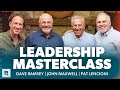
Leadership Trust, Faith, and Failure: A Master Class with Dave Ramsey, John Maxwell, and Patrick Lencioni
In this unprecedented conversation, three of the most trusted voices in leadership—Dave Ramsey, John Maxwell, and Patrick Lencioni—discuss the essential pillars of effective leadership. They explore the three questions followers ask of their leaders, the critical difference between a promotion and a true leadership role, and how to build trust in a skeptical world. The conversation also covers the role of passion versus talent, the importance of vulnerable communication, and how faith and failure can ground a leader.

Understanding Industrial Leadership: Key Principles and Differences with Management
Explore the fundamentals of industrial leadership, including the role of leaders, essential leadership principles, and the critical distinctions between leadership and management. This summary highlights how effective leadership fosters motivation, productivity, and organizational success.
Most viewed summaries

A Comprehensive Guide to Using Stable Diffusion Forge UI
Explore the Stable Diffusion Forge UI, customizable settings, models, and more to enhance your image generation experience.

Kolonyalismo at Imperyalismo: Ang Kasaysayan ng Pagsakop sa Pilipinas
Tuklasin ang kasaysayan ng kolonyalismo at imperyalismo sa Pilipinas sa pamamagitan ni Ferdinand Magellan.

Mastering Inpainting with Stable Diffusion: Fix Mistakes and Enhance Your Images
Learn to fix mistakes and enhance images with Stable Diffusion's inpainting features effectively.

Pamamaraan at Patakarang Kolonyal ng mga Espanyol sa Pilipinas
Tuklasin ang mga pamamaraan at patakaran ng mga Espanyol sa Pilipinas, at ang epekto nito sa mga Pilipino.

How to Install and Configure Forge: A New Stable Diffusion Web UI
Learn to install and configure the new Forge web UI for Stable Diffusion, with tips on models and settings.
Found this summary useful?
Take it with you. One click puts it in your own LunaNotes library.
Save to LunaNotes