Comprehensive Ancient History Revision for Government Exams
1. Stone Age (Prehistoric Period)
Paleolithic Age (Old Stone Age - 500,000 BC to 10,000 BC)
- Lower Paleolithic: Son Valley, Belan Valley (UP)
- Middle Paleolithic: Flake technology introduced
- Upper Paleolithic: Coincides with Holocene era; evolution of Homo sapiens
- Important Sites: Bhimbetka (MP) - discovered by V.S. Wakankar, rock-cut cave paintings; Patane (Maharashtra) - first evidence of ostriches
For an in-depth look at the evolution of human culture across the Stone Age, refer to the Comprehensive Overview of India's Stone Age: Paleolithic to Mesolithic Evolution.
Mesolithic Age (Middle Stone Age - 12,000 to 10,000 BC)
- Characterized by microliths (very small stones)
- Sites: Bagor, Didwana (Rajasthan); Langhnaj (Gujarat); Bhimbetka; Hunsgi (Karnataka)
Neolithic Age (New Stone Age - 7000 BC to 1000 BC)
- Polished stones, agriculture, and pottery (cord impressed pottery)
- Key Sites: Mehrgarh (Pakistan) - oldest Neolithic site, wheat/barley evidence; Chirand (Bihar) - bone tools; Burzahom (Kashmir) - dog burials with humans, lake-side pits; Gufkral (Kashmir) - "cave of potters"
- Crops: Barley (Yava), Wheat (Godhuma), Rice (Vrihi)
Refer to the Understanding the Prehistoric Period of India: A Comprehensive Overview for a broader understanding of early human habitation.
2. Chalcolithic Age (Copper Age - 3000 BC to 1000 BC)
- Copper = first metal discovered by humans
- Important Cultures:
- Ganeshwar-Jodhpura (Rajasthan)
- Ahar-Banas-Gilund (Rajasthan)
- Malwa and Eran (Madhya Pradesh)
- Jorwe (Maharashtra) - largest site: Daimabad
- Pottery: Black and Red Ware (BRW); practice of Urn Burial
Explore the major cultures and their features in the Comprehensive Overview of Chalcolithic Age Cultures in India.
3. Indus Valley Civilization (Bronze Age - 2600-1900 BC)
Discovery & Naming
- Named by John Marshall
- Discoverers: Dayaram Sahni (Harappa, 1921, Ravi river), Rakhaldas Banerjee (Mohenjodaro, 1922, Indus river)
Extent of Civilization
- North: Manda (Jammu & Kashmir)
- South: Daimabad (Maharashtra)
- East: Alamgirpur (Uttar Pradesh)
- West: Sutkagendor (Pakistan-Iran border)
Major Sites & Features
| Site | Location | Key Feature | |------|----------|-------------| | Harappa | Punjab, Pakistan | Coffin burial | | Mohenjodaro | Sindh, Pakistan | Great Bath, Great Granary, Pashupati Seal, Dancing Girl, Priest King | | Lothal | Gujarat | Dockyard, double burial, fire altars | | Kalibangan | Rajasthan | Ploughed field, fire altars, black bangles | | Dholavira | Gujarat | Joint water reservoir, divided into 3 parts (Khadir Bet island) | | Banawali | Haryana | Barley evidence | | Rakhigarhi | Haryana | Largest IVC site (Ghaggar river), terracotta toys | | Bhirrana | Haryana | Oldest IVC site |
Town Planning & Other Features
- Grid pattern roads, proper drainage system
- Most cities divided into Citadel (Upper Town) and Lower Town
- Exceptions: Chanhudaro (without citadel), Dholavira (divided into 3 parts)
- Used burnt bricks, traded with Sumerians (Mesopotamia) via Dilmun & Magan
- Harappans called Meluha by Mesopotamians
- Script: Pictographic, written right to left (Boustrophedon), NOT deciphered
- Barter system (no currency); no iron or lion known
4. Vedic Age (1500 BC - 500 BC)
Early Vedic Age (1500 - 1000 BC)
- Rig Veda composed (Rig Vedic Age)
- Rig Veda: 10 Mandalas, 1028 hymns, 10,600 verses
- Mandal 3: Gayatri Mantra
- Mandal 9: Lord Soma (God of plants)
- Mandal 10: Purush Sukta (caste system origin)
- Mandal 7: Dasharajana War (Battle of Ten Kings)
Later Vedic Age (1000 - 500 BC)
- Samaveda, Yajurveda, Atharvaveda composed
- Iron discovered (Shyam Ayas = black metal)
- Caste system became rigid (hereditary)
- Women's status deteriorated (no participation in Sabha/Samiti)
- Primary God shifted from Indra (Early Vedic) to Prajapati (Later Vedic)
5. Buddhism & Jainism
Buddha's Life & Teachings
| Event | Place | Symbol | |-------|-------|--------| | Birth (563 BC) | Lumbini, Nepal | Lotus & Bull | | Renunciation (age 29) | - | Horse (Kanthaka) | | Enlightenment (age 35) | Bodhgaya (Niranjana river) | Bodhi Tree | | First Sermon | Sarnath (Deer Park) | Wheel (Dharma Chakra) | | Mahaparinirvana | Kushinagar | Stupa |
- Four Noble Truths: Life = suffering → Desire = cause → End suffering → Eightfold Path
- Buddhist Councils:
- Rajgir (483 BC, Ajatashatru, Mahakasyapa)
- Vaishali (383 BC, Kalashoka)
- Pataliputra (72 BC, Ashoka, Moggaliputta Tissa)
- Kundalvan, Kashmir (72 AD, Kanishka, Vasumitra)
- Hinayana vs Mahayana: Hinayana = no idol worship; Mahayana = idol worship, Bodhisattva concept
Jainism
- 24 Tirthankaras: Rishabhdev (1st), Parshvanath (23rd, symbol = snake), Mahavira (24th, symbol = lion)
- Mahavira (540 BC): Born in Kundagram, Vaishali; attained Kaivalya under Sal tree at Jambhikagram
- Triratna: Right Knowledge (Samyak Gyan), Right Faith (Samyak Darshan), Right Action (Samyak Charitra)
- Five Vows: Ahimsa, Satya, Asteya, Brahmacharya, Aparigraha
- Two Sects: Digambar (Bhadrabahu, no clothes) & Shvetambara (Sthulabhadra, white clothes)
6. Mahajanapadas (16 Major Kingdoms, 6th Century BC)
Important Capitals
| Kingdom | Capital | |---------|---------| | Magadha | Rajgir → Pataliputra | | Kosala | Shravasti | | Kashi | Varanasi | | Avanti | Ujjain | | Gandhara | Takshashila | | Kuru | Indraprastha | | Surasena | Mathura | | Matsya | Viratnagar |
Magadha Dynasties
- Haryanka Dynasty: Bimbisara (conquered Anga), Ajatashatru, Udayin (shifted capital to Pataliputra)
- Shishunaga Dynasty: Captured Avanti
- Nanda Dynasty: Mahapadmananda ("first empire builder"), Dhanananda (contemporary of Alexander, 326 BC - Battle of Hydaspes)
- Maurya Dynasty: Chandragupta Maurya (founded by defeating Dhanananda with Chanakya's help)
7. Mauryan Empire (322 - 185 BC)
Key Rulers
Chandragupta Maurya (322-297 BC)
- Founder; defeated Seleucus Nicator; married his daughter Helena
- Megasthenes (Greek ambassador) wrote "Indica" - wrongly divided society into 7 classes (PCS COGWOC)
Bindusara (297-272 BC)
- "Amitochates" to Greeks; patronized Ajivika sect (Makhali Ghosal)
Ashoka (272-232 BC)
- Kalinga War (261 BC) → changed heart → adopted Dhamma
- Propagated through Edicts (Brahmi script, Prakrit language)
- Deciphered by James Prinsep (1837)
- sent Mahendra & Sanghamitra to Sri Lanka
Administration
- 5 Provinces: Avantipath (West-Ujjain), Prachyapath (East-Tosali), Dakshinapath (South-Suvarnagiri), Uttarapath (North-Takshashila), Prachi (Center-Pataliputra)
- Officers: Samaharta (Revenue), Sannidhata (Treasury), Akshapatalika (Audit), Sitadhyaksha (Agriculture)
- New Officer: Dhamma Mahamatta
8. Post-Mauryan Period (185 BC - 300 AD)
Central Asian Invasions
| Ruler | Dynasty | Contribution | |-------|---------|--------------| | Milind/Menander | Indo-Greek | Milind Panho (dialogue with Nagasena); Hellenistic art | | Rudradaman I | Shaka (Scythian) | Junagadh Rock Inscription; repaired Sudarshan Lake | | Gondophernes | Parthian | - | | Kanishka | Kushan (78 AD) | 4th Buddhist Council; Saka Era started; purest gold coins; Rabatak Inscription |
Schools of Art
| Feature | Gandhara School | Mathura School | |---------|-----------------|----------------| | Stone used | Grey sandstone | Red sandstone | | Buddha's head | Wavy hair, not shaved | Shaved head | | Body | Muscular | Less muscular, calm expressions | | Halo | Plain | Highly decorated (or absent) | | Robe | Simple | Greco-Roman influenced | | Nature | Greek influenced | Completely indigenous |
9. Gupta Dynasty (320 - 550 AD) - Golden Age
Key Rulers
- Sri Gupta (Founder)
- Chandragupta I (320-335 AD): Title - Maharajadhiraj; married Kumaradevi (Lichchavi princess)
- Samudragupta (335-375 AD): "Napoleon of India" (V.S. Smith); Prayag Prashasti (Harisena); shown playing Veena on coins; titles - Kaviraj, Sarvarajochchheta
- Chandragupta II (Vikramaditya - 375-415 AD): Killed brother Ramagupta; married Dhruvadevi; daughter Prabhavati married to Vakataka Rudrasena II; Navratnas - Kalidasa, Amarasimha, Dhanvantari, Varahamihira; Chinese traveler Fa-Hien visited
- Kumaragupta I (415-455 AD): Founded Nalanda University
- Skandagupta (455-467 AD): Repaired Sudarshan Lake; repelled Huna invasion
Types of Taxes
- Bhaga: 1/6th of produce
- Bhog: Fruits, flowers, wood
- Bali: Forced/compulsory
- Udakabhaga: Water tax
- Vishti: Forced labor
10. Temple Architecture
Nagara Style (North India)
- Curvilinear Shikhara; Nandi inside; built on elliptical plan (Gajaprishtha)
- Examples: Khajuraho temples
Dravida Style (South India)
- Pyramidal Vimana; prominent Gopuram (gateway); Nandi outside; presence of water tank
- Developed by: Pallavas
- Examples: Brihadeshwara Temple (Thanjavur - built by Raja Raja Chola I), Shore Temple (Mahabalipuram)
Vesara Style (Deccan)
- Mix of Nagara & Dravida
- Developed by: Chalukyas of Badami
- Examples: Virupaksha Temple (Pattadakal - built by Queen Lokamahadevi), Ladkhan Temple (Aihole)
11. Important South Indian Dynasties
Sangam Period (Chera, Chola, Pandya)
| Dynasty | Capital | Emblem | Port | |---------|---------|--------|------| | Chera | Vanji | Bow & Arrow | Muziris, Tondi | | Chola | Thanjavur | Tiger | Puhar/Kaveripattinam | | Pandya | Madurai | Fish | Korkai |
- Sangams: Assembly of poets; Tolkappiyam - Tamil grammar text; Silappadikaram (Ilango Adigal)
Chalukya Dynasty (Badami - 543-753 AD)
- Founder: Jayasimha / Pulakesin I
- Greatest Ruler: Pulakesin II (Dakshinapathapati - Aihole inscription by Ravikirti)
- Defeated Harsha (Battle of Narmada) but was defeated by Pallava Narasimhavarman I (Vatapikonda)
Pallava Dynasty (570-895 AD)
- Founder: Simhavishnu
- Capital: Kanchipuram
- Greatest Ruler: Narasimhavarman I (Mamalla) - built Seven Rathas, Descent of Ganga
- Narasimhavarman II: Built Kailashnathar Temple, Shore Temple
Chola Empire (850-1250 AD)
- Founder: Vijayalaya
- Greatest Rulers:
- Raja Raja Chola I: Built Brihadeshwara Temple (Thanjavur)
- Rajendra Chola I: "Napoleon of South India"; built Gangaikondacholapuram; conquered Sri Lanka, Maldives, Shailendra dynasty
- Administration: Mandalam → Valanadu → Nadu → Villages
- Temples: Gangaikondacholapuram Temple; Nandi outside (Dravidian style)
12. Tripartite Struggle (8th-10th Century AD)
- Fought over: Kannauj
- Parties: Rashtrakutas (Deccan) vs Gurjara-Pratiharas (West India) vs Palas (Bengal)
- Important Rulers: Govinda III (Rashtrakuta), Mihir Bhoja (Gurjara-Pratihara), Dharmapala (Pala)
13. Ajanta & Ellora Caves
| Feature | Ajanta | Ellora | |---------|--------|--------| | Number of Caves | 29 | 34 | | Religion | Only Buddhism | Buddhism, Hinduism, Jainism | | Built by | Vakatakas | Rashtrakutas | | Key Feature | Fresco paintings | Kailashnath Temple (Cave 16, by Krishna I) | | UNESCO Status | 1983 | 1983 |
Exam Tips
- Most questions in recent exams: Vedic Age > Temple Architecture > Gandhara/Mathura School of Art
- Medieval History has gained more importance in recent selection post exams
- Focus on Indus Valley sites and features, Mauryan edicts, Gupta administration, and Chola temple architecture for consistent question repetition
- Remember art school differences for direct MCQ identification
- Use acronyms and mnemonic techniques for memorizing capitals, sites, and taxonomies
- Connect static topics with current cultural/archaeological news for enhanced answer quality
For a complete trajectory from prehistoric times to the Gupta Empire, see the Comprehensive Overview of Ancient Indian History: From Prehistoric to Gupta Empire. You can also review the SSC-specific study strategy at SSC History & GS Strategy: Understanding History, Sources, and Time Periods.
So hello everyone and good evening to all. I hope my voice is coming out properly, everyone will confirm once. So
yes, everything is proper. Please confirm once. So today we are going to do ancient history. Okay? After completing economics, paty, geography. Okay? We are going to start history now.
And in history we are going to do it in parts. That is ancient medieval modern. We will do it in three parts. Okay? So today our first part is going to be that is ancient history.
So let's start now if everything is proper then sir current affairs magazine and ibio current affairs magazine is being made. Okay you will get it in a few days.
Okay sir finish it without any break. There is absolutely no break in it. Alright so let's start. Ok and before starting, as
I told you in other subjects, before starting, what is the new change of pattern that has been observed in that subject. Like if I talk about ancient history, what new change of pattern has been observed here. Ok?
Only if I talk about the entire history. If I talk about the entire history instead of just ancient history, then the change that has been seen here is that medieval history, okay, medieval was a little more important, meaning
more questions came as compared to ancient and then modern . The number of questions from modern have reduced a little bit, as I am telling you this on the basis of things that came in the selection post exam, okay, whether it is a selection question post
or on the basis of Stenhouse, then medieval has been a little more important, meaning more questions came and that too from specific topics like Delhi Sultanate etc. and from ancient to modern. So I
will keep that thing in the back of the mind that brother, from which particular topic more questions have been asked, so we will focus a little more on that. Even in ancient history, if I talk about from where more questions have been asked, then the most important one is
from Vedic, for example. Questions have been made. Okay? It is not that most of the questions have been made from this. It means that questions have come from SH Vedic. Okay? And after that there is a temple architecture. Okay? Questions have been made from temple architecture
. Okay? Vedic Age is done. Temple Architecture is done. And some questions have been made from your Gandhara School of Art, Mathura School of Art. And all these things are given in the Fat Man if you have them. Okay
? You can go and check. Gandhara period, Gandhara School of Art, Mathura School of Art. A lot of questions have been made on this. Okay? So we will focus a little more on them . Overall we are going to revise the complete ancient history here.
So let's start. Okay? First of all we will read the Stone Age here. Okay, what is the Stone Age? So the first thing is that the ancient history. Okay? If we look at the ancient history, then
what is history? So history is actually written, wait a second, wherever we get to know about written evidences, wherever there are some literary sources, we count that in history. Now if we talk about
the Stone Age, then we do not consider the Stone Age to be a part of history. Okay? So what do we consider the Stone Age? We consider the Stone Age to be the Stone Age. What is the Stone Age? So the Stone Age is when people used stones. Okay? See, the simple thing is that
there is one pre-history, one is proto-history and one is history. Okay? So we are currently studying pre-history. Prehistoric time . And this division is the Stone Age. Okay? And then after that the Bronze Age and
then the Iron Age. We study in three ages. Okay? First, we study the Stone Age. Where humans used stones. Then we will study about Bronze Age. Okay? And then we will study about Iron Age. Recently when TCS used to conduct exams
, there was a question here. And that was who gave this classification? Who gave this classification of Stone, Bronze and Iron Age? It was given by C.J. Thomson. Okay? Who gave this classification? C.J. Thomson. So if you ever
ask. So we are going to study Stone Age here. In Stone Age, we have to study three ages. Paleolithic, Mesolithic and Neolithic. Paleolithic means Old Stone Age. Okay? Paleolithic means Paleo means Old
And lithic means stone. Similarly, if we talk about Mezo, then Mizo means middle. And lithic means stone. Okay? And similar goes here. Neo means new. And lithic means stone. So Old Stone Age, Middle Stone
Age and New Stone Age. Okay? Now what is the basis of classification? How did we say this is old, this is middle, this is new. So the first thing is that if I am talking about Stone Age, then Stone Age means the first time
period from where, as we studied Geography yesterday. So I told you something about it there. If you remember, do you remember Pleistocenera, Holocenera? Are you remembering anything? So Paleolithic is the first time
we see humans from where history starts, it starts from Paleolithic. It starts from Paleolithic. Okay? Then they come in the Mesolithic where people are still using stones but of a slightly different type and then
in Neolithic, a slightly different type of stone is being used. So first of all, let us look at the Paleolithic. Okay? Paleolithic means Old Stone Age. By the way , if I talk about the time period of Paleolithic, then from when history started
, I assume 5 lakh BC. Now what does BC mean? You must know that BC means we are talking about the time before the birth of Jesus Christ. For example, if I say 5 lakh BC, then it means
I am talking about 5 lakh years before the birth of Jesus Christ. If I am talking about 1000 BC, it means I am talking about 1000 years before his birth. Okay? So if I put 5 lakh BC here or from the time things started, roughly you
can assume 10,000 BC. Okay? 10,000 BC. We keep this in Paleolithic. Now we divide Paleolithic further. If I talk about Paleolithic, then we divide Paleolithic further. Into what? First
we call it Lower Paleolithic . Okay? Then we call it Middle Paleolithic. And then comes our Upper Paleolithic. Okay? So this is how we classify Paleolithic into lower, middle and upper. Okay? Here also it
is the same game of time period. Here from 5 lakh to 500. Here from 500 to 400 and here from 400 to approximately 10,000 BC. Okay? Now I am not writing that much because I have never asked . Neither was it asked earlier nor has it been asked in the recent exam.
Okay? So I will do it keeping the exam in mind. Now here the thing that we need to pay attention to is a few sites, which are the important sites and the second thing is that flakes were used in the middle stones
. Flake technology. Now what is flake technology? So flakes are such that you can see a little bit on your screen here. So flakes are such that big stones were used earlier. Then
what did they do? They made the stone a little sharp by hitting it. Made a sharp edge. So that is what we call flake technology. So if you ask, then where is flake technology? It is in the middle paleolithic. Simple. Okay? Now we are talking about sites. So
if we talk about sites, then the first one is this Son Valley. Okay? I think it is not shown here . This is the Punjab province of Pakistan. Here is your Son Valley. Okay? This Son Valley is in Uttar Pradesh and then
your Belan Valley is in Uttar Pradesh. Okay? Your Belan Valley is in Uttar Pradesh. All these are your Paleolithic sites. And if I talk about Son Valley and Belan Valley, they come under Lower or Early Paleolithic. Is that okay? Pahalgam where the attack happened
in Kashmir recently. Okay? That is okay? If I talk about Patane here, you must be seeing Patane. In Patna itself, the first evidence of ostriches is found here. Okay? The first evidence of ostriches
is found in Patna, Maharashtra. Did you understand? Then here you must be seeing Bhimbetka. This Bhimbetka is a very important site. The first rock cut cave paintings found in India. These paintings were found in caves. They were found in Bhimbetkai. Where
is it located? It is in Madhya Pradesh. Bhimbetka. Okay? So keep in mind Bhimbetka. Where is it? It is clear that it is in Madhya Pradesh, there are other sites like Inam village, which
is in Maharashtra, Didwana, you can see, is in Rajasthan, so what is this, a paleolithic site from where we get evidence that people of the Old Stone Age lived here. Okay? Clear? And one more thing to note here.
Remember how flake technology was used here, so people started using flint stone here. Okay? Flint stone means a slightly thinner stone was used here. And keep this thing in mind that the Upper Paleolithic coincided
with the Holocene era. Holocene means warmer phase. Pleistocene means Ice Age. So Ice Age means where the temperature used to be very low. Then the temperature started increasing. And keep in mind that this is where
the evolution of modern man takes place. Okay? This means that in a way, the Homo sapiens evolved from here, meaning they evolved completely. Homo sapiens. What is Homo sapiens? So the last species in the entire evolution of man,
which we are, is Homo sapiens. Okay? We are Homo sapiens. Meaning before this there were Netherlandsians. Before that there was Homo. Before that, there was Homo erectus. Okay? So keep this thing in mind. So we
call this the period of Homo sapiens which is the Upper Paleolithic. You have to keep this thing in mind . Okay? Is it clear? By the way, Homo erectus which used to exist before Homo sapiens . There is a place called Hathnora here. It is not mentioned here. But
a skull of Homo erectus is also found in Hathnora. The skull means the skull is also found from here. Keep one thing in mind, if you are asked about the rock cut cave painting of Bhimbetka, then
who discovered this Bhimbetka? So keep this in mind that it was discovered by VS Wakankar. VS Wakankar discovered it. Okay? Now let's come to the Mesolithic Age. What does Mesolithic mean? It
is the Middle Stone Age. If we talk about the time period, then roughly you will find the same time period given differently at different places . Okay? Let me tell you beforehand that it is a little disputed because nowhere exactly it is said that Mesolithic
means Mesolithic Age has started from this time. But roughly a time period is considered. We have to see what has been asked of us in the examination. So for example, if we talk about SSC, then it
has considered 12,000 to 10,000 till now in the earlier vendor. Okay? But roughly you can consider the same from 12,000 to approximately I can say from 12,000 to approximately 8,000 or 7,000. Okay? From 12,000
to 7,000 BC. But let me tell you that whatever has been considered by SSC so far, it is 12,000 to 10,000. Okay? So, keep this thing in mind. If we talk about the Mesolithic Age, then here you can see where we
have found Mesolithic sites. So like Didwana is in Rajasthan, Bagor is in Rajasthan. Okay? And in Gujarat, you have two, one is Langnaz. Okay? There is Langnaz and Mehsana is here.
Okay? There is Langnaz and Mehsana is here. Okay? Bhimbetka is also included in this. Keep in mind. Bhimbetka was there in the Paleolithic as well and you will also find it in the Mesolithic here.
Bhimbetkar and Azamgarh which are in your Madhya Pradesh. If you come up then here you will find Chaupani Mando, Chaupani Mand in Uttar Pradesh. This is near Belan Valley . Okay? And this Hunsagi of yours is in Karnataka. Nevasa is
in Maharashtra, remember Hunsagi is in Karnataka. And one more is right here, Sangna [ __ ] okay? What is it? Sangna [ __ ] is also an important site which is associated with the Mesolithic Age and Middle Stone Age. Then if we talk
about Neolithic. Neolithic means New Stone Age and if we talk about its time period, then from where you end, that is almost the same from 7000 BC to 1000 BC. Remember when we move ahead in BC, this time becomes less. That is,
from 7000 years before the birth of Jesus to 1000 years before. Okay? Now the special feature here is that here you people started using polished stones. Okay? Polished stones were used even now. So that is why it is called Neolithic. So that
is it, how is it different? How is Paleolithic different from Mesolithic? That there are many microliths in Mesolithic. If we talk about Mesolithic, then the characteristic feature that we saw here was microlith. Microlith means that very small stones
also started being used here. If we talk about Mesolithic, then we call it microlith. What is here? Polished stones started being used here . That means they started polishing the stones. Along with this, they
started using pottery. Pottery is available. From here we come to know that Definitely these people must have started practicing agriculture. Why? Because when you do agriculture, there is an agricultural surplus. It is
not like you will consume all that is produced. It has to be stored as well. So to store the grains. Right? Today, if we talk about keeping pottery in the house, we keep things for decoration as well. Right? For decoration. But at that time,
it was kept to store grains. And what kind of pottery was there ? So, cord impressed pottery is called this. Where there is pottery on top. Right? If there is pottery, then there is some kind of embroidery type on it, meaning embroidery in the sense,
meaning something made up. Right? Cord impressed pottery. Right? So, this thing has to be kept in mind that one important thing is that they started using polished stones. They started using agriculture. And because of this,
we get to see the evidence of pottery etc. first of all from here. Is it clear? If we talk about sites, then here you can see the site is Mehrgarh. Where will Mehrgarh come? Mehrgarh will come in Pakistan. Okay? And it is considered as
one of the oldest Neolithic sites. Neolithic sites in the Indian subcontinent. Here we find houses and how is it a house? How is it a house? I mean, not of burnt bricks like this, but yes, they had started making walls etc. in this way
and they had started living there. Along with this, we also get evidence of crops from here. Okay? We also get evidence of crops. Like wheat, barley, we get evidence of all these from here. Burja Home
is also coming on Burja Home. When will the new batch come? That will also come. Okay? Don't worry. I mean that will come after CGL. Okay? The new batch. So, did you understand the crops in Mehrgarh? Now, which crops are these? This question is asked. For example,
you have barley and potan. Okay? Wheat. We get evidence of all these from Mehrgarh. Okay? For example, you can see Chirand, Chirand is in Patna. Okay? It is in Patna. Do you know what is found here?
We get bone tools from here. That means, if we talk about the Paleolithic, or Neolithic, these people had started practicing agriculture. But what did they do in the Paleolithic and Mesolithic? They
were hunters and gatherers. What were they? Hunters. They were mainly hunters. They were mainly hunters. What happened here ? They also became hunters and food gatherers. They started gathering food. That means they were already hunters but they also started food gathering. So, from hunter-
food gatherers, what did these people become? They started practicing agriculture. So how did they hunt? So hunting is like that, they used to make some bones out of stone and kill with that and do that. Then gradually
they started making tools out of bones. Okay? That means from bones. And it is not only this that we get from Chirand. Chirand is in Patna but we also found some sites in Kashmir from where, for example, if we
talk about Burja Home, Burja Home is written here. Burja Home means place of birch. Birch is a kind of tree. Okay? So from there, this word is derived Burja Home which you will find in the west of Srinagar.
Burja Home is located in the west of Srinagar. You have to keep this thing in mind. This raises a question. Now, here, one important feature that we will ask about uniquely is that the dogs here have been buryed with the master. Dogs were buried with humans. Okay? You
can either say buried with humans or buried with their masters. It's the same thing. Okay? They were buried here with humans. Plus, lake side pits were found here. Lake side pits means that pits were found near the lake shores. Now why
were these pits? They used to live in pits. Why? And why did they live near lake shores? Because fish and all other fish were easily available there. Now, even today, if you look at UP, Bihar, the population is very high here. Okay? There is always a high population near river banks. We
live because of agriculture. Okay? Geography has a connection with it. It is very much linked to history. So, in the same way, they live in lake side pits. In Mehrgarh, they did not live in pits. They used to live by building walls like this. These people
used to dig pits and live there. Okay? And here also, we see tools made of bones. There's another site right here in Kashmir. And that is called as Guf Kraal. Guf Kraal. Guf means cave. One second. Okay? Guf
means cave and kraal. It means it is called cave of potters. If we talk about the meaning of Guf Kraal, that would be cave of potters. Okay? Keep this thing in mind. It is known as cave of potters. And
you will also find this in South East of Srinagar which is Gufal. Okay? And this is also in Kashmir. So Burja Hom and Gufal both have to be kept in mind . Okay? Then Hallur. Where is Hallur? So Hallur is in Karnataka.
Okay? It is known for millet cultivation. If we talk about Karnataka, then what are the other places apart from Hallur? Sangna [ __ ] okay Sangna [ __ ] keep in mind and Maski
keep in mind Piklihal keep in mind okay Piklihal so Sangna [ __ ] Maski Piklihal and Halur Payampalli is where is your Payampalli is in Andhra okay Payampalli will be here in Andhra okay and no no ah not in Andhra
it will be a little south in Tamil Nadu okay Andhra will come up here this will be in Tamil Nadu. So Payampalli is in Tamil Nadu. okay? This is one thing to keep in mind. If we talk about Andhra sites then in Andhra you will find one
Budhal. okay? You will find Budhal and Utnoor. Keep in mind Budhal and Utnoor. You just have to remember two. Is this much clear? okay? So this is our Stone Age if we talk about it then we have seen Paleolithic, Mesolithic and
Neolithic. If anyone has any doubt even here then ask in Stone Age. Millet cultivation in Hallur, please tell me something for AFCAT sir. When is the charkut exam for AFCAT?
Sir, who got the fields ploughed under the ground? Now, I don't know who got it, but yes, they definitely got it and where they got it, we have seen it just now. Okay? Now, who got it, how they got it, in what condition, we don't have to remember all that. Sanatan Dharma is
the oldest religion. Krish Rajput, you have started again. Wait. Sir, you coughed. Well, cough reminded me. There is also a Garo here. Okay? Garo which is in Meghalaya is also a Neolithic site. Okay? Because next to it, you
know, there is Khasi and Jaintia. Okay? We are in Cattle Huik Cattle Huik Turkey. There is a protocity. I deliberately did not tell because some things are such that okay. I mean, the previous vendor
used to focus a lot on that. Okay? So that's why the rest is a proto city, meaning a new city which is considered from Neolithic site. Okay? After this comes the Chalcolithic Age. After this comes the Chalcolithic. Okay?
Chalcolithic. Okay? What does Chalcolithic mean? Copper Age. Chalcolithic. Copper Age.
Copper was the first metal which was started by humans. Meaning copper was the first metal to be discovered by humans. Now if I talk about its time period then you can assume it to be around 3000 BC. Okay? You can consider the time period from 3000 or 3500 BC
to 1000 BC in Chalcolithic. Where people used copper. Now here is Harappa. This means everyone must have heard the name of Indus Civilization. You people must not be so naive. Okay? That you don't know anything
about it. So this is okay. At the same time when Harappa and Indus civilization was existing and flourishing, Copper Age was also present here. Now we call Harappa as Bronze Age. What do you call it? Bronze. So where did it come from?
Bronze. What is bronze? No. What is bronze? It is an alloy of copper and tin. Right? So they must have taken copper from here from our Chalcolithic sites. Tin is mainly found in the Afghanistan area. So they must
have mixed it with it from there and taken it from somewhere. They must have mixed it with it from somewhere. So Copper Age was existing at the same time during their time. Now wherever it was existing, for example in Rajasthan, if I talk about Ganeshwar Jodhpur culture, every
culture, what is this culture? It is a culture, for example, we call it Harappan civilization. But Harappa is just a site of Indus civilization. So why do we call it Harappan civilization? Because
this was the first site to be discovered of the civilization. So in the same way, whatever is found in this particular area in Rajasthan, we call it Ganesheshwar Jodhpura culture. Ahar Banas Gilund Ahar Banas Gilund culture,
you know, there is Banas river here, it is west of Aravalli, it originates from the east of Aravalli and whose tributary is Baas, please tell me in the comment, yesterday we saw you then if you come here, what do you call it, in Madhya Pradesh then what is Malwa and Iran, okay, E R A N Iran
culture, what is Malwa and Iran culture and if you come to Maharashtra then Jorve culture. Ganeshwar Jodhpura Aahar Banas Gilund site is in Rajasthan. Where are Kayatha and Malwa? These will be in Madhya Pradesh and Iran. And
you should keep in mind that even now iron has not been discovered here. Okay, iron is not known here. You have to keep this in mind. So this is the thing. Then if we talk about it, we have seen these sites. Now, like
here it is asked that which is the largest site in the Jorwe culture? Jorwe means your Chalcolithic sites in Maharashtra. So the largest is Damabad. Okay? Damabad. You have to keep this in mind. And
did they use pottery? Like pottery was discovered in Neolithic. So it is obvious. These people must have used it. Because pottery had been discovered . So there must be some pottery here as well. And if we talk about the pottery here
, what kind of pottery was there? Black and red ware. Black and red ware. BRW is what we call it. Okay? BRW is Black and Red Ware. And these people used to practice Urn Burial. Urn burial means they used to float the bones in urns. That is called Bronze Age
. Okay? Now let us come to Bronze Age. Now which one ? Let us come to Bronze Age. Bronze Age means the same that we were talking about just now. Harappan Civilization is Indus Civilization
. Where people were using bronze. They were using bronze. This is called Bronze Age. Okay? Clear? The Copper Age that we were studying just now was the Copper Age. The first thing is that in the Brown Age we study the Indus Valley Civilization
. Okay? Who named the Indus Valley Civilization IVC ? Who named it? And who discovered it. Okay? Who named it? And who discovered it? Who discovered
the Indus Valley Civilization first? So it was named by John Marshall. John Marshall named it. Why? Because it was not discovered by the Archaeological Survey of India at that time. This ASI, that is, the Archaeological Survey of
India, was its chairman at that time. So that is why John Marshall named it. And please tell us in the comments who we call the Father of Archaeological Survey of India. Who is also known as the Father of ASI. So who discovered
it? Who discovered? So keep in mind that it is discovery. So let us read further now. Okay? All the things. So here first of all see where you can see the Indus Valley Civilization. What is its location? This is it.
Okay? Now if you see here, it is written Indus Valley Civilization Mature Phase 2600 to 1900 BC. So what is this mature phase? So actually
we break the Indus Valley Civilization into three parts namely Early Phase, Mature Phase and Later Phase. In which in the mature phase, when it was at its peak, it was flourishing a lot. So we call it Mature Phase. If we see it exactly, then from 2600 to 1900 or the time
period that you have to remember overall, this is the time period of Mature Phase from 2600 to 1900. But if we see, its time period is approximately 2500. Okay? We consider from 1750 BC.
Okay? So mainly, when it was flourishing, it flourished till 1900. This is its full extent. The extent that you can see here where in the map it is in a little orange color. Okay? If we talk about its extent
, how far did we get to see it? So if we talk about the northern most site then this is Manda. Where is Manda located? Your Manda is in Jammu and Kashmir. Then if we talk about the southernmost. If we talk about the southernmost then in the south it is Dehmabad
in Maharashtra. If we talk about the easternmost then it is Alamgirpur in Uttar Pradesh and if we talk about the westernmost then it is Sutka Gandor. Sutka Gandor, you see here, this is Sutka Gandor. Now there
is a port located here which is being asked a lot of questions in the recent past. The new wonder that has come, he is asking a lot. I mean the selection of the post, the steno, has happened recently. Okay? I mean at least according to me he must have asked this question at least 15 to 20 times.
Is this correct? Now if it is in the recent past then this is your Iran on the border of Pakistan and Iran and we have built a port in Iran itself, which Chabahar port and it has been built here. Okay? This is Chabahar port and China has built Gwadhar port here
. Okay? China built Gwadhar port here and we have built Chabahar port here. So keep in mind that this is Sutka Gandor which falls in Pakistan But it is right on the border of Iran. Okay? So keep this thing in mind. So this is
in Pakistan. Clear? So keep its extent in mind. Like the question asks that in which of these Indian states you will not find the Indus Valley Civilization. So like it is not in Uttarakhand etc. Okay
? So you can see that it is Manda only. Okay? Manda. Let's move ahead now. It is an important Indus Valley Civilization site. Let's see who discovered it . And if we talk about other important things like Harappa, then
who discovered it and when? So keep in mind that it was discovered by Dayaram Sahni. D R Sahni Dayaram Sahni when did he discover it? In 1921. Okay? He discovered it very accidentally. When he
was sitting, he saw that there was a man who was carrying a lot of bricks. It goes from somewhere inside the jungle and when they noticed the bricks, they found very old bricks. When they went inside and saw, they found that it
seems like a very old civilization was settled here . So this is how it was discovered. Okay? So this is Dayaram Sahni. Okay? Harappa. 1921 and if we see on which bank of which river was it found
? Okay? Ravi. Okay? Ravi is on the bank of the river. Then if we talk about Mohinjo, that is Mohinjodaro which is one of the not the largest but one of the largest Indus civilization site is IBC site. So call it DR
R D Rakhaldas Banerjee. Okay? Rakhaldas Banerjee discovered it in 1922 and we will find it on the banks of the Indus river. Okay? We will see what all discoveries were made in Mohenjo. We will talk about Lothal.
Who discovered Lothal? SR Rao sahab. Okay? Rao sahab discovered it. And you will find it in the banks of Bhogwa or Bhogawa river. If we talk about Kalibangan,
where is Kalibangan? For example, if we talk about Harappa, it is in Pakistan. Both Harappa and Mohenjadaro are in Pakistan. And it also asks in which province ? For example, if we talk about Harappa, it is in Punjab, Pakistan. Okay? And
if we talk about Mohenjo, it is in Sindh, which is in Pakistan. If we talk about Lothal, it is in Gujarat. Okay? If we talk about Kalibangan, it is in Rajasthan. Okay? And
we do not have to remember its discovery. But in this, we have to keep in mind on which river's bank it is. Okay? Ghagar Den Banawali So if we talk about Banawali, then in Banawali also we don't have to remember who discovered it, we just
have to remember where it is, so this is in Haryana, okay in Haryana and what did we find here, is there something important that we have to remember in Banawali, so evidence of barley which is grown in Banawali has been found
here, Dholavira is important, where is Dholavira, it is in Gujarat. And in Dholavira we have to keep in mind that here we found a joint water reservoir system. That is, these people used to store water
to use it for agricultural purposes etc. So joint water reservoir was found here . So if you ask anything related to water like this, then Dholavira will be the answer. And in which island of Gujarat is it? Ask, it is in Khadir Bet Island. Okay
? This is seen in Khadir Bet Island of Gujarat. Okay? And now we will see that whatever city Harappan sites were there, they were divided into two parts. This was divided into three parts. Almost all Harappan sites
were divided into two parts. This was divided into three parts. This thing has to be kept in mind. If we talk about Kalibangan, then what is important in Kalibangan that you have to remember. One is that here we
find fire altars. That is fire altars which we find here as well. That means Lothal and Kalibangan are the only two sites where you will find fire altars that is fire altars . Okay? Whatever people do like havan etc. And we
got to see black bangles. Black bracelets. Okay? Black bangles. And ploughed fields have also been found. That is ploughed fields. We have found this here, from Kalibangan. Okay? And if we talk about Lothal,
I will write it separately here. One thing to keep in mind about Lothal is that first of all it is an ancient port site. Okay? Ancient port means an ancient port . Or we also call it a dock. Dockyard is where ships etc. dock.
Were ships used at that time? Now we did not find any evidence of ships. But yes, these people definitely knew about ships because their seals, we will see what seals are now? Seals mean that
we have found ships built in the seals. Okay? So from there we come to know that these people must have known about ships. Okay? Plus from here we get to see double burials. Double burial means that both men and women
were buried together. That is, suppose now it is obvious that if a man dies, then when a woman dies, she will be buried there together. Okay? This thing has to be kept in mind. Here one more thing has to be kept in mind, like if we talk about Harappa, then
what kind of burials do we get to see here? So here coffin burials are like coffin burials, it is like this, it is like a coffin type. So the coffin burial has been found from here. Well, there is a site and that is a Rakhigarhi.
You should know about Rakhigarhi because it is important. For example, if we talk about Rakhigarhi, then you will find it on the banks of the Ghaggar River . And where is it? It is in Haryana. Okay? You will find it in Haryana.
And it is the largest. This is the largest Indus civilization site. Which is the oldest? Which is the oldest IBC site? So keep in mind that this is Bhirrana. This Bhirrana is also in Haryana. Birana is the oldest and this
is the largest. Okay? What is terracort made of terracort here ? Terracorta is like clay, if you bake it, it becomes terracorta. Okay? So the wheels, toys made of terracorta,
we get all these from Rakhigarhi. Okay? So you can see this is the seal which you can see above . Seals were used for trade purposes. When people used to trade, they used to seal the goods with it. So that means if the seal is broken, it means that it has been opened
. Okay? Simple, whatever purpose seals are used for today, that is what a simple seal is. Okay? So here you can see some animals in the seal. This is one of yours, if you have seen that Mohinjo movie of Hrithik Roshan, then it is shown in it that
he sees this animal in his dreams. One horned dinosaur, unicorn. This is pottery. What kind of pottery was used? Which one? This is ochre colour. So, they used ochre colour pottery. Okay? One second.
OCP in short it is called ochre coloured pottery. Okay? OCP. Okay? OCP mainly used ochre coloured pottery. At some places we used painted pottery.
Okay. Painted greyware has also been found. Okay? We call painted greyware PGW. Okay? So OCP and PGW. Clear?
Let's move ahead. What is this? This is Modiji. And this is his Miloniji. Okay? This is from Harappa, sorry, it has always been linked to Mohenjodaro. Where is it linked? From Mohenjodaro. This is Mother Goddess. This is
Mother Goddess. Okay? This Mother Goddess has not been shown completely here, but a tree is shown growing from the womb of Mother Goddess from her embryo . So it means that she was being worshipped as a goddess of fertility
. Okay? So that the yield etc. is good. That is why she was worshipped. Whose work did we find this? This is made of terracotta. Terracotta, I just told you, if you bake the clay, it is terracotta. But if we talk about Modiji,
then this steatite, this seal made of steatite. Steatite is a kind of soft stone. It is a soft stone. It is not a stone. It is soil. Okay? What is this? This is Pashupati seal. This is Pashupati seal. So, here you
can see that Pashupati ji is sitting in a very yogic posture. He has been compared to a protosava. Where we will find some animals around him. How do we remember them? We remember them by saying better dear. Okay? We remember them like this.
Better dear. So there are two dears. One here, one here, we have found a broken seal. Okay? So it is better dear. So bull, elephant, tiger and rhino. Okay? It is bull elephant. What do we call bull elephant? Sorry bull tiger, this elephant, this
rhino, okay, this is it. And this is ours, it is made of bronze. It is made of bronze. And it is in tribhanga posture. It is called dancing girl statue. What? Dancing girl statue in Tribhanga posture. Tribhanga means
there is a bend in the neck here. There is a band in the hand and there is a bend in the knee here. So this is called Tribhanga They say. In IBACIO exam, its height was asked. Its height is 10 1/2 cm. Let's talk about it. That is your priest. Okay? The
priest king made of steatite. Some people call it a priest. It means that the priest is sitting in a meditative posture. Some people say that it is a king. Okay? It is a king. So it is 17.5 cm. What is it doing? What
is it brother? Is it drawing water? What is going on here? So what is it doing here? Yes. So this is actually the Great Granary. Great Granary means where do we get the huge foodgrains from?
So the Great Granary is what we get from Mohenjo. And it is the largest building in the Mohenjodaro. This is the biggest building we get to see in Mohenjodaro. And most probably what is it? Great Granary. So it
must have been used for storing grains. What is this? Guess. What is this? See, it is written Mahan Mahasanagar that is the Great Bath. That means that big people used to take bath here. Yes sir. So bathing program
used to be conducted here. And most probably it may be used for ritual purpose. Because here we can see that there are some changing room type things here. So it may be used for that only. But whatever it is used for. But it is believed that it
must be used for ritual purpose. Ritual bathing like we went to take bath in Kumbh, so what was that? That was ritual bathing only. So in the same way keep in mind that from where is this also found? It is found only in Mohenjo. Okay? Is it clear? Now we get to see these distinctive features of town planning
from Harappa. One of the most important features of town planning is that almost all these towns were divided into two parts. One was the Upper Town. This was the Upper Town. This is
the seat. Upper Town. Okay? And this was the Lower Town. So this Upper Town is what we call Citadel and this is the Lower Town. Okay? Citadel or this is what we call Acropolis.
Acropolis was most likely the ruling class used to live here and the common people used to live in the Lower Town. Simple. Okay? So you have to keep this thing in mind that where there are a few well established people, they
will live in the Upper Town. Those who are not well established will live in the Lower Town. Simple. Okay? Then if we talk about what else we get to see which gives us an idea about town planning that yes this civilization was
not a normal civilization but it was an urban civilization. It was an urban civilization meaning there were urban people. So how do we know? So the first evidence is town planning. The second means now there is town planning. Now
what are the features of town planning? So in town planning, one thing is that these towns are divided. Plus the roads here are seen in a grid pattern. Grid pattern means they are cutting each other at 90°. Okay?
We can see the proper drainage system. Water is not stagnating because of the drainage system. Okay? The entire drainage system has been built very well. So these are all some evidences which give us an idea about town planning.
About the cigarette pattern, division of town, drainage pattern etc. Okay? Now, I told you that these towns were divided into two parts. One was Citadel and Lower Town. This was not everywhere. There were exceptions too. There were two exceptions in this. There
were two exceptions. One is our Citadel and the other is Citadel. Okay? One is our Dholavira which we have just read. What was there in Citadel? What am I writing ? What am I writing? One was our Chahudaro. Okay? And the other was Dholavira.
What was there in Chahudaro? It was without Citadel. It was a city without Citadel. In this, we do not get to see the Citadel that is Agropish. And if
we talk about Dholavira, then it is divided not into two but three parts. There is also a middle town in it. There is also a middle town there. Is it clear till here? Is it clear till here? Okay? We have seen all the things. This is the granary of Harappa
which was in a row. Six granaries in each row. Okay? Six granaries in each row like this , on both sides. Okay? And in the granary here we have also found a circular brick platform. Circular brick platform where the grain was
most likely ground. Okay? They used to trade with the Sumerians. Trade with Sumerians. Now who are Sumerians? Does anyone have any doubts about this? First tell me this because I have not seen your comments yet.
Hum hum hum no doubt okay okay let's move ahead, what trade with Sumerians Sumerians means this Mesopotamia is correct Mesopotamia is
called Mesopotamia, the language spoken there was Sumeria Mesopotamia means they used to trade with today's Iraq. How did we know this? Actually there, that is Mesopotamia itself, seals of Harappa were found. Harappan
seals were found. So we came to know from that, so this is it. Meaning these people were trading with them. So we came to know from there. Now what did they trade in? So they used to trade in precious stones etc. Like for example
this is the green one's jadeite stone. This is jadeite stone. Okay? Remember there is a place in Brahmaputra valley, Daujali Heading in Assam. We got stone from there as well. And
this blue one that you are seeing is called lapis lazuli. What is it called? Lapis lazuli is of red colour which is also called carnelian bead. So what did these people do in all this? They used to trade. And important shell making industry. Do you know
where was their shell making industry? That means shell making industry was mainly in Nageshwar and Bagalkot. Nageshwar Nageshwar Nageshwar and this one is in Balakot. Nageshwar and Balakot.
This is yours. And there is nothing else. Okay? Keep in mind that when they used to trade, there were some important sites. Okay? Dilmun and Magan are the port sites where these people used to stay. Okay? When they
used to go to Iraq, Dilmun and Magan. And one more thing to keep in mind for a second. What were these of yours? Important trading stations. Okay? When these people used to go, sorry. They used to trade with Mesopotamia. So
what did the people of Mesopotamia call them? They used to call them Melua. Okay? Melua. So who is Melua? Melua is not from Mesopotamia. He is from Harappa. Mesopotamians did not call Harappans Harappa. That
is our name. They used to call them Melua. Okay? So Melua means Harappans. Okay? Is it clear till here? And how did we come to know about the trade? Like I told you, we find seals. Made of what? Steatite. What is steatite? It
is a soft stone. And from that we get to know a lot about what these people knew about? Like a ship was made in a seal. So we know that yes, they knew about ships. Many animals. Well, tell me, did these people
know about crocodiles or not? Did they know about crocodiles and lions or not? Tell me. Did you understand Melua? What is it? Cotton is called sindon in Greek. So that is where the name Indus and Indus Valley Civilization came from. Okay
? Indus was named. Bosphaedon was their handwriting. These people used pictographic script. Who? Harappa people, that is, they used pictures. Which we have not been able to decipher till date. Could not find out. You must have heard that recently the Tamil Nadu
government had said that whoever deciphers it will get $1 million. Do you understand how much 1 million dollars is? How many crores is it? Tell me quickly . So Bosphaedon means that which is written from right to left.
Okay? It is written from right to left. No no no no no. Okay, so let me tell you exactly. These people knew about crocodiles. They knew about crocodiles. We did not know about lion.
We knew about tiger. We have just told you. Okay? Pay attention to this. So, they used to write right to left. Right to left then left to right, right to left, left to right, this way, okay, it is clear,
no, brother, we did not know about lion. Let's say what is Susa Ur and Sur, Susa Ur is your modern day Iran, it is in Iran and this is in Iraq. Present, which is
mainly important, these also used to be trading stations of that time. Okay? Clear? It is on Iron Age. Does anyone have any doubt in what we have read till here ? Does anyone have any doubt till here
and keep this thing in mind that they had town planning and these were urban civilizations. From here it is known that people used burnt bricks. Okay? They used burnt bricks. And do they know about the iron? Did they
know about iron ? Yes or no? Tell me quickly. The answer is no. Okay? Otherwise we wouldn't have called it Iron Age. If iron was present in it So, did these people use any currency?
Was any currency used at this time? Yes or no? Answer quickly. The answer is no. What did people do? These people used the Ba system. What is the Ba system? The Ba system is that what you have, we don't have. What
we have, you don't have. And both of us need it. What you have, what we have, so come. Let's exchange. That is called a barter system. Meaning that exchange takes place here. But it has a lot of limitations. Like we
had read about it in economics as well. Like for example, double coincidence of want means that there should be two, suppose I don't have wheat and you have it. So of course I want it. But you
need rice. But I don't have rice. So that won't work. Okay ? Keep this thing in mind. Okay? Let's move ahead. Let's enter the Iron Age . That means now the discovery of iron has been made here. Iron Age means we
study Vedic Age here. Okay? Vedic period. Now we divide Vedic period into two parts. We divide it into two parts. Which one? So first of all, your time period from 1500 BC to 500 BC is
called Vedic period. Okay? So from that comes Early Vedic and Later Vedic. Clearly Early Vedic is from 1500, that is from 1500 to 1000 BC
and Later Vedic comes from 1000 to about 500 BC. Remember Early Vedic and Later Vedic. Now why is it called Vedic period? It is called Vedic period because Vedas were composed here. Vedas were created here,
that is why we call it Vedic Age. Clear? Now who were these people? Were they from Harappa? No. So there are some theories behind this in which one theory is Aryan Invasion Theory. Okay? There
is a theory which we call Aryan Invasion Theory. It is believed that here in India, a tribe from Central Asia migrated to Europe and a part of it
came to India. Okay? We get to know about this from the Bogaski Inscription in Turkey. What do we get to know from there? From the Bogaski Inscription. We come to know from Bogas's inscription
which is in Turkey that yes, in this way, they are the same people who went to Europe from India and Bal Gangadhar Tilak ji had also written a book on this, Arctic Home. Okay, Arctic Home in the Vedas.
So this was written by Tilak ji, Bal Gangadhar Tilak. We have to keep this thing in mind that Vedas were composed at this time, the Early Vedic Age is also called Rig Vedic Age. Because what was composed in this was Rig Vedic, meaning Rig Veda
was composed. Okay? So first of all, we understand what are the sub divisions of Vedas? So this thing, I think now we know how many Vedas are there in total? So there are total four Vedas. Right? Rig Veda, Sam Veda, Yajur Veda, Atharva Veda, about which we will read in detail now.
Okay? But before that we should know what is the subdivision of Vedas? In how many parts do we divide Vedas? So one is called Samhita. One is called Brahman.
One is Aranyaka. And Upanishad. Okay? What is Samhita? It is a collection of hymns.
Okay? The Suktas, which are called Suktas in Hindi, their collection is called Samhita. If we talk about Brahman, then in Brahman it is written about sacrifices and rituals which you have to perform. Okay? What sacrifices have to be made, what rituals
have to be performed so that you will get exactly what you want. Okay? Aranyaka is for those who live in the forest. Okay? Okay? What has to be performed by the forest developers, whom we also call hermits. So what
all they have to perform is written and we call Upanishad Vedanta. Vedanta means this is at the end of every Veda. Okay? Okay? This is at the end of every Veda. And they talk about Bhakti Marg that how you
can get it by following Bhakti Marg which you can get by performing sacrifices and rituals like Brahmins. You don't need to perform any sacrifice ritual. You can get it by following Bhakti Marg. Okay? Now first of all we will read
about Rigveda. So Rigveda is a book. Okay? Which is made up of 10 books and we call those 10 books 10 Mandals. There are 10 Mandals in it. Okay? And this There are 10 mandals, meaning there are 10 books, something or the other is given in each mandal. And
we should know something important. Like for example, in which mandal is Gayatri Mantra given? Tell me quickly. Then it asks the question in the selection post that in which mandal is the information about Lord Som given? And
then there is this question that brother, in which mandal is the greatness of Purush Sukta given? In which mandal is the greatness of Purush Sukta given. Okay? So if we talk about which mandal the Gayatri Mantra is in, then it is in the third mandal. In the third,
the information about Lord Som is given in the ninth mandal and the greatness of Purush Sukta is given in the tenth mandal. Purush means a cosmic man, a cosmic man, a Brahma. In this, it is told how
the Brahmins have come out from the mouth of Brahma ji. Kshatriyas have come out from his hands. Who has come out of his thighs? They have come out from the thighs. If we talk about Vaishya and Shudra have come out from his feet. So
all these things are mentioned in the hymn of Purushakta. So in the 10 mandalas, there are three important mandalas and there is also one, that is, the seventh one in which it is mentioned about the Dasharajan war which we will see later. Okay? So you have to keep this thing in mind. Okay?
Alright. How many total hymns are given in it? So how many hymns are given in it ? 1028 times 1028 are given. Okay? And the verses are 10,600.
Okay? You have to keep this thing in mind. There is nothing else. Apart from this, you have to keep this thing in mind that we just keep this thing in mind that who was Lord Som? So he means he was the God of plants. He was the God of plants. Okay?
He was the God of plants. Somras is also a drink which people used to drink while reciting Vedas. It was an energy drink. It is called Somras. Now let us come to what was this Dasrajan War. In your seventh mandal, the Dashrajan War
is mentioned. The Dashrajan War actually took place from here. Now, if we read about Mahajanapada later, then actually Mahajanapada and all these Janapadas take birth from here. So, they originate from here. How? So,
if we talk about the 10 Rajan War, then it happened in Bharat Tribe. Right? Who was the king of Bharat Tribe? It was Sudas. Right? He was leading. Versus confederacy of 10 kings. Federacy of 10 kings. 10 kings were on one side and
on the other side was Bharat type leader Sudas. Whose victory was it? Sudas won here and it was from here that the name Bharat was read and later Mahajanapadas etc. were formed which we will read later. Okay? Let us talk about Samveda. So Samveda is considered as the oldest book
on music. The oldest book on music. This book was based on music. Okay? In this we have to read two Upanishads. Two Upanishads. I told you Upanishad is given at the end of every Veda, that is why it is called Vedanta. Vedanga
is different. Vedanta is different. So which are the two Upanishads? I mean keep in mind that there are 108 Upanishads in total. Out of that, these are the two which are important in Samveda. One is Kane Undertaker's brother. Okay? And Chandogya. Okay
? Keep in mind two. Rest of them you will not have any other question in this. If we talk about Yajurveda, then what is there in Yajurveda? So in Yajurveda it is a collection of
mantras. Prayers. Okay? There is a collection of prayers and mantras. It is given
in Yajurveda. It is divided into two parts. One is Shukla Yajurveda and one is Krishna Yajurveda. Krishna means black and Shukla means white. Keep this thing in mind. Okay? And one Brahman, just like Upanishad is at the end of every Veda, similarly every Veda
has Brahman. So Satpath Brahman is a part of Yajurveda. Okay? Satpath Brahman if you ask. And Upanishad, Upanishad is two important in this. One is
ah Kathapanishad and one is your Brihad Ranayika. Vrihad Ranyaika, okay it is considered as the oldest Upanishad. One thing to keep in mind is that the Kat Upanishad
contains the story between Nachiketa and Yama. The story between Nachiketa and Yama is given in it. The dialogues between them are also given in it. Okay, and there is another Upanishad of yours, one of which is Katya Brihadra has
said a Jabala. Okay? Keep Jabala in mind. Jabala Upanishad which is quite famous is also a text of the Yajurveda. Let's talk about Atharvaveda. What is given in it? So, magical
spells and charms are given in it. Magical spells and charms to ward off spirits. That brother, ghosts What is given in it for driving away the ghosts ? Tantra-Mantra knowledge is given there like how to hypnotize someone
? How to pass without studying. Ok? For that you go to Atharva Veda. So remember Atharva Veda. All these things are given there. And if we talk about its Upanishads then in it there is Mundka Upanishad. There is Mundka. Ok? There is Mandukya.
And there is Maha. Ok? Maha Upanishad. What have we taken from Maha Upanishad? Vasudhaiva Kutumbakam. The theme of G20 which was hosted by India was Vasudhaiva Kutumbakam. If we talk about the gift from Mundka then from Mundka
we took Satyamev Jayate. Satyamev Jayate. That is truth only prevails and Mandukya Upanishad, so I have not taken anything like this truth, just keep in mind that Mandukya is a part of Atharvaveda. If we talk about society and polity during Vedic age,
then look, society was divided into four varnas, we saw that from Purushkta's Hymn, but this classification of four varnas, this classification in which society was divided, became rigid.
When? It became rigid. When? In the later Vedic age. It became quite rigid in the later Vedic age. I mean what was it in the early Vedic age? It was not rigid. What does it mean? It means that brother, if
you are a Brahmin, then if you are born in a Brahmin's house, then you will become a Brahmin. Kshatriya does not mean Kshatriya. Chatur Varna system means Chatur Varna is as you are by your karma. Your varna will be determined by your karma. Okay?
You are born in a Brahmin's house by your karma. But you are a Brahmin only when you are a Gyani (knowledgeable person), when you are a Tyagi (renunciate). Okay? It is not that you are born a Brahmin. Okay ? You are a Shukla, you are a Tiwari. Okay? Then you will become a Brahmin. No. You are a Gyani,
you are a Tyagi. So, if you are a Shukla, if you are a Tiwari, then no. If you are a Gyani, then you are a Tyagi. So you are done. Okay? And in the same way, it is the same for Kshatriya, Vaishya, everyone. Okay? So it used to work like that. But what happened in the later Vedic age?
In the later Vedic age, it became very rigid. Meaning that whatever happens, that this is your job to be a Shudra. Showing Shudras down, all that rigidity, caste rigidity, world rigidity, it started increasing here. It had increased completely in the later Vedic age,
not in the early, but in the later. Okay? So what happened in the later age? It became rigid. Meaning it became hereditary . Okay? Plus if we talk about the condition of women in the society, then the condition of women also started to deteriorate.
The meaning of women's condition starting to deteriorate is that it was fine in the early Vedic, but it started to deteriorate in the later Vedic. So the condition of women started to deteriorate . Okay? Deterioration started to deteriorate. How do we know that it
started to deteriorate? No. How do we know? So for example, if we talk about it, then there used to be some meetings of these people, like Sabha, Samiti Vidat
, so these used to be some of their meetings, so the Sabha used to be a community of privileged. Okay? That means those who used to be privileged. Privilege means those who are a little bit learned, this used to be a community of common people. Okay? There was an assembly of common people.
Okay? And this used to be a religious assembly. Okay? There used to be a religious assembly. So keep in mind that this was in the later Vedic age, but it disappeared in the later age. Okay? Disappeared in the later Vedic age. Later Vedic age LVA. Okay
? What was there in the Sabha? Earlier , women could participate in it . Participation of women was allowed but participation in Sabha Samiti ended in the later Vedic age. Participation of women in LVA
ended. Okay? So, from here it is evident that the condition of women also started to deteriorate. Started to deteriorate. Okay? Okay? Is it clear? Let's move ahead. Let's see about Vedic Gods. Religion So, if we talk about Dharma
, what was their Dharma? We should keep one thing in mind that these people of Vedic age used to worship cow a lot. They considered cow as Agni. Meaning not to be killed. Like today in UP, son, if you kill a cow
, you will be chased and killed. Okay? The next day you will find a bulldozer standing at your house . So cow was considered Agni. Meaning it was considered sacred. Not to be killed. Okay? Cow. There used to be wars for cows. There used to be battles
. And battle for cow was known as Gavishthi. What is Gavishthi? Why? It is Gavishthi. Battle for cow. Battle is going on for cow. Do you understand? There must have been a lot of tension. If we talk about religion then Indra is their primary god. See, humans are very clever people. We humans
are very clever people. So they also decide God according to their need. God also creates. Like who asks Indra today? No one asks. Why? Because today it rains. We
are not primary agriculture dependent. We were agriculture dependent then. Indra according to us was considered Indra Purandar. Destroy of fort in war etc. Okay? He was worshipped. Plus what is Indra doing? He is making it rain, so
agriculture was necessary at that time, so brother Indra was worshipped. Where there is fear, there is worship. Why Radha Radha Radha? There is fear in the mind. Isn't it? Premanand ji says that brother, don't chant the name or worship God to ask for something. But
majority of us are right. Whatever happens, but that is why we say it. We are afraid. I want this, I want that. Isn't it? Isn't it? We are afraid. That is why we will go to Vrindavan Dham only. The God in the house of Vrindavan Dham is not God. In Vrindavan Dham,
where is the fun of devotion to God unless we are pushed, kicked and pulled by the collar. Unless there are long lines and pushing and shoving. Then when we
get a glimpse of the main idol of God for just 5 seconds and someone is standing there holding the collar to pull. Oh, I have had the darshan. Now only blessings will be showered. And the God who is sitting in your home or the one in the temple next to you, there is fear only when I am taking you there.
There is something and according to me it is afraid. Okay? So Purandar was very famous in the early Vedic age. But later gradually its passion started decreasing in the later Vedic age. Why? Because we will see that iron
was discovered in the later Vedic age. Yes, we are definitely calling it iron. But when does the main discovery of iron happen? It happens in the later Vedic age. We have to make reels too, yes, what did you take
and then there is crying too, yes, come on brother, no Purandar, I don't have any experience, I don't go to such places, I have complete faith in God, okay, it's not like that, I am an atheist, okay,
there is complete worship of God, there is chanting of Radha Radha name, but I'm not crazy, I mean there should be some logic, then there should also be a reason that yes, why are we going there, God has not said no, we mean, you see the people who die, don't you, due to suffocation,
due to jostling, well Agni, okay, it is the fire god, if we talk about Agni, then it is the fire god, it is considered an intermediary between human and God, that is, like we do havan kund, whether we light fire in the havan kund or not,
then it is believed that the flame of fire is rising and will go directly to God Swaha Swaha, it just went straight to God Swaha Swaha, then one leg has come to God, the other Swaha, quite recently it was the time of Sawan, you must have done Swaha Swaha Why did people
do Rudrabhishek? How many people did Rudra Abhishek, Swaha Swaha? They must have done a lot of it. Surya the Don. So Surya is our Sun God, that's right. Surya the Sun is one of the several elemental Gods, that's right. Surya is God, so Sun God
is worshipped even today, right. And there are some things that are quite scientific. Like we offer water to the Sun God. So there are scientific reasons behind it. It is believed that when we offer water, the sun rays that fall
on us from the water, that means it has positive health benefits. And then you get Vitamin D, of course, if you go to the Sun, right? So there are scientific reasons behind some things. Now we should not deny everything outright. If we don't know,
then we should remain neutral in it. Right? And this is also one thing that we should not deny everything . That is called foolishness. If we start saying about everything, it is like this or like that, okay? So if we don't know, then we should remain neutral. Isn't it so?
So these are our Gods. There are male Gods. There were female goddesses too. It is not like that, okay ? That there were no female goddesses. So, for example, there was our Aditi ji. I will write it here. Okay? So Aditi ji was our Aditi. So she was the mother of Indra. Okay?
Then Savitri ji , the Gayatri mantra is dedicated to Savitri ji. Keep in mind, I am not writing the rest, you can understand it, okay, let's move ahead, I have told you about the politics, the assembly committee, I
have told you about all this. What type of pottery was there here? What type of pottery was seen here? So here, here also we get to see ochre colour pottery. Second ochre means the same ochre colour. So, today ochre
is ochre coloured pottery or black and red ware, black and red ware, what are BRW Vedangas? These are the tools. To understand the Vedas, Vedas cannot be understood like this. If you sit with the Vedas open, you
will not understand anything. You will not understand anything. So for that we need Vedanga. What are Vedangas? What are the tools through which we can understand Vedas? Right? So what are the Vedanta? There is Shiksha, there is Vyakaran. Shiksha means the study of
phonetics. Study of phonetics. Right? How words are pronounced. All these things. What is Kalpa? Study of practices, how they are done. I mean
how their rituals are practiced. Right? If we talk about Chhand. What is Chhand? Whatever is poetic matter, right? The study of poetic matter is called Chhand. What is Nirukta? So Nirukta is
the etymology of the word. Etymology means the study of words is called etymology. That is Nirukta. What is Jyotish in Vedanga? Jyotish means study of life. Jyoti. Okay? And Vyakaran means grammar.
Okay? So how many Vedangas are there? So there are total six Vedangas. Keep this in mind. Okay? This is our philosophy. What does philosophy mean? Philosophy means that we call it an orthodox school of thoughts. There are two types. Orthodox
Heterodox. Orthodox means those who believe in old things. Believe in the things that are going on. What is Heterodox? Those who challenge these things. Like Jainism, Buddhism which we will study further, they
are Heterodox schools of thoughts. Keep this thing in mind. Okay? We should keep this in mind in philosophy. This is our Vaisheshika. Who gave the Vaisheshika philosophy? It was propagated by Kannada. And it is a matter of logic. Okay? The futility of
Maya, that Maya is nothing. This Mayavaya is nothing. And Kannada Ji was the first one to tell about the atom that is atom. So, it means that in Vaisheshika we get to know a little about physics etc. About physics chemistry, right
? Gautam gave Nyaya Philosophy about atom. Remember this that Gautam Gambhir keeps on getting justice for everyone. He fights with whoever you see and keeps on getting justice for everyone. Who teaches yoga? You have Patanjali Ramdev, right? Who is blowing the conch
? Kapil is playing our own. Kapil is some boy, he is blowing the conch. Vedanta Vedanta was given by Vedavyas and Mimansa Jaimini. Right? There are two types of Mimamsa, one is Uttar Mimamsa
and Purva Mimamsa. Purva Mimamsa was given by Jaimini and if we talk about Uttar Mimamsa then it was given by Badrayan, Badrayan, okay, we call it Uttar Mimamsa
Vedavyasa or remember Badrayan ji's name is also there in it, Badrayan, okay. And this Mimamsa given by Jaimini is called Purva Mimamsa. Okay? So this is our philosophy. Now let us come to Mahajanapada. Before all this, let us see
Jainism, Buddhism. First of all, tell me whether you understood this or not? We just went on like this. And where was the discovery of iron made? It happened in the Later Vedic Age. Remember. Here I will differentiate a little.
In Early and Later Vedic Age. Okay? First of all, keep in mind that the metal was mentioned as Ayas. Ayas means black metal.
So, it refers to iron. Let us see a little difference between the Early Vedic Age and the Later Vedic Age . So, in the Early Vedic Age, we saw
the condition of the society. There is a need to write about the condition of women. The condition of women was good here, we were good here, it was bad here. The caste system, the Varna system, was flexible, that is, it was not hereditary here, it became rigid
, it became hereditary, okay, it became hereditary. Then this was a pastoral community. Pastoral means shepherd. It means they used to graze. They used to graze sheep, buffalo, cow, buffalo etc. They were agriculturalists.
They mainly started practicing agriculture on a very large scale because it was discovered in the beginning of the Later Vedic Age? Of metal. That is iron. Iron was discovered here. Okay? Keep this in mind. And the rest they
call it Rig Vedic Age because Rig Veda was composed at this time, the rest are Samveda, Yajur Veda and Atharva Veda. It was compiled in the Later Vedic Age. Okay? Okay, what is Anulom Vilom Anulom Vivaah and Pratilom Vivaah? Tell me.
What is Anulom Vivaah and Pratilom Vivaah? So Anulom Vivaah is Anulom Vivaah. Where we do Anulom-Vilom, why? If we do marriage by doing Anulom Vilom Let's do Saat Phere, what do they say, they
will be bound in the bond of seven phere and I don't know what all happens, okay, so what do they call it Anulom-Vilom, no it is not like that, so your Anulom is where the boy is from the high caste, okay, the boy is from the higher
caste and the girl is from the lower caste, so what is this? It has been permitted. It has been permitted in the Vedic Vedas from the lower caste. But Pratilom marriage has not been done. Now what is Pratilom marriage? Pratilom
marriage is where the boy is from the lower caste. Okay? And the girl is from the higher caste. Tell me the truth. What are you people in the mood to do? No one will lie. Anulom or Pratilom
or the middle, well we don't stop much on these things otherwise there will be a dispute. Let's move ahead. Okay? There are other types of marriages mentioned. Like Asur marriage. Asur Vivaah means
marrying a boy after buying him. That is Asur Vivaah. Gandharva Vivaah. What is Gandharva Vivaah? Gandharva Vivaah. Gandharva Vivaah is love marriage. You must be enjoying reading this topic, so you must be feeling that this is the only topic that is going on. So
go ahead, what is this? Love marriage. Okay brother? This is written in the Vedas, that is why I am teaching you. Okay? Don't think that you can ask . Okay? So what is Anulom Vivaah, Pratilom Vivaah and Gandharva Vivaah? This
should be known. Okay yes, think about Jabala Upanishad, something had to be added in Jabala Upanishad. Keep in mind in Jabala Upanishad, there is a mention of you in it. What do they say? Four ashrams. What are the four ashrams? Four stages of life. These are the
four stages of life. Okay? Four stages of life. And I will tell you your reality. You guys stop. Okay? There are four ashrams. Okay? So four ashrams means four phases of life. First one is your celibacy. Okay? It is celibacy. Where it
is for zero to 25 years, that means here you are focusing. You are doing your career development on things. Okay? It is called celibacy. Okay? Celibacy. The benefits come on grihastha. Grihastha means then you start
your household between 25 to 50. Generally. Okay? There is grihastha. Vanaprastha but nowadays grihastha starts very late. Okay? A time will come when these people will skip it. You will see. Okay? A time will definitely
come when people will skip grihastha. Nowadays that concept has started to come into use, what is this dink? Do you know what is dink? What is dink? This Vanprastha means that after living the life of a householder,
you will go to the forest, that is, you will go to the jungle and after that you will take sanyaas. So these are the four ashrams, Jawa dink, double income, no kids, two people will earn. There will be no kid. There will be no child. They will have fun. This is what happens.
Okay? Agriculture, as I have told you. Agriculture was there at this time. That was flourished in the later Vedic age. And in agriculture, for example, you can be asked what was rice called? Rice or polity is written. Remove polity. Okay?
I had already written polity. So what was rice? What was rice called? What was wheat called? Yes sir. So keep in mind. Rice was known as Vrihi. Vrihi wheat
is godhuma, okay, what did they call barley, is barley Rabi or Kharif, tell me, is barley Rabi or Kharif, so they used to call it Yawa, okay, so this is Rabi, barley, okay, brother, let's move ahead, now
before reading Mahajanapada, should we look at Jainism, Buddhism, because we have just read this Orthodox school of thought, so we can also read the Orthodox school of thought, together it will be better, why do you say,
or will you look at Mahajanapada, Sir, Shyam Ayas was written, Ayas is metal, Shyam Ayas is metal, okay, Shyam means black Ayas means metal, black metal, iron has been referred to, the world will end in 2026, okay,
get me married to an Asur, Sir, son, marry someone who is an Asur in yourself, you will automatically get married to him. Okay? Let's start with Buddhism. So, I just told you that Buddhism
comes under the Eat Dog school of thought. Drink some water. What happened to us was that one day, it happened that the Brahmin people suddenly came to their extreme, they were absolutely in extreme, how
were they in extreme, okay and don't feel offended friend, whatever it is, I have to tell you a little, you people immediately get offended, okay so the extreme was that brother, perform this ritual only then You will get anything, if you want then make this sacrifice, perform this ritual,
who will perform the ritual, it will be a Brahmin. Now if you had got Rudra Abhishek done in your house, then whom did you bring? You would have brought Pandit ji only, who else would you bring? Pandit ji. If Pandit ji had brought you home, mummy, why Pandit ji? Anyone can do it?
You would have been thrown into the house. No no, tell me, if it had not happened, in matters of religion, in matters of reason, this useless nonsense would not have worked. So brother, this had happened at one time. Okay? And Brahmins, Brahmins, we had just seen the
subdivision of Vedas in which rituals and sacrifices were written. So it was written in it that perform this ritual for this. Make this sacrifice for this. Do this ritual, make this sacrifice. Now these were the main Vaishya and Shudra, that is, those who
belonged to the lower class in the Varna system. So they did not have so much money that they could sacrifice. They could get the ritual done. All this. Now for example there is Rudrabhishek. Okay? Now suppose there is no food in my house, I will get Rudrabhishek done sitting. You tell
me yourself. No, you tell me I will get it done or not. Yes, if I don’t get Rudrabhishek done, will Bholenath get angry with me or will I not get attainment, will I not get happiness
or will I not get success, so this is what used to happen a month ago that yes I won’t get it if I don’t do it, then in a way what happened, then some people started registering, some people started registering, now who could register,
why a Shudra, why at a very lower level he would not be allowed to register because we have seen in the later Vedic age that his condition had deteriorated. Vaishya did not have that much power. Kshatriya had it, so Kshatriya was also a little
bit hurt by all these things that brother everything is only Brahmin, Brahmin , why is it like this? Okay? So the Kshatriyas registered and one of them was Gautam Buddha whom we read whether it is Gautam Buddha or Mahavira. Okay?
They belong to the Kshatriya class like if we talk about Gautam Buddha for a second. Okay? So where does Buddhism originate from? From Gautam Buddha. So that is why they are called the Heterdox school of thought. Because they say
don't worry. You don't need to perform any ritual, you don't need to make any sacrifice . Come, we will tell you. So mostly your legal Shudras, they all go into your Buddhism. Okay? In which? In Jainism, Buddhism. And you
should know who our Ambedkar ji was. We, the father of our Indian constitution, he himself had become so obsessed with Hinduism that he first chose Buddhism, meaning that he
wanted to move away from Hinduism, so he felt the same way about Islam, Sunni and Sunni, so finally he came to Buddhism and brought thousands of people into the fold of Buddhism. Ambedkar ji, you know what Gautam Buddha
did. Okay? He founded Buddhism . He belonged to the Shakya clan. He belonged to the Shakya clan. You should know this. And these
are the symbols of his great events of Buddha's life. What things happened in his main life? So, first of all, if we talk about Buddha's birth, then Buddha was born in 563 BC. 563 BC. Where did it happen? He was born in Lumbini, Nepal.
Okay? What happened to him in Lumbini, Nepal? He was born. Then forget that symbol Womble for now . Okay? Let's remember it. Let's represent it with Lotus. Then the Great Departure, he left his planet. He left home at the age of 29.
He left home at the age of 29. Let's represent it with a horse. And the name of his horse was Channa. Channa at my place. Okay? And either Kanthak will be found at some places. At some places it is said that the name of the Chariot was Bhai. Okay? Kanthak and the name of the house was Channa. At some places it
is given in reverse. Okay? He left home at the age of 29. What were the names of his parents? So his mother's name was Mahamaya. Okay? His mother's name was Mahamaya. And his father, father's name was
Sudodhana. Okay? Sudodhana. Okay? His father's name was. He had a step mother. I mean it was his aunt who had a great influence in his life and also became his first Bikuni, that is
the first woman to adopt Buddhism, her name was Maha Prajapati Gautami and later Buddha himself believed that he had
made a big mistake by not allowing Bhai Wumus in Buddhism, so keep this thing in mind that at the age of 29, his The first teacher was his name, Alra Kalma. Okay? So this is the thing that he got enlightenment. When did he get enlightenment? So he
got enlightenment after about six years. Okay? And he wandered from door to door, wandered a lot, went here and there. He understood the reality of life. Okay? What is the reality of life? Because you know that he belonged to a very rich family
. Okay? His father was a king. So he was enjoying the royal life. So later he thought what is the reality of life actually? Okay? For example, I will tell you. Okay? Right now you people are preparing for government jobs
. Okay? I will tell you. Today I enjoyed the class. What a thing. So there is Maslow's Hierarchy Theory. There is one in psychology. If you study psychology etc. then there is Maslow's theory in it .
Their hierarchy means pyramid in such a way that first a person satisfies his basic need like stomach, then arranges for accommodation. Then how to earn money. Then on top comes intellectual need. Like for example, you are preparing for your
food, your parents have arranged for it. Now those who are living on the road. Okay? Those who have nothing. Tell them that they will prepare for government job. They will not do it. Why? Brother, first of all they have to eat. So
we will arrange for food in whatever way we can. Now food is taken care of, household is also done. Now they prepare for government job. Suppose they will get government job. Then suppose they earn more money. Suppose after that you resign and it is okay. You
must have heard a lot about IAS, like recently there was an IPS officer, so after serving for a few years, she resigned and joined her family business. Okay? So then assume that the person did business. After doing business, you earned a lot of money.
After that, you think what is the reality of life now? Then you think that this is not the reality. I am telling you this reality. Okay ? I am telling you the truth. You must be thinking that if you get a government job, you
will be completely happy. Okay? Your certain needs will be fulfilled. Let me tell you. This is the truth. You were given such tempting offers earlier also that do 10th. You will get very good percentage in 10th. Life is set, life is set in 12th,
right? Do graduation and all this. Is your life set? No. It will not be set even after government job . I am telling you. This is the reality. Nothing. All that will happen is that now you will get security. Is it okay? That yes, it means the tension in life will not
reduce. Different kinds of tension will come. That is all that will happen. Okay? So , I am not saying that you should leave the preparation that you are doing . It is necessary. It is important. Okay? It is necessary for you to go to every stage of life. Okay? Because it happens with us that if
we accept something but I forbid you from doing something saying that don't do this. Then it seems that no, there is something there. It also seems that yes, it is there, then it is that. Okay? That the truth in life is that anywhere, that means the ultimate truth is within you.
I am just explaining a little philosophy of the musk deer to you. It is also necessary to give it sometimes . Okay? So you must have heard the story of the musk deer. That the musk deer smells very nice. So it runs here. Runs there
. Runs here. Runs there. Okay? But at the end it realizes that it is right near it. From where that nice smell is coming. That means happiness, joy, it is within you son. You are running here and there. You will get something here, you will get something there.
Brother, prepare for a government job. But if you are thinking that you will get ultimate happiness by going there? You will not get it. I am telling you. You will not get it. You definitely fake it. You will feel that those bhaiya and sis are carrying iPhones. They
should post it. Bhaiya and sis, we are telling you. Okay? Everyone fakes it. They fake it. They show it off, whatever they do. But what do they call it in psychology? They call it something, I don't remember the word. Like
for example, I bought an iPhone, so I am telling myself that look, I am happy . But the reality from inside is that no one is happy. With all these materialistic things. This is the reality of life. Okay? So son,
you should understand my philosophy that bliss is inside you. Happiness is inside you . Run as much as you want outside. Running is not a bad thing. But This is with the awareness that you will not find anything there. This is the reality. And how
will you know this? When you run there and don't find it, then you will automatically realize that yes friend. Okay? So there are many philosophical gurus who say that brother you go there. You see there and come back. When you yourself get satisfaction. Only then
will your mind be satisfied. Otherwise you will feel the same. We just did not go there. Everything was there. Everything was there. Only then we think what is not fun in life. Okay? Well, if we talk about enlightenment, then he
went here and there to many places and after that he sat under a peepal tree under the Buddhist tree for about 49 days and he got enlightenment there. Okay? I would definitely like to see the comments.
Sir new channel name unlocked Parmar Anand Parmar Baba's preparation is now closed, there was heaven only, yes, like for example you leave it, it will become too much, reduce the competition with Baba Parmar Cleanser,
yes you must be thinking that competition is right, greed is wanting in this also, look you are seeing some people, I am smelling greed in this also that right friend, if they hear this, many people will not prepare and if they don't, then we will get involved quickly,
even now greed is not leaving it after explaining so much, okay, I am not refusing, brother one should live in every stage of life, I am not saying no, live while being poor, okay, take a government job, earn more money, okay, to realize
that yes, okay, I have earned that, there is nothing in it, then throughout the life I will keep feeling oh there is nothing to say, brother, see the fun in money, would it be fun if you could get yourself wearing shoes, would it be fun if you could get a car, earn, then you
will realize that thing, okay, that is also necessary, okay, all those things It is necessary to do it , it is necessary to enjoy it, it is necessary to enjoy it, you will come to know only when you enjoy it, okay, but while enjoying it it is very important to be aware that yes, awareness about everything
is very important, anyway, coming to enlightenment, I think you people have also got enlightenment, okay? Did you get enlightenment or not? Under which tree did you get it? Where are you people sitting? Note that down
for yourself. So this is Uvela. Okay? Uruvela is in Bodhgaya. Okay? This is a place in Bodhgaya, Uvela Bodhi Tree which is a kind of peepal tree. It was found there and on the banks of the Niranjana river. Okay? On the banks of the Niranjana river. Now I
can give a lot of lectures on this. But it is the same, isn't it, then it is time for study. I am here right now to show you all the mirror, in a little while, just give me half an hour, I will show you the mirror, in a little while, you all
will leave your preparations and come to me under my shelter, hey Parmar Baba, where is my saffron clothes? Okay, so First Harman, he gave this thing in Sarnath, okay, Sarnath, Varanasi, keep this thing in mind, there is a Deer Park there,
and then his death we call Mahaparinirvana. First Harman is called Dhamma Chakra Pravartan. Okay? Dhamma Chakra, you know, I have been planning for quite some time. I mean, it's been quite some time
for Vipassana and I have not been able to do it till now. It is only you people that is why 10 days are required in it and you will be able to stay without me for 10 days. Death is called Mahaparinirvana and where did it happen? In Kushinara, in
Kushinagar, Mahaparinirvana is called and it is represented by a stupa or by a stupa, you should know which one, like birth is represented by a lotus, house renaissance is represented by a horse, enlightenment is represented by a Bodhi tree,
first sermon is represented by a wheel and death is represented by a stupa. Ok? So, let's match it quickly. This is a question from the ministry of culture. It was posted on their website. So, match it quickly. Tell me the answer quickly.
Match it. Where did the birth take place? Where did the birth take place? In Lumbini Nepal. Where did he get enlightenment? Where did he attain enlightenment? In Bodhgaya. On the banks of the Niranjana river. Where did the first sermon be given? Deer Park, Sarnath, Varanasi. And
if we talk about Mahaparinirvana then in Kushinara 32 4 1 will be the correct answer. Now coming to the philosophy of Buddha ji. So Buddha ji has four noble truths. In which the first is that life entails uncertainty. Meaning that life is full of suffering. The truth of suffering. Life
is full of suffering. Meaning that life is full of sorrows. Are you seeing? Buddha ji is speaking. Buddha ji will speak. He is speaking after listening to me. Okay? And the second one means the first one is that life is full of sufferings. The second one is
D means Desires are the Root Cause of Suffering. That is, our desires are the root cause of suffering. Why are we travelling? Because we have desires. I want to get a government job, I want to marry that person, I want to marry that person. Yes, I
want to get this car, I want to get that. Okay? I will get to travel here, I will get to travel there. These are desires. Leave the desires. So I am not saying that 100% of your desires will go away . Okay? Well, Buddha will be able to tell you more about that. But his philosophy
will be able to tell you more. But one thing is for sure that a lot of our suffering can be reduced if we limit our desires. Okay? Suffering can be ended. That is, there is an end to this suffering. And how can it be ended? Eightfold
Path. So, these are the four noble truths. First is that life is full of suffering. The world is full of suffering. Desire is the root cause of suffering. And this suffering can be ended and this can be bent by following the eight fold path which is called as
Ashtangika Marga. What does Ashtangika Marga say? Follow eight things. Have the right thinking. Have the right intention to do things. Okay? Your intention should be right. Like for example, you are studying. What are you studying for? Thukkar ke mera pyaar
tera mera intkaam dekhegi. This is their intention. Yes, sir, you cleared that and became IAS. You will clear IAS but you will not get only happiness. Jim is telling you to keep your intention right. Okay? Right speech, like in Kafir, I will tell you.
Like I will give a little example again. Like I know Bhaiya. Okay . I mean, Sir, super chat is coming. What are you talking about? Sir, make videos for IB . Piyush, yes, of course Piyush, I will remove the CGL one. Let the CGL thing
get over. After that, we will focus on IB. Don't worry. We will do current affairs etc. So yes, I know him, I mean he is an IAS officer right now, and I know him in Jharkhand, I know him so much that
no one knows him, like he did not make the IAS entry, this grand entry, he is very simple, very simple and I know him from his preparation phase, I know him everything, so he is very pure, which can be called pure, very right intentions, I mean
he had very right intentions, right? He seems very happy too. He is very happy. Why? Because he is able to work. I mean his intention was clear that he has to help because he used to do it earlier also. He used to study, he used to go and teach poor children.
So, are you understanding what I mean? He is a very good person. A very very good person. He is also posted in Jharkhand. Right? Right action. Right living means you have to take the right action. Right? You have to live in the right way. Right efforts
have to be made. Right efforts, it is not that even the efforts are not right. Right attentiveness and right concentration. You will not ask but you should know that Eight Fold Path is related to which religion, it is Buddhism. There are many Buddhist texts. For example, first of all we
should know about Tripitakas. Keep in mind that the main Buddhist text is written in Pali. It is not that it is completely written but it is written in Pali and Sanskrit. But mostly it is written in Pali. The Tripitakas are also
written in this. That is in Pali language. Which ones are there? Sutapitaka. Right? Abhidhamma Pitaka
is right, I am not writing it completely and Vinaya Pitaka is right, so what is written in the sutras, sermons are written, Buddha's teachings are written, what is written in it, Vinaya Pitaka,
Vinaya Pitrathaka has rules and regulations for the mangs and it has philosophical matter, how can you remember it? Recently, a question was asked in UPPCS that you study SS AP
GP Math in RORO. Okay? VR is okay? There is also Virtual Reality and Jataka Tales. Okay? Jataka Tales which tells about the previous birth of Buddha
. Okay? Jataka Tales Buddha's previous birth is okay? Previous birth what is this? This is a stupa. This is the
stupa which is related to Lord Buddha? It is associated with which incident of life. So, now we have seen that it is associated with death. Okay? It is associated with death. Now we should know about its architecture, what is it representing
. So, like this is your tarana. T O R A N A Tarana. Okay? So the gateway is the tarana. Then this is what you are seeing, this is a hemispherical dome called as an egg. Okay? This is your Harmika.
And this is Chhatra. Chhatra. Chhatra means these three umbrellas. One, two, three which represent the Triratna of Buddhism. What are the Triratna in Buddhism? The Triratna are Buddha,
Dhamma and Sangha. Okay, what is Sangha? It is a community of Max. Okay, so much is clear. Here you will see this. What do you call it? It will become Medhi. Pradakshina Path Medhi.
Okay, Medhi is called Pradakshina Path. What do you do there? You roam around. Okay, you take a stroll .
What do you call this? It is coming straight from the mind. So it is Rana, it is Armika, it is Anda, it is Chhatra, Vedika. Okay? Vedika, yes, yes yes.
It is called Vedika. Okay? Now here we read some important stupas. Okay, which stupa is this that is seen in the picture? I had also posted its picture on Telegram. Tell me quickly. Where is this Kesariya (scarf) that you are painting? Kesariya is the
largest stupa. The first thing is this. Okay? It is the largest. Where is it? It is in Bihar. Actually it is the largest in India. But recently a question was asked in RRB that which is the largest. India World
was not mentioned. It was assumed that it is Kesariya. Okay? This which you are seeing is a stupa in Dham which can be seen in Sarnath Varanasi. It is a little cylindrical in shape. Okay? This which you were seeing
here is the stupa of Sanchi. This Sanchi Stupa is in Madhya Pradesh, Chetiyagiri Vihar Festival is also celebrated here. Chetiyagiri Vihar Festival is held here to worship Mahamoglena and the sons of Saroj. Where is Rambhar Stupa? Why Rambhar ji?
Where is Rambhar? It is in Uttar Pradesh. Okay? Where is Varut? It is in MP. Bara Stupa is in Madhya Pradesh. Is it clear? Let's proceed till here. What is Chaitya Vihar? So Chaitya is a place of worship.
Okay? Where worship is done and Vihara is the place of residence. Okay? Where the Buddhist monks etc. live, Vihara is where they worship Chaitya. There were four Buddhist councils which
we should know. Which ones? The first one was in 486. You will also find 483 BC at some places. The second one was in 383, that is, 100 years later. Then almost 100 years later, the third one was held and this was in 72 AD. In 72 AD. AD means we
are talking about the time period after Jesus Christ. Who had patterned it? A K A K A K A K A Ajata Shatru Kalashoka Ashoka Kanishka. Okay? Okay? We will remember each one by one . From which dynasty are those names written. Who presided?
MSMV MSMV Mahaka means it is much easier than this. The option came that who presided the third, who partnered the third? AKA AKA means the name will start with A. Who presided? The name will start with M. So in this way the option
is found in elimination. Where did Rajgiri happen? It happened in Vaishali Pataliputra and Kundalvan Kashmir. Fourth. Kundalvan was the fourth in Kashmir. What is important now? We have already seen that all these were composed, what was in them. But in this fourth
Buddhist Council, it was divided into Hinayana and Mahayana. Okay? So the division was done in Hinayana and Mahayana. Now what is the difference between Hinayana and Mahayana? Let us see a little about that. Then they come in Jainism.
Hinayana means lower vehicle. Mahayana means greater vehicle. Hina means those who believed in idol worship. They did not believe in this. Mahayana people did not believe in ideal worship. They used to see
Lord Buddha in his original form, that is, in human form. Okay? You should accept Lord Buddha as a divine figure. They believed that he is a divine figure. Okay? What kind of figure is he? He is a divine figure. This is what they believed. Okay? This thing
should be known. And what else should be known, where is Mahayana? Japan, China, where is Korea? In South and South East Asia like Sri Lanka, Indonesia, Cambodia, Malaysia, all these places. Okay
? So keep in mind the thing about idol worship. And this thing which I told you about human form, divine form. The concept of Bodhisattva is prevalent only in Mahayana. Who is Bodhisattva? Bodhisattvas. So a Bodhisattva is one,
an intellectual being is one who leaves the path of enlightenment, i.e., Nirvana, meaning he is on the path but leaves it, so that is what he leaves behind for other people. The one who can enlighten is called Buddhist Satva. There are many such as Avalokateshwar
, Padmapani ji. Avalokateshwar, Padmapani ji, Amitabha. These are all names of Buddhist Satvas. Keep this in mind . For example, if I talk about Padmapani,
all of them are different. So, for example, Padmapani ji is considered to be the God of Compassion. Does he have the Buddhist Satva of Compassion, that is, he has a lot of compassion for people. Okay? For example, Amitabha is also different. Okay? He
is very good at speaking. Okay? He is infinite in this way. So, just keep this in mind that Buddhist Satva is related to Mahayana. Let us come to Jainism. So, when we talk about Jainism, the concept of Tirthankara comes here. Tirthankara, who
is Tirthankara? He is a divine figure who is considered in Jainism. There are 24 Tirthankaras in total. There are 24 Tirthankaras. We should know this. If we talk about the first one among them,
then who is the first one? Rishabhdev. Okay? We should know about the 2nd one whose name is Arishta Nemi or Neminath . Arishta Nemi or Neminath is also known as.
Who is the 23rd one? Parshvanath. Okay? Parshvanath and who are the 24th one? So the 24th one is our Mahavira. Okay? Mahavir. Alright? So you have to keep this in mind.
And sometimes it asks that which of these are mentioned in Vedas? In Vedas, in Rigveda. So the first and 22nd are the first time. These are your mentions. Okay? He will be considered the founder but the main propagation, spreading, propaganda was
done by Mahavir ji. He is called Vardhman Mahavir. We have to read about him. Mahavira. Okay ? Vardhman Mahavira. When was he born? Okay? Birth Death So his birth took place in 540 BC. Where did he take place? Kundagram. In Vaishali Bihar. Kundagram is a place situated
in Vaishali Bihar. Okay? This place is situated in Vaishali Bihar. His birth took place there, okay. I had it written. Yes. What was his father's name here? His father's name
was the same as Gautam Buddha's childhood name. What? Siddhartha. So keep in mind what was Gautam Buddha's childhood name? Siddhartha. Okay? What was his mother's name? So what was his mother's name?
His mother's name is not important anyway. Okay? Keep in mind his father's name. And note one more thing here. One second. What was his wife's name? Yashodhara.
Okay? Yashodhara was his wife. Keep in mind this thing of Gautam Buddha. And Mahavir ji's wife's name was Yashoda. Okay? What was his wife's name? Yashoda.
Okay? And if we talk about daughter, what was the name of the daughter? Daughter's name was Anuja Priyadarshini. For example, if we talk about her, that is her name, then let's leave it for now. Okay? First focus on this. I mean, keep in mind her son's name
was Rahul. Okay? So that can also be asked. Okay? Anuja Priyadarshini and this was it. And his first disciple of Mahavir Ji, Vardhman Mahavir Ji, before him, he was his son-in-law. His name was Jamali. Okay? Jamali. Who was Jamali? He was his sign-in-law
. Okay? And the renunciation of house, house run he did at the age of 30 and with whom did he do it? He did it with Makhali Kausal. Okay, Makhali Kausal. Later on, Makhali Kausal got separated from him and formed their own separate sect
which we call, we call it Ajivika sect. Okay, Ajivika means that everything is written in your destiny. They believed in extreme fitilism. Extreme fitilism means that everything is written in your destiny.
They believed in extreme form of asceticism. Asceticism means putting extreme pain on the body. That is called asceticism. Okay? Keep this thing in mind. Then after that, if we talk about the enlightenment that Vardhman Mahavir ji got, where did he get it?
The enlightenment that he got, that is the attainment of knowledge. Okay? He got that after about 12 years. Like he was born six years later, or 12 years later, i.e. at the age of 42. Where? He was born under a Sal tree. Like he was born under a Bodhi tree, he
was born under a Sal tree in Jambika gram. This place is called Rijupalika. Which river was that? It was the Niranjana river where Gautam Buddha was found. This is Rijupalika. Rijupalika. His first sermon,
his first sermon, where did he give it? He gave it in Pawa. He died in Pawapuri. You must keep this in mind. It happened in Pawapuri. Pawa is in UP. Pawa is in
That is in Kushinagar in UP. But the place where he died, that is Pavapuri, is in your Bihar. Keep this thing in mind. Okay? Is it clear? What is Triratna in Buddha Jainism? Right action. Right knowledge right faith. This
is the Triratna of Buddhism. Triratna as we saw there Buddha Dhamma Sangha. So here it is right action. What will we call that? A right action. What does right action mean? Right conduct. Okay? So Samyak Charitra.
Okay? Samyak Charitra, Samyak Gyan and Samyak Darshan. Okay? Darshan. Remember this conduct. So
what will happen by this? You can remember it by doing KFC. KFC knowledge faith conduct. Okay? Keep this thing in mind. If anyone ever asks you about this symbol of Mahavir ji, what was his symbol? So like the symbol of the earlier ones was bull.
What should we know about the first, 23rd and 24th? Theirs was a bull, snake that is serpent. Okay? And theirs was what? Lion. Okay? What are the five things? In Jainism. That means we
can call them five principles. They are called Panchvrat in Jainism. In Jainism they are called Panchvrat. So one is non-violence. Okay? Ahimsa Ahimsa Ahimsa Okay, many people have names in Jainism as well, non-violence, Satya, truthfulness,
Brahmacharya, Chawing Brahmacharya, you know, Apaargraha means non-acquisition, not to acquire things, Asteya means not to steal anything from anyone's heart. Okay, for you people I said, okay
brother, you people are able to connect with all this more with these things, right? So that is why I am telling you. Okay? So let's come to Jain councils. How many Jain councils are there? There were two. How many Buddhist councils were there? There were four. So there
were total two Jain councils and total four Buddhist councils. So we should know about Jainism, where it happened . And which ones happened? So the first one was your first.
First and second. So the first one was in Pataliputra, Pataliputra and the second one was your Vallabhi in Gujarat, Vallabhi in Gujarat.
Who presided over the first one? The first one was Bindusara. Okay, at some places you will also find Chandragupta Maurya. So write both Bindusara and Chandragupta Maurya. If both come, then both will not come. Whichever comes out of the two, tick it.
If both come, then tick Maurya. Okay? Chandragupta Maurya and the second Vallabhi happened in Gujarat. It is not necessary who patterned them. Okay? Now what actually happened was that at that time in Magadha, now we will see, what had come in Magadha?
Famine had come. Magadha is situated here. There is a Mahajanapada near Bihar. Okay? So famine had come here. Okay? So what did Chandragupta Maurya do due to which ? Chandragupta Maurya
patterned Buddhism, sorry Jainism and then patterned Jainism. He accepted it. Why? In Jainism, they believed in extreme asceticism that one should not wear this, one should not eat this. It means that one
should live in very simple ways. So they patterned it so that people will also pattern it. People will also adopt Jainism and what will happen with that? Expenses will be saved. Then the expenses were not being saved. When it became too much, all these people came here. That means a lot of people came here. Some people
stayed there in Magadha and some people came here. That is your Karnataka. There is a place in Karnataka which we call Shravan Belgola. Shravan Belgola is a place in Karnataka. So
Chandragupta Maurya who came here, with whom did he come? He came with Bhadrabahu. He came with whom? He came with Bhadrabahu. Bhadrabahu was a Jain Magadha. Okay? Then when he went back from here, he
saw that those who had remained here started wearing white clothes. So he was told. Okay ? Under whose leadership was Sthulabhadra? They were under the leadership of Sthulabhadra. Okay? So if we talk about Bhadrabahu, he founded what we call
Digambar sect. Digambar means amber is our clothing. Digambar. Okay? They did not wear any clothing. No close and he founded Shvetambara. Those who had remained there in Magadh started wearing white clothes. Shvetambara.
Okay? So keep this thing in mind. So Bhadrabahu, Digambar, Sthulabhadra, Shvetambara. So they had got divided. They got divided in the first Jain Council. We are not the same here. Just like
there was a division in Hinayana and Mahayana in the Fourth Buddhist Council. Okay? Now let us not invade from Central Asia here. Now We will come back here. That is a Mahajanapada. Okay? Let us start. Is it clear to everyone? Do you have any doubts about Jainism and Buddhism?
Yes. So was there a Mahajanapada? Come on brother, what is it? No idol worship, no brother,
Bhaijaan, no, they used to practice idol worship. Okay, they did not practice Hinayana, which means they practiced idol worship. Mahayana. Remember, they did not practice Hinayana, they practiced Mahayana. Sir, please tell us about the books as well. Whose books?
Okay, are you talking about Jain books? So, in Jainism, it comes like Bhagwati Sutra . Okay? Agam Sutra comes. So, Agam, etc., ask about Agam. Now, you will see that all the people are named Agam. Agam, okay
? You will mostly find them. In Jainism, many people have the name Agam. Okay? Many people have the name Ahimsa. So, remember, Agam Sutra is a book. It is Bhagwati Sutra. Okay?
Do you know why we had to delay our classes in the morning? Yesterday we had a long class. We got up in the morning. We were feeling very weak. Then we quickly took paracetamol. Why me? We were refusing then. Now we will not take medicine.
Let us move ahead now and what is Mahajanapada? So Mahajanapada became Janapada Maha. Janapada became bigger. That is Mahajanapada. So we just saw that the later development ended in 500 BC . So only that time period can be considered that it
was the time period of Mahajanapada. Okay? Gradually 16 Mahajanapadas came out here. How many? 16 which - from where do we get to know about them? We get to know from different literary texts. Like for example, if I talk about Anguttar Nikaya. Okay? Anguttar
Nikaya. Okay? So Anguttar Nikaya. This is a Buddhist text. From here we get to know that the 16th Mahajanapada is mentioned here. Similarly, in Deeg Nikaya, 12 Mahajanapadas
are mentioned. In Jain literature, which I was just talking about, Bhagwati Sutra, it is also mentioned there. So, it asks about the capital of 16 Mahajanapadas. Let me tell you. Okay? This will be asked for sure when you will appear for CGL exam. So, note this down as it is asked
in the selection post as well. Okay? So, Champa is of Ang. Look, Ang is the easternmost here . Can you see? It is the most easterly. Isn’t it? Champa is near Bengal. If we talk about Magadh, Magadh’s capital was Rajgir, which later shifted to Pataliputra
. Kashi had Kashi. Son, hey son. Give me sweet lime juice. Okay? So, you can remember like this. Who is called the king of Kaushambi, son, Kausal, Kaushalpur? Lord Ram , isn’t it? So East UP which is the Ayodhya area, the capital there was Shravasti
Surasena, so play a tune in such a way that it reaches till Mathura, okay, Radha is Radha, play a tune in such a way that Premanand Maharaj ji can hear it directly till Mathura, so Surasena Mathura Panchal Aichitra and Kamya Kuru Indraprastha Matsya Virat Nagar,
can you remember Virat Kohli Mata, we take great care of our Mother, okay, Chedi guy was good, Chedi friend, I remember Chedi from Dabangg, our Sonu Sood guy was good, Avanti Ujjain Mahishmati, okay, Gandhar Takshashila Kamboj, ask less, ask less, ask Kamboj,
okay, Asmak Pratishthan Paithan Vajji Vaishali Kushinara, whose is Malla's, the most important one, I mean the most powerful one was Magadha, the second most powerful one was your Avant, this is that Avanti, okay, here you can see your Asmak was here,
do it a little more on the west side, this is Matsya, Virat Nagar, this is Surasena, Mathura Kuru, Indraprastha, okay? Panchal is fine in Hastinapur which is the Haryana region . Achitra Kamilya den Kaushal
Shravasti is the capital. Malla has Kushinara and the rest Chedi Banda. Okay? Chedi's Banda Banda was good. Did you remember the capital? If you don't remember, you have to memorize it, it is important. So different dynasties in that ruled in Magadha. We are going to see. Now
why are we going to see only Magadha? Because friend Magadha was very important. Now why was Magadha so important? Because it was powerful. Why was it powerful? Because its position was powerful. It was located south of Ganga. It was located south of Ganga.
Ganga flows from here. South of Ganga and Son also comes here. So it was at the confluence of Ganga and Son . Okay? We can say it was in Dab region. So agriculture flourished a lot here. Firstly, there were a lot of elephants here, so
they used to help in the war. Thirdly, if we have to attack agriculture, we will have to come this far east. Sir, in that case, even Anga is further east. Magadh had already defeated Anga and conquered it. Now we will see here. Okay? So it is very far east.
It is located in. So its tactical position, along with that, you see, we read about Jag Mineral yesterday. Here, you remember this is a mineral rich region. Why? Chota Nagpur Plateau brother. Sir, was Chota Nagpur Plateau there even during the time of Magadha? What else at that time?
And when you were born, was Magadha made Chota Nagpur Plateau? Yes? Geography is very old. For geography, brother, just like 100 years is for us, similarly, 1 million years is for geography. Understand that just like 100 years
is for us, our life can last a maximum of 100 years. Well, 100 is 1 million years for geography. 1 million is equal to our 100 years. Understand it like this. Okay ? And when are we talking about this? Tell me, how many years ago
are we talking about this. If it is in 500 BC, then how many years ago are we talking about? 2500 years ago. 2500 years is nothing, it is a geographical blink of an eye, two and a half thousand years, okay, so anyway, let's move ahead, if not,
we move ahead today. So, we have to see the different dynasties that ruled Magadha. The first dynasty is Haranka Dynasty, okay? Haranka Dynasty. Who all came in Haranka Dynasty, so in Haranka, first of all Bimbisara, this is not Bindusara,
keep in mind who is this Bimbisar, this Bimbisar, if we talk about the time period of Bimbisar, from 540 BC 544 BC to approximately 490 490 BC, okay, so this
was his time period of Bimbisar, he had conquered Anga, this thing has to be kept in mind, which we have just seen what was its capital, he had taken the title of Champa, okay, this has to be kept in mind and he had made matrimonial alliances, he
had three wives, one of him was Kaushal Devi, who was the sister of King Prasjit of Kaushal. One of them was his wife who was a Licchavi princess and there was another one. Okay? Just remember the names of Kaushal Devi and Chalana. Okay? They had sent a physician named Jeevak. He
was a saint, he was a Licchavi princess. Whom? To whom did they send him? They had sent him to the king of Avanti in Ujjain. He was suffering from dengue. So
he said, John Disam, so he also meant that what did Maldives say earlier, who are you, okay? So what did Modi ji say, Modi ji did not say who are you, still Modi ji maintained the alliance
and the result of that is that today go to Maldives, earlier he used to do India Out campaign, today he is doing India In campaign, okay, so this is the thing, Bimbisara had a son named Ajatashatru, okay? Bimbisar and Chillana gave birth to Azad Shatru. Okay? Keep in mind. Lichchavi
was defeated. Lichchavi and Vaishali were defeated. Okay? This fact is not that important. Okay? I will tell you but just look at it a little. Okay? We saw that he patterned the First Buddhist Council. We
had read this fact. And that's it, okay? And Gautam Buddha and Mahavira were contemporaries. Then comes Udain. What did Udain do? Udain shifted the capital . He shifted the capital. From where did he shift the capital? Where?
From Rajgir to Pataliputra. Okay? Udain did the work of shifting the capital from Rajgir to Pataliputra. Just keep this in mind. If Udain is not in the option then it will be Ajatatru. Kill Ajatatru. Because I don't know which exam was held. Ajatashatru was there in it
but actually Udain was there. Okay? The one who shifted the capital. Rajgir which was called Rajgiri. From this came Pataliputra which is today's Patna. Okay? After this will come Shishugar Dynasty. Like here, Shishunagar Dynasty comes. After this,
we don't really have to read anything about it. Shishu Naga was its founder and we don't need to read anything. We just have to keep in mind that Shishu like Bimbisara had captured Anga. Regarding Shishu Nagar, we just have to keep in mind that the Shishunagar Dynasty
had captured Avanti as well. Okay? Or had captured it. Okay? Avanti as well. So finally Avanti had also come under Magadh. Okay? After Shishunagar, Nanda Dynasty will come. Nanda Dynasty. So who was the founder of Nanda Dynasty? So the founder of Nanda Dynasty was
Mahapadmanand. Okay? Mahapadmand was its founder. He had taken the title of a chariot. Okay? Uprooter of Kshatriya, that is, he was very popular with the Kshatriyas. Okay?
So Uprooter of Kshatriya had taken the title of a chariot. After this came Dhananand. Now you will also know why Dhananand is important. So during the time of Dhananand, Alexander the Great had invented it. Alexander had invented it.
Okay? He had invented it here. The ruler here at that time His name was Porus. So it was Alexander versus Porus. Which we call the Battle of Hades Peace. Do you remember yesterday? I had got some name written for Jhelum.
What name did I get written for Jhelum? You tell me the Vedic name. It starts with V and another name was mentioned as Vyatha and another name was mentioned as Hidaspes in Greek, so Greek is found in Greek text here itself where it is known that Alexander Porus fought the Battle of
Idaspes. Hidaspes is on the banks of Jhelum River. So what is the Vedic name? The Vedic name is Vidasta. Now who won and who lost, no one is going to ask anything. It is disputed. When did this Battle of
Das Peace happen? 326 BC. This was the last thing of Dhanandar Dynasty. It is believed that Mura was one. Okay, in his court there was Kotisan. The one whom you call Rakh Hell type. So he had relations with him. That is what we
mean by that. There are such texts which tell that yes, Chandragupta Maurya was born from there. Okay, and then he insults Kautilya, who is known as Vishnugupta Chanakya. And Kautilya, Vishnugupta Chanakya, who belong to the same community,
defeated Dhanananda with the help of Chandragupta Maurya. They defeat them and replace them from here and finally bring the Maurya Empire. What do they bring? They bring the Maurya Empire. You have to keep this thing in mind. Is it clear? Now we
have to read about the Maurya Empire or the Maurya Dynasty . But what are their literary evidences? What are the literary sources? So we came to know that we had 16 Mahajanapadas. We saw their capitals. The most
powerful among them was Magadha. Now we also saw why Magadha was powerful. Different dynasties came in Magadha. Like Haranaka, Shishunaga and Maurya. So Haranaka, Shishunaga, Nanda and Maurya. So, Maurra is the most important, because it ruled for a very long time period.
That is why we have to read about the Maurya Empire. Okay? So, what are its literary evidences? I mean from where do we get to know about the literary evidences? That is, from where do we get to know that brother, this means this was the case in Maurya Empire. From where do we
get to know? So, there is a book called Arthashastra. Okay? Who wrote Arthashastra? Just tell me who wrote Indica, tell me one is Mudra Rakshasa, Mudra Rakshasa. So Arthashastra was
written by Kautilya , Indica was written by Megasthenes, okay and Mudra Rakshasa was written by Visakhadatta, okay, this was written by Visakhadatta.
Keep this in mind, okay? From here, we get to know that these are the main three texts. There are also other texts like Buddhist literature . Like Deepvansh, Mahavansh, written in Pali. Divyadan, Jatak, Kathayen,
all of them tell us about this place. So, all these are literary evidences. Okay ? But this is the main one that we have just seen here. Yes, meaning by cow. Yes. Are you watching ? Meaning by cow. And let us write a little bit. Come on sir,
write it completely. Sir, I am not able to understand why there is difficulty in writing the complete word in the comment. Well, you are not writing this, this is a big thing. Many people must be sitting peacefully, Ramayana is going on, sitting comfortably, leaning against a pillow,
the fun is going on, I told my friend to bring something to eat, I am chewing, looking after myself, the fun of life is going on, son, enjoy less a bit and write it in the comment when they ask about Chandragupta Maurya, if we talk about Chandragupta Maurya
then from 322, okay, 322 BC to around 297, okay, till 297 BC was the time period, Chandragupta Maurya was the founder of Maurya, now is there a need to tell or write that he defeated Dhanananda,
he defeated Dhanananda, with whose help was he defeated, okay, he also defeated Saliccus Nicator. Who was Saliccus Nicator? When Alexander came here, he went back. okay?
Alexander went back after giving Porus his territory. Okay? So he had left one of his military commanders here, Selis Selicus Nicator. He laid the foundation of the Selicid Empire here. He built the Selicid Empire. Okay? And he
defeated him and then married his daughter. Okay? And this Megasthenes was in his court who did not write the book Indica. So Megasthenes was sent to Chandragupta Maurya's court by Silicus Nicator who wrote the book Indica
in which he told that there was no slavery in the Indian society. Okay! This was a wrong fact. He wanted to say that there was no slavery. Whereas it was written in the Cotylic Arthashastra that there was. He said that it was divided into seven varnas. Seven classes.
In the beginning, this society was divided. Which was again wrong because we already know about the four Varnas, what is the need to read Indica for that. Okay? Brahmin, Kshatriya, Shudra, that has been coming from the later Vedic. Okay? So what did it tell?
We remember after doing PCS 2. PCS 2 is Councillor, right? Philosopher, Cultivator, Shepherd, then what do you call this? Who is this? Trader. Okay? Warrior, Overseer and Councillor. So all these are divided into seven Varnas. Which you
should know. When TCS used to ask who is in the seventh? So it is Counsellor. Who is in the fifth? Like this. So that is why I told you that your Philosopher is there, Cultivator is there, Farmer is there, Shepherd is there, Trader is there, Warrior, Soldier
means and Overseer and who is this for you? Counsellor. Okay? So this is mentioned in Indica. This thing has to be kept in mind. And Chandragupta Maurya defeated him. He also married his daughter Helena. Okay? After this comes his son
Bindus. Sir, he looks like a Sunela. He does not look like a Sunela, son. This Bimbisara was different. He was the founder of Haran Dynasty. The first dynasty in Magadha was Maurya Chandragupta Maurya, son of Chandragupta Maurya, the founder of Maurya Dynasty.
In Mudra Rakshasa written by Vishakhadatta, Chandragupta Maurya was described as belonging to a lower clan. Keep this thing in mind a little bit. Okay? If we talk about Bindusara, then he was there from 297 onwards 297 to 272-273 BC.
And regarding Bindusara, keep in mind that there was Antiochus One, who was the ruler of Syria. He had requested him to send a philosopher, send dry fixes and send some sweet wine. So this was requested
from the king of Syria, Intiochus One, in which he had sent everything except the philosopher . He was the ruler of Syria. Okay? If we talk about Bindusara , then Amitro Cates. Okay? He is known by the name of Amitokates
by the Greeks. Okay? He had mainly patronized livelihood. He had adopted livelihood. Remember livelihood. It was founded by Makhali Ghosal. Remember? An extreme form of aesthetism and all this. Okay? So this is the thing. His son's name was Ashok. Okay
? Cheap Ashok. This is Ashok Leyland. Okay. Anyway, a lot of memes were going around on Shah Rukh Khan these days. Why were they going around?
Anyway, let us now come to Ashok. So Ashok, keep in mind, he was sitting on the throne with the help of Radha Gupta. He was sitting on the throne with the help of Radha Gupta. It is believed that after killing his 99 brothers, this is Ah 99 sons,
not 99 brothers. Okay Ashoka, yes, brother, if we talk about Ashoka, then he
fought the Kalinga War 8 years after his coronation, 8 years after his coronation. Okay? He fought the Kalinga War. When was it fought? So it was fought in 261 BC . Now where does Kalinga fall? Kalinga is the modern day Osa region here.
Because if you see here the Mauryan Empire is mentioned, then Maurya was very vast. It means it was very vast. The foundation that Chandragupta Maurya had laid was laid in the whole. Slowly, slowly this Salis Empire was destroyed. Bindusara
destroyed it. Okay? By the way, gradually this part was left out. This is the Osa part. Later Ashoka conquered it and the South was never captured. But still it was the largest of all. What happens after this, we
see during the time of Gupta Empire. But still it was not that big. So if the biggest empire was under someone then it was Ashoka, not because Ashoka had shot many arrows. But because he had shot, but Chandragupta Maurya, Bindusar, they
had done it before. Okay? Now for example, let's say that now there is Ambani's son, Mukesh Ambani's son. Okay? But if we look at the main thing, then the main work was done by Dhirubhai Ambani. Now let's say that during Anant Ambani's time, these people had more money
. Absolutely. But the work was done by the earlier people like Dhirubhai Ambani, his father Mukesh Ambani, like this. Okay? So this is the thing. Is it clear? So what happened? It was. He had a change of heart in the Kalinga War. Then
what did he do? He replaced Beri Ghosh with Dhammaghosha. Beri Ghosh means to conquer by war. It means that they will fight a war and conquer it. They will bring the empire under their control and it was replaced by Dhammaghosh.
Dhammaghosh means to conquer the heart. It means that they will not pick up the sword now. They have given up the sword. Okay? And Now he proved and spread the philosophy of Dhamma. How did he spread it?
By writing on rocks and pillars, which we call addicts. And he had also sent his son and daughter. His son's name was Mahendra. Okay? And his daughter's name was Sanghamitra.
Okay? He had sent them to Ceylon. That is Sri Lanka to go and preach Buddhism there. And he had it written in addicts. He had it written in addicts. Addict means in rocks, in rocks and in pillars.
What did he do? He had everything written, what things you have to follow. What things you should not do. Okay? So when we talk about rock addicts, here are the major ones. They are divided into two categories. One
is called major and one is minor. You have a total of 14 major rock addicts. Meaning they have been found in 14 places . No, 14 lines, 14 things have been mentioned. That is called 14 rockets. Okay? Clear? So those are not 14 stones, those are 14. Okay? That means those are lines. Okay?
So here you are seeing that it was found in Kandhahar. Where is Kandhahar? In Afghanistan. Shahbazgarh. Okay? Shahbazgarh here is your Khyber Pakhtoonwa region in Pakistan. Khyber Pakhtoon. Okay? Don't do it Bhaijaan, don't do it. Okay? And after that there
is Mansehra. You will also get to see Mansehra in Khyber Pakhtoonkha region. There is Khalsi which is in Uttarakhand. There is Girnar. I saw it in Gujarat. There is Nala Sopara Maharashtra. There is Sannati. Okay? Where is Sannati? It is in Karnataka.
Where is Yaragudi? Kurnool is in Andhra Pradesh. There is Dhauli in Odisha and Jogda in Odisha. Dhauli and Jogda both are in Odisha. Okay? So, these are the major 10 places where we have found rock edits. You have to keep this in mind. We
are talking about major rock edits. You must remember these 10 places which are major rock edits. This is very important. If you don't remember then you will sit and cry. Okay? And all the rock edicts of Ashoka, we get to see them in total three languages, three languages
and four scripts. Okay. Then he asks which language was used the most ? So if he asks which language was used the most ? So Prakrit language was used. And now Brahmi script was used
. Prakrit language and Brahmi script, okay, you will remember it, and how did we come to know about the inscriptions in these scripts, that they belong to Ashoka. So these
were first deciphered in 1837, in some places in 1837, you will find them in 1838 by James Prinsep. The person who deciphered them, James, saw that Devnami Piyadashi is written repeatedly. Okay
? Devnami Priyadashi, beloved of the gods. Okay? We were also standing there nearby. So we said, friend, what is this going on, but our brother? Devnami Piyasi Devnami Priyad, so we said, let’s go a little towards Karnataka. Let’s check there as well.
So it is possible that if we check somewhere else, we might get to know. Unless a person goes, how will he know? So, both of us went, so we found four places. Which four places were they? That was one Muski, you are seeing Muski
in Karnataka, we are seeing Nittur, where is Nittur in Karnataka, okay and you can see Brahmagiri, where is it in Karnataka and you can see Gurjar, we went to these four places which I am circling, okay and we saw here that the name of Ashok
is Devnami Piyasi Ashok, then we came to know that Ashok, now James Prinsep was given the credit but it was never given to me, but we will bear it, now he is a 14 rock addict. Okay? 14 rock
addict. So the first one tells the first line was that don't kill animals, friend. Okay? Don't kill and don't organize festive gatherings. Why not organize festive gatherings. Now look, I will tell you. Like Modi ji, this thing
is not hidden. This is true that brother look, the media is controlled at this time. Okay? You know this. To a large extent, how much control is there and how much is not, is a bit disputed. But it is controlled. There is no doubt about it.
So why is it controlled? Because we know that if someone raises his voice, then this is it. This is it. Immediately they will start shouting and creating chaos and then the chance of a coup is created from here and there. Okay? Why did your name not come up for coup, Sir? Now that
is it. I never asked for credit for that thing, nor was it given to me. But that is what it is. Okay. History has been cruel to some people. I am sad about that. But anyway, Modi Ji has kept it under control. Why? Sorry Modi Ji
did not control it, he did not control it, okay, he did not control it, but you know it, okay, because you know that these people will keep screaming and shouting, so what do they care, hit them by throwing money, see where will the money go now, brother, take more tax,
take a little more tax from the people, okay, now don't give that much for service, throw the money that is left from there and hit them with it, and who will not change with money, for example, suppose you are there, you say that no no no no this party is very good, except BJP,
then this party will hit you by throwing money at you, even a chameleon will feel ashamed. Even a chameleon will feel ashamed. This is the truth. Look, this is the truth. No matter how much you scream or say. This is the truth. They will hit you by throwing money at you. Out of 100 means,
assume that it is only one out of a thousand who will not change. One out of 1000. Okay? So this is it. So brother, what do they do now? Modi Ji's chest is broader than Virat Kohli's. Modi Ji's chest is broader than Salman Khan's.
Keep showing it. In the same way, Ashok also came to know that if these people organize festive gatherings, then the same things will happen there, this rule is not good, he has banned all these, it is okay, medical care for humans, animals,
prostitutes, Brahmins and keep in mind, don't think that I am against BJP or this party, I am against Congress, no no, I am in the middle, absolutely in the middle, BJP is good, Congress is good,
BJP is bad, Congress is bad, okay, I don't have any political affiliation, but there are some things which everyone knows, so I just tell you. Okay? Voice is breaking.
Now, just like I had just studied Modi Ji. In diplomacy, Maldives used to say India Out earlier. Earlier it used to say what are you? Now it says that India is everything. India in campaign, Modi ji toppled the government in Maldives. Then
some people will think that I am a BJP fan. Now some people will think that BJP is not the end, it is not like that. I am in the middle. Okay? In the middle, neutral, right in the middle. Okay? In the third, okay, we have to remember everything. We don't have to remember everything. We
have to remember the first. We don't have to do slaughter. We don't have to remember festivals. Then the 13th one is the most important. In this, there is a mention about Kalinga war, how after Kalinga war, they had a change of heart etc. This
is a little important. Okay? This has to be kept in mind. Okay? You should not keep fame and glory in the 10th. So watch everything once. But the first one is very important. You have to keep in mind the seventh one as well. You have to have tolerance. You have to have tolerance towards every religion. It is not that this
religion is good, that religion is good. Okay? So this is the thing. Okay? So, we have to see the first, seventh, 13th, all of these which are important. Okay? They had got something written on the pillars as well. Okay? They had got something written on the pillars as well.
How many lines were there on the pillar? Seven, like this, not like this, there were seven pillars. There were seven lines. Okay? Now, we should know about its structure. This structure is something like this. This is the shaft which is visible, the stick like rod, this is the shaft.
This is called inverted lotus. This is called abacus. This is called capital. This is capital. Okay? This is abacus. This is inverted bell shaped and this is the shaft. Okay? So this is our national emblem, this Ashok Chakra, you are seeing all this.
This is the national emblem, right? Everyone must know this much. This pillar inscription of Sarnath has been taken from there. It has been taken out from the pillar inscription of Sarnath and today it is the national emblem of India. For example, this Rampurva bull
is kept in Rashtrapati Bhavan. Okay? Rampurva bull is kept where ? In the President House. Okay? It is kept in Rashtrapati Bhavan. Is it clear? There
are some more like this, I cannot remember right now where is it, the birthplace of Ashoka is in Lumbini, Rumini DD, it is called Rumini, okay Rumin
Di Rumin Di filler inscription, this Lumbini is in Nepal, okay Niga Gaali Sagar is in Nepal. Okay? There is a Lauria Araj. Lauria Araj Lauria Nandgarh. Where is it? Tell me quickly. Loriya Raj and Loriya Nandgarh
are in your Bihar. Okay? Let us move ahead. Now it used to be written like this. Who were the officers during their time? Sir
will do it brother. Everything will be done. Okay? Chalukya Vulakya, all will come now. Okay? So Who were the officers during his time? If we talk about officers, there used to be a Samaharata. Alright, there used to be a Sanadata.
Sannidata. Aksha Patalika. Aksha Patalika. Sita Adhyaksha. Sita Adhyaksha .
Gopa. Alright, here if we talk about Samaharata. Samaharata means the one who takes care of everything, that is the collector. Collector of Revenue. Alright? Collector General.
Alright? Collector of Revenue. Alright? Who was Sani Dhata? He used to be the Chief Treasury Officer. Alright? He collected it. Now who will protect him? Who will look after him? Who was this Aksha Patelika? He used to do audit etc. He used to be the audit officer. Sita Daksha was looking after agriculture. Sita Mata
is looking after agriculture. You can remember it like this. He used to be responsible for accounts. Alright? Accounts Ashoka had appointed a new officer who is known as Dhamma Mahamatta. It was the work of Dhamma
Mahamatta to see whether all the people were following Dhamma that is Dharma or not. This was his main work. Dhamma Dhamma. Okay? To see whether people are following Dharma or not. Okay?
Come on brother. If we talk about taxes, what were the types of taxes? So like ah, there used to be a kind of Sena Bhaktam, from where the army was going, then tax had to be paid for the army. Okay? The tax that had to be paid in gold was
called Hiranya. What was Hiranya? The tax that had to be paid in the form of gold . That was Hiranya. Okay? You have to keep this thing in mind. And there was another Pranay. Okay ? Pranay, that used to be your emergency tax. Pranay is also the name of many people,
isn't it? This was kind of emergency tax and some other things. Before coming to the post, let us see a little bit about
how the modern administration was. Okay? So, we have to keep in mind that according to Kautilya's Arthashashtra, Megasthenes' Indica, it was written here that
the entire administration was divided into six committees. There were six committees and there used to be five members in each committee. Five members each. Okay? There used to be five members in each committee. Okay? And Kautilya
had given a saptanga theory. Okay ? He had given saptanga theory. One meaning of saptanga theory is that brother is the king, he has ministers. Okay? Under him, like we read about the Council of Ministers.
He has a whole territory, a fort, that is a fort. Okay? He has a military. Okay? And he has a treasury, a treasury which we call it and he has allies. Okay? He gave the Saptang theory. Who? What do you call Kautil? Kautilyate
. Okay? King means the king has his territory. It is called Janapada. He has a fort. He has a treasury. He has a secretary or a council of ministers which is called Amatya. Okay? Keep noting this. Okay? Saptang
theory and there is an army and he has assistants. I mean he has some friends. Okay? He has allies. So who gave this Saptang theory? Kautilya. Okay? Is it clear? Should we proceed further? I will check once to make sure that nothing is missing.
Yes, keep one thing in mind that there used to be two types of courts. There used to be two types of courts during his time. One used to look into personal disputes which we used to call Dharmasthaya court. Okay? Dharmasthaya court.
Court and one was the Shodhan of your throat. Kantak Pran Kantakam is fine. Kantak Shodhan Nyayalay is fine. It used to look into personal matters. It used to look into personal disputes. Suppose there were disputes of a big level. Suppose
there was something which was not directly related to the government, if a case was directly related to the state, then Kanth Shodhan Nyayalay was used to look into it. And one more thing, yes, during Maurya's time,
the entire administration was divided into five provinces. Like today, India is divided into 28 states. It is divided. Different governments
were run in 28 states. So, at that time, there were five provinces. One was yours which we used to call Avanti Path which was in the West Side. Your Parshya Path was in the East. Okay?
Remember it like this. Stop. Do it. Remember it like this. It will not work now. Okay? Write Avanti Path here as Prash Path. So you will remember it. Okay? In North there used to be Uttar Path. Uttar Path and below there used to be Dakshin Path.
Dakshin Path and in the middle is our Prachi ji. Okay? That is Prachi which was in the center. Okay? Its capital used to be Avantipath that is in the west, Ujjain which was in the east, what
was its capital Tosali, what was the capital of Dakshin Path, Suvarnagiri Suvarnagiri means modern day Karnataka where you get gold, we have seen Hutti Gold Mine, Kolar Gold Field
Swarngiri, that is yours, if we talk about Uttarpath then Takshashila and if we talk about Prachi which is the present UP Bihar region, there Pataliputra was its capital. Okay? Pataliputra. Now after finishing Maurya, let us move
on to post-Maurya. So what happened was that Ashoka, okay? Ashoka's grandsons etc. come, like Dasharath comes as Ashoka. Okay? After that, Brihadath comes at the end. Sir,
pottery was NBPW at that time. Okay? If I will talk about pottery of this time. Okay? If I talk about the pottery of this time, then NBPW is North Black
Polished Ware. Okay? This is called as NPW . Okay? NBPW was this kind of pottery. Keep this in mind . Okay? Okay
clear . Let 's come to the post one second. So, like Maurya, I told you that Ashoka's grandsons also came. Okay, Dasharath Maurya who also built the Nagarjuni caves. Keep this in mind.
Nagarjuni caves for Buddhists. If you ask who built the Nagarjuni caves, then Dasharath Maurya built it. He was the grandson of Ashoka and the last ruler after him was
Brihadrath. So Pushyamitra Shunga was his military commander. Pushyamitra Shunga was his military commander. He defeated , we defeated Brihadrath. Who was Brihadrath? Brihadrath was the last ruler
of the Mauryan Empire. He was the last ruler of the Mauryan Empire. Okay? Turana was founded by Pushyamitra Shunga. His son's name was Agnimitra . What did Agnimitra do? Agnimitra
was the hero of a novel by Kalidas. His name was Malavika Agnimitra. The love story of Malavika and Agnimitra is shown in it. So, that is all we have to read about them . This is not really very important. We just
have to keep in mind that the Shunga dynasty had mainly patronized Buddhism or Brahmanism . These people followed it. Okay? The last ruler of Shunga Dynasty, Devbhooti, was killed
by Vasudev Kanva, who was his military commander, i.e. Brihadrath Maurya, his military commander was Pushyamitra Shunga. Pushyamitra Shunga killed Brihadrath. Similarly, the last ruler of Shunga Dynasty, that is Devbhooti, his military commander was Vasudev
Kanva. He killed him. Okay, now the calculation is done. These are known as Shunga Bhrityas. Shunga Bhrityas means servants of Shungas. Okay? Servants of Shunga, in a way servants of Shungas. Okay? After this
comes the Satavana Dynasty. Satavana is a little important dynasty. When was this rule going on? So you can assume that BC was just coming to an end. Okay? BC was just coming to an end. It was around 50-60 BC. Okay? It was around 50-60 BC
and BC was ending and AD was starting. So till about 200 AD. Okay? Their rule was Satwana. Satwana was ruling in the South. In the South, I mean the Maharashtra region, Satwana was ruling Maharashtra and the region around it.
Who was the founder? So their founder was Simuk Satwana. Okay? Who was the founder? Simuk Satwana. And they are known as Andhra or Andhrabhaya. Because the Andhra ruled region is Andhra Bhartya
was ruling there. Okay. And what was their capital? Pratishthan or Paithan Paithan or Pratishthan who was the greatest ruler? Gautami Putra Satkarni. Gautami Putra Satkarni
was the greatest ruler. Okay? And there is a Nasik Inscription associated with them which their mother Gautamiputra had composed for them when they died. Nasik Inscription
gives us information about them. Gautamiputra was their mother's name. They used to keep their mother's name. So this was a matrilineal society. Right? Matrilineal means they kept their mother's name. Right? They started coins made
of what? Coins made of lead. Lead means glass. So the coins made of lead were started by the South Dynasty. Okay? Is it clear? If we talk about Gautamiputra Satkarni, he had defeated a Sakkar ruler.
Defeated Sakkar ruler named Shatrap Nahapana. Okay? He defeated Shatrap Nahapana. Gautamiputra Shatakarni defeated him. And he also took the title of a Brahmin. It is not that he took the title of a Brahmin and hence
did not pattern other religions. He mainly followed Brahminism. But he patterned other religions as well. How do we know about that? So if you go to Maharashtra, you will find some caves in Maharashtra. Like
Kanhari, okay? Like Karle Caves, Kanehri Caves, Karle Caves. Where will you find all these? In Maharashtra. Okay? Plus he also built many Chaitya Viharas. We just saw
what are Chaitya Viharas? What are Chaityas? So Chaityas are places of worship and Viharas are places of residence. Okay? So where is it? Kaneri Karle Caves in Maharashtra.
Okay? So keep this thing in mind a little bit. And he also built some stupas. He also built stupas. Plus he gets the credit for starting some work in the Ajanta caves . Well, the Nagarjuni cave that I just
told you about, where is it? Nagarjuni cave. So remember, Nagarjuni cave is in Bihar. Nagarjuni caves, okay, you have already seen Jainism, Buddhism, okay, okay, so that's all you have to read in the post Maurya. Don't think that this is all you
have to read in ancient history. Now we will start Invasions from Central Asia. This is our last chapter of this. Okay, brother of the ancient, what happened?
Abhinav Upadhyay sir, will you get the notes or not? You won't get the notes brother. Okay, please go a little fast, why do you have to leave for Panvel? Don't you mean that you are not getting it that there is a man in front of you who
is writing continuously for 3 hours and saying, come quickly, come quickly, will we also do Sangam. Come on, let's do Invasions from Central Asia
now. So first of all what happened was that the tribes from this part of Central Asia started attacking. Why did they do it? Because the Great China Wall started being built here. So they could not go here. So they started pushing each other here
. So first of all Indo-Greeks came and because the Selicid Dynasty was ruling in the North Western part, Selicid. They also started getting a bit weak. So because of this also, starting here means invasion
started. We will not call it invasion because these people did not create such a massacre. So first of all is Indo-Greeks. In this, we have to read about the greatest ruler Milind who is known as Miantar. Okay? Milind is also known as Milind because there
is a book called Milind Panho. Okay? There is a book called Milind Panho from where we come to know about the dialogue between Milind and Nagasen. Okay? There is a dialogue between Nagasen. In Milind Pano, there is a dialogue between Milind and Nagasena. Okay?
There is a dialogue. What kind of questions are asked to Nagasena? Nagasena answers and he converts to Buddhism. Who? Milind. Indo-Greek introduced the Hellistic form of art. What is Hellistic form of art?
Hellistic where you mean Hellistic art, hey bhaiya Hellistic means Greek. Alexander the Great. He was Greek. Okay? So in that,
people are shown to be very muscular. All this is okay? You must have seen muscular etc., right? You know, they were quite a lot of western philosophers. They are always shown to be such muscular types. So that is called Hellistic art. So
Indo-Greek introduced it. Then came the Shakaz who are also known as Scythians . By which name? They are known as Scythians. They had a total of five branches. The main branch which settled down later
settled down here in the Gujarat region. Okay? Keep this thing in mind. One of their rulers was Rudradaman. Rudradaman the First. So Rudradaman who was the First. He
was one of the most famous branch rulers. Okay? At what time did he rule? So you can say that from 135 to 150 AD, okay, at this time he ruled, okay, that is, from 130 to 135 AD to 150 AD and one thing we have to keep in mind about them, which we
get to know about the rock inscription of Junagadh, okay, we get to know about them from the Junagadh rock inscription, which is in Girnar, Gujarat. Okay? In the Girnar Hills of Gujarat, there is an inscription that brother, they have written Sudarshan Lekh.
It was repaired. He also repaired the Sudarshan Lekh. Now if we talk about the Sudarshan Lekh, who got the Sudarshan Lekh built? The Sudarshan Lekh was built by Pushyagupta Vaishya under Chandragupta Maurya. Okay? It
was built by Pushyagupta Vaishya. And who got it repaired? Rudradaman. It was not only Rudradaman who got it repaired. We will see later that some people also got it repaired. But these were the first ones who got it repaired. Who defeated them? Shakas was defeated
by Shakas. Shakas was defeated by us Vikramaditya Parmar. There
was a ruler named Parmar. Okay? Vikramaditya, Vikram era starts from here, from 57 BC. Keep this in mind. Okay? 57 BC 57 BC. Okay? Parthians came after them, that means Shakas, after Scythians, Parthians will come.
Really, I don't want to read anything about them, then come Kushans. Okay, we have to study about Indo-Greek Scythians, Parthians, Kushans. Now, there is a question from here, from the art form in your exam, so we will study that now.
Just give me 1 minute, assume a break of 1 minute, 1 to 2 minutes. Okay , it is 1 to 2 minutes and don't take more than that. There is no need to eat or drink. The class is over. Maximum 202 minutes of things will be left. Okay? 202
minutes of things are left. So, finish it. You will be benefited, otherwise you will regret it. Come on brother, let's start. Let's start. Its battery is also down.
Come on brother, yes, how much is there in the mock? How many of you are coming in the mock? We will just say five for a minute.
Harsh Malvi, son, calm down. Only the history of South India is left. What else is left? Now,
tell us quickly how many are you coming. 115 Give the offer tomorrow. Then you will not get anything. It is an Azadi Ka Mahotsav offer. Why did the Azadi offer move
? Why the Azadi Ka Mahotsav offer? We want laddus, laddus. We are still alive. Reply to Super Chat. What is Super Chat? Vinesh Kumar, Super Chat is probably not visible here.
If it goes away like this, then it goes away. It happens that it may be visible later. Are you getting less marks? The mixture is finished. I brought a bowl full of it. Yes, this is also correct. You are enjoying the glass nicely by resting comfortably.
Why? Let's come to the questions. They also had the same rule, if we talk about it. Okay? Means, now we
follow their rule from the first to the third century AD. Okay? Century AD Now when I say third century AD, what does it mean? From 200 to 300 AD. Third century AD will not mean 300 to 400. It will mean 200 to 300. Remember Kushansh,
Kushansh is also known as Yauchis. Also known as Yauchis or Tacharians. They had two capitals. One was Purushpura which we know today as Peshawar. Okay?
Purushpura and then there was Mathura. Okay? Purushpura and Mathura used to be their two capitals. And these people called themselves Devputras. Now we will read a little about them in detail because the question
is not directly on this but yes, questions have arisen from their art form. Okay? Devputra that is son of gods. They had taken the title of Son of Gods. Okay? And if we talk about their first ruler, okay?
If we talk about the first ruler, then Kujul Katphis was there. Who were they? Kujul cut fishes then come Vima cut fishes Vimal say Juba Kesari , they say Juba with two fingers in the eyes, say Juba Kesari, so the second one was Vima,
Vima cut fishes and the third one was Kanishka, the third one was Kanishka, the ruler of Kushan dynasty, so Kanishka
was the most powerful ruler, first of all he was the son of Vimaphis, the most powerful ruler, so when he sat on the throne , that is in 78 AD, then Saka era started from there. Saka era started from 78 AD. Okay? And we should know about him
that he introduced the purest form of gold coins. The purest gold coins were started by Kanishka. Keep this thing in mind. He has patterned the Fourth Buddhist Council. We have seen this. Okay
? And there is an encryption associated with him which we call Rabatak encryption. You will find Rabatak Inscription in Afghanistan. Okay? And it is associated with them. That means we get to know about them from there. Just
keep this in mind a little bit. Okay? Now the question that will arise is that they introduced the art form and keep one thing in mind a little bit. Like if we talk about Charak Samhita Let us talk about Charak Samhita or the one written by Charak who is called the father of medicine. All right?
Let us talk about Sushruta who is called the father of surgery. We can only talk about all this in his contemporaries. All right? He was his contemporary. Now
listen to the main question that has been made and whatever we will make, carefully. All right? And that is with respect to what? That is with respect to two different schools of art. Gandhar and Mathura school of art. All right? Gandhar and Mathura school of art. Now what is the difference between them? Understand that carefully
. From here, memorize it slowly and comfortably. All right? This will definitely be a question. Keep in mind that in Gandhar school of art,
grey stone has been used. Which one? Grey. Grey stone has been used. But if we talk about which one? Mathura. So here mainly red sand stone has been used.
How? Red sand stone has been used here. All right? Here Buddha is shown shaved. His head is shaved. Okay? Very few expressions are shown. He is shown very calm. His
expressions are very few. I will show you that now. His robe is very simple. What does robe mean? Okay? Rob means the clothes he is wearing. We call it robe. But if you look here, it
is a little influenced by Greco-Roman art. Okay? It is influenced by Greco-Roman art . Then his hair is wavy. Okay? It is not shaved. Wavy hair is shown. And muscular body and muscular body. Now this Mathura School of
Art is completely indigenous. Indigenous means it is completely indigenous. It is Indian. Okay? It is indigenous. But if we talk about Gandhara School of Art, then it is influenced. Because you will get to see it in the Northwest. You
will get to see it in the Northwest. So this is Greek influenced. Look at this. This is grey sand stone. Grey. Grey is in which? Yes, Yes. Grey is in which? And a little bluish grey is in Gandhara. Muscular body is shown. There are hairs here. It
is not shaved. There are wavy hairs here. Here mostly you will see shaved head here. Okay? You can see red sand stone has been used here. Okay? Is it clear?
What is halo? Halo. Halo is for Buddha. If you look at the picture , you can see something behind. That is halo. Okay? That is halo. So if you look here, you
will see halo here. Mainly in your Gandhara School of Art, you will see it in mostly all. But in Mathura, it is missing. Okay? In Mathura, it is missing. Okay? Keep this thing in mind. What is halo? The one
at the back and the rest I have told you like here in Mathura, look there is very less calm expression. Okay? Here a very muscular body has been shown. There is wavy hair. There is a completely shaved head. Look here red sand stone has been used.
Mostly grey sand stone has been used here. Okay? In the halo of Gandhara you will get to see a very distinct halo. And it will be plain generally. It will be plain. Okay? And if it is in Mathura then either it will not be there and if it is there then
it will be very highly decorated. Okay? Note this thing that if it is in Mathura then it will not be there and if it is there then it will be a very highly decorated halo and here there is a simple plain halo. Just like there is a plain MB, similarly
this is a plain halo. Okay is it clear? Remember it properly. Okay? There is a highly decorated hill in Mathura. Now let 's come to the Gupta dynasty. Okay? After doing all these things, now we are finally up to
the Gupta dynasty whose empire is also known as the Golden Era. Golden Era. Okay? What is their time period? 320 AD that is from 320 BC to 543 AD. 543 AD. This is the time period of the Gupta dynasty. Now here we are going
to talk about each ruler, the extent of the Gupta empire is till here, you can see the extent till here, the extent of Maurya was till the bottom, so Gupta was not as big as Maurya but it was quite big, meaning it was quite big
here, okay, let's talk about the founder of the Gupta empire and one more thing, I forgot to write it in Greek and that was that these Indo-Greeks were the first to introduce gold coins. Gold
coins were introduced. Plus coins attributed to kings. Where the king's photo was made, attributed to kings. He was introduced. Most Who introduced the purest form of gold coins? Kushan. And
not Kushan, but during the time of Kanishka. And the largest hold of gold coins was also by Kushan. But if you ask about the largest amount of gold coins, it happened during the time of Gupta. Okay? Keep this thing in mind. If we talk about the founder, then who was he? Shrigupta. Okay?
Shrigupta was their founder and this age, that is, the entire time period, we consider it as the Golden Age. It is believed that he was the son of Kushansh. But he will not ask you this question. Okay? You can see where the rule was.
Let us come to the rulers. First of all, let us come to Chandragupta the First. So his time period was from 320 AD to about 335 AD . In Chandragupta the First, we have to keep this in mind, what title did he take
? Tell me quickly, what was his title? What was the title? What was his wife's name? So the title that he took was Maharaja. Okay? Maharaja
Dhiraj was his title. What was the name of his wife? Kumar Devi. Okay? Kumar Devi was the name of his wife who was a Lichchhavi princess. And the gold coins that were introduced during his time are known as Dinars. Dinars
or the gold coins. We will come to Chandragupta II later. First we will come to Samudragupta. First we will come to Samudragupta. Then after that we will come to Chandragupta II. Okay? Because Samudragupta came after Chandragupta I. Okay? So his time wait
was from 335, that means Chandragupta's reign ended in 335, from 335 to 375 AD. Now what is the important thing about him? First of all, there is an inscription associated with him which we
know as Prayag Prashasti. Prayag Prashasti, okay? Prashasti means praise, who composed it? His court poet was Harisen. He composed Prayag Prashasti. From where we come to know that he
won all the 24 battles he fought. And from there VS Smith that is Winston Arthur Smith gave him the title Napoleon of India. Napoleon of India and the titles that he had taken were like Kaviraj,
okay, Kaviraj Sarvaraj Uchheta that is appropriator of all kings Sarvaraj Uchheta appropriator of all kings and keep in mind that he has been shown playing Veena in the coins . In the coins, he is playing Veena very comfortably. Okay? This thing
has to be kept in mind. What else has to be kept in mind? And only these things have to be kept in mind about him. Okay? And now we come to Chandragupta Second. Chandragupta Second was his son. If we talk about Chandragupta Second,
then first of all he removed his brother Ramgupta, that is, sidelined him. We will not go deep into the story behind that. Okay? The batch is not in class. Just remember that Chandragupta the Second
first kills his brother Ramgupta. And not for the wrong reasons but for the very right reasons. Okay? Then after that he marries his brother's wife Dhruva Devi . Whom? His wife's name was Dhruva Devi.
Isn't it? Now after hearing it you will feel that Dhruv Hasan Gupta the Second is quite bad . So the same happens when the story is told. Isn't it? So we don't get to know completely about anyone. Like I just told you that he killed his brother
. He married his brother's wife. So you must be thinking that Chandragupta is quite an evil character. But not that evil because there were some reasons behind it. Okay? But anyway, we will not discuss that. Then he got his daughter, that is
Prabhavati Gupta, married. Got Prabhavati Gupta married. Whom? The ruler of Vakataka. Rudra Sen the Second was with the ruler of Vakataka. He got the marriage done through Rudrasen the second who was the ruler of Vakataka and formed a matrimonial alliance.
Rudrasen the second died after some time and when he died after some time, then in a way Chandragupta II started controlling the Vakataka empire indirectly. Okay? Keep this thing in mind. The rest of the title that he had taken was
that was Vikramaditya. Okay? Chandragupta the first had taken the title of Vikramaditya. Whose title did he take? He had taken the title of Maharajadhiraj. There were nine gems in his court. In whose court? Ah,
he had added nine gems in the court of Chandragupta the second, in which your Kalidas was one. Okay? You should know some of Kalidas' novels. If you don't know, I am telling you. If you don't know, then write to me if you don't know. Okay? Ah, we had also seen one Malavika Agnimitra.
Okay? Similarly, there was Abhigyan Shakuntalam. Okay? Love story. Similarly, there was Meghduttam. There was Raghuvansh. There was Ritu Samwara. There was Kumar Sambhavam. All these are the writings of Kalidas ji which you should know. Okay? If we talk about Kalidas, then there
was lexicographer and librarian Amar Simha in his court. There was an astrologer named Shapan Ka Astrologer. There was Vetal Bhatta. Vetal Bhatt was a magician. There was Shanku who
used to be an architect. There was Dhanvantari. Dhanvantari was a physician. Okay? Dhanvantari was a physician. Okay? There are three, six, three more, right? There was Vara Ruchi who was a grammarian. Vara Ruchi was an astronomer. Varah
Meera. Okay? So these were the people. I think it becomes eight, right? Who is one more? I think there must be Harisen who was the court poet. So keep in mind who was what. I am not writing but you should know. I have told you who was what. Okay? Let's move ahead. Let
's come to Kumar Gupta. And one more thing to remember is that a traveller came during the time of Chandragupta II. The first Chinese traveller came whose name was Fahin. Okay? He was the first Chinese traveller who came to India. Coming to Kumargupta.
So Kumargupta built Nalanda University. Just remember. He built Nalanda. Okay? So he built Nalanda University. Remember this thing. During his time, there was an attack by the Huns and
who successfully resisted it? Skandagupta. It started during his time, during Kumargupta's time. But who successfully drove away the Huns ? Skandagupta. Successfully resisted the attack of Huns.
And one more important thing about him is that he got the Sudarshan inscription repaired . Like we saw Rudradaman who was a Shakar ruler. So the encryption of Junagadh rock reveals it. So, from there we come to know that
he also got the Sudarshan Lekh repaired and who got it made? So we saw Pushyagupta Vaishya. Okay? Is it clear till here? Now let us come to how the society and officers were divided at that time? So who was Kumar Kumar Amart? So he
used to be an important most officer of that time. Okay? Most important officer. Who was Mahadand Nayika? He is giving punishment. That is, he is punishing. He used to be the officer of justice. He used to give punishment. Who was Sandhi Vigrahika? Officer of war and
peace. Who will get war done and peace done. Okay? We will talk about Nagar Shresthi. He was a chief banker. Okay? He was the chief banker. Okay? Who? Nagar Shresthi. Now earlier this question used to be asked when TCS used to take the exam that which
post Harisen Harisen has not held in it. So Harisen has not held the post of Nagar Shresthi. Now if the vendor has changed, the fact has not changed. Obviously, but there is a test for every vendor.
So, I don't think that he will ask that question in that test. But it is okay. Okay? So these were the officers at that time. As for the rest, if we talk about administration, it was quite decentralized. It was not centralized. We
will read about Cholas later, then there too they had a decentralized administration. Decentralized. Okay? Is it clear? So their administration used to be decentralized. And what did this mean that their entire
empire was divided into Bhukti. Bhukti is like the state, as we have not read about it yet, there were five provinces in Maurya, so Bhukti was divided in the same way, you can call it district in your different subjects
. Okay? It was further divided into Vithi. And it was further divided into villages. Okay? Bhukti which was under Uparika . Okay? Who used to control it? Uparika.
Vishaya. Who used to control the Vishaya? Who used to be the Vishayapati. Who used to control Vithi ? There used to be the Nagarpati. Who used to control the Nagarpati and the village? Gramika. Okay? Then if we talk about taxes, then
Bhag Bhog Bali. Okay? These were the main types of taxes. Bhag was one-sixth of the produce. And it is not like that. It started being imposed from now. It was imposed from the time of Maurya as well as Ashoka. This Bhag which was imposed. Okay? One-sixth of the produce
had to be paid. It was imposed from that time itself. This was not a new tax. What was Bhog? So Bhog was to be given to the king that brother, I have given fruits, fruits and flowers, all this had to be offered. Okay? Bali which used to be a voluntary tax earlier. Now it has become oppressive in a way
. Meaning that it has become compulsory forcibly. You will have to pay this tax. Okay? Keep this in mind. There were other taxes too. Like if you have a plough, If you have a plough, you will have to pay the plough fee. Okay? And that is, if you have
a plough, you will have to pay for it. Okay? There was a tax on water. It was called Udak Bhaag. Udak Bhaag was the tax on water. Tax on water. Okay? And there was just a Vishti. Vishti was
in the form of forced labour. Okay? If you do not have forced labour, we will take forced labour from you. Okay? This is the thing. If we talk about the rest, it is a part of culture. Like you can see on the left side. It is in Kanpur. It
is called your Bhitar Gaon Ka Mandir. Okay? Bhitar Gaon Temple. This is the oldest brick temple in India. It is the oldest brick temple. It is the oldest brick temple. It is near my village. Okay? The oldest brick temple. And
it is dedicated to Lord Krishna. Okay? Clear? Similarly, there is a 10th Avatar Temple. Lalit is in Jhansi, Lalitpur is in Uttar Pradesh. Okay ? Keep in mind the 10 Avatar Temple. And the picture that you can see on the right side,
it is the idol of Varah. Varah means the incarnation of Vishnu Ji who has taken the form of a boar that is a boar. This is to protect the earth. To protect the earth, he has taken the form of a boar. It is an idol of Varah.
Where will you see this? In Udayagiri. This is not Udayagiri Khandagiri. Keep in mind. The caves of Udayagiri Khandagiri were made by King Kharavela. They are in Osa. You will see these in Udayagiri which
is in Madhya Pradesh. It is in MP Vidisha MP. Keep this thing in mind. Like there are also Bagh Caves which are associated with the Gupta Empire. Bagh Caves. Okay? This is also in MP. In Madhya Pradesh. Okay? Bhitar Gaon Mandir 10 Avatar Mandir that is in UP
in Bhitar Gaon Kanpur and those 10 Avatar are in Lalitpur, okay Udayagiri, this can be seen here, Idol of Vara and Bagh in the same MP, okay, both come under Post Gupta Dynasty, which was Post Gupta, okay,
okay, they come under Post Gupta, rest see, Vakatakas were existing during their time, about whom we have seen a little, this was Vakataka, whose marriage was arranged by Chandragupta second with his daughter Prabhavati Gupta, Rudrasen second's
capital, just pay a little attention to who was the founder? The founder was Vindhya Shakti. It was Vindha Shakti. Okay? Vindha Shakti and these are called feudatories of Satavanas. Meaning Satavana was here itself, so they
are called feudatories of Satavanas. What else are we? What else is there? There is nothing else worth remembering about them. Just remember
who their founder was. Their founder was Vrinda Shakti and there is nothing else. Okay , so let's come to Posh Gupta. And if their capital
is not important, but write the capital is not that important. It was Pravarpura, okay? Pravarpura, but not that important. Let's come to Posh Gupta. In Posh Gupta, we have to read about the dynasties. Posh Gupta is of five minutes.
Mainly, in Posh Gupta, there is one Pushyabhuti. They are the Mokharis. Okay? Here they were called God in Bengal. Okay? They were there and here Maitraka. Okay? Maitraka. So what we have to read is Pushyabhuti, whom we know as Vardhan Dynasty. We
have to read about him. Because the question that is formed is formed from here mainly. Okay? Keep this thing in mind. So if we talk about Vardhan Dynasty, which is called Pushyabhuti Dynasty, then
its founder was also Pushyabhuti, who was the founder, Pushyabhuti. Now pay attention, only a little lecture is left, only that 15-20 minutes of lecture is left. So focus a little. Okay? Sir,
when will we get current affairs for IBCA? Please tell me. Look at the missed collection, I cannot commit right now. But yes, it will at least take four days. Okay? It will take four to five days and can I say not more than that? But it will take four days right now. Okay
? What is this comment brother, there will be muscular body in Gandhar, keep in mind, okay, there will be muscular in Gandhar, Sharma ji, you are writing wrong, okay, the app
server is down. Okay. Tomorrow we will get freedom. Are there bomb shots? We will not do bomb shots tomorrow. Some lectures of level two for tomorrow are pending. So we will finish level two first. And I am in a mood that we will finish history.
Medieval modern. Okay? And after that we will focus on level two only. It will be better. We have studied science. Nothing new has been asked in science. There is nothing new in science You have asked. First of all, science does not have that much weightage right now. Okay? The new
vendor and whatever is there, it is already what we have studied, that means there is nothing new here, there is something new in geography, there is nothing new in it, so I am in such a mood that we will not do that, there is content for it, at
least you will get three or four one shots, those who are already studying on the channel, those who are in the batch, they have already got lectures, everything has been done in FRB, so you will revise it from there, by then we will have a good command in level two, it
will be better rather than doing the same thing again, so the founder was Pushyabhoot. His capital was Thanesar. Okay? Where is the present day? Present day is Thanesar in Haryana. Okay? Was it said that
Pushyabhoot's son was Prabhakarvardhan. Okay? His son is Prabhakarvardhan. Prabhakarvardhan and Prabhakarvardhan had two sons and a daughter.
One was Rajyavardhan. Rajyavardhan and the other was Harshvardhan. Okay? Harshvardhan and his daughter was Rajshree. Okay? Now Rajshree was married to Maukri here. Maukri Maukri dynasty's
king was Grihavarman. Okay? So she gets married to Grihavarman. Grihavarman. Okay? And she gets married to Grihavarman. Then what happens to them is that things happen in such a way that Rajyavardhan dies
. Then okay? So Rajvardhan takes revenge for his brother's death by Harshvardhan's death . Why does he take revenge from whom? From the King of God. The King of God killed Grihavarman. Then he killed Rajvardhan. His name was Shashank.
Okay? Then what did Harsha do to Shashank? Defeated him and then Harsha's reign started. We told you only this much in short because the new Wonder has not focused much on this yet . Okay? If we talk about Harsha, the Maukhari dynasty was here
. Do you know where the Maukhari dynasty is? This is Maukhari. Okay? Then in Maukhari, there were Graha Varman, Ishan Varman too. Okay? These were the names of rulers. So what happened was that your ruler, that is Harshvardhan. So there was no one left in Maukhari. So then they
made Kannauj their capital. Who? Harshvardhan, the ruler of Pushyabhuti. What was their capital earlier? It was Thanesar. Later it became Kannauj. Which was earlier known as Kanyak Bhuj Kanyakuj at that time. Okay? So what became their capital
? It became Kannauj. Why did it become so now? Because there was no one there. Okay? So it became Kannauj. Who was their court poet? Well, their court poet was Banbhatta. Okay? Banbhatta was their court poet who composed a lot of writings for them
. For example, if we talk about what Banabhatta composed? So, first of all, he composed Harsha Charitra. Harsha Charitra was composed by Banabhatta. Okay? What is Harsha Charitra? It is his biography.
Okay? It is his biography. Keep this thing in mind. Okay? Doesn't he have any books? Okay? What are his own books? What are Harsha's books? So Harsha's books are Ratnavali.
Okay? Priyadarshika and Nagananda. Okay? Nagan Nagananda. Okay? So, he authored these three books. Another book of Banabhatta
is Kadambari. You will remember it. Okay? The second Chinese tab came during his time, which was called Hansang or Xuanzang, it is also called Xuanzang. And the book he wrote was Xuanzang. Okay? Its other name is Xuanzang. And the
book he wrote was, That Was You See That is Travel of East Travel to East Asia. Okay ? Against whom did he fight? So he fought against Pulakesin II. He fought against Pulakesin II,
which we also know as the Battle of Narmada. Because this is the Narmada River. Okay? Okay? So what did Harsha do? Harsha crossed the Narmada River. There was the Chalukya dynasty here.
Pulakesin II had gone to the Chalukyas. So he wanted to go to the South but was defeated by Pulakesin II and from here all his expeditions stopped. He did not have a son, so his dynasty did not progress. He had a daughter, whom he married into the Maitraka
dynasty. I just showed you the Maitraka dynasty here. Okay? Whose capital was Vallabhi Gujarat. So he got his daughter married into the Maitraka dynasty. And from here the whole matter ended. And now we come to our last chapter.
This is the last part and that is the history of South India. Okay? Let's come to the history of South India now. Okay? So this is the history of South India first of all now It is a hurry. It should not take more than 10 minutes, but 10-15 minutes. Okay? It
is hardly 10 minutes. So please focus and watch and then eat comfortably, bathe, drink and then go to sleep. Okay? How many people did not bathe? Tell me the truth. Tell me the truth today, son. How many people did not bathe today? Let us come to Megalith. We
had just read Megalith in the beginning, we had started from here. Lith is stone, stone, so it is old stone, meso, middle stone, neo, new stone. So in the same way, this is Megalith. Megalith means big stone, mega stone. Okay? So
these people used big stones in their graves. Okay? So it is called Megalith Age. Megalith is the Iron Age of South India. And when was it? It was just at the time when Harappa- Vadappa was going on. Okay? Harappa, all this was happening in India, Chalcolithic civilization,
at the same time, iron had been discovered here. If we talk about South India, then what should we understand? So, in South India, the discovery had already been made, that is, if we talk about Megalith, then from 2500 or 2000 to 500 BC, that
is the time period when Indusli was going on here or Maglith was going on here and this is the Iron Age, it is clear, now what was this, how did this development happen, like you must have heard the name of Cherachola Pandya. So see how
it started developing. So first understand its geography. So, it was divided into five parts. It was divided into five regions by five realms. Real is not reel, son, it is realm. Okay? So, we call realm Thinai. Okay? We call realm Thinai.
So, which were the Thinai? Kurinji Thinai, Palai Thinai, Mullai Thinai, Marutam Thinai and Nettle Thinai. Okay? There were five Thinai. Kurinji Palai, Mullai, Marutam and Nettle. Okay ? In which Kurinji means that what you are seeing in the center, hunters and gatherers used to live here
. Who used to live? Hunter, gatherer or will you have to write it? They are hunting. Then come to Palai. This is Palai. Let us write it here. What were these people? They used to loot. They were cattle lifters. They
used to take away cattle. Okay? Mullai used to do animal husbandry. Okay? If we talk about Marutmathanai, they used to practice agriculture. If we talk about agriculture and Nettle, then fishing means they used to live on the coast. They used to practice
fishing etc. If we talk about Kuranchi, then it is hunting and gathering. Okay ? They used to do hunting and gathering. Okay? Now gradually this is what happened, right? This was the Sangam period. Now Sangam Peetha, let us see what was Sangam Peetha? Okay? Now gradually it
becomes Cherachola Pandya. Gradually these Cheras emerge from here. This Kerala, near Kerala, we also find mention of them in Ashoka's text. Keralaputra, Pandya and Chola in the name of Keralaputra. Okay? These Chera
Chola Pandya emerge from here. Okay? Now we have to read a little about them. Like what was their capital? What was Emlem? And what were their port cities? So if we talk about Cheras, then Vanji was their capital. Okay? Vanji,
okay, theirs, that means Emlem, is Bo and Arrow, which is Lord Rama's Bo and Arrow, okay then we come to Pandya, Pandya's capital was Madurai, okay, what was Pandya's capital? It
was Madurai, and if we talk about Pandya, what was theirs, theirs was Fish, okay? Theirs was Fish. If we talk about Chola, the Cholas, their capital was Tanjore. Okay? There was Tanjore, there was Purayur as well.
And their name was Tiger. Will you remember? Will you remember or not? Tell me quickly. Okay? Then if we talk about the port city, then there was Pohad, it is also known as Kaveripattinam
. What was Chirag? What was Chira? There was Muzri and Tondi. Muzri and Tondi. Muzris and Tondi. And we will talk about Pandya. So
what was Pandya's? Theirs was Karkai. Okay? Karkai. Port city. You will remember this much. Now what had happened? Three Sangams were organised. Three Sangams were held. What does three Sangams mean? Sangam means Assembly of Poets.
Okay? Assembly of Poets. That means all the poets had met and said, come brother, let's make something, write something and develop it. So the first one was first, second and third. Okay? Okay okay okay okay okay okay okay. Okay? First, second and third. So the first and
second one was in Madurai. In Madurai and this one was in Kapatapuram. Where was it? It was in Kapatapuram. A text was composed here, a Tamil text. By what name is it known? Tolka PM. Okay? Tolka
PM which was composed by Tolka PR. Tamil This was the text. Okay. There was no more text left. Okay? I did not remain. Also keep in mind that there was a book called Sheela Padikaram. Who wrote it? Sheela
Padikaram. So Sheela Patikaram was written by Ila Ilango Adigal. Ilango Adigal had mentioned in the book that there is a triangular love story. That is, the triangular love story was such that there was Kovalan and Madhavi. Our Kovalan and Kannagi
were husband and wife. Then Kovalan left Kannagi and went to Madhavi, who was a courtesan. They had a daughter from her, Mani Mekalai, which is again the name of a book in which Mani Mekalai is mentioned, which has been written by Chaturanath
and then later our Kovalan comes back to the Queen and the Queen accepts him. So that is why Queen is also worshipped as a goddess of chastity or purity. If you go to South India, I am talking about that place. Okay?
Is it clear? Is it clear till here? Okay clear, now let's come here and see Chalukya Valukya, now our main thing starts from here and keep one thing in mind,
during the time of Cherachola Pandey, what did we call the ruling class, the ruling class, what did we call the ordinary plough man, okay? And those who were rich, rich traders,
rich land lords. Okay? There is plough man and there is one rich land lord. Rich land lord and those who were landless labourers or slaves, landless labourers or slaves. So if we talk about the ruling class, it was Arasar.
Okay? If we talk about ploughmen, it was Uzhavarur. Okay? If we talk about rich land lord, then who was the rich land lord? So it was mainly Vella. Vella used to roam around because he had land on the highway
side. Why would he work? Why would he study? Why would he prepare for a government job when he has land along the highway. Yes, if we talk about slaves, then the slave who was a landless labourer was called Kadai Siyar. It
is called Kadai Siyar. Do you know jackal, in our place jackal is the name of an animal. We have jackal in the village. It takes away goats. Do you know or not, tell me quickly, have you heard of Kadai Siyar? Have you not heard of Bihar? Siyar
Kadai Siyar or they call it Adim, okay Adim, well these three chiefs, Cherachola Panda, they are also known as Muvendra Muvendra The three chiefs call Cherachola Pandey Muvendra
Hey Muvendra, come on brother, if anyone has any doubt, ask, otherwise we will move on to the last chapter. We just have to see that the battle of Chalukya Pallava and the end of Cholas. The battle of Chalukya Pallava and the end of Cholas.
Muvinda is not a villain, he is a Muvindar. Muvinda is a different villain. Those who are villains, they call only rich landlords. Okay? Just like they call rich landlords 'Will' , they also call him a Muvindar villain. Muvindar calls these three chiefs.
Okay? Why tilier and not brother? Did tilier happen or not? I am suffering from cold.
Should we start with Chalukya , brother, why are your comments not coming?
Jaikal CR, okay, okay? Do we call Jaikal only? Okay, okay, Jaikal only is called CR. Okay , after all, you have spent so much time doing this, Master sahab,
it seems you have not understood the master. Why did you think earlier that you are new in the class today? Let's come to Chalukya, brother. Now let's go to Chalukya. Okay, you can go because now only 10 minutes are left, so you will not go, so it is Chalukya only. Okay,
let's read about Chalukya. This is Chalukya, this Pallava, their daughter-in-law, there was a fight going on one day. Okay, so I went to go but they did not agree, I said, fight it, no, you fight it, today they started fighting. Now Chalukya, why not? We are three parts of Chalukya and
whose feudatory was Chalukya? So Chalukya is considered to be a feudatory of Kadam of Banavasi . Okay? Kadam of Banavasi was Kadam dynasty, it is considered to be their feudatory. Look, the founder was Chalukya, which was one of the three. Like the first
Chalukya, they are called Chalukya of Badami. Chalukyas of Badami. Did they eat almonds a lot? No, Badami is a place in Karnataka. They were there. They used to have their capital, their capital used to be Vatapi. Vatapi. Okay.
Then there was Eastern Chalukya, I mean, one Chalukya, see, there was one Eastern Chalukya, their capital used to be Eastern Chalukya, that was way, okay and there was one Later Chalukya, whom we call Western Chalukya, Later or
Westerners say that the later Chalukyas had their capital Kalyani. Okay, this comes later. So who were their founders? You will find different founders at different places, but keep in mind that Jai Simha is the founder.
Remember the name Jai Simha is considered to be the founder. And if Jai Simha is not in the option, then Pulakesin I will be Pulakesin the first one second
. Okay. Let's move ahead. So who was the greatest ruler? The greatest ruler was Pulakan II. Now understand carefully, its entire story is linked. Chalukya, Pallava , everything is linked. Okay? And come out of the sleep if you are, because
the last 10-15 minutes are left. Understand comfortably. Pulakesin II was the rester. Now what was it that Pulakesin II's uncle. Pulakesin II's uncle. Okay? So his name was Kirtivan I. Pulakesin I had two sons, Kirtivarman and Mangalesh. So
Pulakesin I was the son of Kirtivarman I. And who was the uncle of Pulakesin II? Mangleshwar. At that time Pulakesin II was younger. So Mangleshwar was ruling. When Mangleshwar started ruling, he killed Mangleshwar and established himself here.
And he made his brother Kub Vishnuvardhan the umpire of Eastern East. So who was their founder? Kub Vishnuvardhan. Okay? Vishnuvardhan who was his brother. Okay? Now we have just seen Pulakesin II.
Now in Pulakesin II, we have just seen that he defeated Harsha. We have just seen the Battle of Narmada. And do you know what title he took? He took the title of Dakshin Pateshwar. I am the ruler of the south.
I am Surya the Don. Okay? Dakshin Pateshwar. And from where do we know this? We get to know this from his Aihole pillar inscription . I will write it here. Okay? Aihole is a place in Karnataka. So
the Aihole pillar prashasti is correct? From there it is known who composed it. Their court poet is Ravikriti. Tell me the name of the court poet of Samudragupta quickly. What was the name of the court poet of Samudragupta? Plus he
also defeated the Pallava ruler Mahendra Varman I. He defeated Mahendra Varman as well. And he is absolutely on cloud nine. But now those who have Fat Man, have you seen a meme made of him?
Right? That Pulakeshin II laughs. Pulge laughs. Now the time has come for Pulakeshin II to cry. Now Mahendra Varman I's son, that's what's his name? Narasim Varman I defeats him brother. Right?
Right? So keep in mind Narasim Varman I. Narasimha Varman, one of the Pallava rulers, defeated Pulka Sindh to end up taking the title of Vatapi Konda, that is the conqueror of Vatapi. He had just taken the title of Dakshin
Pateshwar, he took the title of Vatapi Konda, that is, we have conquered Vatapi. Okay, a Tiliyar, this is not Tiliyar. So this is the thing, now we will see the temple architecture of this place. That is, which people
had built which temples etc.? Okay? So their entire temple architecture, first of all they developed the Vesara style. They developed the Vesara style of temple architecture. Now what is Vesara style temple architecture? This is actually a mix of.
Whose mix is this? This is a mix of Nagar and Dravid. It is a mix of Nagar and Dravid. What is Nagar Dravid? So come, let me explain you temple architecture first. We will come after that. Okay? Types of temple
architecture. So types of temple architecture are of two types. One is of North India, the temples in North India will be in a different style and the temples in South India
will be in a different style. The temples in North India are called Nagara style of temple architecture. The ones in South India are called Dravida style of temple architecture. Nagar and Dravid. North is Nagar Dravid South. Is it clear or not
? Now we will see the different types of form and design in both. No no, we will see what has happened today, look, this is Nagar, okay, this is Nagar, this is Dravid, this is Besara, brother, understand carefully what happens in Nagar,
this is the main temple shine in Nagar, this is the main temple shine, on seeing it from a distance, you fold your hands, immediately bow your head, right, and immediately look, you are touching your forehead, there is an atmosphere of fear, why, one should have complete
faith in God. Absolutely you should have. But not so much because of fear. Okay? Everyone is afraid. But it's okay. I will not delve too much into film philosophy otherwise It will become too long. This is called Shikhara. Okay? And this is the Vimana, that is,
the main temple shine. In Nagar temple architecture, there is Shikhara and in Dravid, there is Vimana. Okay? Here, that is what is the difference? What is different in Nagar and Dravid? Okay? What is similar? So, where the deity is kept,
for example, let's say there is a Shivling, where the deity is kept, that is called Garbhagriha. Questions have come from Satam Santorum temple architecture. Those who have given the answer have told that questions have come on this, on temple architecture, so understand it well.
Satam Santorum, okay? Here also Satam S, there will be Garbhagriha where the chief duty will be. This will be the Mandap, which is a pillared hall. Okay? The pillared hall is the Mandap. Where the bells are placed, you keep ringing the bells. Here also there is a Mandap. Now what else
is different, which is not there in the North, is there in Dravid, that is Gopuram. What is it? Gopuram. Okay? Gopuram is a tall gateway. Okay? Here you will find gopurams. Which are tall gateways. Okay? I will show you right now. Don't worry. Okay?
The real one. And these are built in Panchayatan style. What is Panchayatan style? What is Panchayatan style of architecture? Panchayat style of architecture is that there are five in such a way like here
the main God whose temple will be there, okay, there will be four Gods here, there will be four Gods in four corners, so this will be yours, what is called Panchayatan style, so Panchayatan style and one more thing is that here Nandi,
Nandi ji is inside in Nagar style and outside in Dravidian style. Okay? Nandi will be outside in Dravidian and here he will be inside. You have to keep this thing in mind. So in temple architecture, you have to keep this thing in mind. And one more thing is that
it is built on elliptical plan which is called Gaj Prishtha. Gaj Prishtha means Gaj i.e. elephant and its back. So Gaj Prishtha. Okay? And this devil was developed by Pallavas. The credit goes to Pallavas that Pallavas developed it.
This is something to keep in mind. Okay? And what is Pradikshina Path? Where you find it near the Garbha Griha. This is called Pradikshina Path. Okay? It is near the Garbha Griha.
Keep this in mind. And who developed Vesara? Chalukyas developed it. We have just seen it. Okay? Is it clear? Temple architecture. Okay? So Vesara is related to that. Now did you understand Vesara? Okay?
Now we are going to study the temple architecture of Chalukyas. So Chalukyas developed Chalukya vessel style and built temples at two places. Where? In Ahole and in Pattadakal. So we have to study Ahole group of temples and we have to study Pattadakal
group of temples. Which ones? You have to read Ahole and Pattadakal. Okay ? This one that you can see on your screen right now is Virupaksha Temple. Which one is this? Virup is included in Pattadakal Temples
. Okay? Keep in mind that there are total 10 temples in Pattadakal. Here I write that there are 10 temples in Pattadakal. Total 10. Okay? And this is also in UNESCO's World Heritage Site. In 1987, it
was in UNESCO's World Heritage Site. Now, which are the important temples among these? Note down their names in Pattadakal. Like Virupaksha Temple is included. Now if you ask who built it, then the first thing to keep in mind is that Virupaksha means Virupaksha
is considered to be an incarnation of Lord Shiva and there are two temples of Virupaksha. One is in Pattadakal in Karnataka and the other is in Hampi Karnataka. This one in Pattadakal was built by Queen Lok Mahadevi. When there was a ruler of Chalukya dynasty.
To commemorate his victory, her husband's name was Vikramaditya second . So to celebrate his victory, Queen Lok Mahadevi built this temple. Okay? Vipaksh, similarly you will get to see Galaganath temple. Okay?
Galaganath temple, Papana temple. Okay? Papana temple and your Sangameshwar temple. Sangameshwar temple. Okay? Like what you can see, this is a part of Ahole group of temples. Like I told you, he built temples at two places. One
in Pattadakal and one in Ahole. So in Ahole, what you can see is your Durga temple which is built on an acidic plan, something like this. Okay? So it was built about 1400 years ago. So this is your Durga temple.
Okay? This is Durga temple. And similarly here in Ahole you will find the caves of Ravana Phaadi. You will find the caves of Ravana Phaadi and Ladkhan You will find the temple. Okay? Ladkhan Temple.
Okay clear, let's move ahead now and Chalukya is done. Keep one thing in mind about Chalukya. Rashtrakutas came after defeating Chalukyas of Badami. We will see about them now. Rashtrakutas came after defeating Chalukyas and then after defeating Rashtrakutas,
they came later. Chalukyas came later. Their capital was Kalyani. So keep this thing in mind. Now we will come to Pallava. Okay, Pallava is also very important. From when to when did Pallava rule? So roughly assume that
their rule started from around 570 AD and their time period was till around 895 AD. If we talk about the founder, then their founder was Sinha Vishnu. Okay? Sinha Vishnu was their founder. Their capital was Kanchipuram.
Who was considered the greatest ruler of Kanchipuram? So we can call Narasimha Van the one who defeated Pulakesin II and in which battle did he defeat him. If he asks you in which battle did he defeat him,
what will you say? No, what will you say? With what face will you say this? Tell me this first. So keep this in mind, first of all write down this one that the one who defeated them, that means Pulakesin of Pulakesin defeated Mahendra Varman in which battle is it called the Battle of
Pullur. Sintu of Pulla defeated Mahendra Varman in Pullur. And this battle is called the Battle of Battle of a Battle of what was it, yaar? So keep this in mind. Their title was also Mamla, Mamla.
Alright, I can't remember its name right now. We call it Battle of Vatapi. Alright, Battle of Vatapi, Battle of Vatapi. Alright? Let's move ahead now. So Pallav
Pallav Pallav Pallav. So Narasimha Van was the greatest fort of the Pallavas. And keep this thing in mind. I have just told you the title of these Mamla and Vatapi Kunda. Now we will see his temples. Because he developed the Dravidian style. Okay Okay Okay Okay Okay. So he
had built temples. The first thing is that your Narasimha Varman had founded Mahabalipuram, which is a port city. Okay, he founded Mahabalipuram, which is a port city.
It is a port. Okay Okay Okay Okay Okay. So this is the Seven Rath Temple.
This was built by Narasimha Varman. Keep in mind that the Seven Rath Temple , which is the Seven Rath Temple, Narasimha Varman had built two temples
. Okay? Which one? One is fine. One is the Shore Temple of Mahabalipuram. Okay.
This is not a temple. It is shown in this that the Ganges is descending from above in this way. Okay? This is called Ganga's descent. Okay? Ganga's descent is called Arjun's descent. How Shiva is
stopping it with his matted locks. Okay? So that has been shown in this. And then if we talk about Kailashnath temple. It is not Kailash temple, it is Kailashnath temple. Kailash temple is different, which we will see now is Kailash Nathar temple. This was also built by Narasimha Varman II.
Not the first, he was the first one who defeated whom? Kesintu and he built the seventh temple. Now let's come to the Hoel dynasty. What was the capital of Hoel? What was their capital? Halebidu Halebidu
was their capital. Okay? Here we can see that the rule of the Hoel dynasty was prevailing here . And something else, something else, yes yes
, okay? And what was Halebidu, it was their capital which we also know as Dwara Samudram. Okay? It is known as Dwara Samudram. If we talk about the founder,
then Nipakama was Napakama Two. Okay? We have to take care of their temples. Because they had built star shaped temples. Star shaped temples. Yes, which
have also been included in the UNESCO World Heritage Site. Okay? So, what you can see is the Chennai Keshav Temple. Who is called Keshav? Hey Keshav, you must have heard about it in Mahabharata. Who was called Keshav? Krishna Ji. Not Krishna, Vishnu Vishnu. So,
this is Vishnu Ji's temple. Okay? Chennai Keshav Temple. Okay? It is dedicated to Vishnu Ji and one is also dedicated to Lord Shiva which is called Hoysaleshwar Temple. Their temple was the Hoysaleshwar Temple. Okay? It
is the 42nd UNESCO World Heritage Site. 4 second UNESCO World Heritage Site has been made. You are seeing it star shaped, but it doesn't look like a star shape to you. Now, you cannot see it completely from the top. Side view means the front view. So they were known for building star shaped temples
. Who is this? Hoysalas of Halebidu. OK? Clear? Let's move on Yes. Now let's see Imperial Chola. Let's see Rajkuta later. Now let's come to our second last dynasty and that is Chola. Did you see Chola Sir just now? Yes,
I did see it but it is called Early Chola. Okay? We call it Early Chola. And this one that we are going to see is Imperial Chola. Why is it called Imperial Chola ? Because this is the main Chola who in a way established the main Chola dynasty
. Okay? Who was the founder? It was Vijay Laya. Okay. Sir, Dakal Padkal group of temples is near Malla Prabha river, whose tributary is Malla Prabha, everyone will tell soon, in Bagalkot area,
these temples are located there, Patta Dakal people, okay, near Malla Prabha river in Karnataka, Vijaya was the founder, what did he do, he defeated Mutrayar,
who was Mutrayar, he used to be a fiefdom of Pallavas [ __ ] okay, so after removing them, okay, after defeating Mutrayar, Vijaya laid the foundation here, Vijaya laid the foundation of Chola Empire, okay, when did they lay the foundation of Chola dynasty, so
keep in mind that it is about 80 AD, okay, it goes on from 850 to about 1250 AD, okay? There can be some ups and downs, but it is not that important. okay? Just remember this rough time period. So what was their capital? So
after defeating them in Thanjavur, they built a temple for Goddess Nishumba Sudani. He defeated Inhonyaar . Captured Cauvery Delta and built a temple for Goddess Nishumba Sudani. In between all this, first one Pratika Van came. OK?
We have to read about a ruler Pratika Van. OK? OK? If I talk about Pratika Van, then he was the one who defeated Pallava ruler Raja Simma II. He defeated Rajasimha II in the Battle of Vellore. OK. In the Battle of Vellore, he
defeated Krishna III in Vellal. He also defeated the Rashtrakuta Dynasty rulers . Krishna III. Which one? Battle of Vella Vallal. OK? He defeated him in that. So, Principia One has defeated two people, Raja Seema Two and Krishna the Third.
Okay, is it clear or not? Let me tell you quickly, Raja Seema Two, not Pallav, he must be his, he must be Panda’s. Okay, Raj Seema Two, then let’s come to Raja Raja Raja One.
Keep in mind the time period of Raja Raja One is from 985 AD to around 1000 14 AD. Okay, this was his time period. Okay, Raja Raja One. So, don’t keep much in mind about Raja Raja One . Just keep in mind that he had conquered Maldives. He
had started the occupation of Conquered Maldives and Ceylon Sri Lanka . He had not conquered it. Okay? He had started the occupation and he also defeated the Cheras and also defeated the Pandyas. But not that much.
Now, I come to Rajendra the First. What did Rajendra the First do? First of all, he defeated Mahipal, the ruler of the Pala Dynasty. Okay? Okay? Mahipal took the title of Gangai Konda Cholapuram, that the Chola who conquered Konda that is
Ganga took the title of Gangai Konda Chola and established Gangai Konda Cholapuram city . That is why we also call him the Napoleon of South India. Because he also did not lose battles. Like he completely captured Sri Lanka. This
has to be kept in mind. Plus this South East part that is Male Peninsula where Shailendra Dynasty was ruling. Its name at that time was Shri Vijayapuram, which is named today; the capital of Port Blair
used to be called Shri Vijayapuram earlier. Okay? Shri Vijayapuram, please tell me, which island is Shri Vijayapuram located in? I made you remember everything yesterday only. Tell me quickly. Which island is Shri Vijayapuram located in?
Tell me quickly. So if we talk about Shri Vijayapuram, Shailendra dynasty was ruling here and who was responsible for defeating this Shailendra dynasty ? Rajendra the First. Okay? So
he had covered this part completely. Is it clear? Tell me, is it clear or not till here? Tell me quickly. Quickly, quickly, quickly. Okay? So keep in mind Rajendra the First. He was the contemporary of Mahmud Ghaznavi also.
Okay? He was also a contemporary of Ghaznavi. Contemporary of Ghaznavi. Okay? What was his time period? So his reign ended in 2014. So from 2014 to 444 AD. Okay? Now these people had built temples. But before that, let us
see something about their administration. The first thing was that their entire province, that is the province of Cholas, we used to call it Mandalam, what did we call it, the entire province was called Mandalam
Mandalam and this Mandalam was further divided into Valnadu, okay, Valnadu was divided into districts, this is the whole province, this is a district, okay, and this was further divided into villages,
which we call Nadu, Nadu doo doo doo doo, okay, so Mandalam was divided into Velnadu, Velnadu was divided into Nadu, what was the Sabha, it was the assembly of common people, it
was the assembly of common people, and the Sabha was of the learner Brahmins, okay, there was voting here, we got to know about all these things about voting, how names were written on the leaf through Uttara Merur encryption, and
that too, only those people could participate in the voting who had some property. Okay? So then names were written on the leaf. Then a boy was asked to draw that leaf, in a lottery type way. Okay? So Uttara Merur inscription
, where is it? Chingleput district is situated, where? In Tamil Nadu. Uttarameru is there. Okay? Where is it? Chingleput Where is Chingleput? In Tamil Nadu. We get to know about it from there. Did you understand Ursabha? Their land
donations used to be quite famous. They used to donate land. Okay? They used to donate land. So they used to donate land which we know as Devdan, Brahmadeha, Shaal Bhog and Pali Chandam. So the land that they used to donate to temples was called Devdan.
What was Brahmadeha? They used to donate land to Brahmins. Shaal Bhog to Brahmins, Shaal Bhog, etc. They used to donate land to schools. And Palli Chandam, which used to donate land to Jain monks. That was Palli Chandam. They used to levy taxes
of two main forms. That is Vetti and Kadamai. So if we talk about Vetti, then Vetti was a form of forced labour, the tax which was levied in the form of bonded labour and if we talk about Kadam, then it is fine, Vetti, so Kadam
was levied in the form of land revenue. Tax was levied in the form of land revenue. Now let's understand a little about their temple architecture. Because that is important. Okay? He asks, we have come to the last slide and
that is our tax, this temple architecture, okay, so how are you feeling coming to the end of the class, feeling proud, our Parmar army never loses in the field of class, okay brother, so this is what you are seeing, this
is Briheshwar temple, okay sir, this is Brideshwar temple and this is also Brideshwar temple. What are you talking about? So what is different in this? Where is this Brihadeshwar? In Thanjavur.
This Brihadeshwar is in Gangaikonda Cholapuram. In Gangai Konda Cholapuram. It was built by Raja Raja Raja. Okay? Raja Raja was the First. That is why we call it Brideshwar Rajeshwar Temple in Thanjavur. Okay? And who established Gangai
Kundacholapuram City? Rajendra the First. Now you see, now you tell me quickly son. Those who were sleeping will have to go through a fire test. What do you call this? What is this? What is this? What is this? Tell me quickly
son. And this Nandi is visible. Nandi is outside the temple. In South India, it is outside. So what is this? This plane is called the peak and here but this capstone is placed, it weighs 90 tons, it weighs 90 tons now think how it has been placed
here, this gopuram is there and keep in mind one more thing and in the temples of South India, somewhere on the side, one can also see a tank, water tank, it is filled with water, there, just Rashtrakuta, see more, then we
will beat you up too and then leave, then why are we looking at Rashtrakuta, why not, why are we looking at Rashtrakuta, there is some reason for this, the reason is that one day the Rashtrakutas fought with the Gurjar Pratiharas and the Pals,
the Rashtrakutas fought with them, okay, then there was a problem, now if we talk about Rashtrakuta, who was their founder, the founder was their Danti Durg, the founder of this Danti Durg, it was a feudatory, feudatory, they belonged to whom,
they were vassals of the Chalukyas of Badami, these people used to be vassals of the Chalukyas of Badami, okay, what were they, they used to be vassals of them These were the Chalukyas of Badami. Now
what happened when were they there? You can roughly assume the time period from 8th to 10th century AD. Now you should understand this game of centuries. I am talking about 10th century AD, so I mean 900 to 1000 AD. Okay? So
Dantid was the founder of the fort who performed a ceremony by doing Hiranya Garbha. It was. Okay? Woman of a deer like this. Okay? So Hiranya Garbha is a ceremony which was performed by them. Okay?
They performed it. Okay. Then what was their capital? Their capital was Manyakhet. Manyakhet.
Their son was that is Dantu Dhruv's son Krishna Dev Van. It is important about them . We have to read this. Krishna Van had built a temple and that temple is called Kailash Temple. Okay? This is Kailash Temple which you
will get to see where? Which you will get to see in Ellora. Ellora. Now what is this Ellora? Now I come to Ellora. Okay? There is also a question on this if I am not wrong. Okay? Now we will see it in a little detail.
Not in so much detail but it is necessary to see it in a little detail. Because Rashtrakuta had started this work. But first let us focus on Rashtrakuta dynasty. Okay? So this is a raw cut monolithic temple. This is a temple based on Lord Shiva
. And it was built by Krishna Van. Aurangzeb tried to break it. Poor guy, he couldn't break it. Okay? Okay. After Krishna Van, Govinda Second comes. Okay? Dhruva comes. Then Govinda Third comes. This
is a little important, Govinda the Third. Okay? Govinda the Third is defeated . He defeated Nagbhatt the Second. Nagbhatt the Second. Now who is he? He is the ruler of Gurjar Pratihara. Ruler of Gurjar
Pratihara. Yes. So actually, there was a Tripartite Struggle. There was a Tripartite Struggle during the time of 9th 10th century AD. Now what does Tripartite mean? You can understand it from the name itself. There are three parts of Tripartite in it.
So we will call it Tripartite War. Okay? What does Tripartite mean? There was a Tripartite War. Now it is tripartite. So at whose time did tripartite happen, meaning between whom? So it happened between three people. Who were these three people?
Rashtrakuta, Gurjar Pratihar and Pal, for what was it happened? For Kannauj.
So that is why it is also known as Kannauj or Kannak Buz Struggle. This is Kannauj and there was a struggle for it. When did it happen? The same started from the 8th century 80. And it continued till the 10th century 80. From 10th to 11th century 80. It does
not mean that only one year has passed, some struggle was going on. It kept going on. Nothing was decisive. Keep in mind whether they won or not. Sometimes someone is winning and sometimes someone else is winning. Like Govinda the Third defeated whom? The Gurjar Pratihar
. Okay? So keep this thing in mind a little bit. And they had also taken their titles. Meaning they were given to them later. Like Prabhubhaav Varsha. Dominance Varsha because their dominance increased a lot. Okay? Jagatanga
is the king of the world. He is the entire Jagatanga. So after him comes Amog Van. After him comes Krishna Di Third. Okay, Indra Di Third will come. Just remember about Indira Third. He defeats Mahipal. Indira
Third defeats the Rajkut ruler Mahipal. Mahipal defeats the Gurjar Pratihara dynasty ruler. Okay, okay. And one more thing to remember is whose founder were the Rashtrakutas? Chalukyas of Badami. These
Rashtrakutas were ruled by one Kirtivarman of the Chalukyas of Badami. Who was he? Kirtivarman. After defeating him, Danti Durg laid the foundation of Rashtrakutas. Now after removing Rashtrakutas come the Later Chalukyas. What was their capital? Kalyani.
Whom did the Later Chalukyas defeat? They defeated these very people. Okay? Okay ? Clear? Did you understand Tripatite? It is over. Now let us see one or two facts about the Pala dynasty. Let us just end
the lecture. So we will talk about the Pala dynasty. So who was their founder? The founder was Gopal. Okay? Their founder was Gopal.
Gopal had seen Odanapuri University. Which university was built by Kumar Gupta? Nalanda. Similarly, Odantapuri. Okay? He had built Udantapuri. His son was Dharmapal. Okay? Dharmapal.
His son's name was and he built a university called Vikramshila. Vikramshila University was built by him. That is Dharmapal. Keep this thing in mind. He followed Buddhism. And
he adopted the Mahayana form of Buddhism in Buddhism. Keep this thing in mind. So Gopal, Dharmapal have come and because of Dharmapal, Devpal talks. Devpal, Mahipal, all these have come. Okay? And the one who was telling in Mahipal behind was Indra Third Naharaya
He belonged to Gurjar Pratihara, that's clear, okay, just remember one thing in Gurjar Pratihara, Nagabhatta was the founder, okay, Nagabhatta was the founder of whose Gurjar Pratihara, okay, founder of Gurjar
Pratihara, just keep this in mind, regarding them, nothing else, and one of their rulers was Mihir Bhoj, who is considered their greatest ruler, Mihir Bhoj, okay, Mihir Bhoj, one second
hello , okay, okay. So Mihir Bhoj was their greatest ruler. Ok, just give me a few minutes for the last one or two. I want you to write something about Ajanta Ellora.
I have understood Gurjar Pratihara as well. Okay? Now I am not going to do it separately here. Here I will write Ajanta Ellora. Okay? So keep this in mind, where will you read both Ajanta and Ellora? In Maharashtra. The total number of
caves in Ajanta is 29. In which some are Chaitra and some are Vihar. Chaitra means where people live, i.e. Buddhists live mainly and where they do worship and Viharas are the places where they live. Okay? So
keep this thing in mind. These were built first by the Vakatakas. Okay? Vakatakas Vakatakas developed and built these for whom? This was built mainly for the Buddhists. Okay? Here
mainly fresco painting has been used. Okay? Frisco painting was used mainly. Keep this thing in mind. And this was included in the UNESCO World Site in 1983. Okay? It was included in UNESCO in 1983. And
it is only about Buddhism. Okay? There are only Buddhist caves in it. All the Buddhists are there. They are at Ellora. Okay? If we talk about Ellora, there are 34 caves in Ellora . Okay? There are 34 caves. In which you will also find Brahmans .
Apart from the Brahmins, you will also find some Buddhists . And you will also find some Jains in it. Okay? Keep this in mind. And who built it? So mainly the Rashtrakutas started it. Okay
? I mean, first of all, keep in mind that Satwana Dynasty also had a role in it. Okay? Whose? Satwana Dynasty. Given by Rashtrakutas. Okay? Rashtrakutas mainly built it.
Like I told you, Krishna the First built Kailashnath Kailash Temple. Not Kailashnath, but the Kailashnath in Tamil Nadu that I told you was built by Narasimha Varman Second. This is the Kailash Temple. Okay? This was also included in the UNESCO World Site in 1983.
And the Kailashnath Temple that you will find is only here. Sorry Kailash again. Okay? At some places, it is also written as Kailashnath. But that is Kailashnathar. Which one? That is Tamil Nadu Nathar. This must be Nath, or that Nathar. Okay? This is in cave number 16.
Okay? Where are both of them? I think both are about 100 kms away. They are in Maharashtra. Which used to be Aurangabad earlier. Now it is Sambhaji Nagar. Alright. Lecture is over. Thank you.
If you have any doubt, you can ask. We had to do four hours in ancient, in modern, so party night, not party night, brother, ask more questions from ancient in it and also ask from medieval, but medieval
is not big, in medieval there is only Delhi Sultanate, there is Mughal Sultanate, so if we don't finish it tomorrow, tomorrow we will finish level two, then day after tomorrow, on 16th August, we will do that on 16th, then modern on 17th, okay, we will do modern on 17th, most likely we
will do level two only, then we will not do science, science is already available, you have to see that, there is no point in repeating it again, I will make you practice level two in the same time, okay, I want to do PTS for you sir, yes, Kartik ji,
you guys tell me, I will upload a video right now, okay, I will ask you some issues that you guys were having in it, so tell me in that video, okay, yes
SSC and earlier TCS used to ask that brother, like Krishna III had defeated Prantka, we had just seen Prantka Who is Printka, Printka One, he is the ruler of Chola dynasty, Krishna Third had defeated Krishna Two,
Printka Blood Krishna Three defeated him and he was made the victory player in Rameshwar, he is absolutely on 23rd, Fcat, tell me something Chirukut, see Chirukut, what a nice boy he is, till now he was sitting quietly and studying, now he
is asking, be like Chirukut Chirukut is on 23rd, Fcat, tell me something, good, it is on 23rd, 23rd is on 23rd, so what should I tell you, brother, his paper is easy, you just have to link it a little with current affairs, okay, you have to link static with current affairs.
You will blow away the rest, friend, FCAT paper is very light, people clear it in bulk. Anyway, messages come when you clear it. The app has crashed. It feels good that your voice will echo in the paper.
Well, tomorrow is a national holiday. Well, is tomorrow a national holiday? After teaching for 7 hours, Sir did not feel anything today. Yes, this is also true.
Sir, eyes pain. What should I do? Eyes and mouth means fill your mouth with cold water and splash it on your eyes. Look a little away with cold water. There is a rule that after 20 minutes, you have to look 20 feet away. Okay? So I am not able to follow that rule
because I have to teach. You have to look continuously. You have to think, speak , write. Are you okay? And all those things have to be done in one position. You can also take a walk. You can walk a little, you can turn your neck. You
can pause the video by looking a little away and then look a little away. Okay? You can blink your eyes. Will you not get any laddus tomorrow? Of course you will get them brother. Why won't you get them in class? Sir Haldiram's laddus. Yesterday we
had divided the Indian subcontinent into seven parts in Chanakya. Tell me their names. Chanakya did not do it. It was in Megasthenes' Indica and I had made them write it. I had made them write PCS to Counselor. Where were you sleeping?
Yes, a little ancient history is a little boring. Come on brother, thank you, thank you, thank you. You will get the PDF of this PPT on Parmar SSC's Telegram channel. Download it from there and are you applying for level two or not? We will get you
to take care of all the level two tomorrow. Yes, then be ready tomorrow. Okay? You will get my PDF tomorrow . And the rest of the test has been uploaded. The test of the Geography bomb shot on Parmar Academy app has been uploaded. Statement questions
, statement questions have been uploaded. Everything is free, everything. Okay? Go and install it and if you need Ancient Distry then let me know . Thank you. Thank you.
For SSC exams, focus on major IVC sites by their unique features: Rakhigarhi (Haryana) is the largest site, while Bhirrana (Haryana) is the oldest. Dholavira (Gujarat) is known for its unique water reservoirs and three-part city division, Lothal (Gujarat) for its dockyard, and Kalibangan (Rajasthan) for a ploughed field and fire altars. Mohenjodaro features the Great Bath, Great Granary, and the Pashupati Seal.
In the Early Vedic Age, the primary god was Indra, society was more egalitarian, and women participated in assemblies (Sabha/Samiti). In the Later Vedic Age, the primary god shifted to Prajapati, the caste system became hereditary and rigid, and women's status declined. The Later Vedic period also saw the composition of the other three Vedas and the discovery of iron (Shyam Ayas).
Hinayana (Lesser Vehicle) emphasizes the original teachings of Buddha, does not practice idol worship, and focuses on individual enlightenment. Mahayana (Greater Vehicle) incorporates idol worship, the concept of Bodhisattvas (enlightened beings who delay nirvana to help others), and considers Buddha as a divine figure. Kanishka (Kushan Empire) was a major patron of Mahayana, while Ashoka (Maurya Empire) supported early Buddhism which aligned more with Hinayana ideals.
Emperor Ashoka (272-232 BC) fought the Kalinga War around 261 BC. Deeply remorseful by the bloodshed, he adopted the policy of Dhamma (righteousness). He propagated this through Rock and Pillar Edicts written in Prakrit and Brahmi script. He also abolished the traditional policy of Bherighosha (war conquest) for Dhammaghosha (moral conquest), sent missionaries (including his son and daughter) to Sri Lanka, and created a new officer post, Dhamma Mahamatta, to enforce moral law.
Nagara (North India) features a curvilinear shikhara (spire) and places the Nandi (bull) inside the temple. Dravida (South India) has a pyramidal vimana, a prominent gopuram (gateway), and places Nandi outside the main shrine, often with a water tank. Vesara (Deccan) is a hybrid style combining elements of both Nagara and Dravida, developed by the Chalukyas of Badami.
The Triratna (Three Jewels) for liberation are: Right Faith (Samyak Darshan), Right Knowledge (Samyak Gyan), and Right Action (Samyak Charitra). The Five Vows (Mahavratas) taught by Mahavira are: Ahimsa (non-violence), Satya (truth), Asteya (non-stealing), Brahmacharya (celibacy/chastity), and Aparigraha (non-possession/non-attachment).
The Tripartite Struggle was a protracted conflict fought from the 8th to the 10th century AD for control over the city of Kannauj. The three contending dynasties were the Rashtrakutas (Deccan), the Gurjara-Pratiharas (Western India), and the Palas (Bengal). Key rulers involved include Govinda III (Rashtrakuta), Mihir Bhoja (Gurjara-Pratihara), and Dharmapala (Pala).
Keep this summary
Save it to LunaNotes and it becomes a real note in your library — editable, searchable, and ready to turn into flashcards or a diagram. Free to start.
Save to LunaNotesOr summarise for another video.
This summary and transcript were automatically generated using AI with the Free YouTube transcript summary tool by LunaNotes.
Related summaries

Ancient History Mastery: SSC, UPSC, Key Events & Dynasties
This comprehensive video lecture provides a complete revision of ancient Indian history, covering the Stone Age, Indus Valley Civilization, Vedic Age, Mahajanapadas, and major dynasties like Maurya, Gupta, and Chola. The session strategically highlights recent exam patterns, focusing on high-yield topics like temple architecture, the Gandhara and Mathura schools of art, and comparative analysis of Jainism and Buddhism to help aspirants ace competitive exams.
Comprehensive Overview of Ancient Indian History: From Prehistoric to Gupta Empire
This video provides an in-depth exploration of Ancient Indian History, covering significant periods from the Prehistoric era through the Gupta Empire. Key topics include the Indus Valley Civilization, Vedic Period, rise of Jainism and Buddhism, and the political dynamics of the Maurya and Gupta empires.
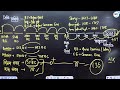
SSC History & GS Strategy: Understanding History, Sources, and Time Periods
This introductory lecture by Abhishek Suman covers the essential approach to SSC General Studies, focusing on History. It explains the difference between history and the past, primary sources like inscriptions and literary works, and the division of Indian history into Ancient, Medieval, and Modern periods. The session also clarifies time-based concepts such as BC/AD, Gregorian calendars, Vikram Samvat, and Shaka Samvat, which are crucial for competitive exams.
Medieval India Timeline & Map: From Ancient to Mughals (UPSC Prep)
In this comprehensive video, Aarti Chavri from UPSC Unstoppables masterfully guides you through the entire timeline of Medieval India using maps and chronological events. The session covers the crucial transition from Ancient India, through the Rajput era and the Delhi Sultanate, ending with the advent of the Mughals and Marathas, making the history of this period a "cakewalk" for beginners.
UPSC 2013: Previous Year Questions and Explanations
This video discusses the previous year UPSC questions from 2013, focusing on various topics including Indian history, culture, and significant events. The session provides detailed explanations and answers to each question, helping aspirants understand the concepts better.
Most viewed summaries

A Comprehensive Guide to Using Stable Diffusion Forge UI
Explore the Stable Diffusion Forge UI, customizable settings, models, and more to enhance your image generation experience.

Kolonyalismo at Imperyalismo: Ang Kasaysayan ng Pagsakop sa Pilipinas
Tuklasin ang kasaysayan ng kolonyalismo at imperyalismo sa Pilipinas sa pamamagitan ni Ferdinand Magellan.

Mastering Inpainting with Stable Diffusion: Fix Mistakes and Enhance Your Images
Learn to fix mistakes and enhance images with Stable Diffusion's inpainting features effectively.

Pamamaraan at Patakarang Kolonyal ng mga Espanyol sa Pilipinas
Tuklasin ang mga pamamaraan at patakaran ng mga Espanyol sa Pilipinas, at ang epekto nito sa mga Pilipino.

How to Install and Configure Forge: A New Stable Diffusion Web UI
Learn to install and configure the new Forge web UI for Stable Diffusion, with tips on models and settings.
Found this summary useful?
Take it with you. One click puts it in your own LunaNotes library.
Save to LunaNotes