Download Subtitles for Pauline Hanson vs Fatima Payman Iran Debate
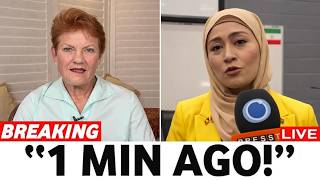
Greens STUNNED as Pauline Hanson SLAMS Fatima Payman’s ‘ignorant’ views on freedom in Iran
Australia Exposed
SRT - Most compatible format for video players (VLC, media players, video editors)
VTT - Web Video Text Tracks for HTML5 video and browsers
TXT - Plain text with timestamps for easy reading and editing
Scroll to view all subtitles
Let's go to Pauline Hanson now, the One
Nation founder and leader. She joins us
from Queensland. Thanks for joining us
again, Pauline.
Um
I just want to go to this issue,
actually, of dangerous ignorance. And uh
first up, uh your colleague in the
Senate, that is Fatima Payman, the
former Labor senator from Western
Australia, now a an independent. And
have a look at what she has said about
her former home of Iran.
credible place that Iran is,
um allowing for women to participate in
the workforce, to ensure that they have
a voice and their voices are heard,
they're involved in the democratic
process. Um reality that we're not privy
to living here and listening to the
propaganda that we receive from very
single-sided organizations with a
specific agenda.
How could she be so ignorant, especially
someone who came here as a refugee,
Pauline? And just how dangerous are
these views?
I think she is very ignorant in what
she's actually saying here. Um she has
come out from Afghanistan, my
understanding, Chris, because I
questioned about her citizenship and
whether she should be a member of
parliament, which they just um ignored
and no investigation into it at all.
My understanding of Iran is that it came
under this totalitarian Islamic regime
in about 1979.
Before then, it was basically more
freedom, democracy. But since being
taken over by this regime, it actually
suppresses women. My understanding of it
is not what Fatima Payman is saying.
It was about in 2022 that one woman who
didn't wear the the hijab, which is just
a She uncovered her head. She was taken
by the police. She was in uh loaded into
the back of the truck and she was
beaten. And witnesses say that her
injuries and reports from it were from
the beating that she received from the
police.
You don't see if tourists going there
lining up to go to Iran. I can't imagine
Western um women wanting to go there or
lie beside a pool with a bikini on. It
just wouldn't happen.
Women are suppressed. And when Fatima
Payman is talks on the floor of
parliament about domestic violence and
how women are treated and all the rest
of it, and yet she makes a statement
about women in Iran, I'm sorry, domestic
violence, women in Iran are controlled
by the men. They cannot be accompanied
unless there's a change, but my
understanding was women cannot walk
around by themselves without being
covered up. They have to be accompanied
by a male, usually, you know, if it's
child, the child has to be of teenage
years. And they lose all control over
the children once the children are
actually five or six. So, it's all given
control to the men and they suppress the
women, control the women. It is not
democratic for women at all. So, I don't
know where she's getting this from.
Yeah, you're right. I mean, it is just
uh you're right, sorry to correct me,
she was from Afghanistan. Her family
came out here as refugees from
Afghanistan. But what she's saying about
Iran is just so wrong and so dangerous.
Women are being arbitrarily arrested on
the streets and thrown into prison if
they're not wearing their hijab properly
and we've had them die in custody. It's
just a shocking situation for women in
Iran. And to pretend otherwise is
deeply, deeply dangerous and very
disappointing to hear that coming from
one of our senators. I want to go back
to domestic politics there very quickly,
Pauline. And uh this spend-a-thon we're
seeing from Labor, and when it comes to
Medicare, at least, and some of the
other issues so far, it's being matched
by the coalition.
We haven't got this money. We can't
afford this, but in an election
campaign, everybody's just throwing
money out the door.
It's the same old rhetoric, Chris, isn't
it, before every election? Throw money
here, throw money there, buying votes
and all the rest of it. At the end of
the day, future generations and this
generation is going to have to pay this
back. A trillion dollar in debt, that's
what we are. And next year, it's
expected we will we will be paying 50
billion a year just in interest alone.
How many hospitals can we build for
that? At least 10 hospitals. How many
how many schools?
Um it's just got to ridiculous.
Medicare, Chris, we actually uh
defrauded of about 3 billion dollars a
year. I'd actually clean up the fraud.
Then if you save yourself 3 billion a
year, then you can actually reinvest it
into giving people higher rebates
through the Medicare levy. But don't
actually then
um throw more money at it. Clean up the
bloody mess that we're in at the moment.
And you can't keep, you know, um funding
these things all the time because
where's money coming from? Both
governments need to pull their heads in,
get the country back on track, get
industry manufacturing jobs going,
productivity, get the GDP, you know, um
in a in a position where where
we can pay for the things. And we've got
to pay down debt. [clears throat]
Right, let's get into this, because what
we've just heard covers a mix of
international issues, domestic politics,
and a fair bit of controversy. And it's
exactly the kind of discussion that's
shaping political debate in Australia
right now.
So, first up, the comments around Iran,
particularly from Fatima Payman, and the
reaction from Pauline Hanson. This is
where things get quite serious, because
we're not just talking about political
opinions, we're talking about how a
country is being portrayed on the global
stage.
Now, the claim that Iran is some sort of
place where women are empowered and
fully participating in society, that's
obviously going to raise eyebrows.
Because when most Australians think
about Iran, they think about strict
laws, especially around women's rights,
dress codes like the hijab, and
well-documented cases of women being
punished for not complying with those
rules.
So, when a sitting Australian senator
appears to paint a more positive
picture, it creates a disconnect. People
start asking, is this accurate or is it
misleading? And more importantly, what
impact does that kind of statement have?
From Hanson's perspective, it's not just
inaccurate, she's framing it as
dangerous. And that word, dangerous, is
important, because it suggests that
these kinds of statements could
influence how Australians understand
global issues, particularly when it
comes from someone in a position of
authority.
Now, whether you agree with Hanson or
not, there's a broader point here about
responsibility.
Politicians aren't just speaking for
themselves, they're shaping public
perception. And when it comes to
international issues, especially ones
involving human rights, accuracy
matters.
At the same time, it's also worth
recognizing that discussions about
countries like Iran are often highly
politicized. Different people will have
very different interpretations depending
on their background, their experiences,
and the sources they rely on.
But again, that's why clarity is key,
because when there's confusion or
contradiction, it doesn't just create
debate, it creates mistrust.
Now, moving on from international issues
to domestic politics, this is where the
conversation shifts into something that
affects every Australian directly:
government spending, debt, and the
economy.
Hanson's criticism here is pretty
straightforward. She's essentially
saying that both major parties, Labor
and the coalition, fall into the same
pattern during election cycles. Big
promises, big spending, and not a lot of
discussion about how it's all going to
be paid for.
And to be fair, that's a criticism
that's been around for a long time in
Australian politics.
When elections come around, there's a
tendency for governments to announce new
funding, new programs, and new benefits.
It's about winning support, plain and
simple. But the flip side is the
long-term cost.
Australia's national debt has been a
growing concern, and the idea of paying
tens of billions of dollars a year just
in interest, that's something that gets
people's attention. Because that's money
that could be going into hospitals,
schools, infrastructure, things that
people actually see and use.
Instead, it's going towards servicing
debt.
And that's where the frustration comes
in, because for many Australians, it
feels like there's a disconnect between
political promises and economic reality.
Now, Hanson brings up Medicare as a
specific example. Instead of simply
pouring more money into the system,
she's arguing for cleaning up
inefficiencies, particularly fraud.
The figure she mentions, billions lost
each year, highlights a broader issue
within government systems. It's not just
about how much money is spent, it's
about how effectively it's used.
And that's a point that resonates with a
lot of voters. People don't necessarily
mind paying taxes if they feel the
system is working, but if they believe
money is being wasted or mismanaged,
that's when trust starts to break down.
Then there's the bigger economic
picture: productivity, industry, and
growth.
Hanson's argument is that Australia
needs to focus more on building its
economic base. Manufacturing, jobs, GDP
growth, these are the fundamentals that
support everything else.
Because without a strong economy, it
becomes very difficult to sustain social
programs, health care, and
infrastructure in the long term.
And again, this ties back to the idea of
sustainability.
Short-term spending might win votes, but
long-term economic stability is what
actually keeps the country running.
Now, one interesting thing about this
whole discussion is how it reflects a
broader shift in Australian politics.
There's a growing frustration with the
major parties, and more attention being
given to alternative voices like One
Nation.
Whether people agree with their policies
or not, the reason they're gaining
attention is because they're tapping
into that frustration, the feeling that
the system isn't working as well as it
should.
And that's something both major parties
are going to have to address moving
forward.
Because at the end of the day, voters
aren't just looking for promises,
they're looking for credibility.
They want to know that the policies
being proposed are not only appealing,
but also realistic.
They want transparency about costs,
about trade-offs, and about long-term
impacts.
And that's where a lot of the current
political debate is falling short.
Instead of clear, detailed discussions,
what we often get is back-and-forth
criticism, point scoring, and competing
narratives.
Now, that might make for good
television, but it doesn't always help
voters make informed decisions.
So, when you step back and look at
everything we've just discussed, from
international commentary to domestic
spending, there's a common thread
running through it all.
And that's trust.
Trust in politicians to provide accurate
information.
Trust in governments to manage money
responsibly.
And trust in the system to actually
deliver outcomes that improve people's
lives.
Right now, that trust is being tested.
And that's why debates like this, even
when they're heated or controversial,
are important.
Because they highlight the issues that
people care about, even if they don't
always provide clear answers.
So, moving forward, the challenge for
Australia isn't just about choosing
policies. It's about rebuilding
confidence in the way those policies are
developed, communicated, and
implemented.
Because without that confidence, even
the best ideas are going to struggle to
gain support.
Full transcript without timestamps
Let's go to Pauline Hanson now, the One Nation founder and leader. She joins us from Queensland. Thanks for joining us again, Pauline. Um I just want to go to this issue, actually, of dangerous ignorance. And uh first up, uh your colleague in the Senate, that is Fatima Payman, the former Labor senator from Western Australia, now a an independent. And have a look at what she has said about her former home of Iran. credible place that Iran is, um allowing for women to participate in the workforce, to ensure that they have a voice and their voices are heard, they're involved in the democratic process. Um reality that we're not privy to living here and listening to the propaganda that we receive from very single-sided organizations with a specific agenda. How could she be so ignorant, especially someone who came here as a refugee, Pauline? And just how dangerous are these views? I think she is very ignorant in what she's actually saying here. Um she has come out from Afghanistan, my understanding, Chris, because I questioned about her citizenship and whether she should be a member of parliament, which they just um ignored and no investigation into it at all. My understanding of Iran is that it came under this totalitarian Islamic regime in about 1979. Before then, it was basically more freedom, democracy. But since being taken over by this regime, it actually suppresses women. My understanding of it is not what Fatima Payman is saying. It was about in 2022 that one woman who didn't wear the the hijab, which is just a She uncovered her head. She was taken by the police. She was in uh loaded into the back of the truck and she was beaten. And witnesses say that her injuries and reports from it were from the beating that she received from the police. You don't see if tourists going there lining up to go to Iran. I can't imagine Western um women wanting to go there or lie beside a pool with a bikini on. It just wouldn't happen. Women are suppressed. And when Fatima Payman is talks on the floor of parliament about domestic violence and how women are treated and all the rest of it, and yet she makes a statement about women in Iran, I'm sorry, domestic violence, women in Iran are controlled by the men. They cannot be accompanied unless there's a change, but my understanding was women cannot walk around by themselves without being covered up. They have to be accompanied by a male, usually, you know, if it's child, the child has to be of teenage years. And they lose all control over the children once the children are actually five or six. So, it's all given control to the men and they suppress the women, control the women. It is not democratic for women at all. So, I don't know where she's getting this from. Yeah, you're right. I mean, it is just uh you're right, sorry to correct me, she was from Afghanistan. Her family came out here as refugees from Afghanistan. But what she's saying about Iran is just so wrong and so dangerous. Women are being arbitrarily arrested on the streets and thrown into prison if they're not wearing their hijab properly and we've had them die in custody. It's just a shocking situation for women in Iran. And to pretend otherwise is deeply, deeply dangerous and very disappointing to hear that coming from one of our senators. I want to go back to domestic politics there very quickly, Pauline. And uh this spend-a-thon we're seeing from Labor, and when it comes to Medicare, at least, and some of the other issues so far, it's being matched by the coalition. We haven't got this money. We can't afford this, but in an election campaign, everybody's just throwing money out the door. It's the same old rhetoric, Chris, isn't it, before every election? Throw money here, throw money there, buying votes and all the rest of it. At the end of the day, future generations and this generation is going to have to pay this back. A trillion dollar in debt, that's what we are. And next year, it's expected we will we will be paying 50 billion a year just in interest alone. How many hospitals can we build for that? At least 10 hospitals. How many how many schools? Um it's just got to ridiculous. Medicare, Chris, we actually uh defrauded of about 3 billion dollars a year. I'd actually clean up the fraud. Then if you save yourself 3 billion a year, then you can actually reinvest it into giving people higher rebates through the Medicare levy. But don't actually then um throw more money at it. Clean up the bloody mess that we're in at the moment. And you can't keep, you know, um funding these things all the time because where's money coming from? Both governments need to pull their heads in, get the country back on track, get industry manufacturing jobs going, productivity, get the GDP, you know, um in a in a position where where we can pay for the things. And we've got to pay down debt. [clears throat] Right, let's get into this, because what we've just heard covers a mix of international issues, domestic politics, and a fair bit of controversy. And it's exactly the kind of discussion that's shaping political debate in Australia right now. So, first up, the comments around Iran, particularly from Fatima Payman, and the reaction from Pauline Hanson. This is where things get quite serious, because we're not just talking about political opinions, we're talking about how a country is being portrayed on the global stage. Now, the claim that Iran is some sort of place where women are empowered and fully participating in society, that's obviously going to raise eyebrows. Because when most Australians think about Iran, they think about strict laws, especially around women's rights, dress codes like the hijab, and well-documented cases of women being punished for not complying with those rules. So, when a sitting Australian senator appears to paint a more positive picture, it creates a disconnect. People start asking, is this accurate or is it misleading? And more importantly, what impact does that kind of statement have? From Hanson's perspective, it's not just inaccurate, she's framing it as dangerous. And that word, dangerous, is important, because it suggests that these kinds of statements could influence how Australians understand global issues, particularly when it comes from someone in a position of authority. Now, whether you agree with Hanson or not, there's a broader point here about responsibility. Politicians aren't just speaking for themselves, they're shaping public perception. And when it comes to international issues, especially ones involving human rights, accuracy matters. At the same time, it's also worth recognizing that discussions about countries like Iran are often highly politicized. Different people will have very different interpretations depending on their background, their experiences, and the sources they rely on. But again, that's why clarity is key, because when there's confusion or contradiction, it doesn't just create debate, it creates mistrust. Now, moving on from international issues to domestic politics, this is where the conversation shifts into something that affects every Australian directly: government spending, debt, and the economy. Hanson's criticism here is pretty straightforward. She's essentially saying that both major parties, Labor and the coalition, fall into the same pattern during election cycles. Big promises, big spending, and not a lot of discussion about how it's all going to be paid for. And to be fair, that's a criticism that's been around for a long time in Australian politics. When elections come around, there's a tendency for governments to announce new funding, new programs, and new benefits. It's about winning support, plain and simple. But the flip side is the long-term cost. Australia's national debt has been a growing concern, and the idea of paying tens of billions of dollars a year just in interest, that's something that gets people's attention. Because that's money that could be going into hospitals, schools, infrastructure, things that people actually see and use. Instead, it's going towards servicing debt. And that's where the frustration comes in, because for many Australians, it feels like there's a disconnect between political promises and economic reality. Now, Hanson brings up Medicare as a specific example. Instead of simply pouring more money into the system, she's arguing for cleaning up inefficiencies, particularly fraud. The figure she mentions, billions lost each year, highlights a broader issue within government systems. It's not just about how much money is spent, it's about how effectively it's used. And that's a point that resonates with a lot of voters. People don't necessarily mind paying taxes if they feel the system is working, but if they believe money is being wasted or mismanaged, that's when trust starts to break down. Then there's the bigger economic picture: productivity, industry, and growth. Hanson's argument is that Australia needs to focus more on building its economic base. Manufacturing, jobs, GDP growth, these are the fundamentals that support everything else. Because without a strong economy, it becomes very difficult to sustain social programs, health care, and infrastructure in the long term. And again, this ties back to the idea of sustainability. Short-term spending might win votes, but long-term economic stability is what actually keeps the country running. Now, one interesting thing about this whole discussion is how it reflects a broader shift in Australian politics. There's a growing frustration with the major parties, and more attention being given to alternative voices like One Nation. Whether people agree with their policies or not, the reason they're gaining attention is because they're tapping into that frustration, the feeling that the system isn't working as well as it should. And that's something both major parties are going to have to address moving forward. Because at the end of the day, voters aren't just looking for promises, they're looking for credibility. They want to know that the policies being proposed are not only appealing, but also realistic. They want transparency about costs, about trade-offs, and about long-term impacts. And that's where a lot of the current political debate is falling short. Instead of clear, detailed discussions, what we often get is back-and-forth criticism, point scoring, and competing narratives. Now, that might make for good television, but it doesn't always help voters make informed decisions. So, when you step back and look at everything we've just discussed, from international commentary to domestic spending, there's a common thread running through it all. And that's trust. Trust in politicians to provide accurate information. Trust in governments to manage money responsibly. And trust in the system to actually deliver outcomes that improve people's lives. Right now, that trust is being tested. And that's why debates like this, even when they're heated or controversial, are important. Because they highlight the issues that people care about, even if they don't always provide clear answers. So, moving forward, the challenge for Australia isn't just about choosing policies. It's about rebuilding confidence in the way those policies are developed, communicated, and implemented. Because without that confidence, even the best ideas are going to struggle to gain support.
Keep this transcript
Save it to LunaNotes and it becomes a real note in your library — editable, searchable, and ready to turn into flashcards or a diagram. Free to start.
Save to LunaNotesOr download subtitles for another video.
These subtitles were extracted using the Free YouTube subtitle downloader by LunaNotes.
Related videos
Download Subtitles for U.S.-Iran Crisis 2026 Insights
Access accurate and timely subtitles for the video "U.S.-Iran Crisis 2026" to better understand the intricate backgrounds, strategic balance, and potential escalation risks discussed. Downloading these captions ensures clear comprehension and enhanced engagement with the critical geopolitical analysis presented.

Download Subtitles for Top 10 Most Heated Debates of 2025
Access accurate subtitles for the 'Top 10 Most Heated Debates of 2025' video and enhance your viewing experience. Downloading captions helps you follow every argument clearly, improves accessibility, and supports better comprehension of key discussion points.
Download Subtitles for Portland Continues to Fall - ANTIFA Video
Easily download accurate subtitles for the video 'Portland Continues to Fall... ANTIFA is Dismantled.' Enhance your understanding and accessibility by accessing clear captions, perfect for all viewers. Stay informed with precise and timely subtitles.

Download Subtitles for First People to Enter Hellfire | Islamic Reminder
Access accurate and easy-to-read subtitles for the inspiring Islamic reminder video "First People to Enter Hellfire" by Oemar Mita. Enhance your understanding and reflection by downloading captions that help grasp the powerful message effectively.

Download Subtitles for The US and Israel Attack Iran Video
Access accurate subtitles for the BBC News video covering the US and Israel's attack on Iran. Enhance your understanding and follow the detailed news coverage with ease by downloading captions in multiple languages.
Most viewed

Untertitel für 'Nicos Weg' Deutsch lernen A1 Film herunterladen
Laden Sie die Untertitel für den gesamten Film 'Nicos Weg' herunter, um Ihr Deutschlernen auf A1 Niveau zu unterstützen. Untertitel helfen Ihnen, Wortschatz und Aussprache besser zu verstehen und verbessern das Hörverständnis effektiv.

ดาวน์โหลดซับไตเติ้ล DMD LAND 3 The Final Land Day 1
ดาวน์โหลดซับไตเติ้ลสำหรับวิดีโอ DMD LAND 3 The Final Land Day 1 เพื่อช่วยให้เข้าใจเนื้อหาได้ง่ายขึ้น และเพิ่มความสะดวกในการติดตามทุกช่วงเวลา เหมาะสำหรับผู้ชมที่ต้องการความชัดเจนและเข้าถึงข้อมูลอย่างครบถ้วน

Subtítulos para TIPOS DE APEGO | 6 DE COPAS Episodio 56
Descarga los subtítulos para el episodio 56 de la tercera temporada de 6 DE COPAS, centrado en los tipos de apego. Mejora tu comprensión y disfruta del contenido en detalle con nuestros subtítulos precisos y accesibles.

Download Subtitles for Harvard CS50 2026 Computer Science Course
Enhance your learning experience with downloadable subtitles for the Harvard CS50 2026 full computer science course. Easily follow along with lectures, improve comprehension, and access the content offline anytime. Perfect for students and enthusiasts aiming to master computer science concepts.

Descarga Subtítulos para NARCISISMO | 6 DE COPAS - Episodio 63
Accede fácilmente a los subtítulos del episodio 63 de '6 DE COPAS', centrado en el narcisismo. Descargar estos subtítulos te ayudará a entender mejor el contenido y mejorar la experiencia de visualización.
Found this transcript useful?
Take it with you. One click puts it in your own LunaNotes library.
Save to LunaNotes