Download Subtitles for U.S.-Iran Crisis 2026 Insights
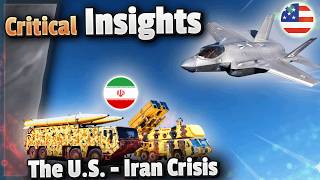
U.S.-Iran Crisis 2026: The untold backgrounds, the real strategic balance and escalation risks
Deep Dive Defense
SRT - Most compatible format for video players (VLC, media players, video editors)
VTT - Web Video Text Tracks for HTML5 video and browsers
TXT - Plain text with timestamps for easy reading and editing
Scroll to view all subtitles
In this video, we will analyze the
ongoing crisis between Iran and the
United States of America as massive
scale disinformation and misconceptions
[music]
continue to circulate in the public
sphere. This video aims to narrate the
true strategic situation and balance
between these two countries, looking
well beyond the mainstream media reports
from both sides, which are designed to
create a narrative favorable [music] to
them for public consumption, not a
realist assessment of the situation.
Like and subscribe if you want to
support the channel in the algorithm.
Now, let's start. The foundation of this
analysis rests on reports from both
Israel and [music] the United States
indicating that the key goals they
pursued during their attack on Iran in
the summer 2025 [music]
12-day conflict were not achieved.
Both Iran's ballistic missile program
and its nuclear capability remain the
central issues these states have with
Iran. It can therefore be stated that
the Trump administration provided Israel
with an opportunity [music] to achieve
its desired outcome through military
means, an attempt which ultimately
failed in that regard.
Now, roughly 6 months after that
engagement, another crisis has emerged
with Iran's missile and nuclear
capabilities being the key pillars of
this current crisis, just as they were
in the previous one.
A crucial reality here is that with the
exception of the limited scope US
midnight hammer operation during that
conflict, it was fundamentally an
Israeli attempt to achieve its
objectives by force. The United States
did provide support by all available
non-kinetic means. But even at that
time, Trump refrained from participating
[music]
directly in the kinetic attack on wide
scale. An attack which caught Iran by
surprise [music] and would have
represented an ideal opportunity to
overwhelm Iran if such a combined
capability from both countries, [music]
Israel and the United States, had
existed and materialized.
At this point, we must recognize a key
reality of global power dynamics.
Interactions between major powers such
as the US and Iran do not permit lies
and tricks to secure the advantage of
the element of surprise. During the
12-day conflict, Trump had warned Iran
of a 60-day ultimatum within which he
allegedly could restrain Israel from
attacking and proceed with negotiations
on the nuclear issue. The Israeli attack
on June 13th fell a day beyond that
60-day [music] limit, providing Trump
with the legitimization that the Israeli
action was beyond [music] his control.
Back then, Iran did not find this threat
credible given its irrationality [music]
in terms of potential outcomes. However,
when the attack occurred and
negotiations with [music] the US
collapsed, Iran was not truly deceived
by Trump due to his prior warnings
regarding crossing Israel's 60-day
deadline.
Why is this point important? Because the
current crisis and the deployment of US
military forces in the region would be
perfectly explainable by a US desire to
renew and revive the negotiations that
collapsed [music] due to the Israeli
surprise attack.
The notion of negotiations being
restarted to conduct another surprise
attack by directly and formally
deceiving Iran is not something major
powers like the two involved countries
would do. Such actions [music] would
leave no viable diplomatic exit strategy
should the situation go out of control,
which is easily [music] possible when
confronting a major military power like
Iran.
To illustrate the personal feelings of
United States President [music] Trump
near the end of the 12-day war, we can
look to a short clip in which he is
[music] actually visibly frustrated with
Israel and the war it initiated.
>> That Iran violated the peace agreement
and the ceasefire agreement. Do you
believe that Iran is still committed to
peace?
>> Yeah, I do. They violated, but Israel
violated it, too.
>> Are you questioning if Israel a
>> Israel? As soon as we made the deal,
they came out and they dropped a load of
bombs the likes of which I've never seen
before. The biggest load that we've
seen, I'm not happy with Israel. You
know, when when I say, "Okay, now you
have 12 hours." You don't go out in the
first hour and just drop everything you
have on them. So, I'm not happy with
them. I'm not happy with Iran either.
But I'm really unhappy if Israel is
going out this morning because the one
rocket that didn't land that was shot
perhaps by mistake that didn't land. I'm
not happy about that.
You know what we have? We basically have
two countries that have been fighting so
long and so hard that they don't know
what the they're doing. Do you
understand that?
>> The sequence of events, Iran striking
the main United States Middle East base,
followed by Israel [music] then asking
him to arrange a ceasefire with Iran,
resulted in outcomes that were quite
unfavorable for Trump.
Generally, the creation of a credible
military [music] threat is a standard
measure to improve one's negotiating
position. Now, here lies a key point in
this [music] analysis.
That same creation of a credible
military threat [music] is also desired
by Iran. Indeed, by late 2025, Israeli
sources reported on [music] several
instances their concerns that a surprise
strike was being planned by Iran. The
summer 12-day conflict concluded with a
ceasefire. meaning hostilities could
actually reerupt at any point. With
Israel being the declared and clear
aggressor and initiator of that
conflict, Iran can insist on reserving
its right to retaliate to avenge the
damage it suffered. The truth is that
Iran's ballistic missiles, its key
military tool when facing an air
powercentric force like Israel, would
provide its greatest effect and
advantage if Iran were the attacker
instead of the attacked. Only under
surprise conditions would Iran's
ballistic missiles with their
approximately 7 [music] minute flight
time for types like the KBAR Shikan 2
create a sufficiently short reaction
window [music] for successfully striking
Israel's air power assets, meaning
neutralizing the aircraft that would
otherwise be utilized to fly a
retaliation strike against Iran's
missile forces.
During the 12-day war, Iran lacked this
advantage of surprise. The subsequent
dispersion and regular relocation of
Israeli aircraft would not allow Iran to
effectively degrade [music] their
operational capacity anymore. Hence,
during this December and January, Iran's
missile deployments and tests about
which almost nothing is publicly [music]
known were detected by US and Israeli
intelligence, raising concerns about an
impending [music] Iranian strike.
At this point, we must address another
key dynamic.
Prior to the 12-day summer conflict,
[music] with international nuclear
inspectors still safeguarding and
tracking Iran's stockpile of 60%
highlyenriched uranium, Iran held the
status of a latent nuclear power.
This meant the United States and Israel
had a small time window [music] during
which they could confidently state that
Iran had not yet broken out to become a
nuclear capable state. This situation
has now changed and was precisely one
key reason why Iran regarded any attack
by Israel as irrational [music] and
unlikely. The situation Iran faces today
is that the 440 kg of 60% enriched
uranium are not only not safeguarded
[music] by any inspectors, but their
whereabouts cannot feasibly be known by
the United States and Israel.
It is suspected to have been stored at
the deep tunnel complex at the Isvahan
uranium conversion facility during the
conflict. Just days after the United
States [music] attacked the tunnel
entrances by Tomahawk cruise missiles,
one entrance was already cleared and
reopened.
Despite contrary [music] statements from
Trump on Iran's access to the material,
that reopening was the point when Iran
transformed from a latent [music]
nuclear power to an ambiguous nuclear
power.
The reason for this change is simple.
Iran's nuclear weapon research and
development, [music] which had created
an advanced nuclear implosion device by
the mid 2000s via the Ahmad program and
has almost certainly been developed and
advanced ever since, was only dependent
on a single element to create
operational nuclear warheads, namely
highlyenriched uranium formed into two
small hemispherical metal shells.
Therefore, it was only dependent on a
material [music] that was previously
safeguarded by international nuclear
inspectors, but is not anymore.
A key fact largely unknown to the public
is that this material at its enrichment
state of 60% instead of the common 90%
is already sufficient [music] to work
equally well in a nuclear weapon design
that has been slightly altered for that
60% enrichment level.
This is an open secret. It is also an
open secret that an advanced country
like Iran, which institutes regularly
publish open-source [music]
papers on thermonuclear research and
simulation, would not simply use the
[music] 440 kg of that weaponizable
uranium to create simple 20 kiloton
explosive yield range fision weapons.
Rather, [music] it would opt to create
very low yield weapons which use a small
amount, just several kilograms of that
60% material to then be used as
primaries, [music]
meaning the igniters for a thermonuclear
weapon with three-digit kiloton
explosive yields.
This fact dramatically changes Iran's
ambiguous nuclear capacity and amplifies
the irrationality of putting Iran into
this position through the military
action of Israel in the 12-day conflict.
Namely, as pure fision weapons, this
material would be sufficient for around
20 nuclear warheads.
However, if used as the mentioned
primaries for thermonuclear weapons,
that 440 kg of highlyenriched uranium
would be sufficient for more than 100
high yield thermonuclear warheads. This
means it would instantly create a
serious nuclear arsenal for Iran,
establishing deterrence dynamics of
[music] mutual assured destruction
against any global power, including the
United States.
Knowing that Iran currently holds this
ambiguous status, we return to the
Israeli fears of an Iranian surprise
retaliation attack. As a latent nuclear
power before the 12-day conflict, any
massive and sudden strike by Iran
against Israel and its main conventional
military mean, namely [music] its air
force, could have resulted in a nuclear
retaliation against Iran. With its air
force largely neutralized, Israel would
be in a situation of existential [music]
threat and fear. From Israel's
perspective, such a situation could
justify a nuclear retaliation against a
[music] non-nuclear nation for the first
time since the Second World War.
Consequently, such a strike was not a
viable option for [music] Iran. What
Iran could do was react proportionally
to Israeli strikes and not exceed that
level. To prevent an Israeli
overreaction [music] via a nuclear
strike, we must dismiss misconceptions
of US capabilities like tracking the 440
kg of weaponizable uranium, which could
fit into a pickup truck, by means such
as continuous all-time space
surveillance coupled with kinetic
weapons like some space-based asset that
would [music] instantly hit that pickup
truck the moment it emerges from a
tunnel at any point in time.
When such myths are put aside, the
reality is that Iran is currently an
ambiguous nuclear power with a serious
arsenal of warheads or no warheads at
all since [music] its opponents have no
means to know that.
The possible existence of this arsenal
deters any Israeli unilateral nuclear
strike against Iran and theoretically
enables Iran to execute a massive sudden
strike with any missile maneuver or
launcher positioning [music] it conducts
requiring only the launch order this
time instead of the missiles moving back
to their tunnel [music]
missile city complexes.
Now with these facts established we can
return to the current crisis. It is of
the greatest interest to [music] the
United States and Israel to remove
Iran's 440 kg stockpile of weaponizable
uranium. This action is necessary not
only to return Iran to the status of a
latent nuclear power instead of an
ambiguous one, but also to avoid this
case becoming a precedent for global
nuclear proliferation and a pathway for
other non-uclear countries to become
nuclear weapons states.
This reality places time pressure on the
US side to resolve this issue as soon as
possible.
Israel on the other side is facing
another kind of dilemma. The summer 2025
strikes were not sufficient to stop
Iran's massive ballistic missile
production quantities.
Already 6 months after the strikes,
important production sites like Shahude
were reconstructed [music]
and likely back to producing solid
propellant missiles. Furthermore, even
that time-limited impact on Iran's
production may have been compensated for
by the accelerating ongoing production
of liquid propellant [music] missiles.
Liquid propellant missiles, contrary to
Iran's solid propellant ones, were not
primary targets of the attack, [music]
as their production lines are situated
mainly inside mountain tunnel complexes
and are too hardened to be effectively
[music] attacked by Israel's
conventional means.
However, there is another reason for
this dilemma.
While Iran has quickly recovered its
[music] missile production according to
Israeli sources, the same is not true
for Israel's ballistic missile [music]
defense interceptors.
Be it their own systems like the Aero3
or US systems like the THAD and SM3,
the complexity of these interceptors
means their production cycles are
timeconuming and production cannot be
feasibly ramped up in significant ways.
Hence, the situation now created for
Israel is that it is less capable of
defending itself than during the summer
conflict.
Iran, on the other hand, is likely to
have already replaced the approximately
500 missiles expended in that conflict.
Additionally, Israel made use of its
high-end standoff attack weapons such as
the Golden Horizon, which it possesses
only in limited quantities and which are
again so complex [music] that their
production cycles take a long time.
Therefore, the position Israel now finds
itself [music] in roughly 6 months after
the conflict combined with Iran's
nuclear ambiguity status means that Iran
can hold Israel effectively [music] at
risk. essentially acting as a bargaining
chip against Trump during negotiations.
Excessive demands in the media like
Trump requiring Iran to limit its
ballistic [music] missiles in range and
quantity as well as to stop supporting
its allies in the region are hence not
only unrealistic but exists solely to
create the public impression of a
superior [music] US negotiating
position.
This is amplified by Trump's recent
statements in which he carefully speaks
only of his goal [music] to remove
Iran's nuclear weapon capability, not
even mentioning uranium enrichment like
before and certainly [music] not the
missile and regional support conditions.
A logical outcome [music] given that the
military option was already applied last
summer and has lost its effect.
While the big picture can only be
deduced indirectly, it rather seems
likely that Iran is on the initiative
here. Recent Trump threats during the
unrest in Iran in January 2026 in which
he set red lines for Iran not to kill
anyone involved were directly crossed by
Iran with several thousand killed in
those unrests.
The so-called madman playbook Trump
applies would usually dictate that one
should not challenge him in a
faceelucing way by crossing his red
lines. This is because the unpredictably
impression he makes on the world stage
is essential to his madman's strategy.
It has great effect on minor powers and
nations.
Iran's very vivid crossing of those red
lines is hence [music] a direct
challenge. Its threat to strike Israel
in retaliation on a significant scale is
hence the reason this new drive by the
United States [music] and its allies in
the region for negotiations has emerged.
Iran has left Trump a face-saving exit
[music] path regarding that red line it
crossed by promising something it has
not even done yet. Namely, stopping a
Trump alleged mass [music] execution of
more than 800 people arrested during the
unrest.
One point must not be misunderstood. The
unrests were one of the key high value
assets for Trump and Israel. During the
12-day conflict, Israel attempted to
ignite this strategic scale asset in
order to challenge Iran on the ground
internally instead of just from the air.
The most famous attempt to spark the
unrests during the summer conflict was
the strike on Iran's important Evan
prison entrance to set the [music]
prisoners there free. However, Iran's
security measures resulted in a failure
to ignite widespread unrests at that
time.
In January, Trump also attempted to
ignite this unrest asset by expressing
his commitment [music] to directly
intervene militarily. The failure of
this activated asset to result in a
significant degradation of Iran's
internal stability means that it is now
effectively a burnt asset, an asset
[music] in which the United States and
Israeli intelligence services had
invested a considerable amount of effort
over a long period of time.
The military [music] force deployments
and big public statements concerning a
single US aircraft carrier group moving
towards Iran are hence just part of the
toolkit necessary to start negotiations
together with a credible military
threat. And Iran is doing the same
posturing with missile launcher
deployments [music] and maneuvers that
raise concerns in Israel about whether
Iran will strike or not.
Just as Trump was unwilling to
participate on a greater military scale
against Iran during the 12-day conflict,
despite Israel making big claims that it
had destroyed Iran's air defenses
[music]
and trying to incentivize Trump to take
larger scale action. Even back in those
days, he had been briefed by his
intelligence [music] services that a war
with Iran would not be strategically
beneficial and ultimately not feasible
given its anticipated outcomes and exit
strategies.
And 6 months later, Trump is even less
likely to take such a risk against a now
ambiguous nuclear power, Iran. With a
defensively and offensively more
exhausted Israel as the ally,
the current power balance is so obvious
that all regional countries except for
Jordan are not merely not in favor of a
US strike, [music]
but have been denying any use of US
bases and their airspace in the case of
a US attack.
This all paints [music] a picture in
which Trump is not the one in the
superior position deciding whether to
strike or not, but rather a situation in
which the military option on the table
has been tried and failed.
Hence, a negotiated deal to get Iran out
of the ambiguous nuclear power status
[music] that the 12-day conflict
produced is now a primary goal for both
Trump and Israel.
In that context, [music]
the maximalist demands presented by
Israel are rather intended for the
audiences they are intended for, not for
the actual decision makers. And in fact,
following Iran's military posturing,
indicating a impending massive
retaliation attack, Israel is reported
to have contacted Russia's President
Putin to inform that it does not intend
any military confrontation with Iran.
Furthermore, during the several weeks of
unrest, Israel was remarkably quiet
about the events, [music] indicating its
deescalatory intentions and concerns. At
this time, renewed negotiations are
planned by Iran and the US side. The
shot down of an Iranian Shahed 129
surveillance drone performing real-time
position tracking of a US aircraft
carrier shows that the situation is
tense. The US side is aware that the
Shahed 129 patrol missions [music] are
the first element of the kill chain Iran
has continuously ready to fire with
anti-ship [music] ballistic missiles
like the secretive sigil 2 ASBM
modification [music] at the end of the
kill chain. 2 days prior to the
negotiations a remarkable event occurred
which [music] served as a good indirect
indication of the balance of leverage
each side holds at this point.
The United States side, utilizing the
hawkish public image of Foreign [music]
Minister Rubio, demanded the talks go
beyond the uranium enrichment topic
[music] and include countries like the
United Arab Emirates joining the
negotiations, which were to take place
in Istanbul, Turkey. Iran, however,
demanded the talks be merely a
continuation of the bilateral format in
Oman that was disrupted by the 12-day
conflict. According to Axios, the United
States [music] side said, "Either our
demand or nothing." To which the
Iranians replied with a laconic, "then
it is nothing." After Iran called the
bluff, the United States side
backtracked and accepted Iran's demands.
In conclusion, it can be said that a
deal regarding Iran's nuclear
capabilities is a much more likely
outcome of this current crisis than any
military action.
The only other feasible outcome would be
for the United States side to intend
[music] a very limited strike campaign
against Iran, an option that is almost
fully deterred by the resulting
certainty [music] of Iran targeting
vulnerable Israel on a significant
scale. The successful [music] US
operation to capture Venezuela's
President Maduro will not intimidate
major players with military potentials
like Iran, [music] Russia, or China into
making concessions out of fear of US
intervention.
Quite to the contrary, recent [music]
events such as Trump's failure to
support the unrest in Iran by military
means despite his promises by words to
the rioters will result in a moment of
consciousness for Iran's opposition and
anti-government sentiments.
They will realize that the myth of
unlimited US military power and its
willingness to act mercifully in support
of human rights or democratic movements
is just that, a myth incompatible with
political realism and national interest.
So that's all for today. If you liked
it, give a thumbs up, comment, and
subscribe. It really makes a difference
in the YouTube algorithm and is a great
support to the channel. The real
enthusiast can become members and given
access to exciting membership area
material. Thanks for your support and
motivation.
Full transcript without timestamps
In this video, we will analyze the ongoing crisis between Iran and the United States of America as massive scale disinformation and misconceptions [music] continue to circulate in the public sphere. This video aims to narrate the true strategic situation and balance between these two countries, looking well beyond the mainstream media reports from both sides, which are designed to create a narrative favorable [music] to them for public consumption, not a realist assessment of the situation. Like and subscribe if you want to support the channel in the algorithm. Now, let's start. The foundation of this analysis rests on reports from both Israel and [music] the United States indicating that the key goals they pursued during their attack on Iran in the summer 2025 [music] 12-day conflict were not achieved. Both Iran's ballistic missile program and its nuclear capability remain the central issues these states have with Iran. It can therefore be stated that the Trump administration provided Israel with an opportunity [music] to achieve its desired outcome through military means, an attempt which ultimately failed in that regard. Now, roughly 6 months after that engagement, another crisis has emerged with Iran's missile and nuclear capabilities being the key pillars of this current crisis, just as they were in the previous one. A crucial reality here is that with the exception of the limited scope US midnight hammer operation during that conflict, it was fundamentally an Israeli attempt to achieve its objectives by force. The United States did provide support by all available non-kinetic means. But even at that time, Trump refrained from participating [music] directly in the kinetic attack on wide scale. An attack which caught Iran by surprise [music] and would have represented an ideal opportunity to overwhelm Iran if such a combined capability from both countries, [music] Israel and the United States, had existed and materialized. At this point, we must recognize a key reality of global power dynamics. Interactions between major powers such as the US and Iran do not permit lies and tricks to secure the advantage of the element of surprise. During the 12-day conflict, Trump had warned Iran of a 60-day ultimatum within which he allegedly could restrain Israel from attacking and proceed with negotiations on the nuclear issue. The Israeli attack on June 13th fell a day beyond that 60-day [music] limit, providing Trump with the legitimization that the Israeli action was beyond [music] his control. Back then, Iran did not find this threat credible given its irrationality [music] in terms of potential outcomes. However, when the attack occurred and negotiations with [music] the US collapsed, Iran was not truly deceived by Trump due to his prior warnings regarding crossing Israel's 60-day deadline. Why is this point important? Because the current crisis and the deployment of US military forces in the region would be perfectly explainable by a US desire to renew and revive the negotiations that collapsed [music] due to the Israeli surprise attack. The notion of negotiations being restarted to conduct another surprise attack by directly and formally deceiving Iran is not something major powers like the two involved countries would do. Such actions [music] would leave no viable diplomatic exit strategy should the situation go out of control, which is easily [music] possible when confronting a major military power like Iran. To illustrate the personal feelings of United States President [music] Trump near the end of the 12-day war, we can look to a short clip in which he is [music] actually visibly frustrated with Israel and the war it initiated. >> That Iran violated the peace agreement and the ceasefire agreement. Do you believe that Iran is still committed to peace? >> Yeah, I do. They violated, but Israel violated it, too. >> Are you questioning if Israel a >> Israel? As soon as we made the deal, they came out and they dropped a load of bombs the likes of which I've never seen before. The biggest load that we've seen, I'm not happy with Israel. You know, when when I say, "Okay, now you have 12 hours." You don't go out in the first hour and just drop everything you have on them. So, I'm not happy with them. I'm not happy with Iran either. But I'm really unhappy if Israel is going out this morning because the one rocket that didn't land that was shot perhaps by mistake that didn't land. I'm not happy about that. You know what we have? We basically have two countries that have been fighting so long and so hard that they don't know what the they're doing. Do you understand that? >> The sequence of events, Iran striking the main United States Middle East base, followed by Israel [music] then asking him to arrange a ceasefire with Iran, resulted in outcomes that were quite unfavorable for Trump. Generally, the creation of a credible military [music] threat is a standard measure to improve one's negotiating position. Now, here lies a key point in this [music] analysis. That same creation of a credible military threat [music] is also desired by Iran. Indeed, by late 2025, Israeli sources reported on [music] several instances their concerns that a surprise strike was being planned by Iran. The summer 12-day conflict concluded with a ceasefire. meaning hostilities could actually reerupt at any point. With Israel being the declared and clear aggressor and initiator of that conflict, Iran can insist on reserving its right to retaliate to avenge the damage it suffered. The truth is that Iran's ballistic missiles, its key military tool when facing an air powercentric force like Israel, would provide its greatest effect and advantage if Iran were the attacker instead of the attacked. Only under surprise conditions would Iran's ballistic missiles with their approximately 7 [music] minute flight time for types like the KBAR Shikan 2 create a sufficiently short reaction window [music] for successfully striking Israel's air power assets, meaning neutralizing the aircraft that would otherwise be utilized to fly a retaliation strike against Iran's missile forces. During the 12-day war, Iran lacked this advantage of surprise. The subsequent dispersion and regular relocation of Israeli aircraft would not allow Iran to effectively degrade [music] their operational capacity anymore. Hence, during this December and January, Iran's missile deployments and tests about which almost nothing is publicly [music] known were detected by US and Israeli intelligence, raising concerns about an impending [music] Iranian strike. At this point, we must address another key dynamic. Prior to the 12-day summer conflict, [music] with international nuclear inspectors still safeguarding and tracking Iran's stockpile of 60% highlyenriched uranium, Iran held the status of a latent nuclear power. This meant the United States and Israel had a small time window [music] during which they could confidently state that Iran had not yet broken out to become a nuclear capable state. This situation has now changed and was precisely one key reason why Iran regarded any attack by Israel as irrational [music] and unlikely. The situation Iran faces today is that the 440 kg of 60% enriched uranium are not only not safeguarded [music] by any inspectors, but their whereabouts cannot feasibly be known by the United States and Israel. It is suspected to have been stored at the deep tunnel complex at the Isvahan uranium conversion facility during the conflict. Just days after the United States [music] attacked the tunnel entrances by Tomahawk cruise missiles, one entrance was already cleared and reopened. Despite contrary [music] statements from Trump on Iran's access to the material, that reopening was the point when Iran transformed from a latent [music] nuclear power to an ambiguous nuclear power. The reason for this change is simple. Iran's nuclear weapon research and development, [music] which had created an advanced nuclear implosion device by the mid 2000s via the Ahmad program and has almost certainly been developed and advanced ever since, was only dependent on a single element to create operational nuclear warheads, namely highlyenriched uranium formed into two small hemispherical metal shells. Therefore, it was only dependent on a material [music] that was previously safeguarded by international nuclear inspectors, but is not anymore. A key fact largely unknown to the public is that this material at its enrichment state of 60% instead of the common 90% is already sufficient [music] to work equally well in a nuclear weapon design that has been slightly altered for that 60% enrichment level. This is an open secret. It is also an open secret that an advanced country like Iran, which institutes regularly publish open-source [music] papers on thermonuclear research and simulation, would not simply use the [music] 440 kg of that weaponizable uranium to create simple 20 kiloton explosive yield range fision weapons. Rather, [music] it would opt to create very low yield weapons which use a small amount, just several kilograms of that 60% material to then be used as primaries, [music] meaning the igniters for a thermonuclear weapon with three-digit kiloton explosive yields. This fact dramatically changes Iran's ambiguous nuclear capacity and amplifies the irrationality of putting Iran into this position through the military action of Israel in the 12-day conflict. Namely, as pure fision weapons, this material would be sufficient for around 20 nuclear warheads. However, if used as the mentioned primaries for thermonuclear weapons, that 440 kg of highlyenriched uranium would be sufficient for more than 100 high yield thermonuclear warheads. This means it would instantly create a serious nuclear arsenal for Iran, establishing deterrence dynamics of [music] mutual assured destruction against any global power, including the United States. Knowing that Iran currently holds this ambiguous status, we return to the Israeli fears of an Iranian surprise retaliation attack. As a latent nuclear power before the 12-day conflict, any massive and sudden strike by Iran against Israel and its main conventional military mean, namely [music] its air force, could have resulted in a nuclear retaliation against Iran. With its air force largely neutralized, Israel would be in a situation of existential [music] threat and fear. From Israel's perspective, such a situation could justify a nuclear retaliation against a [music] non-nuclear nation for the first time since the Second World War. Consequently, such a strike was not a viable option for [music] Iran. What Iran could do was react proportionally to Israeli strikes and not exceed that level. To prevent an Israeli overreaction [music] via a nuclear strike, we must dismiss misconceptions of US capabilities like tracking the 440 kg of weaponizable uranium, which could fit into a pickup truck, by means such as continuous all-time space surveillance coupled with kinetic weapons like some space-based asset that would [music] instantly hit that pickup truck the moment it emerges from a tunnel at any point in time. When such myths are put aside, the reality is that Iran is currently an ambiguous nuclear power with a serious arsenal of warheads or no warheads at all since [music] its opponents have no means to know that. The possible existence of this arsenal deters any Israeli unilateral nuclear strike against Iran and theoretically enables Iran to execute a massive sudden strike with any missile maneuver or launcher positioning [music] it conducts requiring only the launch order this time instead of the missiles moving back to their tunnel [music] missile city complexes. Now with these facts established we can return to the current crisis. It is of the greatest interest to [music] the United States and Israel to remove Iran's 440 kg stockpile of weaponizable uranium. This action is necessary not only to return Iran to the status of a latent nuclear power instead of an ambiguous one, but also to avoid this case becoming a precedent for global nuclear proliferation and a pathway for other non-uclear countries to become nuclear weapons states. This reality places time pressure on the US side to resolve this issue as soon as possible. Israel on the other side is facing another kind of dilemma. The summer 2025 strikes were not sufficient to stop Iran's massive ballistic missile production quantities. Already 6 months after the strikes, important production sites like Shahude were reconstructed [music] and likely back to producing solid propellant missiles. Furthermore, even that time-limited impact on Iran's production may have been compensated for by the accelerating ongoing production of liquid propellant [music] missiles. Liquid propellant missiles, contrary to Iran's solid propellant ones, were not primary targets of the attack, [music] as their production lines are situated mainly inside mountain tunnel complexes and are too hardened to be effectively [music] attacked by Israel's conventional means. However, there is another reason for this dilemma. While Iran has quickly recovered its [music] missile production according to Israeli sources, the same is not true for Israel's ballistic missile [music] defense interceptors. Be it their own systems like the Aero3 or US systems like the THAD and SM3, the complexity of these interceptors means their production cycles are timeconuming and production cannot be feasibly ramped up in significant ways. Hence, the situation now created for Israel is that it is less capable of defending itself than during the summer conflict. Iran, on the other hand, is likely to have already replaced the approximately 500 missiles expended in that conflict. Additionally, Israel made use of its high-end standoff attack weapons such as the Golden Horizon, which it possesses only in limited quantities and which are again so complex [music] that their production cycles take a long time. Therefore, the position Israel now finds itself [music] in roughly 6 months after the conflict combined with Iran's nuclear ambiguity status means that Iran can hold Israel effectively [music] at risk. essentially acting as a bargaining chip against Trump during negotiations. Excessive demands in the media like Trump requiring Iran to limit its ballistic [music] missiles in range and quantity as well as to stop supporting its allies in the region are hence not only unrealistic but exists solely to create the public impression of a superior [music] US negotiating position. This is amplified by Trump's recent statements in which he carefully speaks only of his goal [music] to remove Iran's nuclear weapon capability, not even mentioning uranium enrichment like before and certainly [music] not the missile and regional support conditions. A logical outcome [music] given that the military option was already applied last summer and has lost its effect. While the big picture can only be deduced indirectly, it rather seems likely that Iran is on the initiative here. Recent Trump threats during the unrest in Iran in January 2026 in which he set red lines for Iran not to kill anyone involved were directly crossed by Iran with several thousand killed in those unrests. The so-called madman playbook Trump applies would usually dictate that one should not challenge him in a faceelucing way by crossing his red lines. This is because the unpredictably impression he makes on the world stage is essential to his madman's strategy. It has great effect on minor powers and nations. Iran's very vivid crossing of those red lines is hence [music] a direct challenge. Its threat to strike Israel in retaliation on a significant scale is hence the reason this new drive by the United States [music] and its allies in the region for negotiations has emerged. Iran has left Trump a face-saving exit [music] path regarding that red line it crossed by promising something it has not even done yet. Namely, stopping a Trump alleged mass [music] execution of more than 800 people arrested during the unrest. One point must not be misunderstood. The unrests were one of the key high value assets for Trump and Israel. During the 12-day conflict, Israel attempted to ignite this strategic scale asset in order to challenge Iran on the ground internally instead of just from the air. The most famous attempt to spark the unrests during the summer conflict was the strike on Iran's important Evan prison entrance to set the [music] prisoners there free. However, Iran's security measures resulted in a failure to ignite widespread unrests at that time. In January, Trump also attempted to ignite this unrest asset by expressing his commitment [music] to directly intervene militarily. The failure of this activated asset to result in a significant degradation of Iran's internal stability means that it is now effectively a burnt asset, an asset [music] in which the United States and Israeli intelligence services had invested a considerable amount of effort over a long period of time. The military [music] force deployments and big public statements concerning a single US aircraft carrier group moving towards Iran are hence just part of the toolkit necessary to start negotiations together with a credible military threat. And Iran is doing the same posturing with missile launcher deployments [music] and maneuvers that raise concerns in Israel about whether Iran will strike or not. Just as Trump was unwilling to participate on a greater military scale against Iran during the 12-day conflict, despite Israel making big claims that it had destroyed Iran's air defenses [music] and trying to incentivize Trump to take larger scale action. Even back in those days, he had been briefed by his intelligence [music] services that a war with Iran would not be strategically beneficial and ultimately not feasible given its anticipated outcomes and exit strategies. And 6 months later, Trump is even less likely to take such a risk against a now ambiguous nuclear power, Iran. With a defensively and offensively more exhausted Israel as the ally, the current power balance is so obvious that all regional countries except for Jordan are not merely not in favor of a US strike, [music] but have been denying any use of US bases and their airspace in the case of a US attack. This all paints [music] a picture in which Trump is not the one in the superior position deciding whether to strike or not, but rather a situation in which the military option on the table has been tried and failed. Hence, a negotiated deal to get Iran out of the ambiguous nuclear power status [music] that the 12-day conflict produced is now a primary goal for both Trump and Israel. In that context, [music] the maximalist demands presented by Israel are rather intended for the audiences they are intended for, not for the actual decision makers. And in fact, following Iran's military posturing, indicating a impending massive retaliation attack, Israel is reported to have contacted Russia's President Putin to inform that it does not intend any military confrontation with Iran. Furthermore, during the several weeks of unrest, Israel was remarkably quiet about the events, [music] indicating its deescalatory intentions and concerns. At this time, renewed negotiations are planned by Iran and the US side. The shot down of an Iranian Shahed 129 surveillance drone performing real-time position tracking of a US aircraft carrier shows that the situation is tense. The US side is aware that the Shahed 129 patrol missions [music] are the first element of the kill chain Iran has continuously ready to fire with anti-ship [music] ballistic missiles like the secretive sigil 2 ASBM modification [music] at the end of the kill chain. 2 days prior to the negotiations a remarkable event occurred which [music] served as a good indirect indication of the balance of leverage each side holds at this point. The United States side, utilizing the hawkish public image of Foreign [music] Minister Rubio, demanded the talks go beyond the uranium enrichment topic [music] and include countries like the United Arab Emirates joining the negotiations, which were to take place in Istanbul, Turkey. Iran, however, demanded the talks be merely a continuation of the bilateral format in Oman that was disrupted by the 12-day conflict. According to Axios, the United States [music] side said, "Either our demand or nothing." To which the Iranians replied with a laconic, "then it is nothing." After Iran called the bluff, the United States side backtracked and accepted Iran's demands. In conclusion, it can be said that a deal regarding Iran's nuclear capabilities is a much more likely outcome of this current crisis than any military action. The only other feasible outcome would be for the United States side to intend [music] a very limited strike campaign against Iran, an option that is almost fully deterred by the resulting certainty [music] of Iran targeting vulnerable Israel on a significant scale. The successful [music] US operation to capture Venezuela's President Maduro will not intimidate major players with military potentials like Iran, [music] Russia, or China into making concessions out of fear of US intervention. Quite to the contrary, recent [music] events such as Trump's failure to support the unrest in Iran by military means despite his promises by words to the rioters will result in a moment of consciousness for Iran's opposition and anti-government sentiments. They will realize that the myth of unlimited US military power and its willingness to act mercifully in support of human rights or democratic movements is just that, a myth incompatible with political realism and national interest. So that's all for today. If you liked it, give a thumbs up, comment, and subscribe. It really makes a difference in the YouTube algorithm and is a great support to the channel. The real enthusiast can become members and given access to exciting membership area material. Thanks for your support and motivation.
Keep this transcript
Save it to LunaNotes and it becomes a real note in your library — editable, searchable, and ready to turn into flashcards or a diagram. Free to start.
Save to LunaNotesOr download subtitles for another video.
These subtitles were extracted using the Free YouTube subtitle downloader by LunaNotes.
Related videos
Download Subtitles for The US and Israel Attack Iran Video
Access accurate subtitles for the BBC News video covering the US and Israel's attack on Iran. Enhance your understanding and follow the detailed news coverage with ease by downloading captions in multiple languages.

Download Subtitles for Video on Iranian Plan with Chinese Military Equipment
Easily download accurate subtitles for the revealing video about Iran's strategic plan involving Chinese military hardware. Enhance your understanding and accessibility while watching with clear, synchronized captions.

Download Subtitles for 'After Years of Investing' Video 2026
Get accurate and easy-to-follow subtitles for the video 'After Years of Investing, This Is All I’m Buying in 2026.' Enhance your understanding of investment strategies discussed and never miss key insights by downloading captions.

Download Subtitles for Press Secretary Karoline Leavitt Briefing
Access accurate and timely subtitles for the Press Secretary Karoline Leavitt briefing held on February 18, 2026. Downloading these captions ensures you don’t miss any important information and improves accessibility for all viewers. Enhance your understanding and engagement with this essential media update.

Download Subtitles for Top 10 Most Heated Debates of 2025
Access accurate subtitles for the 'Top 10 Most Heated Debates of 2025' video and enhance your viewing experience. Downloading captions helps you follow every argument clearly, improves accessibility, and supports better comprehension of key discussion points.
Most viewed

Untertitel für 'Nicos Weg' Deutsch lernen A1 Film herunterladen
Laden Sie die Untertitel für den gesamten Film 'Nicos Weg' herunter, um Ihr Deutschlernen auf A1 Niveau zu unterstützen. Untertitel helfen Ihnen, Wortschatz und Aussprache besser zu verstehen und verbessern das Hörverständnis effektiv.

ดาวน์โหลดซับไตเติ้ล DMD LAND 3 The Final Land Day 1
ดาวน์โหลดซับไตเติ้ลสำหรับวิดีโอ DMD LAND 3 The Final Land Day 1 เพื่อช่วยให้เข้าใจเนื้อหาได้ง่ายขึ้น และเพิ่มความสะดวกในการติดตามทุกช่วงเวลา เหมาะสำหรับผู้ชมที่ต้องการความชัดเจนและเข้าถึงข้อมูลอย่างครบถ้วน

Subtítulos para TIPOS DE APEGO | 6 DE COPAS Episodio 56
Descarga los subtítulos para el episodio 56 de la tercera temporada de 6 DE COPAS, centrado en los tipos de apego. Mejora tu comprensión y disfruta del contenido en detalle con nuestros subtítulos precisos y accesibles.

Download Subtitles for Harvard CS50 2026 Computer Science Course
Enhance your learning experience with downloadable subtitles for the Harvard CS50 2026 full computer science course. Easily follow along with lectures, improve comprehension, and access the content offline anytime. Perfect for students and enthusiasts aiming to master computer science concepts.

Descarga Subtítulos para NARCISISMO | 6 DE COPAS - Episodio 63
Accede fácilmente a los subtítulos del episodio 63 de '6 DE COPAS', centrado en el narcisismo. Descargar estos subtítulos te ayudará a entender mejor el contenido y mejorar la experiencia de visualización.
Found this transcript useful?
Take it with you. One click puts it in your own LunaNotes library.
Save to LunaNotes