Download Subtitles for The US and Israel Attack Iran Video
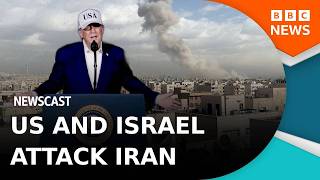
The US and Israel attack Iran | BBC News
BBC News
SRT - Most compatible format for video players (VLC, media players, video editors)
VTT - Web Video Text Tracks for HTML5 video and browsers
TXT - Plain text with timestamps for easy reading and editing
Scroll to view all subtitles
So Patty, for some time we've seen
American forces building up a presence
around Iran. And early this morning, the
attack that had been anticipated for
some time began.
>> A short time ago, the United States
military began major combat operations
in Iran.
Our objective is to defend the American
people by eliminating eminent threats
from the Iranian regime, a vicious group
of very hard, terrible people.
>> We've seen videos from Tehran, the
country's capital, of smoke billowing
from buildings,
>> and the now familiar sounds of sirens
ringing out in Israel.
followed by explosions which the BBC has
authenticated across Gulf states where
the US has bases.
>> Oh my god. Oh my god. Oh my god. Oh my
god.
>> We're talking to you and recording at
12:38 on Saturday. We are in the very
early stages, Paddyy, but this looks
like it could be a very grave chapter in
the many chapters of conflict in the
Middle East.
It's Laura in the studio. Yes.
>> Hello. It's Patty in the studio
>> and it's Lee Tusette joining Patty and
Laura in the studio at this momentous
time.
It feels like a huge day lease and we're
lucky to have you with us today with all
your experience including your recent
experience of being in Iran.
newscasters. A bit later in the program,
we will be talking to the deputy Labour
leader, Lucy Powell, because it's skin a
huge 36 hours in UK politics, too. But
of course, all the headlines today are
focusing on this new stage of conflict
in Iran and which appears to be
spreading across the Middle East with
retaliation from the Iranians towards
Israel and other places. Even Abu Dhabi
and Riyad also reports of strikes across
the region. So, let's just take this
step by step. In the most basic sense,
Lee, what is the first thing that
happened here?
>> At about 6:30 in the morning, uh GMT,
we heard the first reports uh that
Israel had attacked Iran. It was
described as a preemptive strike. Soon
after we got the first videos from
Tehran of plumes of smoke rising from
some of the main squares, then from
Israel, the reports of people being told
to go into the shelters of of air air
raid sirens, just an early warning that
nothing was in the air, but just get
ready. There's possibly advanced warning
warning signals. People immediately went
into the shelters. Then we got reports.
Then it escalated. We had reports of
many more cities in Iran coming under
attack. And then Iran retaliated, not
just against Israel, but as you
mentioned, against other Arab capitals
in Bahrain, in Kuwait, in Jordan, in
Saudi Arabia, in the UAE, one after
another. Iran had warned, repeatedly
warned, that this time it wouldn't hold
back. This time would be different. and
especially if it considered that this
battle was existential, it would use
unprecedented force. And I think this is
what we are seeing. President Trump in
his when he first spoke 8 minutes in a
post in a video on his truth social
platform making it absolutely clear that
as he has often said, Iran cannot have a
nuclear weapon. We will destroy their
ballistic missiles. but even more
calling on Iranian security forces to
lay down their arms and if they did they
would have immunity. If they did not
they would face the consequences.
Telling the people of Iran to take
shelter for now while the bombs are
dropping but when the bombs stopped to
seize the government institutions this
would be their only chance in
generations to take power
>> and because uh
>> it's about regime change. Finally, to
the great proud people of Iran, I say
tonight that the hour of your freedom is
at hand. Stay sheltered. Don't leave
your home. It's very dangerous outside.
Bombs will be dropping everywhere. When
we are finished, take over your
government. It will be yours to take.
This will be probably your only chance
for generations.
For many years, you have asked for
America's help, but you never got it. No
president was willing to do what I am
willing to do tonight. Now you have a
president who is giving you what you
want. So let's see how you respond.
America is backing you with overwhelming
strength and devastating force. Now is
the time to seize control of your
destiny and to unleash the prosperous
and glorious future that is close within
your reach. This is the moment for
action. Do not let it pass. Bear in mind
that even though uh support has been
draining away from uh the clerical uh
regime that they they still have an
ideological core that will fight to the
last breath. They have the elite Islamic
revolutionary guard corps established in
1979 whose specific mandate is to defend
the revolution because they didn't trust
the army. They thought it was too close
to the shaw. You also have the Basiji
which is the volunteer militia and we
saw them on their motorcycles patrolling
the streets of Thrron as a warning
telling people don't come out in the
streets you will know the consequences
they will fight and it has to be said
that in the during that extraordinary
wave of protest that was put down with
lethal force causing more casualties we
still don't know the exact but certainly
in the many thousands many thousands of
deaths we had no reports that there were
any defections in the security forces.
No reports of any cracks in the regime.
But now this is uncharted territory.
What is happening now? And just to spin
out for a bit of very very basic
>> context of what we're talking about
here, the sha was the former monarch
the monarchy in Iran
>> that was brought down in 1979 by the
Iranian revolution which then became the
Islamic revolution when kumeni returned
from Paris and then this broad coalition
of left-wing and activists civil society
they all had come together but it soon
became clear that this was an Islamic
revolution, the Islamists would be in
charge.
>> And the reason that people have been out
on the streets in the last few months
and also previously in other protests
that have been very very violently put
down is because it is now a repressive
regime. It's a regime that many
countries in the west don't believe when
they say that they're not trying to
create a nuclear weapon. So just for
that very basic context because but
let's spell it out too. This is a
country uh three times the size of Iraq.
If you look at the last major US-led in
inter intervention, major uh military
operation um some 92 uh million uh
people what we and the this last wave of
protests in recent years there has been
an uprising every few years. They were
sparked by the traders in the bazaar who
couldn't sell their electronic goods
because there were the currency collapse
and the Americans later uh confessed
that they did that. They brought about
the collapse of the real currency which
went into freef fall against the dollar.
So it began with the traders. It was an
economic strike for over their financial
wos. The students then joined in and
then the spark lit a huge fire. It
spread across many more social classes,
people from many different walks of life
and it spread across the country and
spiraled into something much bigger. And
speaking to people last night in the
streets and markets and bizaars of
Thrron, people would say to me, "Some
people went out for economic reasons and
the government acknowledged there were
economic grievances. Some people went
out because they were fed up with the
corruption and the mismanagement. Others
went out because they saw no way to
improve their lives but that to bring
down the regime. And I have to say for
the very first time in going to decades
in Iran, there were people who said to
me, "I've got nothing to lose. It's not
nice to have your country attacked, but
an American air strike is the only way
for me to bring down this government and
to have a different life." But on the
other hand, others really worried and
they will be worried today as they try
to find shelter. They don't want an
attack. It's a it's a country pulling in
different directions
>> and we're seeing those divisions in some
of the videos that are emerging on
social media and it's very hard to
verify the material that's coming out.
There's often an internet blackout which
we we understand is in place partly
today. But when it comes then to the
position of the Americans and why Donald
Trump has made what is an a very
audacious statement saying you know it
is it is to use your phrase uh for
America now about regime change for
western allies including the UK the
reason they've had so much concern about
Iran is not just because of the
repression in the country but because of
Iranian backing of other groups around
that region and their connections
whether it's Hezbollah or whether it's
Hamas and of course even now we know
from the war in Ukraine you know, Russia
and Iran have had strong links too. So,
this is about that country. But I
suppose the reason why Western allies
and America has been so forceful in this
is they would say that Iran is a regime
that is fermenting terror way beyond
their own borders.
>> I mean, the thing is the West has got a
really bad track record at changing the
heads of oil rich states. We don't have
enough newscast to go through all the
times the West has done this. But what's
different here, Lee, is that Trump has
sent a mixed message. For the last three
months, he's been on again, off again,
and the people of Iran came out thinking
he was going to act earlier. I think we
could say that's true. So now that he
has acted, do you understand why he said
this is their last chance for
generations, can you see why from the
White House's position, staying off with
the Armada parked in the sea is not the
same message as acting with it? He had
he can't just be in this position of
preparing constantly, can he?
>> But let's but let's we're in the early
hours and let's look at how this is
being described now. When the first
report of Israel strikes came in, it was
described as a preemptive strike. We
suggested that they thought an attack
from Iran was was imminent. There is no
evidence to suggest no confirmed
evidence that Iran was about to attack
Israel or was about to do its own
preemptive attack against American bases
and individuals. some 40,000 US
personnel across the region. So they
haven't made their case. They haven't
provided evidence of that. Attacking
another country is also illegal.
Remember before in the run-up to the
US-led invasion of Iraq in 200 and3,
George W. Bush toured the United States.
He spoke in many capitals trying to make
the case for war. He went to the UN
Security Council. He built a coalition
of other countries. President Trump and
Prime Minister Netanyahu have done
nothing of that. and they will think
that this is not they will that that is
secondary to what President Trump
emphasized in his speech that Iran is
the biggest state sponsor of terrorism.
It's a threat. But there are and I'm not
sure if you want to go through it now.
The idea that for example in his State
of the Union address, President Trump uh
for the first time said that Iran was
developing ballistic missiles which
could reach the United States. In other
words, a direct threat to us. the
intelligence assessments, even the US
intelligence assessments is that Iran is
years away from developing
intercontinental ballistic missiles. But
yes, the idea is if we can try to
understand from what they have said that
they believe Iran is at its weakest. Its
so-called axis of resistance or axis of
fire was degraded in some ways destroyed
around the region in the wake of the
Gaza war. Hisbah is weakened. The
Houthis the Houthis are somewhat weak.
Yeah, the Houthis are weakened. the
Iraqi militias, the militias, but
they're still active and they are
indicating they will become active
active too. And they feel the regime is
is at its weakest and they saw the
protests into the streets. So they feel
they have to strike now.
>> So they see opportunity
>> an opportunity. There is an opportunity
and Prime Minister Netanyahu sees an
opportunity with President Trump in the
White House. The last thing I will say
is I was discussing at the weekend I was
at the well this week I was at the
Geneva talks and discussing with people
who are
>> trying to get a deal
>> trying to get the diplomacy and bear in
mind Iran's nuclear ambition.
>> Yes. This was a repeat of what happened
last year when they were in the middle
of negotiations and Israel struck
shattering the negotiating track and it
happened again this time. But discussing
with people, President Trump has shown
he likes short, sharp, successful
operations like in Venezuela. And a lot
of the argument has been that he hasn't
that his military chiefs have been
telling, look, if we start military
operations, there's no guarantee we can
bring about regime change. It's never
happened before in history, as you said,
Patty, that you can bring about regime
change from the air. It might be messy.
It might be violent but and there was an
assessment that he would go for the
short sharp successful to say I've done
a nuclear deal better than Obama but he
seems to have gone for the big prize
that he wants to be able to say I have
done it. I have ended nearly a half
century of enmity with the evil Islamic
Republic of Iran that has been
threatening us from the very moment it
took power. It's a big gamble. And in
terms of then the other decision makers
here, because this is about Donald
Trump's ambitions, it's also about
Benjamin Netanyahu's ambitions. And of
course, he's got an election before too
long coming up in Israel
>> before October. Yeah.
>> This is something that affects so many
different parties here and I just wonder
if you can assess how you think the
decision would have been made between
Israel and the US. You know what's that
relationship really like there? Is this
something that they would have plotted
and planned together? Would Donald Trump
have said I want to make this move? Will
you come with me BB or other way around?
How would you imagine that might have
happened?
>> Yes. And at some point today, I'm sure
you've already been asking 10 Downing
Street when did they find out? When did
President Trump pick up the phone and
say to the Circ Star, a leader he gets
along with, uh, that we're we're going
to be doing this? Well, he may not have
done and the UK statement so far has
been very careful to say we do not want
Iran ever to get its hands on a nuclear
weapon that must not be allowed. But
it's interesting Karma has stopped short
of the kind of backing that's been given
from Anthony Albani, the Australian PM,
and also Mark Carney, the Canadian
leader, who seems to be more supportive
of the American position. And so he's
walking a very fine line, of course,
having just lost a bi-election to a
left-wing rival, but that's a story
we'll come to in a bit. But it just
partly because we're about to hear Clive
Mary in Tel Aviv. I just wonder if you
can explain how you think the
decision-making would have gone between
Israel and and America. You know, whose
idea would it be to begin with?
>> From the beginning when President Trump
returned to the White House for a second
time, Prime Minister Netanyao saw an
opportunity. his whole life, one of his
driving ambitions is to attack the
nuclear installations of Iran to prevent
Iran from getting a nuclear weapon. And
suddenly he found this ally in President
Trump. But it hasn't been easy sailing.
You may remember that last year in the
very week where Israel launched that
carried out that strike which led to the
12-day war, the week started with
President Trump saying to Prime Minister
Netanyao, "Stop threatening Iran, you're
getting in the way of my dealm." But
when he saw the success of the Israeli
strikes, then he said, "Oh, it almost
made it sound we did this together."
>> There were reports this week that that
it would be Israel which would strike
first and not the United States. And as
soon as Israel struck, the first
question was, is this a joint operation?
Have they done this together? And it
quickly became clear that this is a
joint operation. There's a very close
personal relationship between President
Trump and Prime Minister Netany and a
very important political relationship.
What we saw finally was what we saw in
the Gaza war was that President Trump
started listening to other allies to the
Qataris to the Emiratis to the Omanis
but in particular to the Qataris after
Israel tried to kill Hamas leaders in
Qatar. Suddenly he was no longer using
the talking points of Israel. He pushed
Prime Minister Netanyahu to end the Gaza
war to agree to a ceasefire and we saw
this shift and in recent weeks the
Emiratis, the Qataris, the have all been
either in Washington or on the phone
telling President Trump, don't do it.
But what we are seeing today is this
time Prime Minister Netanyahu prevailed
and he has taken his argument this is my
chance to change history. He loves that
president. Who wouldn't? which leader
wouldn't want to be making but it's a
very big gamble.
>> I mean history is all over it from the
United States politics as well because
in 1979 the year of the Iranian then
Islamic revolution Jimmy Carter was the
president launching a catastrophic
rescue mission of hostages held in the
US embassy in Tehran. And Donald Trump
has referenced this because what then
happened in the next presidential
election is that Ronald Reagan became
the president. But it was always seen as
one of the defining political fault
lines. Whose watch was it on when Iran
fell and when our guys were taken is is
a recurrent theme in American uh
politics. It's not as big as the as the
domestic issues, but it's been there for
a long time. So you you've perfectly
explained how in Israel the prime
minister wants the history in America
the white the president wants the
history. So we turn to the people and
let's talk as well about the people in
bomb shelters all over the region
including in Israel
>> the ones who have bomb shelters.
>> The ones who have them
>> the Iranians don't have them. The
Israelis have them and a lot if you're
living in Dubai why would you have a
bomb shelter? It's you know shopping
central. These are place everyone is
going to be finding you and Laura you
keep coming back to this. How will we be
affected? What if Iran closes down the
street of Hormuz, one of the most
important waterways where a huge
percentage of the oil traffic goes
through and all of the goods that reach
Britain if this war drags on and this is
not going to be a matter of just it's
certainly not one day. It's going to be
in days and possibly longer. It will be
felt all the way to the high streets of
of Britain.
>> I notice you you use the word war then.
>> I just we you are calling this a war
now. There's no indication there's going
to be anything else but a war. And for
if you're sitting in Iran wondering
where to find shelter, if you're sitting
in a bomb shelter in Israel, this is a
war. I know we sometimes is do we call
it a conflict. They've made it clear
that this is going to be many days. And
just listen carefully to what President
Trump said in that speech. His ambitions
are are big. And if you're going to try
to bring down the Islamic Republic of
Iran, this is a major major military
operation. And no doubt on the ground.
We know that Mossad, the Israeli uh
agent uh intelligence agency is on the
ground. They played such a key role in
the assassination of nuclear scientists
and security chiefs last time. There
will be this I was reading this week
that this the Israelis say this has been
years in preparation rehearsals and Iran
has prepared. They learned lessons from
the 12-day war. But but you talk about
the people. What about the people of the
United States, Patty, where the opinion
polls show they don't want far, they
don't want President Trump to go to war.
Their concerns are the cost of living
crisis, the immigration crisis. Unlike
George W. Bush, he hasn't gone to
Congress. And there's been criticism by
leading Democratic lawmakers saying
you've got to come to the come to
Congress to get per to get authority to
launch this war. He hasn't done that. He
didn't really make the case for war.
Let's see what happens in America as
well. They're not going to be running to
bomb shelters, but this is not what
President Trump's base elected him to
do.
>> Let's then take you into one of those
bomb shelters. Our colleague Clive Mer
has been in Tel Aiv in Israel where
there have been attacks.
>> I'm surrounded by I don't know, scores
and scores of families, some from uh the
surrounding area. Uh they're not people
who are staying at the hotel. This is a
bomb shelter used by everybody. And uh
in fact, a woman is just coming around
now. She's making some kind of
announcement. I'm not sure what, but no
one seems to be moving. So, the danger
is still imminent, it seems, which is
why we're all down here. There are pets,
there are dogs, there are families with
their children running around. Uh, and
this is obviously something that a lot
of people here are used to, but given
the situation now with what seems to be
a concerted uh attack on Iran, not just
from the Israelis, but from the
Americans, then there are people here
who are worried that this could go on
for some time. Back to Iran. Where is
the leader? The supreme leader.
>> We are having reports at this time. They
have targeted the residency offices of
the Supreme Leader was an attempt to
target him, to kill him. Uh the there's
been reports in American media quoting
Iranian officials that several uh
Revolutionary Guard Corps, several
Iranian officials have been killed.
We've got no details. Uh we're still
getting reports on the targeting, but I
would it would not be surprising given
what Israel did on the first day of the
12-day war. It was like nine nuclear
scientists in one fell swoop. Three
security chiefs. It was breathtaking the
intelligence they they had to be able to
target so many senior people and no
doubt they have done it now. As we're
speaking midday in London, we still are
just getting we there were also reports
that they targeted uh the president um
Peskan and if they're targeting them,
they must have been targeting security
chiefs as well.
>> And if the Americans and Israelis
were successful as they might see it in
taking out the Iranian leadership,
perhaps even the supreme leader, what
would the symbolism of that be, Le?
>> Well, it's not just symbolism. It's have
a huge impact. But what we've been
hearing from uh Tan, what we heard when
we were there is that they've learned
the lessons of the 12-day war. they
realize that they are targeted and they
it came very close uh last time and that
they there had been reports um in the
New York Times and that they prepared a
short list for the succession uh that uh
during the 12-day war uh president the
the supreme leader who's supposed to be
the ultimate decision-m he prepared a
whole level of alternatives if they take
uh the head of the the senior commander
of the IRGC there's another one to step
in his place if he's also killed.
There's another one in seven place. They
have multiple levels of people ready to
take charge. And indeed, the people who
are now in charge this time are ones who
have are quite inexperienced compared to
the ones who actually were in charge
during the 12-day war. They had to slip
into these positions and now they're the
ones who are at the command. And just
when
>> the way it works in Iran's clerical
regime, pardon,
>> just when you say the 12- day war,
>> the war last year last year, summer last
year when things were incredibly my
opinion of your newscast listeners that
I think now that when we say but you but
you're but you're absolutely right. But
there is a procedure in Iran. There is
an assembly of experts, senior clerics.
Their only job is to choose the next
supreme leader. And there's been
discussion amongst these clerics about
who would be there said to have been for
a long time a short list. and that short
list as they've been looking at it of
late to in the midst of what's happening
now to ensure a transition. We just
don't know what's going to survive at
the end of the day.
>> And we are so pleased, Lisa, that you've
been joining us for newscast because
it's only three weeks ago you were there
reporting from Tehran. It's absolutely
unique access for our organization and
we're so proud to have you with us and
we'll keep returning to this subject as
things develop.
>> We will. Thank you so much.
>> And you know, people say, "Well, why
should we be going?" And I have to say
that it is reinforcement of just being
on the ground being able to and the
courage of Iranians. They came up to us.
We want you to know what we think. And
the way they poured out their emotions.
Some people didn't want to talk,
especially when there was a television
camera. But so in a in a way that I
haven't seen before, we want our views
to be known in the world. We want our
voices. We're angry. We want change.
There was such a profound sense that
Iran is now a different country and they
see that there is a profound yearning
for change. I think even at the very top
echelons they understand but is it going
to be the question always was and let's
now it's different after this morning.
Will it be change in the regime or will
it like we're seeing in Venezuela or
will it be regime change?
>> Lee, thank you so much indeed and I'm
sure we'll be I hope you'll be back with
us very soon.
So Paddyy, as promised, newscasters, we
know you're a political nerds like the
two of us, and we want to talk about the
very important big political story in
the UK here at home in the last couple
of days, which was Labour's defeat at
the hands of the Greens into third
place, also by reform in the Gorton and
Denton bi-election. And I'm pleased to
say that we are joined by the deputy
leader of the Labour Party, Lucy Powell,
who was on the doors pretty much every
day during that CA campaign. I think
Lucy um
>> welcome to newscast. What went wrong?
>> Well, obviously it was very
disappointing uh result for us and you
know we weren't able to persuade people
um enough people to to vote Labor or
indeed that Labor was the best place
party to defeat reform. And I think, you
know, these are trends that we've seen
happening and coming for for a while.
And I think we've obviously now got to
reflect further on that and make sure
that we act and we adjust uh course and
we listen to to what's been said in that
bi-election. Um I mean what I would also
say is that bi-elections aren't
themselves a sort of predeterminant of a
as a of a future election and and
governing parties do often def get
defeats in these sorts of bi-elections.
But I don't want to underplay it in in
any sense at all. This is in my own
backyard. This is in a kind of labor
heartland area. And we we lost.
>> You've been saying though and other
leading Labor figures, but particularly
you ran your deputy leadership campaign
on saying we have to change course. We
have to do things differently. That
doesn't seem to have happened, has it?
>> Well, I think those messages have been
heard. Um, but we now need to to go
further and faster and and and get some
urgency around that. I think we've got
to be a lot clearer about uh the purpose
of the Labor government. Make sure that
we are really um telling the story about
what Labor is doing in in this Labor
government and how who side we're really
on. And that will I think will help us
to rebuild our voter coalition. the the
perhaps the the some of the strategy
that's been pursued in the past to to
maybe try and out reform reform. I mean,
I'm not sure that was actually the case,
but that was how it was perceived, you
know, is not a successful um course for
us. And we really do need now to to work
on rebuilding that broad-based voter
coalition that we've always represented
and that we need to continue to
represent. I wonder if you can be as
candid as you can be in answer to the
question. Would Andy Burnham have held
the seat for Labor?
>> Well, he he probably would have done
because I I think certainly the Greens
wouldn't have gone after the seat in in
the same way that they did. Um
>> so that it's back to Kier, isn't it?
Because Kier blocked Andy and Kier
blocked you. So it's once again we're
left asking questions about him. Well,
look, I mean, I think the the the
reasons for that decision and the
reasons that I stand by because I I I
accept collective responsibility in
these things and collective decision-m
the ry the worry was not necessarily
about this particular bi-election but
the subsequent bi-election that
therefore would be required for the
Greater Manchester Mayor. And I think
what we can all sort of take this
weekend is that perhaps we don't want
that many bi-elections going forward
because it is a challenging sort of time
for us. But but what I would say is
look, let's let's look at why Andy
Burnham is is particularly popular
because he is particularly popular um
here in Greater Manchester and and
across the the North because I think
people uh do see in him someone who is
on their side, someone who is delivering
um those labor values and those labor
policies like more social housing and
better buses, more job opportunities um
uh especially for young people. And um
and we have to to draw on that, make use
of Andy Burnham, but also draw on that
and reflect on how we could do that
better nationally and better as a
government. And and I know from talking
to K many many times over recent weeks
before this bi-election and and since
that that is something he is very
focused on on doing on how we can give a
a much clearer account of ourselves and
be much clearer and define ourselves by
whose side we're on and and and which
vested interests we are taking on in
order to to deliver for ordinary people
across the country.
>> So the prime minister needs to be more
like Andy Burnham then. Well, look,
let's let's let's learn from Andy and
also bring Andy more more on board with
what we're doing as well. Make better
use of Andy.
>> Yeah, because I I heard Clive Lewis on
Radio 4 saying Labor has take has gone
against children, disabled people,
pensioners, and he he's he bemons Pat
McFaden saying we've got to win from the
center. He thinks the Down Street
operation's been captured. Do you think
the down street operation's been
captured?
>> We look we've seen a lot of changes in
in in the operation there um re recently
as well. We what what I would say is
that we of of course we've got to to
rebuild that broad-based voter coalition
the the kind of progressive alliance if
you like that and make sure that we are
absolutely seen as the key people to
take on the far view of the world
because there are now two emerging kind
of views of the world in in domestic
politics today. There are those on the
right now now now actually led by Nigel
Farage and and his sort of Tory wannabes
with with the sort of Tories in in tow
there as well who think that
economically the status quo is fine that
more trickle down economics that tax
breaks for the richests and and getting
rid of workers rights and the equality
rights and those kind of things that's
the way to run the economy but instead
they want to blame immigrants and pit
neighbor against neighbor and and we
represent very different um political
values and and a political ical home and
we say that we need big change in the
economy and we need to rewire the
country. Now we've got to be very
clearly the leaders of that voter
coalition of that world view that says
Nigel Farajin is ilka wrong and that
Labor values and our values are the
right way to change the country and we
haven't done that strongly enough and
we've really got to do that. I think
>> the problem you've got though is that in
Gorton and Denton people looked at you
and I know you and lots of other
colleagues were on the door sort of
every day. I know that the candidate and
the team fought very hard and thought
going into it that you might have been
okay was the suggestion from the top of
the Labor party, but voters looked at
you and thought you're not the leaders
of that coalition. Actually, the Greens
are the leader of that coalition. So, is
it now wrong or do you have to shift the
strategy that the prime minister's been
using for the last six months or so to
say, ah, this is a fight between labor
and reform because it looks quite
different after Gorton and Denton. It
looks now that you're being squeezed on
both sides. Well, look, obviously the
the the Greens were more effective in
making that argument in this particular
bi-election and and as I say, sort of
bi-elections have their own kind of uh
chemistry and dynamics at at play there
that don't necessarily play out then
into a general election. I I don't think
there's any reasonable suggestion that
the Greens are going to be forming the
government at the next election. I do
think that when you're three years away,
can you I mean, isn't it the problem?
Some people in your own party were
saying to me privately yesterday, part
of the problem with how the cabinet um
responded to this on the record
yesterday when Heidi Alexander, the
transport secretary, was sent out to do
the the morning round and we're grateful
to you for giving us your time this
afternoon. But part of the problem was
it sounded tenered to say, "Oh, well,
the Greens can't possibly replicate this
everywhere. You can't be sure of that.
This may be three years to the next
general election." Well, I I I mean, I
don't think it is that feasible towards
the next election. But look, I'm I'm
actually as just as interested in today
as I am in the the tram lines of the of
the next election because it's also
about how we're governing in the
meantime. It's not just about how we're
setting things up for the for the next
election. And we do need to take Nigel
Farage on today and tomorrow, not just,
you know, in 2028, 2029. And we've got
to take on his politics. And we've also
got to set out much more strongly. And
we have done some really solid Labor
things that just wouldn't have happened
if we hadn't had a Labor government. You
know, lifting the two child benefit cap,
uh, bringing in the employment rights
act, you know, reationalizing railway
and so on. These are good labor things,
but people don't really know about them
as well, and we haven't knitted them
together in that much clearer story
about the diagnosis of what we think is
wrong with the country and how we're
going about fixing it. And we have got
to do that much more. um strongly as we
govern. And I think look, some of the
things that maybe Clive Lewis and others
have have talked about, some of the the
the mistakes that we have made in our
time in government so far were things
that actually weren't in our manifesto.
>> I was going to say lifting the lifting
the benefit cap on the amount of
children wasn't in there either. It took
a rebellion for that to happen. Um look,
can we go
>> It didn't actually It did take a
rebellion and we we've always been clear
that that's something we would do when
um when finances allow. C can we go back
uh Lucy to Andy Burnham? Should he be
allowed to stand somewhere else?
>> Well, there is nowhere else um right now
and um and actually I really don't want
there to be another bi-election anytime
soon if that's at all possible for any
of those MPs around the country thinking
about that. Um I if there were because
it's not impossible. Well, look, I mean,
you know, everyone knows my my view
about that because uh everyone knows
what decision I took at the at the time
uh for for this particular bi-election.
>> Well, if people have forgotten, spell it
out.
>> What was what was it?
>> Well, I was the one person that, you
know, that voted for him to be to be
allowed to stand in in in this this
bi-election. But, as I say, I I stand by
>> collective collective agreement. And you
know what was what something that was I
take out of the campaign for this
bi-election was that we were able to
bring together under one Labor team a
very united message, a very united team.
Andy Bernham who was out with us all the
time. Uh Kier Darma came up and and he
was you know involved in um things
through throughout. Uh Angela Raina was
there. Wes Street was there. The whole
cabinet was there. we had one labor team
and that is actually when we can punch
through the noise more strongly and tell
the story about what we're doing here in
Manchester but also what we're doing
around the country and and and I see it
as part of my job as the sort of bridge
builder in the Labour party to to make
sure that we continue to work with Andy
Bernham K working with K star working
with everybody else in the Labour party
because this is you know the stakes are
really really high not just for
ourselves but for the country and we've
got to get this right we've got to do
better and that takes us all putting our
shoulder to the wheel and not starting
to pit get once against each other.
>> And given if, as you say, the stakes are
that high, if the prime minister can't
do better, as you've said he needs to,
ought he to think about doing something
else if you're trounced in the May
elections?
Well, look, I'm not I we've got a leader
of the Labor Party and um you know, I I
I I'm really clear that we um we the
last thing we kind of need to do is
start really looking in on ourselves and
and and having those kind of debates
really because it's it's going to it's
very difficult. Running the country is
very difficult. Being prime minister is
very difficult. And you know, we we've
got to get the politics uh right and get
the politics more strongly and that's
what I'm going to focus on.
>> Okay. And it's been a it's a weekend.
You've joined us on a Saturday. It's
really nice of you. These are these are
difficult questions. And the one I
wanted to kind of end on is that we
newscasters know you care. You went into
politics to change people's lives. You
are a person of conviction. So whether
our listeners like Labor or not, they
know that that's who they're listening
to. And I just wonder if you can let me
in. I went campaigning uh I went
watching campaigning canvasing MP today.
Can you let me in on how exhausting it's
been, what it's been like 18 months or
more of Labor government? Government
seems to look really difficult. You
weren't very sympathetic to the
Conservatives when it was their time.
Um, but do you feel more sympathetic to
the Conservatives now that you've had a
go?
>> WELL, LOOK, GOVERNMENT, I think, is
probably hard in in any times, but I
think it's particularly hard uh right
now. And I'm not saying that because I
want any sort of sympathy for it. That's
what we're being paid. that's what we're
being paid to to to do and it's
something we we we want to do. But I
think when you look at what's happening
around the world, I mean, even even this
this weekend, um, when you the the the
kind of world order is is moving and
changing so so fast, alliances and uh
conflicts and uh escalations and um and
trade wars and tariffs and all of that,
when you look at what's happening around
the world, it's moving really fast. Then
you look at what we've inherited domest
uh domestically as well after 15 years
of the the tries and austerity and then
coming out of COVID you know these big
shocks that have come along that have
left people and our public services much
much the poorer and this is the agenda
that we have inherited and and yeah it's
a lot to kind of turn around and change
as quickly as people rightly want to see
it happening and um you know politics is
moving very fast government is very slow
and we've got to get better at matching
those two things up
>> and it is hard work as you've just
explained and we're very grateful to you
for giving us your time on a Saturday
afternoon.
>> People might think you deserve a night
out and I think you're getting one going
to the Brits in Manchester tonight um
with a few other familiar faces
including I think Andy Baron. Who are
you looking forward to seeing the most?
Have you had a look at the set list?
>> Well, I have. I mean, look, it's the
first time the Brits is is leaving
London uh in over 50 years. It's coming
here to Manchester. It's a massive coup
for us coming to my constituency. So, I
have to go. I'm obliged to go, of
course. As you know, it's really a tough
life. Um, I'm taking my 16-year-old
daughter, who thankfully knows all the
acts. I I know a few. Um, I'm
particularly looking forward to Rey and
Harry Styles, which is a bit more kind
of Facebook moms, I think, as we're
called these days. Um, and my teenage
daughter will enjoy all the other acts
that I haven't ever heard of.
>> Yeah. I mean, his his journey to the
mainstream has been fabulous to watch.
Harry Stars. He was on the front pages
of one of the Sunday magazines last.
>> You mean Journey to the Mainstream from
a boy band from like Saturday Night
Reality TV? What are you talking about?
>> Well, Luc is talking about Facebook
moms. I don't think Facebook moms were
his first the fans at first.
>> I'm not sure. Facebook moms with
10-year-old daughters, I think, had
quite an
>> the
>> Yeah, he was pre- Tik Tok though, wasn't
he? He was pre that.
>> Yeah. Here we are. This is very
embarrassing for me. The other thing I
The other thing I'll say is that I'm a
great thief and I'm going to steal what
you said to us in your last answer,
which was guess which bit it was.
>> Politics is very fast. Government is
very slow.
>> There you go.
>> I'm going to be saying that in my career
and it was Lucy Powell who said it
first.
>> You could trademark it.
>> There you go. There was another one. A
senior a senior conservative said to me
early this morning said, "This is a
difficult time for sensible people."
That should be the strap line of this
pop.
>> Quite good as well.
>> Lucy Pal, have a love.
>> I'll try and not be sensible tonight.
Maybe.
>> Yeah, don't be sensible tonight. Have a
great night at the Brits. And we are
really grateful to you for joining us on
Saturday's newscast.
>> Well, Patty, wasn't that interesting?
Especially Lucy Pal's answer, very
honest answer I think to your question
about whether or not Andy Burnham would
have won it for Labor.
>> I mean, that's amazing bit of um
whatifery.
>> It is. and politics and political chat
is very often full of whatifery. But the
reason she said, which I suspect is
probably correct, is the Greens wouldn't
have gone after that seat in the same
way that they did very aggressively if
Andy Burnham had been standing. If, on
the other hand, Andy Bernham had stood
and held it in another bit of waterfery.
This week, the Labour Party might be
consumed with whether or not Andy
Burnham was going to strike and when he
arrived in parliament next week stand up
and say he was going to run against Kier
Starmer and he should shuffle off this
mortal political coil.
>> Do you know what the editor has said is
he knocked Yeah. He knocked over his hip
flask and he said wrap it up. I think
that's very rude. Oh,
>> it's very rude.
>> I was listening to you and I think you
should take it up.
>> Change. Well, I'll carry on. What are
you doing tomorrow?
>> You just fade you down. Uh we've got
Lord Kinnick on our panel.
>> Ah very good.
>> Should be exciting. And we we will cover
the breaking news from the Middle East.
>> Yes. So we will be bringing people the
very latest on what's happening in the
Middle East. I would say things are
incredibly fluid. But I do know we will
play tomorrow on the program a
conversation I was very lucky to have
last week with Tracy Emmen which was
just as wonderful as you might have
imagined it to be. And I say that not as
an a high-end art buff at all, just
someone who has heard of her and watched
her and followed her as one of this most
celebrated
creative people alive. And it's an
amazing conversation and we filmed it
sitting next to the big mucky bed.
>> Yes, her bed looks a lot like mine
actually, I have to say.
>> Well, her bed she said would look very,
very different now, which is part of our
conversation so it'd be all tidy.
Anyway, so we're doing that and then uh
you'll have to wait till tomorrow
because everything's all very up in the
air.
>> It is. Okay. So, we say thank you very
much indeed for listening to Saturday's
newscast. We hope you'll join us
tomorrow.
>> Goodbye.
Full transcript without timestamps
So Patty, for some time we've seen American forces building up a presence around Iran. And early this morning, the attack that had been anticipated for some time began. >> A short time ago, the United States military began major combat operations in Iran. Our objective is to defend the American people by eliminating eminent threats from the Iranian regime, a vicious group of very hard, terrible people. >> We've seen videos from Tehran, the country's capital, of smoke billowing from buildings, >> and the now familiar sounds of sirens ringing out in Israel. followed by explosions which the BBC has authenticated across Gulf states where the US has bases. >> Oh my god. Oh my god. Oh my god. Oh my god. >> We're talking to you and recording at 12:38 on Saturday. We are in the very early stages, Paddyy, but this looks like it could be a very grave chapter in the many chapters of conflict in the Middle East. It's Laura in the studio. Yes. >> Hello. It's Patty in the studio >> and it's Lee Tusette joining Patty and Laura in the studio at this momentous time. It feels like a huge day lease and we're lucky to have you with us today with all your experience including your recent experience of being in Iran. newscasters. A bit later in the program, we will be talking to the deputy Labour leader, Lucy Powell, because it's skin a huge 36 hours in UK politics, too. But of course, all the headlines today are focusing on this new stage of conflict in Iran and which appears to be spreading across the Middle East with retaliation from the Iranians towards Israel and other places. Even Abu Dhabi and Riyad also reports of strikes across the region. So, let's just take this step by step. In the most basic sense, Lee, what is the first thing that happened here? >> At about 6:30 in the morning, uh GMT, we heard the first reports uh that Israel had attacked Iran. It was described as a preemptive strike. Soon after we got the first videos from Tehran of plumes of smoke rising from some of the main squares, then from Israel, the reports of people being told to go into the shelters of of air air raid sirens, just an early warning that nothing was in the air, but just get ready. There's possibly advanced warning warning signals. People immediately went into the shelters. Then we got reports. Then it escalated. We had reports of many more cities in Iran coming under attack. And then Iran retaliated, not just against Israel, but as you mentioned, against other Arab capitals in Bahrain, in Kuwait, in Jordan, in Saudi Arabia, in the UAE, one after another. Iran had warned, repeatedly warned, that this time it wouldn't hold back. This time would be different. and especially if it considered that this battle was existential, it would use unprecedented force. And I think this is what we are seeing. President Trump in his when he first spoke 8 minutes in a post in a video on his truth social platform making it absolutely clear that as he has often said, Iran cannot have a nuclear weapon. We will destroy their ballistic missiles. but even more calling on Iranian security forces to lay down their arms and if they did they would have immunity. If they did not they would face the consequences. Telling the people of Iran to take shelter for now while the bombs are dropping but when the bombs stopped to seize the government institutions this would be their only chance in generations to take power >> and because uh >> it's about regime change. Finally, to the great proud people of Iran, I say tonight that the hour of your freedom is at hand. Stay sheltered. Don't leave your home. It's very dangerous outside. Bombs will be dropping everywhere. When we are finished, take over your government. It will be yours to take. This will be probably your only chance for generations. For many years, you have asked for America's help, but you never got it. No president was willing to do what I am willing to do tonight. Now you have a president who is giving you what you want. So let's see how you respond. America is backing you with overwhelming strength and devastating force. Now is the time to seize control of your destiny and to unleash the prosperous and glorious future that is close within your reach. This is the moment for action. Do not let it pass. Bear in mind that even though uh support has been draining away from uh the clerical uh regime that they they still have an ideological core that will fight to the last breath. They have the elite Islamic revolutionary guard corps established in 1979 whose specific mandate is to defend the revolution because they didn't trust the army. They thought it was too close to the shaw. You also have the Basiji which is the volunteer militia and we saw them on their motorcycles patrolling the streets of Thrron as a warning telling people don't come out in the streets you will know the consequences they will fight and it has to be said that in the during that extraordinary wave of protest that was put down with lethal force causing more casualties we still don't know the exact but certainly in the many thousands many thousands of deaths we had no reports that there were any defections in the security forces. No reports of any cracks in the regime. But now this is uncharted territory. What is happening now? And just to spin out for a bit of very very basic >> context of what we're talking about here, the sha was the former monarch the monarchy in Iran >> that was brought down in 1979 by the Iranian revolution which then became the Islamic revolution when kumeni returned from Paris and then this broad coalition of left-wing and activists civil society they all had come together but it soon became clear that this was an Islamic revolution, the Islamists would be in charge. >> And the reason that people have been out on the streets in the last few months and also previously in other protests that have been very very violently put down is because it is now a repressive regime. It's a regime that many countries in the west don't believe when they say that they're not trying to create a nuclear weapon. So just for that very basic context because but let's spell it out too. This is a country uh three times the size of Iraq. If you look at the last major US-led in inter intervention, major uh military operation um some 92 uh million uh people what we and the this last wave of protests in recent years there has been an uprising every few years. They were sparked by the traders in the bazaar who couldn't sell their electronic goods because there were the currency collapse and the Americans later uh confessed that they did that. They brought about the collapse of the real currency which went into freef fall against the dollar. So it began with the traders. It was an economic strike for over their financial wos. The students then joined in and then the spark lit a huge fire. It spread across many more social classes, people from many different walks of life and it spread across the country and spiraled into something much bigger. And speaking to people last night in the streets and markets and bizaars of Thrron, people would say to me, "Some people went out for economic reasons and the government acknowledged there were economic grievances. Some people went out because they were fed up with the corruption and the mismanagement. Others went out because they saw no way to improve their lives but that to bring down the regime. And I have to say for the very first time in going to decades in Iran, there were people who said to me, "I've got nothing to lose. It's not nice to have your country attacked, but an American air strike is the only way for me to bring down this government and to have a different life." But on the other hand, others really worried and they will be worried today as they try to find shelter. They don't want an attack. It's a it's a country pulling in different directions >> and we're seeing those divisions in some of the videos that are emerging on social media and it's very hard to verify the material that's coming out. There's often an internet blackout which we we understand is in place partly today. But when it comes then to the position of the Americans and why Donald Trump has made what is an a very audacious statement saying you know it is it is to use your phrase uh for America now about regime change for western allies including the UK the reason they've had so much concern about Iran is not just because of the repression in the country but because of Iranian backing of other groups around that region and their connections whether it's Hezbollah or whether it's Hamas and of course even now we know from the war in Ukraine you know, Russia and Iran have had strong links too. So, this is about that country. But I suppose the reason why Western allies and America has been so forceful in this is they would say that Iran is a regime that is fermenting terror way beyond their own borders. >> I mean, the thing is the West has got a really bad track record at changing the heads of oil rich states. We don't have enough newscast to go through all the times the West has done this. But what's different here, Lee, is that Trump has sent a mixed message. For the last three months, he's been on again, off again, and the people of Iran came out thinking he was going to act earlier. I think we could say that's true. So now that he has acted, do you understand why he said this is their last chance for generations, can you see why from the White House's position, staying off with the Armada parked in the sea is not the same message as acting with it? He had he can't just be in this position of preparing constantly, can he? >> But let's but let's we're in the early hours and let's look at how this is being described now. When the first report of Israel strikes came in, it was described as a preemptive strike. We suggested that they thought an attack from Iran was was imminent. There is no evidence to suggest no confirmed evidence that Iran was about to attack Israel or was about to do its own preemptive attack against American bases and individuals. some 40,000 US personnel across the region. So they haven't made their case. They haven't provided evidence of that. Attacking another country is also illegal. Remember before in the run-up to the US-led invasion of Iraq in 200 and3, George W. Bush toured the United States. He spoke in many capitals trying to make the case for war. He went to the UN Security Council. He built a coalition of other countries. President Trump and Prime Minister Netanyahu have done nothing of that. and they will think that this is not they will that that is secondary to what President Trump emphasized in his speech that Iran is the biggest state sponsor of terrorism. It's a threat. But there are and I'm not sure if you want to go through it now. The idea that for example in his State of the Union address, President Trump uh for the first time said that Iran was developing ballistic missiles which could reach the United States. In other words, a direct threat to us. the intelligence assessments, even the US intelligence assessments is that Iran is years away from developing intercontinental ballistic missiles. But yes, the idea is if we can try to understand from what they have said that they believe Iran is at its weakest. Its so-called axis of resistance or axis of fire was degraded in some ways destroyed around the region in the wake of the Gaza war. Hisbah is weakened. The Houthis the Houthis are somewhat weak. Yeah, the Houthis are weakened. the Iraqi militias, the militias, but they're still active and they are indicating they will become active active too. And they feel the regime is is at its weakest and they saw the protests into the streets. So they feel they have to strike now. >> So they see opportunity >> an opportunity. There is an opportunity and Prime Minister Netanyahu sees an opportunity with President Trump in the White House. The last thing I will say is I was discussing at the weekend I was at the well this week I was at the Geneva talks and discussing with people who are >> trying to get a deal >> trying to get the diplomacy and bear in mind Iran's nuclear ambition. >> Yes. This was a repeat of what happened last year when they were in the middle of negotiations and Israel struck shattering the negotiating track and it happened again this time. But discussing with people, President Trump has shown he likes short, sharp, successful operations like in Venezuela. And a lot of the argument has been that he hasn't that his military chiefs have been telling, look, if we start military operations, there's no guarantee we can bring about regime change. It's never happened before in history, as you said, Patty, that you can bring about regime change from the air. It might be messy. It might be violent but and there was an assessment that he would go for the short sharp successful to say I've done a nuclear deal better than Obama but he seems to have gone for the big prize that he wants to be able to say I have done it. I have ended nearly a half century of enmity with the evil Islamic Republic of Iran that has been threatening us from the very moment it took power. It's a big gamble. And in terms of then the other decision makers here, because this is about Donald Trump's ambitions, it's also about Benjamin Netanyahu's ambitions. And of course, he's got an election before too long coming up in Israel >> before October. Yeah. >> This is something that affects so many different parties here and I just wonder if you can assess how you think the decision would have been made between Israel and the US. You know what's that relationship really like there? Is this something that they would have plotted and planned together? Would Donald Trump have said I want to make this move? Will you come with me BB or other way around? How would you imagine that might have happened? >> Yes. And at some point today, I'm sure you've already been asking 10 Downing Street when did they find out? When did President Trump pick up the phone and say to the Circ Star, a leader he gets along with, uh, that we're we're going to be doing this? Well, he may not have done and the UK statement so far has been very careful to say we do not want Iran ever to get its hands on a nuclear weapon that must not be allowed. But it's interesting Karma has stopped short of the kind of backing that's been given from Anthony Albani, the Australian PM, and also Mark Carney, the Canadian leader, who seems to be more supportive of the American position. And so he's walking a very fine line, of course, having just lost a bi-election to a left-wing rival, but that's a story we'll come to in a bit. But it just partly because we're about to hear Clive Mary in Tel Aviv. I just wonder if you can explain how you think the decision-making would have gone between Israel and and America. You know, whose idea would it be to begin with? >> From the beginning when President Trump returned to the White House for a second time, Prime Minister Netanyao saw an opportunity. his whole life, one of his driving ambitions is to attack the nuclear installations of Iran to prevent Iran from getting a nuclear weapon. And suddenly he found this ally in President Trump. But it hasn't been easy sailing. You may remember that last year in the very week where Israel launched that carried out that strike which led to the 12-day war, the week started with President Trump saying to Prime Minister Netanyao, "Stop threatening Iran, you're getting in the way of my dealm." But when he saw the success of the Israeli strikes, then he said, "Oh, it almost made it sound we did this together." >> There were reports this week that that it would be Israel which would strike first and not the United States. And as soon as Israel struck, the first question was, is this a joint operation? Have they done this together? And it quickly became clear that this is a joint operation. There's a very close personal relationship between President Trump and Prime Minister Netany and a very important political relationship. What we saw finally was what we saw in the Gaza war was that President Trump started listening to other allies to the Qataris to the Emiratis to the Omanis but in particular to the Qataris after Israel tried to kill Hamas leaders in Qatar. Suddenly he was no longer using the talking points of Israel. He pushed Prime Minister Netanyahu to end the Gaza war to agree to a ceasefire and we saw this shift and in recent weeks the Emiratis, the Qataris, the have all been either in Washington or on the phone telling President Trump, don't do it. But what we are seeing today is this time Prime Minister Netanyahu prevailed and he has taken his argument this is my chance to change history. He loves that president. Who wouldn't? which leader wouldn't want to be making but it's a very big gamble. >> I mean history is all over it from the United States politics as well because in 1979 the year of the Iranian then Islamic revolution Jimmy Carter was the president launching a catastrophic rescue mission of hostages held in the US embassy in Tehran. And Donald Trump has referenced this because what then happened in the next presidential election is that Ronald Reagan became the president. But it was always seen as one of the defining political fault lines. Whose watch was it on when Iran fell and when our guys were taken is is a recurrent theme in American uh politics. It's not as big as the as the domestic issues, but it's been there for a long time. So you you've perfectly explained how in Israel the prime minister wants the history in America the white the president wants the history. So we turn to the people and let's talk as well about the people in bomb shelters all over the region including in Israel >> the ones who have bomb shelters. >> The ones who have them >> the Iranians don't have them. The Israelis have them and a lot if you're living in Dubai why would you have a bomb shelter? It's you know shopping central. These are place everyone is going to be finding you and Laura you keep coming back to this. How will we be affected? What if Iran closes down the street of Hormuz, one of the most important waterways where a huge percentage of the oil traffic goes through and all of the goods that reach Britain if this war drags on and this is not going to be a matter of just it's certainly not one day. It's going to be in days and possibly longer. It will be felt all the way to the high streets of of Britain. >> I notice you you use the word war then. >> I just we you are calling this a war now. There's no indication there's going to be anything else but a war. And for if you're sitting in Iran wondering where to find shelter, if you're sitting in a bomb shelter in Israel, this is a war. I know we sometimes is do we call it a conflict. They've made it clear that this is going to be many days. And just listen carefully to what President Trump said in that speech. His ambitions are are big. And if you're going to try to bring down the Islamic Republic of Iran, this is a major major military operation. And no doubt on the ground. We know that Mossad, the Israeli uh agent uh intelligence agency is on the ground. They played such a key role in the assassination of nuclear scientists and security chiefs last time. There will be this I was reading this week that this the Israelis say this has been years in preparation rehearsals and Iran has prepared. They learned lessons from the 12-day war. But but you talk about the people. What about the people of the United States, Patty, where the opinion polls show they don't want far, they don't want President Trump to go to war. Their concerns are the cost of living crisis, the immigration crisis. Unlike George W. Bush, he hasn't gone to Congress. And there's been criticism by leading Democratic lawmakers saying you've got to come to the come to Congress to get per to get authority to launch this war. He hasn't done that. He didn't really make the case for war. Let's see what happens in America as well. They're not going to be running to bomb shelters, but this is not what President Trump's base elected him to do. >> Let's then take you into one of those bomb shelters. Our colleague Clive Mer has been in Tel Aiv in Israel where there have been attacks. >> I'm surrounded by I don't know, scores and scores of families, some from uh the surrounding area. Uh they're not people who are staying at the hotel. This is a bomb shelter used by everybody. And uh in fact, a woman is just coming around now. She's making some kind of announcement. I'm not sure what, but no one seems to be moving. So, the danger is still imminent, it seems, which is why we're all down here. There are pets, there are dogs, there are families with their children running around. Uh, and this is obviously something that a lot of people here are used to, but given the situation now with what seems to be a concerted uh attack on Iran, not just from the Israelis, but from the Americans, then there are people here who are worried that this could go on for some time. Back to Iran. Where is the leader? The supreme leader. >> We are having reports at this time. They have targeted the residency offices of the Supreme Leader was an attempt to target him, to kill him. Uh the there's been reports in American media quoting Iranian officials that several uh Revolutionary Guard Corps, several Iranian officials have been killed. We've got no details. Uh we're still getting reports on the targeting, but I would it would not be surprising given what Israel did on the first day of the 12-day war. It was like nine nuclear scientists in one fell swoop. Three security chiefs. It was breathtaking the intelligence they they had to be able to target so many senior people and no doubt they have done it now. As we're speaking midday in London, we still are just getting we there were also reports that they targeted uh the president um Peskan and if they're targeting them, they must have been targeting security chiefs as well. >> And if the Americans and Israelis were successful as they might see it in taking out the Iranian leadership, perhaps even the supreme leader, what would the symbolism of that be, Le? >> Well, it's not just symbolism. It's have a huge impact. But what we've been hearing from uh Tan, what we heard when we were there is that they've learned the lessons of the 12-day war. they realize that they are targeted and they it came very close uh last time and that they there had been reports um in the New York Times and that they prepared a short list for the succession uh that uh during the 12-day war uh president the the supreme leader who's supposed to be the ultimate decision-m he prepared a whole level of alternatives if they take uh the head of the the senior commander of the IRGC there's another one to step in his place if he's also killed. There's another one in seven place. They have multiple levels of people ready to take charge. And indeed, the people who are now in charge this time are ones who have are quite inexperienced compared to the ones who actually were in charge during the 12-day war. They had to slip into these positions and now they're the ones who are at the command. And just when >> the way it works in Iran's clerical regime, pardon, >> just when you say the 12- day war, >> the war last year last year, summer last year when things were incredibly my opinion of your newscast listeners that I think now that when we say but you but you're but you're absolutely right. But there is a procedure in Iran. There is an assembly of experts, senior clerics. Their only job is to choose the next supreme leader. And there's been discussion amongst these clerics about who would be there said to have been for a long time a short list. and that short list as they've been looking at it of late to in the midst of what's happening now to ensure a transition. We just don't know what's going to survive at the end of the day. >> And we are so pleased, Lisa, that you've been joining us for newscast because it's only three weeks ago you were there reporting from Tehran. It's absolutely unique access for our organization and we're so proud to have you with us and we'll keep returning to this subject as things develop. >> We will. Thank you so much. >> And you know, people say, "Well, why should we be going?" And I have to say that it is reinforcement of just being on the ground being able to and the courage of Iranians. They came up to us. We want you to know what we think. And the way they poured out their emotions. Some people didn't want to talk, especially when there was a television camera. But so in a in a way that I haven't seen before, we want our views to be known in the world. We want our voices. We're angry. We want change. There was such a profound sense that Iran is now a different country and they see that there is a profound yearning for change. I think even at the very top echelons they understand but is it going to be the question always was and let's now it's different after this morning. Will it be change in the regime or will it like we're seeing in Venezuela or will it be regime change? >> Lee, thank you so much indeed and I'm sure we'll be I hope you'll be back with us very soon. So Paddyy, as promised, newscasters, we know you're a political nerds like the two of us, and we want to talk about the very important big political story in the UK here at home in the last couple of days, which was Labour's defeat at the hands of the Greens into third place, also by reform in the Gorton and Denton bi-election. And I'm pleased to say that we are joined by the deputy leader of the Labour Party, Lucy Powell, who was on the doors pretty much every day during that CA campaign. I think Lucy um >> welcome to newscast. What went wrong? >> Well, obviously it was very disappointing uh result for us and you know we weren't able to persuade people um enough people to to vote Labor or indeed that Labor was the best place party to defeat reform. And I think, you know, these are trends that we've seen happening and coming for for a while. And I think we've obviously now got to reflect further on that and make sure that we act and we adjust uh course and we listen to to what's been said in that bi-election. Um I mean what I would also say is that bi-elections aren't themselves a sort of predeterminant of a as a of a future election and and governing parties do often def get defeats in these sorts of bi-elections. But I don't want to underplay it in in any sense at all. This is in my own backyard. This is in a kind of labor heartland area. And we we lost. >> You've been saying though and other leading Labor figures, but particularly you ran your deputy leadership campaign on saying we have to change course. We have to do things differently. That doesn't seem to have happened, has it? >> Well, I think those messages have been heard. Um, but we now need to to go further and faster and and and get some urgency around that. I think we've got to be a lot clearer about uh the purpose of the Labor government. Make sure that we are really um telling the story about what Labor is doing in in this Labor government and how who side we're really on. And that will I think will help us to rebuild our voter coalition. the the perhaps the the some of the strategy that's been pursued in the past to to maybe try and out reform reform. I mean, I'm not sure that was actually the case, but that was how it was perceived, you know, is not a successful um course for us. And we really do need now to to work on rebuilding that broad-based voter coalition that we've always represented and that we need to continue to represent. I wonder if you can be as candid as you can be in answer to the question. Would Andy Burnham have held the seat for Labor? >> Well, he he probably would have done because I I think certainly the Greens wouldn't have gone after the seat in in the same way that they did. Um >> so that it's back to Kier, isn't it? Because Kier blocked Andy and Kier blocked you. So it's once again we're left asking questions about him. Well, look, I mean, I think the the the reasons for that decision and the reasons that I stand by because I I I accept collective responsibility in these things and collective decision-m the ry the worry was not necessarily about this particular bi-election but the subsequent bi-election that therefore would be required for the Greater Manchester Mayor. And I think what we can all sort of take this weekend is that perhaps we don't want that many bi-elections going forward because it is a challenging sort of time for us. But but what I would say is look, let's let's look at why Andy Burnham is is particularly popular because he is particularly popular um here in Greater Manchester and and across the the North because I think people uh do see in him someone who is on their side, someone who is delivering um those labor values and those labor policies like more social housing and better buses, more job opportunities um uh especially for young people. And um and we have to to draw on that, make use of Andy Burnham, but also draw on that and reflect on how we could do that better nationally and better as a government. And and I know from talking to K many many times over recent weeks before this bi-election and and since that that is something he is very focused on on doing on how we can give a a much clearer account of ourselves and be much clearer and define ourselves by whose side we're on and and and which vested interests we are taking on in order to to deliver for ordinary people across the country. >> So the prime minister needs to be more like Andy Burnham then. Well, look, let's let's let's learn from Andy and also bring Andy more more on board with what we're doing as well. Make better use of Andy. >> Yeah, because I I heard Clive Lewis on Radio 4 saying Labor has take has gone against children, disabled people, pensioners, and he he's he bemons Pat McFaden saying we've got to win from the center. He thinks the Down Street operation's been captured. Do you think the down street operation's been captured? >> We look we've seen a lot of changes in in in the operation there um re recently as well. We what what I would say is that we of of course we've got to to rebuild that broad-based voter coalition the the kind of progressive alliance if you like that and make sure that we are absolutely seen as the key people to take on the far view of the world because there are now two emerging kind of views of the world in in domestic politics today. There are those on the right now now now actually led by Nigel Farage and and his sort of Tory wannabes with with the sort of Tories in in tow there as well who think that economically the status quo is fine that more trickle down economics that tax breaks for the richests and and getting rid of workers rights and the equality rights and those kind of things that's the way to run the economy but instead they want to blame immigrants and pit neighbor against neighbor and and we represent very different um political values and and a political ical home and we say that we need big change in the economy and we need to rewire the country. Now we've got to be very clearly the leaders of that voter coalition of that world view that says Nigel Farajin is ilka wrong and that Labor values and our values are the right way to change the country and we haven't done that strongly enough and we've really got to do that. I think >> the problem you've got though is that in Gorton and Denton people looked at you and I know you and lots of other colleagues were on the door sort of every day. I know that the candidate and the team fought very hard and thought going into it that you might have been okay was the suggestion from the top of the Labor party, but voters looked at you and thought you're not the leaders of that coalition. Actually, the Greens are the leader of that coalition. So, is it now wrong or do you have to shift the strategy that the prime minister's been using for the last six months or so to say, ah, this is a fight between labor and reform because it looks quite different after Gorton and Denton. It looks now that you're being squeezed on both sides. Well, look, obviously the the the Greens were more effective in making that argument in this particular bi-election and and as I say, sort of bi-elections have their own kind of uh chemistry and dynamics at at play there that don't necessarily play out then into a general election. I I don't think there's any reasonable suggestion that the Greens are going to be forming the government at the next election. I do think that when you're three years away, can you I mean, isn't it the problem? Some people in your own party were saying to me privately yesterday, part of the problem with how the cabinet um responded to this on the record yesterday when Heidi Alexander, the transport secretary, was sent out to do the the morning round and we're grateful to you for giving us your time this afternoon. But part of the problem was it sounded tenered to say, "Oh, well, the Greens can't possibly replicate this everywhere. You can't be sure of that. This may be three years to the next general election." Well, I I I mean, I don't think it is that feasible towards the next election. But look, I'm I'm actually as just as interested in today as I am in the the tram lines of the of the next election because it's also about how we're governing in the meantime. It's not just about how we're setting things up for the for the next election. And we do need to take Nigel Farage on today and tomorrow, not just, you know, in 2028, 2029. And we've got to take on his politics. And we've also got to set out much more strongly. And we have done some really solid Labor things that just wouldn't have happened if we hadn't had a Labor government. You know, lifting the two child benefit cap, uh, bringing in the employment rights act, you know, reationalizing railway and so on. These are good labor things, but people don't really know about them as well, and we haven't knitted them together in that much clearer story about the diagnosis of what we think is wrong with the country and how we're going about fixing it. And we have got to do that much more. um strongly as we govern. And I think look, some of the things that maybe Clive Lewis and others have have talked about, some of the the the mistakes that we have made in our time in government so far were things that actually weren't in our manifesto. >> I was going to say lifting the lifting the benefit cap on the amount of children wasn't in there either. It took a rebellion for that to happen. Um look, can we go >> It didn't actually It did take a rebellion and we we've always been clear that that's something we would do when um when finances allow. C can we go back uh Lucy to Andy Burnham? Should he be allowed to stand somewhere else? >> Well, there is nowhere else um right now and um and actually I really don't want there to be another bi-election anytime soon if that's at all possible for any of those MPs around the country thinking about that. Um I if there were because it's not impossible. Well, look, I mean, you know, everyone knows my my view about that because uh everyone knows what decision I took at the at the time uh for for this particular bi-election. >> Well, if people have forgotten, spell it out. >> What was what was it? >> Well, I was the one person that, you know, that voted for him to be to be allowed to stand in in in this this bi-election. But, as I say, I I stand by >> collective collective agreement. And you know what was what something that was I take out of the campaign for this bi-election was that we were able to bring together under one Labor team a very united message, a very united team. Andy Bernham who was out with us all the time. Uh Kier Darma came up and and he was you know involved in um things through throughout. Uh Angela Raina was there. Wes Street was there. The whole cabinet was there. we had one labor team and that is actually when we can punch through the noise more strongly and tell the story about what we're doing here in Manchester but also what we're doing around the country and and and I see it as part of my job as the sort of bridge builder in the Labour party to to make sure that we continue to work with Andy Bernham K working with K star working with everybody else in the Labour party because this is you know the stakes are really really high not just for ourselves but for the country and we've got to get this right we've got to do better and that takes us all putting our shoulder to the wheel and not starting to pit get once against each other. >> And given if, as you say, the stakes are that high, if the prime minister can't do better, as you've said he needs to, ought he to think about doing something else if you're trounced in the May elections? Well, look, I'm not I we've got a leader of the Labor Party and um you know, I I I I'm really clear that we um we the last thing we kind of need to do is start really looking in on ourselves and and and having those kind of debates really because it's it's going to it's very difficult. Running the country is very difficult. Being prime minister is very difficult. And you know, we we've got to get the politics uh right and get the politics more strongly and that's what I'm going to focus on. >> Okay. And it's been a it's a weekend. You've joined us on a Saturday. It's really nice of you. These are these are difficult questions. And the one I wanted to kind of end on is that we newscasters know you care. You went into politics to change people's lives. You are a person of conviction. So whether our listeners like Labor or not, they know that that's who they're listening to. And I just wonder if you can let me in. I went campaigning uh I went watching campaigning canvasing MP today. Can you let me in on how exhausting it's been, what it's been like 18 months or more of Labor government? Government seems to look really difficult. You weren't very sympathetic to the Conservatives when it was their time. Um, but do you feel more sympathetic to the Conservatives now that you've had a go? >> WELL, LOOK, GOVERNMENT, I think, is probably hard in in any times, but I think it's particularly hard uh right now. And I'm not saying that because I want any sort of sympathy for it. That's what we're being paid. that's what we're being paid to to to do and it's something we we we want to do. But I think when you look at what's happening around the world, I mean, even even this this weekend, um, when you the the the kind of world order is is moving and changing so so fast, alliances and uh conflicts and uh escalations and um and trade wars and tariffs and all of that, when you look at what's happening around the world, it's moving really fast. Then you look at what we've inherited domest uh domestically as well after 15 years of the the tries and austerity and then coming out of COVID you know these big shocks that have come along that have left people and our public services much much the poorer and this is the agenda that we have inherited and and yeah it's a lot to kind of turn around and change as quickly as people rightly want to see it happening and um you know politics is moving very fast government is very slow and we've got to get better at matching those two things up >> and it is hard work as you've just explained and we're very grateful to you for giving us your time on a Saturday afternoon. >> People might think you deserve a night out and I think you're getting one going to the Brits in Manchester tonight um with a few other familiar faces including I think Andy Baron. Who are you looking forward to seeing the most? Have you had a look at the set list? >> Well, I have. I mean, look, it's the first time the Brits is is leaving London uh in over 50 years. It's coming here to Manchester. It's a massive coup for us coming to my constituency. So, I have to go. I'm obliged to go, of course. As you know, it's really a tough life. Um, I'm taking my 16-year-old daughter, who thankfully knows all the acts. I I know a few. Um, I'm particularly looking forward to Rey and Harry Styles, which is a bit more kind of Facebook moms, I think, as we're called these days. Um, and my teenage daughter will enjoy all the other acts that I haven't ever heard of. >> Yeah. I mean, his his journey to the mainstream has been fabulous to watch. Harry Stars. He was on the front pages of one of the Sunday magazines last. >> You mean Journey to the Mainstream from a boy band from like Saturday Night Reality TV? What are you talking about? >> Well, Luc is talking about Facebook moms. I don't think Facebook moms were his first the fans at first. >> I'm not sure. Facebook moms with 10-year-old daughters, I think, had quite an >> the >> Yeah, he was pre- Tik Tok though, wasn't he? He was pre that. >> Yeah. Here we are. This is very embarrassing for me. The other thing I The other thing I'll say is that I'm a great thief and I'm going to steal what you said to us in your last answer, which was guess which bit it was. >> Politics is very fast. Government is very slow. >> There you go. >> I'm going to be saying that in my career and it was Lucy Powell who said it first. >> You could trademark it. >> There you go. There was another one. A senior a senior conservative said to me early this morning said, "This is a difficult time for sensible people." That should be the strap line of this pop. >> Quite good as well. >> Lucy Pal, have a love. >> I'll try and not be sensible tonight. Maybe. >> Yeah, don't be sensible tonight. Have a great night at the Brits. And we are really grateful to you for joining us on Saturday's newscast. >> Well, Patty, wasn't that interesting? Especially Lucy Pal's answer, very honest answer I think to your question about whether or not Andy Burnham would have won it for Labor. >> I mean, that's amazing bit of um whatifery. >> It is. and politics and political chat is very often full of whatifery. But the reason she said, which I suspect is probably correct, is the Greens wouldn't have gone after that seat in the same way that they did very aggressively if Andy Burnham had been standing. If, on the other hand, Andy Bernham had stood and held it in another bit of waterfery. This week, the Labour Party might be consumed with whether or not Andy Burnham was going to strike and when he arrived in parliament next week stand up and say he was going to run against Kier Starmer and he should shuffle off this mortal political coil. >> Do you know what the editor has said is he knocked Yeah. He knocked over his hip flask and he said wrap it up. I think that's very rude. Oh, >> it's very rude. >> I was listening to you and I think you should take it up. >> Change. Well, I'll carry on. What are you doing tomorrow? >> You just fade you down. Uh we've got Lord Kinnick on our panel. >> Ah very good. >> Should be exciting. And we we will cover the breaking news from the Middle East. >> Yes. So we will be bringing people the very latest on what's happening in the Middle East. I would say things are incredibly fluid. But I do know we will play tomorrow on the program a conversation I was very lucky to have last week with Tracy Emmen which was just as wonderful as you might have imagined it to be. And I say that not as an a high-end art buff at all, just someone who has heard of her and watched her and followed her as one of this most celebrated creative people alive. And it's an amazing conversation and we filmed it sitting next to the big mucky bed. >> Yes, her bed looks a lot like mine actually, I have to say. >> Well, her bed she said would look very, very different now, which is part of our conversation so it'd be all tidy. Anyway, so we're doing that and then uh you'll have to wait till tomorrow because everything's all very up in the air. >> It is. Okay. So, we say thank you very much indeed for listening to Saturday's newscast. We hope you'll join us tomorrow. >> Goodbye.
Keep this transcript
Save it to LunaNotes and it becomes a real note in your library — editable, searchable, and ready to turn into flashcards or a diagram. Free to start.
Save to LunaNotesOr download subtitles for another video.
These subtitles were extracted using the Free YouTube subtitle downloader by LunaNotes.
Related videos

Download Subtitles for U.S.-Iran Crisis 2026 Insights
Access accurate and timely subtitles for the video "U.S.-Iran Crisis 2026" to better understand the intricate backgrounds, strategic balance, and potential escalation risks discussed. Downloading these captions ensures clear comprehension and enhanced engagement with the critical geopolitical analysis presented.

Download Subtitles for Video on Iranian Plan with Chinese Military Equipment
Easily download accurate subtitles for the revealing video about Iran's strategic plan involving Chinese military hardware. Enhance your understanding and accessibility while watching with clear, synchronized captions.
Download Subtitles for 'You Will Be Quiet' Israeli Ambassador Clash
Access accurate subtitles for the powerful exchange titled 'You Will Be Quiet' between the Israeli Ambassador and UN Official. Downloading these captions enhances understanding, accessibility, and helps you follow every detail of this important dialogue. Perfect for students, researchers, and anyone interested in international affairs.

Download Subtitles for 'I Ignored the Media and Visited Palestine' Video
Access accurate and easy-to-read subtitles for the 'I Ignored the Media and Visited Palestine' video to enhance your understanding and experience. Downloading these subtitles helps you follow the narrative closely, ensuring you don't miss any important details or insights.

Download Accurate Subtitles and Captions for Your Videos
Easily download high-quality subtitles to enhance your video viewing experience. Subtitles improve comprehension, accessibility, and engagement for diverse audiences. Get captions quickly for better understanding and enjoyment of any video content.
Most viewed

Untertitel für 'Nicos Weg' Deutsch lernen A1 Film herunterladen
Laden Sie die Untertitel für den gesamten Film 'Nicos Weg' herunter, um Ihr Deutschlernen auf A1 Niveau zu unterstützen. Untertitel helfen Ihnen, Wortschatz und Aussprache besser zu verstehen und verbessern das Hörverständnis effektiv.

ดาวน์โหลดซับไตเติ้ล DMD LAND 3 The Final Land Day 1
ดาวน์โหลดซับไตเติ้ลสำหรับวิดีโอ DMD LAND 3 The Final Land Day 1 เพื่อช่วยให้เข้าใจเนื้อหาได้ง่ายขึ้น และเพิ่มความสะดวกในการติดตามทุกช่วงเวลา เหมาะสำหรับผู้ชมที่ต้องการความชัดเจนและเข้าถึงข้อมูลอย่างครบถ้วน

Subtítulos para TIPOS DE APEGO | 6 DE COPAS Episodio 56
Descarga los subtítulos para el episodio 56 de la tercera temporada de 6 DE COPAS, centrado en los tipos de apego. Mejora tu comprensión y disfruta del contenido en detalle con nuestros subtítulos precisos y accesibles.

Download Subtitles for Harvard CS50 2026 Computer Science Course
Enhance your learning experience with downloadable subtitles for the Harvard CS50 2026 full computer science course. Easily follow along with lectures, improve comprehension, and access the content offline anytime. Perfect for students and enthusiasts aiming to master computer science concepts.

Descarga Subtítulos para NARCISISMO | 6 DE COPAS - Episodio 63
Accede fácilmente a los subtítulos del episodio 63 de '6 DE COPAS', centrado en el narcisismo. Descargar estos subtítulos te ayudará a entender mejor el contenido y mejorar la experiencia de visualización.
Found this transcript useful?
Take it with you. One click puts it in your own LunaNotes library.
Save to LunaNotes