Download Subtitles for Money Saving Experts: Avoid Buying a House
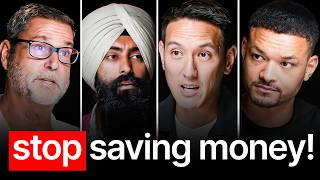
No.1 Money Saving Experts: Do Not Buy A House! Putting Money In A Bank Makes You Poorer!
The Diary Of A CEO
SRT - Most compatible format for video players (VLC, media players, video editors)
VTT - Web Video Text Tracks for HTML5 video and browsers
TXT - Plain text with timestamps for easy reading and editing
Scroll to view all subtitles
[Music]
When I grew up, everyone said to me that
to generate wealth, get a job, get
money, then get a mortgage.
>> That's one of the worst pieces of advice
you can give somebody. Your future self
is going to be poorer because of it.
>> But that's what everyone's doing because
we're not taught this stuff. So, what do
you think the biggest money mistake the
average person makes is?
>> Being a saver.
>> So, just having your money sat in a bank
account.
>> Yeah. It's a guaranteed loss. You're
becoming poor every single day. But
there are plenty of ways to retire early
and be financially independent.
>> And that's including secret hack that
makes people fortunes. So, let's talk
about making more money. This is the
ultimate money-making master class
>> as we are joined by three financial
gurus
>> with very different opinions and methods
to build future wealth. So, I want to
talk about pensions, credit cards,
renting, bad money habits, debt, passive
income, spending money to look rich. But
first, what is it that rich people know
that the average person doesn't know?
>> Rich people are more disciplined and
they're doing the little things that
compound into huge results like
investing. But for example, the average
American spend more money on Netflix
than they do on their investments. And
if I invest $1,000 a month for 30 years
in something like the S&P 500, I will
have about $1.9 million.
>> Or there's no asset in all human history
that's ever generated as much wealth in
a short period of time than Bitcoin.
>> There's one problem. Bitcoin is high
risk. And if any of those risks happen,
I don't
>> Let me let me finish. Do you want to
have hope that you have the Bitcoin or
would you rather have more security?
>> You can reduce risk. It's our job to
educate them. So, if someone was $1,000,
what would you suggest they did?
>> I have a different take on this. If
you're trying to make more money, I
would. And
>> what about bad money habits? Because
when you look at the stats, money is the
number one source of stress for
Americans, topping work, family, and
health. There's a three-step framework,
cuz I want to get into that. Number one,
>> I see messages all the time in the
comments section that some of you didn't
realize you didn't subscribe. So, if you
could do me a favor and double check if
you're a subscriber to this channel,
that would be tremendously appreciated.
It's the simple, it's the free thing
that anybody that watches this show
frequently can do to help us here to
keep everything going in this show in
the trajectory it's on. So, please do
double check if you've subscribed and uh
thank you so much because in a strange
way you are you're part of our history
and you're on this journey with us and I
appreciate you for that. So, yeah, thank
you.
I think the the first place to start is
people want to know how they can make
more money because if you don't feel
like you have money, saving and
investing in these kinds of things
appear to be pointless. I also
understand that that's not necessarily
true. I think you can you can start
investing and saving with a very small
amounts of money. But for those people
that are asking that question, if
they're listening to this now and going,
"How does one make money?" Like, you
know, I've got this job. I'm working a 9
to5. it's paying me £30,000 a year or
£40,000 a year, whatever it might be, is
the right question to be asking. How do
I make more money? And if so, how do I
do that?
>> I always think it's it's a combination
of making more money and also saving
more money. But let's talk about the
making more money piece. I think that
everyone is unique in their own way,
right? You've probably spent more hours
doing some sort of hobby that I have no
idea about. You play paddle, for
example. I've never played paddle in my
life. So, let's say you were Steve
Steven from age 20 and you're a really
good paddle player. You can start to
monetize this type of skill, which you
have that I don't, but perhaps you know
more than me. I could take lessons from
you. Even if you're not, let's say, the
pro paddle player that you are, I might
still be willing to pay you 20 25 an
hour for a lesson, right? Just cuz
you're naturally better than I am. And
so, I would encourage people to to kind
of lean into what makes them unique and
where where they've spent a lot of their
time. I think everyone has something
that they're good at inherently.
Figuring out what skills you have
internally and how you can kind of
monetize those.
>> What you think?
>> I think one of the the hidden things to
do is you really are a function of who
you're surrounded by. Invest in your
network. And I don't mean that in a kind
of coldhearted, you know, I want to
network with these people, but just
surround yourself by people who are who
are also trying to push themselves to
push their income, push their
opportunity set, and it makes it so much
easier. If you're the only one doing it
and you're around a group of friends,
you're the odd one out and you're
castigated for it. Find other people who
want to do the same thing and you kind
of help each other in that journey. So
at an early stage, that's just one of
the key things is to find people who
also want the same journey as you. M
>> uh that really helps. Then it's still
about the best leverage of your skill
set and being honest with what your
skill set is. Just because you you're a
doctor doesn't mean you should be a
doctor just because you've graduated
because you can do other things. And
it's it's figuring that out. That's not
an easy bit, but you figure out over
time by trying stuff. You know, we've
all done multiple jobs and we know what
we're terrible at and what we've been
good at and you kind of overindex on the
things you you're better at and that
works. So if you're if you're early,
it's the time to make bets in yourself
>> and your network and that gives you the
foundational tools to then earn more
income and then invest more.
>> Was there a pointless seemingly
pointless job you did that ended up in
hindsight making you the most money? And
what I mean by that is I think about my
experience doing teley sales between the
age of 16 and 19 as probably the most
important thing I ever did. Like not
only do I spend a lot of time talking
now, but sales is a transferable skill
across raising investment persuading
employees to come and join you. And I
think there's nothing I did that was
more important than telly sales.
>> The single best skill you can acquire in
life is is to learn how to sell. To be
comfortable around people and to be able
to get a message across is the single
most powerful tool you can have in life.
Everything you do finding a partner in
life doing anything you do is basically
sales.
>> And it's all people.
>> It's all people. So if I'm this 24 year
old and I a 25-year-old and I'm
ambitious. I want something big.
>> Yeah.
>> You got to find more income. You got to
have more income to do it. If I'm a
25-year-old and I just want to be okay,
I don't mind my job. I just want to
invest, you know, whatever. You got to
find the right investments. You got to
have a system for your money. And then
you got to create a plan. Anytime you
get paid, you know how much money you're
going to save. You know how much money
you're going to invest. And then you
spend what's left. Because the
difference between the person that
becomes wealthy and everybody else is
wealthy people save and invest their
money first. Everybody else, especially
in America, I spend all my money. I
wonder where all my money went
>> and then if there's anything left, I'll
try to save and maybe invest and
hopefully I'll get rich.
>> For me, it's all around based around
what is your vision of your future self.
>> You know, how do you see yourself
living? Because that is what we do. It's
one of the sources of unhappiness is if
your current state is not moving on the
path of where your future self wants to
be, how you imagine yourself. So
practically and tactically, how do they
do that? How do they create this this
financial vision board? Is there do they
need to know certain numbers? Do they
should they get clear on if they want to
be on a private jet or easy jet? Like
>> oh man, I think I think you know if if
if you have to ask yourself, hm, do I
want to fly on Spirit Airlines or do I
want to fly on a private jet? I think
you already know that question.
>> But is it important to be explicitly
clear with yourself? Because actually,
if I think of most of my life, I I
wasn't entirely clear. And so you either
end up chasing
>> because more and more
>> because it's generally not a
materialistic outcome. It's generally an
emotional outcome.
>> Yeah.
>> And that's why it's hard to to pinpoint
exactly what it is. But you need to
position yourself in that future self
and say, "What does it feel like? Do I
feel secure? Do I feel this? Do I feel
that?" So it's it's an emotional thing
and not a material thing.
>> Is that is that central to a lot of
this? You talked about emotional
elements. is being okay with
what other people think of you.
>> Yeah, that's the other thing is social
pressure, right? So, you may have the
vision of yourself and you just say, "I
want the the three bed house, you know,
with a little strip of lawn and your
barbecue and that's great
>> and around you people like you should
try harder."
>> Yeah.
>> So, they're questioning your own sense
of happiness and society does that at
scale. And then even the whole media
complex is about kind of how unhappy and
how miserable you are and should be. It
doesn't make it an easy place.
>> We're talking about emotional and
psychological barriers here. How do we
get over people not just being scared of
what other people will think, but so
many people are scared of their own
money? When you look at the stats around
avoidance, 82% of Americans admit they
avoid thinking about their own finances.
And one in four Americans have avoided
medical care because they're afraid of
the the bill and thinking about how much
it might cost. For Gen Z's, 67% of Gen Z
and 58% of millennials say they avoid
checking their own bank account because
it's too stressful, which is compared to
only 30% of boomers. And on in terms of
mental health, money is the number one
source of stress for Americans topping
work, family, and health.
36% of people with debt experience
clinical anxiety and 23% depression. So
people avoid their own money. A lot of
people avoid it because the financial
world's full of jargon.
>> Y
>> you need to go to a professional for
advice. That's what people think.
>> It's intimidating. You don't feel like
you've got enough money. You're going to
let them down, yourself down, your
family down. So, there's this whole kind
of thing around it.
>> It's the confidence that you can learn
because a lot of people say, "No, no,
unless you're from an investment bank or
you're in a RAIA or something, you can't
do this."
>> Right? but just a little bit of
confidence to say, "Yeah, you can do
this."
>> A simple tip that I think people can do
is just kind of figure out how much they
spend on a monthly basis. Track your
expenses for 30 days, 60 days, or 90
days. And you're going to learn so much
more about just your personal habits of
what you do. Cuz sometimes I'll forget
that I door dash something for $30. Or
I'll forget that $15 or $20 Uber charge
and I'll just kind of file it away
because I'm swiping my credit card. I
don't really I'm not aware of it. It's
like if you're going to the gym and
you're not aware of your weight, how are
you going to where where's your starting
point? So you I like to give people a
starting point because then they can
kind of have that small step to kind of
start working towards their finances in
that sort of way.
>> 65% of Americans have no idea what they
spent in the last month according to the
US Bank. And 60% underestimate their
monthly spending by a significant
margin.
>> Right? And that's exactly what I found.
I track my expenses for a month in 2014.
I thought I was spending 1,500 bucks a
month. Guess what? I was spending $2,800
and I wasn't making that much and I was
like, how am I off by an order of
magnitude of I don't know 60 70%. And I
find that even like all my friends I
issue this challenge to mo most of them
don't make it to the 3 months. But I
think as long as you have an
approximation of what you're spending
that can help because that that means
then you're going to have a little bit
of a difference of what you make and
what you spend and then you can save
that money and I think that's one of the
bad money habits of Americans is they
don't save right. So,
>> it's a really good point which is a a
practical step to just heighten one's
awareness because you need to have sort
of informationational awareness of where
you're at to even understand what you
need to do to get to where you want to
go. So,
>> yeah, I think you need to start with the
mindset. You have to build the basics.
You got to get rid of the credit card
debt. You got to save a little bit of
money, but you got to have some
breathing room because investing is all
about taking the extra money that you
have,
>> throwing it somewhere to grow that
money. And this is where uh there's a
three-step framework that I'll talk
about because there's a lot of ways to
invest. At the very simplest is I could
be completely hands-off. I can work with
a financial adviser. I can give them my
money and they can do everything for me.
If you don't have a lot of money, you're
not going to get a very good adviser.
But there's a con and a cost to a
financial adviser, which is the amount
of money you have to pay because they're
going to charge a fee. So, if I invest
my money, $1,000 a month with a
financial adviser, I get a good
financial adviser who beats the market.
They get 11% a year, but I have to pay
1.5% a year. After 30 years, I'm going
to have $1.8 million after paying
$600,000 to my adviser. Stage number two
is I can be a completely passive
investor. It's a little bit more
involved than an adviser, but I can just
put my money into the stock market,
something like the S&P 500, which is a
group of the 500 largest companies in
the stock market. It's kind of like
investing your money into the United
States economy. This has historically
averaged 10% a year, which means if I
invest $1,000 a month for 30 years, I
will have about $1.9 million. a little
bit more work than completely hands-off
but still pretty passive. Then we have
the people that want to be more
involved. What we call is a active
investor. And an active investor is
somebody who now wants to invest their
money themselves. And I don't mean
trading. I mean actually investing their
money. And now I'm going to be doing the
research to find which investments I
want to own. Maybe it's real estate that
I want to own. Maybe I want to invest in
individual companies. So it's more risk
for more potential return. A small edge
can give you outsized return.
Because if now I don't get a 10% return,
I can get a 13% return, which you know,
we're not talking about 200 or 50%
returns. A 13% annual return means that
my $1,000 a month over 30 years is now
going to grow to $3.5 million. So about
$1.6 $6 million more than before just
with this slight edge. And you got to
figure out how involved you want to be
>> on this point of being an active
investor and picking stocks yourself
versus being a passive one. The data
shows that passive investors who invest
in the S&P 500, like you said,
consistently outperform most stock
pickers over a 20-year period, more than
90% of actively managed investors, so
talking about funds there, underperform
the S&P 500 after fees. So, should
people be actively investing or should
they just put the money in an S&P 500
and be patient?
>> I say most people should not be active
investors. In fact, I say 98% of America
should not be active investors. Just be
a passive investor because if you don't
want to put in the work, if you're not
willing to put in the time and the
effort to research, you're probably
going to lose. And many people do.
>> So, why do people want to be active
investors if the if the probability is
stacked against them? Well, if you get a
little bit better returns, if you're
willing to put in the work, you can get
better returns and it is possible. We do
see people that are doing it consist.
>> Is there an element of fun in
entertainment?
>> Absolutely.
>> People like sports betting and
>> that's the problem because the fun is I
like researching versus, oh, I want to
see my money go up tomorrow. If I buy a
house tomorrow morning, am I going to go
on to Zillow in the afternoon, check,
what is my house price? I'm going to
check in the evening, what's my house
price? No. because you know that this is
something I want to own for the long
term. Well, when I go into the stock
market because it's so liquid, I buy a
stock in the morning, I'm checking it 15
minutes later, I'm checking at lunch,
I'm checking in the bathroom, I'm
checking in the evening, I know I'm
getting anxiety cuz if it's going up or
down, I'm I'm a very emotional and
that's that emotional
control as an investor, which is just as
important as the research that you're
putting in. I see I fundamentally differ
on all of this stuff is people are so
screwed. They are coming out of
university with massive debts. We looked
at the stat earlier um off camera when
we were talking about the fact that
percentage of 30-year-olds who have a
mortgage and a and and are married has
gone from 52% in 1950 to 12%.
Nobody can afford anything. So if you
look at the average millennial in the US
and a Gen Z, they generally have a 401k
if they've got a job, right? They have
some sort of savings, but they're taking
massive amounts of risk. A lot of us
would look at them and say, "This is
ridiculous."
>> Why are they taking risk for anyone that
doesn't?
>> Because there is no way of closing the
gap between buying, getting the deposit
on the house, getting into a house,
realizing that future vision of
themselves, however reasonable that is.
Why
>> it's so far away? because the ass the
cost of assets has gone up so much
versus the incomes don't go up.
>> You mean the cost of buying like a house
for example?
>> Yes. Or even however much percentage
share of the stock market the average
salary does, you know, stuff like that.
That you're you're getting less for your
money. So your future self is
automatically going to be poorer because
of it because you could buy less of a
house, etc. Explain that to me like I'm
an idiot, like I'm like I'm 10 years old
and maybe in the context of this mug
here
in terms of the how why is that worth
less now based on what you said?
>> The way of explaining it is money is the
medium of exchange, the thing that you
buy something with. If we all have a lot
of money, we've all got a stack of cash
on this table and you want to sell that
mug. We can pay anything for that mug
because we've got a stack of cash.
>> Mhm.
>> So that mug suddenly is worth not the
$10 it's supposed to be worth. It's
suddenly we're paying $150 for the mug.
Why? Because that money has no value to
us because we've got excess money. So
when you create excess money in the
system, it's this debasement of
currency. It's an optical illusion that
the value of assets are actually going
up. They're not. It's the value of your
money is going down. And this is this
pain point because your earnings
only grow with economic growth generally
plus your progression of your career or
whatever it may be. But those things,
the scarce assets are going up optically
by the amounts they're lowering the
thing. So what you find is salaries go
up at about 2 or 3% a year.
And the house of the cost of the S&P is
about 12% 13% up every year and a house
price is about the same. Gold is about
the same.
>> And that's because they're printing more
and more money.
>> Correct.
>> Okay, that makes perfect sense to me. So
I'm imagining you all have a big stack
of paper in front of you which you're
using it to take some notes on. And if
if I was saying I'm going to sell you
guys this mug for some of the paper you
have there, but then my team said you
guys can have unlimited paper. this mug
loses value because you can all just
offer a gazillion sheets of paper for
this mug.
>> Well, it doesn't lose value. It
optically will give you a gazillion for
it as opposed to, you know, three sheets
of paper because we've got so much
paper. It matters not.
>> So, I'll be I'll be thinking, "Wow, like
this mug is worth a gazillion sheets of
paper, but actually the each sheet of
paper is now worth nothing."
>> Correct.
>> Okay, got you.
>> And this is the problem that people are
finding is they put money in a 401k, you
compound it at 10%. for my generation.
Yeah, that was that was how the world
worked and it was great and it worked
and now it doesn't work. So, they need
assets that go up 50% a year, 100% a
year, which is ridiculous, but luckily
we've been gifted a few. Um, and so
that's helped.
>> Go on and say it.
>> Well, it's crypto. Simplistically, it
just outperforms all other assets even
with the excess volatility. So, Bitcoin,
for example, produces about since 2012,
it's produced about 145% a year returns.
So that's 10x the stock market
and that's including three 70% draw
downs in the middle of it.
>> A draw down being a drop.
>> Yeah. Well, you feel like you're an
idiot. You're losing money. It's all
going to go, you know, you've made the
biggest mistake in your life and it
recovers and it keeps going because it's
a it's a technological network adoption
model that's happening. So, it's just
sucking in more and more people. So
there's now 650 million crypto brokerage
accounts in the world, which is more
than all the stock market brokerage
accounts added together in the world.
And we're seeing it all around the world
because everybody can buy a share of
something. So as opposed to be able to
buy, nobody can buy a Fifth Avenue
apartment here. Everybody can buy a
fractionalized share of Bitcoin, which
is in theory $100,000 asset. But we can
all put in 10 bucks, five bucks, a
thousand bucks, 10 billion.
>> Let me challenge it then. So, Bitcoin
isn't based on anything, though. Okay,
I'm being I'm being a futter here.
That's my job.
>> Bitcoin isn't based on anything. It is a
database in the sky that isn't backed by
gold or it doesn't produce any sort of
valuable asset as its byproduct. So, why
how can we have faith in Bitcoin? It's
essentially in its essence before
someone clips me, this is I'm playing
devil's advocate cuz I know they're
going to clip this part out. It is
essentially many would say a Ponzi
scheme.
>> Mhm.
>> Which is it only goes up if other people
take part in it and if everybody decides
that it's um not worth anything then
it's going to go to zero.
>> So all money is social consensus.
Everything. Gold has no real value.
>> I can build a table with gold though. I
could rest some things on it and it's a
good it doesn't rust.
>> If you're building a table of gold, then
the value is going to be much less if
everybody's building gold tables.
>> Trump has
>> we do
um and so really it's just social
consensus. What do we as humans ascribe
value to?
>> But the problem with the 145% like you
mentioned, Bitcoin has fallen by 70
plus% on multiple occasions.
>> If we let's go back to the S&P 500. A
lot of people invest in the SPY, the S&P
500, and still lose money. Why? Because
when the we go through any downturn,
people panic and they sell.
>> And and if we look at I mean Bitcoin's I
think Bitcoin's 2009 if when it started
if I'm not mistaken.
>> Um
>> if we look at the crashes from you know
recent history 2020 stocks fell by 30%,
Bitcoin fell by 50%. 2022 stocks fell by
20. The S&P fell by about 20%. Bitcoin
fell by 60%. So in those times, people
who are in the S&P are freaking out
selling.
>> Yeah. But here's the thing. This is the
riskreward that people don't understand.
If you've got a time horizon, let's say
the average draw down in the S&P during
a a bare market is 25%.
>> A draw down being a a drop.
>> A lot. Yeah. A drop. A drop in prices.
you're getting compensated 15% a year
returns for that at best. In Bitcoin,
the average draw down over the same
period will be about 70%. But you're
getting 150% return.
>> If you're on the winning side, though
I buy it and I can sell it for a higher
price,
>> hold it. Just hold it.
>> That's the key.
>> So all of these are in a nice trend
channel. They go up. So anybody can buy
something and hold it long enough it
will go up. Well, what about let's look
at housing. We could say the same thing
about housing. 2008, housing crashed.
Just hold it. I have too much debt. I'm
underwater. My bank's taking it from me.
People are buying Bitcoin with debt.
>> Yeah. I mean, that would not recommend
that. But housing's different because
you can endlessly create more housing.
>> And we have a demographic problem in
housing that makes it more complicated.
Demographic problem is A, everyone's
leaving the cities now.
B, the generational gap. Nobody can
afford the boomer houses. We don't have
enough cheap housing for young people.
People are relocating, moving around.
So, we got a very interesting mismatch
in real estate now that makes it more
complicated than it used to be.
>> Absolutely. And and I do want to say I
think the part that we fundamentally
differ is not that there's value in
crypto. I own crypto,
>> but the difference between you and I is
you are all in crypto. For me, it's a
speculative piece of my portfolio. So, I
invest in my own business. I have real
estate, stocks, my speculative assets,
and then a little bit of gold.
>> Imagine how difficult to replicate what
you've achieved in your amazing career
is for the average person listening to
this versus buying one thing in your
Coinbase account, your Robin Hood
account, and doing nothing. It's so
there's no cost. It's not like buying a
house. It's like servicing all the
stuff. There's no debt involved. There's
nothing
>> in theory, but theory isn't reality. How
many people end up losing money when
things go down? How many people panic
especially with Bitcoin? Because if we
look at especially the early adopters of
Bitcoin, who are those people? These are
the people that well a lot a lot of the
average person is I want to get rich. I
want to get rich quick. It's I want to
make money fast versus the average
person who's buying the S&P 500. This is
somebody who is I want to invest and
build wealth for the long term. It's a
very different mindset. The average
investor of this is 32 years old. And we
said, "No, you need to invest for the
long run. They're never going to have a
house. So they their whole vision of
their future selves is utterly
destroyed."
>> So it becomes a logical thing to
actually take more risk. It's logical
for them because they've got nothing to
lose.
>> So Bitcoin you're saying is 145% a year.
>> Yeah. And in recent years as the trend
rate of adoption grows, it's probably
down to about 100% a year. Let's call it
that for easy maths. But now let's think
about this just from a practical
long-term perspective. Warren Buffett is
arguably the best investor in the
history of time.
He has averaged about 19% a year over
the course of his decades making him a
multi multi multi-billionaire.
And so when we compare a 20% return from
one of the top investors in the world
versus hey Bitcoin is going to give you
100% a year there's there's some sense
of something wrong. So, even if I'm
wrong by 50%. You still outperform
Buffett. To put it in perspective,
Bitcoin since 20 2010 has done I think
it's about 90 million% returns. There's
no asset in all human history that's
ever generated as much wealth in the
shortest period of time. And because
it's not a random thing, it's actually a
technology. It's a network model of
technology. as more people use the
network and we see with Bitcoin,
governments buying it and asset
management firms buying and everybody
else you have this network adoption
model and so what it creates is the same
chart as Google or Amazon all of these
it just goes up in a log trend over time
with some volatility so you've got a
secular bull market which means that
over time prices go up for measurable
understandable reasons and it happens to
be the highest performing asset of all
time. There's one problem
>> and it's volatile. The psychological
thing you're dead right about. It's re
very hard when it falls 70%. I've gone
through three of those. They're hard.
>> The problem is
just like with real estate,
everyone has said real estate only goes
up. Well, how do you make money on the
real estate? You make money when you
sell or you lose money if you sell.
Ultimately, it comes down to that. You
make or lose money only if you sell.
Well, what about everything along the
way? And what if I need to sell during
that 70% crash? Because what happens
during those crashes? A lot of times
people lose jobs. A lot of times people
lose their income. A lot of times people
need that money during that time. And so
now I'm desperate or I'm panicking.
There's there's two things happening and
now maybe it's the end and I go in and
now I lose money thinking that I'm going
to make all this money.
>> I think I can appreciate your love for
cryptocurrency and your 100%
concentration in cryptocurrency.
>> You're saying it's suitable for
everybody, right? I've got my the you
know bottom of Maslo hierarch of needs
taken care of. I've got houses. I don't
have debt. You know, it's easy for me.
I've got multiple sources of income that
I can take that back. I'm not saying
that for everybody, but I can also
understand why a 25year-old can do that
too because they got nothing to lose.
>> But do you think that if a 25year-old
puts their entire salary and savings
into Bitcoin and they lose it, let's say
they run through a 70% draw down, aren't
they just putting themselves in a bigger
hole for their future as well? like
maybe before there was a a glimmer of a
chance that they could that they buy a
house and then now they can't.
>> The most important um part of financial
markets is the least understood is time.
>> Mhm.
>> It's not just price, it's time. So if
you're 25 years old and you get wiped
out,
>> we've all done it. We've all kind of
screwed up and you know had to move home
to our parents or do whatever. We've all
done it. You can do that several times
when you're young and it's okay. You
just don't want to do it.
>> At age 50. Sure,
>> you really really don't. You become more
risk averse generally speaking.
>> It just depends where you are and how
much time you've got to take that risk.
>> But now, if I'm investing my money in
Bitcoin or really anything, a lot of the
value is what some people refer to as
like equity. It's it's I bought it for
like I started buying Bitcoin when it
was $3,000.
That other stuff is equity. It's
invisible money, which in my view is is
theory. It's not actual money in my bank
account. It's sitting there waiting for
me to sell, hoping that when I go to
sell, it's going to be a profit versus
cash flow.
>> If I buy a dividend paying stock,
>> what's a dividend paying stock?
>> Some companies have big profits. For
example, McDonald's has billions of
dollars of profits. There's three things
that they can do with their cash. They
can save that money for an emergency.
They can take some of that money and
reinvest it and open more stores and
create better burgers. Or the third
thing that they can do, which some
companies do, not all, is they can just
give this money away to their investors,
the shareholders. It's called a
dividend. So, it's a cash payment for
doing nothing except owning that
investment. So, if I buy something,
whether it's ETF, stock, or whatever,
that's paying a dividend or a rental
property that's putting money in my bank
account every single month or year,
that's money I can use to buy food, go
on a vacation, do something. Here's
here's what Let me tell you.
>> You're getting paid 4%.
>> Listen, who cares? I started buying
Bitcoin at $3,000 a coin when it was at
I went through multiple crashes. I
remember when $20,000 of Bitcoin was the
oh my god, we did it.
And once it hit around 70,000, I looked
at this and I said, "Wow, I have my real
estate, my stocks, my speculative, which
is crypto and startups, and then 2%
gold, which is now looking extremely
inflated. I need to lower this. That way
I can have some more income." So what
did I do? I sold some Bitcoin about
rental properties. That now rental
property is putting money in my bank
account every single month.
The Bitcoin, it's a big number on paper,
but it doesn't actually mean anything
unless I do something with it.
>> Could you have staked it, which means
you can stake the cryptocurrency and
make a monthly yield from it,
>> get a loan against it?
>> Now, that's adding risk. Well, what
happened into if I take a 80% loan, 70%
loan? Let's let's uh 50% loan.
>> Yeah, it's it's very volatile. So
>> So let's take let's take a 50% loan
>> and Bitcoin falls by 70%. Which it has.
Now I'm underwater. Now what? Now the
bank comes knocking on the door. Margin
call. You're forced to sell and it's a
foreclosure.
>> My point being on my Bitcoin.
>> I mean, I don't disagree and really
speaking, people should have the ability
to have cash flow or cash for if things
go wrong, right? That's really a super
important thing to be able to have a
long-term view to be comfortable with
draw downs to be able to invest in
startups or to to invest in crypto or
technology and all of this stuff. Um,
that makes sense, but I just don't think
a dividend of 4% makes any difference to
anybody.
>> Well, it does if you do it consistently
month after month, year after year.
>> You need huge capital to start with to
be worthwhile.
>> No. If if you if you start investing for
dividend income, I call it a decade of
sacrifice. And this is why it's so hard.
>> Yeah. But if you're 33 years old now,
you're sacrificing till you're 43.
>> You're going to become 43 at some point.
And imagine if you're 43 and now you
have the income to pay for that car, to
pay for the house, you don't have to
worry about it. Well, do you want to
have hope that you have the Bitcoin or
would you rather have more security? I'm
again Bitcoin in my perspective high
risk high potential return and I'm not
saying don't buy it. I'm saying allocate
it in your portfolio in a way where you
understand you are arguably one of the
top crypto experts in the world.
>> I'm not I also am not the stock expert
in the world. I'm also not the real
estate expert in the world. What I doing
is I'm probably going to be wrong. If my
stocks crash, I have my real estate. If
real estate crashes, I got my stocks.
Crypto crashes, well, that's part of my
speculative portfolio. I really don't
care. And if everything crashes, I got
some gold. So, for me, I have to
diversify against myself because I know
stocks crash. I know crypto crashes. I
know real estate crashes.
>> But if you're not starting with a lot of
money, your your strategy is the
strategy of a rich person. Oh, I've got
houses and I've got dividends and I've
got some gold and I've got a bit of
this. That's the strategy of being
>> But I didn't start with all of those. I
didn't start with all those at all. I
started with one.
>> Where did you make most of your money?
Being an entrepreneur. What would you
taking obscene risk?
>> I did. That was me.
>> An entrepreneur is taking obscene risk.
>> But if I'm making $50,000 a year, the
first step, let's assume now I'm putting
$5,000 aside, $7,000 aside a year. I can
take high risk, high potential return or
I can be conservative or a hybrid
and not everybody should be taking all
the risk because there's Bitcoin has
risks and again I'm telling you somebody
who owns it the government could come in
and change policies on Bitcoin.
Quantum could change Bitcoin.
people could stop caring about Bitcoin.
And if any of those things happen and
all my money is in this very speculative
asset, I'm the one that's carrying all
the risk.
>> So, if you if someone was $1,000 in
disposable income to invest, what would
what would you suggest they did,
Humphrey?
>> My take on $1,000 is as has changed over
the years. I used to say you could
invest $1,000, but as as rule probably
mentioned, 10% on $1,000 is is not that
much, right? So, like, you know, if you
invest $1,000 bucks in the S&P 500, you
get 10%. Next year, you'll have $1,100.
That $100 is not going to change your
life dramatically. So, if I had $1,000,
I'm investing in myself. So, trying to
improve my skills to make more money at
some point.
>> How exactly would you do that?
>> When I was uh still coming up, I was
trying to take a lot of courses online.
So, I try to figure out different types
of skills that I could that I could use
in the marketplace. So, I took a AdWords
course back in the day for like 150
bucks that taught me how to do Google
Adwords and I would try to consult for
for businesses out there to try to make
more of an hourly income on the side.
>> And Google Adwords, for anyone that
doesn't know, is Google's advertising
platform.
>> Yeah. And now there's Tik Tok ads and
Facebook ads, but you know, anywhere
where I could be more of value to
another business, I knew that
economically speaking that I could
command more in the marketplace.
>> So, something with that like that would
be great. So, so right now clearly that
is AI because what what you saw there is
like a knowledge arbitrage with a new
technology where most people didn't
didn't understand AdWords and you could
be the young guy bridging the gap for
people's ignorance. So most businesses
now would be dramatically more efficient
and effective if they understood even
the basics of AI.
>> Yeah.
>> So a kid could take a a course in AI and
do you know what's crazy? If you read
the top 10 books on AI, you'd be in the
top 1% in the world in terms of
knowledge.
>> Yeah. I mean if you just read the
instruction manual of how chat GBT or
you know quad works you you could
probably be in the top you know 1% of
prompt engineers right and that could be
a that could be a value to a business or
service right so
>> that's probably where my career came
from was we were the kids 18 19 20 years
old that knew social media cuz we'd
messed around with it so we sold it to
companies right
>> and that started my first business and
then there was soon hundreds of us
>> and there's there's a lot of these apps
right now coming out from 18 19 20 year
olds have you seen that that one profile
of that guy who created Calai. Uh Calai
is this this app where you take a photo
of your food and then you know it sends
it to to AI and it tells you how many
calories are in it. Well, the guy's
making 50 million bucks a year or
whatever it is. And
>> yeah, I saw that this morning, funnily
enough, for $4 million a month he's
making from a
>> like Chad basically it's an AI rapper
obviously. I think he has some, you
know, secret sauce that he puts into it,
but a lot of a lot of kids these days
are using AI to try to leverage that and
and try to turn bit turn them into
businesses. I do want to say though, I
think with $1,000 and with with what
Jess Breit said, I think you can still
make a decent if you can make a decent
income, you can start to slowly save and
invest your way to some sort of
semblance of retirement. I think you can
still be able to retire and be
financially independent without having
to, let's say, bet your life savings on
on crypto. I know that I personally
bought Bitcoin at $100, but I've sold it
many time. You know, I bought and resold
it so many times because, you know, when
it's up 10x, you're like, "Oh, like, you
know, if if you had given me a 10x
return when I first bought it, I like,
yeah, I'm taking that any day of the
week, right?"
>> Mhm.
>> And so, I think that's why it's so hard.
It's like Bitcoin does produce 145%
return since 2012, but in 2012, no one
knew how to buy it. I bought it on some
random sketchy website. I got this like,
you know, this this string of characters
for my wallet and I I try to buy, you
know, I try to buy a coffee at a cafe in
Palo Alto and I didn't know that bitcoin
transactions took 30 minutes to go
through. So, I sent Bitcoin twice for a
$5 coffee. Now, keep in mind this is 0.1
bitcoins, right? This is 10k worth. It's
an expensive coffee.
>> I sent it twice and they didn't get it.
And guess what? I still had to pay for
the coffee with my debit card.
>> So, where did my go?
>> You spent what? 20k on
>> I spent 20k on coffee. Yeah, that could
be the title of this video. just
spent 20k on coffee. Yeah, I literally
was I I sent it to Koopa Cafe in Palto
if anyone wants to go there.
>> I think the average person
psychologically speaking,
>> it's really hard when it goes down 80%.
And if Jasp Breed says you need money
like at that moment, you're going to
sell it.
>> But your your point about I mean the
primarily important thing is income.
>> Yes. I mean, and that and we talked
about last time I was on the podcast,
he's like, "How do you just leverage the
same skills in different ways that you
can earn more money from it?" Like the
story I was told when I left university
was speaking to a friend of my dad's, he
was like, "Well, what are you going to
do?" And my father was in marketing and
I liked marketing and but it was like
late '8s Wall Street thing was going on.
And I'm like, well, I'm thinking about
either going uh to work for somebody
like Mars, do marketing, you know, great
company, or or going work in the city in
London. And the guy looked at me and
said, it's really simple, Ral. It's the
same job. You're a salesman in both.
One, you get free miles, and the other,
you get free money. And he realized, oh,
there's actually arbitrage in what you
can do with the same skill set.
>> Mhm. Well, I would say there is a point.
So, I agree. If it was me with $1,000,
I'm going to go out and invest in my
income, read some books, get whatever I
got to do, go start something because
that's enough. But if we look at time,
$1,000 compounded is decent. If I if you
go back 1971,
>> but how do I pay for my college loan and
my house deposit and I want to get
married and have kids?
>> You're telling me I can't do that for
another 20 years? If I took $1,000 in
1971, I invested that into the S&P 500
and I did nothing else. I keep doing
whatever I'm doing, my job, and I only
invest $1,000. I never invested another
penny again. Today, that would be worth
if I reinvested my dividends about
$330,000.
And I never invested another penny after
the first $1,000 investment. Why?
because the S&P 500 has grown by a
little bit over 10% a year from 1971 to
now. It's something. Now, imagine if I
invested $1,000 a year, $1,000 a month.
Now, I can't say that about Bitcoin
because Bitcoin didn't exist 50 years
ago. I can't say that about Bitcoin
because Bitcoin didn't exist 25 years
ago. And so,
>> how about Amazon?
>> What about Amazon?
>> That's that started trading in 2000 or
even better, Facebook 2012.
How do I
>> do we not invest in it because it wasn't
around? It hasn't been around as long as
gold.
>> I mean, it's been has been around less
than Bitcoin has shorter of time
>> creates a profit. It has a tangible
value that you can see and feel because
I can go on to Amazon and order myself a
brand new guacamole set. They'll be
there in 2 hours.
>> They didn't make a single profit until
what, 2018?
>> Well, but that was that wasn't because
they weren't producing a value. It's
because they were growing so
aggressively. So, you think if you had
$1,000, you should you should invest it
in the S&P 500.
>> Well, I'm not saying you should. I think
personal finance is personal. I think if
it was me, I'm if I have $1,000 extra
and I'm just trying to figure things
out, I'm going to go buy some books. I'm
going to buy a class. I'm going to do
something about how do I increase my
income? Going back to what you said,
>> but if I'm saying I just want to work my
job. I don't want to go out and do all
that. I would do half into the S&P 500.
Yeah.
>> And I would go half into uh individual
companies. So, more risk than the S&P
500. not as much risk as the Bitcoin.
And the reason why I would do this is
because this is something I enjoy. I
like that research side of things and I
understand this is something that I
could see returns with. Like you talked
about Amazon, like you talked about
Microsoft and whoever, there's
potential.
>> And what about you, Humphrey? If
$10,000, does your strategy change?
>> My strategy is a little probably more
conservative or traditional. It's
probably 90% index funds. Uh so tracking
the S&P 500 and then 10% speculative.
And my whole goal for that 25-year-old
would probably be to get to $100,000 as
quickly as possible because at that
point I think they have more options and
flexibility and they're able to kind of
use that capital to maybe take more risk
after
>> that's still 10 years with the S&P.
Well, eight years of the
>> S&P about 7.84 years. Yeah. But that
also assumes that they're only doing the
10,000 bucks a year. Maybe they they can
save and invest a little bit more.
That'd be nice. But I think for a lot of
people in America, if they can get a
guaranteed $100,000 in 7.84 in 84 years.
I I think a lot of people might opt for
that.
>> So, I agree, but I'd remove the S&P.
>> You do all crypto?
>> No, I just do NASDAQ.
>> Oh, yeah. You do NASDAQ.
>> So, NASDAQ compounds at 18% a year.
>> What is NASDAQ?
>> The NASDAQ is um the NASDAQ 100, which
is the top technology stocks in the
United States, right? We live in a world
that tomorrow will be more digital than
today, guaranteed.
Um and so therefore, these stocks tend
to generate the most performance. And
we've talked about many of these names
that is all in the NASDAQ. So a little
arbitrage is if you want to shorten your
7.8 years
>> to 5 and a half years, 6 years,
>> buy the NASDAQ 100. It's an ETF, zero
cost, easy. And then I would say and
then do 70% that 30% crypto and you
don't have to care about anything. True.
>> You're fine. Now, if you have a
different risk tolerance, you can tweak
those dials. Or if you are more
risk averse, then you up your cash dial
or or some other more stable flow,
whether it's gold, although gold is
still driven by the debasement of
currency. They're all the same thing.
They're all driven by the same macro
factors. But so, yeah, similar kind of
idea.
>> And the NASDAQ is great. If I just say
one thing, but just like with Bitcoin,
the difficult part with the 18% is you
got to be willing to go through the
downturns. And I want to make sure that
that's clear because I mean the big drop
2000 the NASDAQ fell by 78%.
From its peak during that time the S&P
500 fell by 40%. So it's a bigger drop.
Not to mention the NASDAQ didn't get to
its level until 2015.
15 years later of no money.
>> It is still compounded more returns than
the S&P.
>> Absolutely. If you held on,
>> you can't live your life of the drop.
>> 100%.
>> It's got to be in the riskadjusted
returns versus the gains.
>> But how many people can hold on for 15
years and say year one, h no big deal.
Year two, okay, year three, year five,
it's going to go up. Year 10, it's going
to go up. And by the way, year 10 was
also another crash because
>> all you have to do is dollar cost
average.
>> What's that? So dollar cost averaging is
if you're young and you're you've got a
bit of excess cash now. You know, you've
sold your income a little bit as opposed
to just chucking everything in or you do
you put your large sum in. You've saved
up your 10 grand, but now you've got
maybe $500 a month of of free capital
you want to put into your savings. So
when you have these drawdowns, you're
actually keep buying. And what happens
is it lowers your average cost over time
and you get to new all-time highs in
your portfolio much before the market
did. So for example, in the last crypto
down cycle in 22,
in 22 all I did was add as much as I
could to my crypto. So I was at new
all-time highs in my portfolio well
before the market was because I'd
lowered my average entry. That compounds
your profits over time incredibly. And
is there something psychological there
where if you commit to the habit of just
putting $500 in regardless of what
happens,
>> you remove emotion.
>> You remove a bit of emotion from it.
>> And the emotion is the thing that people
struggle with. If you're investing in
things that are more volatile,
um you firstly understand that you will
see larger draw downs when markets go
down. Usually they're all correlated.
They all go down at the same time, all
up at the same time.
>> So you're going to do that. But if you
tell yourself that's an advantage for me
because I can buy more, that's a secret
hack that makes people fortunes
compounding. This is Warren Buffett's
thing.
>> I% agree with that.
>> More companies in a bare market than in
a bull market because
>> I agree.
>> Yeah, I I 100% agree with that part. I
call it poop.
>> Uh panic leads to overselling leads to
opportunity leads to profit. So I am on
board with that.
But that requires a specific level of
financial sophistication.
>> No, even your Coinbase app can just you
can
>> dollar cost average.
>> But how many people can dollar cost
average down 70% for 15 years waiting to
see that?
>> It wasn't 70% in 15 years. It was it was
70% in one year and then rallied ever
since. Every single year after year
after year it went up.
>> Did you see that down? Well, no. After
the 2008 crash, the Nasdaq also again
crashed more than the S&P 500.
>> And then step back and look at the
returns of the NASDAQ first.
>> I agree. Over the long term, it's a
great investment, but volatility is hard
for the average person who doesn't have
the emotional IQ and the financial
sophistication to understand.
>> That's our job to educate them.
>> Yes,
>> our job is to help people in this
journey
>> and not get them to make decisions that
compromise their future. we have to help
them. I agree. And riskadjusted returns
and time horizon are two of the single
most important thing.
>> And so what I hear I mean through
history contrarians have made the most
money. Um and also I think what the
other thing that I've really pulled out
from what you both were just saying
there is you need to set up a system
that removes emotion and requires you to
not make decisions because it's in
making decisions that your amydala the
emotional center of your brain is going
to do make a bad one. And it's that I
think that that self-awareness emerges
from what you were both saying, which is
okay, my brain is going to panic. It's
going to poop or whatever you were
talking about there. And I need a system
which is panic proof. So you know that
the best performing brokerage accounts
in the United States are dead people.
>> That's true. It's a known fact because
they don't do anything. So they have
these accounts that haven't been closed
and they're inactive. They outperform
all the active people. You are 100% in
crypto in terms of your investment
portfolio.
>> Yeah.
>> So, you must be sat here thinking that
actually when I ask that $10,000
question, what what would should someone
do with $10,000? You must be thinking
that the right answer is to put it into
crypto.
>> The right answer for me is that to his
point,
>> but you you I actually would say but you
know this is it's an audience of people
and people misinterpret things. Yes. The
answer is we've been given the gift of
the greatest performing asset the world
has ever been given. That's not just
Bitcoin. That's the the crypto complex.
If you're very careful in investing in
like top projects, you can even have a
more a broader diversified portfolio of
that. Like you've had Ethereum, Bitcoin,
Salana, Sui, all of these things great
they will definitely outperform for a
period of time and that's based on
macroeconomic factors which is the
debasement of currency which we've
talked about. That means all of these
assets go up by a certain amount and
some outperform it. The only two assets
that outerform the debasement of
currencies is the NASDAQ
and crypto.
This has been a persistent trend that is
observable and measurable. So this is
not a speculative asset. What it is is a
met law adoption model. Bitcoin is the
adoption of let's say a money or
collateral layer like gold, digital gold
we'll call it. While the rest of crypto
is the new rails for the internet. So
it's a tech technological investment. It
is growing at twice the speed of the
internet in terms of adoption and has
been since the first 5 million IP
addresses for the internet and the first
5 million wallets. Twice the speed of
the internet makes it the fastest
adoption of any technology the world has
ever seen aside from AI now which is now
outpacing it.
>> If if we sit here in 20 years time
>> Yeah.
>> and you were wrong.
>> Yeah.
>> What happened do you think? Well,
firstly, in terms of investments, you
have to always once you have a high
conviction bet, your entire job is to
question yourself, not to keep
reaffirming yourself. Sure, you end up
reaffirming by questioning and then you
you figure it out. For it not to have
been true, what would have happened?
The AI would have had a new system of
money that it created. This there has to
be a competitor to this because we're
now in the game of nation.
nations are acquiring this. The Middle
East nations, nations in Asia, the US
wants to acquire it. So we've got and
we've got South American nations. So
it's now the game of nations,
geopolitics. This is a real thing.
But what changes in 20 years time? Well,
in 20 years time, we're in a very
different world. The economic engine is
driven by robots and infinite
intelligence.
We don't know how the economic machine
works. We don't even know what the value
of money is when we go into that world.
So I've talked about this before, the
economic singularity. Past 2030, the
economic model breaks down.
So the the economy generally grows by a
measure of population growth, how many
people are in the economy
um or coming into the economy or being
born. Productivity, how much output they
create, and then debt growth is is the
other lever. What's happened here is the
population of the entire western world
plus Japan plus China has been aging.
So the rate of change of population
growth is shrinking. They tried
immigration but that became politically
unacceptable. So that's stopped. So
you've got this slowing economy. GDP
growth has been slowing over time.
Productivity. Old people make less
things. So it makes less economic
output. So we've got this mess and then
we got this debt and we stopped that
whole engine in 2008 and we need to
service this debt. So okay, so that's
the system we're in and this is why
we're printing money to service this
debt cuz we're not generating enough
output in the economy.
But after 2030, this population part
changes. We've got infinite
artificial humans.
>> You're talking about AI agents and
robotics.
>> Yeah, infinite. So what does that do for
that that the multiplier of that
formula, you know, population growth
plus productivity growth plus debt
growth? It breaks because you can have
20% GDP growth because you've had an
huge rise in the number of AI agents
creating economic activity in robots.
>> And so what does that mean for for me as
a average person?
>> For me is like the economic system
starts changing. We get to this world of
abundance. We don't know what has value.
what we as humans do, we we we change
and retool to become more humans because
AI and robots can't be humans. So, we
have to figure all of this stuff out.
Investing, we were talking about this
earlier, is like, well, does the the AGI
is that going to be a better investor
than any of us? Yes.
>> Artificial general intelligence.
>> So, that's the next stage where it's
smarter than any human that's ever
existed and we're very close to that.
So, in which case, well, how do markets
work? And when businesses are agents
selling stuff to other agents, where do
we play a role? So all I'm saying is my
job my whole life has to been to look
into the future sort of 10 years out and
try and probabilistically understand
paths.
Here I get to like 2030 and it's like a
dark curtain. Just to flip that for a
second, how could AI actually positively
influence your hypothesis? I'm very
positive about AI. I think humanity will
come out this just fine. I think
economic growth that explodes is we can
work a way of accreing it to to humans
or society or whatever we want to do
with this. I'm not an AI doomer
>> specifically on Bitcoin's value and
price. How could AI make it even more
important in
>> Well, in the end, an AI is a it requires
two inputs. It requires it's it's
Maslov's hierarchy of needs is basically
two things comput and energy and it
needs to be paid. These agents can't you
can't build all this agents of billions
of agents running around doing things
without paying for them. And agents will
use agents. So they will one agent will
get another 10 agents to do all this
task. They're all going to have to be
paid. And the way of doing that is using
crypto rails,
>> stable coins,
>> whether it's stable coins, whatever it
is. But that whole crypto rail, you
know, all of this new infrastructure for
the internet, the the blockchain, that's
where it works.
>> Often the difference between a company
succeeding or failing isn't down to its
product or strategy. It's down to the
people on the inside. After all, the
definition of the word company is group
of people. And some of the best
companies in the world have been largely
built by a players. Because I'll let you
in on a little secret. When you hire an
A player, they go on to hire more A
players. And it perpetuates. The
challenge is finding those first few A
players. I found the majority of mine on
LinkedIn who are a sponsor of this show.
LinkedIn provides talent I could not
find anywhere else. Talent with the
necessary skills and culture fit that
I'm looking for. Whenever I've paid to
promote a role on LinkedIn, I've been
able to hire faster and of course
better. Their data supports this, too.
You'll actually get three times more
qualified applicants than if you posted
the same role for free. So, if you're
trying to build something truly great,
you can get started by posting a job for
free by visiting linkedin.com/doac.
That's linkedin.com/doac
and you can post your role for free
there. Terms and conditions, of course,
apply. Do any of you remember a
conversation I had on this podcast with
anthropologist Daniel Lieberman. It was
one of our most viewed conversations of
all time. And the most replayed moment
in that conversation was when I talked
about this product. These are what I
call barefoot shoes by Vivo Barefoot,
which have significantly reduced
support, which gives my feet the
opportunity that they desperately want
to need to strengthen. If you've learned
anything from this podcast, it might be
that we're living in a comfort crisis.
And that at all times in our lives,
we're making this trade of whether to
have more comfort now and therefore more
discomfort in the future or a little bit
less comfort now, but to be stronger and
healthier in the future. And for me,
that is the choice to wear barefoot
shoes. So, if you want to start
strengthening your feet and your body,
visit vivobarfoot.com/stephven
and you'll get 20% off when you use code
Stevenb20
at checkout. That also comes with a
100day money back guarantee. What have
you got to lose?
>> I wanted to ask you a question. The
reason I went and got my phone is
because um
>> I had someone contact me that I knew
from my childhood. Used to be one of my
best friends. Frankly, not spoke to them
in 10 years. sent me a text
message and
the text message they sent me is
and I wanted to get your opinion on this
because I I said I ended up saying to
him, listen, I'm not the guy to ask
about this. I think you've misunderstood
who I am.
>> Hi, mate. I hope you're well. I got
myself in a bit of trouble with some
debt about £40,000.
some more than a bit of trouble after
I'm after some advice and direction in
terms of maybe passive income slash an
avenue to try and work my way out of it.
Is there some material I should be
reading watching that you might know of?
And I asked him I said what kind of debt
is it? And he said personal loans and
credit cards, mate. Um and I said like
how I need to ascertain how urgent those
debts are and if it's causing any any
immediate issues. and he said, "Well,
they're not super urgent, but as a
result of the high monthly outgoings,
I'm a month behind my mortgage payment
this month. So, it like is, but it's not
because I don't want to keep being in
that position moving forward. It's
costing me circa $1,000, £800 a month in
repayments at the moment, and I can't
get a consolidation loan. It's a perfect
storm starting because I've just started
a new job, and my partner is on
maternity leave, and I have this debt
mountain. It's starting to affect my
family
>> if I can't pay the mortgage, you know?
So, I've got to change moving forward
and figure out
>> what to do. And you're the man to ask
for advice. I was like, "Fuck, I'm not."
And then he messaged me again within an
hour and said, "Hey, sorry, man. If
you're busy, just wanted to nudge this."
Then messaged again an hour later cuz I
was on a flight and said, "Hey, I really
need some help and direction, man. I'm
quickly running out of places to turn."
He's kind of in a hard spot because
£40,000 in debt with the interest
payments of let's say your interest rate
is 15 to 20% that starts to spiral out
of control a little bit. Like if he was
under £10,000 in in debt, it's a little
bit more manageable. But at 40,000, the
interest starts to compound quite
quickly.
>> So, you know, you said he had a
mortgage, he might even have to consider
moving, selling, selling the home to at
least get the interest payments under
control or like reduce that amount of
debt. It's kind of that one of those
situations where you just need to reduce
every single expense possible and start
really pouring all your money into the
highest interest rate debt that he owns.
So like, you know, you can rank your
interest rates of all your debts from
highest to lowest and start start at the
very top, right? If it has 22% interest
rate, you want to get rid of that first
because that's what's killing them. At
those levels of debt, it's really tough
because I think a lot of people consider
bankruptcy at that point just to kind of
clear that amount of debt. uh depending
on what his income is. I know I've
known, let's say, a waitress or a server
that had $50,000 in credit card debt and
just unable to get over it because the
interest payments were as much as her
salary. So, in those cases, unless you
can get a personal loan from, let's say,
a family member and, you know, kind of
clear that debt, you're in a really
tough spot. Reduce your expenses as much
as possible, put any extra money you
have towards that debt at the highest
interest rate possible, the first the
highest interest rate thing, and then
consider selling some assets if he has
assets. Bankruptcy.
>> Bankruptcy.
>> When should someone consider bankruptcy
and what's the trade-off?
>> The trade-off is seven years. Uh I
believe your credit is shot in America.
So, um but I I believe that uh actually
I think if you pull up a chart, someone
sent me a tweet the other day of like
bankruptcy lawyer searches in America on
Google and it's like been kind of like
going up and to the right, which is not
a great thing. Uh bankruptcy just you
know there's different types of bankrupt
bankruptcy that you can file for but I
do know that it usually clears some if
not all your debt and you basically have
to start over but as a result you lose a
lot of your privileges like for example
no credit score.
>> I read some stat I'm not you might know
if this is true but I read a stat that
it said something to the effect that
people avoid going into bankruptcy
because of the stigma associated with
it. But when they looked at the
financial performance over 10 years of
people that did go into bankruptcy,
those that did typically were better off
than those that tried to avoid it for
the next 10 years.
>> Um, so yeah,
>> I don't know. That could be anecdotal. I
don't know. That's tough because if you
have $50,000 in debt and you make
$50,000 a year, it's Yeah, it's
different.
>> Bankruptcy in some ways is a good thing
because it forces you to do crisis
control. It's like your expenditure,
what you're doing, what everything
becomes hyperfocused. Like you you led
in the beginning with about you know how
people should look at their expense
expenditure, right?
>> When you're $40,000 in debt, you've not
been doing that.
>> Correct.
>> And bankruptcy actually forces you to to
actually discipline that for a extended
period of time where it becomes a habit.
So Stephen, that's why they outperform
in the end because you've created the
habit that you talked about right in the
beginning of this discussion.
>> Yeah. So I I just found the stat here.
It said, "Yeah, this is one of the
uncomfortable truths in finance." And
the answer is often yes. Those who file
for bankruptcy end up in a better place
long term than those who try for
prolonged periods of time to avoid it.
And the research shows uh that people
who file for bankruptcy typically get
their debt wiped out and cleaned. And
they um removing unpayable debt. Um and
it's bankruptcy can bring immediate
mental relief removing the crushing
stress of unpayable debts. People who
avoid it often live in chronic financial
stress which spills into their health,
relationships and work. So in short,
those who fa face bankruptcy head-on
often recover faster and end up in a
long a stronger position than those who
keep limping along trying to avoid it.
And I think somebody who's listening who
may be in a similar or the same
situation ultimately wants to know how
do I get relief? Bankruptcy is one
option, but at the end of the day, there
has to be change. And that change is
difficult. And that's the part that I
think a lot of people have hard time
talking about or comprehending. There is
relief, but it comes with severe,
extreme, and quick sacrifice. What do I
mean? Number one, you got to cut back
your expenses as fast as possible. In
that situation, you have to sell as much
stuff as possible. I mean bankruptcy
obviously works but you also lose your
house. You also lose other things along
with it. There's a lot of emotional toll
with it. You have a family, you have a
kid. I mean it's also a big reason
people end up getting a divorce. So it
can also impact your life in many
different ways. So you have to make
extreme sacrifices and I mean get rid of
the Netflix subscription not because
it's just costing you $15 a month but
because the average American is spending
more than two hours a day watching
Netflix. And if you're in that type of
situation and you're spending two hours
sitting there watching whatever the heck
is on Netflix, how do you sleep at
night? You shouldn't be sleeping eight
hours a night. You better be getting up,
going try to get some more money. I
don't care if it's Uber. I don't care if
you're working at McDonald's.
Find some extra money and learn how you
can earn some more money. And I mean, it
sounds harsh, but the reality is if you
want extreme change, it's not going to
happen without extreme change.
>> So, could he sell his house? Do you
think that assuming he's making the 50k,
which I think is probably accurate,
having a vague understanding of his job
and where he lives, etc.,
>> sell his house and then move in, rent an
apartment, would that free up capital?
>> I mean, that would alleviate his current
problem immediately. Sure.
>> He says here after some advice,
direction in terms of maybe passive
income, this word passive income, I know
nuts.
>> Why does it drive you nuts? It is a
there's like a passive income
industrialization complex that is I mean
it is literally every millennial's dream
is I'm going to get passive income
>> and it doesn't exist. We talked about
property. Property is the least passive
income you can imagine. It is awful.
Every time I've tried to rent out
property there are so many costs.
Everything goes wrong. It's just
endless. You're paying fees. And people
think there there's a magic passive
income. Everything comes with effort.
There is no such thing as returns
without effort. That's well even robbery
comes with effort. You know there
there's no way of making money without
effort or risking something. And so when
you're 40 grand in debt, how on earth do
you think passive income is going to
rescue you? But he's seen that on Tik
Tok and uh on Instagram. Oh, we're we're
are millennials in our in our 30s and
we're now living in in the in in Lisbon
and we've got passive income from our
house. It's like it's It's
social social media dream that doesn't
really exist and that's never going to
save him from £40,000 debt.
>> Passive income can exist.
The perception of what it is is the
problem. I am struggling with money. I
have no money. I got bills to pay. I
need passive income. Well, that's not
how it works.
>> So, how it works?
>> The way it works is you you take an
extra money, right? I have I'm going to
work and I'm I'm I'm saving and
investing some money. I take the extra
money that I'm want to put my to my
investments and I can put it into an
asset, an investment that can pay me for
owning it without actually working,
without going to work to own it. Now,
let me ask you about your real estate
because I got to I got to keep coming
back to you, man. Did did you did you
manage your real estate yourself or did
you have a manager? I've
>> done both. I've had management agent and
a management myself.
>> Managing yourself is probably a a
absolute nightmare.
>> It's horrific.
>> And managing it with a manager is also
probably a nightmare just in a different
scene.
>> Yeah. And because your yield is
massively reduced as well.
>> It is reduced.
>> And then you take the trade-off between
whether you're going to do short-term
less or longerterm rentals. And there's
the volatility in the short-term less
that you don't know what your yield's
going to be. long-term different as
well. Then you've got the tenants and
how bad the tenants have been and the
damage that they've done. Y
>> by the end of it, you walk away and
think really it was just wasn't worth
the effort.
>> Well, I would disagree with part.
>> Yeah. I mean, obviously people can do
really well out of property.
>> The work in real estate investment
is learning the process. When I first
started investing in real estate, it was
a complete nightmare. And it was not
passive, anything close to passive. It
was a nightmare. What you don't know
when you start is that there's a good
property manager. There's also a bad
property manager. How do I find good
property managers? By going through a
lot of bad property managers and
learning that process. And that is a
painful process, a very timeconuming
process. But when you do have the right
team, it can be extremely passive. So I
I invest in real estate.
>> What kind of properties are we talking
about?
>> Single family houses and multif family
apartments.
>> And do you have lots of them?
>> Not lots, but I have a decent amount.
And how much of your portfolio is in
buying properties and then renting them
out to families?
>> 50%.
>> And what are your returns been like over
year-over-year for the last decade?
>> So the way I look at returns when I look
to acquire a property is I want 7% cash
on cash on the money that I put in. So
when I look at return, I don't care
about equity. We talked about this kind
of a lot that if I buy a house for,
let's just call it $100,000 and it goes
up to $200,000. I don't care. My goal
when I acquire real estate is not to
sell it and flip it for a profit. My
goal is to grow the cash flow that I'm
generating month after month after month
rental payments.
>> From rental payments.
>> It's really difficult though cuz if I
someone that hasn't done a lot of
property rentals and stuff like that,
the chance that I'm going to up
>> is so high.
>> And I'm one of those people and I
probably screwed up
more than more than I could count. It
has cost me a lot of sleep, cost me a
lot of stress.
>> So, you have to kind of be an expert.
>> Uh you don't have to be an expert, but
you got to be willing to passive.
>> In the beginning, right, for the first
number of years, it was extremely
painful. But today, when I go and I
acquire a property, I will look for the
property just like I do research on a
stock or whatever I want to do. I do the
work to research a property. In today's
economy, it's much harder, not
impossible, to find those returns.
acquire the property, hand over the keys
to the property manager, give them the
goals, and now I oversee the manager
because I have a team now that is
>> it's a business.
>> It's a business.
>> It's like starting a starting a startup,
>> but it's not like starting a startup.
>> Why?
>> Because starting a startup,
>> when I work in my company, I am working
at my company and I work a lot of hours.
So, I'm meeting with my employees. I'm
leading the meetings. I'm coming up with
ideas. I'm leading the vision. With
this, I acquire, I hand over the keys.
I've already set the framework and now
you are doing the execution.
>> That's a mature business. With my
company, there's hundreds of people in
the UK right now.
>> But you're not the one that's the
starting that startup.
>> I was the founder.
>> And now what have you done? You've
acquired more employees to get there,
>> which is what you did with your property
management.
>> It's much harder to do with a startup
though. How big does a startup have to
be in order to be able to displace you
as a CEO to pay for the staff to make
the money and then to hire a new CEO and
to lead it the way?
>> Depends. My friends, my friend Ash, who
was just with me last week in LA, has
four people in his startup. He's out in
LA right now in my house in LA with my
girlfriend and my other best friend
who's still there. And I watched, he's
in the hot tub right now. I know that
because every day at the same time he
goes in the hot tub and then they go for
this hike and my girlfriend sends me
photos. What he's done is he set up his
team of four people. They do personal
branding on LinkedIn for people and
they're running it back for him in the
UK. He's up in bloody the mountain with
my girlfriend right now.
>> That's beautiful. But how many startups
don't do it there? to start a business.
>> You described it to me. I was like, "Oh,
that's just it's just a business."
>> A steep learning curve to develop
expertise and then you put systems in
place to make it sustainable.
>> But it the systems are kind of
pre-established
where you need to rent it out. You need
a good manager. It's going to find a
good tenant. They got to pay the bills.
And it's it's not like a startup where I
have to innovate and create an idea. I
don't have to go out and build the
blueprint. I am going out. I'm acquiring
an asset that people already need that's
already existing.
>> Mhm. and then I'm going to put use to it
by having somebody live there or use it
>> and then there's a team just maintaining
it.
>> So what do you think then in terms of
passive income and is it real? But
specifically let's do this point of
housing. Do you advise people to buy
rental properties and then generate
rental fees from them as a source of
income?
>> Well, you just heard Jasp breed at how
much work it would take. So I I
generally don't advise people to to get
into that business just because of the
steep learning curve and not everyone is
built for that and not everyone has
capital for that. So if you're just
trying to get started and actually make
some money, I just think the stock
market is the most liquid and easiest
place to get started. I personally rent
and I I plan on renting and just instead
investing the difference of what my
mortgage payment might be in my my rent.
I think in on the coasts like San
Francisco, New York, I think Miami, that
might actually be the more reasonable
thing to do.
>> I was reading a New York Times article
that just came out yesterday and it said
more millionaires than ever are renting
in the United States and that it's
tripled between 2019 and 2023. So, in
just a couple of years, millionaires are
choosing to rent more than ever before.
What's going on? My guess would be a lot
of the millionaires are probably living
on the coast because they invest a lot
or they have higher paying jobs and
maybe it's slightly unaffordable for
them to buy a house in say San
Francisco, Seattle, New York, Los
Angeles.
>> In the New York Times article, it says
they're choosing flexibility and
liquidity over ownership. Um, and they
don't want to be bothered with the
inconveniences of home ownership, which
includes paying a real estate tax and
insurance, especially in markets like
Florida and California where we're
seeing a lot of natural catastrophes.
>> Yeah. So the US is a peculiar market
because there's this high real estate
tax in owning real estate.
>> Mhm.
>> So all the time your returns are being
reduced by that you pay. So whether it's
like 1 and a half% or 2% whatever the
number is, there's that and then there's
the other real estate taxes that come on
top of it.
Interest rates have been high. They've
been high for a while now. So a lot of
people have just been priced out of the
market just in interest payments. But
now because of mortgage payments are
here. The difference is actually with
the rental is a lot of rental people
aren't trying to cover a mortgage cost
because they own the property outright.
So you get cheaper rates. So it's to do
with price. The US economy's not been
super strong yet at Main Street level.
Wall Street's had a great period of
time, but Main Street hasn't. So people
don't have excess earnings yet. So I
think it's a function of that, but it's
probably a larger trend as well.
>> Yeah. I think also it's understanding
what the opportunities are. I mean,
there's a lot of flexibility with
renting. I mean, I finally bought a
house in 2025. I've been renting before
this.
>> So, you bought your first property to
live in with your family this year
>> for Yes. me to live in was 2025.
>> Why didn't you do it sooner?
>> Well, because when I was renting, I
could take the capital and buy other
rental properties, buy other
investments. So, it was uh it made more
sense for me to put that money to work
somewhere else. So, is buying a property
as a means to generate wealth a terrible
idea?
>> As a means to generate to buy for
yourself to live in or to
>> Well, but you know, when you when I grew
up, everyone said to me that you get
money, get a job, then you get a
mortgage. And so, like that's what you
did.
>> That's one of the worst pieces of advice
you can give somebody,
>> but that's what everyone's doing. That's
still what the vast majority of people
doing. And I know that because I look at
I look at my friends that um don't have
the same financial advice that I have
from like my brother and my financial
adviserss, my accountants, and the first
thing they do when they get a bit of
money is they go and get a mortgage and
that's because that's what their parents
did and that's what everyone's always
done. Is that a good idea?
>> Yes and no. No. I think these days with
how the economy has been set up, don't
forget when I was 24, 25, I was working
in an investment bank. I wasn't the
highest paid guy there. I was a 25 year
old and to buy my first flat in London
was three and a half times my income.
That equivalent flat and the equivalent
income is 12 times.
So rent makes much more sense now. And
you might as well invest, buy all the
stuff that you think will drive returns.
But a house, a primary house is not an
investment. Never will be because once
you buy it, you don't sell it. You don't
realize the equity. Maybe your kids do
if you've got kids. So it's not an
investment, but it can be an investment
in your future.
>> But there's like some optical illusion
going on here because when I think about
renting, I go, "Well, that money, I
never see it again."
>> But with buying a house, I'm paying into
it. So it's like me depositing the money
in a piggy bank. So logically, of
course, renting is wasting money. It
goes to someone else. I never see it
again.
>> But that's not exactly true. If you go
out today, I buy a half a million dollar
house. I put 20% down. So I put $100,000
down. I finance $400,000.
I get a $6.5% mortgage. 30 years, my
mortgage payment is $2,500 a month. Now,
what am I doing? I'm not renting. I'm
not giving money to my landlord. I'm
building equity in my property.
But banks also understand the same game.
They frontload your mortgage. What does
that mean? When I pay $2,500,
it's not 12250 going to principal to
build equity in my house and 1250 for
interest. It's
>> principal being
>> buying your house back for yourself.
It's not half and half. It's almost all
interest. In fact, if you go on and buy
the half a million dollar house today at
a 6.5% mortgage, 20% down
for the first 20 years of that mortgage,
more than half of that payment is going
to go directly to your banker's pocket
with interest. It's not until you're 21
that half of your $2,500 payment is
going to go towards equity in your
house. So it's all interest zero equity
and then slowly it moves like this. It
takes 20 years to get there. And then
what happens along the way for a lot of
people for not everybody for a lot of
people is along the way interest rates
go down. I need some extra money. So
what do I do? I refinance.
As soon as I refinance that amortization
starts all over again. And so now I'm
paying all this interest again. and my
real equity that I'm building is not
there. This is why I say it's not bad to
buy a house. I think it's great if you
buy a house, but don't treat your house
like like you said, don't treat your
house like an investment. Treat it like
an expense. Buy it buy it because you
can afford it, because you want it,
because you're ready, but not because
you're going to build wealth.
>> I agree with both their takes. I think
that um
you know, a home is an asset that you
can't sell very easily, so that's also a
good thing. Like if you have $100,000 to
put into stocks or $100,000 to put on a
down payment and you know you were just
such an emotional person that the moment
that the stock market goes down 2%
you're selling probably better to buy a
house, right? You can't really sell your
house in the tap of two swipes. But in
terms of an investment, it's like
usually it's much more than an
investment to people. They they buy them
for psychological reason or emotional
reasons or this the sense of security.
So, I would just say like if you're
interested in buying a house and you you
can afford it, then that that's great.
Yeah.
>> And let's let's actually go with the
best case scenario. So, like I think you
were mentioning this. I buy a house for
let's call it half a million dollars. It
goes up in value to a million dollars.
Oh my god, I'm rich, right? Well, it's
invisible, but but yeah, I could take a
cash out refinance, but now I had to pay
all that. But here's the problem. You
now own a million dollar house. What
does that mean? You have to pay property
taxes on a million- dollar house. So,
you got to pay a lot more property
taxes. you have to pay insurance on a
million dollar house. And so now if you
pass this house down to your kids,
great. They got a million dollar house.
But if they can't afford the property
taxes or the insurance on a million-
dollar house, now they have to sell.
>> Insurance is one of these really hidden
costs that you don't realize. Um
particularly if like if you're in a
hurricane area like Texas or Oklahoma or
something, suddenly your house insurance
costs are prohibitive on top of the
taxes you pay. People don't think about
So Jasper, you're saying by Bitcoin,
right?
>> Go all in. You're one coin away from
everything.
>> Zero cost.
>> They've just clicked that. Clipped that.
Gone viral.
>> But none. No one at this table would
adopt buying a house as a wealth
creation strategy.
>> No. You would all do many things before
then.
>> Yeah.
>> Correct.
>> Would that be almost at the bottom of
the list of things?
>> It's part of its age cohort. Who are we
talking about? If you're kind of like 38
years old, you've got a kid, you kind of
cleared up some of your student debt
payments, you
okay, that security thing is fine, but
it's not an investment. Um, anybody
younger, just no.
>> Yeah. If you're just talking pure dollar
investment returns, I probably would
rank it lower on the list for sure.
Yeah.
>> Is there any such thing as good debt?
Because I remember at the start you said
clear up your debt. Is there is there a
good debt? People make a lot of money on
debt, but people lose a lot of money on
debt.
>> I just try to stay away from debt
altogether. Yeah. I mean, I think, yeah,
there is such a thing as like good debt
if it's working for you and you're able
to to leverage that money to make more
money. But a lot of people, you know,
with leverage get comes a lot of risk.
And I know a lot of people got wiped out
because they took on quote unquote good
debt, right?
>> What's leverage? leverages. So, for
example, in Jasper's example, you put
20% down on a house and you take an 80%
the rest of it as a mortgage. That's
technically leveraging your money
because you're taking the 100k that you
have and now you are affording an asset
that's 500 worth $500,000. If your home
goes from $500,000 to a million, you
have a $500,000 gain, but you only put
in $100,000. So, technically, your
profit or your return percentage is much
higher. It was leveraged by that debt
that you carried.
>> Well, I don't think most people know
that they can leverage their crypto.
>> That's right. You can borrow against it.
>> So, anyone can. You don't need to go to
a bank.
>> No, you can do it instantaneously in
what's known decentralized finance or
there's there's a whole bunch of
companies that do this. Well, you can
borrow against your assets. You can even
do it against digital arts. I I'm a huge
digital art collector, much like the art
market. You can actually go and borrow
against the value of the art. Maybe 40
50% against the value.
>> Explain this to me super simply if I as
if for someone that's like never even
bought a Bitcoin before and is thinking
about potentially buying one, but they
would also like some way to have a
little bit of cash.
>> Look, I I don't like it.
>> Okay,
>> I understand why. But the issue is
you've got an asset that does this.
>> It's volatile.
>> It's very volatile. and you're borrowing
a certain amount against it and you
don't know whether it falls below that
that value and you get liquidated then
you've lost all of your Bitcoin. The
whole game is if you're in a secular
bull market it's don't lose control of
your tokens own your Bitcoin all the way
through and you have a risk of screwing
that up for the extra 5% income or 10%
income
>> in in Ethereum very different world
because you're staking so you're getting
naturally rewarded in the network.
>> What does that mean staking? What it
means is in in Bitcoin you actually get
miners basically get rewarded for
solving the the algorithm the
computation in Ethereum and Salana and
Suie and the other big blockchains you
basically get rewarded for securing the
network. So you stake your tokens to
secure the network as the more people
then have this network connectivity
between them and you get paid for that.
So in Ethereum right now it's probably
4% yield.
>> Okay. Okay. So, just uh I'll try and
summarize this like a 10-year-old.
>> There's no risk in that. You're not
getting leverage in that.
>> I So, if I choose to buy Ethereum, which
is a form of cryptocurrency, I can take
my $100,000 of Ethereum and on my phone
in a couple of clicks, I can move it. I
can press a button and move it so that
it is staked. And when it's staked, I am
basically using my Ethereum to secure
the network to make the whole thing more
secure so it can run properly. And in
return, they'll give me 4%
of it as a payment every month.
>> Well, not 4% a month, but monthly
payments. Monthly payments
>> of 4% annualized.
>> Yeah.
>> So, you can you can get interest on your
crypto.
>> Yes.
>> And then if you're a little more
sophisticated, a little bit racier,
there are then yield enhancements. And
we talked about high yield bank
accounts. There's high yield versions in
crypto and you can get up to 20 30%. But
now you're taking risks
>> and I can also loan against my Ethereum.
So I actually did this at one point. I
don't do it anymore, but I I had a,000
Ethereum and I and I put it um I took
>> $1,000 or a,000
>> Ethereum. Yeah, Yeah, I know.
>> I actually I switched it into Bitcoin a
little while ago. So a couple of months
back, but probably bad timing. This is
why Melon
>> Terrible timing.
>> You should have called me first.
>> I know. Um but yeah, this people
are emotional. Um, I had a loan against
it. So, I borrowed a couple of million
dollars a at one point to buy some more
other crypto assets against my Ethereum.
And it was surprising to me that I
didn't have to call anybody. I didn't
have to ring a bank. I could just click
a couple of simple buttons on my phone.
And this thousand Ethereum I had, I
managed to get a couple of million
dollars paid straight away in cash
straight to me.
>> Um, but I chose not to do that cuz the
markets are super volatile. But but it
is incredibly efficient effective way of
people if you were to let's say you had
$100,000 of Bitcoin, one Bitcoin to
borrow $20,000 against it.
>> Yeah,
>> that's not very risky.
>> Or $5,000 against it
>> or$5,000, whatever it is, it's not very
risky. Or if you're in a different
currency where you can stake it, very
little risk, very very little risk. It's
like lending to the US government, i.e.
lending to the to the government of
Ethereum, the Ethereum network. That's a
pretty decent way of of of enhancing.
>> It's hard to do that with stocks. It's
hard to get a loan against your stocks
if you have
>> $5,000 of stocks,
>> isn't it?
>> Yeah.
>> It's typic I mean, when I was when I was
younger and I had I bought $10,000 of
Facebook stock when I finally got some
money, I couldn't think I couldn't see a
simple way of taking a loan against my
Facebook stock. It wasn't until later
when I had a private investment bank in
Europe that my private investment bank
were like, "Do you want 50% of your blue
chip stocks as a loan.
>> Yeah, it's probably usually reserved for
people with more assets. But I do want
to push back a little bit on the staking
yield. I do understand it's 4% virtually
risk-f free, but there are are always
going to be risks with, you know, the
price of Ethereum, right? So like you're
getting paid in Ethereum. And so
>> this is a key thing, right, is
>> your your risk is the is the currency
you're staking. So if Ethereum goes down
50% then your fiat value of Ethereum
sorry of your stake could go down versus
you know if you're getting a 4% high
yield savings account it's backed by the
FDIC it's virtually this
>> and there is another risk as well is
Ethereum is actually annual staking.
>> Oh I see. And most of it is being done
via a few businesses like LADA which are
turning into short-term staking.
>> And so there's a duration mismatch that
has some elements of risk in. Sorry, go
ahead.
>> I was going to say when do you get paid
the with the Ethereum staking you get
paid every month or do you get paid on
the year?
>> I was getting paid monthly.
>> Monthly. Okay.
>> What about pensions?
>> Retirement.
>> Retirement. So in the UK we call it a
pension. And I think you guys call it a
401k.
>> Okay.
>> But over across the world, it's pretty
much the same across the western world
anyway.
>> If I'm 25 or 30 or whatever, should I
should I be paying into my pension as a
way to generate to make myself wealthy
someday?
>> Is that a smart idea?
>> I don't have a 401k. I don't have an
IRA. But the reason why people like
these accounts and why they can work for
some people is because they are tax
deferred accounts. meaning I can put my
money in whether I pay taxes now or
later.
The money will then sit there, grow, and
I don't pay taxes until I pull my money
out.
But there's a couple problems. Problem
number one is
I have very little control where my
money can be invested. Maybe this will
change. Uh the Trump administration has
passed a new executive order on 401ks to
change what you could potentially invest
in 401ks, but that hasn't happened yet.
you have very limited options. They're
primarily just mutual funds and many of
them have a fee. I think Nerd Wallet
said 92% of Americans don't know what
the 401k fees are. So, if you don't have
know what your 401k fee is, this is your
uh notice to go check what the expense
ratio is, and you should know that. So,
you have very limited options. You're
going to have to pay a fee, which means
somebody on Wall Street is going to be
paid forever until you retire. Number
two, I can't touch this money until I'm
60 years old, 59 and a half. if I do, I
have to pay a 10% penalty.
And number three, the whole discussion
is you're doing this for tax benefits,
but kind of like we talked about
earlier, there's a lot of tax benefits
that you can get outside of a 401k,
which is why for me, I don't like it.
But I'm not everybody. For some people,
it can be a great place because your
employer might say, "We're going to give
you a 3% match." So, if you invest,
let's just say, $3,000 into your 401k
and and they match it 100%. they might
also just throw $3,000 into your 401k,
but you have the same risks and concerns
um along the way.
>> I don't think most people even know what
a pension is to be honest. I think we
pay into it, but we don't really know
what's working. And I saw this really
interesting debate take place on X the
other day where someone was a guy was
saying in the UK, I've paid into my
pension my whole life. Um so I deserve
it and it'll be there when I'm ready.
And then everyone underneath it was
telling him that by the way it's not
like some piggy bank that you get to
break open. The money you paid into a
pension was used to pay for the people
that needed a pension when you were
working.
>> So you're talking about social security
in the United States because as an
employee in the United States,
>> you have to pay into social security. So
6.2% of your income. So you you have a
lot of taxes. you're going to have to
pay income taxes on what you make. And
then you have social security tax. So on
your income, you're going to pay 6.2% of
that separately from your income tax,
but 6.2% into this social security fund.
And then your employer is also going to
pay 6.2% into this fund.
>> Yeah.
>> This money in theory is supposed to grow
and compound. That way when you retire,
you have this retirement fund that's
going to pay you every single year. You
don't get to choose. I mean, you can
choose when you pull it out, but you
don't get to do anything with it. The
government's going to be in charge.
>> Yeah.
>> This is what is running out of money in
the United States today. Why? Because
people that are in their 20s, 30s, and
40s that are paying into it today, it's
not paying for their retirement. It's
paying for the people who are retiring
today to pay for their social security
benefits.
>> And that's what people don't understand.
They think they're paying into a piggy
bank that they get to crack open and
that will pay for them as long as they
live for the rest of their life. I was
looking at the biggest misconceptions
around pensions. And the first one was
that my pension is guaranteed money for
the entirety of my life once I retire.
>> Well, there there is some truth to that.
The part in the United States at least
that you are guaranteed what what the
what the wording is that you're going to
get the social security until you pass
away. But the part that they never tell
you and there's no asterisk about this
either is how much that value of the
check will be. So here's what's going
on. People are paying into the social
security fund thinking that they're
going to be able to fund their
retirement. Every financial adviser
historically has said that retirement is
a three-legged stool. You have your
401k, your your personal retirement. You
have your own personal savings and then
you have social security. Well, you pay
into social security by force because
you don't get to opt out of it unless
you are an investor. You don't have to
pay your social security income or
social security taxes on your investment
income. But you pay into this until you
hit retirement age and then you get to
pull this money out. Well, the
government is running out of social
security money. But people misconrue
that because they say, "Oh, that means
the government's no longer going to pay
social security." That's not true.
They'll still pay it, but they'll just
print their way to pay it, which is what
you've been talking about. So great,
they they're giving you a bigger check.
The problem with that bigger check is
that bigger check can't buy you as much
stuff. So yeah, you're based off what
the United States government says,
assuming that they don't default, you're
going to get the social security check,
is just not going to be able to buy you
as much as you thought before.
>> The other big misconceptions are that
people think their employer is putting
enough in to cover their full
retirement. They think it's the same as
a savings account. They think they can
access it whenever they like. Um the
government will cover them when it runs
out and I don't need to think about it
until I'm older. And lastly, my pension
pot is taxfree. So the big shift that
happened around 20 years ago was a shift
from what's known as defined
benefit to divine contribution.
So defined benefit used to work for Ford
or an American Airlines or whatever
company. You retired, you got 60% of
your final year salary forever.
Oh
>> that was bankrupting all of these
pension plans because people were living
longer all the other stuff. And so they
kind of changed it to define
contribution. Basically, you get out
what you put in plus the investment
returns, but there's fees. Maybe you
didn't give it to a good manager. Maybe
you didn't know when they said, "Well,
do you want to put it in bonds or
equities?" You like bonds and it didn't
grow as much or whatever it was. And in
the end, you're just not sure that your
the average 401k in the United States
for a baby boomer, I believe, is about
$100,000.
>> What age? a baby boomer like 65.
>> Yeah,
>> I think it's right now around 200,000.
>> Oh, 200. Okay, but it's not enough to
retire.
>> 200 is not enough to retire. There's 10
years of 20 grand a year,
>> right?
>> So, there's so little money in the US
pension system particularly um that
there is no hope for these people. And
this whole video on this called the
retirement crisis became a huge kind of
viral success years ago just explaining
there is no way out of this for the
pensioners, the boomers or the
millennials and everyone's going to have
to change within this to figure this
stuff out.
>> I think you said it earlier today. You
were talking about a Ponzi scheme here.
You have one but nobody wants to say
that. But everyone is paying in to keep
funding this thing but the only way it's
running is because people are paying it
in. problem is there's not enough money
coming in
>> because
>> because the remember the remember we
talked about at the beginning the
demographics there's less and less young
people there's less and less young
people because we're having less babies
>> but there's tons of these retired people
so and this keeps going in perpetuity
because we're having babies so that's
workers in 20 years time the babies now
workers in 20 years time we can forward
project this it doesn't stop so how the
hell are we going to pay for this
massive amount of baby boomers which is
in the United States is 78 8 million of
them, a largest cohort in history at the
time. We can't pay for them.
>> And this is where the proposals are to
tax your Bitcoin, the value of your
Bitcoin or tax the value of your assets
or tax your investment income.
>> But the UK's got the same this whole
wealth that everybody's got the same
problem. Everybody
>> What do you think, Humphrey? In terms of
retirement crisis,
>> I think that so I have a different take
on Well, I think first of all, I think
Jess Breed row you guys were talk and
you were talking about social security,
right? Yeah. But I I I have a different
take on retirement altogether. I think
uh I think 401ks are good for the
average person because it's a forced
savings mechanism. A lot of people
wouldn't contribute to a retirement
account unless they the employer offered
it, right? And so the the whole match
thing is a great thing for behavioral
behavioral finance. It's like, okay, if
I if I do this, I get some free money
from my employer and at least I'm saving
some money instead of nothing. You are
working for that money. It's not really
free. A 401k for anyone that doesn't
understand is you agree to invest in a
investment pot alongside your employer.
>> It is more like an individual retirement
account that is awarded to you because
you work for an employer. You have the
option to invest within a 401k and that
401k is typically tax deferred
>> uh which means that you pay taxes on it
later in life.
>> And what's the difference between that
and a social security? A social security
is a government program where you are
required to pay into it every paycheck
that goes into this big pot and then
when you do retire the government will
send you a social security check every
month.
>> Okay.
>> But I I still think that there are
plenty of ways to retire and retire with
some sort of freedom. Retire early. Have
you heard of Coastfire before?
>> No. Coastfire is another newer thing
that's uh that's kind of on Reddit, but
it's a variation of financial
independence retire early and it's
essentially you get your nest egg to a
point where you don't have to invest any
dollar into it after that, but because
you get it to let's say a certain number
and that number is usually pretty
reasonable. The investment returns if
you're invested into the S&P 500 will
get you to a full retirement by the time
you're able to retire at 65. So, it
doesn't mean you retire early
completely, but it means that if you get
to your Coastfire number, which is what
it's called, maybe you have more freedom
of choice in what you're working on. So,
like maybe you don't have to work for
the employer that you absolutely hate.
You can maybe go do something that's a
little bit more suited to your
lifestyle. You're still working, but
you're not working to save for
retirement anymore because you hit that
coastfire number. So, for example, at
the age of 35, I think the coastfire
number is like $150,000.
If you can hit 150k by 35, if you have
30 years of investment returns at 8%,
you'll have $1.5 million by the time you
retire, which is a little bit more
palatable for people that are having a
hard time wrapping their heads around,
am I ever going to retire. They're not
going to retire in that they're not
going to be kicking up their feet on the
sand beaches of Aruba, but you're still
going to be doing something. And I I
personally think if I was retired, I'd
be so bored out of my mind doing
nothing, right? So, I'd like to work on
something. The idea is you just don't
have to work for maybe the job you hate
or something like that.
>> So if I hit the $150,000 in savings and
I put it into the S&P 500 and get the
>> 8% return.
>> 8% return by the age of 65 I'll have 1
something million.
>> 1.59. Yeah.
>> What's that worth then?
>> That's true. There that is another part
of the equation is with inflation what
is it going to be worth?
>> And is this what you're trying to do?
Cuz I remember an hour ago you said I'm
just trying to retire early words to
that effect.
>> Yeah. Yeah, I mean I'd like to be
Coastfire and uh Coastfire is, you know,
however you would like to define it.
But, you know, I already think I'm I'm
pretty close or if not, I've already
reached it, which is like I get to work
on the things that I love and I I think
that my retirement nest egg will
eventually grow to a point where by the
time I hit 60, 65, I'll be able to
coast. Jill,
>> did you create a number? Do the math on
what you'd need to get to?
>> Yes.
>> Okay.
>> Yeah. So you can project out your
expenses of what you think your expenses
are going to be on an annual basis and
then kind of work backwards to that
number.
>> Okay.
>> Yeah.
>> A lot of math involved, but you kind of
have to do
>> tragedy or something.
>> Retirement crisis. Hm. That's
concerning.
>> That's concerning. So your approach is
to do the Coastfire thing. My approach
is let's stay disciplined, consistent
with our savings and investing and
actually get to a place where retirement
might be possible. I
>> I love that idea and that's the same as
when I started with the manifesting your
your destiny. You say, "Well, I need
this goal. How do I do it? We do this
and grow it via investments, right? It's
it's brilliant to do that
>> and then you can take more risk." If you
isolate that and say, "Well, any capital
I build now, I can do whatever I want."
>> Um, that was the same idea that I had
with the home. It's exact. It's like
I've derisked my life now. I can take
risk. And that's a really nice thing to
do.
>> And I love the way that you do it by
saying, well, my future self wants this.
>> For me to do that, I need to do this now
and then it should take care of that.
Now,
>> it's all there's always imagine, but
yeah.
>> And then you have extra dollars to do
whatever you want with, right? So,
>> I also love that you've been disciplined
on like what you like and what you know.
>> Yeah. And uh I appreciate that. Thank
you.
>> Because you said I think 90% are in
index funds and ETFs.
>> That's what I would recommend for
people. Sorry. For me personally, I'm
like 50 60% index funds,
>> but still that's that's pretty high and
and not having that, you know, shiny
object syndrome or whatever you want to
call it. I mean that that may
everybody here, but but whatever it
might be um to to to be disciplined. I
think that's such a valuable trait. And
you know, you talked about the scarcity
mindset. I think that's also a
discipline mindset that you have that.
So, I I would I would reframe that and I
think you've done an excellent job.
>> I think personal finance is personal.
>> All right, guys. Gonna go get Steve. The
guest is here. Ready?
>> Come in.
>> Oh my god. Steve,
>> what are you doing?
>> This is uh Bontage face mask. It's good
for blemishes, wrinkles, uh clears up
the skin. It's red light. Have you not
used it before?
>> No.
>> I tried this before. It's um it's really
really good.
shines red light on your face which
helps increase and boost collagen
production. Actually found it out
because of the misses seen her wearing
it. She terrified me a couple of nights
in a row. Um I thought it was to scare
people with but actually it's really
really good for your skin. So they are a
sponsor of the podcast and uh I've been
using it every day for about a year and
a half now.
>> Wow.
>> Well, I'm glowing. Great.
>> Yes. And Boncharge ships worldwide with
easy returns and a year-long warranty on
all of their products. So, visit
bondcharge.com/diary
for 25% off on any product sitewide, but
you have to order through that link.
That's boncharge.com/diary
with code diary. Make sure you keep what
I'm about to say to yourself. I'm
inviting 10,000 of you to come even
deeper into the diary of a CEO. Welcome
to my inner circle. This is a brand new
private community that I'm launching to
the world. We have so many incredible
things that happen that you are never
shown. We have the briefs that are on my
iPad when I'm recording the
conversation. We have clips we've never
released. We have behind the-scenes
conversations with the guests and also
the episodes that we've never ever
released and so much more. In the
circle, you'll have direct access to me.
You can tell us what you want this show
to be, who you want us to interview, and
the types of conversations you would
love us to have. But remember, for now,
we're only inviting the first 10,000
people that join before it closes. So if
you want to join our private close
community, head to the link in the
description below or go to
daccircle.com.
I will speak to you there. On that point
of discipline, Humphrey, I have seen a
couple of videos from you where you talk
about the things that you stopped
spending money on. And there is a
narrative that says, you know, in order
to get rich or to save uh to get to
where you want to go with your financial
goals, you should not have the Starbucks
coffee.
>> Sure.
>> You should not do these things. What
what did you stop spending money on and
what's your framework there? So, I
looked at I took a look at my expenses
from 2014 and onward and just kind of
like saw the differences in how my
spending habits have changed. The first
thing I stopped spending money on are
Airbnbs. So, Airbnbs used to be a great
value. They used to be a unique
experience, but these days they're all
kind of commercialized. And I feel like
with the cleaning fees and all these
fees, you end up paying more for less
convenience as a hotel. So, that's
number one. I stopped buying food in
bulk. I know that sounds kind of random,
but uh I'm a single guy. Sometimes I I
get two gallons of milk and I can't
finish it, right? So, I'm pouring milk
down the drain or I'm buying 48 eggs at
a time from Costco and I'm just like,
dude, like I I I mean, I like the gym,
but I can't eat 48 eggs in like 2 weeks
or what whatever that that time is,
right? So, that's that's another. And
then, um, another thing I did was I
started to switch my car insurance
because I moved into San Francisco, the
city, I'm driving less. So, I used to
drive 15,000 mi a year. I drive 3,000 mi
a year now. And just by calling my car
insurance, I was able to save like 40
bucks a month just because my driving
requirements are much lower. So those
are like
>> Explain that.
>> Yeah. So, you know, a car a car
insurance rates are dependent on how
much you drive. And if you drive less
and you you move to a city, then your
rates should come down. But I think some
people are a little bit too loyal to
their providers. They're not willing to
compare rates because it it's painful.
You don't really want to do it. It takes
time. Uh, but I think doing that,
spending an hour calling your insurance
provider, looking at different insurance
providers, not just for cars, but for
homes, too, you can save a lot of money
because insurance is kind of
commoditized. So, it's like you're going
to get coverage from many different
providers. You might as well put them
kind of in a bidding war for your
business.
>> I used to work selling car insurance,
you know, I used to it was one of my
telly sales jobs that
>> Yeah. And there was interestingly, I
don't think people know this, but as I
sat there in the the car insurance call
center, there's this bar on the screen
that I can move in either direction to
basically give you a discount
>> based on how the sale is going. So, if I
really think I'm going to lose your
sale, all I do is slide the bar to the
left and it brings your your upfront
payment down and your monthly payment
down. But if I thought this sale was
easy, I could bring the bar up in terms
of the price I quote you and give you
breakdown insurance and all these other
upsells. And so I don't think people
realize how negotiable all of their
insuranceances are, even their their
phone insurance and all these other
things. And sometimes you don't figure
out until you you say you're going to
quit and then suddenly they give you
some great offer where they're going to
give you 50% off.
>> Yeah.
>> Yeah. And the other way of approaching
it is I never really sold for cost. I
sold for income.
>> Okay.
>> And that is saying that is saying okay
your lifestyle as long as you're not
being ridiculous, right? It's like
>> do I really want to not go to a go to a
restaurant or get that Uber Eats or
whatever.
>> I understand. Yeah.
>> Because that's penalizing yourself and
that's not a nice thing to do always,
right? It takes a lot of discipline and
discipline is hard. But if you've got an
equal and opposite amount of discipline
in solving for income,
you actually move your lifestyle further
ahead. So, you know, the rise of I mean,
I do three, four jobs. You do three,
four, we all do lots of different things
now. You do as well. We all got
different income streams. You're almost
better off to spend your energy thinking
about how do I increase my income stream
than your cost basis. At a certain
point, we agree like Steven's friend who
sent him the message, he needs to
desperately rescue his cost base.
>> Um, but generally, if you're looking at
a life plan,
>> you'll get to your coast fire or
whatever it's called
>> quicker by solving for income than you
will for cost.
>> I just think lowering fruit is solving
for expenses, which is like everyone can
cut back a little bit, but everyone
can't just like say, "I'm going to make
2x more tomorrow." That's kind of a
harder problem. And I think if you want
>> well you just trade off your time
because you I mean you can if you're in
a lower earning job you can drive an
Uber and earn extra money or you can do
a bar.
>> I see what you're saying. Yeah.
>> It's like multiple revenue streams is
now the way the world works because the
cost of living has become so expensive
>> that everyone's having to do multiple
jobs but with technology we can actually
do it much easier. I Trey's point as
well though, you can get a 30% pay rise
today just by maybe bringing a pack
lunch or
>> sure
>> walking somewhere or whatever else and
it's probably harder to get a 30% pay
rise. Not sure about that.
>> It depends. I think it depends on which
stage of life you're in because now if
you just stick with a lunch,
>> if you're on the lunch example, packing
lunch costs time and depending on how
much your time is worth,
>> that one hour of time could be $20, it
could be $2,000. And I think that's that
key difference. And and I think there's
>> definitely times and places you got to
cut. I fully agree with you on that. But
I think at a certain stage, look, I'm I
have still cheap with my money in
multiple places. Uh but I have on when
it comes to time. So our office is in
downtown Detroit and my commute there
45 minutes and but I don't drive. What I
do is I get driven there. U and the
reason why I do that is because I can
sit in the back seat and work. And one
of the things that you know we publish
daily financial news. So sometimes
something will be happening in the with
our market briefs where oh this is
important and if I'm driving I don't
want to be texting and driving. So
instead I pay for an Uber or whatever
and I go that 45 minutes there 45
minutes back and it's money out of my
account every single day but I get back
an hour and a half of my time which is
worth way more than whatever I'm paying
in my driver fees. So I I think it
depends on where you are in the stage of
life because I wouldn't do that if this
was way before.
>> What is the biggest This is an open
question to everybody. What do you think
the biggest money mistake the average
person makes is?
>> They spend all your money. The the two
S's you you're spending all your money
>> and if you get past that then you're
saving all of your money.
>> Both of them are mistakes.
>> Both of them are mistakes.
>> So just having your money sat in a bank
account doing nothing,
>> you're becoming poorer every single day.
>> I don't think most people know this.
I've got a friend who's
steadily compounded his his bank balance
over time. And I remember asking him, I
like, "How much money do you now have in
your bank account?" He's taken a really
slow approach over time. He runs a
business as a freelancer. And he goes,
"I think probably about a million
dollars." And I was like, "It's just sat
in your bank account." He was like,
"Yeah." And because he's scared, like
he's scared. He doesn't know what to do
with it. So he thinks just putting it in
the bank account is the safest possible
thing to do.
>> Well, it's a guaranteed loss. uh if your
if your bank account the average bank
account in the United States today not
the high yield accounts but the average
account is paying
>> 0.1%
0.5% I don't know something something
super low if we just say inflation is
3%. Meaning the the the cost you have to
spend out of the bank account to buy
something is going up by 3% and that's
the reported number. It's not the the
real inflation that many people feel.
Well that means there's a net loss of 2
and a.5% on that. So, if I have a
million dollars there, that's $25,000 of
lost buying power.
>> Ro, do you think companies, because a
lot of my audience are companies,
whether they're, you know, one person
companies or big companies, do you think
they should be putting their money that
they have sat in their account into
Bitcoin?
>> In essence, if you're Microsoft, they
have huge cash piles. What does
Microsoft buy with their cash?
really they buy
some investment stuff but it's generally
cashbased
and then they may buy another company or
they may buy real estate data centers
let's say or they may buy their own
shares back all of those three things
that they buy are driven by the
debasement of currency and they get more
expensive every year and they're holding
a cash return of three and a half%. So
it's stupid what they're doing because
actually all your shareholder cash is
not buying the equivalent of the actual
things that drive the value of the
company.
>> What about small companies? What if
there's people listening now that have
companies where they've got a million 2
million in the in the bank? They
probably don't need it all for cash flow
reasons.
>> And so I do think that investing versus
saving is misunderstood to go back to
your original question. I think
investing
is much more important. I made the
mistake of being a saver when I was
young because you know that the fear
that you know all of that stuff meant I
was super riskaverse and I was an
investment banker. I was investing but I
didn't so I made money from being in
that industry. So I'm I'm just going to
hoard cash. I did worse for doing that
and then once we saw the banking system
fail I'm like I'm not doing this
anymore. I'm going to take control of my
own finances. So the same is true of a
business. that they're generating cash.
They shouldn't be sitting on a massively
large amount of cash, but some liquid
investments, I think, massively help
because you're going to make your cash
grow for you and your shareholders. Um,
and that's important, but but don't let
go of your liquidity because when you
really need it and you don't have cash,
that's the worst thing in the world,
particularly when you've saved the
money.
>> So, in your business bank account for
Real Vision, do you put some of the
>> the money into crypto?
>> It depends. A lot of it gets reinvested
for growth within the company. So you're
making a decision is does how's your
capital going to grow? Is it going to
grow grow your share price via
reinvesting in the business or is it
better to use the savings pool and buy
other investments and diversify away?
That really depends on your business
where it is in the growth cycle. But if
you're like a a cashg generating regular
non-growth style business
then you're going to be generating cash.
You might have taken some de dividends
out and bought a house and done all that
thing. Yeah, there's no reason not to do
some relatively conservative investment
strategy.
>> Humphrey, you worked with lots of rich
people advising them.
>> What is it that rich people know that
the average person doesn't know as it
relates to money? Because there are
money games that you discover when you
get to see behind the curtain. What is
it that they're doing with their money
that the average person isn't aware of
or isn't able to do with their money?
>> Rich people are typically more
disciplined. They're they're typically
checking their bank account every day,
right? They they're doing the little
things that compound into huge results
at the end of 10 or 20 years and they're
they're thinking in decades, not just
what am I going to do this week, right?
They're they're choosing investment
choices for themselves in 10 years, 20
years from now instead of choosing
sports betting on on the football match
for 1,000, you know, uh that night
because they know that their,000 working
for them today will be worth, you know,
10,000, 20,000 in 10 or 20 years. So,
it's more just like a long-term mindset
versus a short-term mindset.
>> Like delaying gratification.
>> Delaying gratification. Yes.
>> What were you writing down there?
>> Okay. I was writing down how the system
is rigged in the favor of rich people is
it's extraordinary because it's the it's
the Charlie Munger quote of show me the
incentive and I'll show you the outcome.
What people get once you get it's not
the 100,000 but it's like the people
who've got 10 million in their bank
account they get loans that are called
non-reourse loans.
It's an extraordinary thing because
unlike your friend, they don't have to
pay it back.
So, a non-reourse loan means you're not
legally liable for the loan in the end.
Now, there'll be some provisions and how
to do it, but why are they doing this?
Why are they getting these favorable
terms? Why are they getting the private
placements in stocks before they go
public? Why are they getting all of the
best offers? Because they pay fees.
They pay fees to the investment banks.
And the investment banks desperately
want these people because they have a
lot of financial activity. And so they
incentivize them. None of us get a look
at all of that. It's the same thing that
I talked about with the hedge fund
industry in the beginning. It's like
they were incentivized by a phase to get
information that was better than
everybody else. And I think part of that
is is the ability that all we're trying
to say to people is you don't have to
play the same game.
You don't have to pay anybody's fees.
You buy a Bitcoin, stick it in your
Coinbase thing or wherever. It cost you
nothing to run and you're outperforming
a venture capital investor. There's, you
know, simple things like buying an index
fund. You're not paying the Wall Street
complex thousands of dollars for active
management. There's ways of hacking this
and it's not that expensive to do. Just
before we move to Jasper, one of the
things that I think you kind of both
alluded to a little bit and you said
earlier on was about how relationships
make money and because what I was
watching when I was sat in that
apartment with this billionaire is his
friends and his contacts who had done
business with him in the past were
getting
>> the allocation the prime allocation of
being able to invest just before this
company went public which means that the
next day it would multiply but those
were relationships. So if if there is a
strategy to to build wealth, it goes
back to what Ral said at the start.
Being around people and having good
relationships is actually I think really
really unappreciated.
I've got a friend I can name my friend
um called Harry Stubbings. He runs a
podcast called 20BC and on that podcast
he sits with extremely rich people. the
podcast. Harry's podcast isn't as big as
Joe Rogan's, but because Harry has had
two-hour conversations with the richest
people on planet Earth and continues to
do so, he's built one of the biggest
investment funds in Europe, especially
as like a guy in his 20s. I mean, I
think he's raised, if I'm not mistaken,
750 million
just from the relationships. And he said
to me, he said, you know, the biggest
value leverage I've built in the last 5
10 years isn't like the views. People
have more views than him. It's he had he
knows everyone rich
>> and and I think we underestimate that
when we think about wealth creation
because if you can do what Ral said and
get around rich people
>> help them in some way build those
relationships it pays dividends what
forever.
>> There's a there's a great guy called
Desh Mackan who runs a firm an
investment firm in in San Francisco
called Iconic. He was a young investment
banker at Goldman around the same time
when I started there as well. But he was
he was hired into the internet banking
team
at in 2000. He turned up the office but
a month later the entire thing was gone.
Everybody was fired and he was too
young. He was kind of too junior to
bother fire. They fired all the senior
bankers and um he thought what he do. I
think he had no bosses left. So he just
basically went to Silicon Valley and
hung out in coffee shops and made
friends. The people he happened to make
friends with with Mark Zuckerberg, Reed
Hastings, Reed Hoffman, all of these
people. But he then became their wealth
adviser at Goldman to Morgan Stanley and
then built his own firm. Iconic and
Iconic is massive. runs all the wealth
for these Silicon Valley people from
this network of meeting these random
dudes building businesses when nobody
else wanted to speak to them because you
know they gone through the big bust and
he made his entire life on that network.
Genius.
>> Probably at that cafe where I spent all
my bitcoin.
>> The one with the gold door. You were
there at the same time sending zero
bitcoin.
It's interesting because when we talk
about systems and all these things for
money, nobody ever talks about a system
for managing your relationships. And the
way that most of us manage our
relationships is we get someone's
number.
>> Mhm.
>> And we hope that we'll cross paths
again. But I think I even I'm thinking
about obviously I do this podcast where
I meet so many great people. I should
have a much better system for
understanding those relationships, how I
can be of service to those people,
understanding their birthdays and all
these other kinds of things. And uh not
only would that be good for my mental
health in more friends, less all these
kinds of sort of social psychological
things, but in business terms, there's
going to be opportunities whether it's
six years from now where I need your
advice.
>> The the key to networks
is it's what you put into the network,
not what you take out.
>> Yeah. So the people who have the best
networks I've ever seen are always the
people say, "How can I help you?"
>> Yeah.
>> Hey, I've got something for you. You
should meet so and so.
>> Oh, yeah.
>> It's never,
>> hey, listen, what can you do for me?
>> Yeah.
>> That comes back. Karma flows back
always. Give as much into the network as
possible and the network gives back.
>> I think that's what in the case of
Harry, he's also done because funnily
enough about a month ago, I said, "Oh,
I've got this idea to do this thing."
And Harry turned around to me 30 seconds
within WhatsApp and said, "Oh, I know
insert name of this person who's the
very top in investing in Europe. I'll
put you in a WhatsApp group with him.
Put me in a WhatsApp group with this
guy." Sent a voice note said, "Steve's
the best ever." Then he said, he said,
"Steve's way better than I am.
Everything." This is literally what he
said. And then he said about the guy who
put me in the WhatsApp group. He goes,
"And this guy's also the best at what he
does ever putting you two together. Good
luck." And immediately I thought,
"Fucking hell, Harry's what a great
guy." And then the guy he' introduced me
to goes, "Isn't Harry such a great guy?
And so I measured her like listen if
there's anything I can do for you. But
that's the karma that
>> honestly I you know I really believe in
networks. I think it's the most
important thing. Your community your
network is everything. And the absolute
answer is you have to keep putting into
the network
cuz if you try and um extract from the
network it collapses.
>> Yeah. because then you're just that guy
who's making the phone call after 10
years saying, "Hey, Stephen, can I get
some money from you because I've run out
of cash?"
>> The last thing I wanted to talk about is
the UK and the US and geographies
generally and how much that plays a role
because right now there's lots of
political social conversations about the
UK. People are a little bit doomer about
the UK. Some people are optimistic about
the US, some aren't. How much do you
think about geographies when you're
thinking about your wealth creation,
your finance strategy? Does it play a
role?
>> So, I was fortunate enough to live in
London for a little bit over a month or
so. And I did a number of podcasts out
there and well, I guess I could just ask
you. The interesting thing about these
podcasts is when I was talking to them,
what they told me is that the majority
of their listener base is in the United
States. The majority of their money
comes from the United States. the
majority of their sponsors come from the
United States. It's not from the UK. And
I thought that was very interesting
because it's a it's a huge market. But
what they were saying is people who are
really looking to grow in the United
Kingdom, a lot of them at least, just
from what I heard, would prefer to earn
from the United States because the
dollar figures are much higher. Now, I
don't have a lot of global experience
outside of that, but I do think that the
United States is more friendly for
people that are interested in wealth
growth, wealth accumulation. Uh maybe
not the best. There's taxfree countries
out there, but in terms of for somebody
who is more entrepreneurial in that
sense, I think you have a lot of
opportunities here that you don't have
other places.
>> What do you think, Ram?
>> I'm a huge believer in uh geographic
location for a number of different
reasons. So, I've lived in the UK,
India, Spain, and the Cayman Islands. I
spent most my working career on this
side of the pond in the US. Spain is
lifestyle arbitrage.
The cost of living is even probably half
that of the UK and a third of that what
it is in the US or the Cayman Islands.
300 days of sunshine, incredible people,
culture, climate, cost is very cheap,
rent is cheap, to buy is cheap,
everything. Perfect lifestyle arbitrage.
Problem is network. you're not
surrounded by people who are ambitious
doing different stuff. In a globalized
world now where we can work online, it's
actually doable. So, we're seeing a lot
of Americans moving down to Latin
America. That's the arbitrage here, uh,
or Colombia as well. So, into South
America, Latin America, it's cheap, high
quality of life, relatively safe, and if
you're in a business where you can work
online, okay, you you can get to your
end goal, your coastfire thing super
fast by doing that. If you want to your
point, if you want intellectual capital,
there is only one place in the world
that has it in such high density, the
US. Capital and intellectual capital.
Asia has it, India has it. You know,
it's all around, but they're all missing
different forms of it. So, it's using
that for your end goals.
>> What about the UK?
>> I can't do it because
the UK's attitude now has become we just
can't have nice things. They don't want
to, if I speak to my friends, they don't
want to invest. They they just want to
have the bigger house and and the next
car on lease. People are institutionally
unhappy in the UK right now and there
has been for a while. And so we don't
have a culture of entrepreneurialism
left. It's been stamped out Europe too.
So it's not just the UK. Everywhere in
Europe, the same thing has happened.
People just don't believe they can have
nice things anymore. When you think
about the narrative
that you understand of the UK, like what
is the the message? So, if it was like a
marketing slogan, the UK, you're an
investor, you're an entrepreneur, what
in your head when you think of the UK,
what comes out?
>> What is it in reality or what would be
how would you sell the UK to others?
>> No, I'm saying like what do you think of
what do you think the narrative of the
UK is right now as an investor and
entrepreneur?
>> I think it just feels like a backwater.
>> Backwater. Yeah, it's an economic
backwater.
>> So, don't forget in the late 90s and
2000s, it was this entire center of the
world's financial industry. It was the
center of the world's advertising
industry. It was some of the, you know,
all the creative industries. It was all
based in London. We lost all of it.
>> Why?
>> Regulation.
>> So, you think it's the government's
government have misstepped?
>> Yeah. Yeah, the government misstepped
and the US took the banking system back
because how they treated uh capital
requirements in the UK and Europe was
different than the US and they managed
to get the Wall Street back to Wall
Street. It all moved. I was working for
Goldman Sachs, London was their biggest
office. Same for JP Morgan, Morgan
Stanley, everybody. And we just stopped
it and now we're seeing it again. We've
got new industries rising. We've got AI,
crypto, you know, AI came out of
Cambridge. I think it was, you know, the
Google Deep Mind. And I think it was
Cambridge University for most of that
stuff. And we dropped the ball. We
dropped the ball in the finance
industry. We dropped the ball in AI. We
get this massive talent density coming
out of Oxford and Cambridge, Imperial
College and all these others. And we we
don't use it. They all move to the US.
We had the crypto industry of which we
were part of that. We we dropped that
ball too. We dropped the whole ball on
everything. And Europe is actively
shutting the door on every opportunity
um by saying we don't want to do this
there. Don't forget they're a nation of
old people now, most most of Europe. So
they rather just not have any change.
But if we go back to that economic
formula for GDP growth, population
growth is the key driver. You need a
growing population over time, but it
just needs to be in a done in the right
way. So they're blaming that, but the
whole economic machine is because
nobody's had kids. That's the pro the
demographic problem is the structure of
everything. And the problem is is
nobody's had kids. So you don't have
economic growth. So then you try and
bring in new workers to create growth.
You don't want that. So they get thrown
out. Meanwhile, the economy slows down.
People get pulled back. They don't want
to take risk anymore. The whole system
is now having to pay for the National
Health Service to pay for these old
people. There's not enough kids to
support all of that. The governments are
getting more in debt. Bond yields are
going up. Everyone's like, "What's going
on?" It's all been a function of
demographics from day one.
>> Closing arguments. Um Humphrey, closing
position. What's the most important
thing people should be thinking about?
How would you round off? Is there
anything that I didn't ask you that I
should have asked you?
>> Yeah, I think that my my personal
philosophy is just that personal finance
just comes down to your income minus
your expenses. So, know those two
intimately. Know how to drive both of
those two. And then just really watch
what you spend your money on, right?
Like the car pay the average car payment
in America is 745 a month. Stay away
from that if you can. Try to try to be
reasonable. Everything is about about
being consistent and reasonable. And I
think those small decisions compound to
a much brighter future.
real
>> for me
first thing is educate yourself. You
don't know you know we talked about what
do your finances look like? What's your
bank account look like? What are you
trying to achieve? Right? So educate
yourself. Learn about investing. Invest
above all things. Investing above saving
is the only way you're going to get
there because if not your money goes
down. And then just do it. Make a trade.
Make an investment. Fail. Learn. Do it
again. And do it again. And keep
learning, educating. And then surround
yourself
by a good network. Just be whether it's
even on Twitter, on social media, find a
network of people that you can learn
from. Add to the network and those
things you will you'll get ahead. You
can't fail if you educate yourself. Just
get started and then learn, keep doing
it then and just grow a great network
>> and buy Bitcoin
>> obviously.
>> What what what coins do you own in
crypto? So I am so this is going to get
more contentious now. So I actually
don't I own just one Bitcoin for
posterity sake.
>> Oh Okay.
>> So I own
>> I'll delete the episode then.
>> My I am own mainly Sooie which is the
which is the um the crypto network that
came out of Facebook.
>> But I'm also on the foundation as well.
But I actually put most of my liquid net
worth into that. Uh and then I own a lot
of digital art on Ethereum.
>> Um because that's a a long-term store of
value for me. NFTs
>> and I yeah NFTs and so I've moved around
a lot between you know Bitcoin,
Ethereum, Salana and Sooie I don't trade
so these are long-term holds I might
change once every two years change my
allocation so but it's all generally all
the big big tokens
>> and just pre closing statements
>> well first off thank you Rahul Humphrey
and Stema for putting this together this
is and to add on to everything that you
guys said for me I think there's a lot
of for lack of a better word crap um on
the internet of people romanticizing and
fantasizing how easy it is for passive
income or for insane levels of wealth
where it becomes uh sometimes hard to
see how you could actually do that. And
what I'd like to say is look, nothing
comes easy, but change can always be
made regardless of where you are, what
your background is, where you come from,
but it's going to take work. And I think
the best thing to help your outcome to
get to where you want to go is hard
work, sacrifice,
put in what I call a decade of
sacrifice. That way you can have uh what
most people dream of. And the only
reason why you're able to get there is
because you're willing to do what the
majority of people are not willing to
do.
>> And in a word, AI positive about it or
pessimistic?
>> Positive.
>> Best tool we've ever been given.
>> Optimistic. Yeah. Okay, good.
Refreshing. Very refreshing to you.
Thank you all so much for giving me your
time today. I'm I'm going to link the
top three things that you tell me we
should direct the audience to below. So,
I'll ask you after this conversation to
give me three things where people can
find you. The first is going to be your
channels. So, your channel's on YouTube.
You're all very large YouTubers um and
have incredible channels, channels that
I followed for many, many years. Um is
there anything else that you guys would
like me to link that you think is going
to be pertinent to the audience? Well,
we have a free newsletter for investors
that we publish every single day called
Market Briefs. I think that would be a
great one.
>> I'll link that one as well. Anything
else?
>> Real Vision is a simple place. It's a
simple home for everybody to find what
they need. So,
>> the website realvision.com or
>> realvision.com.
>> Okay. And Humphrey.
>> And I'm building a website right now.
That's uh basically my my guide, but
it's my guide on different financial
products. So, it's humphreguide.com.
Humphregu.com.
>> Appreciate it.
>> Thank you so much.
[Music]
Full transcript without timestamps
[Music] When I grew up, everyone said to me that to generate wealth, get a job, get money, then get a mortgage. >> That's one of the worst pieces of advice you can give somebody. Your future self is going to be poorer because of it. >> But that's what everyone's doing because we're not taught this stuff. So, what do you think the biggest money mistake the average person makes is? >> Being a saver. >> So, just having your money sat in a bank account. >> Yeah. It's a guaranteed loss. You're becoming poor every single day. But there are plenty of ways to retire early and be financially independent. >> And that's including secret hack that makes people fortunes. So, let's talk about making more money. This is the ultimate money-making master class >> as we are joined by three financial gurus >> with very different opinions and methods to build future wealth. So, I want to talk about pensions, credit cards, renting, bad money habits, debt, passive income, spending money to look rich. But first, what is it that rich people know that the average person doesn't know? >> Rich people are more disciplined and they're doing the little things that compound into huge results like investing. But for example, the average American spend more money on Netflix than they do on their investments. And if I invest $1,000 a month for 30 years in something like the S&P 500, I will have about $1.9 million. >> Or there's no asset in all human history that's ever generated as much wealth in a short period of time than Bitcoin. >> There's one problem. Bitcoin is high risk. And if any of those risks happen, I don't >> Let me let me finish. Do you want to have hope that you have the Bitcoin or would you rather have more security? >> You can reduce risk. It's our job to educate them. So, if someone was $1,000, what would you suggest they did? >> I have a different take on this. If you're trying to make more money, I would. And >> what about bad money habits? Because when you look at the stats, money is the number one source of stress for Americans, topping work, family, and health. There's a three-step framework, cuz I want to get into that. Number one, >> I see messages all the time in the comments section that some of you didn't realize you didn't subscribe. So, if you could do me a favor and double check if you're a subscriber to this channel, that would be tremendously appreciated. It's the simple, it's the free thing that anybody that watches this show frequently can do to help us here to keep everything going in this show in the trajectory it's on. So, please do double check if you've subscribed and uh thank you so much because in a strange way you are you're part of our history and you're on this journey with us and I appreciate you for that. So, yeah, thank you. I think the the first place to start is people want to know how they can make more money because if you don't feel like you have money, saving and investing in these kinds of things appear to be pointless. I also understand that that's not necessarily true. I think you can you can start investing and saving with a very small amounts of money. But for those people that are asking that question, if they're listening to this now and going, "How does one make money?" Like, you know, I've got this job. I'm working a 9 to5. it's paying me £30,000 a year or £40,000 a year, whatever it might be, is the right question to be asking. How do I make more money? And if so, how do I do that? >> I always think it's it's a combination of making more money and also saving more money. But let's talk about the making more money piece. I think that everyone is unique in their own way, right? You've probably spent more hours doing some sort of hobby that I have no idea about. You play paddle, for example. I've never played paddle in my life. So, let's say you were Steve Steven from age 20 and you're a really good paddle player. You can start to monetize this type of skill, which you have that I don't, but perhaps you know more than me. I could take lessons from you. Even if you're not, let's say, the pro paddle player that you are, I might still be willing to pay you 20 25 an hour for a lesson, right? Just cuz you're naturally better than I am. And so, I would encourage people to to kind of lean into what makes them unique and where where they've spent a lot of their time. I think everyone has something that they're good at inherently. Figuring out what skills you have internally and how you can kind of monetize those. >> What you think? >> I think one of the the hidden things to do is you really are a function of who you're surrounded by. Invest in your network. And I don't mean that in a kind of coldhearted, you know, I want to network with these people, but just surround yourself by people who are who are also trying to push themselves to push their income, push their opportunity set, and it makes it so much easier. If you're the only one doing it and you're around a group of friends, you're the odd one out and you're castigated for it. Find other people who want to do the same thing and you kind of help each other in that journey. So at an early stage, that's just one of the key things is to find people who also want the same journey as you. M >> uh that really helps. Then it's still about the best leverage of your skill set and being honest with what your skill set is. Just because you you're a doctor doesn't mean you should be a doctor just because you've graduated because you can do other things. And it's it's figuring that out. That's not an easy bit, but you figure out over time by trying stuff. You know, we've all done multiple jobs and we know what we're terrible at and what we've been good at and you kind of overindex on the things you you're better at and that works. So if you're if you're early, it's the time to make bets in yourself >> and your network and that gives you the foundational tools to then earn more income and then invest more. >> Was there a pointless seemingly pointless job you did that ended up in hindsight making you the most money? And what I mean by that is I think about my experience doing teley sales between the age of 16 and 19 as probably the most important thing I ever did. Like not only do I spend a lot of time talking now, but sales is a transferable skill across raising investment persuading employees to come and join you. And I think there's nothing I did that was more important than telly sales. >> The single best skill you can acquire in life is is to learn how to sell. To be comfortable around people and to be able to get a message across is the single most powerful tool you can have in life. Everything you do finding a partner in life doing anything you do is basically sales. >> And it's all people. >> It's all people. So if I'm this 24 year old and I a 25-year-old and I'm ambitious. I want something big. >> Yeah. >> You got to find more income. You got to have more income to do it. If I'm a 25-year-old and I just want to be okay, I don't mind my job. I just want to invest, you know, whatever. You got to find the right investments. You got to have a system for your money. And then you got to create a plan. Anytime you get paid, you know how much money you're going to save. You know how much money you're going to invest. And then you spend what's left. Because the difference between the person that becomes wealthy and everybody else is wealthy people save and invest their money first. Everybody else, especially in America, I spend all my money. I wonder where all my money went >> and then if there's anything left, I'll try to save and maybe invest and hopefully I'll get rich. >> For me, it's all around based around what is your vision of your future self. >> You know, how do you see yourself living? Because that is what we do. It's one of the sources of unhappiness is if your current state is not moving on the path of where your future self wants to be, how you imagine yourself. So practically and tactically, how do they do that? How do they create this this financial vision board? Is there do they need to know certain numbers? Do they should they get clear on if they want to be on a private jet or easy jet? Like >> oh man, I think I think you know if if if you have to ask yourself, hm, do I want to fly on Spirit Airlines or do I want to fly on a private jet? I think you already know that question. >> But is it important to be explicitly clear with yourself? Because actually, if I think of most of my life, I I wasn't entirely clear. And so you either end up chasing >> because more and more >> because it's generally not a materialistic outcome. It's generally an emotional outcome. >> Yeah. >> And that's why it's hard to to pinpoint exactly what it is. But you need to position yourself in that future self and say, "What does it feel like? Do I feel secure? Do I feel this? Do I feel that?" So it's it's an emotional thing and not a material thing. >> Is that is that central to a lot of this? You talked about emotional elements. is being okay with what other people think of you. >> Yeah, that's the other thing is social pressure, right? So, you may have the vision of yourself and you just say, "I want the the three bed house, you know, with a little strip of lawn and your barbecue and that's great >> and around you people like you should try harder." >> Yeah. >> So, they're questioning your own sense of happiness and society does that at scale. And then even the whole media complex is about kind of how unhappy and how miserable you are and should be. It doesn't make it an easy place. >> We're talking about emotional and psychological barriers here. How do we get over people not just being scared of what other people will think, but so many people are scared of their own money? When you look at the stats around avoidance, 82% of Americans admit they avoid thinking about their own finances. And one in four Americans have avoided medical care because they're afraid of the the bill and thinking about how much it might cost. For Gen Z's, 67% of Gen Z and 58% of millennials say they avoid checking their own bank account because it's too stressful, which is compared to only 30% of boomers. And on in terms of mental health, money is the number one source of stress for Americans topping work, family, and health. 36% of people with debt experience clinical anxiety and 23% depression. So people avoid their own money. A lot of people avoid it because the financial world's full of jargon. >> Y >> you need to go to a professional for advice. That's what people think. >> It's intimidating. You don't feel like you've got enough money. You're going to let them down, yourself down, your family down. So, there's this whole kind of thing around it. >> It's the confidence that you can learn because a lot of people say, "No, no, unless you're from an investment bank or you're in a RAIA or something, you can't do this." >> Right? but just a little bit of confidence to say, "Yeah, you can do this." >> A simple tip that I think people can do is just kind of figure out how much they spend on a monthly basis. Track your expenses for 30 days, 60 days, or 90 days. And you're going to learn so much more about just your personal habits of what you do. Cuz sometimes I'll forget that I door dash something for $30. Or I'll forget that $15 or $20 Uber charge and I'll just kind of file it away because I'm swiping my credit card. I don't really I'm not aware of it. It's like if you're going to the gym and you're not aware of your weight, how are you going to where where's your starting point? So you I like to give people a starting point because then they can kind of have that small step to kind of start working towards their finances in that sort of way. >> 65% of Americans have no idea what they spent in the last month according to the US Bank. And 60% underestimate their monthly spending by a significant margin. >> Right? And that's exactly what I found. I track my expenses for a month in 2014. I thought I was spending 1,500 bucks a month. Guess what? I was spending $2,800 and I wasn't making that much and I was like, how am I off by an order of magnitude of I don't know 60 70%. And I find that even like all my friends I issue this challenge to mo most of them don't make it to the 3 months. But I think as long as you have an approximation of what you're spending that can help because that that means then you're going to have a little bit of a difference of what you make and what you spend and then you can save that money and I think that's one of the bad money habits of Americans is they don't save right. So, >> it's a really good point which is a a practical step to just heighten one's awareness because you need to have sort of informationational awareness of where you're at to even understand what you need to do to get to where you want to go. So, >> yeah, I think you need to start with the mindset. You have to build the basics. You got to get rid of the credit card debt. You got to save a little bit of money, but you got to have some breathing room because investing is all about taking the extra money that you have, >> throwing it somewhere to grow that money. And this is where uh there's a three-step framework that I'll talk about because there's a lot of ways to invest. At the very simplest is I could be completely hands-off. I can work with a financial adviser. I can give them my money and they can do everything for me. If you don't have a lot of money, you're not going to get a very good adviser. But there's a con and a cost to a financial adviser, which is the amount of money you have to pay because they're going to charge a fee. So, if I invest my money, $1,000 a month with a financial adviser, I get a good financial adviser who beats the market. They get 11% a year, but I have to pay 1.5% a year. After 30 years, I'm going to have $1.8 million after paying $600,000 to my adviser. Stage number two is I can be a completely passive investor. It's a little bit more involved than an adviser, but I can just put my money into the stock market, something like the S&P 500, which is a group of the 500 largest companies in the stock market. It's kind of like investing your money into the United States economy. This has historically averaged 10% a year, which means if I invest $1,000 a month for 30 years, I will have about $1.9 million. a little bit more work than completely hands-off but still pretty passive. Then we have the people that want to be more involved. What we call is a active investor. And an active investor is somebody who now wants to invest their money themselves. And I don't mean trading. I mean actually investing their money. And now I'm going to be doing the research to find which investments I want to own. Maybe it's real estate that I want to own. Maybe I want to invest in individual companies. So it's more risk for more potential return. A small edge can give you outsized return. Because if now I don't get a 10% return, I can get a 13% return, which you know, we're not talking about 200 or 50% returns. A 13% annual return means that my $1,000 a month over 30 years is now going to grow to $3.5 million. So about $1.6 $6 million more than before just with this slight edge. And you got to figure out how involved you want to be >> on this point of being an active investor and picking stocks yourself versus being a passive one. The data shows that passive investors who invest in the S&P 500, like you said, consistently outperform most stock pickers over a 20-year period, more than 90% of actively managed investors, so talking about funds there, underperform the S&P 500 after fees. So, should people be actively investing or should they just put the money in an S&P 500 and be patient? >> I say most people should not be active investors. In fact, I say 98% of America should not be active investors. Just be a passive investor because if you don't want to put in the work, if you're not willing to put in the time and the effort to research, you're probably going to lose. And many people do. >> So, why do people want to be active investors if the if the probability is stacked against them? Well, if you get a little bit better returns, if you're willing to put in the work, you can get better returns and it is possible. We do see people that are doing it consist. >> Is there an element of fun in entertainment? >> Absolutely. >> People like sports betting and >> that's the problem because the fun is I like researching versus, oh, I want to see my money go up tomorrow. If I buy a house tomorrow morning, am I going to go on to Zillow in the afternoon, check, what is my house price? I'm going to check in the evening, what's my house price? No. because you know that this is something I want to own for the long term. Well, when I go into the stock market because it's so liquid, I buy a stock in the morning, I'm checking it 15 minutes later, I'm checking at lunch, I'm checking in the bathroom, I'm checking in the evening, I know I'm getting anxiety cuz if it's going up or down, I'm I'm a very emotional and that's that emotional control as an investor, which is just as important as the research that you're putting in. I see I fundamentally differ on all of this stuff is people are so screwed. They are coming out of university with massive debts. We looked at the stat earlier um off camera when we were talking about the fact that percentage of 30-year-olds who have a mortgage and a and and are married has gone from 52% in 1950 to 12%. Nobody can afford anything. So if you look at the average millennial in the US and a Gen Z, they generally have a 401k if they've got a job, right? They have some sort of savings, but they're taking massive amounts of risk. A lot of us would look at them and say, "This is ridiculous." >> Why are they taking risk for anyone that doesn't? >> Because there is no way of closing the gap between buying, getting the deposit on the house, getting into a house, realizing that future vision of themselves, however reasonable that is. Why >> it's so far away? because the ass the cost of assets has gone up so much versus the incomes don't go up. >> You mean the cost of buying like a house for example? >> Yes. Or even however much percentage share of the stock market the average salary does, you know, stuff like that. That you're you're getting less for your money. So your future self is automatically going to be poorer because of it because you could buy less of a house, etc. Explain that to me like I'm an idiot, like I'm like I'm 10 years old and maybe in the context of this mug here in terms of the how why is that worth less now based on what you said? >> The way of explaining it is money is the medium of exchange, the thing that you buy something with. If we all have a lot of money, we've all got a stack of cash on this table and you want to sell that mug. We can pay anything for that mug because we've got a stack of cash. >> Mhm. >> So that mug suddenly is worth not the $10 it's supposed to be worth. It's suddenly we're paying $150 for the mug. Why? Because that money has no value to us because we've got excess money. So when you create excess money in the system, it's this debasement of currency. It's an optical illusion that the value of assets are actually going up. They're not. It's the value of your money is going down. And this is this pain point because your earnings only grow with economic growth generally plus your progression of your career or whatever it may be. But those things, the scarce assets are going up optically by the amounts they're lowering the thing. So what you find is salaries go up at about 2 or 3% a year. And the house of the cost of the S&P is about 12% 13% up every year and a house price is about the same. Gold is about the same. >> And that's because they're printing more and more money. >> Correct. >> Okay, that makes perfect sense to me. So I'm imagining you all have a big stack of paper in front of you which you're using it to take some notes on. And if if I was saying I'm going to sell you guys this mug for some of the paper you have there, but then my team said you guys can have unlimited paper. this mug loses value because you can all just offer a gazillion sheets of paper for this mug. >> Well, it doesn't lose value. It optically will give you a gazillion for it as opposed to, you know, three sheets of paper because we've got so much paper. It matters not. >> So, I'll be I'll be thinking, "Wow, like this mug is worth a gazillion sheets of paper, but actually the each sheet of paper is now worth nothing." >> Correct. >> Okay, got you. >> And this is the problem that people are finding is they put money in a 401k, you compound it at 10%. for my generation. Yeah, that was that was how the world worked and it was great and it worked and now it doesn't work. So, they need assets that go up 50% a year, 100% a year, which is ridiculous, but luckily we've been gifted a few. Um, and so that's helped. >> Go on and say it. >> Well, it's crypto. Simplistically, it just outperforms all other assets even with the excess volatility. So, Bitcoin, for example, produces about since 2012, it's produced about 145% a year returns. So that's 10x the stock market and that's including three 70% draw downs in the middle of it. >> A draw down being a drop. >> Yeah. Well, you feel like you're an idiot. You're losing money. It's all going to go, you know, you've made the biggest mistake in your life and it recovers and it keeps going because it's a it's a technological network adoption model that's happening. So, it's just sucking in more and more people. So there's now 650 million crypto brokerage accounts in the world, which is more than all the stock market brokerage accounts added together in the world. And we're seeing it all around the world because everybody can buy a share of something. So as opposed to be able to buy, nobody can buy a Fifth Avenue apartment here. Everybody can buy a fractionalized share of Bitcoin, which is in theory $100,000 asset. But we can all put in 10 bucks, five bucks, a thousand bucks, 10 billion. >> Let me challenge it then. So, Bitcoin isn't based on anything, though. Okay, I'm being I'm being a futter here. That's my job. >> Bitcoin isn't based on anything. It is a database in the sky that isn't backed by gold or it doesn't produce any sort of valuable asset as its byproduct. So, why how can we have faith in Bitcoin? It's essentially in its essence before someone clips me, this is I'm playing devil's advocate cuz I know they're going to clip this part out. It is essentially many would say a Ponzi scheme. >> Mhm. >> Which is it only goes up if other people take part in it and if everybody decides that it's um not worth anything then it's going to go to zero. >> So all money is social consensus. Everything. Gold has no real value. >> I can build a table with gold though. I could rest some things on it and it's a good it doesn't rust. >> If you're building a table of gold, then the value is going to be much less if everybody's building gold tables. >> Trump has >> we do um and so really it's just social consensus. What do we as humans ascribe value to? >> But the problem with the 145% like you mentioned, Bitcoin has fallen by 70 plus% on multiple occasions. >> If we let's go back to the S&P 500. A lot of people invest in the SPY, the S&P 500, and still lose money. Why? Because when the we go through any downturn, people panic and they sell. >> And and if we look at I mean Bitcoin's I think Bitcoin's 2009 if when it started if I'm not mistaken. >> Um >> if we look at the crashes from you know recent history 2020 stocks fell by 30%, Bitcoin fell by 50%. 2022 stocks fell by 20. The S&P fell by about 20%. Bitcoin fell by 60%. So in those times, people who are in the S&P are freaking out selling. >> Yeah. But here's the thing. This is the riskreward that people don't understand. If you've got a time horizon, let's say the average draw down in the S&P during a a bare market is 25%. >> A draw down being a a drop. >> A lot. Yeah. A drop. A drop in prices. you're getting compensated 15% a year returns for that at best. In Bitcoin, the average draw down over the same period will be about 70%. But you're getting 150% return. >> If you're on the winning side, though I buy it and I can sell it for a higher price, >> hold it. Just hold it. >> That's the key. >> So all of these are in a nice trend channel. They go up. So anybody can buy something and hold it long enough it will go up. Well, what about let's look at housing. We could say the same thing about housing. 2008, housing crashed. Just hold it. I have too much debt. I'm underwater. My bank's taking it from me. People are buying Bitcoin with debt. >> Yeah. I mean, that would not recommend that. But housing's different because you can endlessly create more housing. >> And we have a demographic problem in housing that makes it more complicated. Demographic problem is A, everyone's leaving the cities now. B, the generational gap. Nobody can afford the boomer houses. We don't have enough cheap housing for young people. People are relocating, moving around. So, we got a very interesting mismatch in real estate now that makes it more complicated than it used to be. >> Absolutely. And and I do want to say I think the part that we fundamentally differ is not that there's value in crypto. I own crypto, >> but the difference between you and I is you are all in crypto. For me, it's a speculative piece of my portfolio. So, I invest in my own business. I have real estate, stocks, my speculative assets, and then a little bit of gold. >> Imagine how difficult to replicate what you've achieved in your amazing career is for the average person listening to this versus buying one thing in your Coinbase account, your Robin Hood account, and doing nothing. It's so there's no cost. It's not like buying a house. It's like servicing all the stuff. There's no debt involved. There's nothing >> in theory, but theory isn't reality. How many people end up losing money when things go down? How many people panic especially with Bitcoin? Because if we look at especially the early adopters of Bitcoin, who are those people? These are the people that well a lot a lot of the average person is I want to get rich. I want to get rich quick. It's I want to make money fast versus the average person who's buying the S&P 500. This is somebody who is I want to invest and build wealth for the long term. It's a very different mindset. The average investor of this is 32 years old. And we said, "No, you need to invest for the long run. They're never going to have a house. So they their whole vision of their future selves is utterly destroyed." >> So it becomes a logical thing to actually take more risk. It's logical for them because they've got nothing to lose. >> So Bitcoin you're saying is 145% a year. >> Yeah. And in recent years as the trend rate of adoption grows, it's probably down to about 100% a year. Let's call it that for easy maths. But now let's think about this just from a practical long-term perspective. Warren Buffett is arguably the best investor in the history of time. He has averaged about 19% a year over the course of his decades making him a multi multi multi-billionaire. And so when we compare a 20% return from one of the top investors in the world versus hey Bitcoin is going to give you 100% a year there's there's some sense of something wrong. So, even if I'm wrong by 50%. You still outperform Buffett. To put it in perspective, Bitcoin since 20 2010 has done I think it's about 90 million% returns. There's no asset in all human history that's ever generated as much wealth in the shortest period of time. And because it's not a random thing, it's actually a technology. It's a network model of technology. as more people use the network and we see with Bitcoin, governments buying it and asset management firms buying and everybody else you have this network adoption model and so what it creates is the same chart as Google or Amazon all of these it just goes up in a log trend over time with some volatility so you've got a secular bull market which means that over time prices go up for measurable understandable reasons and it happens to be the highest performing asset of all time. There's one problem >> and it's volatile. The psychological thing you're dead right about. It's re very hard when it falls 70%. I've gone through three of those. They're hard. >> The problem is just like with real estate, everyone has said real estate only goes up. Well, how do you make money on the real estate? You make money when you sell or you lose money if you sell. Ultimately, it comes down to that. You make or lose money only if you sell. Well, what about everything along the way? And what if I need to sell during that 70% crash? Because what happens during those crashes? A lot of times people lose jobs. A lot of times people lose their income. A lot of times people need that money during that time. And so now I'm desperate or I'm panicking. There's there's two things happening and now maybe it's the end and I go in and now I lose money thinking that I'm going to make all this money. >> I think I can appreciate your love for cryptocurrency and your 100% concentration in cryptocurrency. >> You're saying it's suitable for everybody, right? I've got my the you know bottom of Maslo hierarch of needs taken care of. I've got houses. I don't have debt. You know, it's easy for me. I've got multiple sources of income that I can take that back. I'm not saying that for everybody, but I can also understand why a 25year-old can do that too because they got nothing to lose. >> But do you think that if a 25year-old puts their entire salary and savings into Bitcoin and they lose it, let's say they run through a 70% draw down, aren't they just putting themselves in a bigger hole for their future as well? like maybe before there was a a glimmer of a chance that they could that they buy a house and then now they can't. >> The most important um part of financial markets is the least understood is time. >> Mhm. >> It's not just price, it's time. So if you're 25 years old and you get wiped out, >> we've all done it. We've all kind of screwed up and you know had to move home to our parents or do whatever. We've all done it. You can do that several times when you're young and it's okay. You just don't want to do it. >> At age 50. Sure, >> you really really don't. You become more risk averse generally speaking. >> It just depends where you are and how much time you've got to take that risk. >> But now, if I'm investing my money in Bitcoin or really anything, a lot of the value is what some people refer to as like equity. It's it's I bought it for like I started buying Bitcoin when it was $3,000. That other stuff is equity. It's invisible money, which in my view is is theory. It's not actual money in my bank account. It's sitting there waiting for me to sell, hoping that when I go to sell, it's going to be a profit versus cash flow. >> If I buy a dividend paying stock, >> what's a dividend paying stock? >> Some companies have big profits. For example, McDonald's has billions of dollars of profits. There's three things that they can do with their cash. They can save that money for an emergency. They can take some of that money and reinvest it and open more stores and create better burgers. Or the third thing that they can do, which some companies do, not all, is they can just give this money away to their investors, the shareholders. It's called a dividend. So, it's a cash payment for doing nothing except owning that investment. So, if I buy something, whether it's ETF, stock, or whatever, that's paying a dividend or a rental property that's putting money in my bank account every single month or year, that's money I can use to buy food, go on a vacation, do something. Here's here's what Let me tell you. >> You're getting paid 4%. >> Listen, who cares? I started buying Bitcoin at $3,000 a coin when it was at I went through multiple crashes. I remember when $20,000 of Bitcoin was the oh my god, we did it. And once it hit around 70,000, I looked at this and I said, "Wow, I have my real estate, my stocks, my speculative, which is crypto and startups, and then 2% gold, which is now looking extremely inflated. I need to lower this. That way I can have some more income." So what did I do? I sold some Bitcoin about rental properties. That now rental property is putting money in my bank account every single month. The Bitcoin, it's a big number on paper, but it doesn't actually mean anything unless I do something with it. >> Could you have staked it, which means you can stake the cryptocurrency and make a monthly yield from it, >> get a loan against it? >> Now, that's adding risk. Well, what happened into if I take a 80% loan, 70% loan? Let's let's uh 50% loan. >> Yeah, it's it's very volatile. So >> So let's take let's take a 50% loan >> and Bitcoin falls by 70%. Which it has. Now I'm underwater. Now what? Now the bank comes knocking on the door. Margin call. You're forced to sell and it's a foreclosure. >> My point being on my Bitcoin. >> I mean, I don't disagree and really speaking, people should have the ability to have cash flow or cash for if things go wrong, right? That's really a super important thing to be able to have a long-term view to be comfortable with draw downs to be able to invest in startups or to to invest in crypto or technology and all of this stuff. Um, that makes sense, but I just don't think a dividend of 4% makes any difference to anybody. >> Well, it does if you do it consistently month after month, year after year. >> You need huge capital to start with to be worthwhile. >> No. If if you if you start investing for dividend income, I call it a decade of sacrifice. And this is why it's so hard. >> Yeah. But if you're 33 years old now, you're sacrificing till you're 43. >> You're going to become 43 at some point. And imagine if you're 43 and now you have the income to pay for that car, to pay for the house, you don't have to worry about it. Well, do you want to have hope that you have the Bitcoin or would you rather have more security? I'm again Bitcoin in my perspective high risk high potential return and I'm not saying don't buy it. I'm saying allocate it in your portfolio in a way where you understand you are arguably one of the top crypto experts in the world. >> I'm not I also am not the stock expert in the world. I'm also not the real estate expert in the world. What I doing is I'm probably going to be wrong. If my stocks crash, I have my real estate. If real estate crashes, I got my stocks. Crypto crashes, well, that's part of my speculative portfolio. I really don't care. And if everything crashes, I got some gold. So, for me, I have to diversify against myself because I know stocks crash. I know crypto crashes. I know real estate crashes. >> But if you're not starting with a lot of money, your your strategy is the strategy of a rich person. Oh, I've got houses and I've got dividends and I've got some gold and I've got a bit of this. That's the strategy of being >> But I didn't start with all of those. I didn't start with all those at all. I started with one. >> Where did you make most of your money? Being an entrepreneur. What would you taking obscene risk? >> I did. That was me. >> An entrepreneur is taking obscene risk. >> But if I'm making $50,000 a year, the first step, let's assume now I'm putting $5,000 aside, $7,000 aside a year. I can take high risk, high potential return or I can be conservative or a hybrid and not everybody should be taking all the risk because there's Bitcoin has risks and again I'm telling you somebody who owns it the government could come in and change policies on Bitcoin. Quantum could change Bitcoin. people could stop caring about Bitcoin. And if any of those things happen and all my money is in this very speculative asset, I'm the one that's carrying all the risk. >> So, if you if someone was $1,000 in disposable income to invest, what would what would you suggest they did, Humphrey? >> My take on $1,000 is as has changed over the years. I used to say you could invest $1,000, but as as rule probably mentioned, 10% on $1,000 is is not that much, right? So, like, you know, if you invest $1,000 bucks in the S&P 500, you get 10%. Next year, you'll have $1,100. That $100 is not going to change your life dramatically. So, if I had $1,000, I'm investing in myself. So, trying to improve my skills to make more money at some point. >> How exactly would you do that? >> When I was uh still coming up, I was trying to take a lot of courses online. So, I try to figure out different types of skills that I could that I could use in the marketplace. So, I took a AdWords course back in the day for like 150 bucks that taught me how to do Google Adwords and I would try to consult for for businesses out there to try to make more of an hourly income on the side. >> And Google Adwords, for anyone that doesn't know, is Google's advertising platform. >> Yeah. And now there's Tik Tok ads and Facebook ads, but you know, anywhere where I could be more of value to another business, I knew that economically speaking that I could command more in the marketplace. >> So, something with that like that would be great. So, so right now clearly that is AI because what what you saw there is like a knowledge arbitrage with a new technology where most people didn't didn't understand AdWords and you could be the young guy bridging the gap for people's ignorance. So most businesses now would be dramatically more efficient and effective if they understood even the basics of AI. >> Yeah. >> So a kid could take a a course in AI and do you know what's crazy? If you read the top 10 books on AI, you'd be in the top 1% in the world in terms of knowledge. >> Yeah. I mean if you just read the instruction manual of how chat GBT or you know quad works you you could probably be in the top you know 1% of prompt engineers right and that could be a that could be a value to a business or service right so >> that's probably where my career came from was we were the kids 18 19 20 years old that knew social media cuz we'd messed around with it so we sold it to companies right >> and that started my first business and then there was soon hundreds of us >> and there's there's a lot of these apps right now coming out from 18 19 20 year olds have you seen that that one profile of that guy who created Calai. Uh Calai is this this app where you take a photo of your food and then you know it sends it to to AI and it tells you how many calories are in it. Well, the guy's making 50 million bucks a year or whatever it is. And >> yeah, I saw that this morning, funnily enough, for $4 million a month he's making from a >> like Chad basically it's an AI rapper obviously. I think he has some, you know, secret sauce that he puts into it, but a lot of a lot of kids these days are using AI to try to leverage that and and try to turn bit turn them into businesses. I do want to say though, I think with $1,000 and with with what Jess Breit said, I think you can still make a decent if you can make a decent income, you can start to slowly save and invest your way to some sort of semblance of retirement. I think you can still be able to retire and be financially independent without having to, let's say, bet your life savings on on crypto. I know that I personally bought Bitcoin at $100, but I've sold it many time. You know, I bought and resold it so many times because, you know, when it's up 10x, you're like, "Oh, like, you know, if if you had given me a 10x return when I first bought it, I like, yeah, I'm taking that any day of the week, right?" >> Mhm. >> And so, I think that's why it's so hard. It's like Bitcoin does produce 145% return since 2012, but in 2012, no one knew how to buy it. I bought it on some random sketchy website. I got this like, you know, this this string of characters for my wallet and I I try to buy, you know, I try to buy a coffee at a cafe in Palo Alto and I didn't know that bitcoin transactions took 30 minutes to go through. So, I sent Bitcoin twice for a $5 coffee. Now, keep in mind this is 0.1 bitcoins, right? This is 10k worth. It's an expensive coffee. >> I sent it twice and they didn't get it. And guess what? I still had to pay for the coffee with my debit card. >> So, where did my go? >> You spent what? 20k on >> I spent 20k on coffee. Yeah, that could be the title of this video. just spent 20k on coffee. Yeah, I literally was I I sent it to Koopa Cafe in Palto if anyone wants to go there. >> I think the average person psychologically speaking, >> it's really hard when it goes down 80%. And if Jasp Breed says you need money like at that moment, you're going to sell it. >> But your your point about I mean the primarily important thing is income. >> Yes. I mean, and that and we talked about last time I was on the podcast, he's like, "How do you just leverage the same skills in different ways that you can earn more money from it?" Like the story I was told when I left university was speaking to a friend of my dad's, he was like, "Well, what are you going to do?" And my father was in marketing and I liked marketing and but it was like late '8s Wall Street thing was going on. And I'm like, well, I'm thinking about either going uh to work for somebody like Mars, do marketing, you know, great company, or or going work in the city in London. And the guy looked at me and said, it's really simple, Ral. It's the same job. You're a salesman in both. One, you get free miles, and the other, you get free money. And he realized, oh, there's actually arbitrage in what you can do with the same skill set. >> Mhm. Well, I would say there is a point. So, I agree. If it was me with $1,000, I'm going to go out and invest in my income, read some books, get whatever I got to do, go start something because that's enough. But if we look at time, $1,000 compounded is decent. If I if you go back 1971, >> but how do I pay for my college loan and my house deposit and I want to get married and have kids? >> You're telling me I can't do that for another 20 years? If I took $1,000 in 1971, I invested that into the S&P 500 and I did nothing else. I keep doing whatever I'm doing, my job, and I only invest $1,000. I never invested another penny again. Today, that would be worth if I reinvested my dividends about $330,000. And I never invested another penny after the first $1,000 investment. Why? because the S&P 500 has grown by a little bit over 10% a year from 1971 to now. It's something. Now, imagine if I invested $1,000 a year, $1,000 a month. Now, I can't say that about Bitcoin because Bitcoin didn't exist 50 years ago. I can't say that about Bitcoin because Bitcoin didn't exist 25 years ago. And so, >> how about Amazon? >> What about Amazon? >> That's that started trading in 2000 or even better, Facebook 2012. How do I >> do we not invest in it because it wasn't around? It hasn't been around as long as gold. >> I mean, it's been has been around less than Bitcoin has shorter of time >> creates a profit. It has a tangible value that you can see and feel because I can go on to Amazon and order myself a brand new guacamole set. They'll be there in 2 hours. >> They didn't make a single profit until what, 2018? >> Well, but that was that wasn't because they weren't producing a value. It's because they were growing so aggressively. So, you think if you had $1,000, you should you should invest it in the S&P 500. >> Well, I'm not saying you should. I think personal finance is personal. I think if it was me, I'm if I have $1,000 extra and I'm just trying to figure things out, I'm going to go buy some books. I'm going to buy a class. I'm going to do something about how do I increase my income? Going back to what you said, >> but if I'm saying I just want to work my job. I don't want to go out and do all that. I would do half into the S&P 500. Yeah. >> And I would go half into uh individual companies. So, more risk than the S&P 500. not as much risk as the Bitcoin. And the reason why I would do this is because this is something I enjoy. I like that research side of things and I understand this is something that I could see returns with. Like you talked about Amazon, like you talked about Microsoft and whoever, there's potential. >> And what about you, Humphrey? If $10,000, does your strategy change? >> My strategy is a little probably more conservative or traditional. It's probably 90% index funds. Uh so tracking the S&P 500 and then 10% speculative. And my whole goal for that 25-year-old would probably be to get to $100,000 as quickly as possible because at that point I think they have more options and flexibility and they're able to kind of use that capital to maybe take more risk after >> that's still 10 years with the S&P. Well, eight years of the >> S&P about 7.84 years. Yeah. But that also assumes that they're only doing the 10,000 bucks a year. Maybe they they can save and invest a little bit more. That'd be nice. But I think for a lot of people in America, if they can get a guaranteed $100,000 in 7.84 in 84 years. I I think a lot of people might opt for that. >> So, I agree, but I'd remove the S&P. >> You do all crypto? >> No, I just do NASDAQ. >> Oh, yeah. You do NASDAQ. >> So, NASDAQ compounds at 18% a year. >> What is NASDAQ? >> The NASDAQ is um the NASDAQ 100, which is the top technology stocks in the United States, right? We live in a world that tomorrow will be more digital than today, guaranteed. Um and so therefore, these stocks tend to generate the most performance. And we've talked about many of these names that is all in the NASDAQ. So a little arbitrage is if you want to shorten your 7.8 years >> to 5 and a half years, 6 years, >> buy the NASDAQ 100. It's an ETF, zero cost, easy. And then I would say and then do 70% that 30% crypto and you don't have to care about anything. True. >> You're fine. Now, if you have a different risk tolerance, you can tweak those dials. Or if you are more risk averse, then you up your cash dial or or some other more stable flow, whether it's gold, although gold is still driven by the debasement of currency. They're all the same thing. They're all driven by the same macro factors. But so, yeah, similar kind of idea. >> And the NASDAQ is great. If I just say one thing, but just like with Bitcoin, the difficult part with the 18% is you got to be willing to go through the downturns. And I want to make sure that that's clear because I mean the big drop 2000 the NASDAQ fell by 78%. From its peak during that time the S&P 500 fell by 40%. So it's a bigger drop. Not to mention the NASDAQ didn't get to its level until 2015. 15 years later of no money. >> It is still compounded more returns than the S&P. >> Absolutely. If you held on, >> you can't live your life of the drop. >> 100%. >> It's got to be in the riskadjusted returns versus the gains. >> But how many people can hold on for 15 years and say year one, h no big deal. Year two, okay, year three, year five, it's going to go up. Year 10, it's going to go up. And by the way, year 10 was also another crash because >> all you have to do is dollar cost average. >> What's that? So dollar cost averaging is if you're young and you're you've got a bit of excess cash now. You know, you've sold your income a little bit as opposed to just chucking everything in or you do you put your large sum in. You've saved up your 10 grand, but now you've got maybe $500 a month of of free capital you want to put into your savings. So when you have these drawdowns, you're actually keep buying. And what happens is it lowers your average cost over time and you get to new all-time highs in your portfolio much before the market did. So for example, in the last crypto down cycle in 22, in 22 all I did was add as much as I could to my crypto. So I was at new all-time highs in my portfolio well before the market was because I'd lowered my average entry. That compounds your profits over time incredibly. And is there something psychological there where if you commit to the habit of just putting $500 in regardless of what happens, >> you remove emotion. >> You remove a bit of emotion from it. >> And the emotion is the thing that people struggle with. If you're investing in things that are more volatile, um you firstly understand that you will see larger draw downs when markets go down. Usually they're all correlated. They all go down at the same time, all up at the same time. >> So you're going to do that. But if you tell yourself that's an advantage for me because I can buy more, that's a secret hack that makes people fortunes compounding. This is Warren Buffett's thing. >> I% agree with that. >> More companies in a bare market than in a bull market because >> I agree. >> Yeah, I I 100% agree with that part. I call it poop. >> Uh panic leads to overselling leads to opportunity leads to profit. So I am on board with that. But that requires a specific level of financial sophistication. >> No, even your Coinbase app can just you can >> dollar cost average. >> But how many people can dollar cost average down 70% for 15 years waiting to see that? >> It wasn't 70% in 15 years. It was it was 70% in one year and then rallied ever since. Every single year after year after year it went up. >> Did you see that down? Well, no. After the 2008 crash, the Nasdaq also again crashed more than the S&P 500. >> And then step back and look at the returns of the NASDAQ first. >> I agree. Over the long term, it's a great investment, but volatility is hard for the average person who doesn't have the emotional IQ and the financial sophistication to understand. >> That's our job to educate them. >> Yes, >> our job is to help people in this journey >> and not get them to make decisions that compromise their future. we have to help them. I agree. And riskadjusted returns and time horizon are two of the single most important thing. >> And so what I hear I mean through history contrarians have made the most money. Um and also I think what the other thing that I've really pulled out from what you both were just saying there is you need to set up a system that removes emotion and requires you to not make decisions because it's in making decisions that your amydala the emotional center of your brain is going to do make a bad one. And it's that I think that that self-awareness emerges from what you were both saying, which is okay, my brain is going to panic. It's going to poop or whatever you were talking about there. And I need a system which is panic proof. So you know that the best performing brokerage accounts in the United States are dead people. >> That's true. It's a known fact because they don't do anything. So they have these accounts that haven't been closed and they're inactive. They outperform all the active people. You are 100% in crypto in terms of your investment portfolio. >> Yeah. >> So, you must be sat here thinking that actually when I ask that $10,000 question, what what would should someone do with $10,000? You must be thinking that the right answer is to put it into crypto. >> The right answer for me is that to his point, >> but you you I actually would say but you know this is it's an audience of people and people misinterpret things. Yes. The answer is we've been given the gift of the greatest performing asset the world has ever been given. That's not just Bitcoin. That's the the crypto complex. If you're very careful in investing in like top projects, you can even have a more a broader diversified portfolio of that. Like you've had Ethereum, Bitcoin, Salana, Sui, all of these things great they will definitely outperform for a period of time and that's based on macroeconomic factors which is the debasement of currency which we've talked about. That means all of these assets go up by a certain amount and some outperform it. The only two assets that outerform the debasement of currencies is the NASDAQ and crypto. This has been a persistent trend that is observable and measurable. So this is not a speculative asset. What it is is a met law adoption model. Bitcoin is the adoption of let's say a money or collateral layer like gold, digital gold we'll call it. While the rest of crypto is the new rails for the internet. So it's a tech technological investment. It is growing at twice the speed of the internet in terms of adoption and has been since the first 5 million IP addresses for the internet and the first 5 million wallets. Twice the speed of the internet makes it the fastest adoption of any technology the world has ever seen aside from AI now which is now outpacing it. >> If if we sit here in 20 years time >> Yeah. >> and you were wrong. >> Yeah. >> What happened do you think? Well, firstly, in terms of investments, you have to always once you have a high conviction bet, your entire job is to question yourself, not to keep reaffirming yourself. Sure, you end up reaffirming by questioning and then you you figure it out. For it not to have been true, what would have happened? The AI would have had a new system of money that it created. This there has to be a competitor to this because we're now in the game of nation. nations are acquiring this. The Middle East nations, nations in Asia, the US wants to acquire it. So we've got and we've got South American nations. So it's now the game of nations, geopolitics. This is a real thing. But what changes in 20 years time? Well, in 20 years time, we're in a very different world. The economic engine is driven by robots and infinite intelligence. We don't know how the economic machine works. We don't even know what the value of money is when we go into that world. So I've talked about this before, the economic singularity. Past 2030, the economic model breaks down. So the the economy generally grows by a measure of population growth, how many people are in the economy um or coming into the economy or being born. Productivity, how much output they create, and then debt growth is is the other lever. What's happened here is the population of the entire western world plus Japan plus China has been aging. So the rate of change of population growth is shrinking. They tried immigration but that became politically unacceptable. So that's stopped. So you've got this slowing economy. GDP growth has been slowing over time. Productivity. Old people make less things. So it makes less economic output. So we've got this mess and then we got this debt and we stopped that whole engine in 2008 and we need to service this debt. So okay, so that's the system we're in and this is why we're printing money to service this debt cuz we're not generating enough output in the economy. But after 2030, this population part changes. We've got infinite artificial humans. >> You're talking about AI agents and robotics. >> Yeah, infinite. So what does that do for that that the multiplier of that formula, you know, population growth plus productivity growth plus debt growth? It breaks because you can have 20% GDP growth because you've had an huge rise in the number of AI agents creating economic activity in robots. >> And so what does that mean for for me as a average person? >> For me is like the economic system starts changing. We get to this world of abundance. We don't know what has value. what we as humans do, we we we change and retool to become more humans because AI and robots can't be humans. So, we have to figure all of this stuff out. Investing, we were talking about this earlier, is like, well, does the the AGI is that going to be a better investor than any of us? Yes. >> Artificial general intelligence. >> So, that's the next stage where it's smarter than any human that's ever existed and we're very close to that. So, in which case, well, how do markets work? And when businesses are agents selling stuff to other agents, where do we play a role? So all I'm saying is my job my whole life has to been to look into the future sort of 10 years out and try and probabilistically understand paths. Here I get to like 2030 and it's like a dark curtain. Just to flip that for a second, how could AI actually positively influence your hypothesis? I'm very positive about AI. I think humanity will come out this just fine. I think economic growth that explodes is we can work a way of accreing it to to humans or society or whatever we want to do with this. I'm not an AI doomer >> specifically on Bitcoin's value and price. How could AI make it even more important in >> Well, in the end, an AI is a it requires two inputs. It requires it's it's Maslov's hierarchy of needs is basically two things comput and energy and it needs to be paid. These agents can't you can't build all this agents of billions of agents running around doing things without paying for them. And agents will use agents. So they will one agent will get another 10 agents to do all this task. They're all going to have to be paid. And the way of doing that is using crypto rails, >> stable coins, >> whether it's stable coins, whatever it is. But that whole crypto rail, you know, all of this new infrastructure for the internet, the the blockchain, that's where it works. >> Often the difference between a company succeeding or failing isn't down to its product or strategy. It's down to the people on the inside. After all, the definition of the word company is group of people. And some of the best companies in the world have been largely built by a players. Because I'll let you in on a little secret. When you hire an A player, they go on to hire more A players. And it perpetuates. The challenge is finding those first few A players. I found the majority of mine on LinkedIn who are a sponsor of this show. LinkedIn provides talent I could not find anywhere else. Talent with the necessary skills and culture fit that I'm looking for. Whenever I've paid to promote a role on LinkedIn, I've been able to hire faster and of course better. Their data supports this, too. You'll actually get three times more qualified applicants than if you posted the same role for free. So, if you're trying to build something truly great, you can get started by posting a job for free by visiting linkedin.com/doac. That's linkedin.com/doac and you can post your role for free there. Terms and conditions, of course, apply. Do any of you remember a conversation I had on this podcast with anthropologist Daniel Lieberman. It was one of our most viewed conversations of all time. And the most replayed moment in that conversation was when I talked about this product. These are what I call barefoot shoes by Vivo Barefoot, which have significantly reduced support, which gives my feet the opportunity that they desperately want to need to strengthen. If you've learned anything from this podcast, it might be that we're living in a comfort crisis. And that at all times in our lives, we're making this trade of whether to have more comfort now and therefore more discomfort in the future or a little bit less comfort now, but to be stronger and healthier in the future. And for me, that is the choice to wear barefoot shoes. So, if you want to start strengthening your feet and your body, visit vivobarfoot.com/stephven and you'll get 20% off when you use code Stevenb20 at checkout. That also comes with a 100day money back guarantee. What have you got to lose? >> I wanted to ask you a question. The reason I went and got my phone is because um >> I had someone contact me that I knew from my childhood. Used to be one of my best friends. Frankly, not spoke to them in 10 years. sent me a text message and the text message they sent me is and I wanted to get your opinion on this because I I said I ended up saying to him, listen, I'm not the guy to ask about this. I think you've misunderstood who I am. >> Hi, mate. I hope you're well. I got myself in a bit of trouble with some debt about £40,000. some more than a bit of trouble after I'm after some advice and direction in terms of maybe passive income slash an avenue to try and work my way out of it. Is there some material I should be reading watching that you might know of? And I asked him I said what kind of debt is it? And he said personal loans and credit cards, mate. Um and I said like how I need to ascertain how urgent those debts are and if it's causing any any immediate issues. and he said, "Well, they're not super urgent, but as a result of the high monthly outgoings, I'm a month behind my mortgage payment this month. So, it like is, but it's not because I don't want to keep being in that position moving forward. It's costing me circa $1,000, £800 a month in repayments at the moment, and I can't get a consolidation loan. It's a perfect storm starting because I've just started a new job, and my partner is on maternity leave, and I have this debt mountain. It's starting to affect my family >> if I can't pay the mortgage, you know? So, I've got to change moving forward and figure out >> what to do. And you're the man to ask for advice. I was like, "Fuck, I'm not." And then he messaged me again within an hour and said, "Hey, sorry, man. If you're busy, just wanted to nudge this." Then messaged again an hour later cuz I was on a flight and said, "Hey, I really need some help and direction, man. I'm quickly running out of places to turn." He's kind of in a hard spot because £40,000 in debt with the interest payments of let's say your interest rate is 15 to 20% that starts to spiral out of control a little bit. Like if he was under £10,000 in in debt, it's a little bit more manageable. But at 40,000, the interest starts to compound quite quickly. >> So, you know, you said he had a mortgage, he might even have to consider moving, selling, selling the home to at least get the interest payments under control or like reduce that amount of debt. It's kind of that one of those situations where you just need to reduce every single expense possible and start really pouring all your money into the highest interest rate debt that he owns. So like, you know, you can rank your interest rates of all your debts from highest to lowest and start start at the very top, right? If it has 22% interest rate, you want to get rid of that first because that's what's killing them. At those levels of debt, it's really tough because I think a lot of people consider bankruptcy at that point just to kind of clear that amount of debt. uh depending on what his income is. I know I've known, let's say, a waitress or a server that had $50,000 in credit card debt and just unable to get over it because the interest payments were as much as her salary. So, in those cases, unless you can get a personal loan from, let's say, a family member and, you know, kind of clear that debt, you're in a really tough spot. Reduce your expenses as much as possible, put any extra money you have towards that debt at the highest interest rate possible, the first the highest interest rate thing, and then consider selling some assets if he has assets. Bankruptcy. >> Bankruptcy. >> When should someone consider bankruptcy and what's the trade-off? >> The trade-off is seven years. Uh I believe your credit is shot in America. So, um but I I believe that uh actually I think if you pull up a chart, someone sent me a tweet the other day of like bankruptcy lawyer searches in America on Google and it's like been kind of like going up and to the right, which is not a great thing. Uh bankruptcy just you know there's different types of bankrupt bankruptcy that you can file for but I do know that it usually clears some if not all your debt and you basically have to start over but as a result you lose a lot of your privileges like for example no credit score. >> I read some stat I'm not you might know if this is true but I read a stat that it said something to the effect that people avoid going into bankruptcy because of the stigma associated with it. But when they looked at the financial performance over 10 years of people that did go into bankruptcy, those that did typically were better off than those that tried to avoid it for the next 10 years. >> Um, so yeah, >> I don't know. That could be anecdotal. I don't know. That's tough because if you have $50,000 in debt and you make $50,000 a year, it's Yeah, it's different. >> Bankruptcy in some ways is a good thing because it forces you to do crisis control. It's like your expenditure, what you're doing, what everything becomes hyperfocused. Like you you led in the beginning with about you know how people should look at their expense expenditure, right? >> When you're $40,000 in debt, you've not been doing that. >> Correct. >> And bankruptcy actually forces you to to actually discipline that for a extended period of time where it becomes a habit. So Stephen, that's why they outperform in the end because you've created the habit that you talked about right in the beginning of this discussion. >> Yeah. So I I just found the stat here. It said, "Yeah, this is one of the uncomfortable truths in finance." And the answer is often yes. Those who file for bankruptcy end up in a better place long term than those who try for prolonged periods of time to avoid it. And the research shows uh that people who file for bankruptcy typically get their debt wiped out and cleaned. And they um removing unpayable debt. Um and it's bankruptcy can bring immediate mental relief removing the crushing stress of unpayable debts. People who avoid it often live in chronic financial stress which spills into their health, relationships and work. So in short, those who fa face bankruptcy head-on often recover faster and end up in a long a stronger position than those who keep limping along trying to avoid it. And I think somebody who's listening who may be in a similar or the same situation ultimately wants to know how do I get relief? Bankruptcy is one option, but at the end of the day, there has to be change. And that change is difficult. And that's the part that I think a lot of people have hard time talking about or comprehending. There is relief, but it comes with severe, extreme, and quick sacrifice. What do I mean? Number one, you got to cut back your expenses as fast as possible. In that situation, you have to sell as much stuff as possible. I mean bankruptcy obviously works but you also lose your house. You also lose other things along with it. There's a lot of emotional toll with it. You have a family, you have a kid. I mean it's also a big reason people end up getting a divorce. So it can also impact your life in many different ways. So you have to make extreme sacrifices and I mean get rid of the Netflix subscription not because it's just costing you $15 a month but because the average American is spending more than two hours a day watching Netflix. And if you're in that type of situation and you're spending two hours sitting there watching whatever the heck is on Netflix, how do you sleep at night? You shouldn't be sleeping eight hours a night. You better be getting up, going try to get some more money. I don't care if it's Uber. I don't care if you're working at McDonald's. Find some extra money and learn how you can earn some more money. And I mean, it sounds harsh, but the reality is if you want extreme change, it's not going to happen without extreme change. >> So, could he sell his house? Do you think that assuming he's making the 50k, which I think is probably accurate, having a vague understanding of his job and where he lives, etc., >> sell his house and then move in, rent an apartment, would that free up capital? >> I mean, that would alleviate his current problem immediately. Sure. >> He says here after some advice, direction in terms of maybe passive income, this word passive income, I know nuts. >> Why does it drive you nuts? It is a there's like a passive income industrialization complex that is I mean it is literally every millennial's dream is I'm going to get passive income >> and it doesn't exist. We talked about property. Property is the least passive income you can imagine. It is awful. Every time I've tried to rent out property there are so many costs. Everything goes wrong. It's just endless. You're paying fees. And people think there there's a magic passive income. Everything comes with effort. There is no such thing as returns without effort. That's well even robbery comes with effort. You know there there's no way of making money without effort or risking something. And so when you're 40 grand in debt, how on earth do you think passive income is going to rescue you? But he's seen that on Tik Tok and uh on Instagram. Oh, we're we're are millennials in our in our 30s and we're now living in in the in in Lisbon and we've got passive income from our house. It's like it's It's social social media dream that doesn't really exist and that's never going to save him from £40,000 debt. >> Passive income can exist. The perception of what it is is the problem. I am struggling with money. I have no money. I got bills to pay. I need passive income. Well, that's not how it works. >> So, how it works? >> The way it works is you you take an extra money, right? I have I'm going to work and I'm I'm I'm saving and investing some money. I take the extra money that I'm want to put my to my investments and I can put it into an asset, an investment that can pay me for owning it without actually working, without going to work to own it. Now, let me ask you about your real estate because I got to I got to keep coming back to you, man. Did did you did you manage your real estate yourself or did you have a manager? I've >> done both. I've had management agent and a management myself. >> Managing yourself is probably a a absolute nightmare. >> It's horrific. >> And managing it with a manager is also probably a nightmare just in a different scene. >> Yeah. And because your yield is massively reduced as well. >> It is reduced. >> And then you take the trade-off between whether you're going to do short-term less or longerterm rentals. And there's the volatility in the short-term less that you don't know what your yield's going to be. long-term different as well. Then you've got the tenants and how bad the tenants have been and the damage that they've done. Y >> by the end of it, you walk away and think really it was just wasn't worth the effort. >> Well, I would disagree with part. >> Yeah. I mean, obviously people can do really well out of property. >> The work in real estate investment is learning the process. When I first started investing in real estate, it was a complete nightmare. And it was not passive, anything close to passive. It was a nightmare. What you don't know when you start is that there's a good property manager. There's also a bad property manager. How do I find good property managers? By going through a lot of bad property managers and learning that process. And that is a painful process, a very timeconuming process. But when you do have the right team, it can be extremely passive. So I I invest in real estate. >> What kind of properties are we talking about? >> Single family houses and multif family apartments. >> And do you have lots of them? >> Not lots, but I have a decent amount. And how much of your portfolio is in buying properties and then renting them out to families? >> 50%. >> And what are your returns been like over year-over-year for the last decade? >> So the way I look at returns when I look to acquire a property is I want 7% cash on cash on the money that I put in. So when I look at return, I don't care about equity. We talked about this kind of a lot that if I buy a house for, let's just call it $100,000 and it goes up to $200,000. I don't care. My goal when I acquire real estate is not to sell it and flip it for a profit. My goal is to grow the cash flow that I'm generating month after month after month rental payments. >> From rental payments. >> It's really difficult though cuz if I someone that hasn't done a lot of property rentals and stuff like that, the chance that I'm going to up >> is so high. >> And I'm one of those people and I probably screwed up more than more than I could count. It has cost me a lot of sleep, cost me a lot of stress. >> So, you have to kind of be an expert. >> Uh you don't have to be an expert, but you got to be willing to passive. >> In the beginning, right, for the first number of years, it was extremely painful. But today, when I go and I acquire a property, I will look for the property just like I do research on a stock or whatever I want to do. I do the work to research a property. In today's economy, it's much harder, not impossible, to find those returns. acquire the property, hand over the keys to the property manager, give them the goals, and now I oversee the manager because I have a team now that is >> it's a business. >> It's a business. >> It's like starting a starting a startup, >> but it's not like starting a startup. >> Why? >> Because starting a startup, >> when I work in my company, I am working at my company and I work a lot of hours. So, I'm meeting with my employees. I'm leading the meetings. I'm coming up with ideas. I'm leading the vision. With this, I acquire, I hand over the keys. I've already set the framework and now you are doing the execution. >> That's a mature business. With my company, there's hundreds of people in the UK right now. >> But you're not the one that's the starting that startup. >> I was the founder. >> And now what have you done? You've acquired more employees to get there, >> which is what you did with your property management. >> It's much harder to do with a startup though. How big does a startup have to be in order to be able to displace you as a CEO to pay for the staff to make the money and then to hire a new CEO and to lead it the way? >> Depends. My friends, my friend Ash, who was just with me last week in LA, has four people in his startup. He's out in LA right now in my house in LA with my girlfriend and my other best friend who's still there. And I watched, he's in the hot tub right now. I know that because every day at the same time he goes in the hot tub and then they go for this hike and my girlfriend sends me photos. What he's done is he set up his team of four people. They do personal branding on LinkedIn for people and they're running it back for him in the UK. He's up in bloody the mountain with my girlfriend right now. >> That's beautiful. But how many startups don't do it there? to start a business. >> You described it to me. I was like, "Oh, that's just it's just a business." >> A steep learning curve to develop expertise and then you put systems in place to make it sustainable. >> But it the systems are kind of pre-established where you need to rent it out. You need a good manager. It's going to find a good tenant. They got to pay the bills. And it's it's not like a startup where I have to innovate and create an idea. I don't have to go out and build the blueprint. I am going out. I'm acquiring an asset that people already need that's already existing. >> Mhm. and then I'm going to put use to it by having somebody live there or use it >> and then there's a team just maintaining it. >> So what do you think then in terms of passive income and is it real? But specifically let's do this point of housing. Do you advise people to buy rental properties and then generate rental fees from them as a source of income? >> Well, you just heard Jasp breed at how much work it would take. So I I generally don't advise people to to get into that business just because of the steep learning curve and not everyone is built for that and not everyone has capital for that. So if you're just trying to get started and actually make some money, I just think the stock market is the most liquid and easiest place to get started. I personally rent and I I plan on renting and just instead investing the difference of what my mortgage payment might be in my my rent. I think in on the coasts like San Francisco, New York, I think Miami, that might actually be the more reasonable thing to do. >> I was reading a New York Times article that just came out yesterday and it said more millionaires than ever are renting in the United States and that it's tripled between 2019 and 2023. So, in just a couple of years, millionaires are choosing to rent more than ever before. What's going on? My guess would be a lot of the millionaires are probably living on the coast because they invest a lot or they have higher paying jobs and maybe it's slightly unaffordable for them to buy a house in say San Francisco, Seattle, New York, Los Angeles. >> In the New York Times article, it says they're choosing flexibility and liquidity over ownership. Um, and they don't want to be bothered with the inconveniences of home ownership, which includes paying a real estate tax and insurance, especially in markets like Florida and California where we're seeing a lot of natural catastrophes. >> Yeah. So the US is a peculiar market because there's this high real estate tax in owning real estate. >> Mhm. >> So all the time your returns are being reduced by that you pay. So whether it's like 1 and a half% or 2% whatever the number is, there's that and then there's the other real estate taxes that come on top of it. Interest rates have been high. They've been high for a while now. So a lot of people have just been priced out of the market just in interest payments. But now because of mortgage payments are here. The difference is actually with the rental is a lot of rental people aren't trying to cover a mortgage cost because they own the property outright. So you get cheaper rates. So it's to do with price. The US economy's not been super strong yet at Main Street level. Wall Street's had a great period of time, but Main Street hasn't. So people don't have excess earnings yet. So I think it's a function of that, but it's probably a larger trend as well. >> Yeah. I think also it's understanding what the opportunities are. I mean, there's a lot of flexibility with renting. I mean, I finally bought a house in 2025. I've been renting before this. >> So, you bought your first property to live in with your family this year >> for Yes. me to live in was 2025. >> Why didn't you do it sooner? >> Well, because when I was renting, I could take the capital and buy other rental properties, buy other investments. So, it was uh it made more sense for me to put that money to work somewhere else. So, is buying a property as a means to generate wealth a terrible idea? >> As a means to generate to buy for yourself to live in or to >> Well, but you know, when you when I grew up, everyone said to me that you get money, get a job, then you get a mortgage. And so, like that's what you did. >> That's one of the worst pieces of advice you can give somebody, >> but that's what everyone's doing. That's still what the vast majority of people doing. And I know that because I look at I look at my friends that um don't have the same financial advice that I have from like my brother and my financial adviserss, my accountants, and the first thing they do when they get a bit of money is they go and get a mortgage and that's because that's what their parents did and that's what everyone's always done. Is that a good idea? >> Yes and no. No. I think these days with how the economy has been set up, don't forget when I was 24, 25, I was working in an investment bank. I wasn't the highest paid guy there. I was a 25 year old and to buy my first flat in London was three and a half times my income. That equivalent flat and the equivalent income is 12 times. So rent makes much more sense now. And you might as well invest, buy all the stuff that you think will drive returns. But a house, a primary house is not an investment. Never will be because once you buy it, you don't sell it. You don't realize the equity. Maybe your kids do if you've got kids. So it's not an investment, but it can be an investment in your future. >> But there's like some optical illusion going on here because when I think about renting, I go, "Well, that money, I never see it again." >> But with buying a house, I'm paying into it. So it's like me depositing the money in a piggy bank. So logically, of course, renting is wasting money. It goes to someone else. I never see it again. >> But that's not exactly true. If you go out today, I buy a half a million dollar house. I put 20% down. So I put $100,000 down. I finance $400,000. I get a $6.5% mortgage. 30 years, my mortgage payment is $2,500 a month. Now, what am I doing? I'm not renting. I'm not giving money to my landlord. I'm building equity in my property. But banks also understand the same game. They frontload your mortgage. What does that mean? When I pay $2,500, it's not 12250 going to principal to build equity in my house and 1250 for interest. It's >> principal being >> buying your house back for yourself. It's not half and half. It's almost all interest. In fact, if you go on and buy the half a million dollar house today at a 6.5% mortgage, 20% down for the first 20 years of that mortgage, more than half of that payment is going to go directly to your banker's pocket with interest. It's not until you're 21 that half of your $2,500 payment is going to go towards equity in your house. So it's all interest zero equity and then slowly it moves like this. It takes 20 years to get there. And then what happens along the way for a lot of people for not everybody for a lot of people is along the way interest rates go down. I need some extra money. So what do I do? I refinance. As soon as I refinance that amortization starts all over again. And so now I'm paying all this interest again. and my real equity that I'm building is not there. This is why I say it's not bad to buy a house. I think it's great if you buy a house, but don't treat your house like like you said, don't treat your house like an investment. Treat it like an expense. Buy it buy it because you can afford it, because you want it, because you're ready, but not because you're going to build wealth. >> I agree with both their takes. I think that um you know, a home is an asset that you can't sell very easily, so that's also a good thing. Like if you have $100,000 to put into stocks or $100,000 to put on a down payment and you know you were just such an emotional person that the moment that the stock market goes down 2% you're selling probably better to buy a house, right? You can't really sell your house in the tap of two swipes. But in terms of an investment, it's like usually it's much more than an investment to people. They they buy them for psychological reason or emotional reasons or this the sense of security. So, I would just say like if you're interested in buying a house and you you can afford it, then that that's great. Yeah. >> And let's let's actually go with the best case scenario. So, like I think you were mentioning this. I buy a house for let's call it half a million dollars. It goes up in value to a million dollars. Oh my god, I'm rich, right? Well, it's invisible, but but yeah, I could take a cash out refinance, but now I had to pay all that. But here's the problem. You now own a million dollar house. What does that mean? You have to pay property taxes on a million- dollar house. So, you got to pay a lot more property taxes. you have to pay insurance on a million dollar house. And so now if you pass this house down to your kids, great. They got a million dollar house. But if they can't afford the property taxes or the insurance on a million- dollar house, now they have to sell. >> Insurance is one of these really hidden costs that you don't realize. Um particularly if like if you're in a hurricane area like Texas or Oklahoma or something, suddenly your house insurance costs are prohibitive on top of the taxes you pay. People don't think about So Jasper, you're saying by Bitcoin, right? >> Go all in. You're one coin away from everything. >> Zero cost. >> They've just clicked that. Clipped that. Gone viral. >> But none. No one at this table would adopt buying a house as a wealth creation strategy. >> No. You would all do many things before then. >> Yeah. >> Correct. >> Would that be almost at the bottom of the list of things? >> It's part of its age cohort. Who are we talking about? If you're kind of like 38 years old, you've got a kid, you kind of cleared up some of your student debt payments, you okay, that security thing is fine, but it's not an investment. Um, anybody younger, just no. >> Yeah. If you're just talking pure dollar investment returns, I probably would rank it lower on the list for sure. Yeah. >> Is there any such thing as good debt? Because I remember at the start you said clear up your debt. Is there is there a good debt? People make a lot of money on debt, but people lose a lot of money on debt. >> I just try to stay away from debt altogether. Yeah. I mean, I think, yeah, there is such a thing as like good debt if it's working for you and you're able to to leverage that money to make more money. But a lot of people, you know, with leverage get comes a lot of risk. And I know a lot of people got wiped out because they took on quote unquote good debt, right? >> What's leverage? leverages. So, for example, in Jasper's example, you put 20% down on a house and you take an 80% the rest of it as a mortgage. That's technically leveraging your money because you're taking the 100k that you have and now you are affording an asset that's 500 worth $500,000. If your home goes from $500,000 to a million, you have a $500,000 gain, but you only put in $100,000. So, technically, your profit or your return percentage is much higher. It was leveraged by that debt that you carried. >> Well, I don't think most people know that they can leverage their crypto. >> That's right. You can borrow against it. >> So, anyone can. You don't need to go to a bank. >> No, you can do it instantaneously in what's known decentralized finance or there's there's a whole bunch of companies that do this. Well, you can borrow against your assets. You can even do it against digital arts. I I'm a huge digital art collector, much like the art market. You can actually go and borrow against the value of the art. Maybe 40 50% against the value. >> Explain this to me super simply if I as if for someone that's like never even bought a Bitcoin before and is thinking about potentially buying one, but they would also like some way to have a little bit of cash. >> Look, I I don't like it. >> Okay, >> I understand why. But the issue is you've got an asset that does this. >> It's volatile. >> It's very volatile. and you're borrowing a certain amount against it and you don't know whether it falls below that that value and you get liquidated then you've lost all of your Bitcoin. The whole game is if you're in a secular bull market it's don't lose control of your tokens own your Bitcoin all the way through and you have a risk of screwing that up for the extra 5% income or 10% income >> in in Ethereum very different world because you're staking so you're getting naturally rewarded in the network. >> What does that mean staking? What it means is in in Bitcoin you actually get miners basically get rewarded for solving the the algorithm the computation in Ethereum and Salana and Suie and the other big blockchains you basically get rewarded for securing the network. So you stake your tokens to secure the network as the more people then have this network connectivity between them and you get paid for that. So in Ethereum right now it's probably 4% yield. >> Okay. Okay. So, just uh I'll try and summarize this like a 10-year-old. >> There's no risk in that. You're not getting leverage in that. >> I So, if I choose to buy Ethereum, which is a form of cryptocurrency, I can take my $100,000 of Ethereum and on my phone in a couple of clicks, I can move it. I can press a button and move it so that it is staked. And when it's staked, I am basically using my Ethereum to secure the network to make the whole thing more secure so it can run properly. And in return, they'll give me 4% of it as a payment every month. >> Well, not 4% a month, but monthly payments. Monthly payments >> of 4% annualized. >> Yeah. >> So, you can you can get interest on your crypto. >> Yes. >> And then if you're a little more sophisticated, a little bit racier, there are then yield enhancements. And we talked about high yield bank accounts. There's high yield versions in crypto and you can get up to 20 30%. But now you're taking risks >> and I can also loan against my Ethereum. So I actually did this at one point. I don't do it anymore, but I I had a,000 Ethereum and I and I put it um I took >> $1,000 or a,000 >> Ethereum. Yeah, Yeah, I know. >> I actually I switched it into Bitcoin a little while ago. So a couple of months back, but probably bad timing. This is why Melon >> Terrible timing. >> You should have called me first. >> I know. Um but yeah, this people are emotional. Um, I had a loan against it. So, I borrowed a couple of million dollars a at one point to buy some more other crypto assets against my Ethereum. And it was surprising to me that I didn't have to call anybody. I didn't have to ring a bank. I could just click a couple of simple buttons on my phone. And this thousand Ethereum I had, I managed to get a couple of million dollars paid straight away in cash straight to me. >> Um, but I chose not to do that cuz the markets are super volatile. But but it is incredibly efficient effective way of people if you were to let's say you had $100,000 of Bitcoin, one Bitcoin to borrow $20,000 against it. >> Yeah, >> that's not very risky. >> Or $5,000 against it >> or$5,000, whatever it is, it's not very risky. Or if you're in a different currency where you can stake it, very little risk, very very little risk. It's like lending to the US government, i.e. lending to the to the government of Ethereum, the Ethereum network. That's a pretty decent way of of of enhancing. >> It's hard to do that with stocks. It's hard to get a loan against your stocks if you have >> $5,000 of stocks, >> isn't it? >> Yeah. >> It's typic I mean, when I was when I was younger and I had I bought $10,000 of Facebook stock when I finally got some money, I couldn't think I couldn't see a simple way of taking a loan against my Facebook stock. It wasn't until later when I had a private investment bank in Europe that my private investment bank were like, "Do you want 50% of your blue chip stocks as a loan. >> Yeah, it's probably usually reserved for people with more assets. But I do want to push back a little bit on the staking yield. I do understand it's 4% virtually risk-f free, but there are are always going to be risks with, you know, the price of Ethereum, right? So like you're getting paid in Ethereum. And so >> this is a key thing, right, is >> your your risk is the is the currency you're staking. So if Ethereum goes down 50% then your fiat value of Ethereum sorry of your stake could go down versus you know if you're getting a 4% high yield savings account it's backed by the FDIC it's virtually this >> and there is another risk as well is Ethereum is actually annual staking. >> Oh I see. And most of it is being done via a few businesses like LADA which are turning into short-term staking. >> And so there's a duration mismatch that has some elements of risk in. Sorry, go ahead. >> I was going to say when do you get paid the with the Ethereum staking you get paid every month or do you get paid on the year? >> I was getting paid monthly. >> Monthly. Okay. >> What about pensions? >> Retirement. >> Retirement. So in the UK we call it a pension. And I think you guys call it a 401k. >> Okay. >> But over across the world, it's pretty much the same across the western world anyway. >> If I'm 25 or 30 or whatever, should I should I be paying into my pension as a way to generate to make myself wealthy someday? >> Is that a smart idea? >> I don't have a 401k. I don't have an IRA. But the reason why people like these accounts and why they can work for some people is because they are tax deferred accounts. meaning I can put my money in whether I pay taxes now or later. The money will then sit there, grow, and I don't pay taxes until I pull my money out. But there's a couple problems. Problem number one is I have very little control where my money can be invested. Maybe this will change. Uh the Trump administration has passed a new executive order on 401ks to change what you could potentially invest in 401ks, but that hasn't happened yet. you have very limited options. They're primarily just mutual funds and many of them have a fee. I think Nerd Wallet said 92% of Americans don't know what the 401k fees are. So, if you don't have know what your 401k fee is, this is your uh notice to go check what the expense ratio is, and you should know that. So, you have very limited options. You're going to have to pay a fee, which means somebody on Wall Street is going to be paid forever until you retire. Number two, I can't touch this money until I'm 60 years old, 59 and a half. if I do, I have to pay a 10% penalty. And number three, the whole discussion is you're doing this for tax benefits, but kind of like we talked about earlier, there's a lot of tax benefits that you can get outside of a 401k, which is why for me, I don't like it. But I'm not everybody. For some people, it can be a great place because your employer might say, "We're going to give you a 3% match." So, if you invest, let's just say, $3,000 into your 401k and and they match it 100%. they might also just throw $3,000 into your 401k, but you have the same risks and concerns um along the way. >> I don't think most people even know what a pension is to be honest. I think we pay into it, but we don't really know what's working. And I saw this really interesting debate take place on X the other day where someone was a guy was saying in the UK, I've paid into my pension my whole life. Um so I deserve it and it'll be there when I'm ready. And then everyone underneath it was telling him that by the way it's not like some piggy bank that you get to break open. The money you paid into a pension was used to pay for the people that needed a pension when you were working. >> So you're talking about social security in the United States because as an employee in the United States, >> you have to pay into social security. So 6.2% of your income. So you you have a lot of taxes. you're going to have to pay income taxes on what you make. And then you have social security tax. So on your income, you're going to pay 6.2% of that separately from your income tax, but 6.2% into this social security fund. And then your employer is also going to pay 6.2% into this fund. >> Yeah. >> This money in theory is supposed to grow and compound. That way when you retire, you have this retirement fund that's going to pay you every single year. You don't get to choose. I mean, you can choose when you pull it out, but you don't get to do anything with it. The government's going to be in charge. >> Yeah. >> This is what is running out of money in the United States today. Why? Because people that are in their 20s, 30s, and 40s that are paying into it today, it's not paying for their retirement. It's paying for the people who are retiring today to pay for their social security benefits. >> And that's what people don't understand. They think they're paying into a piggy bank that they get to crack open and that will pay for them as long as they live for the rest of their life. I was looking at the biggest misconceptions around pensions. And the first one was that my pension is guaranteed money for the entirety of my life once I retire. >> Well, there there is some truth to that. The part in the United States at least that you are guaranteed what what the what the wording is that you're going to get the social security until you pass away. But the part that they never tell you and there's no asterisk about this either is how much that value of the check will be. So here's what's going on. People are paying into the social security fund thinking that they're going to be able to fund their retirement. Every financial adviser historically has said that retirement is a three-legged stool. You have your 401k, your your personal retirement. You have your own personal savings and then you have social security. Well, you pay into social security by force because you don't get to opt out of it unless you are an investor. You don't have to pay your social security income or social security taxes on your investment income. But you pay into this until you hit retirement age and then you get to pull this money out. Well, the government is running out of social security money. But people misconrue that because they say, "Oh, that means the government's no longer going to pay social security." That's not true. They'll still pay it, but they'll just print their way to pay it, which is what you've been talking about. So great, they they're giving you a bigger check. The problem with that bigger check is that bigger check can't buy you as much stuff. So yeah, you're based off what the United States government says, assuming that they don't default, you're going to get the social security check, is just not going to be able to buy you as much as you thought before. >> The other big misconceptions are that people think their employer is putting enough in to cover their full retirement. They think it's the same as a savings account. They think they can access it whenever they like. Um the government will cover them when it runs out and I don't need to think about it until I'm older. And lastly, my pension pot is taxfree. So the big shift that happened around 20 years ago was a shift from what's known as defined benefit to divine contribution. So defined benefit used to work for Ford or an American Airlines or whatever company. You retired, you got 60% of your final year salary forever. Oh >> that was bankrupting all of these pension plans because people were living longer all the other stuff. And so they kind of changed it to define contribution. Basically, you get out what you put in plus the investment returns, but there's fees. Maybe you didn't give it to a good manager. Maybe you didn't know when they said, "Well, do you want to put it in bonds or equities?" You like bonds and it didn't grow as much or whatever it was. And in the end, you're just not sure that your the average 401k in the United States for a baby boomer, I believe, is about $100,000. >> What age? a baby boomer like 65. >> Yeah, >> I think it's right now around 200,000. >> Oh, 200. Okay, but it's not enough to retire. >> 200 is not enough to retire. There's 10 years of 20 grand a year, >> right? >> So, there's so little money in the US pension system particularly um that there is no hope for these people. And this whole video on this called the retirement crisis became a huge kind of viral success years ago just explaining there is no way out of this for the pensioners, the boomers or the millennials and everyone's going to have to change within this to figure this stuff out. >> I think you said it earlier today. You were talking about a Ponzi scheme here. You have one but nobody wants to say that. But everyone is paying in to keep funding this thing but the only way it's running is because people are paying it in. problem is there's not enough money coming in >> because >> because the remember the remember we talked about at the beginning the demographics there's less and less young people there's less and less young people because we're having less babies >> but there's tons of these retired people so and this keeps going in perpetuity because we're having babies so that's workers in 20 years time the babies now workers in 20 years time we can forward project this it doesn't stop so how the hell are we going to pay for this massive amount of baby boomers which is in the United States is 78 8 million of them, a largest cohort in history at the time. We can't pay for them. >> And this is where the proposals are to tax your Bitcoin, the value of your Bitcoin or tax the value of your assets or tax your investment income. >> But the UK's got the same this whole wealth that everybody's got the same problem. Everybody >> What do you think, Humphrey? In terms of retirement crisis, >> I think that so I have a different take on Well, I think first of all, I think Jess Breed row you guys were talk and you were talking about social security, right? Yeah. But I I I have a different take on retirement altogether. I think uh I think 401ks are good for the average person because it's a forced savings mechanism. A lot of people wouldn't contribute to a retirement account unless they the employer offered it, right? And so the the whole match thing is a great thing for behavioral behavioral finance. It's like, okay, if I if I do this, I get some free money from my employer and at least I'm saving some money instead of nothing. You are working for that money. It's not really free. A 401k for anyone that doesn't understand is you agree to invest in a investment pot alongside your employer. >> It is more like an individual retirement account that is awarded to you because you work for an employer. You have the option to invest within a 401k and that 401k is typically tax deferred >> uh which means that you pay taxes on it later in life. >> And what's the difference between that and a social security? A social security is a government program where you are required to pay into it every paycheck that goes into this big pot and then when you do retire the government will send you a social security check every month. >> Okay. >> But I I still think that there are plenty of ways to retire and retire with some sort of freedom. Retire early. Have you heard of Coastfire before? >> No. Coastfire is another newer thing that's uh that's kind of on Reddit, but it's a variation of financial independence retire early and it's essentially you get your nest egg to a point where you don't have to invest any dollar into it after that, but because you get it to let's say a certain number and that number is usually pretty reasonable. The investment returns if you're invested into the S&P 500 will get you to a full retirement by the time you're able to retire at 65. So, it doesn't mean you retire early completely, but it means that if you get to your Coastfire number, which is what it's called, maybe you have more freedom of choice in what you're working on. So, like maybe you don't have to work for the employer that you absolutely hate. You can maybe go do something that's a little bit more suited to your lifestyle. You're still working, but you're not working to save for retirement anymore because you hit that coastfire number. So, for example, at the age of 35, I think the coastfire number is like $150,000. If you can hit 150k by 35, if you have 30 years of investment returns at 8%, you'll have $1.5 million by the time you retire, which is a little bit more palatable for people that are having a hard time wrapping their heads around, am I ever going to retire. They're not going to retire in that they're not going to be kicking up their feet on the sand beaches of Aruba, but you're still going to be doing something. And I I personally think if I was retired, I'd be so bored out of my mind doing nothing, right? So, I'd like to work on something. The idea is you just don't have to work for maybe the job you hate or something like that. >> So if I hit the $150,000 in savings and I put it into the S&P 500 and get the >> 8% return. >> 8% return by the age of 65 I'll have 1 something million. >> 1.59. Yeah. >> What's that worth then? >> That's true. There that is another part of the equation is with inflation what is it going to be worth? >> And is this what you're trying to do? Cuz I remember an hour ago you said I'm just trying to retire early words to that effect. >> Yeah. Yeah, I mean I'd like to be Coastfire and uh Coastfire is, you know, however you would like to define it. But, you know, I already think I'm I'm pretty close or if not, I've already reached it, which is like I get to work on the things that I love and I I think that my retirement nest egg will eventually grow to a point where by the time I hit 60, 65, I'll be able to coast. Jill, >> did you create a number? Do the math on what you'd need to get to? >> Yes. >> Okay. >> Yeah. So you can project out your expenses of what you think your expenses are going to be on an annual basis and then kind of work backwards to that number. >> Okay. >> Yeah. >> A lot of math involved, but you kind of have to do >> tragedy or something. >> Retirement crisis. Hm. That's concerning. >> That's concerning. So your approach is to do the Coastfire thing. My approach is let's stay disciplined, consistent with our savings and investing and actually get to a place where retirement might be possible. I >> I love that idea and that's the same as when I started with the manifesting your your destiny. You say, "Well, I need this goal. How do I do it? We do this and grow it via investments, right? It's it's brilliant to do that >> and then you can take more risk." If you isolate that and say, "Well, any capital I build now, I can do whatever I want." >> Um, that was the same idea that I had with the home. It's exact. It's like I've derisked my life now. I can take risk. And that's a really nice thing to do. >> And I love the way that you do it by saying, well, my future self wants this. >> For me to do that, I need to do this now and then it should take care of that. Now, >> it's all there's always imagine, but yeah. >> And then you have extra dollars to do whatever you want with, right? So, >> I also love that you've been disciplined on like what you like and what you know. >> Yeah. And uh I appreciate that. Thank you. >> Because you said I think 90% are in index funds and ETFs. >> That's what I would recommend for people. Sorry. For me personally, I'm like 50 60% index funds, >> but still that's that's pretty high and and not having that, you know, shiny object syndrome or whatever you want to call it. I mean that that may everybody here, but but whatever it might be um to to to be disciplined. I think that's such a valuable trait. And you know, you talked about the scarcity mindset. I think that's also a discipline mindset that you have that. So, I I would I would reframe that and I think you've done an excellent job. >> I think personal finance is personal. >> All right, guys. Gonna go get Steve. The guest is here. Ready? >> Come in. >> Oh my god. Steve, >> what are you doing? >> This is uh Bontage face mask. It's good for blemishes, wrinkles, uh clears up the skin. It's red light. Have you not used it before? >> No. >> I tried this before. It's um it's really really good. shines red light on your face which helps increase and boost collagen production. Actually found it out because of the misses seen her wearing it. She terrified me a couple of nights in a row. Um I thought it was to scare people with but actually it's really really good for your skin. So they are a sponsor of the podcast and uh I've been using it every day for about a year and a half now. >> Wow. >> Well, I'm glowing. Great. >> Yes. And Boncharge ships worldwide with easy returns and a year-long warranty on all of their products. So, visit bondcharge.com/diary for 25% off on any product sitewide, but you have to order through that link. That's boncharge.com/diary with code diary. Make sure you keep what I'm about to say to yourself. I'm inviting 10,000 of you to come even deeper into the diary of a CEO. Welcome to my inner circle. This is a brand new private community that I'm launching to the world. We have so many incredible things that happen that you are never shown. We have the briefs that are on my iPad when I'm recording the conversation. We have clips we've never released. We have behind the-scenes conversations with the guests and also the episodes that we've never ever released and so much more. In the circle, you'll have direct access to me. You can tell us what you want this show to be, who you want us to interview, and the types of conversations you would love us to have. But remember, for now, we're only inviting the first 10,000 people that join before it closes. So if you want to join our private close community, head to the link in the description below or go to daccircle.com. I will speak to you there. On that point of discipline, Humphrey, I have seen a couple of videos from you where you talk about the things that you stopped spending money on. And there is a narrative that says, you know, in order to get rich or to save uh to get to where you want to go with your financial goals, you should not have the Starbucks coffee. >> Sure. >> You should not do these things. What what did you stop spending money on and what's your framework there? So, I looked at I took a look at my expenses from 2014 and onward and just kind of like saw the differences in how my spending habits have changed. The first thing I stopped spending money on are Airbnbs. So, Airbnbs used to be a great value. They used to be a unique experience, but these days they're all kind of commercialized. And I feel like with the cleaning fees and all these fees, you end up paying more for less convenience as a hotel. So, that's number one. I stopped buying food in bulk. I know that sounds kind of random, but uh I'm a single guy. Sometimes I I get two gallons of milk and I can't finish it, right? So, I'm pouring milk down the drain or I'm buying 48 eggs at a time from Costco and I'm just like, dude, like I I I mean, I like the gym, but I can't eat 48 eggs in like 2 weeks or what whatever that that time is, right? So, that's that's another. And then, um, another thing I did was I started to switch my car insurance because I moved into San Francisco, the city, I'm driving less. So, I used to drive 15,000 mi a year. I drive 3,000 mi a year now. And just by calling my car insurance, I was able to save like 40 bucks a month just because my driving requirements are much lower. So those are like >> Explain that. >> Yeah. So, you know, a car a car insurance rates are dependent on how much you drive. And if you drive less and you you move to a city, then your rates should come down. But I think some people are a little bit too loyal to their providers. They're not willing to compare rates because it it's painful. You don't really want to do it. It takes time. Uh, but I think doing that, spending an hour calling your insurance provider, looking at different insurance providers, not just for cars, but for homes, too, you can save a lot of money because insurance is kind of commoditized. So, it's like you're going to get coverage from many different providers. You might as well put them kind of in a bidding war for your business. >> I used to work selling car insurance, you know, I used to it was one of my telly sales jobs that >> Yeah. And there was interestingly, I don't think people know this, but as I sat there in the the car insurance call center, there's this bar on the screen that I can move in either direction to basically give you a discount >> based on how the sale is going. So, if I really think I'm going to lose your sale, all I do is slide the bar to the left and it brings your your upfront payment down and your monthly payment down. But if I thought this sale was easy, I could bring the bar up in terms of the price I quote you and give you breakdown insurance and all these other upsells. And so I don't think people realize how negotiable all of their insuranceances are, even their their phone insurance and all these other things. And sometimes you don't figure out until you you say you're going to quit and then suddenly they give you some great offer where they're going to give you 50% off. >> Yeah. >> Yeah. And the other way of approaching it is I never really sold for cost. I sold for income. >> Okay. >> And that is saying that is saying okay your lifestyle as long as you're not being ridiculous, right? It's like >> do I really want to not go to a go to a restaurant or get that Uber Eats or whatever. >> I understand. Yeah. >> Because that's penalizing yourself and that's not a nice thing to do always, right? It takes a lot of discipline and discipline is hard. But if you've got an equal and opposite amount of discipline in solving for income, you actually move your lifestyle further ahead. So, you know, the rise of I mean, I do three, four jobs. You do three, four, we all do lots of different things now. You do as well. We all got different income streams. You're almost better off to spend your energy thinking about how do I increase my income stream than your cost basis. At a certain point, we agree like Steven's friend who sent him the message, he needs to desperately rescue his cost base. >> Um, but generally, if you're looking at a life plan, >> you'll get to your coast fire or whatever it's called >> quicker by solving for income than you will for cost. >> I just think lowering fruit is solving for expenses, which is like everyone can cut back a little bit, but everyone can't just like say, "I'm going to make 2x more tomorrow." That's kind of a harder problem. And I think if you want >> well you just trade off your time because you I mean you can if you're in a lower earning job you can drive an Uber and earn extra money or you can do a bar. >> I see what you're saying. Yeah. >> It's like multiple revenue streams is now the way the world works because the cost of living has become so expensive >> that everyone's having to do multiple jobs but with technology we can actually do it much easier. I Trey's point as well though, you can get a 30% pay rise today just by maybe bringing a pack lunch or >> sure >> walking somewhere or whatever else and it's probably harder to get a 30% pay rise. Not sure about that. >> It depends. I think it depends on which stage of life you're in because now if you just stick with a lunch, >> if you're on the lunch example, packing lunch costs time and depending on how much your time is worth, >> that one hour of time could be $20, it could be $2,000. And I think that's that key difference. And and I think there's >> definitely times and places you got to cut. I fully agree with you on that. But I think at a certain stage, look, I'm I have still cheap with my money in multiple places. Uh but I have on when it comes to time. So our office is in downtown Detroit and my commute there 45 minutes and but I don't drive. What I do is I get driven there. U and the reason why I do that is because I can sit in the back seat and work. And one of the things that you know we publish daily financial news. So sometimes something will be happening in the with our market briefs where oh this is important and if I'm driving I don't want to be texting and driving. So instead I pay for an Uber or whatever and I go that 45 minutes there 45 minutes back and it's money out of my account every single day but I get back an hour and a half of my time which is worth way more than whatever I'm paying in my driver fees. So I I think it depends on where you are in the stage of life because I wouldn't do that if this was way before. >> What is the biggest This is an open question to everybody. What do you think the biggest money mistake the average person makes is? >> They spend all your money. The the two S's you you're spending all your money >> and if you get past that then you're saving all of your money. >> Both of them are mistakes. >> Both of them are mistakes. >> So just having your money sat in a bank account doing nothing, >> you're becoming poorer every single day. >> I don't think most people know this. I've got a friend who's steadily compounded his his bank balance over time. And I remember asking him, I like, "How much money do you now have in your bank account?" He's taken a really slow approach over time. He runs a business as a freelancer. And he goes, "I think probably about a million dollars." And I was like, "It's just sat in your bank account." He was like, "Yeah." And because he's scared, like he's scared. He doesn't know what to do with it. So he thinks just putting it in the bank account is the safest possible thing to do. >> Well, it's a guaranteed loss. uh if your if your bank account the average bank account in the United States today not the high yield accounts but the average account is paying >> 0.1% 0.5% I don't know something something super low if we just say inflation is 3%. Meaning the the the cost you have to spend out of the bank account to buy something is going up by 3% and that's the reported number. It's not the the real inflation that many people feel. Well that means there's a net loss of 2 and a.5% on that. So, if I have a million dollars there, that's $25,000 of lost buying power. >> Ro, do you think companies, because a lot of my audience are companies, whether they're, you know, one person companies or big companies, do you think they should be putting their money that they have sat in their account into Bitcoin? >> In essence, if you're Microsoft, they have huge cash piles. What does Microsoft buy with their cash? really they buy some investment stuff but it's generally cashbased and then they may buy another company or they may buy real estate data centers let's say or they may buy their own shares back all of those three things that they buy are driven by the debasement of currency and they get more expensive every year and they're holding a cash return of three and a half%. So it's stupid what they're doing because actually all your shareholder cash is not buying the equivalent of the actual things that drive the value of the company. >> What about small companies? What if there's people listening now that have companies where they've got a million 2 million in the in the bank? They probably don't need it all for cash flow reasons. >> And so I do think that investing versus saving is misunderstood to go back to your original question. I think investing is much more important. I made the mistake of being a saver when I was young because you know that the fear that you know all of that stuff meant I was super riskaverse and I was an investment banker. I was investing but I didn't so I made money from being in that industry. So I'm I'm just going to hoard cash. I did worse for doing that and then once we saw the banking system fail I'm like I'm not doing this anymore. I'm going to take control of my own finances. So the same is true of a business. that they're generating cash. They shouldn't be sitting on a massively large amount of cash, but some liquid investments, I think, massively help because you're going to make your cash grow for you and your shareholders. Um, and that's important, but but don't let go of your liquidity because when you really need it and you don't have cash, that's the worst thing in the world, particularly when you've saved the money. >> So, in your business bank account for Real Vision, do you put some of the >> the money into crypto? >> It depends. A lot of it gets reinvested for growth within the company. So you're making a decision is does how's your capital going to grow? Is it going to grow grow your share price via reinvesting in the business or is it better to use the savings pool and buy other investments and diversify away? That really depends on your business where it is in the growth cycle. But if you're like a a cashg generating regular non-growth style business then you're going to be generating cash. You might have taken some de dividends out and bought a house and done all that thing. Yeah, there's no reason not to do some relatively conservative investment strategy. >> Humphrey, you worked with lots of rich people advising them. >> What is it that rich people know that the average person doesn't know as it relates to money? Because there are money games that you discover when you get to see behind the curtain. What is it that they're doing with their money that the average person isn't aware of or isn't able to do with their money? >> Rich people are typically more disciplined. They're they're typically checking their bank account every day, right? They they're doing the little things that compound into huge results at the end of 10 or 20 years and they're they're thinking in decades, not just what am I going to do this week, right? They're they're choosing investment choices for themselves in 10 years, 20 years from now instead of choosing sports betting on on the football match for 1,000, you know, uh that night because they know that their,000 working for them today will be worth, you know, 10,000, 20,000 in 10 or 20 years. So, it's more just like a long-term mindset versus a short-term mindset. >> Like delaying gratification. >> Delaying gratification. Yes. >> What were you writing down there? >> Okay. I was writing down how the system is rigged in the favor of rich people is it's extraordinary because it's the it's the Charlie Munger quote of show me the incentive and I'll show you the outcome. What people get once you get it's not the 100,000 but it's like the people who've got 10 million in their bank account they get loans that are called non-reourse loans. It's an extraordinary thing because unlike your friend, they don't have to pay it back. So, a non-reourse loan means you're not legally liable for the loan in the end. Now, there'll be some provisions and how to do it, but why are they doing this? Why are they getting these favorable terms? Why are they getting the private placements in stocks before they go public? Why are they getting all of the best offers? Because they pay fees. They pay fees to the investment banks. And the investment banks desperately want these people because they have a lot of financial activity. And so they incentivize them. None of us get a look at all of that. It's the same thing that I talked about with the hedge fund industry in the beginning. It's like they were incentivized by a phase to get information that was better than everybody else. And I think part of that is is the ability that all we're trying to say to people is you don't have to play the same game. You don't have to pay anybody's fees. You buy a Bitcoin, stick it in your Coinbase thing or wherever. It cost you nothing to run and you're outperforming a venture capital investor. There's, you know, simple things like buying an index fund. You're not paying the Wall Street complex thousands of dollars for active management. There's ways of hacking this and it's not that expensive to do. Just before we move to Jasper, one of the things that I think you kind of both alluded to a little bit and you said earlier on was about how relationships make money and because what I was watching when I was sat in that apartment with this billionaire is his friends and his contacts who had done business with him in the past were getting >> the allocation the prime allocation of being able to invest just before this company went public which means that the next day it would multiply but those were relationships. So if if there is a strategy to to build wealth, it goes back to what Ral said at the start. Being around people and having good relationships is actually I think really really unappreciated. I've got a friend I can name my friend um called Harry Stubbings. He runs a podcast called 20BC and on that podcast he sits with extremely rich people. the podcast. Harry's podcast isn't as big as Joe Rogan's, but because Harry has had two-hour conversations with the richest people on planet Earth and continues to do so, he's built one of the biggest investment funds in Europe, especially as like a guy in his 20s. I mean, I think he's raised, if I'm not mistaken, 750 million just from the relationships. And he said to me, he said, you know, the biggest value leverage I've built in the last 5 10 years isn't like the views. People have more views than him. It's he had he knows everyone rich >> and and I think we underestimate that when we think about wealth creation because if you can do what Ral said and get around rich people >> help them in some way build those relationships it pays dividends what forever. >> There's a there's a great guy called Desh Mackan who runs a firm an investment firm in in San Francisco called Iconic. He was a young investment banker at Goldman around the same time when I started there as well. But he was he was hired into the internet banking team at in 2000. He turned up the office but a month later the entire thing was gone. Everybody was fired and he was too young. He was kind of too junior to bother fire. They fired all the senior bankers and um he thought what he do. I think he had no bosses left. So he just basically went to Silicon Valley and hung out in coffee shops and made friends. The people he happened to make friends with with Mark Zuckerberg, Reed Hastings, Reed Hoffman, all of these people. But he then became their wealth adviser at Goldman to Morgan Stanley and then built his own firm. Iconic and Iconic is massive. runs all the wealth for these Silicon Valley people from this network of meeting these random dudes building businesses when nobody else wanted to speak to them because you know they gone through the big bust and he made his entire life on that network. Genius. >> Probably at that cafe where I spent all my bitcoin. >> The one with the gold door. You were there at the same time sending zero bitcoin. It's interesting because when we talk about systems and all these things for money, nobody ever talks about a system for managing your relationships. And the way that most of us manage our relationships is we get someone's number. >> Mhm. >> And we hope that we'll cross paths again. But I think I even I'm thinking about obviously I do this podcast where I meet so many great people. I should have a much better system for understanding those relationships, how I can be of service to those people, understanding their birthdays and all these other kinds of things. And uh not only would that be good for my mental health in more friends, less all these kinds of sort of social psychological things, but in business terms, there's going to be opportunities whether it's six years from now where I need your advice. >> The the key to networks is it's what you put into the network, not what you take out. >> Yeah. So the people who have the best networks I've ever seen are always the people say, "How can I help you?" >> Yeah. >> Hey, I've got something for you. You should meet so and so. >> Oh, yeah. >> It's never, >> hey, listen, what can you do for me? >> Yeah. >> That comes back. Karma flows back always. Give as much into the network as possible and the network gives back. >> I think that's what in the case of Harry, he's also done because funnily enough about a month ago, I said, "Oh, I've got this idea to do this thing." And Harry turned around to me 30 seconds within WhatsApp and said, "Oh, I know insert name of this person who's the very top in investing in Europe. I'll put you in a WhatsApp group with him. Put me in a WhatsApp group with this guy." Sent a voice note said, "Steve's the best ever." Then he said, he said, "Steve's way better than I am. Everything." This is literally what he said. And then he said about the guy who put me in the WhatsApp group. He goes, "And this guy's also the best at what he does ever putting you two together. Good luck." And immediately I thought, "Fucking hell, Harry's what a great guy." And then the guy he' introduced me to goes, "Isn't Harry such a great guy? And so I measured her like listen if there's anything I can do for you. But that's the karma that >> honestly I you know I really believe in networks. I think it's the most important thing. Your community your network is everything. And the absolute answer is you have to keep putting into the network cuz if you try and um extract from the network it collapses. >> Yeah. because then you're just that guy who's making the phone call after 10 years saying, "Hey, Stephen, can I get some money from you because I've run out of cash?" >> The last thing I wanted to talk about is the UK and the US and geographies generally and how much that plays a role because right now there's lots of political social conversations about the UK. People are a little bit doomer about the UK. Some people are optimistic about the US, some aren't. How much do you think about geographies when you're thinking about your wealth creation, your finance strategy? Does it play a role? >> So, I was fortunate enough to live in London for a little bit over a month or so. And I did a number of podcasts out there and well, I guess I could just ask you. The interesting thing about these podcasts is when I was talking to them, what they told me is that the majority of their listener base is in the United States. The majority of their money comes from the United States. the majority of their sponsors come from the United States. It's not from the UK. And I thought that was very interesting because it's a it's a huge market. But what they were saying is people who are really looking to grow in the United Kingdom, a lot of them at least, just from what I heard, would prefer to earn from the United States because the dollar figures are much higher. Now, I don't have a lot of global experience outside of that, but I do think that the United States is more friendly for people that are interested in wealth growth, wealth accumulation. Uh maybe not the best. There's taxfree countries out there, but in terms of for somebody who is more entrepreneurial in that sense, I think you have a lot of opportunities here that you don't have other places. >> What do you think, Ram? >> I'm a huge believer in uh geographic location for a number of different reasons. So, I've lived in the UK, India, Spain, and the Cayman Islands. I spent most my working career on this side of the pond in the US. Spain is lifestyle arbitrage. The cost of living is even probably half that of the UK and a third of that what it is in the US or the Cayman Islands. 300 days of sunshine, incredible people, culture, climate, cost is very cheap, rent is cheap, to buy is cheap, everything. Perfect lifestyle arbitrage. Problem is network. you're not surrounded by people who are ambitious doing different stuff. In a globalized world now where we can work online, it's actually doable. So, we're seeing a lot of Americans moving down to Latin America. That's the arbitrage here, uh, or Colombia as well. So, into South America, Latin America, it's cheap, high quality of life, relatively safe, and if you're in a business where you can work online, okay, you you can get to your end goal, your coastfire thing super fast by doing that. If you want to your point, if you want intellectual capital, there is only one place in the world that has it in such high density, the US. Capital and intellectual capital. Asia has it, India has it. You know, it's all around, but they're all missing different forms of it. So, it's using that for your end goals. >> What about the UK? >> I can't do it because the UK's attitude now has become we just can't have nice things. They don't want to, if I speak to my friends, they don't want to invest. They they just want to have the bigger house and and the next car on lease. People are institutionally unhappy in the UK right now and there has been for a while. And so we don't have a culture of entrepreneurialism left. It's been stamped out Europe too. So it's not just the UK. Everywhere in Europe, the same thing has happened. People just don't believe they can have nice things anymore. When you think about the narrative that you understand of the UK, like what is the the message? So, if it was like a marketing slogan, the UK, you're an investor, you're an entrepreneur, what in your head when you think of the UK, what comes out? >> What is it in reality or what would be how would you sell the UK to others? >> No, I'm saying like what do you think of what do you think the narrative of the UK is right now as an investor and entrepreneur? >> I think it just feels like a backwater. >> Backwater. Yeah, it's an economic backwater. >> So, don't forget in the late 90s and 2000s, it was this entire center of the world's financial industry. It was the center of the world's advertising industry. It was some of the, you know, all the creative industries. It was all based in London. We lost all of it. >> Why? >> Regulation. >> So, you think it's the government's government have misstepped? >> Yeah. Yeah, the government misstepped and the US took the banking system back because how they treated uh capital requirements in the UK and Europe was different than the US and they managed to get the Wall Street back to Wall Street. It all moved. I was working for Goldman Sachs, London was their biggest office. Same for JP Morgan, Morgan Stanley, everybody. And we just stopped it and now we're seeing it again. We've got new industries rising. We've got AI, crypto, you know, AI came out of Cambridge. I think it was, you know, the Google Deep Mind. And I think it was Cambridge University for most of that stuff. And we dropped the ball. We dropped the ball in the finance industry. We dropped the ball in AI. We get this massive talent density coming out of Oxford and Cambridge, Imperial College and all these others. And we we don't use it. They all move to the US. We had the crypto industry of which we were part of that. We we dropped that ball too. We dropped the whole ball on everything. And Europe is actively shutting the door on every opportunity um by saying we don't want to do this there. Don't forget they're a nation of old people now, most most of Europe. So they rather just not have any change. But if we go back to that economic formula for GDP growth, population growth is the key driver. You need a growing population over time, but it just needs to be in a done in the right way. So they're blaming that, but the whole economic machine is because nobody's had kids. That's the pro the demographic problem is the structure of everything. And the problem is is nobody's had kids. So you don't have economic growth. So then you try and bring in new workers to create growth. You don't want that. So they get thrown out. Meanwhile, the economy slows down. People get pulled back. They don't want to take risk anymore. The whole system is now having to pay for the National Health Service to pay for these old people. There's not enough kids to support all of that. The governments are getting more in debt. Bond yields are going up. Everyone's like, "What's going on?" It's all been a function of demographics from day one. >> Closing arguments. Um Humphrey, closing position. What's the most important thing people should be thinking about? How would you round off? Is there anything that I didn't ask you that I should have asked you? >> Yeah, I think that my my personal philosophy is just that personal finance just comes down to your income minus your expenses. So, know those two intimately. Know how to drive both of those two. And then just really watch what you spend your money on, right? Like the car pay the average car payment in America is 745 a month. Stay away from that if you can. Try to try to be reasonable. Everything is about about being consistent and reasonable. And I think those small decisions compound to a much brighter future. real >> for me first thing is educate yourself. You don't know you know we talked about what do your finances look like? What's your bank account look like? What are you trying to achieve? Right? So educate yourself. Learn about investing. Invest above all things. Investing above saving is the only way you're going to get there because if not your money goes down. And then just do it. Make a trade. Make an investment. Fail. Learn. Do it again. And do it again. And keep learning, educating. And then surround yourself by a good network. Just be whether it's even on Twitter, on social media, find a network of people that you can learn from. Add to the network and those things you will you'll get ahead. You can't fail if you educate yourself. Just get started and then learn, keep doing it then and just grow a great network >> and buy Bitcoin >> obviously. >> What what what coins do you own in crypto? So I am so this is going to get more contentious now. So I actually don't I own just one Bitcoin for posterity sake. >> Oh Okay. >> So I own >> I'll delete the episode then. >> My I am own mainly Sooie which is the which is the um the crypto network that came out of Facebook. >> But I'm also on the foundation as well. But I actually put most of my liquid net worth into that. Uh and then I own a lot of digital art on Ethereum. >> Um because that's a a long-term store of value for me. NFTs >> and I yeah NFTs and so I've moved around a lot between you know Bitcoin, Ethereum, Salana and Sooie I don't trade so these are long-term holds I might change once every two years change my allocation so but it's all generally all the big big tokens >> and just pre closing statements >> well first off thank you Rahul Humphrey and Stema for putting this together this is and to add on to everything that you guys said for me I think there's a lot of for lack of a better word crap um on the internet of people romanticizing and fantasizing how easy it is for passive income or for insane levels of wealth where it becomes uh sometimes hard to see how you could actually do that. And what I'd like to say is look, nothing comes easy, but change can always be made regardless of where you are, what your background is, where you come from, but it's going to take work. And I think the best thing to help your outcome to get to where you want to go is hard work, sacrifice, put in what I call a decade of sacrifice. That way you can have uh what most people dream of. And the only reason why you're able to get there is because you're willing to do what the majority of people are not willing to do. >> And in a word, AI positive about it or pessimistic? >> Positive. >> Best tool we've ever been given. >> Optimistic. Yeah. Okay, good. Refreshing. Very refreshing to you. Thank you all so much for giving me your time today. I'm I'm going to link the top three things that you tell me we should direct the audience to below. So, I'll ask you after this conversation to give me three things where people can find you. The first is going to be your channels. So, your channel's on YouTube. You're all very large YouTubers um and have incredible channels, channels that I followed for many, many years. Um is there anything else that you guys would like me to link that you think is going to be pertinent to the audience? Well, we have a free newsletter for investors that we publish every single day called Market Briefs. I think that would be a great one. >> I'll link that one as well. Anything else? >> Real Vision is a simple place. It's a simple home for everybody to find what they need. So, >> the website realvision.com or >> realvision.com. >> Okay. And Humphrey. >> And I'm building a website right now. That's uh basically my my guide, but it's my guide on different financial products. So, it's humphreguide.com. Humphregu.com. >> Appreciate it. >> Thank you so much. [Music]
Keep this transcript
Save it to LunaNotes and it becomes a real note in your library — editable, searchable, and ready to turn into flashcards or a diagram. Free to start.
Save to LunaNotesOr download subtitles for another video.
These subtitles were extracted using the Free YouTube subtitle downloader by LunaNotes.
Related videos

Download Subtitles for MONEY EXPERTS: Earning $1 Million from $0
Access accurate subtitles for the MONEY EXPERTS video where strategies to make $1 million from scratch are revealed. Downloading captions helps you follow expert insights easily and improves comprehension of key financial tips.

Download Subtitles for #1 Money Expert's 75/15/10 Wealth System
Access accurate subtitles for the #1 Money Expert's video on the 75/15/10 money system that helps build wealth regardless of your income. Downloading these captions ensures you grasp every detail of this powerful financial strategy to improve your money management skills.
Download Subtitles for 'After Years of Investing' Video 2026
Get accurate and easy-to-follow subtitles for the video 'After Years of Investing, This Is All I’m Buying in 2026.' Enhance your understanding of investment strategies discussed and never miss key insights by downloading captions.
Download Subtitles for Secrets Of The Millionaire Mind Summary
Enhance your understanding of 'Secrets Of The Millionaire Mind' with our accurate subtitles. Download captions to follow along easily, improve comprehension, and revisit key insights anytime. Perfect for learners and book enthusiasts alike.

Download Subtitles for Central Banks Buying Gold Video
Access accurate subtitles for the video on central banks' secret gold purchases. Downloading these captions helps you follow complex financial insights clearly and stay informed on what’s coming next in the gold market.
Most viewed

Untertitel für 'Nicos Weg' Deutsch lernen A1 Film herunterladen
Laden Sie die Untertitel für den gesamten Film 'Nicos Weg' herunter, um Ihr Deutschlernen auf A1 Niveau zu unterstützen. Untertitel helfen Ihnen, Wortschatz und Aussprache besser zu verstehen und verbessern das Hörverständnis effektiv.

ดาวน์โหลดซับไตเติ้ล DMD LAND 3 The Final Land Day 1
ดาวน์โหลดซับไตเติ้ลสำหรับวิดีโอ DMD LAND 3 The Final Land Day 1 เพื่อช่วยให้เข้าใจเนื้อหาได้ง่ายขึ้น และเพิ่มความสะดวกในการติดตามทุกช่วงเวลา เหมาะสำหรับผู้ชมที่ต้องการความชัดเจนและเข้าถึงข้อมูลอย่างครบถ้วน

Subtítulos para TIPOS DE APEGO | 6 DE COPAS Episodio 56
Descarga los subtítulos para el episodio 56 de la tercera temporada de 6 DE COPAS, centrado en los tipos de apego. Mejora tu comprensión y disfruta del contenido en detalle con nuestros subtítulos precisos y accesibles.

Download Subtitles for Harvard CS50 2026 Computer Science Course
Enhance your learning experience with downloadable subtitles for the Harvard CS50 2026 full computer science course. Easily follow along with lectures, improve comprehension, and access the content offline anytime. Perfect for students and enthusiasts aiming to master computer science concepts.

Descarga Subtítulos para NARCISISMO | 6 DE COPAS - Episodio 63
Accede fácilmente a los subtítulos del episodio 63 de '6 DE COPAS', centrado en el narcisismo. Descargar estos subtítulos te ayudará a entender mejor el contenido y mejorar la experiencia de visualización.
Found this transcript useful?
Take it with you. One click puts it in your own LunaNotes library.
Save to LunaNotes