Download Subtitles for English Learning in Home Appliances Shop
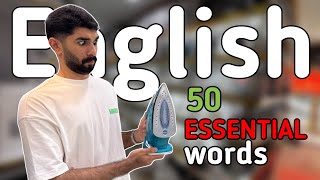
Learn speaking English in a home appliances shop | 50 Essential words | comprehensible input
English with Farzin
SRT - Most compatible format for video players (VLC, media players, video editors)
VTT - Web Video Text Tracks for HTML5 video and browsers
TXT - Plain text with timestamps for easy reading and editing
Scroll to view all subtitles
In this video, we're going to learn how
to speak English in a house, appliances,
and electronic store. You can see the
list of the words we're going to learn
here and in the description. And don't
forget to watch the video once without
subtitles and the second time with
subtitles which are automatically
provided by YouTube. First of all, we're
going to learn the words related to this
shop. So, I'm going to teach you
everything you can see here. After that,
I will teach you some small conversation
strategies to buy whatever you want in a
shop like this. Let's go. So, this kind
of shop that has both electronics
and appliances is called appliances shop
or appliances store. It is a bit
informal but if you want to say that in
a formal way the complete name is house
electronics and appliances store. First
of all we're going to learn this. This
is called a refrigerator. So this is a
refrigerator. This is a displayer that
you can see different kinds like how
much is the temperature of the fridge.
Um, this part that is usually colder,
you can put ice cream, ice, and so on in
like this. This is the fridge. This is
the fridge. And this part that you can
put your fruit, your vegetables,
your water, milk, anything is the
refrigerator part.
This is the handle. This is a handle
that you can grab and pull to open the
door. And this is a water dispenser.
This is a water dispenser. So you you
get the glass, you get the glass, you
put it, you push this pedal, you push
this pedal, and it will dispense water.
This might make you curious. I have
taught you this in other lessons in the
past lessons but we call it a vacuum
cleaner or a vacuum easy. And here we
have some as you can see microwaves.
These are microwaves. Um they can also
be used as a toaster but generally we
call them microwaves. These that look
like a microwave are not exactly
microwaves. You know, this or this is
not a microwave. It's an oven. It's
different from a microwave. Like you can
bake things in a oven. You can bake a
cake. You can bake turkey and things
like that. This is an oven. Here in this
part, you can see some stuff that you
usually use to make your clothes look
better and stylish. So, we call this an
iron. It's an iron. And the verb when
you do this, when you use it and you
make your clothes look better, you iron
your clothes. You iron your clothes. So,
it is an iron and the action is also
called ironing. Here we have some
electronic kettles. These are electronic
kettles. These are like the traditional
and typical kettles that we used to brew
tea and things like that. And that you
can see there, it's an Iranian kettle.
It's an Iranian kettle which is very
old. And to be honest, in my
perspective, drinking tea using these
kettles is much more delicious.
Um, just for your information, these
kind of kettles, um, they are also
called samovar in our language. So, I
think in English they also call it
samoar, but if you also call it Iranian
kettle, it's not a mistake, you know.
And here we have some choppers. We have
choppers like you put things in them and
it makes fruit or vegetables in small
slices and pieces. So this is a chopper.
Here we have a grinder that we use it
again to chop and mash things.
There is something very important you
have to know. If you use your hand to
mix something by this, this is called a
whisk. But if you use it like the
electronic style, it is called a mixer.
So they're different. Just for your
information. Here we have a grounder.
This is a grounder. You put beef or
chicken or any kind of meat here. It
grounds the meat. The beef and the
ground beef, the ground meat comes out
of here. This part,
these are all coffee makers.
This is a coffee maker.
And this is again a toaster, but is only
used for toasting bread.
These here, they're called sandwich
maker. Like you make a sandwich, you put
it here, you close it, and it will cook
and make a sandwich for you. Here we
have some air fryers. These are air
fryers. And this is a grill. This is a
grill. Again, we have some air fryers.
And here we have some rice cookers. They
are rice cookers that you can cook rice
using these appliances. This here is a
coffee grinder. It's a coffee grinder.
Like you put the seeds here and it will
grind it and give you the powder of
coffee. And this is a blender. This is a
blender. You can blend everything you
want. You can make smoothies using a
blender.
And this is a juice maker. This is a
juice maker. You put the fruit here. You
press this and it will give you the
juice.
Here we have another kind of dish. It's
for cooking rice or maybe some kinds of
um soups or stews. It's a pressure
cooker. It's a pressure cooker and you
know it usually makes the process of
cooking faster.
You have different kinds of pressure
cookers here. Iranians use it a lot.
Okay, now it's time for the washing and
cleaning appliances. This is a washing
machine. Easy. Or we can also call it a
laundry machine. Washing machine or a
laundry machine. And this is me
that
or this one. This is a dishwasher.
Dishwasher. I myself don't really like
it, but it's it has made the process of
washing the dishes really fast.
These are easy speakers.
This is the DJ part. And this is a fan.
This is a fan which I don't really
fancy. And this is called air
conditioning or AC.
Usually people call it AC because you
know English people are usually lazy in
speaking. But yeah, air conditioning or
AC.
This is a dryer, hair dryer. I love it.
I think it's one of the most useful
appliances you can have. This is a
straightener. Hair straightener. You can
use it to straighten your hair. And this
one is a curler. Like you put your hair
around it and it will curl your hair and
make your hair curly. These are all um
trimmers.
This is a trimmer. We have different
kinds of trimmers here as you can see.
But it's a very big question for me that
why do you have perfumes?
And this is a ironing board. This is a
ironing board that you use irons
and you put your clothes on the board on
the ironing board and you iron it. Okay.
Now, here we have some cutting tables.
They're called cutting tables. And I
have told you what they are called. I
taught you in the second or the third
lesson. I will put it here or maybe
here. You can go to this video and type
it in the comment. What is this? This is
a trace and this is a thermos. This is a
thermos for um maintaining water for
keeping water. Okay. Now here we have
some
bowls. This is a small bowl.
small bowls. And this is a saucer.
Actually, it's a little bigger than
saucer. So, I think it's a plate. It's a
plate that we can use for eating fruit
and so on. Those are cups. You see it
has a handle. It's a cup.
And here we have a bowl. This is a mug.
It's a mug. These are all bowls.
They're all bowls and there are some
serving dishes.
That's for example a fruit serving or
maybe candy serving dish.
And here we have a pitcher. This is a
pitcher. You put juice or water or
anything drinkable liquid. You put it
inside it and you pour it for everyone
who wants. So this is called a pitcher.
And by the way, in the old times when
someone in usually in royal families and
in castles and in palaces, when someone
used to pour water in parties, that
person was also called pitcher. So when
they wanted to call him, they would say,
"Pitcher, come here." And he would pitch
water for them. Now let's talk about
these stuff. So here we have a peeler.
This is a peeler that you can peel the
skin of fruit and other things like
that.
These are not Caesars. You know, we
don't usually call these Caesar. It's a
kitchen shears. Kitchen shears. But, you
know, informally you can also call it a
Caesars, not a by the way, because it's
plural.
And this one that you can sharpen your
knives with is called a sharpener. Knife
sharpener. And these are all knives. We
say one knife, two knives.
Be careful of this. This is a small bowl
and this is a salt shaker.
These are all plates.
They are all plates in different sizes.
This one is a sauce pitcher. You put
sauce and you pour it on salad.
This is called a colander. This is a
colander. For example, you wash your
vegetables. You put it in the colander
so that they get dry and the water drops
down.
These two are the easiest ones I think
so far. Spoon and fork. spoon, fork.
This one is a spatula. This is a
spatula. We can also call it a turner
because we use it to turn stuff like
kebab or fish or different things like
that. So, this is a spatula or turner.
This one is a slotted ladle. You see,
because it has some holes in it, we call
it slotted ladle.
This one is a normal ladle.
This is a ladle. We call it a ladle.
This one is a pasta server that you can
serve pasta with. And this is a rice
spoon. Rice paddle.
Easy.
This one is also a serving spoon. We can
also call it a turner because it's
metal. This one that we can use for
serving salad, we can call it tongs.
They're called tongs.
Okay, here um this might be a big
question for you. These are called
chafing dish or food warmer. Why?
Because under this dish you can put
candles and it will keep the food warm.
It will maintain the food warm. Now
let's talk about cooking dishes.
As you know this is a pan. It's a frying
pan that it's a very normal kind of
that. This one is a saucepan. It's a
saucepan. It has a handle and it is
small and usually high to make sauce or
maybe to boil water or milk.
This one is a pot. It's a normal pot,
but these two are called stock pots.
These are stockp. Why do we call them
stockp? because they're bigger and
they're used to make um soup and stews
and things like that. Here we have a
grill pan. It has grill lines um on the
surface and it has a lid to close it
completely. By the way, this is not a
door. This is called lid. This is lid.
So the door of um pots and dishes like
this is called lid.
This is also a kind of fryer for frying
fish or chicken. So we can call it the
chicken fryer or a fish fryer. I just
wanted to tell you also these these are
spice jars. They are spice jars like you
put pepper, salt and things like that
inside these jars and you can use them,
shake them and put spice on your food.
So they are spice jars. They were all
the words that you needed to know for
shopping house appliances and
electronics. Now in the next part I will
teach you how to speak in a shop like
this and get discount or negotiate with
the shopkeeper to buy something. So
first of all when you enter the shop the
shopkeeper comes to you and asks how can
I help you? How can I help you? Is the
most important sentence you should know
when you want to buy something. They
usually ask this to understand what you
want and what you need. After they ask
you if you don't want to buy anything,
you can say, "I'm just browsing." That
means you're just looking at the stuff
they have in the shop. But if you want
something specific, you would say, "I'd
like a I'd like a plus the word the
thing you want to buy." For example, I'd
like a refrigerator. I'd like a trimmer.
I'd like a vacuum cleaner. So anything
like that when you want to ask for the
price you would say how much is this?
How much is this? This is the easiest
sentence you can say. You can also say
how much does this cost? But it's longer
and harder. So if you say how much is
this easy that's it but if it is not
only one it is not singular it's more
than two you should say how much are
they how much are they then the
shopkeeper would tell you the price like
$100 $1,000 you know it depends on the
price of the stuff of the thing after
you want to pay before you pay you of
course want to buy it for a cheaper
price. So you can say I'll pay like $50.
Maybe it's $60 and you want to pay 50 or
40. You suggest your price in this way.
So I would pay I would pay I would pay
$40 for this. So in this way you can get
a discount and if they insist on the
price you can maybe lower your
expectations and go for a little bit
higher price. for example, okay, no
problem. I would pay $55.
That's it. Finish. Let's have a deal.
That's when you want to close the
negotiation. You say, "Okay, let's have
a deal." But if they insist on the price
they gave you, I cannot help you in
English.
I think you have to punch them, which is
not a very good action. When you want to
pay, you can ask if you would like to
pay by card or in cash. You want to give
paper money. So you can say, shall I pay
by card or in cash? Or you can also say
shall I pay by card, in cash or shall I
transfer the money to you? Because you
know these days we also transfer the
money. Or maybe you want to give a
check. So, you can say, "Can I pay by a
check?" And if they accept it, good for
you. That was it for our today's lesson.
I'm so sorry because I was posting two
videos a week, but because of the
problems in my country, I have to upload
less videos during a week. So, that's
why I'm uploading one video a week. But
for this week's challenge, I want you to
record your voice and talk about any
house appliance or electronic you have
and tell me what do you have inside them
and how do you use them. That was it for
today's video. I hope you enjoyed. Don't
forget to subscribe my channel for more
videos like this. See you in the next
video. Bye-bye.
Full transcript without timestamps
In this video, we're going to learn how to speak English in a house, appliances, and electronic store. You can see the list of the words we're going to learn here and in the description. And don't forget to watch the video once without subtitles and the second time with subtitles which are automatically provided by YouTube. First of all, we're going to learn the words related to this shop. So, I'm going to teach you everything you can see here. After that, I will teach you some small conversation strategies to buy whatever you want in a shop like this. Let's go. So, this kind of shop that has both electronics and appliances is called appliances shop or appliances store. It is a bit informal but if you want to say that in a formal way the complete name is house electronics and appliances store. First of all we're going to learn this. This is called a refrigerator. So this is a refrigerator. This is a displayer that you can see different kinds like how much is the temperature of the fridge. Um, this part that is usually colder, you can put ice cream, ice, and so on in like this. This is the fridge. This is the fridge. And this part that you can put your fruit, your vegetables, your water, milk, anything is the refrigerator part. This is the handle. This is a handle that you can grab and pull to open the door. And this is a water dispenser. This is a water dispenser. So you you get the glass, you get the glass, you put it, you push this pedal, you push this pedal, and it will dispense water. This might make you curious. I have taught you this in other lessons in the past lessons but we call it a vacuum cleaner or a vacuum easy. And here we have some as you can see microwaves. These are microwaves. Um they can also be used as a toaster but generally we call them microwaves. These that look like a microwave are not exactly microwaves. You know, this or this is not a microwave. It's an oven. It's different from a microwave. Like you can bake things in a oven. You can bake a cake. You can bake turkey and things like that. This is an oven. Here in this part, you can see some stuff that you usually use to make your clothes look better and stylish. So, we call this an iron. It's an iron. And the verb when you do this, when you use it and you make your clothes look better, you iron your clothes. You iron your clothes. So, it is an iron and the action is also called ironing. Here we have some electronic kettles. These are electronic kettles. These are like the traditional and typical kettles that we used to brew tea and things like that. And that you can see there, it's an Iranian kettle. It's an Iranian kettle which is very old. And to be honest, in my perspective, drinking tea using these kettles is much more delicious. Um, just for your information, these kind of kettles, um, they are also called samovar in our language. So, I think in English they also call it samoar, but if you also call it Iranian kettle, it's not a mistake, you know. And here we have some choppers. We have choppers like you put things in them and it makes fruit or vegetables in small slices and pieces. So this is a chopper. Here we have a grinder that we use it again to chop and mash things. There is something very important you have to know. If you use your hand to mix something by this, this is called a whisk. But if you use it like the electronic style, it is called a mixer. So they're different. Just for your information. Here we have a grounder. This is a grounder. You put beef or chicken or any kind of meat here. It grounds the meat. The beef and the ground beef, the ground meat comes out of here. This part, these are all coffee makers. This is a coffee maker. And this is again a toaster, but is only used for toasting bread. These here, they're called sandwich maker. Like you make a sandwich, you put it here, you close it, and it will cook and make a sandwich for you. Here we have some air fryers. These are air fryers. And this is a grill. This is a grill. Again, we have some air fryers. And here we have some rice cookers. They are rice cookers that you can cook rice using these appliances. This here is a coffee grinder. It's a coffee grinder. Like you put the seeds here and it will grind it and give you the powder of coffee. And this is a blender. This is a blender. You can blend everything you want. You can make smoothies using a blender. And this is a juice maker. This is a juice maker. You put the fruit here. You press this and it will give you the juice. Here we have another kind of dish. It's for cooking rice or maybe some kinds of um soups or stews. It's a pressure cooker. It's a pressure cooker and you know it usually makes the process of cooking faster. You have different kinds of pressure cookers here. Iranians use it a lot. Okay, now it's time for the washing and cleaning appliances. This is a washing machine. Easy. Or we can also call it a laundry machine. Washing machine or a laundry machine. And this is me that or this one. This is a dishwasher. Dishwasher. I myself don't really like it, but it's it has made the process of washing the dishes really fast. These are easy speakers. This is the DJ part. And this is a fan. This is a fan which I don't really fancy. And this is called air conditioning or AC. Usually people call it AC because you know English people are usually lazy in speaking. But yeah, air conditioning or AC. This is a dryer, hair dryer. I love it. I think it's one of the most useful appliances you can have. This is a straightener. Hair straightener. You can use it to straighten your hair. And this one is a curler. Like you put your hair around it and it will curl your hair and make your hair curly. These are all um trimmers. This is a trimmer. We have different kinds of trimmers here as you can see. But it's a very big question for me that why do you have perfumes? And this is a ironing board. This is a ironing board that you use irons and you put your clothes on the board on the ironing board and you iron it. Okay. Now, here we have some cutting tables. They're called cutting tables. And I have told you what they are called. I taught you in the second or the third lesson. I will put it here or maybe here. You can go to this video and type it in the comment. What is this? This is a trace and this is a thermos. This is a thermos for um maintaining water for keeping water. Okay. Now here we have some bowls. This is a small bowl. small bowls. And this is a saucer. Actually, it's a little bigger than saucer. So, I think it's a plate. It's a plate that we can use for eating fruit and so on. Those are cups. You see it has a handle. It's a cup. And here we have a bowl. This is a mug. It's a mug. These are all bowls. They're all bowls and there are some serving dishes. That's for example a fruit serving or maybe candy serving dish. And here we have a pitcher. This is a pitcher. You put juice or water or anything drinkable liquid. You put it inside it and you pour it for everyone who wants. So this is called a pitcher. And by the way, in the old times when someone in usually in royal families and in castles and in palaces, when someone used to pour water in parties, that person was also called pitcher. So when they wanted to call him, they would say, "Pitcher, come here." And he would pitch water for them. Now let's talk about these stuff. So here we have a peeler. This is a peeler that you can peel the skin of fruit and other things like that. These are not Caesars. You know, we don't usually call these Caesar. It's a kitchen shears. Kitchen shears. But, you know, informally you can also call it a Caesars, not a by the way, because it's plural. And this one that you can sharpen your knives with is called a sharpener. Knife sharpener. And these are all knives. We say one knife, two knives. Be careful of this. This is a small bowl and this is a salt shaker. These are all plates. They are all plates in different sizes. This one is a sauce pitcher. You put sauce and you pour it on salad. This is called a colander. This is a colander. For example, you wash your vegetables. You put it in the colander so that they get dry and the water drops down. These two are the easiest ones I think so far. Spoon and fork. spoon, fork. This one is a spatula. This is a spatula. We can also call it a turner because we use it to turn stuff like kebab or fish or different things like that. So, this is a spatula or turner. This one is a slotted ladle. You see, because it has some holes in it, we call it slotted ladle. This one is a normal ladle. This is a ladle. We call it a ladle. This one is a pasta server that you can serve pasta with. And this is a rice spoon. Rice paddle. Easy. This one is also a serving spoon. We can also call it a turner because it's metal. This one that we can use for serving salad, we can call it tongs. They're called tongs. Okay, here um this might be a big question for you. These are called chafing dish or food warmer. Why? Because under this dish you can put candles and it will keep the food warm. It will maintain the food warm. Now let's talk about cooking dishes. As you know this is a pan. It's a frying pan that it's a very normal kind of that. This one is a saucepan. It's a saucepan. It has a handle and it is small and usually high to make sauce or maybe to boil water or milk. This one is a pot. It's a normal pot, but these two are called stock pots. These are stockp. Why do we call them stockp? because they're bigger and they're used to make um soup and stews and things like that. Here we have a grill pan. It has grill lines um on the surface and it has a lid to close it completely. By the way, this is not a door. This is called lid. This is lid. So the door of um pots and dishes like this is called lid. This is also a kind of fryer for frying fish or chicken. So we can call it the chicken fryer or a fish fryer. I just wanted to tell you also these these are spice jars. They are spice jars like you put pepper, salt and things like that inside these jars and you can use them, shake them and put spice on your food. So they are spice jars. They were all the words that you needed to know for shopping house appliances and electronics. Now in the next part I will teach you how to speak in a shop like this and get discount or negotiate with the shopkeeper to buy something. So first of all when you enter the shop the shopkeeper comes to you and asks how can I help you? How can I help you? Is the most important sentence you should know when you want to buy something. They usually ask this to understand what you want and what you need. After they ask you if you don't want to buy anything, you can say, "I'm just browsing." That means you're just looking at the stuff they have in the shop. But if you want something specific, you would say, "I'd like a I'd like a plus the word the thing you want to buy." For example, I'd like a refrigerator. I'd like a trimmer. I'd like a vacuum cleaner. So anything like that when you want to ask for the price you would say how much is this? How much is this? This is the easiest sentence you can say. You can also say how much does this cost? But it's longer and harder. So if you say how much is this easy that's it but if it is not only one it is not singular it's more than two you should say how much are they how much are they then the shopkeeper would tell you the price like $100 $1,000 you know it depends on the price of the stuff of the thing after you want to pay before you pay you of course want to buy it for a cheaper price. So you can say I'll pay like $50. Maybe it's $60 and you want to pay 50 or 40. You suggest your price in this way. So I would pay I would pay I would pay $40 for this. So in this way you can get a discount and if they insist on the price you can maybe lower your expectations and go for a little bit higher price. for example, okay, no problem. I would pay $55. That's it. Finish. Let's have a deal. That's when you want to close the negotiation. You say, "Okay, let's have a deal." But if they insist on the price they gave you, I cannot help you in English. I think you have to punch them, which is not a very good action. When you want to pay, you can ask if you would like to pay by card or in cash. You want to give paper money. So you can say, shall I pay by card or in cash? Or you can also say shall I pay by card, in cash or shall I transfer the money to you? Because you know these days we also transfer the money. Or maybe you want to give a check. So, you can say, "Can I pay by a check?" And if they accept it, good for you. That was it for our today's lesson. I'm so sorry because I was posting two videos a week, but because of the problems in my country, I have to upload less videos during a week. So, that's why I'm uploading one video a week. But for this week's challenge, I want you to record your voice and talk about any house appliance or electronic you have and tell me what do you have inside them and how do you use them. That was it for today's video. I hope you enjoyed. Don't forget to subscribe my channel for more videos like this. See you in the next video. Bye-bye.
Keep this transcript
Save it to LunaNotes and it becomes a real note in your library — editable, searchable, and ready to turn into flashcards or a diagram. Free to start.
Save to LunaNotesOr download subtitles for another video.
These subtitles were extracted using the Free YouTube subtitle downloader by LunaNotes.
Related videos

Download Subtitles for Learn Speaking English in a Shop Video
Enhance your English learning experience by downloading subtitles for this shop-themed speaking video. Subtitles provide clear and accessible comprehension to improve your language skills through immersion and comprehensible input.

Download Subtitles for Learn Speaking English the Easy Way
Enhance your English learning experience by downloading accurate subtitles for the video 'Learn Speaking English the Easy Way.' Subtitles help improve comprehension through clear, accessible text to follow along and practice effectively using comprehensible input and immersion techniques.

Download Subtitles for English Speaking Practice Videos
Enhance your language learning by downloading subtitles for the 'English Speaking Practice: From Awkward to Confident in Real Conversations' video. Subtitles help improve comprehension, pronunciation, and boost your confidence in everyday conversations.
Download Subtitles for Daily Routine Conversation Video
Enhance your English learning experience by downloading subtitles for the Daily Routine Conversation video. Subtitles help improve comprehension, vocabulary, and pronunciation through easy-to-follow, immersive content. Perfect for learners wanting to practice speaking English naturally and effectively.
Download Subtitles for Easy English Conversation Practice Video
Enhance your English speaking and listening skills by downloading accurate subtitles for this 30-minute beginner-friendly video. Subtitles help you follow along, improve comprehension, and reinforce language learning effectively.
Most viewed

Untertitel für 'Nicos Weg' Deutsch lernen A1 Film herunterladen
Laden Sie die Untertitel für den gesamten Film 'Nicos Weg' herunter, um Ihr Deutschlernen auf A1 Niveau zu unterstützen. Untertitel helfen Ihnen, Wortschatz und Aussprache besser zu verstehen und verbessern das Hörverständnis effektiv.

ดาวน์โหลดซับไตเติ้ล DMD LAND 3 The Final Land Day 1
ดาวน์โหลดซับไตเติ้ลสำหรับวิดีโอ DMD LAND 3 The Final Land Day 1 เพื่อช่วยให้เข้าใจเนื้อหาได้ง่ายขึ้น และเพิ่มความสะดวกในการติดตามทุกช่วงเวลา เหมาะสำหรับผู้ชมที่ต้องการความชัดเจนและเข้าถึงข้อมูลอย่างครบถ้วน

Subtítulos para TIPOS DE APEGO | 6 DE COPAS Episodio 56
Descarga los subtítulos para el episodio 56 de la tercera temporada de 6 DE COPAS, centrado en los tipos de apego. Mejora tu comprensión y disfruta del contenido en detalle con nuestros subtítulos precisos y accesibles.

Download Subtitles for Harvard CS50 2026 Computer Science Course
Enhance your learning experience with downloadable subtitles for the Harvard CS50 2026 full computer science course. Easily follow along with lectures, improve comprehension, and access the content offline anytime. Perfect for students and enthusiasts aiming to master computer science concepts.

Descarga Subtítulos para NARCISISMO | 6 DE COPAS - Episodio 63
Accede fácilmente a los subtítulos del episodio 63 de '6 DE COPAS', centrado en el narcisismo. Descargar estos subtítulos te ayudará a entender mejor el contenido y mejorar la experiencia de visualización.
Found this transcript useful?
Take it with you. One click puts it in your own LunaNotes library.
Save to LunaNotes