
Introduction to Phenolic Compounds and the Shikimate Pathway
Phenolic compounds, characterized generally by a benzene ring with hydroxyl groups, are vital plant metabolites involved in diverse biological functions. These compounds commonly derive from phenylpropanoids (C6-C3 structures). This lecture focuses on their biosynthesis via the shikimate (or simate) pathway, linking primary metabolism to complex phenolic derivatives.
Key Concepts Covered
- Overview of the shikimate pathway
- Regulation of shikimate metabolism
- Biosynthesis of aromatic amino acids: phenylalanine, tyrosine, tryptophan
Phenolic Origin and Classification
- Phenolic compounds include molecules containing a benzene ring with hydroxyl substitutions (e.g., phenol) and related derivatives such as cinnamic acid.
- Phenylpropanoids form the backbone of many subclasses: coumarins, lignans, lignins, stilbenes, flavonoids, tannins.
- Specific phenylalanine derivatives contribute to floral scents (e.g., phenylethanol).
Detailed Pathway Insights
Primary Precursors
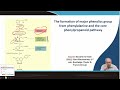
- The shikimate pathway begins with condensation of erythrose 4-phosphate and phosphoenolpyruvate catalyzed by DAHP synthase (DHS).
- Sequential enzymatic steps generate intermediates like 3-dehydroquinate, 3-dehydroshikimate, and eventually shikimic acid.
- Shikimate phosphorylation leads to EPSP formation, catalyzed by EPSP synthase; this step is inhibited by glyphosate, a widely used herbicide.
From Chorismate to Aromatic Amino Acids
- Chorismate is a central intermediate that bifurcates into pathways producing tryptophan, tyrosine, and phenylalanine.
- Tyrosine forms by hydroxylation of phenylalanine at the para-position.
- The conversion from chorismate to phenylalanine and tyrosine involves enzymes like chorismate mutase, prephenate aminotransferase, arogenate dehydratase, and arogenate dehydrogenase.
Regulation of the Shikimate Pathway
- DHS, the first enzyme, serves as a critical regulatory point with multiple isoforms influenced by feedback inhibition from downstream products such as tyrosine.
- These regulatory mechanisms ensure metabolic balance between different phenolic compounds.
- Recent research indicates plastid and cytosolic isoforms of DHS with distinct roles.
Phenolic Derivatives and Their Biosynthetic Branches
- Phenylalanine-derived metabolism leads to compounds such as lignin, flavonoids, tannins, and coumarins.
- Hydroxycinnamic acids are central intermediates undergoing various transformations to form these diverse phenolics.
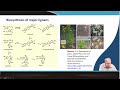
- The lecture highlights structures of important phenolic compounds including caffeic acid, eugenol, resveratrol, and pinoresinol.
Subcellular Localization
- The pathway mainly operates within plastids; enzymes converting chorismate to aromatic amino acids function here.
- Some cytosolic pathways for phenylalanine biosynthesis also exist but are less clearly defined.
Practical Implications
- Glyphosate’s mode of action as an EPSP synthase inhibitor underlines the pathway’s herbicidal target relevance.
- Understanding pathway regulation aids in manipulating phenolic compound biosynthesis for agricultural and pharmaceutical purposes.
Summary
The shikimate pathway is essential for producing aromatic amino acids which serve as precursors for a wide array of phenolic compounds. Regulation primarily occurs at the DAHP synthase step, coordinating production of secondary metabolites like lignins and flavonoids. Ongoing research continues to elucidate enzymatic variants and subcellular logistics shaping this complex metabolic network.
For complementary insights on plant secondary metabolism, exploring the Comprehensive Overview of Terpenoid Biosynthesis via MVA and MEP Pathways can provide a broader understanding of how plants coordinate diverse biosynthetic pathways. Additionally, while focusing on phenolics, readers interested in alkaloid biosynthesis may find value in the Comprehensive Overview of Indole Alkaloid Biosynthesis and Metabolic Engineering, which details related aromatic amino acid derivative pathways. Finally, to understand enzymatic and pathway regulation in detail, the Decoding Strictosidine Biosynthesis: Enzymes, Pathways, and Biotechnological Insights offers an in-depth look at enzyme function and regulation in plant secondary metabolism.
[Music] [Music] welcome to nptl online certification
course on pharmacognosy and metabolic engineering we'll now go to lecture number
48 where I will speak about the origin of phenolic
via simate pathway so phenolic compounds are very important because they plays important role very important role so I
will uh talk about that but let me briefly tell what are the concepts to be covered in this lecture uh so as you see
here that the we'll first cover the siket coreset pathway and then we'll talk about the regulation
of simate pathway and then we'll talk about the biosynthesis of aromatic amino acids okay so phenolic as we say so
phenolic is basically a phenol counting hydroxy group we come to that so why we study phenolic and phine propanoids so
phenolic is a big name so it starts with mostly it starts with Phile propanoids so Phile propanoids are generally C6 C3
compounds so right for example this is C6 and this is
C3 so this is a three carbon and this is a six carbon so these are Phile
propanoids so why we study Phile propanoids because phal propanoids consist of diverse
subgroups uh like kumarin like ligant like ligins like subin steelb flavonoids tannins so most of this we are going to
cover in the uh subsequent class in the lecture number 49 okay let's see so this is phenol
phenol is just a simple Benzene ring with a hydroxy group so any compound
containing a benzin ring with a hydroxy group will come under phenolic but again there are compounds
where hydroxy group is not there but still we put it under phenolic uh classic example is this is a camic
acid so here there is no hydroxy group but still we'll call it phenolic compound
because this is the origin of uh phenolic Moes so here from where it starts from phine alanin it converted
into camic acid so you can say this is the basic precursor of the phenolic compounds and apart from that there are
a lot of phy alenin uh derivative phenolic compounds are there uh which contributes to the Rose fragrance like
Phile ethanol then Phile ethy acetate so where also there is at four position no hydroxy is there but still we'll call
under phenolic compounds so what we are going to see that how phenolic compounds originate so it basically originates
from primary metabolism as you see here erros Force phosphate and finol pyet these two joins
and eventually they create the simate pathway uh which where simate is one of the major intermediates and then it
produces chorismate so sometimes we call it Sate Kismet pathway from Kismet pathway uh there are two different
routes one root contributes to the in case of indol alkaloids so where tryptophan converted into tryptamine by
tryptophan decarbox and we have also said how tryptophan originates via indol and the
other roote which is of much concern in these classes is basically the formation of tyrosin and phy alanin so tyrosin and
phy alanin these are the tropen these three are aromatic amino acids and uh the difference between tyrosin and phy
alanin is this that in case of phy alanin this is the structure of finy
aronin and when this fourth position o is added then it becomes tyrosin so let us now see in the in
details about the uh about the simate coris pathway the first step is basically arios Force phosphate joining
with phenol pyate here and the E1 what I have mentioned here is basically the first enzyme which is called DP synthes
d a HP synthes also nowadays it is called DHS as well uh yeah
DHS it is also called DHS as another abbreviations so this is three deoxy D Arab know so let me write it for you
three deoxy D
ARA bino Hep
loic acid 7 phosphate which is called d a HP
okay so this is dhp this dhp in the next step it is converted
into three dehydroquinate so the three dehydroquinate the enzyme which is
E2 E2 is basically dehydro queet synthes
dehydroquinate synthes we also call dhqs next enzyme is E3 E3 basically dehydroquinate converted
into dehydro simate dehydroquinate converted into dehydrate so or dehydr cimic acid so the
enzyme is dehydroquinate dhq stands for dehydroquinate and then
simate uh simate dehydrates dehydrates means basically a molecule of water will go out so you can
show it here H2O so this forms dehydrate so the next one is the
E4 E4 is also this is dehydroquinate uh dehydroquinate simate
dehydrogenase de hydrogenous so that is called dhq
dash s DH dehydr sec dehydrogen okay here the abbreviations is also same for the other
one uh so here also is uh DH DH q s DH abbreviation is same for both the
cases whereas the first one is a dehydratase and second one is a dehydrogenase so when is a dehydrogen
then it requires iph and
liberates np+ okay so it forms simic acid which which I mentioned that this is one of
the intermediate major intermediate that is why the pathway is named as simic acid
next what happens simate will be converted into simate 3 phosphate so there will be the addition of phosphate
that means ATP is required so you can add an ATP it liberates ADP which forms simate
3 phosphate and this Sim 3 phosphate uh then what is the
enzyme enzyme is basically it is as phosphate this is called simate kyes
simate KES SK
okay and the next one uh simate three phosphate with addition of phosph pyate it form
epsp so epsp is again another major product of this pathway epsp and the enzyme E6 is
called epsp synthes so and then E7 which
converts epsp 2 coris smat so the E7 is basically it's it's CS we can say
it is cisat synthes uh c h o r i s m a tmate
synthes or CS and uh this one is
PPS okay here one important thing I'd like to tell here that uh one of the very well-known herbicide is glyphosate
so glyphosate is applied uh to get rid of the weeds so basically it stops the simate pathway
and that thus blocks the formation of aromatic amino acid eventually the metabolism and the plant dies
particularly the diots and what what it happens that glyphosate basically blocks here so it's
basically a competitive inhibitor of this enzyme which is epsp synthes and therefore the pathway blocks
so if one study the pathway leading to formation of the different phenolic compounds uh if a metabolism can be
studied in cell and orgal culture there glyphosate addition can make impact on the end product uh so regulation is so
stringent so this is in brief about the uh pathway leading to the formation of Kismet from arthos for forest and
dihydroxy acetone phosphate next slide what we will see that
coris uh what we see that will be converted into uh this is called prenate so the prenate is
basically called corate mutas so this enzyme so I will call c m CM stands for Kismet
mutas then comes uh this pranet so pranet is here prenate will be converted into El arogenate by another enzyme
which is called prefet aminot transference uh cmic acid prenate to prenate will
convert yeah it's called prefet aminot transference we will also call this in brief as
P the enzyme is called P E9 what the new name is p so p means that prenate aminot transfer is
so it's written here preate aminot transfer is okay and next what happens one aerogenic acid is formed so but this
requires but this requires uh glutamate and which Liber
two Oxo glutarate okay
and then it converted into arogenate so arogenate from there there are two pathway exist one is arogenate
dehydrates uh so ADT so I can give a name ADT here this
one is ADT ADT stands for arogenate dehydrogen dehydrate is so
arog genate dehydrates when we say so then we have
to show that a water molecule is released as well as a molecule of carbon dioxide is also released so which
converts arogenate to tyrosin the other one is that arogenate dehydrogenase which
is ADH ADH which is arogenate dehydro genus when uh it
requires again it here also a molecule of carbon dioxide
liberates and it requires this energ pH so because of shortage of space I'm not showing that
and it finally that is why ultimately it makes uh phy alanin or tyosin if arogenate dehydrogen is work
it makes phy alanin if arogenate dehydrate is work it makes thyrosin and in Plants both the pathway is operating
but there is a fine balance between two and we will see much later that the volatile benzenoids benzenoids originate
from this Phile propanoids so those uh and they they emit from different flowers ponia was used as a model so
scientists what they did they tried to control the path at this level ADH and ADT and that basically makes impact on
the final product so that means the control is far ahead than the it's not in the penultimate step but in the very
long distal Step Ahead now uh what I say that sub cellular
localization so the pathway mostly operate in the plastid so so uh that means the cormic acid
onwards the pathway is operating in the plastid so like coris mutas okay and then this prenate aminot
transfer is then arogenate uh dehydrogen the arogenate dehydr both are uh operating inside the plastid and
thyrosin and pyerin are produced inside the plastid okay and from there maybe they are uh emitting out into the cytool
for different function whereas cytosolic Phile pyate Pathways also exists okay where phy alenin is produced from
chorismic Acid so here you see chorismate mutas one this is cm1 which is operated in the plased
whereas cm2 coris mutus 2 which convert cormic to penic acid this is isopor but this
basically localized in the cytool which makes pranic acid then then there may be a Preen
dehydrates which is still not clear but which makes Phile pyate this Phile pyate bile Pate again
aminot transference which basically makes the Phile alanin so uh so this is the uh
cytosolic root of formation of pheny ananin uh from the simate pathway okay so now both phy alanine and
tyosin are formed so this is in a nut cell the pathway now what I am showing here is basically this is from
a uh review article which is published in current opinion in plan biology 2022 so where basically it focused on
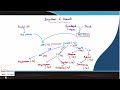
that the the simate corate pathway the main regulation occurs at the very first stage which is this DP synthes uh which
I have also said that it is nowadays called DH DHS also there are different different isoforms exist like dhs1 dhs2
DHS 3 and that basically plays important role in controlling the pathway so basically uh some feedback regulation
work so when uh sufficient amount of thyrosin is produced then a signal goes and stops
the dhs2 the red one so which isopor is basically controlling
the tyos whereas the uh even coris can also be controlled by that even much later the
cafet which plays important role in lignification and other cic acid EST that is also being controlled at the
very early stage in the pathway uh so okay uh so uh so DHS is important that is why I made it
otherwise the whole pathway modeless I have covered so only two tell you that the uh where the regulation lies and
also another important point this from tyos different metabolites originate like
tocoferol vitamin E plastoquinones isoquinoline Alco we have covered that cogenic glycosides we have not covered
in that details betal lens whereas from phy alanin the most important products are ligin stannin
subin flavonoids anthoine kumarin steel bin salicylate this we are going to cover soon and tryptophan is also being
controlled by the dhs2 and we have we have seen that tropen contributes to indol
pathway now uh multiple regulations of plant DHS activity as indicated by the pink box so so this uh these DHS genes
are basically nuclear encoded genes and then the once the DHS protein is produced it mostly moved into the
plastid okay so basically this is showing the movement into the plastid and there it basically performs it
function and there m manganese ion plays an important role and it performs different functions so basically uh it
it it plays important role in this feedback regulation this is what I mean to say
and there is also cobal dependent cytosolic DHS activity has also been discovered in recent
years so but uh this is not fully known and this is again from the latest
information available in current opan in plant biology so the take-home message is that DHS or dhp synthes is very
important enzyme that is the regulatory enzyme which is controlling the s cmate pathway ultimately the Phile
propanoid pathway and uh that is mostly it moved into the into the plastid but that is also the evidence of cytosolic
DHS so uh so this is we have discussed the simate pathway so simate pathway forms
the uh Phile alanin here we have discussed so Phile Aline are C6 C3 compounds C6 C3 compounds and from there
different other C6 C3 compounds originate like camic acid karic acid Kumar Co and then what happens from this
C6 C3 then again this is C6 C3 and from there it forms lignin which is basically C6 C3 and digin is multiple n so it's a
polymer and it can also form simple phenolics like uh c6c C6 C1 benzoic acid C6 C2 compounds even even the
C6 C3 C6 which is called flavonoid compounds this can also produced and this when joins in multiple unit it
forms the condensed tanins of proanthocyanins also from sikic Acid the G IC acid is
produced and which plays important role in forming the large polymer hydrolyzable tannins which I will show
in the next class so the point here is this that simate arogenate pathway ultimately contributes to phy
alanin or hydroxy camic pathway so phy alanin to camic acid so the camic acid is hydroxy camic acid when this four o
when this camic acid when it's converted into four hydroxy Amic acid which is called parakum aric acid we'll see that
so that is why it is called hydroxycinnamic acids so that is an important molecule from where uh from
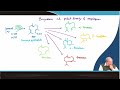
from that molecule different compounds originate so if you remember at the origin of uh when you talk about the
origin of specialized metabolites so from the precursor uh it produces
the the main P product and from P under goes different transformation so basically these are nothing but
different transformation which occurred in different plants sometimes it occurred in uh several of these
reactions occur in different plants for example um 1 to 5 so what is showing here 1 to 5 1 2 3 4 5 so 1 2
5 uh so this basically leads to formation of flavonoids so this is flavonoids and
then number two is basically steel Bane we'll talk all this in the subsequent class okay then style of Pyon we leave
it bop phenon bop phenon actually leads to the formation of uh this um zenthon is number four is very important
ultimately it forms the zenthon and this actually contributes to antoin and then what important is this
dihydro Camile 7 to hydroxy Camile alcohol so this is basically the component of ligin monomer which is
called monol liol then number eight is basically hydroxy benzoid these are small
molecules uh so which includes vanilline also and then number nine is basically hydroxy kumarin so kumarin you will find
in several plants including ellify spes and then conjugations uh which leads to hydroxy
Esters number 10 we will see that in due course and amides so basically this is the central
role of hydroxy cinam towards the formation of different uh Phile proponent compounds
so these are the trans transformation P P1 P2 P3 P4 P5 so p is basically the hydroxycinnamic acid so now the major
class of phenolics I will end this class briefly telling this but again I will bring this issue in the subsequent class
so C6 are called Simple phenols examples are caol C6 C1 are the hydroxy benzoid C6 C2 are aceto phenon
C6 C3 which are Phile propin hydroxyamines kumarin then C6 C4 are nap quinon we will talk
about one such Napo quinon pigments towards the end of this phenolic classes uh cin then C6 C1 C6 is basically the
zenthon whereas C6 C2 C6 which is still bin and
the C6 C3 C6 are basically flavonoids and then C6 C3 constitute the ligin uh with n okay and then so on then
C6 c3n which is condensed tenin it's basically the polymer uh so we will talk
about this important uh groups in the subsequent classes like we'll talk about liance which is
basically two molecules of monol lion Li monomer joints and form liance we we'll mention about that
and so many interesting things so this is basically the major classes of phenolic all these originate from this
simate Kismet pathway and these are some of the structures uh with this uh so like
uh hydroquinon like kol for hydroxy benzo acetophenone cafeic acid
eugenol we'll talk about that uh and and then R veratrol will talk about that Tetra hydroxy janon we talk about that
quatin will beefly talk pinoresinol will talk and so many so on so with this I end this class thank you very much
The shikimate pathway is a metabolic route in plants that converts simple carbohydrate precursors into aromatic amino acids like phenylalanine, tyrosine, and tryptophan. These amino acids serve as essential precursors for a wide range of phenolic compounds, including lignins, flavonoids, and tannins, which are vital for plant structure, defense, and signaling.
Glyphosate inhibits the enzyme EPSP synthase, a key catalyst in the shikimate pathway responsible for converting shikimate 3-phosphate to EPSP. By blocking this step, glyphosate effectively prevents the biosynthesis of aromatic amino acids and downstream phenolic compounds, leading to plant growth arrest, which is why it functions as a broad-spectrum herbicide.
DAHP synthase (DHS) catalyzes the first step of the shikimate pathway, condensing erythrose 4-phosphate and phosphoenolpyruvate. This enzyme is regulated via multiple isoforms subject to feedback inhibition by downstream products such as tyrosine, enabling the plant to balance metabolic flux and prevent overproduction of phenolic compounds.
Phenylalanine metabolism produces key phenolic derivatives including lignin (important for structural integrity), flavonoids (involved in pigmentation and UV protection), tannins (defense compounds), coumarins, and hydroxycinnamic acids. These compounds contribute to plant defense, aroma, and overall fitness.
The shikimate pathway primarily takes place within plastids, where enzymes convert initial precursors into chorismate and then into aromatic amino acids. There are also cytosolic pathways for phenylalanine biosynthesis, though they are less well understood, indicating compartmentalized regulation of phenolic biosynthesis.
Chorismate serves as a central branching intermediate in the shikimate pathway leading to the formation of phenylalanine, tyrosine, and tryptophan. Phenylalanine can be hydroxylated to produce tyrosine, and specific enzymes like chorismate mutase and arogenate dehydrogenase mediate these conversions, enabling plants to diversify phenolic metabolites from common precursors.
Insights into the shikimate pathway inform agricultural biotechnology, such as developing herbicides targeting EPSP synthase (e.g., glyphosate) and engineering plants with enhanced production of beneficial phenolics for pharmaceuticals, nutrition, or stress resistance. Manipulating pathway regulation can tailor phenolic profiles to improve plant health and commercial value.
Keep this summary
Save it to LunaNotes and it becomes a real note in your library — editable, searchable, and ready to turn into flashcards or a diagram. Free to start.
Save to LunaNotesOr summarise for another video.
This summary and transcript were automatically generated using AI with the Free YouTube Transcript Summary Tool by LunaNotes.
Related summaries
Comprehensive Overview of Phenolic Compounds: Phenylpropanoids, Benzenoids, Coumarins, and Tannins
This lecture provides an in-depth exploration of phenolic compounds derived from the phenylpropanoid pathway, including the biosynthesis and functions of phenylpropanoids, benzenoids, coumarins, flavonoids, and tannins. Key metabolic routes, enzymatic steps, and their biological roles in plants are detailed for enhanced understanding of these essential natural products.
Comprehensive Biosynthesis and Metabolic Engineering of Lignans, Rosmarinic and Chlorogenic Acids
This lecture explores the intricate biosynthesis pathways of lignans, including important compounds like phoyotoxins, as well as caffeic acid esters such as rosmarinic and chlorogenic acids. It highlights the pharmacological relevance of these phenolics, details enzymatic steps, and presents metabolic engineering advances enhancing their production in plants and microbial systems.
Comprehensive Overview of Terpenoid Biosynthesis via MVA and MEP Pathways
This lecture provides an in-depth exploration of terpenoid biosynthesis, focusing on the mevalonate (MVA) and methylerythritol phosphate (MEP) pathways. It covers the origin of key five-carbon precursors, the diversity of terpenoid structures, and the cellular compartmentalization and regulation of these pathways, highlighting their biological significance and applications such as essential oil production and antimalarial targets.
Comprehensive Overview of Terpene Diversity and Biosynthesis in Plants
This lecture explores the biosynthesis pathways and product diversity of key terpene classes including sesquiterpenes, diterpenes, triterpenes, and polypenes. It highlights their roles in plant defense, fragrance, and medicinal properties, with detailed examples such as chamomile compounds, phytoalexins, and cardiac glycosides.
Comprehensive Overview of Flavonoid Biosynthesis and Metabolic Pathways
This lecture provides an in-depth summary of biosynthetic pathways leading to flavonoids, including flavones, isoflavonoids, proanthocyanidins, and related polyphenols. It explores key enzymes, chemical conversions, and the significance of these compounds in plants such as legumes and tea. Essential metabolic routes and compound formations are clearly explained for academic and research contexts.
Most viewed summaries

A Comprehensive Guide to Using Stable Diffusion Forge UI
Explore the Stable Diffusion Forge UI, customizable settings, models, and more to enhance your image generation experience.

Kolonyalismo at Imperyalismo: Ang Kasaysayan ng Pagsakop sa Pilipinas
Tuklasin ang kasaysayan ng kolonyalismo at imperyalismo sa Pilipinas sa pamamagitan ni Ferdinand Magellan.

Mastering Inpainting with Stable Diffusion: Fix Mistakes and Enhance Your Images
Learn to fix mistakes and enhance images with Stable Diffusion's inpainting features effectively.

Pamamaraan at Patakarang Kolonyal ng mga Espanyol sa Pilipinas
Tuklasin ang mga pamamaraan at patakaran ng mga Espanyol sa Pilipinas, at ang epekto nito sa mga Pilipino.

How to Install and Configure Forge: A New Stable Diffusion Web UI
Learn to install and configure the new Forge web UI for Stable Diffusion, with tips on models and settings.
Found this summary useful?
Take it with you. One click puts it in your own LunaNotes library.
Save to LunaNotes