Introduction to Lignans and Phenolic Biosynthesis Pathways
Phenolic compounds, originating mainly through the shikimate pathway, lead to the biosynthesis of various bioactive metabolites including lignans, rosmarinic acid, and chlorogenic acid. Lignans are formed by the dimerization of two monolignol (C6-C3) units, acting as plant defense molecules and offering antiviral and anticancer properties. For a deeper insight into related phenolic compound classes and their roles, refer to the Comprehensive Overview of Phenolic Compounds: Phenylpropanoids, Benzenoids, Coumarins, and Tannins.
Lignan Biosynthesis and Key Enzymes
- Monolignols such as coniferyl alcohol are precursors to lignans.
- Two monolignol molecules couple enzymatically, mediated by dirigent proteins, to form lignans like pinoresinol.
- The pathway progresses through enzymatic reductions and modifications via pinol linol reductases and dehydrogenases, leading to compounds such as lariciresinol and matairesinol.
- Lignans can also integrate into lignin polymers. Learn more about lignin formation in the Comprehensive Overview of Monolignol Biosynthesis and Lignin Formation Pathways.
- Notably, hinokinin, a lignan effective against Hepatitis B virus, exemplifies therapeutic potential.
Biosynthesis and Applications of Phoyotoxins
- Phoyotoxins derive from matairesinol through multiple enzymatic steps involving methylation and glycosylation.
- Phoyotoxins serve as precursors for semisynthetic anticancer drugs like etoposide and teniposide.
- Natural sources include endangered plants such as Phyllum peltatum and Podophyllum hexandrum.
- Cell and organ culture techniques have been explored to sustainably produce phoyotoxins due to overharvesting risks.
Caffeic Acid Esters: Rosmarinic and Chlorogenic Acids
Rosmarinic Acid Pathway
- In plants like Coleus blumei, rosmarinic acid forms by coupling 4-coumaroyl-CoA and 4-hydroxyphenyllactic acid through rosmarinic acid synthase.
- Cytochrome P450 enzymes hydroxylate intermediates, leading to rosmarinic acid, which can further modify into lithospermic and salinic acids.
- Metabolic engineering has enabled microbial synthesis of rosmarinic acid using yeast, combining native yeast genes with heterologous plant genes to synthesize the compound de novo from glucose.
Chlorogenic Acid Biosynthesis
- Chlorogenic acid is an ester of caffeic acid and quinic acid, synthesized by hydroxylcinnamoyl transferases (HCT) and hydroxycinnamoyl quinate transferases (HQT).
- It accumulates in plants such as potatoes, especially at wound sites, functioning as an antioxidant and pathogen barrier.
- Structural diversity arises from multiple hydroxylations and esterifications forming various chlorogenic acid derivatives.
Metabolic Engineering Advances
- Overexpression of HCT/HQT genes in tomato plants significantly increased chlorogenic acid content, enhancing antioxidant capacity.
- Expression of Arabidopsis transcription factor AtMYB12 in tomato upregulated both flavonol and chlorogenic acid pathways, leading to increased metabolite levels and altered fruit coloration.
- These studies underscore the use of genetic engineering to bolster health-beneficial phenolic compounds in crop plants. For related examples in pathway manipulation, see Metabolic Engineering of Monolignol Pathways: Case Studies in Lignin Manipulation.
Summary
- Understanding the biosynthesis of lignans, rosmarinic acid, and chlorogenic acid provides insights into plant defense and pharmaceutical applications.
- Enzymatic specificity and pathway regulation are crucial in producing bioactive lignans and caffeic acid esters.
- Metabolic engineering strategies demonstrate potential for sustainable and enhanced production of these valuable phenolic compounds in plants and microbial systems.
[Music] [Music] welcome to
nptl online certification course on pharmacognosy and metabolic engineering this is lecture number 52
where I will discuss uh biosynthesis of ligant including pyot toxins and then
we'll talk about the cfic acid rests particularly uh rosar acids and chlorogenic acids and we'll also uh
discuss very briefly about a few metabolic engineering applications with this
Pathways now let's go to the next slide so the concepts that will be covered in this lectures are uh first the
biosynthesis of ligant and then we'll talk about the rosmarinic acid pathway and once we finish the rosmarinic acid
discussion we will briefly talk about one specific metabolic engineering applications of rosmarinic acid and then
we will talk about the biosynthesis of chlorogenic acid and then finally we'll end up with several uh metabolic
engineering case studies with the chlorogenic acid pathway so if you remember in in the
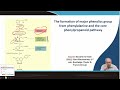
earlier classes I used to show this scheme so again I am bringing this particular schematic diagram here what
is showing here that the Phile propanoid pH we are disc as we are discussing phenolics for the last few classes and
we'll continue to do so until the end of the course about the phenolic so phenolic basically originate through
simate coris pathway so what is showing here simate pathway contributing to the formation of Phile alanin and this Phile
alanin subsequently converted into trinamic acid and pal is one of the most important enzymes of the red limiting
enzymes of the pathway and then this camic acid subsequently converted into other hydroxycinnamic acids which I have
discussed and then from there uh different Roots originate uh like ligin ligant so lignin pathway I have
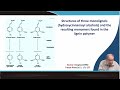
discussed I have discussed about the biosynthesis of monol liol which basically act as the precursor of the
ligin polymer and uh so what we are going to do here is basically we will talk now about
the ligant so the ligant are you see C6 C3 2 that is two mole
molecules of monol liol joins together and form the ligant so while we are studying ligant ligant are very
important compounds so they are produced by the plant uh themselves to defend from various iotic and biotic stresses
but uh ligant are very important pharmacologically active compounds particularly as antiviral as well as
anti-cancer agents so that is the practical application of studying these compounds and then uh once I finish
liance then we'll talk about other uh other cic acid EST so cfic acids is
like C6 C3 and then it joins and then it forms different molecules okay so Phile propanoids monol
liol and ligant Phile propanoids are C6 C3 units as you know that this is the C6 and this is the
C3 units okay sorry this is C6 right and so this is called Phile Pro proile and then then what happens
then basically uh these are the monol
LOLs which are again C6 C3 compounds and these basically two molecules are monol signals joins
together and form liant so this is a characteristic uh diagram structural diagram of the
ligan so what you see here if you look carefully that two monolignol molecules are joining here one
is this one and another is this one that is why it is is
called uh C6 C3 2 yeah this is a
slight this 63 right okay so uh this is artifical
structure of a lan molec and ligant undergo several modifications leading to the formation of new liant no
ligant we will not go into that details but just you should know that new liance and no liance are basically derivatives
of different ligant so bio synthesis of liance basically as I said that these are two monol liol as you see this is C6
C3 and this is again C63 and they are the monol lials these two joints and
form the ligant basic ligant and then it undergo sepal modification and leading to the formation of different complex
ligant one such example is this one pinol so as you see here that these two
with two different colors it is it is made clear that this is coming from one and this is coming from
another same is true for malool so what I have said is this that
it's all about the Phile propanoid pathway and this Phile propanoid pathway basically what we have we have studied
in in details about the monolignol pathway like 4 CL HCT C3 Prime H HCT all these enzymes we have studied and
finally we also uh discuss the formation of Conifer
alcohols or copile alcohols or paracom alcohols and these Conifer alcohols what is this that this
basically uh or copile alcohol this joints in N numbers and form the polymeric
structure which is the ligin but only two such molecules will join and form the liance
this is the basic difference I I hope with this it is clear so what you see here that this Conifer alcohol by some
some entic reactions it makes this intermediate joining and then ultimately it forms different structures as I have
mentioned pinol is one and uh and even it it can also joins with the ligin molecules as well ligant can also
join with the ligin molecules as well now what is important point to tell here that uh kif perhaps I have mentioned if
not then I'm mentioning now that Conifer alcohol is a monol liol so that basically by the action of a glucos ale
transference it this this should be a GT it makes coniferin coniferin is nothing but
a glucose okay I just this is you see the glucose is here so this
coniferin from the cytoplasm it moves into the cell one W this is the cell wall and
then again by the action of glucosidase it is back to ciferal alcohol and then it makes different
functions so for transportation it requires a sugar molecule addition and then again will be
Detachment now here what is showing here that the early stages of Lin formation includes this okay coniferin is called
for glucoside of this and that takes part in liin formation and this is basically the LI liance I am I'm showing
this one here these are the two type plus and minus so what we will see that when two monol liol joins it always
forms plus not the minus so that means that is very uh specificity which exist among the
enzymes which joins these things earlier what was thought that it was a random reaction uh so Random
coupling cc8 random coupling but much later it this was identified this coupling was catalyzed by an enzyme
which is called derent protein please remember Deen protein so
it's a Deen transform basically to guide is a Greek word g so it's a guide protein and which basically oxid is in
nature and derion protein basically it joins two monolignol and form the first step of the ligan biosynthesis so this
is a is a a and then next comes to b b is
basically pinoresinol synthes penor resinol synthes and uh okay what I can do this a I can
make it in this way and then the next
reaction is c c is basically C and D are
pinol linol reduct
is Lis resinol linol yeah linol there is a mistake here so it
should be a l is C I will be added
here l c the so uh pinol converted into lisin and then that is subsequently converted
into SEO ISO linol so the enzymes are called pinol linol
reducts so this is this one and then
e which converts SEO isolid resinol
to mati resinol so matol e so it is called SEO isol linol dehydrogen so dehydrogen
enzymes is basically working here and then finally we see F which actually a methy transfer is which converted into
other products and here you see that deoxy protoy toxin is also there that is is also a part of this so uh point is
this the pathway first it makes pinol which is a stable compound pinol converted into
linol linol converted into SEO isol resinol and then that is converted into mati resinol these are the different
Roots you don't have to remember that but for the shake of knowledge you should study uh and uh also you see that
here that cisem in in cism Lum so that there also this pathway is
operating next so the myos synthesis of major ligant so this is basically a a uh Lum a lum species
so scientists they explored cell and organ culture in order to make more of this ligant there in order to study the
digant biosynthesis so it is always better to have a culture system that is why I'm showing here so again just a
revision cor two molecules of Conifer alcohol makes pinoresinol plus pinoresinol and that one root May
contributes toward the formation of camine okay say the cism is the English name of the plant that converted
into pinol linol reductors which converted into linol then again plr the same another
reaction catalyzed with the same enzyme which makes SEO isol linol and then there is a de hydrogenous which make
maol and now this through multiple steps it forms phoyo Toxin and I mention photophy toxin
as one of the potent anti-cancer drug so that is why we are studying lignan and this pathway has well stud
has well studed by German groups including the cloning of the genes and the OV expression and the antisense
oparation but that metabolic engineering applications I'm not basically discussing here
now apart from this this uh Conifer alcohol can also converted into dehydro dioner alcohol and which will be
subsequently converted into ISO dihydro dehydro chroner Al it's a big name but the enzyme is called Phile kumaran benzy
ether reductase okay this is a new information uh that means the Conifer alcohol can
also uh utilize for producing more complex Conifer alcohols as showing here but the main root what I have discussed
is this this we have now started so uh okay this we have now start it fine okay so and finally why I bring this issue
because hinin is a molecule of interest and hinin is produced by a species of Lum Lum Corum
bosam bosam so this is H hinin so hinin is one such ligan so hinokinin is a very pharmacologically active compound
against particularly Hepatitis B uh so virus infection so it's it it has potentiality to make into antiviral
drugs uh so this is hinokinin so hinokinin biosynthesis has been studied by the German group and this is
outstanding paper is it published in plan Journal J's journal and so so what is showing here that this is
a synthes so and then there is a hinin synthes and hinin synthes makes hinin or it can also uh this can also that is the
Matti resinol through multiple root it produces hinin one is through this root another is
through this root anyway we you need not have to worry about this things uh but just to tell you that how complex is the
pathway however the camine camine is as I said camine is also formed through this pathway camine
so camine is formed in the lam species that is well known and these are the different enzymes which are showing here
like PS is pinol synthes uh like PS is porol synthes and so what
is and then plr I have mentioned sdh I have also mentioned then PLS is new one
so this is the PLS and then PSS is there then uh HS stands for hocin synthes so this is important HS stands
for hinin synthes so which actually finally the ultimate enzyme for the formation of hinin which is a bioactive
compound so uh few genes of this pathway has been characterized uh but not the whole
pathway yet so now come to the phoyo toxin as I have shown that photophy toxin originates basically again from
this ainol so phoyo toxin is basically here and for and this is basically
matol so matol makes this deoxypodophyllotoxin DPT and that subsequently make PPT phoyo
toxin now the pathway which is shown inside this box that is particularly operating in
this tuja but not in the others so that is why is showed in this way otherwise this
matol can be converted into deoxy poopy toxin okay and then uh this phot toxin uh will
subsequently uh methylated and then it forms C6 methoxy prototoxin
and so on and then also at some Stage IT joins with the sugar so you see that the glucoside is also there so this is six
myoxy protoy Toxin and then a glucose is added so it is now glucoside
so here is the glucose molecule added and similarly phoyo toxin uh can directly converted into
phoyo toxin 7 glucoside because it is very toxic so it has to accumulate it in the cell and the the molecule must moved
into the vacle and so that and it it retained as a glucoside so there will be induction of glucos transparence which
joins the glucose and safely stored in the vacol so here is this that this is of more of
practical application so extraction and semisynthesis leading to etoposide so pyot toxin
molecule as you have uh seen here uh this
molecule so this phoyo toxin molecule uh
uh is used as a basic
uh basic molecule For the synthesis of etoposide so what is etoposide etoposid are nothing but the modified pyot toxin
as you see here that uh any R1 and R2 position this is R1 position this is R2 position so in case of aopo side the
methy and hydrogen's added in case of eoos one is methy and other is this hydroxy and in case of teniposide
here one is this this ring added and another hydrogen added so these are different
modified version uh semisynthetic version of phoyo toxin all of these have potential uh to inhibit the cancer
growth so among this etoposide is the most promising one and that is synthesized basically semi synthesized
from the naturally occurring phoyo toxin so that is should be your text home message but normally phoyo toxin
accumulates in the romes of phylum species so like phylum peltatum this is an endanger plant you
will hardly with a thorough search in few pockets of Himalayan uh high altitude you will find this phylum buil
atum and uh this is a flowering and uh there is another plant called copham hexandrum earlier it was
called poopum hexandrum so that is mostly confined to the China China region so these are the plants are good
source of Pho phot toxin apart from that Lum flavum common one Lum album then hip
sence common lamasi plant is also uh accumulating phoyo toxin apart from that
juniperus and other gyos sperms also accumulate phoyo toxins so some natural alternative sources of phoyo toxins
are uh shown here like deoxy poopy toxin this is three and these are the plants from where this photox s
derivatives can be isolated but uh large scale isolation leads to uh extension of the plant so that is why
Pym is is is a highly endangered plant so ATMs were made to make cell and organ culture for making pyot toxin partial
success has been obtained not fully yet so with this now I move into the another aspect of this today's lecture
which is basically the cafeic acid esters so there I am going to cover Ros Maric acid and chlorogenic acid both of
them are cfic acid Ester so what is showing here in this is basically the metah Hydrox silation so metah Hydrox
silation is very important Oro meta par so and so what we see here that Kumar qu by
the H C it makes Kumar simate or Kumar quinate and then subsequently uh by the action of C3
Prime H uh which add the hydroxy group at three position
so that makes uh that makes parakum Esters like CFO Esters
like Kumar uh so that means that uh Cil simate C quinate so these are different CFO acid
estas also the Cil hydroxy Phile lactic acid that is also a cic acid estas which subsequently converted into rosin acid
so all the CAPIC acid ests are basically shown here so we have discussed about capil simic acid now if the C MO is
joined with uh quinic acid not simic acid then it forms Cil quinic acid which is called
chlorogenic acid so chlorogenic acid is nothing but the capile quinic acid so uh this is what is because of this metah
Hydrox silation and then the proposed biosynthetic pathway of rosic acid a scientist from Marburg University
Germany Professor Mikey Peterson she actually is worked for decades for ranic acid bios synthesis using Lamas plant
like colus blumi that is was a model and she has decifer the biosynthetic pathway of
uh rosmarinic acid using mostly using the cell cultures so what you see here as I said that rosic acid is also the
caic acid Ester so how rosic acid is formed basically from for Kumar oil KO and from the tyrosin the tat enzyme it
makes four hydroxy Phile pyic acid so that hydroxy Phile pyate reductase R means reductase which makes four hydroxy
Phile lactic acid so four hydroxy fenile lactic acid and paracom aric acid they joins together uh by the action of the
enzyme called rosmarinic acid synthes ra stands for rosmarinic acid synthes and which makes this intermediate compound
uh which is four Kumar four hydroxy Phile lactic acid and this subsequently by the action of cytochrome p450
enzyme makes either Cil for hydroxy uh Phile lactic acid or for karile 3 Prime 4 Prime dihydroxy Phile
lactic acid and eventually this by the action of again another cytochrome p450 it makes the
rosmarinic acid and this rosmarinic acid can further converted into lithospermic acid and salanic acid so these are the
sometime marker compounds of the lamas species so this is the biosynthetic pathway and uh this is the structure so
as you see the structure this is the structure of kumaro ko and which which is formed from paric acid and this is
the structure of for hydroxy lactic acid which is formed from for hydroxy Phile pyic acid by the action of this enzyme H
PPR reduct is and then uh rosic acid synthes joins this together and which makes this four Kumar for hydroxy lactic
acid and then again there will be cytochrome p450 that means hydroxy that is it is called 4 cphl 3H and this is 3
Prime H so when it is 3H it makes Capo when it is 3 Prime H then it forar 3 Prime 4 Prime dihydroxy and eventually
there will be another hydroxy so this is I have shown another
cytochrome p450 and these are all membrane bound enzyme and eventually that makes the complex rosic acid so to
basically mopat group they have purified this uh membrane bound enzymes and they obtain the inter terminal
sequence information from their basically the design degenerate primer Bas and then they clone the genes so it
is a very very tedious process and they published these papers in very good journals so like planta
or JBC probably so for planta probably I have seen that one yeah so so this is basically an
later there's an overview published in the famous Journal phytochemistry by Michael Peterson's
group so in brief the biosynthesis of rosic acid is basically through paror oil Co and for hydroxy Phile lactate and
eventually rosmarinic acid synthes and then two cytochrome 4 450 it makes rosmarinic acid I think it is clear so
now the next attempt was to make if to make rosic acid in the microbal system so East was chosen as a model system
because it is a uh eukariotic system uh so what is showing in the Orange is basically the chimic pathway so the
orange the orange root are non-existent in the plant so this orange root so these are the climatic pathway and
through which rosic acid is formed in the East system whereas the black arrows are basically the pathway which is
operating in the plant so so they have hired uh fug from the plants and then fug from the microbes and
eventually they they are able to synthesize the rosic acid which I should put it in
the uh R yeah so so the native genes are indicated in Black so these are the native
genes OV Express genes uh East gen je in green so a few e genes are there and then over Express heterologous genes in
purple so these are from different sources heterologous genes and then Arrow orange arrow SW basically it is
the chimic pathway it is non-existent imp plants but once they put these jeans together finally it makes rosic acid and
this paper was published in synthetic biology in the year of 2020 so basically this is an East cell this is East cell
and where uh the this is again a denovo synthesis of rosic acid because glucose was used as a substrate as you see and
they have basically tailored few ples few East genes so they have also subsidized or they have also blocked few
East genes and they also use other genes from different sources and eventually uh the East cells were able to produce the
rosem Maric acid so that is interesting and this is the typical plant which is called
rosemarinus uh so it's also a Lamas plant and here basically the leaves are very aromatic and if you touch you will
get the smell of uh this uh aromatic compound so ranic acid is not indeed aromatic it is a phenolic compound it
accumulates but it also produces a lot of volatile phenolic compounds uh so but if you analyze this plant this
rosemarinus by hlc you'll be able to detect rosmarinic acid now from here we will move into another cic acid EST
which is chlorogenic acid what I said that chlorogenic acid is formed by joining Cil qu along with the uh by
joining Sorry by joining kumaro qu with the quinic acid which makes comaro quinic acid and then that subsequently
forms Cil quinic acid or so the c quinic acid is called chlorogenic acid so and then the capil M can be detached so the
hqt is basically this it is a transference hydroxy Camile queet transference and HCT we have shown that
is again a transference so what is showing here that this is how the chlorogenic acid so chlorogenic acid
this is 5 capy chlorogenic acid and chlorogenic acid several chlorogenic acid can join together so and as a
result of that it produces uh 35 Dapo quinic acid so these are the complex chlorogenic acid
substitutes uh so and it can also make four five Dy quinic acids so that means the plants where chlorogenic acids are
dominating so proper hlc analysis can lead to the formation of different uh cafeic acid EST including
chlorogenic acid four five dapy coic acids which is again a derivative of chlorogenic acid or this five capile
quinic acids so now uh so so let us talk before I end this class let us talk
to metabolic engineering studies so this is the structure of chlorogenic acid chlorogenic acid also found in solarus
plants like potato and when you cut potato tuber and leave it you will find that it forms uh it
forms a layer on the cart surface which is basically a subin layer and that layer if you peel off and analyze you
will find that is basically accumulating lot of chlorogenic acid there so chlorogenic acid is basically forming
sometimes a cross linking in the wounding site that that stop the integration of
pathogen or other thing inside the plant cell so what we see here that this parar
acid parakum qu converted into paracom sikic acid by HCT so we have studied HCT in details in
previous classes and which makes parakum sikic acid this by the action of c3h which makes Capo simic acid
similarly uh HCT can also catalyze another sort of reaction where it takes quinic acid instead of sikic acid and it
makes paracom quinic acid so paracom quinic acid by the action of again c3h it makes Cil quinic
acid so Cil quinic acids are nothing but this is called chlorogenic acid so it's a parallel pathway exist uh and then uh
this cap chlorogen IC acid plays important role it is a strong antioxidant it has a defensive role uh
and also there is an alternative root that is that from camic Acid Camile glucoside can be formed and that that
leads to the formation of karile glucoside Cil glucose and then it makes Cy quinic acid but this pathway is
not uh that much well estblished so the established pathway is basically the
this one so what scientists they have done is basically they uh overexpress
this uh HCT which converts this uh uh paracom KO which joins paracom KO and
quinic acid into paracom Que quinic acid and then it it subsequently converted into cinic acid so
as so the uh hqt enzyme was targeted so this enzyme what you call HCT is basically it's basically hqt basically
is a queet transfer so here what is showing HCT is basically the H
QT hydroxy camil queet transfer so when they overexpress this in tomato what
they have found that leading to enhancement of chlorogenic acid so what is wild type means the wild type so this
is basically the chlorogenic acid in the wild tape and you see here if you particularly see the scale so here it's
less than6 but here it is reaching one so almost the content doubled uh and not only that they have also used
uh suppression of this uh Gene and that leads to suppression of the chlorogenic acid that I'm not showing but this
result was very interesting because chlorogenic acid producing more chlorogenic acid tomato in tomato makes
tomato more strong antioxidant Source because tomato contains lopine which is a strong antioxidant so that is a
carotin now you are adding a phenolic antioxidant there which is chlorogenic acid so that makes tomato even richer
source of antioxidant and this paper was published long ago in nature biotechnology by a
group led by Kathy Martin Professor Kathy Martin from JN Center nor so she actually worked on this Phile propanoid
metabolic engineering uh for a long time so uh the same group also uh they made another attempt this time they have used
arabidopsis taliana M uh 12 gen so basically it's basically a transcription Factor Gene so they have transferred
this gene into tomato and with an aim to enhance the both flavonol as well as cfile quinic acid that means both
flavonol pathway as well as the chlorogenic acid pathway in tomato okay now flavonol pathway I will discuss in
the next class but this is in brief that uh the Kumar koi joins with malony koi and
then eventually it forms different uh molecules including dihydro cerol uh and then cerol and then cerol rutinoside
similarly quatin quatin routin oide so routin is a very common this is a dominating uh flavonol which can be
detected in the Tomato very well so these are basically the flavonols so qu in cerol these are the flavonols whereas
the other pathway is this one uh so which we have studied that is the uh chlorogenic acid CFO quinic acid so the
CFO quinic acid is there C which is the typical chlorogenic acid that again by joining with another molecule of eil Co
which makes the Dapo quinic acid and that F the joining of another molecule of Cy COI it makes triail
quinic acid so these are all Cil quinet derivatives and what they have done actually by overexpressing this m
transcription factor that leads to huge synthesis of both flavonol as well as uh this C quinet so S2 and S12 so the here
the black the black is almost uh invisible so black is there under this red background which is the
control okay it's a control so that means when you when they did not transfer the gene whereas the red one is
basically the transcription Factor Gene which was transferred so as a result of that you see particularly I marked S2 so
one is the pill tomato pill and one is the Tomato flesh okay now uh the S2 is basically the five Cil
quinic acid so five Cil quinic acid that is an enhancement in both as compared to control huge enhancement similarly S12
S12 is trapy quinic acid that is also huge enhancement of course S8 S10 so these
are flavonols I purposefully not mentioning here because flavonol I have not covered yet but we cannot really
totally detach it because this paper discuss both now so that means that a transcription Factor uh expression of a
transcription factor in tomato which is hi from arabidopsis that actually push the pathway very well and it enhances
both the uh chlorogenic acid root at as the flavonol root leading to the formation of uh these metabolites in
huge amount and as a result of that what you see here is this that
the this is the control and this is the
transgenic now the fruit color also changed the fruit color also Chang that is what it is that is very
interesting because of the accumulation of this compounds and this is all about this so
I have covered the ligant I have covered the rosic acid and I have covered the chlorogenic acid so with this I end this
class thank you
Lignans are bioactive phenolic compounds formed by the enzymatic dimerization of two monolignol units, such as coniferyl alcohol. This process, mediated by dirigent proteins, leads to intermediates like pinoresinol and progresses through reductions and modifications to form compounds like lariciresinol and matairesinol, which play roles in plant defense and have medicinal properties.
Rosmarinic acid is synthesized by coupling 4-coumaroyl-CoA and 4-hydroxyphenyllactic acid via rosmarinic acid synthase, with subsequent hydroxylations by cytochrome P450 enzymes. Chlorogenic acid forms as an ester of caffeic acid and quinic acid catalyzed by hydroxylcinnamoyl transferases (HCT) and hydroxycinnamoyl quinate transferases (HQT). While rosmarinic acid biosynthesis involves distinct plant-specific enzymes, chlorogenic acid pathway centers around HCT/HQT-mediated esterifications.
Lignans such as hinokinin exhibit antiviral activities against viruses like Hepatitis B, demonstrating therapeutic potential. Phoyotoxins, derived from matairesinol, are precursors for semisynthetic anticancer drugs like etoposide and teniposide. These compounds highlight the importance of lignans in developing antiviral and anticancer medications.
Metabolic engineering strategies include expressing heterologous plant genes in microbes like yeast to produce rosmarinic acid de novo from glucose. In plants, overexpressing genes like HCT and HQT or transcription factors such as AtMYB12 in tomato has significantly increased chlorogenic acid levels and antioxidant capacity, demonstrating effective genetic approaches to boost phenolic compound biosynthesis.
Phoyotoxins are sourced from endangered plants like Phyllum peltatum, making natural harvesting unsustainable. To address overharvesting risks, cell and organ culture techniques enable sustainable, controlled production of these valuable lignans, reducing environmental impact while supplying precursors for important anticancer drugs.
Caffeic acid esters function as antioxidants and form part of the plant's defense mechanism against pathogens. Chlorogenic acid, for example, accumulates at plant wound sites to act as a barrier, while rosmarinic acid and its derivatives contribute to protective biochemical pathways that enhance plant resilience.
Keep this summary
Save it to LunaNotes and it becomes a real note in your library — editable, searchable, and ready to turn into flashcards or a diagram. Free to start.
Save to LunaNotesOr summarise for another video.
This summary and transcript were automatically generated using AI with the Free YouTube transcript summary tool by LunaNotes.
Related summaries
Comprehensive Overview of Phenolic Compounds: Phenylpropanoids, Benzenoids, Coumarins, and Tannins
This lecture provides an in-depth exploration of phenolic compounds derived from the phenylpropanoid pathway, including the biosynthesis and functions of phenylpropanoids, benzenoids, coumarins, flavonoids, and tannins. Key metabolic routes, enzymatic steps, and their biological roles in plants are detailed for enhanced understanding of these essential natural products.
Comprehensive Overview of Flavonoid Biosynthesis and Metabolic Pathways
This lecture provides an in-depth summary of biosynthetic pathways leading to flavonoids, including flavones, isoflavonoids, proanthocyanidins, and related polyphenols. It explores key enzymes, chemical conversions, and the significance of these compounds in plants such as legumes and tea. Essential metabolic routes and compound formations are clearly explained for academic and research contexts.
Comprehensive Overview of Monolignol Biosynthesis and Lignin Formation Pathways
This lecture unpacks the detailed biosynthesis of hydroxycinnamic acids and monolignols, emphasizing the complex metabolic pathways leading to lignin formation in plants. It explores classical and contemporary views, revealing enzymatic steps and structural transformations critical for understanding plant aromatic metabolism and lignification.
Understanding Phenolic Compound Biosynthesis via the Shikimate Pathway
This lecture explores the origin and biosynthesis of phenolic compounds through the shikimate pathway, highlighting the role of aromatic amino acids and key regulatory enzymes like DHS. It provides a detailed overview of metabolic routes leading to diverse phenolic subclasses and the impact of herbicides such as glyphosate.
Comprehensive Guide to Anthocyanin Biosynthesis and Metabolic Engineering
Explore the detailed biosynthesis pathway of anthocyanins, understand the structural diversity influencing flower coloration, and discover advanced metabolic engineering techniques for enhanced anthocyanin production in plants. This lecture also explains anthocyanin transport mechanisms within plant cells and highlights recent developments in transcription factor–driven metabolic engineering.
Most viewed summaries

A Comprehensive Guide to Using Stable Diffusion Forge UI
Explore the Stable Diffusion Forge UI, customizable settings, models, and more to enhance your image generation experience.

Kolonyalismo at Imperyalismo: Ang Kasaysayan ng Pagsakop sa Pilipinas
Tuklasin ang kasaysayan ng kolonyalismo at imperyalismo sa Pilipinas sa pamamagitan ni Ferdinand Magellan.

Mastering Inpainting with Stable Diffusion: Fix Mistakes and Enhance Your Images
Learn to fix mistakes and enhance images with Stable Diffusion's inpainting features effectively.

Pamamaraan at Patakarang Kolonyal ng mga Espanyol sa Pilipinas
Tuklasin ang mga pamamaraan at patakaran ng mga Espanyol sa Pilipinas, at ang epekto nito sa mga Pilipino.

How to Install and Configure Forge: A New Stable Diffusion Web UI
Learn to install and configure the new Forge web UI for Stable Diffusion, with tips on models and settings.
Found this summary useful?
Take it with you. One click puts it in your own LunaNotes library.
Save to LunaNotes