Introduction to Monolignols and Lignin
Monolignols are the primary precursors of lignin, a major structural polymer in plants. This course lecture focuses on the biosynthesis of hydroxycinnamic acids and their conversion into monolignols, culminating in lignin formation.
Overview of Phenylpropanoid Metabolism
- Starts with phenylalanine conversion to trans-cinnamic acid via the enzyme PAL (phenylalanine ammonia lyase).
- Trans-cinnamic acid undergoes hydroxylation forming para-coumaric acid, a hydroxycinnamic acid.
- Activation by 4-coumarate-CoA ligase (4CL) facilitates formation of diverse monolignols.
For a broader understanding of related compounds, see Comprehensive Overview of Phenolic Compounds: Phenylpropanoids, Benzenoids, Coumarins, and Tannins.
Hydroxycinnamic Acid Variants and Enzymatic Modifications
- Para-coumaric acid (4-hydroxycinnamic acid) is hydroxylated at the 3rd position to generate caffeic acid.
- Ferulic acid arises from caffeic acid by methylation, involving methyl donors.
- 5-Hydroxyferulic acid can be further methylated to sinapic acid.
Monolignol Types and Plant Distribution
- p-Coumaryl alcohol: Derived from para-coumaric acid, leads to H-type lignin (typical in monocots/grasses).
- Coniferyl alcohol: Originates from ferulic acid, forms G-type lignin prevalent in gymnosperms.
- Sinapyl alcohol: From sinapic acid, generates S-type lignin mostly found in angiosperms.
Revised Monolignol Biosynthetic Pathway
- New findings indicate that conversion from para-coumaric acid to caffeic acid involves complex intermediates such as para-coumaroyl shikimate, not a direct hydroxylation.
- Enzymes like hydroxycinnamoyl-CoA:shikimate/quinate hydroxycinnamoyl transferase (HCT) and p-coumarate 3-hydroxylase (C3H) play critical roles.
- A complex cycle of hydroxylation and methylation leads to feruloyl-CoA, which is reduced to coniferaldehyde and eventually coniferyl alcohol.
For additional insight on phenolic compound formation, refer to Understanding Phenolic Compound Biosynthesis via the Shikimate Pathway.
Enzymatic Steps Leading to Monolignol Formation
- Para-coumaric acid is ligated to coenzyme A.
- Transfer to shikimate/quinate forms esters.
- Hydroxylation by C3H enzyme introduces hydroxyl groups.
- Methylation by caffeoyl-CoA O-methyltransferase (CCoAOMT).
- Reduction steps by cinnamoyl-CoA reductase (CCR) and cinnamyl alcohol dehydrogenase (CAD) produce monolignols.
Polymerization into Lignin
- Monolignols are transported to the cell wall.
- Oxidative polymerization by peroxidases and laccases forms beta-O-4, beta-5, and beta-beta linkages.
- The resulting complex polymer imparts mechanical strength and defense.
Importance and Implications
- Understanding this pathway is essential for improving biomass processing, enhancing delignification for biofuel production.
- Variations in lignin composition (H, G, S units) affect digestibility and industrial applications.
Summary
- The monolignol biosynthesis pathway is more intricate than previously thought, involving multiple hydroxylation and methylation cycles.
- Recent molecular tools have revised classical views, providing a more complete picture of lignin precursor formation.
- This knowledge supports advancements in plant metabolic engineering and sustainable biomass utilization.
For complementary understanding of related terpene biosynthesis pathways influencing plant metabolism, see Understanding the Diversity and Biosynthesis of Monoterpenoids in Plants.
[Music] [Music] welcome to nptl online certification
course on pharmacognosy and metabolic engineering this is lecture 50 where I will discuss about the monol liol ligins
and ligant so the concepts covered will be biosynthesis of hydroxycinnamic acids
biosynthesis of monolignols new view of monolignol pathway and ligins and if time permits I will talk briefly on the
liance otherwise liant aspect will be covered in one of the subsequent classes so let's go to the next slide so
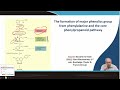
in the previous class I have given an overview of pH propanoid metabolism this is just to make a quick revision that uh
this started with phy alanin and uh by the action of the enzyme pal
Phile alanin converted into trinamic acid and trinamic acid is basically a C6 C3
compound and trinamic acid again converted into into parakum aric acid by an enzyme called camate 4
hydroxy uh so it acts fourth position o and it forms four hydroxycinnamic acid or parakum aric acid after that parakum
aric acid will get activated uh by addition of ko so it's a KO
lias so and then finally it forms the different monolignols so uh so our point of discussions today is about the ligin
and the precursor of ligin is the monolignol so monolignols are nothing but the precursor of lignin so that is
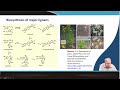
our mostly the point of discussion and uh this is basically the structure of hydroxycinnamic acids uh which I have
also shown in the previous class uh so for example how the structure changes I
would like to show you this is called trans camic acid
and once uh o is added this is camic acid or trans camic
acid and if one o is added here then it will become parakum aric acid or four karic
acid or four hydroxy camic acid same word so now this structure can be further modified
into by addition of one hydroxic group here so
now this structure is called cafeic acid or 34 dihydroxy camic
acid from this if you compare the structure between this karic acid and caic
acid then it is quite clear that a simple Hydrox silation
at three position of the Benin ring will convert foric acid to cafeic acid so
ideally one should say that there might be an enzyme called uh
c3h which maybe a cam 3 hydroxy which converts uh Kumar to Cafe it and uh lot of attention was paid on this and
initially it was thought to be a soluble enzyme but much later when molecular tools were explode then it was found
that this conversion is not that simple so in other word Kumar to Cafe conversion is not possible through this
way okay so we will see then how this conversion will happen but let us now go to the other structures for example this
peric acid ferulic acid this one was O is basically the
cafet now if you remove the O and add
ch3 so it will become feric acid so one thumb rule is this in order to have the
methylation first there will be Hydrox silation followed by the methylation so and ideally such conversion is possible
so a methy donor should be available and then it makes this one then subsequently there is another structure which is also
elucidated this is peric acid which is O addition here so when o added at
five position so it is called five hydroxy ferulic
acid and this five hydroxy furic acid can be converted into Copic acid as you see the structure here so this at five
position now this is replaced with a methoxy group so this is five position this is six position this is 1
2 3 4 so this will become Sy acids so again there will be a donor for this methy group so this is basically all the
hydroxamic acids and it was thought that hydroxy camic acids act as a precursor for several uh uh phenolic compounds
including the monolignols now hydroxy Camile alcohols are the monolignols because these are
the precursors one is the Conifer alcohol which basically coming from ferulic Acid because structure if you
remember the structure it is this one and the other one is basically uh the Kumari alcohol who are
only o group so which is basically originated from karic Acid so this is for Kumar alcohol or parar alcohol or
same and the copile is basically originated from Copic acid so the
structure as you see here so this is the copile alcohol so these three are the uh three major monol liol that
contribute to the formation of uh ligin okay so the overview of aromatic metabolism in Plants what I have started
talking from the last class so phos phenol pyate peros for phosphate that joins by the dhp synthes which produce
dhp and I have mentioned that this is a very active step because this is a regulatory step and eventually via
simate it forms Kismet from Kismet one roote goes to tyrosin other root goes to phy alanin and there is
another root which goes to tryptophan okay so and phy alanin is basically the starting point for uh Phil propanoid
metabolism although tyrosin can also be the starting point particularly for the monocots and we have also mentioned
about the pal enzyme which is phenyalanine ammonia lies which releases the ammonia from here and converting F
into camic acid so this camic acid usually trans camic acid and this subsequently by the action of cinam for
hydroxy it forms paric acid and subsequently other hydroxycinnamic acids this is a common structure and this step
is very important which is the activation of hydroxy I acid by the 4cl I have also mentioned this so this is
basically addition of qu Hester and this is now the activated compound from their different root uh
emerges for example uh the root towards flavonoid and antoin moves in this way the root towards ligin which Moves In
This Way the root towards other penal proponent that moves in this way so specific Branch points so this is
General overview of the aromatic acid metabolism and then now we will I have already mentioned about this
structures uh if you the paracom alcohol I have mention just in the previous slide so which is one of the
monolignols and the lignine Which derived from paracom alcohol dominate or the ligin which is
basically dominated by the paracom alcohol are called parah hydroxy pheny ligin or in brief it is
called H liin hydroxy fenile okay whereas the Conifer alcohol which is
basically coming from the ferulic acid as you see the structure here so Conifer alcohol that actually
contributes toward the formation of guile ligin g u a i a c y l guy lignin or it is called
gin whereas the third one is the one which derives from copit or the copile alcohol is
the uh monolignol that uh makes the serile liin residue or it is called s ligin now one point I must mention here
that H liin is basically dominated in the
monocots example is grasses whereas
the uh gin is found to be the only Lin in the Conifer that is gymnos SPM so Conifer
liin is only the Gin whereas s liin you will find
in angos sperms so angos sperms you will get a fine balance between S and G so a balance
between s also you will find some hin is also present so in monocot although H is
dominant but you will you can also get little bit of S and G but normally in the angos which is S and G and uh that
actually uh makes a lot of uh issues particularly in terms of delignification in terms of Li quality all these things
maybe I will discuss a little bit later so now this is what I am showing this is basically a old scheme or the classical
scheme of monal pathway so uh now this scheme is not fully valid now but it is important that we should know this and
then we will appreciate the what are the new discoveries made on this so this was basically published in the first uh year
of the journal which is called Trends in plant science so Trends in plant science is basically the the journal uh which
which started publishing in 1996 okay so what we what we see here is again the camic
acid by the action of camet 4 hydroxy it makes parakum aric acid then then c3h you see that c3h is
mentioned here because see that it is as early as 1996 so still at that time there was a uh there was a
uh there was an argument that in fact the c3h exists it may be a soluble enzyme so that is why but now what I
have mentioned that as such c3h is not uh functioning nowadays so Cafe acid can convert it into fuic acid by a methy
transference this is possible okay because you know that this this added and then feret five hydroxy basically
converts feric acid to five hydroxy ferulic acid at this position that is all right and then then subsequently the
co Mt which makes this position methy group added so these are all five hydroxamic acids I
have already mentioned now this karic acid by activated by making parar Al KO and contributing to paracom alcohol
whereas the feral Coy which originates from ferulic Acid contributed to Conifer alcohol and
the Copo Koy which originated from the Copic acid now contributed to
the formation of copile alcohol and I have mentioned about the respective ligins
formed by this monolignols like H G and S so here this scheme is pretty straightforward so what you what you see
here that basically there are three parallel pathway operating this one other one is this
one and the this one and the intermediates like cafet and
hydroxy hydroxy fer alcohols that is not directly involved in the monolignol formation perhaps it supplies the
intermediates from one branching point to other branching point so methylation pathway so methylation is
very important and there is no wrong in the methylation uh
discoveries uh so so now what what is known what is now known that
the karic acid so I better use this whiteboard that uh structure I'll show in the next uh slide because drawing
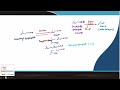
structure will take time I'll not finish in time so for karic acid or parakum Maric
acid cannot directly convert into Cafe acid but it is first converted into par karil qu this parar
qu subsequently converted into uh either paracom sikim or paracom cafet so it is
joining with a cemic acid so simic acid biosynthesis I have shown
in the previous class and also apart from simic Acid uh quinic acid can also joins because that also I have
mentioned in this uh queet secate pathway so here uh for the sake of our
discussion we'll concentrate only on the simate queet issue I will discuss maybe in the next class when when we'll talk
about other cic acid EST so paracom qu joins with the cumic acid and it forms the
uh it forms the karile sikic acid or
par karile simic
acid so this pararel simic acid uh will be actually I should make it in that color otherwise there is no point
of so this converted into Capo
capil simic acid so the Capo simic
acid and then this capile sumic acid what will happen from here
this leads to the formation of Cil
Co leaving the simic acid
out so basically there are three reaction the first and third reaction are catalyzed by an enzyme which is
called HCT hydroxy co uh this is camil Cil transfer so it's basically a
transfer which basically joins sikic acid and comaro Co make pararo simic acid and the next enzyme is basically
the c3h which converts paracom sikim to Cil so remember that Kumar and cile is what
is the difference between the structure if you if I briefly tell that is this Kumar only four position and
Cil addition of a hydroxy is at three position so this is Capo and this is parakum
so this Hydrox this addition is basically this is addition so which means a
hydroxy so c3h is nothing but a uh three hydroxy it added three position which converts CFO Kumar oil to
Cil so and then finally again the H C which uh converts capil
to capile co and this capile KO subsequently will be utilized by another enzyme leading to
the formation of another important structure which is called feru Co so when it is FAL Coy then basically
there will be a cc Mt enzyme will be there cile Co methy transference what will
happen that this position o will be replaced with a myoxy so that is why omt working here I think I think
it is clear to you it will be more clear in the next slide when I'll see the structure
so the take-home message is that Kumar to Cafe conversion is not simple it involves a complex roote using either
simate or quinic acid and making paracom simate that convert into Capal simate and here c3h plays important role and
then it converted again back to Cil koi so this is now cleared here in this as you see here that this is parakum aric
acid so parakum aric acid first with the 4cl enzyme it makes paracom qu that PR paracom qu now joining with the simic
acid and here is the HCT and which makes the paracom cimic acid and then it's the c3h what I have
shown so you see the structural difference as I have mentioned in the previous
slide that so this is only o and is a capo then o added additional o added here
this is additional that is why C3 3 Prime H is see 3 H is there okay and
then this converted to Again by HCT which makes capile qu and I have said that capile qu subsequently utilize in
making the fqu and the pathway moves however cqu can also form from cic Acid by another foral reaction okay so
that means this is what that Kumar qu to Cil qu way is a multi-step reaction this part that is called metah Hydrox
silation which is the complexity of the lignification pathway so this was all discovered in 2004 5 6 that that time
onwards so you will first see uh such uh Pathways coming uh into the Publications so much later in the book so from uh
2006 onwards uh in the publication so one such publication I will I have referred somewhere okay and then you see
that the H unit no problem with h unit for the G Unit that means G Unit is basically moving in this way
okay and the a unit is basically moving in this way that means the copal
deide keral deide karal pararal deide how it is formed it is formed from paracom
qu keral how it is formed it is formed from feral qu and the enzymes that catalyzes those reactions are this CCR
cam Co reduct is a generic name okay so and uh okay so that means the ferulic acid
is not directly involved in making ferulic acid is not directly involved in
making feral Co and the Copic acid is not directly involved
in making this Copo KO that means this is not usually not functioning so function is performing in this way so
this is again a new discovery and uh this is basically how this once the monolignols are formed they
basically moves out from the cytool to the cell wall space and then there lies the enzyme laes and peroxides and then
it forms different linkages beta4 linkages 405 linkages 55 linkages and then they form the detail polymer so the
uh so this is basically the uh paper which published in 2000 and 2001 in two very high impact journals one is Journal
biological chemistry and plant cell so the there they have mentioned these things so the first one is
basically uh talked about these two steps so that means Conifer alide converted into copal deide and the
second one is basically talks about there is an existence of a d so
and which converts this to this so now this will be clear here this is a simplified diagram so what I have shown
again just to make the concept clear parakum o qu making C qu but in order to make this you require H C two times and
C3 H okay and uh so basically what is here HCT
c3h again HCT then it makes cap Co then cap Co methy transfer basically o methy transfer
which makes feral Co feral Coy by the action of CCR calco reductors which makes ciferal deide and ciferal deide by
the action of CAD which makes Conifer alcohol that is one of the monol liol which converted into which is
contributing towards the Gin whereas the new pathway says that from Conifer Al deide syap alide is formed cnap alide is
not from the copit so through the enzymes called this C Mt which is f5h is basically named as this C 5H Conifer
alide 5 hydroxy is c a d 5H and the second one is called Al lomt aldhy Ile transfer which convert
one alide to another alide five hydroxide Conifer alide converted into syap alide by a methy transfer so the
reaction is like this this is one five hydroxy Conifer alide converted into cop alide uh so omt means omile
transfar as you see here that here is the addition and here this o but here it
becomes O3 okay and then by the action of Cad and
sad copile alcohol dehydrogen is uh so both Cad and sad can work and this makes copile alcohol and then they are
transported to the cell wall and oxidative polymerization takes place by the action of peroxid and lacas and
ultimately it formed the ligin so so this is basically the revised model so what I have said just
briefly go through it so that it will uh settle in your mind so karic acid Kumar KO from there it moves to parakum simate
to capile simate and then it comes back to cafeic acid then from here it goes to ferulic
acid then Conifer alide one root goes to uh Conifer deide to Conifer alcohol and the root for the syap oil goes in
this way and then eventually it forms the uh cop alide and copile Al and copile alcohol so this is basically the
joining of different scheme uh leading to the formation of different uh monol Lial so this is another way of
representation so this was actually first appeared in environmental chemistry Letters by a group and I
picked up this one that and then uh with further addition we make it so here basically they have mentioned all the
enzymes like c3h or C3 Prime H so that is converting this uh Kumar to keil which is called Kumar esta 3 Prime
hydroxy so so both C3 and C3 Prime H is used c3h is used when you are talking about the Kumar simate to Cil simate but
when you are talking about the comaro quinet to Cil quinet there C3 Prime H is used that is what a normal
convention okay and finally uh that apart from this H ligin gin and S ligin
recently there are arguments and evidences that uh cin which is from the Cil
can it is a possibility that that can also be formed and uh although these stepes are unclear but from Cil KO as
Cil KO contributes to feral qu so Cil KO can by the action of uh CCR can make cile
alide and cile alide by the action of CAD can make Cil alcohol so this is nothing but the structure of cile
alcohol so so that may contribute to the cin and other one is this that uh the feret five hydroxy or which is the
intermediate which uh which contributes to five hydroxy feret or uh uh this is or 5H we can also call this uh CD uh
this uh CD 5H so that I have mentioned previously so this ultimately makes what
this is the structure of five hydroxy five hydroxy feral deide five hydroxy feral deide is already produced
in the pathway and this five Hydrox fer alide simply one requires only as only a
specific CAD which converts five hydroxy feral deide or ciferal deide into this F hydroxy Conifer alcohol this is five
hydroxy Conifer alcohol this is the Conifer alcohol this is conifer alcohol and this is five
hydroxy Conifer alcohol so simply one CAD can convert the already this Conifer alide five
Hydrox Conifer alide is already produced by c d o c d 5H ciferal alide five hydroxy so this is
produced so this can move in another Direction and it eventually May contribute to five hydroxy ligin which
is called 5H ligin so these are the new View and this was published in Trends in plan science in the year of
2018 so this is a review appeared in 2018 so I have given here but anyway I did not give you the detailed references
so this is all about the uh classical and contemporary views of monol Lial pathway okay liin I will not liance I
will not discuss I'll discuss in a separate class with this I end this class thank you very much
Monolignols are the primary precursors of lignin, a key structural polymer in plant cell walls. They provide mechanical strength and resistance to pathogens, making them essential for plant integrity and defense.
Phenylpropanoid metabolism begins with the conversion of phenylalanine to trans-cinnamic acid by phenylalanine ammonia lyase (PAL). Through a series of hydroxylation, methylation, and ligation steps involving enzymes like 4-coumarate-CoA ligase (4CL), hydroxycinnamoyl transferase (HCT), and cinnamyl alcohol dehydrogenase (CAD), this pathway produces distinct monolignols that eventually polymerize into lignin.
There are three primary monolignols: p-coumaryl alcohol (leads to H-type lignin common in monocots and grasses), coniferyl alcohol (forms G-type lignin prevalent in gymnosperms), and sinapyl alcohol (creates S-type lignin mostly found in angiosperms). Each contributes to unique lignin compositions affecting plant properties.
Instead of direct hydroxylation, para-coumaric acid is first ligated to coenzyme A, transferred to shikimate or quinate forming esters, then hydroxylated by p-coumarate 3-hydroxylase (C3H). This multi-step process involves intermediates like para-coumaroyl shikimate and highlights a complex enzymatic cycle critical for monolignol diversity.
Monolignols are transported to the cell wall where oxidative enzymes such as peroxidases and laccases catalyze their polymerization. This process forms diverse linkages like beta-O-4, beta-5, and beta-beta bonds, resulting in the complex lignin polymer that reinforces plant structural integrity.
Lignin composition influences biomass digestibility and processing efficiency. By elucidating monolignol biosynthesis, scientists can engineer plants with modified lignin content or composition, facilitating easier delignification and improving biofuel yields from plant biomass.
Recent molecular studies revealed that monolignol formation involves complex cycles of hydroxylation and methylation with key intermediate compounds, challenging the simpler linear pathway model. Enzymes like HCT and C3H play crucial roles, providing a more detailed and accurate map of lignin precursor biosynthesis.
Keep this summary
Save it to LunaNotes and it becomes a real note in your library — editable, searchable, and ready to turn into flashcards or a diagram. Free to start.
Save to LunaNotesOr summarise for another video.
This summary and transcript were automatically generated using AI with the Free YouTube transcript summary tool by LunaNotes.
Related summaries
Metabolic Engineering of Monolignol Pathways: Case Studies in Lignin Manipulation
Explore detailed case studies on the metabolic engineering of lignin biosynthesis pathways focusing on monolignol manipulation. Learn how downregulation and antisense expression of key enzymes like CAD, 4CL, and HCT impact lignin content, wood quality, cellulose accumulation, and forage digestibility, presenting innovative strategies for industrial applications in pulp, paper, and livestock feed sectors.
Comprehensive Overview of Phenolic Compounds: Phenylpropanoids, Benzenoids, Coumarins, and Tannins
This lecture provides an in-depth exploration of phenolic compounds derived from the phenylpropanoid pathway, including the biosynthesis and functions of phenylpropanoids, benzenoids, coumarins, flavonoids, and tannins. Key metabolic routes, enzymatic steps, and their biological roles in plants are detailed for enhanced understanding of these essential natural products.
Comprehensive Biosynthesis and Metabolic Engineering of Lignans, Rosmarinic and Chlorogenic Acids
This lecture explores the intricate biosynthesis pathways of lignans, including important compounds like phoyotoxins, as well as caffeic acid esters such as rosmarinic and chlorogenic acids. It highlights the pharmacological relevance of these phenolics, details enzymatic steps, and presents metabolic engineering advances enhancing their production in plants and microbial systems.
Understanding the Diversity and Biosynthesis of Monoterpenoids in Plants
This lecture explores the classification, biosynthetic pathways, and structural diversity of monoterpenoids, key isoprenoid compounds synthesized in plant plastids. It details enzymatic reactions from basic isoprene units to various monoterpenoid structures, highlighting their roles in plant protection and ecological interactions.
Comprehensive Overview of Flavonoid Biosynthesis and Metabolic Pathways
This lecture provides an in-depth summary of biosynthetic pathways leading to flavonoids, including flavones, isoflavonoids, proanthocyanidins, and related polyphenols. It explores key enzymes, chemical conversions, and the significance of these compounds in plants such as legumes and tea. Essential metabolic routes and compound formations are clearly explained for academic and research contexts.
Most viewed summaries

A Comprehensive Guide to Using Stable Diffusion Forge UI
Explore the Stable Diffusion Forge UI, customizable settings, models, and more to enhance your image generation experience.

Kolonyalismo at Imperyalismo: Ang Kasaysayan ng Pagsakop sa Pilipinas
Tuklasin ang kasaysayan ng kolonyalismo at imperyalismo sa Pilipinas sa pamamagitan ni Ferdinand Magellan.

Mastering Inpainting with Stable Diffusion: Fix Mistakes and Enhance Your Images
Learn to fix mistakes and enhance images with Stable Diffusion's inpainting features effectively.

Pamamaraan at Patakarang Kolonyal ng mga Espanyol sa Pilipinas
Tuklasin ang mga pamamaraan at patakaran ng mga Espanyol sa Pilipinas, at ang epekto nito sa mga Pilipino.

How to Install and Configure Forge: A New Stable Diffusion Web UI
Learn to install and configure the new Forge web UI for Stable Diffusion, with tips on models and settings.
Found this summary useful?
Take it with you. One click puts it in your own LunaNotes library.
Save to LunaNotes