Introduction to Terpene Biosynthesis
Terpenes are a large class of naturally occurring organic compounds derived from isoprenoid units. This lecture delves into the biosynthesis and diversity of various terpene classes: sesquiterpenes (C15), diterpenes (C20), triterpenes (C30), and polypenes. For a more detailed understanding of the pathways involved, see Comprehensive Overview of Terpenoid Biosynthesis via MVA and MEP Pathways.
Sesquiterpenes (C15) Biosynthesis and Diversity
- Precursor Formation: Sesquiterpenes originate from farnesyl pyrophosphate (FPP), synthesized by combining dimethylallyl pyrophosphate (DMAPP) and two isopentenyl pyrophosphate (IPP) units.
- Key Enzyme: Sesquiterpene synthase catalyzes the formation of various sesquiterpene skeletons.
- Representative Structures:
- α-Farnesene: Common in route plants of the orange family.
- β-Caryophyllene: Found in Daucus carota (carrot).
- α-Isoboldol: Present in several species including Santalum.
- Humulene: Specific to hops (Humulus lupulus).
- Germacrene: Precursor to several compounds including chamomile constituents.
- Volatile and Non-Volatile Sesquiterpenes: Many sesquiterpenes serve as volatile fragrance compounds, while others act as phytoalexins (plant defense compounds) accumulating in different tissues.
Product Diversity from Key Sesquiterpene Cations
- Germacrene Cation Derivatives: Lead to compounds like germacrene A and related structures, which further convert into:
- Apoparistolochene
- Capsidiol (a phytoalexin in tobacco and pepper)
- Guaiylene derivatives
- Matricin and chamazulene components of German chamomile essential oil
- Jarmacene Cation Derivatives: Result in patchoulol, a major perfumery component from patchouli oil.
- Babilene Cation Derivatives: Lead to α-bisabolol and its oxides, and artemisinin (an antimalarial from Artemisia annua).
Sesquiterpene Phytoalexins and Defense
- Capsidiol: Induced in plants under fungal attack.
- Gossypol: A polyphenolic sesquiterpene dimer found in cotton, notable for its four benzene rings and defense role.
- Lubimin: Derived from vetispiradiene, accumulates in potatoes during pathogen attack.
- Doin and Gingiperenes: Defensive sesquiterpenes found in carrot and ginger, respectively.
Diterpenes (C20) Overview
- Precursor: Geranylgeranyl pyrophosphate (GGPP) formed by the condensation of DMAPP and three IPP units.
- Examples of Diterpene Compounds:
- Abietadiene: Precursor of abietic acid.
- Flobal (floorball): An ester found in bearing plants.
- Casbene: A phytoalexin in castor beans.
- Taxadiene: Backbone of taxol synthesis, important anticancer compound.
- Janile geraniol: Common flower volatile.
For a broader understanding of monoterpene and related biosynthetic processes, consider reading Understanding the Diversity and Biosynthesis of Monoterpenoids in Plants.
Triterpenes (C30) and Their Biological Roles
- Formation: Derived from squalene, a C30 isoprenoid, via squalene synthase.
- Key Compounds:
- Cycloartenol and β-amyrin: Precursors to plant sterols and triterpenoid saponins.
- Oleanolic acid: Derived from β-amyrin.
- Phytosterols: Including cholesterol and stigmasterol analogs; important for membrane structure.
- Phytoecdysteroids: Insect molting inhibitors affecting larval development.
- Saponins (e.g., ammannin) and cardiac glycosides (e.g., digoxin): Medicinal compounds protecting plant and human health.
Triterpene Functions
- Membrane stabilization
- Defense against herbivory and pathogens
- Medicinal properties including cardiotonic effects
For detailed biosynthesis and metabolic engineering insights of related phenolic compounds, see Comprehensive Overview of Phenolic Compounds: Phenylpropanoids, Benzenoids, Coumarins, and Tannins and Comprehensive Biosynthesis and Metabolic Engineering of Lignans, Rosmarinic and Chlorogenic Acids.
Polypenes and Other Complex Terpenoids
- Briefly introduced as a link to carotenoids (C40 compounds).
- The next lecture will cover carotenoid biosynthesis in detail.
Conclusion
Terpenes exhibit vast structural diversity and biological functions in plants, ranging from fragrance and flavor to defense and pharmacological activity. Understanding their biosynthetic pathways provides insight into metabolic engineering and natural product discovery.
This summary integrates detailed structural examples, enzymatic steps, and functional roles essential for students and researchers in pharmacognosy and metabolic engineering.
[Music] [Music] hello welcome to uh nptl online
certification course on pharmacognosy and metabolic engineering this is lecture number
39 where I'll cover the diversity of sarpin D Tarpin TR Tarpin and polypin I have mentioned about these uh
terminologies in one of the previous classes so what I'm going to cover we'll cover briefly the biosynthesis of c
cpin and then we'll see the product diversity of C tpin then we'll see the product
diversity of D Tarpin and tri ppins and finally I will give you a brief outline about
polypin so let's go to the board that is squins biosynthesis
and product diversity
of SQ Tarpin so CES Tarpin are C15 compounds which I have already mentioned in one of
the previous classes and it also there is an enzyme called sarpin
synthes uh and the substrate is file pyrophosphate so fares pyrophosphate is formed
from D map p dimethy alile pyrophosphate and the enzyme will be file pyrophosphate
synthes a PS and which requires
two molecules of Ip 2 into IP so that means DM p p is C5 and 2 IPP means 2
into C5 so total 15 carbons leading to the formation of this fpps skeleton which will act as the
substrate for cesarin synthes
I just use the is should go down up to this
much it come here go down go down so this is basically the
structure of file pyrophosphate uh
fpp I'll write the full name here or file D
foser if are in okay n is missing sorry
okay this will be converted into different uh C typin molecules so here
I'm not discussing the reaction mechanism so I will first put the sepal products which form from
file uh phosphate so one main example is your faresin so
fessing structure I'll draw it here it is pretty similar to fpp
this is alpha alpha fing
so apart from this another major structure which is of common occurrence is beta kop
filing so this is the
problem this is the structure of beta
kopil beta c a r y o p h y l l e n e so and
another representative structure I will draw here which I will draw as Bab
bolon this is Alpha
Visa B okay any more interesting one is another
interesting one is Humulin I can also put it J and jarma I also need to put it so
this five structures only I will show one is one is jarma
cream okay let us draw the Humulin
h u m u l e n e and finally I will draw the structure of jarmak so the jarmak
yeah this is the structure of
yac so these are all volatile compounds and you will find it in different plants
Alpha harnessing you will find in uh so many plants particularly you will find in the routesy plants in the orange
family kopin also you will find there you'll find in the docas karota uh and isab bolon you will find
in several species including the santalum jarmac also is a common say sarpin which is also found in different
floral scent and Humulin is specific for the Hops so in the Hops flower you'll find Humulin and the product diversity
is much more in cins than that of monins although formation is a bit more
complex okay uh now uh of course there are uh these are
all uh the volatile cins but apart from that there are several nonvolatile C cpin also exists
and that act as defense compounds and it accumulates in different plants in different
tissues uh so that also I will list it up but before for that uh okay let us go to the next
slide so here what I'm going to show that from
uh gpp uh from AP that is parile pyro phosphate uh there are
different cation generated for example one is jarmac cation which contributes to jine and
related compounds so that I'm going to show you so from jmac cations uh
different uh product formation of occurs for example
uh from jarmac Kon apart from jine a which is g e r m
a c r e n a jine a jine b and jarine c are also produced
jine D are also produced see I'm not showing so apart from jine a both jine B and
jarine uh D are produced by uh uh different rearrangements of the uh skeleton which originated from gerac
C so from jarine a the pathway contributes towards the formation
of apep aristol loin and that finally lead to the formation of
capc DL whereas from jarine
a uh two more root originates in this way one in this way
the short root contributes towards the formation of paranoide
whereas the other root from here guile cion is produced g u a i y l y
i cat is produced and from there
it produces Marti Martis
Martis and from Martis shulin is
produced now Martis and chulin basically are the component of marara
chamoma so the scientific name of the plant is the the English name is German chamomile so the scientific name
is MTI Kia
cha which is called German chamomile or German chamomile so the English name
is c h a m o m i l
e okay and from AP
another C is form which is jarmac C okay J okay J okay jarmac Caton I have
said jarm Kon also contributes to uh
pul so jarmak K also contributes to pul so I'll put another arrow here which
will make p a t c h o u l o l so this is basically
a right cyclic SQ
Tarpin and this is very important because it is used as perfumy raw
material and it is also the major component of P
Oil is poon cin is the scientific
name okay now from fpp
another cation form which is called baboli cation
Bab cation and from babile cation uh two different Roots
originate one contributes to bisabolol [Music]
so I put it Alpha bisabolol b i s a b o l o l and
that eventually formed babal oxide a bisabolol oxide B
Alpha [Music] Bol oxide
a and Alpha bisa
B oxide B whereas the other root
contributes towards the formation of arine
so I put the arrow in this way so this makes first
amorpha amha 41 Dian
that subsequently converted to aric
acid meic sorry problem with the
p a it and arisc acid arine is produced a r
t a r t e m i s i n i n AR Miss in so put the
arrow now AR Miss is basically a Chinese uh medicine from obtained from the plant
which is called timia anua sorry I have to use the different color
this is the English name is called sweet word mode the ch Chinese name of arimin is
King Hau so we will not write that it's such a difficult to pronounce so this is from AP
different cat formed as a result of this parine synthes reaction one major is this gerac C another one is Bab babile
cion from the jarmac C we will see the formation of jine parano capsidiol
Martis and chulin so chulin and Marine are the component of this marara essential oil whereas capsidiol
is basically a uh uh phyto alexin compounds which accumulated in the
plants to protect against a fungal attack so okay so it is uh I'll talk about that
now in the next slide that means other C pins which plays important
role in defense so
all the compounds that basically plays important role in defense so one is because uh I will not draw all the
structure one is okay if we start with uh AP p fory
pyrophosphate so start from this side fpp from fpp one
root uh contributes to the formation of AP Addis toen e p i AP a r i s t o l o c h e
n if AP Addis to loen so from AP Addis to loen capsid is formed C
capsy capsid dool is formed so capsid dool and AP Arisen synthes enzyme contributes to the formation
of this product AP are
loin synthes that is nothing but a part of cpin synthes and so what I have mentioned you
can also not it down here this is basically a major
phytoalexin and it is found in paper and tobacco phyto alexin are those comp
compounds when plants are healthy you will find very TR amounts but when plants are under attack then the
Machinery becomes active and leading to enormous amount of synthesis of this compounds uh I have mentioned this in
one of the very early classes that the three ways these defensive specialized metabolites are
formed okay uh other root from here which contributes towards the formation of
Delta cadinin c a d i n e n e so this is found in
Cotton this is found in cotton and this finally makes the structure
which is called gosip Bol so gosip Bol structure I will draw so the gosip
PA g s s y p o l what is gosip gosip is a cbin d s c s q u i t e
r p e n sarpin dier so let me draw the structure okay okay the gosip all
here so gosip fall structure is very interesting it's four benine ring one
2 G o
h c o so this is the structure of
gosip so now
another defensive uh sarpin which is
called lubimin luim Min l u b i m i
n which you will find in in in potato so and LU
is basically formed from
V V is
spadin vtis pyin and vtis pyin is basically produced from
fpp by this vtis py
dine synthes so this subsequently converted into
lubimin so this is uh so that means lamine is also a defense compound which
accumulated in the potato so I have said the different uh defensive cin that
accumulate in different plant similarly in doas there is a doin doin is a cpin which accumulated in
doas so I can write it here uh
doin doin accumulates in tocas that means
carrot in ginger also there is another cpin which accumulates which is
called ging p p e
r e n e so this is found in
ginger okay so with this information now I will go to the very
briefly about uh dpin
so diar pins are basically C20 compounds so that means dipin are formed
from uh d m a p with addition of three molecules
of IPP and the enzyme is ggpp synthes g g
PPS is stand trans for synthes okay ggpp synthes leading to the formation of ggpp
so ggpp only structure I can draw because of shortage of time I'll not draw the other structure but gpp
structure is pretty complex let me try so this is the structure of ggpp ggpp
stands for Jan Nile
janile pyro phosphate this acts as the substrate for the subsequent
enzymes and this leads to the formation of different dipine compounds for example I just
write the name of the compounds one is called abadin
AB i e t a d i e n e abadin so from abadin the atic acid is formed a b i e t i c atic acid is
formed and the enzyme is Abed in synthes AB synthes
similarly one root contributes towards the formation of flow
Ball P H O floor ball b o l floor ball so this
is uh an ester found in the latex bearding plant
particularly U for BSC okay another one is basically the
casbin c a s b e n e let me make it clear spelling otherwise you will
not c a s b e n e casban what is casban casban is again a phto
alexin it's a defense compound and it is found in castor bean which is called recus
communist scientifically ggpp also contributes towards the formation
of tadan t a x a d i e n e so it is basically
contribute to the skeletal of the taxol so the taxan synthes is responsible for
that t a x a d i e n e synthes and ggpp also contributes to the formation
of janile geraniol which is a common volatile metabolite found in
different flowers okay so this is in brief about the
different dipin compounds now if I go to briefly on the TR tarpine
compounds Tarpin so Trin are basically C3 compounds that also originate from two
molecules of AP that timately formed squal
squin is considered as a precursor of trines so the enzyme is sine
synthes which requires two molecule of AP so sine is again the C30 compounds and from
squalen different compounds of originate like
Q E okay from squin oxidos qualin is
formed s q u a oxidos qualin is
formed and from oxidos qualin different compounds originate for example cyclo tinol Cy
tinol from their brassing is synthesized and from oxidos
qualin another root contributes towards the formation of uh beta
amrin and from biter Amrine oleanolic acid is formed so just to tell you the product
diversity squallin also contributes towards formation of other sterols for
example uh cholesterols and also contributes towards the
formation of stigma sterile and
cytal sigo stero and Cyro stero structures are pretty similar only this contains
a double bond which is absent in this
structure okay uh and
uh steroid molecules with with an alcohol with an alcohol group is sterols and these sterols also one such stero is
phyto so this accumulates in the plant and the and the insect's legs The larva or form then
larva to Pupa conversion then when Pupa basically the uh when the larva consume the phyto Egon the pupa
formation get hindered because of its toxicity so this has the steroid
structure apart from this there are uh two important compounds which comes under trines which is Ammon
uh y a m o n i
n which is a type of saponin and another is well known
digoxygenin d i g i d g toxy genine which is
a cardino that is at low concentration it has a role
in uh protecting the heart from other diseases okay so this is about the different trar pins which accumulate
in different plants and they play important role um for example the protection of the plants protection of
the membrane structure and and different aspects so this is
about the trins C30 C40 will be this carotin which I will cover in a separate class
now okay maybe uh I should stop here and in the next class when we'll talk about kerotin before that I will briefly talk
about the polypin and oio resins before I move into the uh carotin structure so with this I'll end this
class thank you very much
Sesquiterpene phytoalexins are specialized compounds produced by plants in response to pathogenic attacks, helping inhibit fungal or bacterial growth. Examples include capsidiol in tobacco and pepper, gossypol in cotton, and lubimin in potatoes. These compounds accumulate in affected tissues, strengthening plant defense systems against biotic stress.
The overview covers sesquiterpenes (C15), diterpenes (C20), triterpenes (C30), and polypenes like carotenoids (C40). They differ by the number of isoprenoid units they contain: sesquiterpenes consist of three isoprene units, diterpenes have four, triterpenes are composed of six units, and polypenes include even larger repeat units. This classification influences their biosynthesis pathways and biological roles in plants.
Sesquiterpenes are biosynthesized from farnesyl pyrophosphate (FPP), which is formed by condensation of dimethylallyl pyrophosphate (DMAPP) and two isopentenyl pyrophosphate (IPP) units. The key enzyme, sesquiterpene synthase, catalyzes the cyclization of FPP into various sesquiterpene skeletons, leading to diverse compounds such as α-farnesene, β-caryophyllene, and humulene. These processes generate both volatile fragrance compounds and non-volatile defense molecules.
Triterpenes are C30 isoprenoids derived from squalene via squalene synthase. They serve multiple biological functions including membrane stabilization (e.g., phytosterols like cycloartenol), defense against herbivory and pathogens (e.g., saponins), and producing medicinal compounds such as cardiac glycosides like digoxin. Phytoecdysteroids, another triterpene class, interfere with insect development by acting as molting inhibitors.
Diterpenes are synthesized from geranylgeranyl pyrophosphate (GGPP), formed by condensation of DMAPP with three IPP units, while sesquiterpenes originate from FPP with fewer isoprene units. Important diterpenes include abietadiene (a precursor to abietic acid), casbene (a phytoalexin in castor bean), taxadiene (key to anticancer taxol biosynthesis), and geraniol, a common floral volatile. The larger carbon skeleton allows more diverse biological roles.
Understanding terpene biosynthesis reveals the enzymatic steps and precursor molecules that generate diverse terpene structures with valuable biological activities. This knowledge enables metabolic engineering to enhance production of pharmaceutically important compounds like artemisinin or taxol and to create novel terpenoids. It also facilitates natural product discovery by linking plant genetics and enzyme function to metabolite diversity, improving applications in medicine, agriculture, and industry.
Polypenes, such as carotenoids (C40 compounds), are briefly introduced in the overview. Carotenoids play crucial roles in plants, including light harvesting in photosynthesis and providing pigmentation. Their detailed biosynthesis and functions are covered in subsequent lectures, highlighting their importance in plant biology and potential nutritional benefits.
Keep this summary
Save it to LunaNotes and it becomes a real note in your library — editable, searchable, and ready to turn into flashcards or a diagram. Free to start.
Save to LunaNotesOr summarise for another video.
This summary and transcript were automatically generated using AI with the Free YouTube transcript summary tool by LunaNotes.
Related summaries
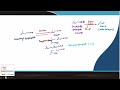
Understanding the Diversity and Biosynthesis of Monoterpenoids in Plants
This lecture explores the classification, biosynthetic pathways, and structural diversity of monoterpenoids, key isoprenoid compounds synthesized in plant plastids. It details enzymatic reactions from basic isoprene units to various monoterpenoid structures, highlighting their roles in plant protection and ecological interactions.
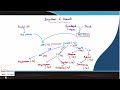
Comprehensive Overview of Terpenoid Biosynthesis via MVA and MEP Pathways
This lecture provides an in-depth exploration of terpenoid biosynthesis, focusing on the mevalonate (MVA) and methylerythritol phosphate (MEP) pathways. It covers the origin of key five-carbon precursors, the diversity of terpenoid structures, and the cellular compartmentalization and regulation of these pathways, highlighting their biological significance and applications such as essential oil production and antimalarial targets.
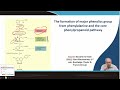
Comprehensive Overview of Phenolic Compounds: Phenylpropanoids, Benzenoids, Coumarins, and Tannins
This lecture provides an in-depth exploration of phenolic compounds derived from the phenylpropanoid pathway, including the biosynthesis and functions of phenylpropanoids, benzenoids, coumarins, flavonoids, and tannins. Key metabolic routes, enzymatic steps, and their biological roles in plants are detailed for enhanced understanding of these essential natural products.
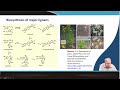
Comprehensive Biosynthesis and Metabolic Engineering of Lignans, Rosmarinic and Chlorogenic Acids
This lecture explores the intricate biosynthesis pathways of lignans, including important compounds like phoyotoxins, as well as caffeic acid esters such as rosmarinic and chlorogenic acids. It highlights the pharmacological relevance of these phenolics, details enzymatic steps, and presents metabolic engineering advances enhancing their production in plants and microbial systems.
Comprehensive Overview of Flavonoid Biosynthesis and Metabolic Pathways
This lecture provides an in-depth summary of biosynthetic pathways leading to flavonoids, including flavones, isoflavonoids, proanthocyanidins, and related polyphenols. It explores key enzymes, chemical conversions, and the significance of these compounds in plants such as legumes and tea. Essential metabolic routes and compound formations are clearly explained for academic and research contexts.
Most viewed summaries

A Comprehensive Guide to Using Stable Diffusion Forge UI
Explore the Stable Diffusion Forge UI, customizable settings, models, and more to enhance your image generation experience.

Kolonyalismo at Imperyalismo: Ang Kasaysayan ng Pagsakop sa Pilipinas
Tuklasin ang kasaysayan ng kolonyalismo at imperyalismo sa Pilipinas sa pamamagitan ni Ferdinand Magellan.

Mastering Inpainting with Stable Diffusion: Fix Mistakes and Enhance Your Images
Learn to fix mistakes and enhance images with Stable Diffusion's inpainting features effectively.

Pamamaraan at Patakarang Kolonyal ng mga Espanyol sa Pilipinas
Tuklasin ang mga pamamaraan at patakaran ng mga Espanyol sa Pilipinas, at ang epekto nito sa mga Pilipino.

How to Install and Configure Forge: A New Stable Diffusion Web UI
Learn to install and configure the new Forge web UI for Stable Diffusion, with tips on models and settings.
Found this summary useful?
Take it with you. One click puts it in your own LunaNotes library.
Save to LunaNotes