The Periodic Table: A 2,000-Year Journey from Alchemy to Atomic Science
Description
Uncover the fascinating history of the periodic table, from ancient alchemists to modern-day scientists. This summary explores the key discoverers, Lavoisier, Mendeleev, Moseley, and Seaborg, who transformed a list of 33 elements into a powerful tool of 118 organized elements.
Keywords
history of the periodic table, Mendeleev periodic table, chemical elements discovery, alchemy to modern chemistry, Dmitri Mendeleev, Henry Moseley atomic number, transuranic elements, periodic table evolution
The Origins: From Alchemy to the First Scientists
Alchemy & Early Elements (Before 1789)
- Alchemists sought to turn metals into gold but failed. However, they identified elements like gold, silver, and mercury. The philosophical pursuit of transformation was a precursor to the scientific method, but the real breakthrough came with the Big Bang Theory: How All Elements Were Created From the Beginning, which explains the cosmic origin of the simplest elements.
- 1789 – Antoine Lavoisier classified 33 elements based on chemical properties, marking the start of scientific organization of matter.
A New System of Naming (1811)
- Jöns Jacob Berzelius introduced modern chemical nomenclature, using symbols based on Latin initials (e.g., H for Hydrogen, O for Oxygen). This system remains the foundation today.
The Path to Patterns: Groups and Octaves
Law of Triads (1829)
- Johann Wolfgang Döbereiner grouped elements in threes with similar properties (e.g., lithium, sodium, potassium). Though limited, this was a crucial step toward the periodic table.
Law of Octaves (1864)
- John Newlands observed that properties repeated every eight elements when arranged by atomic mass, similar to musical octaves. Initially rejected, this idea helped find patterns in elements.
The Race to Organize: Mendeleev vs. Meyer
Dmitri Mendeleev's Breakthrough (1869)
- Dmitri Mendeleev created the first periodic table, organizing elements by atomic mass.
- He identified “periodic patterns” in properties and left empty spaces to predict undiscovered elements like gallium and germanium. This innovative structure is the foundation for the modern Periodic Table Structure: Periods, Groups, Metals, & Metalloids Explained.
Lothar Meyer's Parallel Work
- Lothar Meyer independently developed a table based on atomic masses and properties.
- Mendeleev published first and gained more recognition, but both contributions were fundamental.
The Modern Table: Atomic Number & New Families
Henry Moseley's Correction (1913)
- Henry Moseley discovered elements should be arranged by atomic number (proton count), not atomic mass. This concept is central to Understanding the Classification of Elements and Periodic Properties in Chemistry.
- This solved inconsistencies in Mendeleev’s table and laid the foundation for the modern version.
Adding Noble Gases
- Helium, argon, and other noble gases were placed in a new column, completing the table’s structure.
20th Century & Beyond: Superheavy Elements
Glenn T. Seaborg's Contributions
- Glenn T. Seaborg discovered transuranic elements (more than 92 protons). For a deeper look at the building blocks of all matter, review Understanding Atoms and Elements: A Comprehensive Overview of Chapter 4 in Chemistry.
- He refined the table by placing lanthanides and actinides in separate rows below the main table.
- Key in creating artificial elements like plutonium and americium.
The Modern Periodic Table Today
- Contains 118 elements organized by atomic number and electron configurations. Get a complete picture with Comprehensive Overview of Periodic Table and Key Concepts in Chemistry.
- An essential tool for chemistry, biology, physics, and technology.
Key Takeaways
- From 33 to 118 elements: The periodic table evolved over centuries through the work of many scientists.
- Patterns & Predictions: Mendeleev’s empty spaces proved that the table could predict undiscovered elements.
- Nomenclature Legacy: Berzelius’s one- and two-letter symbols are still used worldwide.
- Continuing Evolution: New elements and configurations (like or orbitals) keep the table a living science.
Did this journey through history interest you? Share your thoughts in the comments, and don't forget to like, subscribe, and turn on notifications for more science stories!
[Music] Welcome to our channel before we start don't forget to
like subscribe and activate the notification Bell today we will explore the
incredible history of one of science's greatest achievements the periodic table it all
began with the Alchemists who sought to turn medals into gold although they did not succeed they identified elements
like gold silver and mercury in 1789 Antoine laiser classified 33 elements based on their chemical properties
marking the beginning of the scientific organization of matter in 1811 the Swedish chemist John Jacob brazus
introduced a key advancement modern chemical nomenclature he was the first to use symbols to represent elements
based on the initials of their Latin names for example hydrogen is H oxygen is O this system Remains the foundation
for identifying elements today later in 1829 yuhan Wolf Gang dobriner proposed the law of Triads
observing that certain elements could be grouped in threes with similar properties although limited his idea was
a crucial step toward the modern periodic table in 1864 the English chemist John nands proposed the law of
octat he observed that when elements were arranged by atomic mass their properties
repeated every eight elements like musical notes in an octave although some scientists initially rejected his idea
the law of octaves was an important step in finding patterns in chemical elements by the mid 19th century two
scientists were working in parallel on the development of the periodic table Dimitri MF a Russian chemist loar
a German chemist in 1869 mlef created the first periodic table organizing Elements by their atomic mass and
identifying periodic patterns in their properties the most impressive part he left empty spaces predicting the
existence of undiscovered elements like gallium and germanium meanwhile lothar Meyer also developed a periodic table
based on atomic masses and properties but mlef published his work first gaining more recognition however both of
their ideas were fundamental to the modern table in 1913 Henry Mosley discovered that elements should be
arranged by atomic number not just atomic mass this solved inconsistencies in mf's table and laid the foundation
for the modern periodic table later noble gases like helium and argon were added to the table forming a new
column in the 20th century Glen t seaborg made groundbreaking contributions he discovered transuranic
elements with more than 92 protons refine the table by placing the lanthanides and actinides in separate
rows was key in the creation of artificial elements such as plutonium and amorium his work revolutionized our
understanding of the periodic table the periodic table has continued evolving today it includes electron
configurations that explain how elements interact currently the periodic table consists of 118 elements organized with
Precision it is an essential tool for Science and Technology as you can see the periodic table is not just a chart
it is the result of centuries of effort and Ingenuity from brazus and his nomenclature to Dober Riner newand mlef
and seaborg each step was essential in shaping the table we know today did you enjoy this journey through history leave
us a comment before you go don't forget to give us a like subscribe and turn on notifications
[Music]
Dmitri Mendeleev created the first periodic table in 1869 by organizing elements according to their atomic mass. He left empty spaces in his table to predict the existence and properties of undiscovered elements like gallium and germanium, which were later found and matched his predictions. This made his table uniquely powerful because it could not only organize known elements but also forecast future discoveries.
Henry Moseley discovered in 1913 that arranging elements by atomic number (proton count) rather than atomic mass resolved inconsistencies in Mendeleev's table. For example, some pairs of elements had unsorted properties when ordered by mass, but their properties fit perfectly when ordered by proton count. This correction formed the basis for the modern periodic table.
Alchemists contributed by identifying several elements such as gold, silver, and mercury, even though their main goal of turning metals into gold failed. Their practical experiments with substances laid early groundwork for systematic chemical study. The philosophical quest for transformation also inspired later scientists to seek order and patterns in matter.
The periodic table grew from Antoine Lavoisier's 1789 list of 33 elements to today's 118 elements through contributions from many scientists. Jöns Jacob Berzelius introduced chemical symbols, Döbereiner and Newlands found patterns, and Mendeleev organized elements into a predictive table. In the 20th century, Glenn T. Seaborg discovered transuranic elements and reshaped the table to include lanthanides and actinides, reaching the current count.
Transuranic elements are synthetic elements with more than 92 protons, meaning they go beyond naturally abundant uranium. Glenn T. Seaborg discovered and studied these elements, including plutonium and americium, and refined the periodic table by moving the lanthanides and actinides into separate rows below the main table. This work extended the table's scope into the superheavy element region.
Before Mendeleev, several systems highlighted periodic trends. Johann Döbereiner's Law of Triads (1829) grouped elements into threes with similar properties, such as lithium, sodium, and potassium. John Newlands' Law of Octaves (1864) noted that properties repeated every eight elements when sorted by atomic mass, an idea that was initially rejected but later recognized as a step toward the periodic pattern.
Jöns Jacob Berzelius introduced modern chemical nomenclature in 1811 by creating one- and two-letter symbols based on Latin initials, such as H for hydrogen and O for oxygen. This system simplified communication among scientists and replaced the complex names and symbols used earlier. His notation remains the global standard for writing chemical elements today.
Keep this summary
Save it to LunaNotes and it becomes a real note in your library — editable, searchable, and ready to turn into flashcards or a diagram. Free to start.
Save to LunaNotesOr summarise for another video.


32K+ people have turned 65K+ videos into notes
“Very useful tool. I'm using it for the last couple weeks and I'm loving it so far. Makes learning on YouTube a great experience.”
 Bhai Chrome Web Store review
This summary and transcript were automatically generated using AI with the Free YouTube transcript summary tool by LunaNotes.
Related summaries
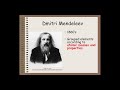
Periodic Table Structure: Periods, Groups, Metals, & Metalloids Explained
This video breaks down the periodic table's structure, covering periods and groups, the three element classes—metals, nonmetals, and metalloids—and the periodic law. Learn how Mendeleev predicted missing elements and how properties repeat by atomic number for a solid chemistry foundation.
Understanding the Classification of Elements and Periodic Properties in Chemistry
This video provides an in-depth exploration of the classification of elements and their periodic properties in chemistry. It covers the periodic table's structure, trends in atomic radius, ionization energy, electron affinity, and electronegativity, along with historical context and exceptions to general trends.
Comprehensive Overview of Periodic Table and Key Concepts in Chemistry
This video provides an in-depth exploration of the periodic table, focusing on the classification of elements, atomic structure, and key concepts such as ionization energy and electron affinity. It covers essential topics for students preparing for chemistry exams, including the trends in the periodic table and the significance of effective nuclear charge.

Understanding Atoms and Elements: A Comprehensive Overview of Chapter 4 in Chemistry
This lecture provides an in-depth exploration of Chapter 4, focusing on the fundamental concepts of atoms and elements in chemistry. Key topics include chemical symbols, the periodic table, atomic structure, and the significance of isotopes and electron configurations.
Atoms and Elements: Basic Building Blocks of Matter Explained
Explore the fundamental concepts of atoms, elements, and their subatomic particles. This summary breaks down the structure of matter, from macroscopic substances to the unbelievably small world of protons, neutrons, and electrons.
Most viewed summaries

A Comprehensive Guide to Using Stable Diffusion Forge UI
Explore the Stable Diffusion Forge UI, customizable settings, models, and more to enhance your image generation experience.

Kolonyalismo at Imperyalismo: Ang Kasaysayan ng Pagsakop sa Pilipinas
Tuklasin ang kasaysayan ng kolonyalismo at imperyalismo sa Pilipinas sa pamamagitan ni Ferdinand Magellan.

Mastering Inpainting with Stable Diffusion: Fix Mistakes and Enhance Your Images
Learn to fix mistakes and enhance images with Stable Diffusion's inpainting features effectively.

Pamamaraan at Patakarang Kolonyal ng mga Espanyol sa Pilipinas
Tuklasin ang mga pamamaraan at patakaran ng mga Espanyol sa Pilipinas, at ang epekto nito sa mga Pilipino.

How to Install and Configure Forge: A New Stable Diffusion Web UI
Learn to install and configure the new Forge web UI for Stable Diffusion, with tips on models and settings.
Found this summary useful?
Take it with you. One click puts it in your own LunaNotes library.
Save to LunaNotes