Video Summary: Mastering the Structure of the Periodic Table
This video, presented by Mr. Kovalt, provides a foundational overview of the periodic table's organization, focusing on the periodic law, the classification of elements, and the significance of periods and groups. It also highlights how scientists like Mendeleev and Moseley shaped our modern understanding.
Key Concepts: Periodic Law & the Periodic Table
- Periodic Law: Physical and chemical properties of elements repeat at regular intervals (periodic) when arranged by increasing atomic number.
- Periodic Table: Arranged by atomic number to reveal these repeating patterns in element properties. For a deeper look into how these patterns work, see the Comprehensive Overview of Periodic Table and Key Concepts in Chemistry.
What is an Element?
- A pure substance containing only one kind of atom.
- Can exist as single atoms or bonded molecules (e.g., O2, H2).
- Cannot be broken down into simpler substances by chemical means.
- About 90 elements occur naturally on Earth; 25 have been synthesized in labs. Learn more about the building blocks of matter in Understanding Atoms: Structure, Particles, and Elements.
Historical Development: Mendeleev & Moseley
Dmitri Mendeleev (1860s)
- Russian scientist who grouped elements by atomic mass and properties.
- His table had gaps (question marks). He predicted the characteristics of these missing elements based on patterns.
- Example: Predicted "eka-silicon" (atomic mass 72, density 5.5 g/cm3). Germanium was discovered 15 years later with almost identical properties (atomic mass 72.6, density 5.47 g/cm3).
Henry Moseley (1914)
- Rearranged the periodic table by atomic number (number of protons) instead of atomic mass.
- This corrected Mendeleev's ordering and created the modern periodic table. For more on the particle that defines an element, check out Understanding Atomic Structure: Protons, Electrons, and Electron Configuration.
The Three Classes of Elements
The periodic table is divided by a zigzag staircase (metalloid line).
1. Metals (Left of the Staircase)
- Location: Largest part (~2/3 to 3/4) of the table.
- Chemical Properties: Few valence electrons (1-3); lose electrons easily to form cations (positive ions).
- Physical Properties: Malleable (can be hammered), ductile (can be drawn into wires), good conductors of heat/electricity, shiny, solid at room temperature (except mercury).
2. Nonmetals (Right of the Staircase)
- Location: Upper right portion of the table.
- Chemical Properties: Many valence electrons (4-8, almost full); gain electrons to form anions (negative ions).
- Physical Properties: Brittle (break easily), poor conductors (insulators), often gases at room temperature (some solids like carbon, one liquid: bromine).
3. Metalloids (On the Staircase)
- Location: Borderline between metals and nonmetals.
- Chemical Properties: Often have half-full valence shells (e.g., Boron with 3 electrons, Silicon with 4). Can form anions or cations depending on the environment.
- Physical Properties: Mix of metal and nonmetal properties; act as semiconductors (e.g., Silicon).
Important Periodic Table Terminology
Periods (Horizontal Rows)
- Definition: Horizontal rows are called periods (rows 1-7).
- Key Properties:
- Atomic numbers and masses increase from left to right.
- Elements in the same period have the same number of energy levels (electron shells), equal to the period number.
- Example: Period 2 elements have 2 energy levels; Period 3 elements have 3.
Groups/Families (Vertical Columns)
- Definition: Vertical columns are called groups or families (columns 1-18).
- Key Properties:
- Atomic numbers and masses increase from top to bottom.
- Elements in the same group have the same number of valence electrons (except transition and inner transition metals).
- Example: Group 1A (Alkali Metals) have 1 valence electron; Group 6A have 6.
- Because they share the same valence electrons, they have similar chemical and physical properties.
How to Determine Valence Electrons for Main Groups (A Groups)
- Use the A-group number (1A-8A):
- 1A = 1 valence electron
- 2A = 2 valence electrons
- 3A (Group 13) = 3 valence electrons
- 4A (Group 14) = 4 valence electrons
- 5A (Group 15) = 5 valence electrons
- 6A (Group 16) = 6 valence electrons
- 7A (Group 17) = 7 valence electrons
- 8A (Group 18) = 8 valence electrons (except Helium, which has 2)
For a practical method on this using the table itself, see How to use the periodic table to write electron configuration easily.
Summary Table: Metals vs. Nonmetals vs. Metalloids
| Feature | Metals | Nonmetals | Metalloids | | :--- | :--- | :--- | :--- | | Location | Left of staircase | Right of staircase | On the staircase | | Valence Electrons | Few (1-3) | Many (5-8) | Middle (3-4) | | Electron Tendency | Lose electrons (form + ions) | Gain electrons (form - ions) | Depends on environment | | Conductivity | Good conductors | Poor conductors (insulators) | Semiconductors | | Malleability/Ductility | High (malleable & ductile) | Low (brittle) | Mixed | | Physical State (Room Temp) | Mostly solid (except Hg) | Solids, liquids, or gases | Solids |
This structured breakdown provides a clear and scannable guide for understanding the periodic table's layout, the properties of elements, and the historical context behind its organization. For a more general classification perspective, refer to Understanding the Classification of Elements and Periodic Properties in Chemistry.
hello everyone and welcome back this is Mr kovalt and in this video we're going to be talking about the structure of the
periodic table so what we need to talk about is this word
periodic so periodic means that there's something that occurs at regular or predictable intervals so something that
repeats over and over again uh like for example the the The Swinging back and forth of a of a pendulum is considered
periodic things like that so we're going to look at what is periodic in the periodic table
so when we're talking about periodic law um what we mean there is that there are physical and chemical properties of of
the elements in the periodic table that are periodic meaning there's a repeating pattern
so this repeats by atomic number okay so we're going to see that pattern later on so the periodic table of
elements is arranged by atomic number and this shows patterns in the properties
okay elements so let's uh talk a little bit about elements let's remind ourselves what an element is an element
is one of those pure substances remember there's two categories of pure substances there's elements pure there's
elements and then there's also compounds so elements is one of those categories of pure substances there's only one kind
of atom so you as long as you have only one kind of atom you've got an element it could be bonded together in in a
molecule like O2 and H2 or P4 or S8 so even though they are bonded together in a molecule it's still one kind of
atom bonded together and so it's a pure substance and an element okay so these cannot be broken down into
simpler substances uh because you only got that one kind of atom to break it down further would be basically to
destroy the atom and not have an element anymore so 90 of the elements occur naturally on
Earth so the first 90 are going to be naturally occurring
and then 25 of these were synthesized or made by scientists in the lab so you you make these kind of like in
the super collider uh the Hadron Collider uh will are is a place where these elements can be synthesized
okay let's talk about the periodic table and the first name that you should know is Dimitri
Mendeleev so Dimitri Mendeleev it was a Russian scientist
so he was around in the 1860s and he grouped the elements according to atomic masses and properties so he took the
information that was that was gathered by other scientists he kind of put together and he decided to kind of
organize and group elements according to their properties and then ordered his table according to Atomic massive so
everything was kind of ordered according to the mass of the elements today the periodic table is ordered by atomic
number but he he ordered it by atomic mass so
uh so then uh he created his own periodic table and this is the periodic table
that he originally set up so um you could see that it is in German um and so you could see here
that the elements here are ordered you have sodium here you have
lithium sodium beryllium boron carbon nitrogen oxygen fluorine so it's kind of you got
hydrogen and lithium here but you got beryllium in this grouping here and then you got magnesium so his groupings are
kind of across so brillium magnesium so it's kind of hard to see a little bit of what his table was doing
but you will notice that there are these question marks in the table they're like gaps or holes in his table
so why do you think these question marks are here so mendeleev's table allowed him to make
predictions so those holes in the table had to be filled so Mendeleev based on the pattern of his periodic
table and what he saw the way he arranged it he said that those holes should be filled so there should be some
elements out there that are missing that we need to discover they're waiting to be discovered so mendeleev's table
uh had those gaps but he was able to predict the characteristics of these missing elements based on the
periodicity or the periodic law that he noticed in the table so for example on the left hand side is his predicted
element called eka silicon and so he predicted that the uh atomic mass would be 72 the density
would be 5.5 grams per centimeter cubed the bonding power would be four right and then what he means by the
bonding power is basically how many how many bonds can this element make and he predicted the color would be dark gray
and so all of this was based on the surrounding elements in the periodic table and the pattern that he saw and so
he had predicted this element in 1871 and then in 1886 not long after about 15 years later the element germanium was
discovered and so it was discovered to have an atomic mass of 72.6 a density of 5.47 grams per centimeter cubed which is
basically really close to what he had predicted it has a bonding power of four it can it can make four bonds and it's a
grayish white color so notice here how mendeleev's prediction or predictions were very
accurate when compared to germania's actual characteristics that's amazing so he was able to predict uh these
properties of a missing element based on the periodicity and the patterns in the periodic table
so then now comes along Henry Mosley and Henry Mosley in 1914 rearrange the elements in the periodic table according
to atomic numbers instead of atomic masses and so here uh he determined that the
number of protons is equal to what is called the atomic number and so this uh allows us to have the
periodic table that we have today and so now we see that there are groupings here so if we using this as a
guide we could color code your periodic table to show the three classes so there's this highlighted zigzag normally
in the periodic table that's in yellow and so that usually is a key for dividing the periodic table into two
parts there's actually three major parts or classes of elements that we see here there's this part on the right I'm sorry
on the left the biggest part of the table is on the left of this stairway this yellow highlighted stairway
and then you got the reddish part on the right that's the second part and then you got this green part that's on the
stairway itself and so those are the three parts so we're going to talk about those three
parts in a moment okay so here are the classes so the metals are the light blue so everything
that is light blue are metals and you can see right away that Metals occupy the largest part of the periodic
table about two-thirds of it it seems or three-fourths
and then you have the non-metals the nonmetals are in the red so they're to the right of this stairway and the the
metals are to the left and then you got what are called the metalloids which are the green elements and the metalloid
kind of sounds like something um like if you know what a humanoid is that's something that's human-like right
maybe not quite human but it's got human characteristics and maybe it's got characteristics of other other things
right so a metalloid is something that's metal like it's got characteristics of metals but it also has characteristics
of non-metals too so they're in the middle on this stairway and so let's talk about Metal so Metals
they're on the left of that zigzag line that stairway on the periodic table uh and it's and hydrogen is an exception
a hydrogen is obviously a gas it's not a metal and some chemical properties of metals
is that they have few uh valence electrons so they're all the way to the left of the periodic table so if we're
looking at valence electrons you know those groups 1A and 2A and 3A they those have like three valence electrons
up to most one two and three valence electrons so not a lot of valence electrons for the metals uh they lose
electrons easily right they want to be like a noble gas and so since they have only a few valence electrons it's easy
just to lose those three those valence electrons to become like a noble gas and therefore they will have a positive
charge and that makes them cations some physical properties is that they're malleable malleable means you can beat
it and pound it into shape right ductile means that you can draw it into wires you can pull it so that it thins out in
the wires they're good conductors they're shiny and they are solid at room temperature
so can you guess what metal is not a solid at room temperature if you guessed Mercury you would be
right okay so atoms with few electrons in their outer energy level these are
metals so you could see that in the outermost energy level of beryllium you only have two valence electrons for
sodium you only have one so notice that there's only two in this one and there's only one electron in the
outer one so losing those electrons is no big deal for these these atoms they want to lose those electrons so they
could be like a noble gas so what about no uh non-metals uh so they're to the right of this zigzag line
that highlighted stairway that I pointed to you earlier so some chemical properties these are pretty much the
opposite of metal properties so if you can remember what the metal metallic properties are or the properties of
metals then you just think the opposite so they are instead of being almost empty or have only a few valence
electrons they're almost full right so they have a lot of valence electrons so they're they're like they're like five
six seven and eight right um so they're full or almost full with their valence electrons they tend to
gain electrons and the reason they gain electrons is because gaining electrons makes them more stable because then
they're they can be like a noble gas so gaining electrons makes them more like a noble gas instead of losing electrons
and because they're gaining electrons this gives them a negative charge so they tend to have negative charges and
they make anions so what are the physical properties so again the physical properties are kind
of the opposite of metals right so metals are ductile and malleable and uh non-metals are not ductile or malleable
they're actually you know brittle brittle means that they can break off into pieces pretty easily that you can't
really pound them with the hammer and bend them into shape though they're going to crack and break up into pieces
and you're not going to pull them into wires uh they're bad conductors so metals are
good conductors non-metals are very bad conductors they hardly conduct anything they're mostly solid
although there's a lot of gases as well and maybe a liquid here and uh summer you know gases it
at room temperature okay so here's some examples so we have oxygen fluorine and helium these are all
on the right side of the of that stairway that highlighted stairway on the periodic table
and you'll notice that that fluorine has seven electrons seven valence electrons on its
outer shell so it only needs one electron to be like a noble gas so it's going to pick up that one electron
helium is a noble gas it has a full outer shell with two electrons so that's going to be stable and also notice
oxygen has six valence electrons so it only needs two more to be stable at like a noble gas so it's going to pick up
those electrons pretty easily and so as I said helium is uh full outer shell
oh yeah what about the metalloids they're the green ones that we saw that are smack on the middle so they're along
that stairway so those metalloids have basically uh properties of both metals and non-metals so they're kind of in the
middle as far as their properties go so they border on that zigzag line chemical properties most have half a full uh
Half-Life I'm sorry have a full valence shell so they have half full valence shells most of them do so they're like
in the middle they don't they don't have a little bit they don't have a lot there in the middle and so these guys are
going to make anions or can ions depending on their environment depending on what compound they make so the
physical properties are going to be smack in the middle right so they have properties of metals and nonmetals you
know um so they're very good conductors a lot of uh the the metalloids or what are
also called semi-metals are very [Music] um
they tend to be the semiconductors right so they uh they're in the middle as far as conducting uh and there's no way to
know which properties of each so they have a they have a lot of different properties a mixture of properties
so here uh you'll notice that we have two of these so you have boron and you have a silicon so boron
has three valence electrons and silicon has four so the middle is that's a four is the
half of eight and so these are in the middle they have pretty much half half complete outer energy
level so only have three electrons for the outer energy level and for Boron and
four four silicon so what are the important features of the periodic table so first of all we
need to know we need to we need to use our terminology properly and we we're going to use this very often in science
class in in chemistry you got to know the terminology when we're talking about the periodic table so the first thing
you need to know is that the rows are we don't call them rows they're called periods and they're called periods
because that's where the the periodic repeating pattern occurs it's along the row it's along the period so as you go
from left to right in a period you'll notice that there are certain certain patterns that repeat itself when you go
from one period to the next there's this repeating pattern and so you'll also notice that the uh the elements that are
put together in these columns they have similar characteristics so the similarity of the characteristics as you
go across from left to right repeats when you go down to the next uh period so when you look at lithium
certain characteristics beryllium has certain characteristics boron has certain characteristics carbon and so on
all the way to Neon which is non-reactive and then when you follow from neon which is 10 to sodium you get
the repeating pattern so sodium behaves like lithium magnesium behaves like beryllium aluminum behaves like Boron to
some extent and so on so you get this repeating pattern so the rows are called periods
so each horizontal row of elements is on the periodic table that's called a period
okay so left to right okay
so we have period one only has two elements in it period two has eight elements in it
period three has eight elements in it period four has 18 elements in it so as we're going down these are our periods
so you can see that the periods are numbered on the side on the on the left hand side here
and so we keep going so this would be period five period six now this lanthanide series
here the lanthanides actually fits in between uh the barium and uh the ruthenium here so here it
fits right here in the middle and then same for period seven so the actinides uh this row here fits in
between uh 89 and or I'm sorry 80 88 and 103 so that's where you're going to fit these in so these two rows here fits in
the periods six and seven so they're part of that period as well so how many periods of rows are there on
the periodic table of elements there are seven seven periods so
periodic Properties or period properties so the seven periods they're numbered from the top down numbered from top down
so the first period is on top second third fourth working your way down as we saw in the previous previous slide
so atomic numbers and atomic masses increase as you go from left to right in a period so that's the first thing
masses and atomic numbers increase atomic numbers are going to increase because that's the way the table has
been set up by Mosley so Mosley set it up according to atomic numbers so as we go across period atomic numbers are
going to increase as you go numerically through the periodic table from one element to the next the the the
atomic numbers are increasing so left to right and mass increases as well there are some exceptions where the mass
decreases when you go from one element to the other but I think there's only those two exceptions
so all the elements in the same period have the same number of energy levels that's another thing to keep in mind so
the period number matches the number of energy levels that the atoms in that period have so if you're an element in
Period four then you have four energy levels if you're if you're an element in Period two then you have two energy
levels so all the elements in a period have the same energy levels and that and that number of energy levels is
indicated by the period number so period number one equals one energy level
two equals two energy levels period three has three energy levels and Etc so and what we mean by the
energy levels if we're thinking about the Bohr model with the Solar System model with the nucleus in the center and
the and the electrons traveling around in orbits then each orbit is an energy level and so
um the number of energy levels is going to equal the uh the number period that you're in so
here's some examples of period elements that have the same number of energy levels at in their atoms so you could
see here that they all have uh these two on top they both have two energy levels right these two orbits
each orbit is an energy level so these two elements have two energy levels and then these two on the bottom have
three energy levels so these two elements whichever elements they are we know that they are in Period two because
they have two energy levels the two on the bottom we know that they have to be in Period three whichever elements they
are because they have three energy levels so in what period do you think these
atoms are we just said two period two and the ones on the bottom are going to be in Period three
okay so the other thing you need to know is that the columns these up and down columns are we don't call them columns
we call them groups or families and the reason we call them groups or families is because they have similar
characteristics so just like members of your own family have similar characteristics right maybe the the you
know the children the family have certain physical characteristics maybe they have you know their father's eyes
or maybe they have the mother's hair or colored or whatever the case may be so we share certain characteristics when
you're in a family so because the elements in a group or in a column they share the same kinds of characteristics
we call them families or groups so each column of elements is is considered a group or family in the
periodic table so they go from the top to the bottom or the bottom to the top so this first one would be group one
this is has a special name called The Alkali Metals and then you have group two next to it those are the alkaline
earth metals and then we have these groups throughout the table now these groups starting with
three this gets into what are called the transition elements this is that d block area that we were talking about they're
also called transition elements so we can go through these 10 elements at a time so that's the transition
element and then we got 13. 13 is also called 3A so on the top you can see the numbers of the groups or families
numbered 1 through 18 but we can also call groups one two thirteen fourteen fifteen we can number those 1A 2 a 3A
and so on and so you've got group 14 15 16 17 and 18.
so how many groups or families there are there are 18 groups uh in the periodic table
so what are the properties of these families or groups so there's 18 groups they're numbered from left to right
and the atomic number and masses increase as you go down the group right so going down the group the atoms get
bigger so from the top downward atomic mass is getting bigger atomic numbers are
getting bigger atoms in the same group have the same number of valence electrons so we if we
said this before that if you're in group one especially 1A if we're talking about the
a groupings so if we go back and look at the periodic table here so groups 3 through 12 in this table are
called the transition elements we can ignore those as far as as far as uh valence electrons go so we can label
the other ones starting from left to right we could say this group one is also called 1A and
this group 2 is also called 2A but then we can skip over these middle ones and jump over to 13 and we can call that 3A
and then 14 is 4A 15 is 5A and so on and so those groups those numbers match with the number of valence electrons in your
group so if you're in group 1A you've got one valence electron if you're in group 3A you have three valence
electrons if you're in 5A you've got five analyst electrons 6A you've got six valence electrons and so on
so there are exceptions we talked about uh with the D Block and F block so the group numbers there don't match the
valence electrons the valence electrons are by and large only two so if you have a transition element or an element in
that D and F block uh you're likely to only have one or two valence electrons so groups of elements elements in the
same group have similar physical and chemical properties because they all have the same valence electrons so
remember why do elements react the way they do it goes back to the valence electrons so the number of valence
electrons your atom has dictates the kinds of properties it's going to have so if your elements have the same
valence electrons then they're going to have the same properties that's it for this video I hope you
enjoyed this video I hope this was a learning experience if you like my videos please smash that like button uh
subscribe to my channel hit that notification Bell so you'll be notified by other videos I put out and put
comments in the comment section let me know what you think if you have any questions thanks for joining me have a
great day
The periodic table is arranged by increasing atomic number, reflecting the periodic law: chemical and physical properties repeat at regular intervals. Elements in the same vertical group share similar properties due to the same number of valence electrons, while elements in the same horizontal period share the same number of electron shells.
Mendeleev organized elements by atomic mass and predicted missing elements, leaving gaps in his table. Moseley improved this by ordering by atomic number (proton count), which fixed ordering issues and became the basis of the modern periodic table.
Look at the zigzag metalloid line: metals are to the left (≈2/3 of elements), nonmetals are to the right (upper-right area), and metalloids lie directly on the line. Metals usually have 1-3 valence electrons and are conductive, nonmetals have 4-8 and are insulators, while metalloids have mixed properties and act as semiconductors.
For main-group elements (A groups, columns 1-8A), the number of valence electrons equals the group number (1A=1, 2A=2, etc., up to 8A=8, except He with 2). This pattern does not apply to transition or inner transition metals.
Elements in the same vertical group have identical numbers of valence electrons (e.g., Group 1A all have 1 valence electron). This electron configuration determines how they interact chemically, leading to similar behaviors like forming ions with the same charge or reacting similarly with water.
Metals are malleable, ductile, good heat/electricity conductors, and shiny (except liquid mercury). Nonmetals are brittle, poor conductors (insulators), and often gases at room temperature (like oxygen). Metalloids have mixed properties: they look like metals but behave as semiconductors (e.g., silicon).
The period number (horizontal row) indicates the number of electron shells or energy levels an atom has. For example, Period 2 elements have 2 shells, Period 3 elements have 3, and so on. This shell count increases as you move down the table.
Keep this summary
Save it to LunaNotes and it becomes a real note in your library — editable, searchable, and ready to turn into flashcards or a diagram. Free to start.
Save to LunaNotesOr summarise for another video.


32K+ people have turned 65K+ videos into notes
“Very useful tool. I'm using it for the last couple weeks and I'm loving it so far. Makes learning on YouTube a great experience.”
 Bhai Chrome Web Store review
This summary and transcript were automatically generated using AI with the Free YouTube transcript summary tool by LunaNotes.
Related summaries
Understanding the Classification of Elements and Periodic Properties in Chemistry
This video provides an in-depth exploration of the classification of elements and their periodic properties in chemistry. It covers the periodic table's structure, trends in atomic radius, ionization energy, electron affinity, and electronegativity, along with historical context and exceptions to general trends.
Comprehensive Overview of Periodic Table and Key Concepts in Chemistry
This video provides an in-depth exploration of the periodic table, focusing on the classification of elements, atomic structure, and key concepts such as ionization energy and electron affinity. It covers essential topics for students preparing for chemistry exams, including the trends in the periodic table and the significance of effective nuclear charge.
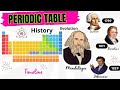
From Alchemy to 118 Elements: The Complete History of the Periodic Table
Uncover the fascinating history of the periodic table, from ancient alchemists to modern-day scientists. This summary explores the key discoverers—Lavoisier, Mendeleev, Moseley, and Seaborg—who transformed a list of 33 elements into a powerful tool of 118 organized elements.

Understanding Atoms: Structure, Particles, and Elements
This video explores the fundamental building blocks of matter, known as atoms, detailing their structure, components, and the concept of ions. It explains the roles of protons, neutrons, and electrons, as well as how elements are represented in the periodic table.
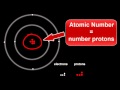
Understanding Atomic Structure: Protons, Electrons, and Electron Configuration
Explore the fundamental building blocks of atoms, including protons, electrons, and neutrons, and learn how electron configurations determine the properties of elements. This video breaks down the first ten elements of the periodic table and explains why atomic number defines an atom's identity.
Most viewed summaries

A Comprehensive Guide to Using Stable Diffusion Forge UI
Explore the Stable Diffusion Forge UI, customizable settings, models, and more to enhance your image generation experience.

Kolonyalismo at Imperyalismo: Ang Kasaysayan ng Pagsakop sa Pilipinas
Tuklasin ang kasaysayan ng kolonyalismo at imperyalismo sa Pilipinas sa pamamagitan ni Ferdinand Magellan.

Mastering Inpainting with Stable Diffusion: Fix Mistakes and Enhance Your Images
Learn to fix mistakes and enhance images with Stable Diffusion's inpainting features effectively.

Pamamaraan at Patakarang Kolonyal ng mga Espanyol sa Pilipinas
Tuklasin ang mga pamamaraan at patakaran ng mga Espanyol sa Pilipinas, at ang epekto nito sa mga Pilipino.

How to Install and Configure Forge: A New Stable Diffusion Web UI
Learn to install and configure the new Forge web UI for Stable Diffusion, with tips on models and settings.
Found this summary useful?
Take it with you. One click puts it in your own LunaNotes library.
Save to LunaNotes