After over a year of developer frustration, Anthropic's Claude Code has finally embraced the universal Agentic MD standard. This long-awaited update introduces a groundbreaking mods system that allows developers to customize Claude Code's internal behavior, marking a significant shift away from AI black-box tools towards modular, developer-controlled systems. For those new to the platform, our Claude Full Masterclass 2025: The Complete Guide in Tamil provides an excellent starting point to understand the tool's fundamentals before diving into this advanced feature.
At its core, the Agentic MD (Agentic Markdown) format provides a structured yet flexible way to define how AI agents interpret and execute tasks. By adopting this open standard, Claude Code now allows developers to inject custom instructions, modify tool behavior, and even redefine the AI’s internal reasoning loop. This is not just a minor update; it's a philosophical shift. Previously, Claude Code operated as a black box, you gave it a task, and it returned a result without much insight into how it arrived there. Now, with Agentic MD support, developers can inspect, tweak, and entirely rewrite the rules of engagement. If you are curious about how to leverage this for iterative improvement, check out How to Build a Self-Improving System with Claude Code in 5 Steps for a practical roadmap.
One of the standout features of this update is the mods system. Think of mods as plugins or middleware for your AI agent. They can enforce coding standards, hook into specific phases of the development workflow, or even integrate external APIs directly into Claude Code's decision-making process. For example, a developer could create a mod that automatically reviews all proposed code changes for security vulnerabilities before they are executed. Another could enforce a company's specific logging format, ensuring every piece of generated code aligns with internal best practices. This level of customization was previously impossible without forking the entire tool or resorting to complex scripting hacks. To understand how this compares to other options in the market, read our analysis on Claude Code vs OpenAI Codex: Real AI Coding Tool Comparison.
The implications for software engineering are profound. Agentic MD support makes Claude Code not just a coding assistant, but a customizable platform that can adapt to the unique needs of any project or team. It democratizes the ability to shape AI behavior, moving control from a centralized development team at Anthropic to the global developer community. This aligns with a broader industry trend towards transparency and modularity in AI tools. As we discussed in The Revolutionary Impact of Claude AI: A Game-Changer for Software Engineering, such shifts are what truly define leaps in productivity.
For practical application, this means developers can now create mods that turn Claude Code into a specialized tool for their stack. Whether you're building React frontends, managing cloud infrastructure, or writing complex algorithms, the ability to inject domain-specific knowledge through Agentic MD mods ensures the AI behaves like a seasoned expert in your field. The most immediately accessible use case is for web development, where mods can enforce responsive design patterns and accessibility standards automatically. Our guide on Build Stunning AI-Powered Websites with Claude Code: No Coding Needed demonstrates exactly this kind of workflow in action.
In conclusion, Claude Code's support for Agentic MD and its new mods system represents a maturation of the AI-assisted development paradigm. It acknowledges that the most effective tools are not those that think for you, but those that think with you, adapting to your methods and standards. For developers who felt constrained by the previous version, this update is a liberation. The era of customizing your AI agent is officially here, and Claude Code is leading the charge. Now is the time to experiment, build your own mods, and redefine what's possible in your development workflow.
Claude code has finally opened up. Core engineer Theic announced that the latest version now supports the agents MD
standard. For over a year, developers have been waiting for this. A GitHub issue requesting this feature became the
most popular in the repository. With over 5,200 up votes, it crushed the competition.
Even the Codeex team leads celebrated the move, welcoming them to the light. But what exactly is a gent MD? Think of
it as a project manual for AI detailing how to compile, [music] test, and code. Before this, Claude code only read cloud
MD. This created a walled garden while the rest of the industry moved on. Agents MD is the universal standard
launched by Open AI in 2025. It is now used by codeex, cursor, copilot, and many others. Over 60,000 open-source
projects already use agents, MD. It is the common language for modern coding agents. Ironically, both anthropic and
open AI are members of the same Linux Foundation AI group. Yet, they remain disconnected for months. The real pain
was for developers. If a team used multiple AI tools, they had to maintain two identical redundant manuals. If one
manual was updated and the other forgotten, the AI would produce inconsistent code leading to major
headaches. Developers resorted to messy workarounds like sim links or custom scripts just to keep their AI assistance
in sync. It was a bizarre reality where humans spent more time managing AI compatibility than actually writing
code. Now those workarounds are history. You can simply open a repo with an agents.md
file and claude code works instantly. However, the bigger news lies in the new mods system. Agents MD is actually the
first official mod for Claude Code. The revealed that mods allow developers to customize how claude code runs its
internal harness. This means Anthropic is no longer the sole authority on how projects are read or processed by their
AI. The community is already diving into the source code, exploring how to build their own custom hooks and life cycles.
As one developer noted, agents MD is just the demo. The mod system itself is the true protagonist of this update.
This pivot toward customization mirrors the rise of the Deep Seek harness, which recently took GitHub by storm. Deep
Seek's Everything is a plug-in philosophy treats models and tools as interchangeable modular components. It
highlights a growing demand. Developers don't just want a finished AI tool. They want one they can modify. So, are Claude
Code mods and Deep Seek harness the same? Not quite. They represent two different design philosophies. Deepseek
is a from scratch modular framework, while Clawed Code Mods provide a way to customize an existing polished product.
Whether building from scratch or modifying a finished tool, the era of the AI blackbox is officially coming to
an
Agentic MD (Agentic Markdown) is a structured, open standard format that defines how AI agents interpret and execute tasks. Now supported by Claude Code, it allows developers to inject custom instructions, modify tool behavior, and redefine the AI's internal reasoning loop. This is important because it shifts Claude Code from a black-box assistant to a transparent, customizable platform, enabling developers to inspect and control how the AI arrives at its results.
The mods system acts like plugins or middleware for your AI agent. Developers can create mods to enforce coding standards, hook into specific workflow phases, or integrate external APIs into Claude Code's decision-making process. For example, a mod could automatically review code for security vulnerabilities or enforce a company's logging format, providing unprecedented customization without forking the tool or resorting to complex scripts.
Practical uses include creating a mod that automatically checks all proposed code changes for security vulnerabilities before execution, or one that enforces a company's specific logging format across all generated code. Another example is a mod that enforces responsive design patterns and accessibility standards during web development, ensuring the AI behaves like a seasoned expert in your specific stack.
Previously, Claude Code operated as a black box where you gave it a task and received a result without insight into its reasoning. With Agentic MD, developers can now inspect, tweak, and rewrite the rules of engagement. This makes Claude Code a customizable platform that adapts to any project's needs, democratizing control from Anthropic to the global developer community and enabling domain-specific expertise injection.
This update represents a maturation of AI-assisted development by moving toward transparency and modularity. It allows Claude Code to become a specialized tool for any stack—whether building React frontends, managing cloud infrastructure, or writing algorithms—by injecting domain-specific knowledge through mods. This democratizes AI behavior customization, aligning with industry trends that define true productivity leaps.
Beginners should start with foundational resources like the Claude Full Masterclass 2025: The Complete Guide in Tamil to understand the tool's fundamentals. Then, explore practical tutorials like How to Build a Self-Improving System with Claude Code in 5 Steps for iterative improvement, and Build Stunning AI-Powered Websites with Claude Code: No Coding Needed for web development workflows.
Keep this summary
Save it to LunaNotes and it becomes a real note in your library — editable, searchable, and ready to turn into flashcards or a diagram. Free to start.
Save to LunaNotesOr summarise for another video.
This summary and transcript were automatically generated using AI with the Free YouTube transcript summary tool by LunaNotes.
Related summaries
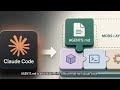
Claude Code Finally Supports Agents MD: Universal AI Standard Arrives
Claude Code now supports the Agents MD standard, ending over a year of developer frustration with 5,200+ GitHub votes demanding this feature. The update introduces a powerful new mods system that allows developers to customize Claude Code's internal behavior, signaling a pivot from AI blackbox to modular customization.

Claude Full Masterclass 2025: The Complete Guide in Tamil
This is a comprehensive masterclass on Anthropic's Claude AI ecosystem, covering Claude Chat, Claude Code, and the powerful Claude Works. The video explains how to master the entire Claude ecosystem, move from a current stage to 2x or 3x productivity, and use agentic tools without any coding knowledge. It includes a detailed guide on installation, setup, skills, connectors, and plugins, as well as advanced prompt engineering frameworks like CRISP.

How to Build a Self-Improving System with Claude Code in 5 Steps
Learn a proven five-step framework to create your own self-improving system using Claude Code. This guide covers project setup, data ingestion, automated improvement loops, and best practices to continuously enhance your AI-driven workflow efficiently.
The Revolutionary Impact of Claude AI: A Game-Changer for Software Engineering
Explore how Claude AI surpasses GPT-4 and revolutionary features that redefine productivity.
Connecting Claude and Obsidian: A Step-by-Step Guide
Learn how to integrate Claude with Obsidian to enhance your note-taking and idea generation. This guide walks you through the setup process, including installing necessary software and configuring settings for optimal use.
Most viewed summaries

A Comprehensive Guide to Using Stable Diffusion Forge UI
Explore the Stable Diffusion Forge UI, customizable settings, models, and more to enhance your image generation experience.

Kolonyalismo at Imperyalismo: Ang Kasaysayan ng Pagsakop sa Pilipinas
Tuklasin ang kasaysayan ng kolonyalismo at imperyalismo sa Pilipinas sa pamamagitan ni Ferdinand Magellan.

Mastering Inpainting with Stable Diffusion: Fix Mistakes and Enhance Your Images
Learn to fix mistakes and enhance images with Stable Diffusion's inpainting features effectively.

Pamamaraan at Patakarang Kolonyal ng mga Espanyol sa Pilipinas
Tuklasin ang mga pamamaraan at patakaran ng mga Espanyol sa Pilipinas, at ang epekto nito sa mga Pilipino.

How to Install and Configure Forge: A New Stable Diffusion Web UI
Learn to install and configure the new Forge web UI for Stable Diffusion, with tips on models and settings.
Found this summary useful?
Take it with you. One click puts it in your own LunaNotes library.
Save to LunaNotes