
Download Subtitles for The Last American Who Remembered the Old World
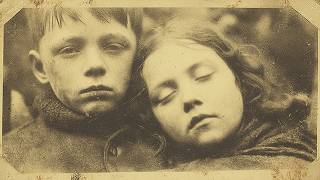
The Last American Who Remembered the Old World — What She Told Her Family Before Dying (1953)
Erased Century
SRT - Most compatible format for video players (VLC, media players, video editors)
VTT - Web Video Text Tracks for HTML5 video and browsers
TXT - Plain text with timestamps for easy reading and editing
Scroll to view all subtitles
the last American who remembered the old
world. What she told her family before
dying 1953. There's a filing cabinet in
the Library of Congress that contains
the voices of dead Americans, not
recordings. Transcriptions. Thousands of
pages of handwritten and typed
interviews conducted between 1936 and
1940 by government writers who were sent
into homes across 24 states with a
single instruction. Get their stories
before they're gone. The program was
called the Federal Writers Project, a
branch of Roosevelt's New Deal that
employed outof work journalists,
novelists, and researchers to document
the lives of ordinary citizens. They
collected 2,900 life histories. Then
they filed them in the Library of
Congress where they sat mostly unread
for nearly 40 years. I found them
because I was looking for something
else. I was tracing architectural
records from the 1870s, trying to
understand why so many American
courouses and government buildings from
that era feature proportions that don't
match the people who supposedly used
them. The same question I keep running
into. But the deeper I went into those
archives, the more I realized the
buildings weren't the real story. The
people were. Because those 2,900
interviews captured something no
textbook ever could. the firsthand
memories of Americans who were alive
before everything changed. And what they
described doesn't match the history
we've been taught. Let me explain what I
mean by before everything changed.
Consider the math. An American born in
1855 who lived to 85, not unusual, would
have died in 1940. That means they were
alive, speaking, remembering when those
government writers knocked on their
doors. They would have been children
during the 1860s and 1870s. They would
have witnessed the most dramatic
transition in American history. Not
gradually, not over centuries, but
within a single lifetime. And their
grandchildren, born in the 1920s and
1930s, heard their stories firsthand.
Those grandchildren are the last
generation that carries the oral history
of the old world, and they're almost
gone.
Mary Kelly was born in 1851 in
Southfield, Michigan. She lived to one
and 13 and died in 1964. She was alive
before the Civil War and survived long
enough to see television in every
American home. Maggie Barnes was born to
a formerly enslaved woman in the early
1880s and lived to approximately 11:15,
dying in 1998 in North Carolina. These
weren't extraordinary cases. The
Derontology research group has verified
16 Super Centinarians born in the 1850s
alone. Dozens more lived past 100.
Hundreds lived past 90. an entire
generation of witnesses whose memories
spanned two completely different worlds.
The government had the chance to record
all of them. It recorded 2,900.
Then it stopped. The project was
defunded in 1939 after congressional
hearings turned over to state control
and effectively shut down. The
interviews were boxed up, not published
in any accessible form until the 1970s.
30 years of silence around the last
firsthand testimony of Americans who
remembered what came before. Before what
exactly? That's where October 8, 1871
becomes impossible to ignore. Every
American learns about the great Chicago
fire. Mrs. Ori's cow, the wooden city,
the rebuilding. What almost no one
learns is what happened the same night
at the same hour across three states
simultaneously. In Peshiggo, Wisconsin,
a firestorm consumed the entire town in
approximately 1 hour. Between 2,00 and
2,500 people perished, making it the
deadliest wildfire in American recorded
history. The fire burned 1.2 million
acres. Survivors describe winds strong
enough to lift adults off the ground,
flames that moved faster than a person
could run, and a heat so intense that
people crossing open ground simply burst
into flame without being touched by
visible fire. Reverend Peter Perin, the
parish priest who survived by submerging
himself in the Pestigo River, published
his eyewitness account in 1874.
He described a phenomenon that doesn't
match any normal wildfire behavior. The
available oxygen was consumed so rapidly
that people who showed no burns were
found deceased, as if the air itself had
been weaponized. The fire created its
own weather system, a vortex of
superheated wind that behaved less like
a forest fire and more like something
detonating from a central point outward.
The same night, Holland, Michigan
burned. Manesty, Michigan burned. Port
Huron, Michigan was threatened. Across
225 million acres of the upper Midwest,
fires erupted simultaneously.
The National Weather Service confirms
these fires broke out across three
states at the same time on the same
evening. The official explanation is
drought, lumber debris, and a cold front
with high winds. Reasonable except for
one detail that has nagged researchers
since 1883. The simultaneity. In 1883, a
hypothesis emerged that fragments of
Ba's comet had struck the atmosphere and
ignited the fires from above. This
theory was revisited in a 1997
documentary and investigated again in
2004 by the American Institute of
Aeronautics and Astronautics. Witnesses
in Chicago reported blue flames burning
in basement, a color consistent with
unusual chemical combustion, not wood
fires. The theory has never been proven.
It has also never been disproven.
But here's what matters for this
investigation. The elderly Americans
interviewed by the WPA writers in the
1930s were children in 1871. A
70-year-old interviewed in 1938 would
have been 3 years old that night. An
80-year-old would have been 13, old
enough to have watched the sky turn red.
Old enough to have been told by their
parents exactly what happened. The
Library of Congress describes those
2,900 interviews as containing tales of
surviving the 1871 Chicago fire and
pioneer journeys. But that description
only scratches the surface. What else
did those Americans remember? What did
they tell the government writers about
the night everything burned? And why was
the project shut down before the full
picture could emerge? The burning wasn't
the only erasia. In 1890, the United
States conducted the most comprehensive
census in its history. For the first
time, each family received an entire
form. The census recorded immigration
status, naturalization details, English
language proficiency, home ownership,
and civil war service. 62.9 million
Americans documented in unprecedented
detail. It was also the first census for
which the government broke from a
century of protocol and did not require
copies to be filed in local offices.
Every previous census from 1790 to 1880
had local backups stored in county
courouses and state archives. The 1890
census existed in one location, the
basement of the Commerce Department
building in Washington DC. On January
10th, 1921, a fire broke out in that
basement. Approximately 25% of the
records were destroyed outright. Another
50% suffered serious water and smoke
damage. The investigation never
determined a definitive cause. Theories
range from a discarded cigarette to
faulty wiring to spontaneous combustion
of sawdust in the building's workshop.
What happened next is more disturbing
than the fire itself. The surviving
records, perhaps half still usable, were
moved to a warehouse. For 12 years,
nothing happened. No restoration effort,
no attempt to copy or preserve what
remained. Then in December 1932, the
chief cler of the Bureau of Census sent
the librarian of Congress a list of
documents scheduled for destruction.
The 1890 census was on that list. The
librarian was asked to identify any
records worth preserving for historical
purposes. He identified none. Congress
authorized destruction on February 21st,
1933.
The next day, February 22, President
Hoover laid the cornerstone for the
National Archives Building, the
fireproof facility specifically created
to prevent exactly this kind of loss.
They destroyed the records one day
before beginning construction of the
building that would have saved them. Of
62.9 million names, roughly 6,160
survive. The single most detailed record
of every American alive during the
transition period. The people who
remembered the old world eliminated, not
by accident, by sequence. Fire, neglect,
bureaucratic process, authorized
destruction. Each step plausible on its
own. Together they form something harder
to dismiss. And then there were the
children. Between 1854 and 1929,
approximately 250,000 children were
loaded onto trains in New York, Boston,
and Philadelphia, and transported to
rural communities across the Midwest and
West. The orphan train movement,
organized primarily by the Children's
Aid Society, founded in 1853 by Charles
Luring Brace and later by the New York
Founding Hospital. At stops along the
route, the children were displayed in
what contemporary accounts describe as
auction-like events. Farming families
inspected them, evaluated their size and
apparent health, and selected the ones
they wanted. Many were taken to work
fields. Less than half were actual
orphans. The rest were children of
immigrants, children of the poor,
children whose parents couldn't afford
to feed them or couldn't fight the
institutions that took them. An
estimated 30,000 children lived on the
streets of New York City in the 1850s
alone. But here's the detail that nobody
discusses. Upon arrival in their new
communities, older children were
strongly encouraged, sometimes required,
to break all contact with their past.
Names were changed. Origins were not
recorded or were recorded inaccurately.
The organizations that ran the program
kept spotty records at best. Many
children could not tell their own
grandchildren where they came from
because they genuinely didn't know.
250,000 Americans whose identities were
functionally severed. An entire
generation disconnected from their own
history by institutional design. The
timing is precise. The orphan trains ran
from 1854 to 1929. The fires occurred in
1871.
The giant photographs clustered between
1850 and 1900. Tartaria vanished from
maps in the mid 1800s. The architectural
transition from grand classical to
simplified modern happened in the same
window. And the 1890 census, the one
record that would have documented every
single person alive during this
transition was eliminated. Not
coincidence, pattern. Which brings me to
1893 and the buildings they don't want
you to think about too carefully. The
World's Columbian Exposition in Chicago.
27 million visitors across 6 months.
Over 200 buildings spread across 630
acres of Jackson Park, the White City.
Official history tells us these massive
neocclassical structures, enormous domes
rivaling European cathedrals, columns,
and sculptural detail as precise as
ancient Rome were built in under two
years from a mixture of plaster, cement,
and jute fiber. Uh, wooden frames built
with horsedrawn equipment, hand tools,
and manual labor. No cranes, no
bulldozers, no modern construction
technology. 200 buildings in 630 acres
in under 24 months. And then after 6
months of display, nearly every single
structure was demolished. The only major
building that survived is the Palace of
Fine Arts, now the Museum of Science and
Industry, preserved because it had been
fireproof to protect the art collections
inside. Everything else was torn down or
burned. This pattern repeated. Paris,
1889. Buffalo 1901, St. Louis 1904, San
Francisco 1915.
Build magnificent structures of
impossible scale and detail. Display
them briefly. Destroy them completely
every time. The elderly Americans
interviewed in the 1930s remembered the
White City. Some had visited as children
or young adults. They walked through
those buildings and saw something that
looked nothing like the America being
constructed around them. something
older, something grander, something that
felt less like a temporary exhibition
and more like a city that had always
been there and then it was gone. Here's
what I keep coming back to. There was a
woman, there had to have been, in every
county in America in the early 1950s.
A woman born in the late 1850s, living
past 90, sitting in a house surrounded
by grandchildren who'd grown up hearing
her stories. Stories about buildings
that were already ancient when she was
young, but that the textbooks claimed
were built just years before. Stories
about the night the sky turned red
across three states. Stories about
trains full of children heading west
with no names, no families, no pasts.
Stories about a world that operated
differently than anything her
grandchildren saw around them. A world
of different proportions, different
architecture, different knowledge. And
when she tried to tell them, when she
described what she remembered, they
nodded politely and changed the subject
because her memories didn't match the
textbooks. And in 1950s America, the
textbooks always won. The WPA caught
some of these voices, 2,900 documents
from 24 states. But what about the other
24 states? What about the thousands of
elderly Americans who were never
interviewed? What about the stories that
were told across kitchen tables and
front porches and deathbeds in the 1940s
and 1950s that no government writer
recorded? Those stories passed to
grandchildren who are now in their 80s
and 90s. The last human chain connecting
us to firstirhand memory of whatever
existed before the transition. The
timeline isn't subtle. The 1850s through
the 1870s, the old world architecture
stands everywhere. Oversized doorways,
impossible construction, buildings
scaled for someone other than us. The
1871 fires simultaneously destroy cities
across three states in a single night.
The 1890 census captures 62.9 million
names during the transition. Then the
only copy is stored without backup for
the first time in American history. The
1890s, the photographs of giants stop
appearing. The skeleton discoveries stop
being reported. The maps are quietly
redrawn. The 1893 white city is built,
displayed, and demolished. The orphan
trains finish relocating a quarter
million children with severed
identities. The 1921 fire damages the
census. The 1933 order destroys what's
left. The 1936 WPA project scrambles to
interview the last witnesses. It's
defunded 3 years later. By the 1950s,
the last Americans who saw the old world
with their own eyes are gone, and their
grandchildren choose silence because the
alternative is too enormous to process.
The Library of Congress still has those
2,900 documents, transcribed testimonies
from Americans who live through whatever
this was. They've been publicly
available since the 1970s. They're
searchable. They're readable. And I have
to wonder, has anyone gone through every
single one? Has anyone searched them for
the details that don't fit? for the
memories that contradict the official
record. For the specific descriptions of
buildings, fires, proportions, and
technologies that the textbooks say
never existed. Because the last
Americans who remembered are gone. Their
grandchildren are almost gone. But the
words are still in the archive. And
archives don't forget. Not even when
everyone else agrees to. The buildings
remember even if we don't. The documents
preserve what the encyclopedias erased.
And somewhere in those 2,900
transcriptions, in the careful
handwriting of depression era government
workers recording the memories of
Americans born before the transition,
the truth is sitting in a filing
cabinet, waiting the same way it's been
waiting for almost a century for someone
willing to read what the last witnesses
actually said instead of what we've been
told they should have remembered.
Full transcript without timestamps
the last American who remembered the old world. What she told her family before dying 1953. There's a filing cabinet in the Library of Congress that contains the voices of dead Americans, not recordings. Transcriptions. Thousands of pages of handwritten and typed interviews conducted between 1936 and 1940 by government writers who were sent into homes across 24 states with a single instruction. Get their stories before they're gone. The program was called the Federal Writers Project, a branch of Roosevelt's New Deal that employed outof work journalists, novelists, and researchers to document the lives of ordinary citizens. They collected 2,900 life histories. Then they filed them in the Library of Congress where they sat mostly unread for nearly 40 years. I found them because I was looking for something else. I was tracing architectural records from the 1870s, trying to understand why so many American courouses and government buildings from that era feature proportions that don't match the people who supposedly used them. The same question I keep running into. But the deeper I went into those archives, the more I realized the buildings weren't the real story. The people were. Because those 2,900 interviews captured something no textbook ever could. the firsthand memories of Americans who were alive before everything changed. And what they described doesn't match the history we've been taught. Let me explain what I mean by before everything changed. Consider the math. An American born in 1855 who lived to 85, not unusual, would have died in 1940. That means they were alive, speaking, remembering when those government writers knocked on their doors. They would have been children during the 1860s and 1870s. They would have witnessed the most dramatic transition in American history. Not gradually, not over centuries, but within a single lifetime. And their grandchildren, born in the 1920s and 1930s, heard their stories firsthand. Those grandchildren are the last generation that carries the oral history of the old world, and they're almost gone. Mary Kelly was born in 1851 in Southfield, Michigan. She lived to one and 13 and died in 1964. She was alive before the Civil War and survived long enough to see television in every American home. Maggie Barnes was born to a formerly enslaved woman in the early 1880s and lived to approximately 11:15, dying in 1998 in North Carolina. These weren't extraordinary cases. The Derontology research group has verified 16 Super Centinarians born in the 1850s alone. Dozens more lived past 100. Hundreds lived past 90. an entire generation of witnesses whose memories spanned two completely different worlds. The government had the chance to record all of them. It recorded 2,900. Then it stopped. The project was defunded in 1939 after congressional hearings turned over to state control and effectively shut down. The interviews were boxed up, not published in any accessible form until the 1970s. 30 years of silence around the last firsthand testimony of Americans who remembered what came before. Before what exactly? That's where October 8, 1871 becomes impossible to ignore. Every American learns about the great Chicago fire. Mrs. Ori's cow, the wooden city, the rebuilding. What almost no one learns is what happened the same night at the same hour across three states simultaneously. In Peshiggo, Wisconsin, a firestorm consumed the entire town in approximately 1 hour. Between 2,00 and 2,500 people perished, making it the deadliest wildfire in American recorded history. The fire burned 1.2 million acres. Survivors describe winds strong enough to lift adults off the ground, flames that moved faster than a person could run, and a heat so intense that people crossing open ground simply burst into flame without being touched by visible fire. Reverend Peter Perin, the parish priest who survived by submerging himself in the Pestigo River, published his eyewitness account in 1874. He described a phenomenon that doesn't match any normal wildfire behavior. The available oxygen was consumed so rapidly that people who showed no burns were found deceased, as if the air itself had been weaponized. The fire created its own weather system, a vortex of superheated wind that behaved less like a forest fire and more like something detonating from a central point outward. The same night, Holland, Michigan burned. Manesty, Michigan burned. Port Huron, Michigan was threatened. Across 225 million acres of the upper Midwest, fires erupted simultaneously. The National Weather Service confirms these fires broke out across three states at the same time on the same evening. The official explanation is drought, lumber debris, and a cold front with high winds. Reasonable except for one detail that has nagged researchers since 1883. The simultaneity. In 1883, a hypothesis emerged that fragments of Ba's comet had struck the atmosphere and ignited the fires from above. This theory was revisited in a 1997 documentary and investigated again in 2004 by the American Institute of Aeronautics and Astronautics. Witnesses in Chicago reported blue flames burning in basement, a color consistent with unusual chemical combustion, not wood fires. The theory has never been proven. It has also never been disproven. But here's what matters for this investigation. The elderly Americans interviewed by the WPA writers in the 1930s were children in 1871. A 70-year-old interviewed in 1938 would have been 3 years old that night. An 80-year-old would have been 13, old enough to have watched the sky turn red. Old enough to have been told by their parents exactly what happened. The Library of Congress describes those 2,900 interviews as containing tales of surviving the 1871 Chicago fire and pioneer journeys. But that description only scratches the surface. What else did those Americans remember? What did they tell the government writers about the night everything burned? And why was the project shut down before the full picture could emerge? The burning wasn't the only erasia. In 1890, the United States conducted the most comprehensive census in its history. For the first time, each family received an entire form. The census recorded immigration status, naturalization details, English language proficiency, home ownership, and civil war service. 62.9 million Americans documented in unprecedented detail. It was also the first census for which the government broke from a century of protocol and did not require copies to be filed in local offices. Every previous census from 1790 to 1880 had local backups stored in county courouses and state archives. The 1890 census existed in one location, the basement of the Commerce Department building in Washington DC. On January 10th, 1921, a fire broke out in that basement. Approximately 25% of the records were destroyed outright. Another 50% suffered serious water and smoke damage. The investigation never determined a definitive cause. Theories range from a discarded cigarette to faulty wiring to spontaneous combustion of sawdust in the building's workshop. What happened next is more disturbing than the fire itself. The surviving records, perhaps half still usable, were moved to a warehouse. For 12 years, nothing happened. No restoration effort, no attempt to copy or preserve what remained. Then in December 1932, the chief cler of the Bureau of Census sent the librarian of Congress a list of documents scheduled for destruction. The 1890 census was on that list. The librarian was asked to identify any records worth preserving for historical purposes. He identified none. Congress authorized destruction on February 21st, 1933. The next day, February 22, President Hoover laid the cornerstone for the National Archives Building, the fireproof facility specifically created to prevent exactly this kind of loss. They destroyed the records one day before beginning construction of the building that would have saved them. Of 62.9 million names, roughly 6,160 survive. The single most detailed record of every American alive during the transition period. The people who remembered the old world eliminated, not by accident, by sequence. Fire, neglect, bureaucratic process, authorized destruction. Each step plausible on its own. Together they form something harder to dismiss. And then there were the children. Between 1854 and 1929, approximately 250,000 children were loaded onto trains in New York, Boston, and Philadelphia, and transported to rural communities across the Midwest and West. The orphan train movement, organized primarily by the Children's Aid Society, founded in 1853 by Charles Luring Brace and later by the New York Founding Hospital. At stops along the route, the children were displayed in what contemporary accounts describe as auction-like events. Farming families inspected them, evaluated their size and apparent health, and selected the ones they wanted. Many were taken to work fields. Less than half were actual orphans. The rest were children of immigrants, children of the poor, children whose parents couldn't afford to feed them or couldn't fight the institutions that took them. An estimated 30,000 children lived on the streets of New York City in the 1850s alone. But here's the detail that nobody discusses. Upon arrival in their new communities, older children were strongly encouraged, sometimes required, to break all contact with their past. Names were changed. Origins were not recorded or were recorded inaccurately. The organizations that ran the program kept spotty records at best. Many children could not tell their own grandchildren where they came from because they genuinely didn't know. 250,000 Americans whose identities were functionally severed. An entire generation disconnected from their own history by institutional design. The timing is precise. The orphan trains ran from 1854 to 1929. The fires occurred in 1871. The giant photographs clustered between 1850 and 1900. Tartaria vanished from maps in the mid 1800s. The architectural transition from grand classical to simplified modern happened in the same window. And the 1890 census, the one record that would have documented every single person alive during this transition was eliminated. Not coincidence, pattern. Which brings me to 1893 and the buildings they don't want you to think about too carefully. The World's Columbian Exposition in Chicago. 27 million visitors across 6 months. Over 200 buildings spread across 630 acres of Jackson Park, the White City. Official history tells us these massive neocclassical structures, enormous domes rivaling European cathedrals, columns, and sculptural detail as precise as ancient Rome were built in under two years from a mixture of plaster, cement, and jute fiber. Uh, wooden frames built with horsedrawn equipment, hand tools, and manual labor. No cranes, no bulldozers, no modern construction technology. 200 buildings in 630 acres in under 24 months. And then after 6 months of display, nearly every single structure was demolished. The only major building that survived is the Palace of Fine Arts, now the Museum of Science and Industry, preserved because it had been fireproof to protect the art collections inside. Everything else was torn down or burned. This pattern repeated. Paris, 1889. Buffalo 1901, St. Louis 1904, San Francisco 1915. Build magnificent structures of impossible scale and detail. Display them briefly. Destroy them completely every time. The elderly Americans interviewed in the 1930s remembered the White City. Some had visited as children or young adults. They walked through those buildings and saw something that looked nothing like the America being constructed around them. something older, something grander, something that felt less like a temporary exhibition and more like a city that had always been there and then it was gone. Here's what I keep coming back to. There was a woman, there had to have been, in every county in America in the early 1950s. A woman born in the late 1850s, living past 90, sitting in a house surrounded by grandchildren who'd grown up hearing her stories. Stories about buildings that were already ancient when she was young, but that the textbooks claimed were built just years before. Stories about the night the sky turned red across three states. Stories about trains full of children heading west with no names, no families, no pasts. Stories about a world that operated differently than anything her grandchildren saw around them. A world of different proportions, different architecture, different knowledge. And when she tried to tell them, when she described what she remembered, they nodded politely and changed the subject because her memories didn't match the textbooks. And in 1950s America, the textbooks always won. The WPA caught some of these voices, 2,900 documents from 24 states. But what about the other 24 states? What about the thousands of elderly Americans who were never interviewed? What about the stories that were told across kitchen tables and front porches and deathbeds in the 1940s and 1950s that no government writer recorded? Those stories passed to grandchildren who are now in their 80s and 90s. The last human chain connecting us to firstirhand memory of whatever existed before the transition. The timeline isn't subtle. The 1850s through the 1870s, the old world architecture stands everywhere. Oversized doorways, impossible construction, buildings scaled for someone other than us. The 1871 fires simultaneously destroy cities across three states in a single night. The 1890 census captures 62.9 million names during the transition. Then the only copy is stored without backup for the first time in American history. The 1890s, the photographs of giants stop appearing. The skeleton discoveries stop being reported. The maps are quietly redrawn. The 1893 white city is built, displayed, and demolished. The orphan trains finish relocating a quarter million children with severed identities. The 1921 fire damages the census. The 1933 order destroys what's left. The 1936 WPA project scrambles to interview the last witnesses. It's defunded 3 years later. By the 1950s, the last Americans who saw the old world with their own eyes are gone, and their grandchildren choose silence because the alternative is too enormous to process. The Library of Congress still has those 2,900 documents, transcribed testimonies from Americans who live through whatever this was. They've been publicly available since the 1970s. They're searchable. They're readable. And I have to wonder, has anyone gone through every single one? Has anyone searched them for the details that don't fit? for the memories that contradict the official record. For the specific descriptions of buildings, fires, proportions, and technologies that the textbooks say never existed. Because the last Americans who remembered are gone. Their grandchildren are almost gone. But the words are still in the archive. And archives don't forget. Not even when everyone else agrees to. The buildings remember even if we don't. The documents preserve what the encyclopedias erased. And somewhere in those 2,900 transcriptions, in the careful handwriting of depression era government workers recording the memories of Americans born before the transition, the truth is sitting in a filing cabinet, waiting the same way it's been waiting for almost a century for someone willing to read what the last witnesses actually said instead of what we've been told they should have remembered.
Keep this transcript
Save it to LunaNotes and it becomes a real note in your library — editable, searchable, and ready to turn into flashcards or a diagram. Free to start.
Save to LunaNotesOr download subtitles for another video.
These subtitles were extracted using the Free YouTube Subtitle Downloader by LunaNotes.
Related videos
Download Subtitles for Learn Real-Life English: Abandoned American Neighborhood
Enhance your English learning by downloading accurate subtitles for this insightful video about an abandoned American neighborhood. Subtitles help improve comprehension, vocabulary, and listening skills through real-life contexts.

Download Subtitles for Wife Abandoning Disabled Husband Video
Access accurate subtitles for the poignant video 'Wife Is Forced To Abandon Disabled Husband' by DramatizeMe. Downloading these captions helps improve understanding, accessibility, and engagement with this emotional story.

Download Subtitles for The War Between The Land And The Sea Documentary
Enhance your viewing experience by downloading accurate subtitles for the full documentary "The War Between The Land And The Sea." Subtitles help improve understanding, support accessibility, and allow you to enjoy the film in various environments without missing any details.
Download Subtitles for 'You Won't Expect This...' Video
Enhance your viewing experience by downloading accurate subtitles for the video 'You Won't Expect This...'. Perfect for better understanding, accessibility, and enjoying the content without missing any details.

Download Subtitles for Stanford Neuroscientist Dream Analysis Video
Access accurate subtitles for this compelling video where a Stanford neuroscientist explores why you might not remember your dreams and what your brain is signaling. Enhance understanding and improve accessibility by downloading captions now.
Most viewed

Untertitel für 'Nicos Weg' Deutsch lernen A1 Film herunterladen
Laden Sie die Untertitel für den gesamten Film 'Nicos Weg' herunter, um Ihr Deutschlernen auf A1 Niveau zu unterstützen. Untertitel helfen Ihnen, Wortschatz und Aussprache besser zu verstehen und verbessern das Hörverständnis effektiv.

ดาวน์โหลดซับไตเติ้ล DMD LAND 3 The Final Land Day 1
ดาวน์โหลดซับไตเติ้ลสำหรับวิดีโอ DMD LAND 3 The Final Land Day 1 เพื่อช่วยให้เข้าใจเนื้อหาได้ง่ายขึ้น และเพิ่มความสะดวกในการติดตามทุกช่วงเวลา เหมาะสำหรับผู้ชมที่ต้องการความชัดเจนและเข้าถึงข้อมูลอย่างครบถ้วน

Subtítulos para TIPOS DE APEGO | 6 DE COPAS Episodio 56
Descarga los subtítulos para el episodio 56 de la tercera temporada de 6 DE COPAS, centrado en los tipos de apego. Mejora tu comprensión y disfruta del contenido en detalle con nuestros subtítulos precisos y accesibles.

Descarga Subtítulos para NARCISISMO | 6 DE COPAS - Episodio 63
Accede fácilmente a los subtítulos del episodio 63 de '6 DE COPAS', centrado en el narcisismo. Descargar estos subtítulos te ayudará a entender mejor el contenido y mejorar la experiencia de visualización.

Download Subtitles for Inside Out 2 Extended Preview 2024
Get accurate and easy-to-follow subtitles for the Inside Out 2 extended preview (2024) featured on Fandango at Home. Enhance your viewing experience and ensure you catch every detail of this exciting preview with our downloadable captions.
Found this transcript useful?
Take it with you. One click puts it in your own LunaNotes library.
Save to LunaNotes