
Overview of Healthcare Systems and Models
Healthcare systems determine how medical care is accessed and funded within societies. According to the World Health Organization (1948), a health system encompasses organizations, institutions, people, and resources aimed at promoting, restoring, and maintaining health. For a deeper understanding of these foundational ideas, see Understanding Public and Global Health: Key Concepts and History.
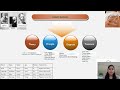
Different models exist worldwide, reflecting variations in government involvement, funding, and service delivery. The principal models include:
- Single-payer system: Government solely funds and manages healthcare.
- Multi-payer system: Both government and private bodies contribute to healthcare funding and delivery.
- Community-based services: Care is provided and supported at the community level.
- Out-of-pocket model: Individuals pay directly for healthcare services.
1. Beveridge Model
Named after British economist William Beveridge, who in 1942 proposed national healthcare funded through taxation, this model features:
- Government-provided healthcare services.
- Public employees (doctors, staff) paid and managed by the government.
- Universal access regardless of individual payment ability.
Countries Practicing Beveridge Model: United Kingdom, New Zealand, Finland.
2. Bismarck Model
Originating from German Chancellor Otto von Bismarck in the late 19th century as a response to economic hardship, this model is characterized by:
- Healthcare funded through private insurance schemes known as sickness funds, contributed to by employees.
- Services delivered by private providers.
- Government plays a regulatory but not direct management role.
Countries Practicing Bismarck Model: Germany, France, Japan.
3. National Health Insurance Model
This approach combines elements of the Beveridge and Bismarck models:
- Government funds healthcare via taxation.
- Service delivery handled by private entities, such as private hospitals and pharmacies.
In Nigeria, for example, this blended model includes government funding alongside private service provision, complemented by community-based schemes and varied insurance coverage. Understanding the impact of these arrangements can be enriched by exploring Understanding Community Health and Health Equity: Insights from Keely Gallagher.
4. Uninsured or Out-of-Pocket Model
Common in low-income countries where governmental support is limited, this model:
- Requires individuals to pay for healthcare services directly.
- Limits access to those who can afford care.
This model is prevalent alongside other systems in Nigeria, Chad, and similar countries. For related concepts on individual roles during illness, consider Understanding Sick Role: Responsibilities and Expectations in Illness.
Healthcare Policy Context in Nigeria
- The Federal Health Act (1988) established key regulations.
- Adoption of World Health Organization policies from 1948 guides public health strategies.
- Nigeria practices a mixed healthcare model reflecting both government and private sector roles.
To better understand government influence in health policies and broader governance, the summary Understanding State Roles in Historical and Global Contexts offers valuable insights.
Conclusion
Understanding these healthcare models is crucial for grasping how different countries provide and fund medical care. Each system reflects historical, economic, and social factors unique to the country, influencing access, quality, and equity in health services.
For further insights: Examining national health policies and international guidelines offers a comprehensive understanding of healthcare systems worldwide.
Hi guys, today we talk about health care systems and the models you know the the health care system or the models of
healthare system. How do you fend for medical care and everything? How do you access medical care in the society where
you exist on a country where you are at or where you are from? That is what we are looking at today. And not only how
they are done, but we're looking at the world existing health care systems, right? And we want to point out some
countries that practice which of them and what each of those models entails and everything. But generally we
understand that this um um according to World Health Organization WH 1948 we understand that it refers to
organizations or institutions or people or resources. I will take it again. According to WB48,
yes, it refers health system refers to organizations, institutions or people's or resources. Yes. Whose primary aim is
to promote, restore and maintain health in the society. Yes, that is when we talk about healthare systems. It is the
goal that is commonly achieved not only by individuals, not only by the government but society at large. Yes,
very important. So some we understand that some people in society can afford the health care system or healthare
services please and some people cannot. Yes. And this is why several health care systems were established.
Yes. Yes. So several of these includes uh they are donated
under you see uh the one we call uh the single payer system right we are going to review the model but I'm trying to
look at the the the um the types you see that some of the models are the one we call the singlepayer system in here only
government takes care of that. We look at the model that that gave birth to this. We'll look at it soon. Yes. And
then we'll have the multi-payer system where both the government private bodies are are having hand to do to uh provide
the health services right and then the out of pocket we look at that. So the second one is the multi-payer system.
the the we have the community based yes community based um services and number four like I said is the out of out of
pocket model right now we are going to be looking at the models of healthare system and the first model we're going
to be looking at is the beverage model the beverage model was named after s William beverage s William beverage
or beverage a renowned um British economist who in 1942 published the government report a
government report he called social insurance and allied services. Social insurance and allied services. He in
this his book he proposed that national healthcare should be provided for all individuals and should be paid through
taxation. That is by summ beverage not beverage please not beverage beverage I don't
know okay so I've made the right assumption there so
in this model the government as we see provide the healthare services whenever you're sick you can go there you you'll
be taken care of and everything uh and not only by providing this to the society
both the staffing, the employees or the doctors, the medical practitioners that render the services, they are controlled
by the government. When I say control, I mean providing the facilities, even their paycheck and everything. Yes. Some
countries that are under this beverage model include like UK, right? UK. We have uh New Zealand.
Yes. New Zealand and Finland. They practice the beverage model. Yeah. Excuse me. So another model we are
looking at today is the Bismar model. Bismar that is by um a German a German um chancellor. In fact the German of the
old Germany the German Empire we call it the the current Germany we call today. Initially
the German Empire it was named after this man Van Bismar.
Ottoan Bismar that is his name. So he was the first chancellor of that German Empire which is today known as Germany
right he was a chancellor between 1871 to 1898. Yes 1871 to 18 no 1890 and
that time Germany was faced with serious economic crisis. that the um the citizens were unable to
bear the responsibilities associated with their healthcare. He suggested in 1981 that health services should be priv
that health service should should be provided by private bodies people should contribute and all of those private
entrepreneurs and philanthropies should provide for that and everything. And before you know it the legislature
passed it. They passed the bill in 1983. Yes. And in this model we understand that
the the health services Yes. are funded and delivered by private interventions through the money individuals pay to
private insurance such as sickness fund. Yes, people can pay to sickness fund all of those NOS's and everything and
they render it. So through that health care service can render to uh uh the society people that cannot afford it and
everything. Government has a hand here but majorly the private bodies through several fund health fund today we hear
who all of those things and people can contribute and get reaching out to the persons in the society. So countries
that practice this include uh Germany as we know right we call France um
Japan etc. Yes. And um we have the one we understand as uh should I call it um in fact I'm looking at this separately
but it's almost like um the the autoban vismark model the banism model because um the national health
insurance the national health insurance model as practiced in Nigeria here the There is a combination of both the
beverage and a bismouth model. Yes. Here the government funds the the the the healthcare through the money collected
from taxation. Yes. While the delivery of these services is by private bodies.
That's why you see pharmacies owned by persons and all of those things and some of them is is being paid by the C
government hospitals, the CC private hospitals and everything and that is it and
um in Nigeria we practice that um national health insurance and in fact the mixture of all of those yes the
beverage and the bambark model. So and the one we call the uninsured model or out of pocket model. This is where the
individuals have to in fact uninsured model if you don't have money you can't receive any healthcare. Yes. Yes. So
places like low income countries where they cannot afford the the whole services health services the government
cannot afford it. This is what they they practice and you see that it's also in Nigeria and if you review completely the
national insurance model you understand that the government could pay the health service uh health care um service
renders but the medicine you may take sometimes are paid by your tax or paid out of the top uh your pocket. Yes. So,
so you see that we practice that and like I said community um health services also we practice this in Nigeria and
that is what you see as the combination of both um the beverage and beverage and um the bisma because there is a
government intervention to an extent and there is private NOS's and philanthropies and good well wishes and
or good people trying to put their also pocket also in action in in a place like Nigeria. So you see Chad Chad republic
Nigeria etc. So so that is uh what we we see in that aspect. So you will want to know that in Nigeria the national policy
was we have the federal act of health federal health act was in 1988. Yes. And then
the I think yes we call it this um the center for disease and control act we may want to check that out also then
other international policies activity of the world health organization of 1948 yes and the British medical art yes so
this is the size of the models of um health um health care and health care delivery and activities and services
right so thank you and See you um in the next video.
The Beveridge model features government-funded and managed healthcare with public employees, offering universal access regardless of ability to pay, as seen in the UK and New Zealand. In contrast, the Bismarck model is funded through private insurance schemes contributed by employees, with services delivered by private providers and government acting mainly as a regulator; Germany and France use this model.
The National Health Insurance model is government-funded through taxation like the Beveridge model but utilizes private entities such as hospitals and pharmacies to deliver healthcare services, similar to the Bismarck model. This blended approach allows government oversight with private service provision, exemplified by countries like Nigeria.
In many low-income countries with limited government healthcare funding, individuals must pay directly for services under the out-of-pocket model. This restricts access to those who can afford care, often leading to healthcare inequities and untreated illnesses. Countries like Nigeria and Chad experience this alongside other healthcare systems.
Government policies, such as Nigeria's Federal Health Act (1988) and adherence to World Health Organization guidelines, establish regulations and frameworks that integrate public and private healthcare sectors. This creates a mixed system where government funding and private service delivery coexist, aiming to improve coverage and health equity.
Community-based healthcare provides localized, accessible care supported by community involvement, enhancing health promotion and disease prevention tailored to specific populations. This approach increases coverage in areas underserved by centralized systems and complements models like National Health Insurance by addressing local health equity.
The Beveridge model originated post-WWII in the UK as a way to provide universal healthcare funded by taxation, reflecting socio-political commitment to welfare. The Bismarck model emerged in 19th-century Germany as a response to economic challenges, leveraging insurance funded by employers and employees to maintain social stability. Both models are products of their unique countries’ histories and economies.
Exploring summaries like 'Understanding Public and Global Health: Key Concepts and History' and 'Understanding Community Health and Health Equity' provides foundational insights. Additionally, studying national health policies and WHO guidelines enriches knowledge on how healthcare models shape access and equity worldwide.
Heads up!
This summary and transcript were automatically generated using AI with the Free YouTube Transcript Summary Tool by LunaNotes.
Generate a summary for freeRelated Summaries

Understanding Public and Global Health: Key Concepts and History
Explore the fundamentals of public and global health, including definitions, disease classifications, and pivotal historical milestones. Learn about epidemics, pandemics, and endemic diseases, plus groundbreaking public health figures and their contributions.

Comprehensive Guide to Economic Planning in India: History, Models & Reforms
Explore India's economic planning journey from the early visionary plans to modern reforms. Understand key economic models, five-year plans, planning commissions, and the shift to NITI Aayog, alongside concepts like mixed economy, open-closed economy, and sustainable growth. This summary provides insights into India's economic strategies and policy evolution.
Comprehensive Overview of Indian Traditional Medicine Systems and Their Use of Medicinal Plants
Explore the fundamentals of India’s traditional medicine systems including Ayurveda, Siddha, Unani, and Homeopathy. This summary highlights their historical roots, diagnostic methods, treatment principles, and the pivotal role of medicinal plants in healing and wellness.

Nigeria in Peril: Ethnic Conflicts, Terrorism, and Economic Challenges
Nigeria confronts a complex crisis marked by ethnic violence, terrorist threats from groups like Boko Haram, and deep-rooted economic issues including resource dependency and corruption. This summary explores the causes, impacts, and proposed solutions to these persistent challenges undermining Nigeria’s stability and development.

Understanding Entrepreneurship in Nigeria: Challenges and Opportunities
Explore the dynamics of entrepreneurship in Nigeria, key challenges, and strategies for success in a changing environment.
Most Viewed Summaries

Kolonyalismo at Imperyalismo: Ang Kasaysayan ng Pagsakop sa Pilipinas
Tuklasin ang kasaysayan ng kolonyalismo at imperyalismo sa Pilipinas sa pamamagitan ni Ferdinand Magellan.

A Comprehensive Guide to Using Stable Diffusion Forge UI
Explore the Stable Diffusion Forge UI, customizable settings, models, and more to enhance your image generation experience.

Mastering Inpainting with Stable Diffusion: Fix Mistakes and Enhance Your Images
Learn to fix mistakes and enhance images with Stable Diffusion's inpainting features effectively.

Pamamaraan at Patakarang Kolonyal ng mga Espanyol sa Pilipinas
Tuklasin ang mga pamamaraan at patakaran ng mga Espanyol sa Pilipinas, at ang epekto nito sa mga Pilipino.

How to Install and Configure Forge: A New Stable Diffusion Web UI
Learn to install and configure the new Forge web UI for Stable Diffusion, with tips on models and settings.

If you found this summary useful, consider buying us a coffee. It would help us a lot!