Video Summary: Football Offensive Systems Explained
This video provides an in-depth breakdown of three distinct football offensive systems: the West Coast offense, the Air Coryell vertical system, and the Air Raid offense. It explains the philosophy behind each system, how play calls are structured using personnel, formations, and route concepts, and the specific advantages each system offers.
1. The West Coast Offense
The West Coast offense, created by Bill Walsh in the 1980s, is built on the principle of using quick, high-percentage passes to open up the running game.
Core Philosophy
- Pass to set up the run: The revolutionary idea is that short, quick passes tire out linebackers by forcing them to cover more ground, creating advantages for running the ball.
- QBs need quick release and accuracy: Success relies on quarterbacks who can get the ball out quickly with a three-step drop, have excellent short-to-medium accuracy, and strong timing and anticipation.
- Yards after catch (YAC) are crucial: Receivers like Deebo Samuel are highly effective because they can make a quick catch, break a tackle, and gain extra yards.
Anatomy of a Play Call: Ace Twins Right 62 Slant Flat
| Component | Meaning | | :--- | :--- | | Personnel (Ace) | 11 personnel (1 RB, 1 TE). Quarterback typically under center. | | Formation (Twins Right) | Two receivers lined up on the right side of the field. The tight end (Y) is in-line next to the tackle. The right side is the primary side for the play. | | Protection (62) | 6 players block (5 linemen + 1 RB). "2" indicates a balanced protection where the line blocks the four down linemen and the middle linebacker. | | Route Concept (Slant Flat) | The two receivers on the right run a slant route and a flat route. The quarterback reads the defense (e.g., Cover 3) and throws to the receiver left open by the defender's decision. |
Key West Coast Concepts
- Spacing: Outside receivers run short hitches, while a slot receiver runs a flat route, creating picks and confusion for defenders.
- Texas: A receiver runs a seam route while the running back runs an angle route, often creating a favorable 1-on-1 matchup for the back against a linebacker.
- Shallow Cross: Two receivers run horizontally across the field at different depths, which is difficult for both man and zone coverages to defend.
- Smash: An outside hitch route combined with a slot corner route, designed to attack the space between a deep safety and cornerback.
2. The Air Coryell (Vertical) System
Created by Don Coryell in the late 1960s-80s, this system aims to attack deep every play to break defenses and create explosive plays.
Core Philosophy
- Deep threats open up intermediate routes: Constant deep passes force safeties to play back, creating space underneath.
- Revolutionized the tight end position: Athletic tight ends like Kellen Winslow were used primarily as receivers, creating mismatches against slower linebackers.
- Dictates pace with personnel: The offense uses heavy personnel (like the I-formation with a fullback) for passing plays, forcing defenses into less optimal packages.
Anatomy of a Play Call: I Right Slot 824 Lead 989 F Angle 68 Protection
| Component | Meaning | | :--- | :--- | | Personnel (I) | A formation with a fullback and running back directly behind the QB. The QB is always under center. | | Formation (Right Slot) | One receiver is aligned in the slot on the right side. Tight end is in-line. | | Play Action (Fake 24 Lead) | A fake handoff to the running back through the "4 hole" on the right side, with a fake lead block by the fullback. | | Route Concept (989) | The three-digit code for the routes run by the X, Y, and Z receivers. A "9" is a go route, an "8" is a post route. So here: X (9), Y (8), Z (9). | | Running Back (F Angle) | The F (running back) is tagged to run an angle route. | | Protection (68) | 6 blockers (including the fullback). The "8" indicates the fullback's blocking assignment to the strong side edge rusher. |
Key Air Coryell Concepts
- Mills: Designed to beat Cover 3. A Z receiver runs a go, an X runs a post, and the tight end runs a dig route, exploiting the deep safety's decision.
- Y Pop: All receivers run go routes, but the tight end hesitates as if to block before releasing deep, getting behind the safety in the seam.
- Levels (e.g., 96 Z Drag): Routes are run at different depths (e.g., go, dig, drag) to force linebackers to choose which level to defend.
- Corner Post: A double-breaking route (corner then post) that can shake man coverage.
3. The Air Raid Offense
Developed by Mike Leach in the 1990s, the Air Raid is designed to pass 70-80% of the time using a simplified system of only 10-20 core concepts.
Core Philosophy
- Simplicity and mastery: Players master fewer concepts perfectly, allowing for fast tempo and quick execution.
- Short and intermediate passes: Despite the name, it's built on short and intermediate passes, not deep bombs.
- Personnel: Typically uses 10 personnel (1 RB, 0 TEs, 4 WRs) or 5-wide sets.
Anatomy of a Play Call: Doubles Right 92 Mesh F Wheel
| Component | Meaning | | :--- | :--- | | Formation (Doubles Right) | Two receivers are split to each side of the field. | | Route Concept (92 Mesh) | A two-digit code for the passing concept. "92" specifically refers to the Mesh concept, where two receivers run shallow crossing routes over the middle. | | Running Back (F Wheel) | The running back (F) is tagged to run a wheel route, providing an outlet for the quarterback. |
Key Air Raid Concepts
- 4 Verticals: A simple concept where four receivers run go routes, exploiting a lack of deep defenders.
- Y Cross (e.g., Trips Right 95): The Y receiver runs a deep crossing route at 10-12 yards, while other receivers run a go, dig, and shallow cross.
- Stick (e.g., Trips Right 80 Stick): A base hitch concept overridden by a "stick" concept, where one receiver clears out vertically, another runs a flat, and the third runs an option route. This creates a 3-on-2 advantage for the offense on that side of the field.
4. The Erhardt-Perkins System
Developed by Ron Erhardt and Ray Perkins in the 1970s, this system is known for its flexibility and simplicity.
Core Philosophy
- Concepts over formations: Concepts are called out and are formation-independent. Players know their assignment regardless of alignment.
- QB mastery is key: The quarterback must master terminology, read defenses, and call audibles on the fly to take advantage of matchups.
- Values versatile players: Quarterbacks look for veteran players who can line up anywhere and adapt quickly.
Key Concept: Ghost
The "Ghost" concept is a three-receiver pattern designed to beat Cover 3.
- In a Bunch formation: Z runs a go route, H runs a flat route, Y runs a hitch route.
- In a Doubles formation: The running back replaces the third receiver, running an angle route to fill the flat zone. The system allows the same concept to be applied across different formations without changing the core idea. For a deeper dive into how structure and rules shape the modern game, check out Understanding Football Team Structure and Rules.
Other Concepts
- Ranch: Run from trips or bunch formations. One receiver runs a go/fade, Z runs a slant, and the slot runs a short corner route, creating three varying route depths to confuse defenders.
To learn how to identify these formations and concepts in live action, explore NFL Film Study: How to Watch Football Smarter with Personnel & Formation Breakdowns.
For a look at how similar strategic thinking applies to other games, read Deadlock Game Roles Explained: Position Strategies & Teamplay Basics.
West Coast. This is a play from a West Coast offense called ace twins right 62 slant flat and it showcases this Q
receiver passing concept that forces the defense to move laterally across the field. A man named Bill Walsh created
the West Coast system in the 1980s because he wanted high percentage throws that didn't require elite arm strength
or speed from his quarterback. The revolutionary idea is that the passing game opens up the run game, which is
complete opposite from the traditional approach. The theory is that quick short passes tire out linebackers because it
forces them to cover more ground, which then creates an advantage when it comes to running the ball. Let's break down
each component of this play call and talk about some other important West Coast concepts. Ace twins right refers
to the personnel package and the formation. The personnel package simply means which positions are on the field
for the offense. Each team has to have 11 players. And for offense, five of those players are always going to be in
your line them. And over your sixth is your quarterback. This means the remaining five players are going to be
some combination of running backs, tight ends, and receivers. Personnel packages are described using two-digit codes. The
first digit represents the number of running backs on the field, and the second is the number of tight ends. So,
we're looking at an 11 personnel package right now, which is also called ACE for short. By default, quarterbacks line up
under center in ace formations, but they can line up in the shotgun as well, in which case the play call is simply gun
ace. Twins right refers to a twin or pair of receivers lined up on the right side of the field. With right being the
side of the play where the primary receivers and the first read for the quarterback are going to be. And because
these two receivers are declared in the play call, we know by default that the other two receivers are going to be on
the left side of the field. Importantly with twins rightight, our Y receiver, which is our tight end, is going to line
up in line, which means on the line of scrimmage right next to the tackle. Trey right is the same thing except our tight
end is lined up in line on the right side. So three receivers on the right side. Trips right is the same thing
except our tight end is no longer lined up in line. In trips, right, Y off, you'll notice there's a unique tag at
the end of the play call, the Y off. The Y refers to be specific player position and the off is their assignment and
where he's expected to line up. Each player has a letter assigned to them. In this case, this is our X. Our tight end
is our Y. Our H is our slot receiver and Z is our outside receiver on the play side. Longo
times you'll see X and Z in this position. But if the main side of the play was on the left, like for example
in trips left, then our Z receiver would be on the left side on the outside. Winning backs are often referred to as
F. So pay specific position is tagged at the end of a play call. That tag overrides whatever their default
assignment was in the rest of the play call. So in this case, trips right would normally have our tight end lined up
here, but the tag overwrites that with Y off and he lines up here. This is an example of done ace trey right where our
quarterback is lined up in the shotgun position and we have that Trey right formation on the right here with our
tight end in line. Bunch right is where three receivers are on the right side in very close proximity to each other in
this triangle formation. Doubles right refers to a double pair of receivers on the right and left. This is very similar
to twins right where we also had two receivers on the right except our tight end is not in the endline position. He's
in the slot. Now, the 62 refers to the pass protection being used. The six is the number of players that have to be
blocking. Five players will be our alignment by default. And then the sixth will be our running back. The two refers
to the type of protection that they'll use. Two is kind of a default balanced protection where the offensive line will
block the four down lineman as well as the middle linebacker. 63 means that the line will shift to the
left and the running back will block any pressure that comes off the right. And 64 is the exact opposite. The line will
block right and the running back will block left. Slant flat refers to the rep combination for these two receivers on
the right in this twins right formation. It's one of the many concepts that defines West Coast offenses. And players
are coached to know that based on the personnel and formation, which specific receivers should be running the slanted
flap. You'll notice these backside receivers don't have a specific assignment names in the play call. So,
they're coached to know what by default they should be running. It might be something like a go fade and a hitch
route, for example. However, like we mentioned before, this could be overwritten by a tag such as X dig,
which would instruct the X receiver to run a dig route instead of his default assignment. The purpose of this slant
concept is to attack cover three, which is where each cornerback will play a deep third.
Our safety will play a deep third in the middle, and then this Mickelback will cover either this curl route or maybe
this out zone or maybe the flat. Regardless, we've got one defender against two receivers, so he's going to
have to make a decision on which one he covers. If he maintains inside leverage and follows the slant route, the
quarterback will throw to the flat route receiver and vice versa. Now, of course, the offense doesn't know if the deep is
going to play cover three or not, which is why it might make sense to tag the backside receivers to run a route that
attacks cover two. In cover two, we have these two deep safeties and our cornerbacks playing in these flat zones.
And the Miss Nickelback might still be playing in this curl zone. So in this case, our slant route and our flat route
if played correctly by the defense will be covered. But if we can have our X receiver to run that dig route we talked
about or maybe a post route, then the quarterback has an option to attack the weak part of the field against cover two
and cover three. So what will happen is a quarterback will snap the ball, read the safeties to
understand if it's cover two, cover three, or something else. If it's cover three, he'll look to his receivers on
the right and make a decision on which one to throw to based on where the Nickelback decides to go. But if it's
cover two, then he'll first look to his exceiver to see if this across the deep middle is open. And if not, he might
have a backup checkown route by his tight end, like a hitch rub or something like that. Quarterbacks that succeed in
West Coast tend to be able to get the ball out quickly with three-step drops. They need to have very good short and
medium accuracy and have timing and anticipation so that they can release the ball before the receiver makes their
break and deliver a very quick and accurate pass. 50 yard after the catch receivers are really effective in West
Coast offenses. Think DVO Samuel Almond Ross St. Receivers who can make a quick catch,
break their first tackle, and then run for a bunch of extra yards. Running backs and tight ends who can catch and
run are also valued because there's a lot of plays coming out of the back field and these short soft zone plays
across the middle. Spacing is another popular concept in West Coast systems where the two outside receivers will run
short hitch routes and the wide receiver will run a flat route. What this does is creates pick opportunities where
covering defenders will run into each other as they run horizontally across the field. Texas is a concept where the
wide receiver might run some kind of seam or vertical route while the running back runs this angle route.
Now, this might peel the linebacker away from the middle of the field. More than likely, it's going to attract the
attention of the deep safety and lead this linebacker one-on-one with this running back, which if you have a fast
running back, that might be a favorable matchup for the offense. Shallow cross, it involves two receivers running
horizontally across the field, but at different depths. It's good against man because horizontally running across the
field without many breaks, is going to be very difficult task for defenders to keep up with. Speedy receivers are going
to be able to get open. It's difficult with zone coverages as well because receivers are going to be running across
multiple zones where there are going to be open gaps in between. Also, defenders are going to have to make choices on
whether or not they cover this deeper route or shorter route. Smash concepts involve a hitch route on the outside, a
corner route from the slot receiver. It's particularly effective against cover where the deep safety and
cornerback will have to make a difficult decision. If timed right, the quarterback can hit this corner route
right as he's breaking, which is in an awkward space between these two coverage defenders. The safety is going to have a
hard time coming down to that route and defending it effectively. In which case, the cornerback might come back and
protect that route, leaving this kick route wide open. As a checkdown, the running back might run some kind of flat
route or wheel route, which gives an extra opportunity on this outside for a completion. Air Corel. This is a play in
the air corell or vertical system called Iight slot 824 lead 989 F angle 68 protection. The air corell system was
created by Don Corell in the late60s and early 80s with the San Diego Chargers. Corel believed that attacking deep every
play would eventually break defenses and create explosive plays. thinglessly, his quarterback, Dan Fouts, had seasons
where he threw for over 47 and 4,800 yards, which by today's standards is pretty impressive, but 45 years ago is
revolutionary. Most of the plays were designed to attack the field deep. These constant deep threats force safeties to
play back, opening up intermediate routes underneath. This system also revolutionized the tight end position
with Kellen Winslow. It was the first time an athletic tight end was used more as a receiver than just for blocking,
which created big mismatches against linebackers that just wasn't seen before.
I slot refers to the personnel and formation. Just like with West Coast, the personnel is 21 because we have two
running backs in the back field and one tight end. Because of the alignment of the fullback and running back directly
behind the quarterback, we call this an eye formation for short. The quarterback's always under center in
this case. In eye formations, the tight end is lined up in line on the line of scrimmage next to the tackle unless it's
declared or tagged otherwise, which leaves two lone receivers on each side of the field. Now, the mention of slot
indicates that this receiver on the right side is lining up in the slot instead of on the outside. Fake 24 lead
is not a necessary component of this play call, but this is an example of how you would use play action, which is a
fake run where the quarterback pretends to hand the ball off to the running back, keeps the ball, and then proceeds
to pass it to a receiver down the field. 24 refers to number two, the running back, which is the position number,
which we learned in the previous video. Four refers to the four hole uh of our running gap on the right side. So it
just indicates which position and which hole this fake run is intending on directing towards. Lead indicates that
it's a fake lead block where the bullvac is the lead blocker that the running back would follow behind. So 24 lead is
the name of a running play. But the mention of the term fake means that it's play action. By mentioning the fourhole
specifically as part of this fake run, you can see the level of detail that goes into making this a believable fake
run. 989 is classic terminology for an air corore system. The three numbers in a row refer to the different routes on
the route tree that the X, Y, and Z receiver are intended on running in this play. The nine is a go route. So our
outside receivers will run those and an 8 is a post route. We know because the term right is used in the formation
declaration in I write slot that this is our Z receiver which makes this our X by default and of course our Y is our tight
end lined up here. The three digits in the play call usually go XYZ making this 9 8 9. F angle refers to the
F position which is our running back and an angle route which is just like this. Without mentioning F angle, the running
back might have a default route that he's expected to run. But by tagging him with a specific route, it makes it super
clear exactly what he's meant to do. 68 protection of course refers to the pass protection being used. The six refers to
the number of players blocking with our sixth player blocking being our fullback. Without specifically declaring
this in the play call, we can assuming this because all of our receivers have route assignments as well as our running
back. And the eight refers to the specific type of block, which in the Corell system is a little bit different
than the West Coast system. In this case, it's the direction and technique of the fullback's blocking assignment,
which is blocking to the strong side edge rusher. So, this is the strong side because we have the tight end. So, he'll
be blocking on this side. We're showing this against the 4-3 defense with four down defensive linemen and three
linebackers, which is a little bit uncommon to the 425, which is the most common base package for defenses, where
we would replace a linebacker with a nickel corner. But the reason for this is because the offense is in an eye
formation with two running backs, one of them being a fullback. An offense typically will include a fullback in
their personnel package because they intend on running the ball a lot. And it's possible that up until this point
in the game, they have run a lot of run plays. Now, linebackers are going to be more effective at stopping the run than
a nickel quarterback, for example, which is why it might make sense for the defense to come out in 4-3 package
compared to a 4-2. But, of course, in this case, we're running it passing play, which means that we actually have
more of a passing threat against fewer pass protectors in the second area, which is the brilliance for this scheme
being run out of VI formation. the offense gets to dictate the pace of play and can make substitutions at any point
during their drive. But when that happens, for example, if a fullback comes off and we bring on a wide
receiver, the defense is allowed a 7 to 10 second period where they can make a substitution of their own, maybe sending
a linebacker off for that nickel quarterback we talked about. But if the offense feels like they have a personnel
advantage or a matchup advantage based on the players that are currently on the field, then they're not going to make
that substitution. The defense can still make that substitution if they want, but they have to do it quickly because the
offense does not have to wait for them and they can snap the ball and give them a penalty. So this pass heavy corell
offense that's using a lot of vertical passing concepts using this thigh formation with their running heavy
personnel is actually pretty genius because it gives them a flexibility to run multiple different types of play and
keep the defense on their toes and not expect what's come next. Mills is a popular porell concept that's intended
on beating cover three. Our Z defender is going to run a go route, get the attention of our deep cornerback playing
a thirdyear. Our X receiver is going to run a post route right across the middle of the field. Get the attention of this
deep safety. And our Y receiver, our tight end in this case, is going to run a dig route also going across that deep
middle. In theory, if this cornerback is playing this deep third and maybe this safety is playing up here to get
pressure was a possibility that this wide receiver is going to be open in this deep middle behind our linebackers.
Again, we're exploiting this deep safety having to choose between this deep post route and this dig route underneath.
This play call might look like Iight slot 869. Again, we're in the I formation, the right side with our
receiver in the slot with our receivers running an eight, six,
and nine. The mill refers to the combination of these two routes. You could simplify this play call to I write
slot mills Y dig where we're tagging our Y receiver to run that dig route. Again, if we just said Mills, this receiver
might have a different default route expectation. So by tagging him with that D- route, it makes that expectation
clear that he's running this dig across the center. Y pop is another popular concept in the vertical system. This
play call might look like I write 999 Y pop. We're again in our I formation, but this time our receiver is on the
outside, not in the slot. Typical high formation. Our X, Y, and Z receivers are all running nine routes, which are go
routes. But we have this Y pop, which means our Y receiver, our tight end has something overwritten on his default
route. A pop route is a go route except there's a slight hesitation where it looks like he's going to block this
outside defender on the line. That hesitation might make the safety run down expecting to run, which might be
enough for that tight end to get behind him in the seam and create an open air. It's also effective against typical
cover three where this seam zone between the two deep safeties is often a weak point. I
write 96Z drag is another popular corel play call that showcases the levels concept. We're still in the typical
Iight formation with our X and Y receivers running a noning and a six route which is a go and a dig and our Z
receiver running a drag right across the middle. It's very similar to the shallow cross concept we looked at in West
Coast. Although with West Coast, you might have some slightly shallower crossing routes. Whereas in this case,
our cut end is running a true gig, which is at 8 to 12 yards in depth. It's also often run out of drips or bunch
formations where it'll have not only two but three varying levels. And the purpose here is to force these
linebackers and other defenders to be confused and decide which level they want to defend. ITE 996X corner post
showcases the corner post concept which in this Iight formation includes our X receiver running a 9 route, our Y
receiver running a 9 route and our Z receiver running a six row. But then we have a tag for X corner post. So because
our X already has a default play, this tag will overwrite that. And the reason for that is because this corner post
route is not a typical route that's on the route tree. So we need to declare it as a tag. It's a combination of a corner
route and a post route. The corner route goes to the outside. Post route goes toward the middle in the post. So, it
starts as a vertical corner, but then comes back to a post. If this cornerback is in nan coverage or deep zone coverage
against this receiver, this double breaking route has the possibility of shaking that coverage and allowing him
to get open. We've also got this dig route which will take time to develop but might become open underneath in that
deep left zone. Air raid. This is a play in the air raid offense called doubles right 92 mesh fhe wheel which uses the
popular mesh concept across the middle. The air raid offense was created by how mummy in the 1990s and started at small
colleges. Air raid offenses passed the ball 70 to 80% of the time which is way more than the balanced 50/50 in most
offensive schemes. Despite that only 10 to 20 core concepts are used in air raid compared to the 100 plus the other pro
style offenses. This simplicity allows players to master fewer concepts perfectly. Most air raid offenses tend
to use 10 personnel with one running back, zero tight ends, and four receivers, or empty, which is five
receivers. Despite the name air raid suggesting that this offense might be built around deep vertical passes,
that's actually not the case. It's built around mostly short and intermediate passes. the devil's right in his play
call refers to the formation that these players are lining up in the two receivers lining up on the right side.
These are VR's Z and Y receivers. And on the left, we've got our X and H receivers. 92 mesh is a good example of
the naming convention used in air raid offenses, which is often a two-digit code to suggest what the passing concept
is. The main air raid concepts each fall within this '90s series. So 90, 91, 92, etc. are each a different combination of
passing routes. 92 specifically refers to this mesh concept where we've got two receivers running these shallow crosses
across the field. Now 92 specifically refers to mesh in this case. So the addition of the turn mesh in the play
call is a bit redundant, but might add it just to add extra clarity so everyone knows exactly what they're doing. The
play call might also tag individual assignments as well as other passing concepts to layer on top of the base 92
concept. In this case, the F wheel is tagging this running back RF run wheel route. The quarterback's progression is
going to be number one, one of these mesh concepts across the middle. Number two, the dig, number three, the go
route, and then lastly, the running back. Four verticals is another popular concept and carate offenses, which is a
pretty simple play design with four receivers running go routes. This makes it difficult for defenses because they
often don't have enough safeties or defensive backs playing deep coverage to cover these four vertical routes. The
difficulty is that these routes need time to develop because they're deep downfield and require good blocking.
This particular play would be called doubles right 96 with 96 being the two-digit code for this passing concept.
Trips right 95 might look something like this where the X receiver is running a digout. Our Z receiver on the outside is
running a go or a fade. Our H receiver is running a shallow cross across the middle. And importantly, our Y receiver
is running this deep crossing route at 10 to 12 yards. This concept is called Y cross because it's our Y receiver
running disc crossing route. Trips right 80 stick is a really interesting play as well. We took our last play. Trips right
refers to three receivers who are lined up on the right side of the field. This would be our Y, H, and Z and our X on
the opposite side. AD is the code for a hitch concept where every receiver will run a hitch row that looks something
like this. 3 to 5 yards and then twirling immediately back to the quarterback.
If you just called trips right 80, the play would look something like this. This is our base. But by adding the term
stick to the end of the play call, it's adding this stick concept on top of this play which overrides the default
responsibilities of a couple receivers. The routes that stay the same are going to be our X and Y receivers. Although
our Y receiver might have an option route where he can run either a hitch, maybe an in or maybe an out depending on
how the defensive coverage rolled out. Our Z receiver this times just clear the field vertically with a go route or a
fade route. Our H receiver is going to run a flat route. The stick concept are these three routes on the right side of
the player which are going to challenge likely two defenders to make a decision on which of the two routes they need to
cover. executed correctly and if unexpected by the defense, one of these three routes is almost always going to
be open. Airheart Perkins. This is a play in the Airheart Perkins system called bunch left gun
f angle. You'll noticed on the left side we have a concept that looks very similar to the stick concept we just
looked at in the air raid. It's a great example of how this Airheart Perkins offense works. This offense was
developed in the 70s by Ron Heheart and Ray Perkins and later became the foundational system for Bill Parcels and
then Bill Bich. The key idea is that play calling is simplified into concepts such as ghost in this play call.
Concepts are formation independent. So you can call the same concept in multiple formations and players are
coached to know exactly what their responsibility is. Unice plate bunch left gun refers to a bunch concept which
if you remember are three receivers on the left side in close proximity wind up in this triangle formation left meaning
they're on the left side of the field because the left side is the play side that makes this outside receiver the Z
the one on the right are X this RH and this R Y gun simply refers to this play being run out of the shotgun so the
quarterback is stepped back from the line of scrimmage ghost refers to the specific concept which in this
particular personnel and formation involves a go route from our Z, a flat route from our H and a hitch route from
our Y. Gives that same three receiver concept that we saw before, which is really effective against cover three. Up
that side, we might have the X doing a slant. Now, this is not part of the ghost concept. It's not mentioned in the
play call, but this might be a default route that's coached into all of the receivers. Its angle refers to its
specific tag for our running back who's running an angle route. But here's how this would be applied if we were in a
completely different formation. This play is called doubles right gunhost cf angle. The doubles right refers to the
two receivers being on the right side. Our Y is our tight end. We saw an example before where our Y and doubles
right was lined up on the left, which could be the case for certain offenses, but more often than not, the Y actually
lines up on the right. gun. We're in shotgun ghost. We have a ghost concept and then F angle, our running back is
doing this angle route. The way that the ghost concept will be applied in this scenario is to also have the Z receiver
run that go/fade route and have our tight end run in the kitch. But of course, in this case, we don't have a
third receiver on the right side of the field to run that flat route. And that's what the purpose of this running back is
to run this pangle route. But the players will be coached to know that in this circumstance, in this formation,
when ghost is called, this F player, our running back, is expected to run this angle route instead. Whereas in the
other formation, it's the H receiver expected to run that flat route. That's just something that they are taught and
have to memorize. Now, because of that, it's actually not necessary to include F angle in the play call here because it's
technically part of that ghost concept, but offenses will typically do it just for added clarity because this might be
a little bit of a unique situation or a formation where they don't typically run ghost out of. So, when that play is
called in the huddle, they just want to make sure that everyone understands what's happening. So, ghost is one of
many concepts in this offensive scheme. The quarterback could at the line of scrimmage, read the defense, and call
out to the left side a specific concept, and then to the right side a specific concept. Each week, they could disguise
different terms for the different concepts. So, he can call audles on the fly in reaction to what he sees defense
do. And because everyone has to be very well coached and adaptable in this system, this concept play calling system
allows the offenses to work with faster tempo, take advantage of personnel advantages they might have, and really
move down the field quickly. Whereas with other offenses, they might have to make substitutions and swap out
different personnel packages and take a little bit slower pace. But in order for this to be successful, the quarterback
has to have a mastery of the terminology. Not only does he need to memorize the coding concepts and how
they're applied to different formations, but he needs to be able to recognize the situations where it would make sense to
use specific concepts and be able to quickly audible the play call on the fly. For skilled players, coaches and
quarterbacks look for veteran players who can line up anywhere and understand to play concepts and can adapt quickly
on the fly. That's why you'll notice the Bellich Patriots having kind of an odd set of personnel. slot receivers who
were maybe smaller and older with less emphasis on speedy outside receivers like you see with a lot of teams. Ranch
is another popular concept often run out of a trips or bunch formation where one receiver is running that go or fade
route, the Z receivers usually running a slant and the slot receiver is running a short corner route. Very similar to the
stick and that we've got three varying depths for each of these three routes. Although this accomplishes essentially
the same thing, giving different looks, different routes, different variety makes it a little bit more confusing for
the defenders, making them have to react in real time and potentially make mistakes.
The West Coast offense, created by Bill Walsh, uses quick, high-percentage short passes to open up the running game. It’s based on the principle of "pass to set up the run," where short passes force linebackers to cover more ground, tiring them out and creating advantages for the running game. This system prioritizes quarterbacks with a quick release and accuracy, as well as receivers who excel at gaining yards after catch.
In the Air Coryell system, a play call like "I Right Slot 824 Lead 989 F Angle 68 Protection" is broken down into several components: personnel (e.g., I-formation with QB under center), formation (e.g., slot alignment), play action fake, a three-digit route concept code (e.g., 989, where 9=go, 8=post), running back tag (e.g., F Angle route), and protection scheme (e.g., 68, indicating 6 blockers and the fullback's assignment). This structured system uses heavy personnel and play-action to attack deep every play.
Unlike other systems built on complexity, the Air Raid offense simplifies the playbook to 10-20 core concepts that players master for fast tempo execution. It typically uses 10 personnel (1 running back, 0 tight ends, 4 wide receivers) and focuses on short and intermediate passes rather than deep bombs. Its goal is to pass 70-80% of the time, using concepts like Mesh or Y Cross to attack defenses with speed and precision.
The Erhardt-Perkins system prioritizes flexibility by making concepts formation-independent: instead of calling specific formations with plays, concepts like "Ghost" are called and applied to any alignment (e.g., Bunch or Doubles). This allows players to know their assignments regardless of formation, and the quarterback must master reading defenses and calling audibles to exploit mismatches. It values versatile players who can line up anywhere.
The Air Coryell vertical system revolutionized the tight end position by using athletic players like Kellen Winslow as primary receivers to exploit mismatches against slower linebackers. Its deep-passing philosophy forces safeties to play back, creating space for tight ends on intermediate routes like Mills or Y Pop. This system often uses heavy personnel packages to dictate defensive alignments.
Yards after catch are critical in the West Coast offense because its short, quick passes (e.g., slant flat or shallow cross) rely on receivers to gain extra yardage after catching the ball. Receivers like Deebo Samuel are effective because they can make a catch, break a tackle, and extend drives. This emphasis on YAC complements the system's philosophy of using the pass to set up the run and tire out the defense.
The Air Raid offense prioritizes tempo and simplicity by relying on a small set of mastered concepts (10-20) for fast execution, while the West Coast offense uses timing-dependent short passes to control the clock rhythm. The Air Coryell system often dictates pace through personnel changes and deep play-action, while the Erhardt-Perkins system simplifies play-calling through formation-independent concepts that require the quarterback to make adjustments at the line.
Keep this summary
Save it to LunaNotes and it becomes a real note in your library — editable, searchable, and ready to turn into flashcards or a diagram. Free to start.
Save to LunaNotesOr summarise for another video.
This summary and transcript were automatically generated using AI with the Free YouTube transcript summary tool by LunaNotes.
Related summaries
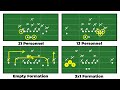
NFL Film Study: How to Watch Football Smarter with Personnel & Formation Breakdowns
Learn how to watch football like a pro by focusing on personnel packages and formations. This guide reveals what to look for before the snap, how teams like the Ravens and Chiefs use unique strategies to gain an edge, and how to predict plays by understanding alignments.

Understanding Football Team Structure and Rules
This video provides a comprehensive overview of the structure of a football team, detailing the roles of players including the goalkeeper, defenders, midfielders, and attackers. It also explains key football rules such as free kicks, penalty kicks, and the offside rule.

Deadlock Game Roles Explained: Position Strategies & Teamplay Basics
This comprehensive guide breaks down the key roles in Deadlock, detailing position one through six responsibilities and gameplay strategies. Learn how to maximize farming efficiency, timing, and map presence to improve your team's coordination and win rate.

John Maxwell's 5 Daily Habits: The Secret to Success | Personal Growth Plan
John Maxwell reveals the five simple yet powerful daily habits that have been the secret to his success: learning, reflecting, writing, sharing, and sustaining thoughts. He explains why intentional daily growth is more important than goal setting, and shares his personal journey of investing in a growth plan. This video also features a deep discussion with James Clear on atomic habits, systems vs. goals, and identity-based change, plus Ryan Leak on the power of 'chasing failure'. Key takeaways include how to design a growth plan, the importance of evaluating experiences, and why daily small habits compound into massive success over time.

Mastering Roaming and Ganking Strategies in Deadlock: Wave Mechanics & Execution
This comprehensive guide from top-ranked Deadlock competitor Pasha Pop breaks down the critical elements of effective roaming and ganking. Learn how wave mechanics dictate timing, pressure, and positioning, how to plan and execute successful ganks, and movement techniques to maximize impact without losing lane control.
Most viewed summaries

A Comprehensive Guide to Using Stable Diffusion Forge UI
Explore the Stable Diffusion Forge UI, customizable settings, models, and more to enhance your image generation experience.

Kolonyalismo at Imperyalismo: Ang Kasaysayan ng Pagsakop sa Pilipinas
Tuklasin ang kasaysayan ng kolonyalismo at imperyalismo sa Pilipinas sa pamamagitan ni Ferdinand Magellan.

Mastering Inpainting with Stable Diffusion: Fix Mistakes and Enhance Your Images
Learn to fix mistakes and enhance images with Stable Diffusion's inpainting features effectively.

Pamamaraan at Patakarang Kolonyal ng mga Espanyol sa Pilipinas
Tuklasin ang mga pamamaraan at patakaran ng mga Espanyol sa Pilipinas, at ang epekto nito sa mga Pilipino.

How to Install and Configure Forge: A New Stable Diffusion Web UI
Learn to install and configure the new Forge web UI for Stable Diffusion, with tips on models and settings.
Found this summary useful?
Take it with you. One click puts it in your own LunaNotes library.
Save to LunaNotes