Introduction to Cesin and Its Importance
Cesin is an alkaloid primarily produced by plants like Gloriosa superba and Chumautal. It holds significant pharmaceutical applications, notably in treating gout and inducing polyploidy in plant cytology, highlighting its dual role in medicine and plant biology.
Challenges in Cesin Production
The structural complexity of cesin makes its chemical synthesis laborious and unsuitable for industrial-scale production. Consequently, reliance on natural plant sources leads to supply inconsistencies, emphasizing the need for understanding its biosynthetic pathway.
Biosynthetic Pathway Discovery Approach
Researchers employed a combination of transcriptomics, metabolic logic, and pathway reconstitution to decode the biosynthesis of cesin:
Transcriptomic Analysis
- Focus on the rhizome (underground part) of Gloriosa superba where cesin accumulates.
- De novo comparative transcriptomic profiling of rhizome, leaf, and stem identified differentially expressed genes potentially involved in cesin biosynthesis.
- Candidate biosynthetic genes were pinpointed based on expression patterns unique to the rhizome.
Enzymatic Pathway Reconstruction
- Candidate genes (including methyltransferases and cytochrome P450 enzymes) were cloned and functionally expressed individually in heterologous systems.
- Sequential enzymatic transformations from one phenyl isoquinoline to intermediate compounds such as sautomnine and isoandrosbin were validated.
Key Biochemical Reactions
- Phenol–phenol coupling catalyzed by a P450 enzyme, an unusual and critical step forming the cesin molecular scaffold.
- Ring expansion reactions facilitating the transition from isoandrosbin to in-formal deocolin.
Pathway Overview
- Starting precursor: One phenyl isoquinoline, derived from amino acids phenylalanine and tyrosine.
- Intermediate Formation: Six enzymatic steps involving four methyltransferases and one P450 enzyme convert the precursor to sautomnine.
- Formation of Isoandrosbin: Phenol coupling by a P450 enzyme.
- Ring Expansion: Producing in-formal deocolin through P450-mediated steps.
- Conversion to Cesin: Predicted subsequent steps include demethylation and acetyl transfer, not yet molecularly confirmed.
Metabolic Engineering in Model Plants
- The entire pathway was reconstructed in Nicotiana benthamiana leaves through Agrobacterium-mediated transformation.
- Three modular gene clusters were introduced:
- Module 1: Enzymes for phenylpropanoid pathway producing 4-hydroxy dihydro cinnamaldehyde (4-HDCA).
- Module 2: Enzymes converting tyrosine to dopamine from Gloriosa superba and Berberis species.
- Module 3: Nine cesin biosynthetic genes converting substrates to in-formal deocolin.
- Feeding the precursor enabled full synthesis of the penultimate cesin intermediate.
Significance and Future Directions
- This study, published in Nature (2020), represents a near-complete elucidation of cesin biosynthesis.
- Enables prospects for biotechnological production of cesin in heterologous systems like yeast.
- Further characterization of the final three enzymatic steps will complete the pathway, potentially enabling sustainable industrial cesin production.
Conclusion
Integrating multi-omics approaches and metabolic engineering has unraveled the complex biosynthetic pathway of cesin, offering new avenues for pharmaceutical alkaloid production and fundamental plant biology research. Ongoing studies aim to fully characterize the remaining biosynthetic steps to facilitate complete synthetic biology production platforms.
For broader context on alkaloid biosynthesis and metabolic strategies, see Comprehensive Overview of Indole Alkaloid Biosynthesis and Metabolic Engineering. Insights from case studies are detailed in Metabolic Engineering of Indole Alkaloid Biosynthesis: Case Studies in Plants and Yeast, which may inform approaches for cesin pathway optimization. For exploration of enzymatic mechanisms similar to those in cesin biosynthesis, refer to Decoding Strictosidine Biosynthesis: Enzymes, Pathways, and Biotechnological Insights.
[Music] [Music] welcome to nptn online certification
course on pharmacognosy and metabolic engineering so this is lecture 35 where I will discuss about the recent
discovery of cesin biosynthetic pathway so cesin cesin is basically an alkaloid
Amin alkaloid it is produced by the plant called gloriosa Superba s p e r b super bar
and another species called Chum autal I put species which
basically produces this alkaloid now why should we study cesin cesin has Cal applications including and including
pharmaceutical applications so the most important one it is used as a drug for treatment of goer that is a severe form
of arthritis and not only that cisin is basically used for cytological studies
in order to make uh polyploid uh in order to induce polyic
cesin is used so cesin plays an important role
uh for not only for the pharmaceutical application but but also to De for the fundamental plant
biology okay now cesin the structure of CES is pretty complex and uh Only The enhan shio
Selective synthesis so I put a color enhan
[Music] Co selective synthesis was only achieved in
that of in the year of 2017 but it was so complex that it cannot be applicable
at in industrial scale production it cannot be applicable to
produce at industrial scale therefore the demand for cultes in to be made
from natural resources available and that sometimes makes
the supply chain unreliable so
therefore there is a need for understanding the culture
biosynthesis uh so that uh later the molecular tools can be applied leading to more production of cin in
automl or in in gloriosa or in other or in some model plants also maybe in future it is possible to produce cusin
dinovo in another eukariotic system such as East
so uh now what is the uh what is the status of biosynthesis okay so in order to study the biosynthesis one needs to
know uh or should have the idea of a precursor molecule
fortunately for cesin such molecule was indicated by the organic chemist so scientists have
chosen the precursor molecule or the start molecule
as one f e
eile ISO quinoline one feny isoquinoline so this
was uh considered to be the uh important precursor for the formation of uh cesin now how this one Phile isoline to
be produced in Plants that's again another question so we will address that a bit later let's go to the next slide
so next slide is that the cesin biosynthesis
thesis so this has been done by uh so the by the use of uh by combination of
knowledges by combination of transcriptomic metabolic
logic and pathway
reconstitution so these are the important steps uh to be considered in order to
understand the cusin biosynthesis okay now now when we talk about the transcriptomic what they have
done that one thing was clear to them that cesin accumulates in the in the ryome that is the underground
part so r that is the underground part of gloriosa
Superba so what they have done they have done a comparative transcriptomic study d n c
i tox of leaf
steem Rome okay and then what they have done from their uh they try to study the
differential gene expression we try to understand the differential and this transcriptomic was
denovo that is no information available earlier about the transcription profile of this plant so
from there they could get an idea that what could be the candidate
genes for cisin biosynthesis so that means the
gene expression analysis will tell you particularly as I said that as the ryome is the part so definitely when you
analyze the uh differential gene expression in ryome you'll be able to find
several uh transcripts which are not present in the other part now these transcripts is properly analyzed from
there an idea can be generated that what will be the potential genes or enzymes responsible
for the pathway so actually that was the starting point and then uh once they come up with the idea that this could be
the enzymes and then they basically work out the chemistry putting the putative substrate and putting the enzyme and
there what could be the product formation so again for example I have discussed long
back so as I have said the substrate more or less is known from the organic chemist
from the study made by the organic chemist so and say you have discovered the
enzyme Z enzyme
y enzyme X that means the subsequent the genes are Gene X
Gene sorry so the X gen will in X Gene en code enzyme X maybe y Gene en code
enzyme Y and Z Gene and code enzyme Z so then once they understand this one that is
what are the putative candidate genes XY Z then then what enzyme they will encode that is XY Z enzyme and then if such
enzyme is there say methy transfer so you know a substrate then if a methy transported work then it will make uh
potential product so which could be B okay then there may be a hydroxy for example which may be involvement of Cyro
450 so the product will be a some sort of hydro hydroxate product so that will be C and similarly D like that way they
theoretically created the concept and once they created the concept then they uh characterize this genes
they uh clone it and they studied the functional expression of these genes individually in an nuarc system to
confirm that indeed Gene X converts A to B say Gene y converts B to C and then g z converts C to D So based on all this
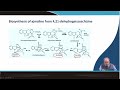
knowledge uh what they have come up is basically the pathway which I am going to put it here so one one pheny
isoquinoline as I said that is the starting point so let us put that one that is the part of I should what
will be the heading The Heading will be part of part of
the biosynthetic pathway
of cusin so one
F eile ISO
quinoline Q UI okay the board is withit disturbing [Music]
q [Music] q
[Music] new q u i n o l i n e so this will be converted
into several uh step reactions and finally it will produce a compound which is called
s a terminal so s a u t
u m n a l i n e is automine so aamal is the species
from there perhaps the name given is aalin now this involves six
steps and including
four methy transfer ises and one p 450
enzyme and in The Next Step this by the action of one unusual enzyme or one unusual reaction that is 1
p450 that job was to do the phenol coupling p h e n o l phenol c o u p l i n g coupling it
makes the product which is called ISO Andros simin
ISO andro s
bin now ISO Andro s bin subsequently by a two-step reaction uh where uh it's basically two
steps so one is basically one methy transference another is one
p450 and that this is called basically the uh ring expansion and this leads to the
formation of in
horile d d
Callin All Greek names in formal dein
so it was uh subsequently predicted that in formal D Colin will be converted
into Colin through subsequent steps which may involve
uh uh demiles a deformes okay I think Def mileage we should write before which may
involve uh du for my
then dethy and in atile
transfer transfer is leading to the formation of our
Target molecule which is cesin
now this part is still not confirm at the molecular level yet to
be confirmed but up to
in formal deos cin this is confirmed so that means after to This Much from
here this is called the near
completion step of cesin
synthesis so this paper I will discuss again the steps a little bit more detail this paper published in the famous
journal Nature in the year of 2020 volume
500 84 page number 140 8 to
153 and the first author is netol n Ryan s
netol and this was published from Stanford University and this paper is so
impactful the editor asked another scientist with a similar expertise to write a News and Views article so
uh News and Views article also published in the same issue of nature
2020 volume 584 page number 49 to 50 so and they
have given a nice name for this News News and Views article that is the chemical Kno
how of the sorry
of the flame Lily so to sum up what I have
said that the starting point for net and his colleagues is basically based on a proposed biosynthetic pathway
uh given by organic chemists several years back so there what they considered that
one pheny isin is probably the starting point of cesin biosynthesis and this one pheny isoline
is probably derived from amino acid phy alanin and tyosin and this intermediate that is one fthy
isoquinoline this to be converted to n form demolin in N step
reaction the first intermediate that contains the molecular scaold of
cesin so this conversion basically involves two unusual bioch chemical reactions so number one is the rare
transformation which is known as phenol ring coupling so which
is this one and and on precedented reaction that leads to the expansion of the molecular
ring so that is somewhat unusual reaction which was not reported in the plant system before
so that means pheny isoquinoline is initially made from amino acids Phile alanin and
tyrosin it is then converted into aalin in six steps by four methy transfer and one cytochrome p450
enzyme uh then two other p450 catalyzes the unusual biochemical reaction f one is a phenol coupling and the second
one uh phenol coupling and as a result of this first one reaction it produces uh
ISO Andro simin and then a ring expansion which
produces in for mile demolin now a fif methy transference is also needed to convert
ISO andrin into the substrate for expansion so the enzymes for the final three
steps in which the Nile demin is thought to be converted into cesin is not yet confirmed at the molecu level but it was
predicted that deformes dyes and in atile transference will do the job so okay now this is in
brief what has been elucidated by net and colleagues and this paper published in nature what I said now let us go to
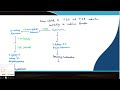
the uh some of the early steps of the pathway now uh if I put this in a sequence I
will not put I will not write the name of the each and every substances because it will be
rather pretty heavy so to start with say I what I said that the one
F eile ISO quinoline so one feny is Queen so this
is considered as a one that makes two two makes three three makes 4 four makes five five makes six then six
makes 7 7 makes 8 8 makes 9 9
Max 10 so the enzymes
are omt1 then nmt
then cyp 75 a 109 that is hyron p 450 then again
omt 2 then again a cyp 75 a 1 109
then omt then again Cy P 75 a 110
then omt 4 and then again cyp 71
FB 1 so these all constitutes the pathway so
the last one is the uh
in for mile D
Colin the penultimate step was O meile
and draw sing and that of previous one is number
eight was ISO Andro so
in and then the seven was autom nin and then subsequently previous steps so this is all the steps
so these are all characterized now now once they have characterized
this the next point was basically they want to check the biochemical function of all these candidate gen so they have
used the they confirm the biochemical function
in of the enzymes encoded a function of the enzymes
encoded by the nine candidate gen so there here they have used the
model plant which is a relative of the tobacco nikiana
B Manana so what they have done they have transferred
all nine genes
by Agro filtration along with that they have
done feeding of substrate which is the one which is uh
one fin ethy
ISO quinoline and
and then what they have done so then they and uh they check for the production of this uh product which is
the in form Mile demolin and all genes worked well and as a result of
that uh what they found that that there will be the uh they achieve total biosynthesis of so
what I put it in another color uh
upon transient expression
in nikiana B Manana Leaf they found
total biosynthesis of
in form mile D Colin
Callin call so that means
successful reconstitution of
cesin biosynthetic pathway in
osana Bena Miana now they are not happy with this
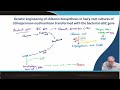
they wanted to also Express the early genes of the pathway that leading to the formation of the first product that is
one fenile isocon so what they have done in this this case they have used three different
modules so in the next one metabolic engineering
of ctis pathway
in osana v
m so what they have done they also inserted the primary uh me they they aim
to they aim to achieve that the primary metabolic products will be utilized directly by the plant so that it
produces the uh substrate uh which is the starting point
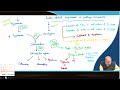
for the cesin pathway so they have used three module so in the module one where they have done so they have
taken several enzymes from different sources including gloriosa Superba which starting with DH P
synthes that is the starting point of this uh cumate pathway and eventually it makes phy
alanin and this subsequently by the action of multiple enzymes for
example GS spel uh GS 4
CL uh GS a e r
GS c4h G uh GS uh
CCR that leads to the formation of 4 h DCA so 4 H DCA and uh here one thing I would like
to tell that is this okay I'll tell later so this is
module one now they have also done the module
2 where El tyosin was taken and
GS d t r DC or D
DC they have taken another plant from another source BV CP
76 85 this is from Barbarian Volaris and that ultimately makes
dopamine 4 HDs 4 hdcs stands for four
hydroxy dihydro Camal deide that is why the CCR was
used okay and AER e stands for alkenal reduc
so now the module two completed so
this and this will join together by the action of
CJ NCS Nolin synthes and that leads to the formation of
one Fen eile isoquinoline
so this subsequently a module 3 which
involves so many enzymes which I have already listed before so I'm not putting all the
enzymes so n and eventually it makes
n form mile D
Callin and this subsequently by three successive
reaction eventually will produce cesin so what I said that these three
steps are not characterized yet but the penultimate product of cesin has been achieved so that
means the they characterize the nine genes from gloriosa suburba using transcriptomic metabolic logic
uh as well as the uh chemical as well as the PA pathway
reconstitution so pathway reconstitution they have done in uh nikiana bamana where starting from one Phile
isoquinoline until the formation of De form demolin and what I said file demin will be converted into cin by three
steps which have not yet characterized at the molecular level now uh uh but it is confirmed that this is the
near completion of the pathway so as I said the genes were characterized from gloriosa
Superba and functionally expressed individually uh in the another hus system then they put all the genes
together and they reconstituted the pathway in nikiana and then what they did they
also reconstitute the whole pathway starting from the primary metabolic products that is glycer phosphate and
arthros phosphate leading to the formation of uh dhp by putting dhp
synthes uh from gloriosa Superba and subsequently the genes for the simate pathway leading to formation of Phile
alanin and and then several larly gen of Phile propanoid including pal 4cl CCR c4h and AER that ultimately led to
the formation of 4 hdca that is four hydroxy dihydro Camal deide and this joins with dopamine now dopamine also
they produce through module 2 by putting the genes of dopamine formation hiding from gloriosa as well as from barbaris
that produces dopamine now this dopamine and hdca joins by Narco cloudin synthes and uh which they have hired from CJ
means coptis Japonica and it makes one FY isoquinoline and subsequently all all nine genes inserted and that makes the N
formal D Colin that means starting from the primary metabolism the end product
achieved so this is really an wonderful work and that is why this paper published in
nature so we have to wait for few more years when three uh uh penultimate and ultimate enzymes will be characterized
so that whole cine can be produced and that time maybe dinovo cine in East such interesting papers will come out in
years to come with this I end this class thank you
Cesin's structural complexity makes chemical synthesis laborious and impractical for industrial-scale production, leading to inconsistent supply from natural sources. Understanding its biosynthetic pathway enables alternative production methods, such as metabolic engineering, to produce cesin sustainably and consistently.
Cesin is an alkaloid produced by plants like Gloriosa superba and Chumautal, notable for its pharmaceutical uses, including gout treatment, and its ability to induce polyploidy in plant cytology. This dual role highlights its significance in both medicine and plant biology research.
Researchers used transcriptomic analysis focusing on the rhizome of Gloriosa superba to identify genes uniquely expressed there. They cloned candidate methyltransferases and cytochrome P450 enzymes and functionally expressed them to reconstruct enzymatic steps, validating transformations from precursors to intermediates like sautomnine and isoandrosbin.
The pathway starts from phenyl isoquinoline precursors derived from phenylalanine and tyrosine, undergoing six enzymatic steps involving four methyltransferases and one P450 enzyme to form sautomnine. A crucial phenol–phenol coupling by a P450 enzyme forms isoandrosbin, followed by P450-mediated ring expansion to in-formal deocolin. Final steps likely involve demethylation and acetyl transfer but remain to be molecularly characterized.
The entire cesin biosynthetic pathway was reconstructed in Nicotiana benthamiana leaves by introducing three gene modules through Agrobacterium transformation. These modules included enzymes from phenylpropanoid and tyrosine-to-dopamine pathways plus cesin biosynthetic genes, enabling synthesis of the penultimate cesin intermediate upon precursor feeding, demonstrating feasibility of heterologous production.
Future work aims to characterize the remaining enzymatic steps in cesin biosynthesis to fully complete the pathway. This will facilitate sustainable industrial production via synthetic biology platforms such as engineered yeast or plants, potentially ensuring consistent, scalable supply of this pharmaceutically valuable alkaloid.
Comprehensive resources include summaries on indole alkaloid biosynthesis and metabolic engineering strategies, case studies in plants and yeast, and analyses of enzymatic mechanisms like those in strictosidine biosynthesis. These materials provide broader context and methodologies that can inform optimization and industrial application of cesin biosynthetic pathways.
Keep this summary
Save it to LunaNotes and it becomes a real note in your library — editable, searchable, and ready to turn into flashcards or a diagram. Free to start.
Save to LunaNotesOr summarise for another video.
This summary and transcript were automatically generated using AI with the Free YouTube transcript summary tool by LunaNotes.
Related summaries

Decoding Strictosidine Biosynthesis: Enzymes, Pathways, and Biotechnological Insights
This lecture explores the groundbreaking discovery of the strictosidine biosynthetic pathway in plants, revealing enzyme functions and gene involvement crucial for synthesizing this toxic alkaloid. Understanding this pathway opens doors for developing pharmaceutically valuable strictosidine derivatives through synthetic biology.
Comprehensive Overview of Indole Alkaloid Biosynthesis and Metabolic Engineering
This lecture provides an in-depth overview of indole alkaloid biosynthesis pathways in Catharanthus roseus, highlighting enzymatic steps, cellular compartmentalization, and regulatory mechanisms including transcription factors and light influence. It further explores metabolic engineering strategies such as non-natural alkaloid production and metabolic reprogramming, alongside advances in bioprocess engineering for industrial-scale alkaloid production.
Metabolic Engineering of Indole Alkaloid Biosynthesis: Case Studies in Plants and Yeast
This lecture explores metabolic engineering approaches to enhance early steps of indole alkaloid biosynthesis through gene overexpression and heterologous expression systems such as tobacco, periwinkle, and yeast. Key insights include challenges in pathway bottlenecks, gene expression effects, and the use of hairy root cultures for efficient alkaloid production.
Unraveling the Missing Enzymes in Vindoline Biosynthesis Pathway
This lecture explores recent breakthroughs in identifying key enzymes—T3 oxidase and T3 reductase—in vindoline biosynthesis within Catharanthus roseus. It also details the elucidation of the biosynthetic steps leading to tabersonine and catharanthine formation, supported by gene silencing and heterologous expression studies that clarify complex metabolic pathways essential for vinblastine production.
Metabolic Engineering Strategies to Enhance Secin Production in Lithospermum Arizon
This lecture explores the metabolic pathways and genetic engineering approaches to increase secin, a red naphthoquinone pigment, in Lithospermum arizon roots. Key topics include the roles of heterologous genes like UbiC and UbiA, enzyme activity modulation, and transcription factor manipulation to optimize secin biosynthesis.
Most viewed summaries

A Comprehensive Guide to Using Stable Diffusion Forge UI
Explore the Stable Diffusion Forge UI, customizable settings, models, and more to enhance your image generation experience.

Kolonyalismo at Imperyalismo: Ang Kasaysayan ng Pagsakop sa Pilipinas
Tuklasin ang kasaysayan ng kolonyalismo at imperyalismo sa Pilipinas sa pamamagitan ni Ferdinand Magellan.

Mastering Inpainting with Stable Diffusion: Fix Mistakes and Enhance Your Images
Learn to fix mistakes and enhance images with Stable Diffusion's inpainting features effectively.

Pamamaraan at Patakarang Kolonyal ng mga Espanyol sa Pilipinas
Tuklasin ang mga pamamaraan at patakaran ng mga Espanyol sa Pilipinas, at ang epekto nito sa mga Pilipino.

How to Install and Configure Forge: A New Stable Diffusion Web UI
Learn to install and configure the new Forge web UI for Stable Diffusion, with tips on models and settings.
Found this summary useful?
Take it with you. One click puts it in your own LunaNotes library.
Save to LunaNotes