Introduction to Vindoline Biosynthesis Revisions
- Vindoline, a precursor in vinblastine biosynthesis, is derived from tabersonine through multiple enzymatic steps.
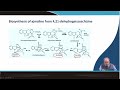
- Sequential transformations include formation of 16-hydroxytabersonine, 16-methoxytabersonine, and 16-methoxy-23-dihydro-3-hydroxy-tabersonine.
Role of T3 Oxidase (T3O) and T3 Reductase (T3R)
- Two critical enzyme activities, T3 oxidase (a cytochrome P450 enzyme) and T3 reductase (an alcohol dehydrogenase), act in tandem.
- Their coupled activity is necessary to convert 16-methoxytabersonine to acetoxy-tabersonine; isolated activity of either leads to alternative products such as vindorosine.
- This coupling likely occurs within a metabolon complex ensuring substrate channeling and efficient catalysis.
- Discovery was reported in 2015 (PNAS, 112:6229, Michael et al., led by Vincenzo De Luca).
Biosynthesis of Tabersonine and Catharanthine in Catharanthus roseus
- Stemaarinine (stemaradenine) serves as a branch point intermediate forming precondylocarpine acetate via enzyme PAS (Precondylocarpine Acetate Synthase).
- Subsequently, DPAS (Dihydroprecondylocarpine Acetate Synthase) converts this intermediate into dehydrosecodine.
- Finally, two hydrolase enzymes, Tabersonine Synthase (TS) and Catharanthine Synthase (CS), catalyze cyclization to produce tabersonine and catharanthine respectively.
Experimental Confirmation
- Virus-induced gene silencing of TS and CS in C. roseus resulted in significant decreases in respective alkaloid levels, confirming their function.
- Heterologous pathway reconstitution was achieved by transient expression of PAS, DPAS, and either TS or CS genes in Nicotiana benthamiana.
- Feeding stemaradenine acetate to engineered N. benthamiana led to successful biosynthesis of tabersonine or catharanthine, validating enzyme activity hierarchies.
Significance and Future Prospects
- These findings elucidate critical missing steps of vinblastine biosynthesis, an important anticancer alkaloid pathway.
- Understanding enzyme interactions and pathway architecture enables potential metabolic engineering for scalable vinblastine precursor production.
- The study sets a precedent for reconstructing complex plant alkaloid pathways in heterologous hosts, facilitating synthetic biology applications.
Key References
- Michael et al., PNAS 2015, "Coupled enzymatic steps in vindoline biosynthesis"
- Caputi et al., Science 2018, "Identification of missing enzymes in vinblastine biosynthesis"
This comprehensive overview underscores how combined biochemical, genetic, and synthetic biology approaches are unraveling intricate plant secondary metabolite pathways. For enhanced understanding of regulatory mechanisms influencing vindoline biosynthesis, see Light-Regulated Transcription Factors Control Vindoline Biosynthesis in Catharanthus. Additionally, to explore the broader context of these biosynthetic steps, readers may consult Late Steps of Indole Alkaloid Biosynthesis in Catharanthus roseus. These insights pave the way for sustainable bioproduction of valuable medicinal compounds.
[Music] [Music] welcome to nptl inline certification
course uh on pharmacognosy and metabolic engineering uh this is lecture 28 where I will
discuss the missing enzymes of vindoline biosynthetic pathway this is based on one of the latest discoveries made uh
with this biosynthetic pathway so what I'm going to cover first is the revision of the established root to tarpo Indo
alkaloid biosynthesis so we'll recapitulate the pathway again then we'll talk about further clarification
of three T3 oxidase and T3 reductase in vindin formation and then we'll talk about the
biosynthetic steps to tabarin and catharanthine formation in catharanthus Rosas
so let's go to the slide so uh this is what I have covered in one of the previous classes where I have shown you
that uh tab personin converted to vindoline uh through multiple step
reactions uh sequentially formation of 16 hydroxy tonin then 16 methoxy tonin and
then uh it forms 16 methoxy 23 dihydro three hydroxy taronin and this St
requires two two enzyme activities one is tonin 3 oxidase and other in tonin 3 reductase and then subsequently other
steps like nmt d4h and d8 formed so uh what I would like to talk now is about this step that
means this issues related to T T3
o and t3r
activities that contributing
to vindoline formation
so 16 methoxy tonin okay so let me put it in this
way tabar sonin and uh six eoy
tonin and in between of course 16 hydroxy tonin is there but that I am not
showing if you say I can add it also no problem that is
16 hydroxy tonin so the enzymes
are t16 H
then second one is T
16 omt so this is also now called t16 H2
now what uh what we have discussed in the last class is this that
these 16 methoxy stonin converted into three
hydroxy 16 uh
aoxy 23 dihydro
T sonin and this was
subsequently converted into sorry
this acetoxy tonin uh uh what color I use I use this
color this acetoxy
taronin so the enzyme which is T T3
o or T3 r o here is oxidase or here
is reductase now uh T3 o and
t3r so they if they work separately then the step cannot be forwarded towards the formation of this
dis oxy dis oxy uh this acetoxy tonin okay suppose if it happens like that
that out of this oxidation and reductors one of them is not functional in that case what will
happen that this may leads to formation of three
hydroxy 2 three dihydro
tonin and this the next step it
forms this acetoxy window
voro C D and
this by the action of uh d4h
and d a t Okay the space is less I need to give l space
said this will be vindor scene actually there is a mistake
here deile vindorosine and finally it forms uh vindorosine v i n Vin d o r o s i n e
by the action of uh d a t
d4h so here what happens what I mean to say that only T30 is active so therefore in order to make
tonin sorry in order to make
vindoline so I put vindoline in this color these two enzymes will work have to work these two
enzymes have to work together okay so that what I have mentioned
that it should remain in the form of a metabolon so therefore one product one
it catalyzes one reaction immediately it catalyzes the other reaction so uh otherwise what will happen that
normally uh if this enzyme T3 oxidase uh is used separately and a substrate uh is going is it if if the
reaction is catalyzed by if a invitro reaction can be carried out sorry invitro reaction can be carried out with
t3o so it will never produce a proper substrate for t3r uh I think so if
t3o reaction can be cared out in vro then the product of t3o cannot be used as a
substrate for t3r so that is what the point is so therefore t3o and t3r are working as a
group uh and therefore ultimately it forms as a result it forms this product and what will happen if t3o is only
working t3r is not there then it leads to the formation of vindorosine not vindoline that is what uh I I'm telling
you uh okay that is for your information now uh for your information also that this t3o is basically a
cytochrome uh p450 enzyme
and the t3r is basically an alcohol
dehydrogen so the message again I write product of
t3o is an epoxide
and are not used
by d3r therefore coupled
action is required in order to have this activity so this was
discovered uh in the year 2015 and the paper published a famous Journal called proceedings of the
National Academy of Science of pns 2015 volume 112 page number 622 42
6229 and this is the first author is Michael Michael at all the group leader is Vincenzo
deuca from Canada so this is basically the uh question which I said at the beginning
that is clarification about the 32o and t3r in vindin formation now I go to the uh Missing step aspects that
is biosynthetic steps to taronin and cenin formation in catharanthus Rosas
so what we know from the biosynthetic
stps to to uh
to uh taronin and
centin formation in catanus
Rosas okay so if we write the step then the stto
sidin a glycon it forms
uh gasio cyrine is it forms this uh 421 dehydro
G and from here different pathway originat one root goes to
aisin uh and Serpentine and the other root which we
are now concerned with that this makes a product called stemar
denin s m m a d e n i n e
so this stadin so from stenin
to taronin or to cathan information it was not clear but the organic
chemists they have synthetically shown such reactions so but that actually uh helped now the
combinatorial uh chemist as well as the biologist or the synthetic biologist to work out the step so I will not narrate
the discovery of this rather I will just simply go through the steps so stemar denin
forms okay because of uh space shortage I will put the stemen in uh here in the
I put the stem here to start with s m m a d e n i n
e this stanine will be converted to steminine acetate
stenin acetate that subsequently converted
to pre condilo
carpin acetate this is an unstable
compound and this leads to the formation of
dihydro pre condilo
carpin acetate and
that subsequently leads to formation
of dehydro secin uh where I put it I will put it okay
here dehydr codin and from dehydr
acodin uh either catharin or
tonin is formed now if I put the arrow now the enzyme discovered I will show
here so steminine acetate to precond carpine acetate this is p s and this one is
dpas okay and and this
is uh CS
TS it [Music] releases
as and then so PA stands
for precon Dio
carpin acetate synthes and DPA stands
for same D Hydro
pre corn Dio Carin p
synthes so a scientist from uh led by Sara conod that time she was with she was
working at johnin Center UK so they collaborated with several institutions in Germany as well as in UK
other Institute like Oxford uh and they have elucidated this pathway so what
they basically identified they identified two mysic enzymes necessary for Vin blastin
biosynthesis so first one is basically uh an oxidase and a reduct is that isomerize tamarine
acetate into dihydro precond carpine
acetate which is then
de acetalated and cyclized to form
either catharanthine or taronin via to
hydrolyses so uh so that means
the uh so this is the basically these are the these two new enzy enzymes so these two new enzymes they
have characterized for the first time from catharanthus Rosas so in order to check the
activity uh so they have done uh virus induced gene silencing of tab t stands for taronin
synthes and CS stands for uh cathann synthes so when they did virus induced gen
silin this resulted in Mark reduction of tonin as well as
karantin level goes down that is one thing uh now another thing what they have done in order to confirm this
function of these enzymes so they uh reconstituted this tabarin and
catharanthine pathway in nikiana benina so I just go to the next slide because otherwise so
reconstitution of tonin
and cenin inana
menana so that means these jeans uh they have expressed so let me
try to show it in this way so so here the genes
for p plus
d plus CS so these three genes were
inserted and they
add steminine acetate here the fed and as a result of that
if it can produce the cathan
thing that will indicate that indeed these gen are functional similarly for the other one
what they have done they made the construct with
p plus DPS Plus Ts
they again do feeding of steam Den in
acetate and that led to the formation of
neveron so through this they have
confirm that indeed these are the missing enzymes of the pathway and this is the best way to
confirm the function of the newly discovered Gene in a heterologous system so the tobacco this pathway is not
operative so therefore they have tailored these three genes together stitch together and put it uh in the
nikiana benthamiana plant and then they have injected in the leaf steminine acetate and as I have shown in the
previous slide that steminine acetate will be taken up by the pass and it forms the precond carpin acetate if pass
is functional there then it makes precond carpine acetate then D pass will come and that makes dehydro pilocarpine
acetate and then similarly the catharanthine synthes or tonin
synthes through hydris activity it makes this uh either tonin or catharanthine so similar experiments They carried out
here and the results were confirmed so uh so the pathway showed how plants create chemical diversity and
this also enable the development of a heterologous platform for generation of stem deriv by active compounds so
stenin derived always problem with my
handwriting derived bioactive compounds can be generated so this paper
published in the
leading World leading Journal so one is nature another one is science I have mentioned this is published in science
in the year of 2018 volume 360 page number 1 to 3521 2
39 so the first author was capu at all c a p u t i caputi
at all and the group leader two group leader one of them is
Vincent Cod dult French from
uh TOS France and other one is basically Sara e conod uh from
this so this is indeed uh this appears to be very simple but this is indeed a very complex research and if you get a
chance to read the science paper with care and attention you will enjoy how they have carried out the
experiments and uh and uh through these experiments they have confirmed the pathway and with this the total pathway
of Vin blastin biosynthesis uh from uh tryptamine and cyanin is more or
less resolved so the interesting point is this that at some later stage the whole pathway may
be expressed in East system and denovo alkaloid production can be achieved what was possible in case of tropen alkaloids
or isoquinoline alkaloids which I told you in a few previous classes so with this I end this
class thank you
The conversion requires two coupled enzymes: T3 oxidase (a cytochrome P450 enzyme) and T3 reductase (an alcohol dehydrogenase). Their tandem activity ensures the efficient formation of acetoxy-tabersonine, whereas isolated action of either enzyme leads to alternative products like vindorosine. This coupling likely happens within a metabolon to facilitate substrate channeling.
Researchers used virus-induced gene silencing in Catharanthus roseus to knock down TS and CS, resulting in decreased levels of tabersonine and catharanthine, respectively. Additionally, transient expression of PAS, DPAS, and either TS or CS in Nicotiana benthamiana, combined with feeding stemaradenine acetate, successfully reconstituted the biosynthesis pathways, confirming enzyme functions.
PAS (Precondylocarpine Acetate Synthase) converts stemaradenine into precondylocarpine acetate, a pivotal intermediate. DPAS (Dihydroprecondylocarpine Acetate Synthase) then transforms this intermediate into dehydrosecodine, which serves as the direct precursor for cyclization by TS and CS to form tabersonine and catharanthine respectively.
Vindoline is a key precursor to vinblastine, an important anticancer alkaloid. Elucidating the complete biosynthetic pathway, including missing enzymes and their interactions, enables metabolic engineering approaches to produce vinblastine precursors sustainably at scale, reducing reliance on slow-growing plants and facilitating synthetic biology production platforms.
The necessity of tightly coupled activity for converting 16-methoxytabersonine into acetoxy-tabersonine, coupled with the observation that isolated activity produces alternative compounds, suggests substrate channeling. This implies these enzymes physically associate in a metabolon complex to efficiently pass intermediates, minimizing side reactions and increasing catalytic efficiency.
Reconstruction in heterologous systems like Nicotiana benthamiana enables detailed study of pathway steps and regulatory mechanisms. It also allows metabolic engineering to enhance yields and produce valuable alkaloids in more controllable, faster-growing organisms, opening avenues for scalable and sustainable manufacturing of anticancer drugs.
Future efforts include further elucidation of regulatory networks controlling gene expression, optimizing enzyme expression levels and interactions within synthetic pathways, and transferring complete biosynthetic modules into microbial or plant chassis. These steps aim to improve production efficiency and facilitate commercial-scale synthesis of these complex medicinal alkaloids.
Keep this summary
Save it to LunaNotes and it becomes a real note in your library — editable, searchable, and ready to turn into flashcards or a diagram. Free to start.
Save to LunaNotesOr summarise for another video.
This summary and transcript were automatically generated using AI with the Free YouTube transcript summary tool by LunaNotes.
Related summaries
Late Steps of Indole Alkaloid Biosynthesis in Catharanthus roseus
This lecture explores the detailed late-stage biosynthesis of vindoline from tabersonine in Catharanthus roseus, highlighting enzymatic reactions, subcellular localization, and metabolic differences between plant aerial parts and roots. It provides insights into compartmentalization and enzyme functions critical for indole alkaloid production, essential for metabolic engineering applications.
Engineered Yeast for Sustainable Production of Anti-Cancer Drug Vinblastine Precursors
This lecture explores the innovative use of engineered yeast cells to biosynthesize precursors of the anti-cancer drug vinblastine. It highlights the challenges of plant-based production, outlines modular synthetic biology strategies to produce catharanthine and vindoline in yeast, and discusses future directions for achieving complete vinblastine synthesis.
Light-Regulated Transcription Factors Control Vindoline Biosynthesis in Catharanthus
This lecture explores the regulatory role of transcription factors CRPIF1 and CRGATA1 in light-induced vindoline biosynthesis from tabersonine in Catharanthus roseus. It details how light exposure modulates the degradation and activity of these transcription factors, ultimately controlling the expression of key biosynthetic genes and vindoline accumulation.
Biosynthesis and Transport of Monoterpenoid Indole Alkaloids in Catharanthus
This lecture explores the complex biosynthesis and secretion pathways of monoterpenoid indole alkaloids (MIAs) in Catharanthus roseus. It details the cellular and subcellular compartmentalization of key intermediates like vindoline and catharanthine, their transport mechanisms across specialized cell types, and the involvement of specific transporters critical for alkaloid distribution and accumulation.
Comprehensive Overview of Indole Alkaloid Biosynthesis and Metabolic Engineering
This lecture provides an in-depth overview of indole alkaloid biosynthesis pathways in Catharanthus roseus, highlighting enzymatic steps, cellular compartmentalization, and regulatory mechanisms including transcription factors and light influence. It further explores metabolic engineering strategies such as non-natural alkaloid production and metabolic reprogramming, alongside advances in bioprocess engineering for industrial-scale alkaloid production.
Most viewed summaries

A Comprehensive Guide to Using Stable Diffusion Forge UI
Explore the Stable Diffusion Forge UI, customizable settings, models, and more to enhance your image generation experience.

Kolonyalismo at Imperyalismo: Ang Kasaysayan ng Pagsakop sa Pilipinas
Tuklasin ang kasaysayan ng kolonyalismo at imperyalismo sa Pilipinas sa pamamagitan ni Ferdinand Magellan.

Mastering Inpainting with Stable Diffusion: Fix Mistakes and Enhance Your Images
Learn to fix mistakes and enhance images with Stable Diffusion's inpainting features effectively.

Pamamaraan at Patakarang Kolonyal ng mga Espanyol sa Pilipinas
Tuklasin ang mga pamamaraan at patakaran ng mga Espanyol sa Pilipinas, at ang epekto nito sa mga Pilipino.

How to Install and Configure Forge: A New Stable Diffusion Web UI
Learn to install and configure the new Forge web UI for Stable Diffusion, with tips on models and settings.
Found this summary useful?
Take it with you. One click puts it in your own LunaNotes library.
Save to LunaNotes