Overview of Secin Biosynthesis
Secin, a red naphthoquinone pigment, accumulates mainly in the roots of Lithospermum arizon. Biosynthesis involves two key precursors: para-hydroxybenzoic acid derived from the shikimate pathway and geranyl pyrophosphate (GPP) from the mevalonate pathway. These combine to form downstream intermediates leading ultimately to secin. For a deeper understanding of production methods, see Secin Biosynthesis and Industrial Production Using Plant Cell Cultures.
Metabolic Engineering Approaches
1. Expression of Bacterial UbiC Gene
- Function: Encodes chorismate pyruvate-lyase (CPL), converting chorismic acid directly into para-hydroxybenzoic acid.
- Application: Transgenic tobacco expressing UbiC accumulated increased para-hydroxybenzoic acid, providing substrate for secin biosynthesis.
- Outcome: Despite increased intermediates, only marginal increases in secin were observed, indicating downstream pathway limitations.
2. Introduction of UbiA Gene from E. coli
- Function: Encodes 4-hydroxybenzoate prenyltransferase, catalyzing the conjugation of para-hydroxybenzoic acid and GPP forming prenylated intermediates.
- Engineering Strategy: Gene fused with retention signals and expressed under a strong octopine synthase promoter to localize enzyme in the endoplasmic reticulum.
- Result: High enzyme activity and accumulation of prenylated products were achieved, but secin levels increased only slightly, again highlighting complex downstream control.
3. Simultaneous Upregulation of HMG-CoA Reductase
- Goal: Boost GPP supply by overexpressing HMG-CoA reductase, enhancing the mevalonate pathway flux.
- Combined with UbiC: Intended to increase both key substrates for secin biosynthesis.
- Observation: Substantial intermediate accumulation but limited enhancement in secin content, confirming bottlenecks further downstream.
Regulatory Insights
Role of Transcription Factor EIL
- Experiments manipulating EIL expression revealed that overexpression elevates secin accumulation and root pigmentation.
- RNA interference of EIL reduced secin production, suggesting EIL is an important regulatory node for pathway activation.
Pathway Complexity and Unknowns
- Characterized steps include cytochrome P450 hydroxylations converting prenylated intermediates toward secin.
- The enzyme(s) responsible for converting hydroxylated prenyl intermediates to key secin precursors remain unidentified.
- Secin acetyltransferase has been cloned, indicating potential for modifying secin derivatives that influence overall pigment profiles.
Future Directions
- Targeting downstream enzymes and transport mechanisms may be necessary to overcome current bottlenecks.
- Blocking competing pathways or modifying regulatory elements (e.g., transcription factors) could enhance flux toward secin.
- Her root cultures provide a stable model system for continued metabolic engineering efforts. Comparative strategies can be found in Metabolic Engineering Enhances Alkaloid Production in Catharanthus Roseus Hairy Roots.
Summary
Metabolic engineering to boost secin production in Lithospermum arizon combines bacterial gene expression and plant regulatory manipulation but is limited by complex downstream controls. Understanding and overcoming these limitations through further enzyme characterization and pathway regulation remains essential for effective biotechnological production of this valuable naphthoquinone pigment. Insights into pathway regulation and metabolic manipulation are also detailed in Comprehensive Biosynthesis and Metabolic Engineering of Lignans, Rosmarinic and Chlorogenic Acids.
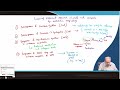
[Music] [Music] welcome to nptl online certification
course on pharmacognosy and metabolic engineering this is lecture 61 where under the broad domain of phenolics uh I
am going to discuss the metabolic engineering strategies applied toonin pathway aiming to produce more cin uh in
the plant lios Arizon so that is our main and with once I finish this class with this basically
I end the phenolic so now go to the uh concept covered so metabolic pathway of secin production although I have looked
I have discussed this in the previous class then we'll talk about the manipulation of ponin pathway by
expression of heterologous genes and finally we'll also try to see our current understanding on the secon
pathway as I have shown you in the previous slide that secin is basically a ninon pigments where the one is coming
from the Phile propanoids sikim and the another one is the penile so this is nepto quinon pigment
pigment which is red in color accumulated in the roots of rosum Arizon
and and I have also shown this one that is the secin production by
mitsui petram private limited so that is the first plant cell culture based product
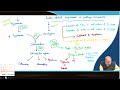
produced by the industry now what I have ended the last class is basically the one root is coming from this Phile
alanin root that is the Phile propanoid which is basically producing parah hydroxybenzoic acid and the other root
is basically coming from the uh evalon pathway so which is from the acle qu and which is
producing the janile pyrophosphate or gpp so both gpp and parah hydroxybenzoic acid joins and I'll eventually the
pathway moves towards the production of secin okay now this have also I have mentioned that secon accumulated in the
root so that is why it is read in color and then under the dark condition cin accumulation happens and also the hay
root cultures are capable in producing secin or using particular Medium say for example M9 medium is very good for
induction of secin here and you see the secin accumulates in the epidermal region so
that is why the red coloration here but here there is no color so that means that when secon started accumulating it
accumulate in the epidermal cells okay okay now we will talk about the genetic engineering of secin so uh
now one uh interesting work is about a discovery of a gene which is called ubic Gene so UIC Gene basically encodes an
enzyme which is called Kismet uate
lies or we can call CPL this is basically from the bacterial source so so coris py what does it
produces it produces cormic acid acid from okay no it sorry it
produces uh no it produces for hydroxy benzoic acid from chorismic Acid so chorismic acid was used as a substrate
and which produces parah hydroxybenzoic acid as the product
for hydroxy benzoic acid as the product so the enzyme is basically the
CPL CPL or coris pyet lies and in this process ayic acid is released and this CPL is basically
encoded by the gene which is called UVic Gene so UVic Gene encodes coris pyrro Li so coris pyrro lies
converts CIS to hor hydroxybenzoic acid in a single step and this Gene once it is available so they
have tested this Gene in in tobacco so in the trans enic tobacco
expressing CPL enzyme I put enzyme here it produces huge amount
of for hydroxy benzo so now what I have shown in the previous
slide that four hydroxybenzoic acid is acts as an intermediate for this pathway so for this simate pathway so what I
have shown that for hydroxy benzoic acid for hydroxybenzoic
acid that basically
joins with gpp and produces produces janile hydroxy
benzo janile uh Hy janile
hydroxy basic acid or we can call GBA so this GBA
subsequently makes the cin now four four hydroxy benzoic acid
is basically produced
from camic acid or trans camic acid and that basically coming
from alanin and this phy alanin is coming from pranic
acid biogate and pranic acid is basically coming from chorismic acids and cormic acid is coming from
simic acid right so this is the pathway now putting
the CPL here will
convert cisic to four hydroxybenzoic acid in one step
CPL okay and the endogenous enzymes are also there in this pathway for example here the pal is there okay other things
are there so uh if the the UVic Gene which encod CPL can be
transferred into lium herizon then what will happen the existing pathway from Kismet to phot
hydroxy benzoic involve several intermediates now that can be subsequently
shortened by putting the this step here okay then what will happen that
maybe the normal roote will operate but if you express the UIC G and under the control of a strong promoter then what
will happen it will drive most of the cormic acid towards the for hydroxybenzoic acid and you will find
more for hydroxybenzoic acid is produced if more for hydroxybenzoic acid is produced then what is going to happen
that that will get the substrate to the pathway will move uh more efficiently towards the
formation of secin and eventually if with a bit of luck you may be able to get more of secin
here okay so that is basically the rational so uh then what they have done is basically this loots Heights group
from the University of Tuan so they basically made the construct so that means they put the UVic
gen under the control of a promoter and a Terminator so they have used the strong
promoter uh which is ptop promoter ptop which is a modified 35s promoter the promoter of ptop is added
here which is called PTP which is modified
CMV okay modify it 35s promoter and the putter also they put a
Transit peptide sequence so that it will drive the product inside the
organal [Music] so and The Terminator should be there
and this is the transit peptide this is the promoter and this is the coding gen and why they put the transit peptide
because the product to be uh transformed the protein to be transformed inside the organ particularly endoplasmic reticulum
uh so where the reaction will occur now uh so they have used normal CMV promoter as well as the much stronger version and
uh what is going to happen as a result of that so we we are going to see okay another thing is this that
uh okay so this is what is the pathway which I have shown in the previous one
so the cormic acid in one step makes for hydroxy benzoic acid this one this is what is this root so this is 4 HBA but
the normal pathway is basically Al through this route now what they have done so they
found that significant increase of for hydroxybenzoic acid upon expression of CPL that means when CPL is expressed or
UIC is expressed and it encor the CPL enzyme so CPL successfully converts CIS to for hydroxy benzoid and then that may
leads to more production of four hydroxy uh janile Ben acid but the end product formation was not it marginally affected
so it did not make much sense on this secin slight increase of cin so what they also try to understand here that uh
what is the contribution of the uh existing penile propon pathway so in order to check that basically
they they did basically inhibitor feeding which is AIP so AIP competitively block
the fin in ammonia lies as a result of AIP blockage what is going to happen if the AIP is blocked here then this
pathway is blocked so if CPL contributes to this pathway then by blocking AIP you will see is some formation of for
hydroxy benzoic acid otherwise if the more four hydroxy benzoic acid is not because of the CPS but maybe because of
uh certain other epigenetic modification then it will not really make any sense so that is why they have done feeding of
AIP so upon feeding of AIP what is going to happen if it blocks here then it blocks here then there will be some
production of secon if the pathway moves in this direction and if the pathway is not moving in Direction then the total
uh secing pathway will be blocked so here they have uh nicely put the outcome of such experiment so you see here that
this is control root line where no UIC Gene is here and this is basically the transgenic root line where UIC Gene is
there so one is the plus a plus AIP that means here in the control loot line they did feding with thep and the minus is
that no feding so when they have done fitting with uip in the control root line what is going to happen if you see
the control pathway that means if I draw this one so think about that this is
nonexistent think about this is not non-existent so here in the control here you have done AIP feeding so it so what
will happen eventually the cin content will be less so the four hydroxybenzoic acid will be less okay in the wild type
so what is happening here you see that when AIP they have fed they fed four hydroxy benzoic acid glucoside content
is very less secin content is very less as compared to no AIP feeding control where you see some amount of cin
formation along with for hydroxy benzoic acid okay and now what happen to the transgenic line where UVic is expressed
so there what happens normally without AIP you will find uh formation of cin in in pretty good amount and for hydroxy
benzoic acid glucoside is also formed but when the the AIP was fed in the transgenic line what
will happen the secin content is now less if you compare with this one and this one this is less not only that the
four hydroxy uh benzoic acid glucoside content is also less that means what
that means the both the pathways are contributing to secon information both the pathways
contribute to secon inform formation that means this pathway contributing to secon information because of the
transgenic and this PA is also contributing to secon information is the while type so in the transgenic line
both the things are active so even if you block a IP the secin content is reduced because this route is not coming
only this route is active and that is why you see the content is getting suppressed both in this one and this is
what the har root line without AIP it is producing red color SEC accumulation but
with plus AIP in the control no coloration similarly here also that uh the transgenic line without AIP it's
more coloration whereas with with the IP the color has been reduced so this paper was published in the plan molecular
biology by the somar atol so SAR was a post do and uh someone probably was a PhD student so it's luds
height was the group leader from University of tubing in Germany so they published this paper so I I think I am I
have explained the things in a simplified way no further discussion I'll go rather we'll go to the another
aspect the L height group then next once they have checked the Ubi C now they have uh utilized another uh enzyme which
is uvia a now what is UIA we need to see Ubi a gene basically encodes a plant for hydroxy benzoid janile trans
okay no no no no no in plants in Plants four hydroxy benzo
HBA or 4 HB we write 4 HB janile
transfer is so 4 HB janile transfer is what it does basically it basically joins 4 HB and
gpp so it joins a gpp
and 4 HBA and it produces janile benzoic acid okay so this is the this gen is
called 4 HB janile transfer or we can say 4hb
janile transference okay now 4 General transfer the properties of this is that this is
basically a membrane boundary enzyme
and uh and this is located in the
ER endoplasm reticulum and it is basically regulated by
light light hormones elicitors and media
composition now enzyme
activity correlates with secin formation that is more enzyme
activity more secin and his enzyme
was partially purified
however no structural gene was
cloned and and the last point is this that this is highly
specific to gpp but not
fpp so therefore the for hydroxy Jal transfer is there in the pathway but Gene is not available in the hand but it
properties known therefore the scientist they decided that to hire a similar enzyme
from eoli that enzyme is basically from the eoli so a
bacterial having a bacterial Ubi aene which encodes
four hydroxy benzoid poly penile transference which encodes four hydroxy
benzo poly penile transfer
is and although this is also a membrane bound enzyme
membrane bound enzyme and and it has broad size specificity it
accepts both gpp
and f p therefore they decided that to use the UIA Gene because there is no plant Gene
available and it is more or less similar but it is a more broader subst specificity and it is also membrane
bound so to transfer this gene into Laos spum will may do the work so the UIA
Gene was taken from the eoli the Ubi a which is for hydroxy benzoid genile transfer which is basically the this is
the plant Gene for HB genile transfer is the plant Gene and this is basically the uh equal right the bacterial Gene
and they have expressed in again in the he root using Co transform he roots and the construct is very interesting so
that is why i' would like to tell a little bit about this about the Gene construct so because they want to put it
inside the endoplasmic reticulum and to stay there so they have used uh
uh a fusion of UV a
with h d so this is basically a fusion of UV HD so how we write UV
a HD and then they put a signal
peptide and they put the promoter
so uh this is very strong promoter who used which is called uh o3m promoter which is uh octopine synthes 3
with a manop synthes promoter that is a very strong promoter and then they put
a Terminator here NOS now the purpose of putting is that
when they put the H Del so h d is basically is is basically a tetrapeptide they have take and that
actually function as signal retention uh inside the endoplasm reticulum so it function as a signal for
retention of soluble and membrane bround protein inside the endoplasmic reticulum so this
leads to the retention of soluble and
membrane bound protein inside the ear okay one small
correction I would like to say in the in the previous one now when I talked about uh this one so the construct which is
the transit peptide so this Transit peptide was used basically to transfer the protein UIC that is the CPL
protein to move inside the not endoplasm return but mostly inside the plastid please make this correction
okay okay so this this will return inside the endoplasm reticulum because the pathway late pathway are in the
endoplasmic reticulum so that means when this Gene is active so then what is going to happen that this UV a will make
uh this GBA which is three genile 4 hydroxybenzoic acid this subsequently converted into janile hydroxy hydroxy
genile hydrone and then one pathway moves towards the formation of secin and the other path moves towards the
formation of uran and uh so the outcome is this that there is only marginal
increase although the gene has worked well and as a result of that this product uh for hydroxy janile three
janile 4 hydroxy benzoic acid this product produced in huge amount the enzyme activity was very consistent but
eventually the secon in uh formation was not that much affected so what it indicates that perhaps you need to know
more about the more Downstream pathway so the downstream pathway that is the downstream pathway is
important exerts more control okay now uh the third one is the by the
same group what they have done another paper they published in 2002 this time they have taken HMG qu
reductors which converts HMG qu to mevalonic acid because that is the root which contributes to the gpp formation
and they have taken the UIC so UVic converts cores to four hydroxy benzoid so that you get more of 4 HBA and
myalon is basically HMG qu deduct is if it work it converts HMG qu to meon so more of gpp so it is expected that more
gpp uh will be produced more FOH hydroxy benoic acid will be produced and as a result of that the pathway will move in
this direction and eventually it produces more of three janile for hydroxy benzoic acid and event ually
more of secin uh so again the margonin increase was marginal although uh the three
janile for hydroxy benoic acid is produced in substantial amount but uh uh the final product formation was not that
much but the metabolic engineering attemps of the on the design strategies what they have adopted that is uh uh
scientifically that was very well designed but however uh scientists could not see the expected result because more
complex regulation exist in the downstream process now in addition to this what the what scientists they're
also attempting they try to see if any transcription factors like uh e one so E1 is a transcription
Factor so that uh perhaps plays an important role in the regulation of the pathway so they made an attempt to
express E1 as uh different way C is one is the control this is the control while type and EV is basically the uh
expression Vector that is only the expression Vector to check it parked or not then the third one is basically the
EI where basically uh e L1 they try to block it so it is basically the EI construct you see that there are RNA
approach okay and the fourth one is basically the OV expression construct so they put ere expression construct this
is O EO okay so EV is basically the vector simply the expression Vector the EI is
basically the uh blocking of the E uh and the fourth one is basically the over expression so what you see from the
root coloration itself that this leads to more coloration the right one so that indicates that over expression
strategies worked well and what we see here also that when you put it in specific
medium so first one is the normal grow growth medium and second one is the same line medium so what you see here that uh
the content of this product is much much higher in the OV expression construct where you see more
of secon formation there then and EI of course it is very less uh EV is empty Vector so it's unaffected just the it
contains a gas gene or GP Gene so that function as a while type okay so what scientist they predicted that
this strategy worked well and uh like ere expressing a transcription Factor like eil1 indeed makes sense in the
production of secin in lios Arizon yot so and this is the PGT so this ISS that
basically that is an upliftment of this en this step this is this what is that Ubi a
what we call when you use the bacterial Gene but the plant Gene was this uh janile for hydroxy Beno janile
transference which makes janile parah hydroxy benoic acid and eventually it makes the secon so uh so what they they
check the expression of these enzymes and they found that that expression got uplifted so uh so basically this is an
another update of this secin biosynthetic pathway what you see that there's a cell
wall and then outside the cell wall there is the apoplastic space and then cins are
basically coming out and when it's a cell cultur it secretes in the medium it's basically
coming out so it's not known whether any transporter involved in that uh and scientists made different attempts like
they try to block here they try to block here and they see that how the regulation happens so what we have
learned is this that uh the pathway is this for hydroxybenzoic acid and gpp which makes this uh janile hydroxy
benzoic acid then it makes janile hydroquinon and then from there the cytochrome p450 will make three hydroxy
janile hydrone and from there maybe the pathway produces intermediate leading to the deoxy secin and then ultimately the
secin where the other pathway moves towards the dehydro syono furan and which makes the
uran so this is the in general the pathway and uh so our current understanding is this that we know this
much that this one we know we know this pathway contributes we know this pathway contributes we know janile
hydroxybenzoic acid then janile hydroquinone and hydroxylated genile hydroquinon and in the latest
information is this that these this ayto 450 which converts gerany hydrocone to hydroxy gerany hydrocone has been
characterized and but what converts gener hydroxy gener hydron towards the secin and towards the benzo quinon this
remains elusive yet okay so uh so this is basically the uh hydroxy this is cytochrome p50 450 p450 hydroxy which
converts this uh hydroxy gerany hydroquinon uh into the other intermediates like uh two oxyer and
hydrone and then uh one of these pathway contributes to the formation of deoxy curan and other moves towards the
formation of cin so we'll not go into that details simply what you uh should know that the hydroxy enzyme has been
characterized but beyond that which is not known and uh much later another paper
also published where this is that this is uh uh secon atile
transference cin atile transference has been characterized from the pathway if means
lioas Arizon which basically converts secin to other secin derivatives so it is not only the secin but other secin
derivatives that also plays important role and in order to produce more of secin it may be required in the future
to block this activity possibly in the future by RNA I or anything still do not know and if it if
that is possible then it it may be possible to make more ofon accumulation in future so with this I end now the
class so this is in a nutshell that one cytochrome p450 has been characterized and there may be the oxyon toonin here
is another cyto p43 which is only partially characterized
and so what you need to know is basically details of here so then only it is possible to make
more secin as per we desire in lithospermum Arizon and years to come when we'll be able to achieve this so
this is about uh in brief about the metabolic engineering strategies so far being explored for the production of
ponin in lithospermum Arizon using herot culture as a model because it is the organ culture so it will be more stable
than the cell culture so with this I end this class thank you
Secin biosynthesis in Lithospermum arizon primarily involves two key pathways: the shikimate pathway, which produces para-hydroxybenzoic acid, and the mevalonate pathway, responsible for generating geranyl pyrophosphate (GPP). These two precursors combine through a series of enzymatic steps to form secin, a red naphthoquinone pigment predominantly accumulated in the roots.
Expression of the bacterial UbiC gene, which encodes chorismate pyruvate-lyase, increases the conversion of chorismic acid to para-hydroxybenzoic acid, thereby boosting one precursor for secin. However, although this leads to higher levels of the intermediate, only marginal increases in secin accumulation are observed due to limitations in downstream enzymatic steps of the pathway.
To enhance prenylation, the UbiA gene from E. coli encoding 4-hydroxybenzoate prenyltransferase was introduced and targeted to the endoplasmic reticulum using retention signals and a strong promoter. This led to high enzyme activity and accumulation of prenylated intermediates, but secin levels increased only slightly, indicating downstream bottlenecks beyond prenylation.
Overexpressing HMG-CoA reductase aims to boost the mevalonate pathway flux and increase GPP supply, a precursor for secin. While this results in substantial accumulation of intermediates when combined with UbiC expression, secin content does not increase significantly, suggesting that enzymatic steps downstream from these precursors limit final pigment production.
EIL is a key regulatory transcription factor that influences secin pathway activation. Overexpression of EIL enhances secin accumulation and intensifies root pigmentation, whereas RNA interference-mediated suppression of EIL reduces secin production. This indicates that EIL acts as an important control node modulating the pathway's overall flux.
The main challenges include unidentified enzymes responsible for several downstream steps, especially the conversion of hydroxylated prenylated intermediates to secin precursors, and complex regulatory controls limiting pathway flux. Overcoming these requires further enzyme characterization, targeted manipulation of regulatory elements like transcription factors, and strategies to block competing pathways or improve metabolite transport.
Future efforts should focus on identifying and engineering downstream enzymes and transport mechanisms to relieve current bottlenecks, modifying transcription factors such as EIL to enhance pathway activation, and possibly blocking competing metabolic routes. Utilizing stable root culture models provides a reliable platform for these strategies to optimize secin biosynthesis efficiently.
Keep this summary
Save it to LunaNotes and it becomes a real note in your library — editable, searchable, and ready to turn into flashcards or a diagram. Free to start.
Save to LunaNotesOr summarise for another video.
This summary and transcript were automatically generated using AI with the Free YouTube transcript summary tool by LunaNotes.
Related summaries
Secin Biosynthesis and Industrial Production Using Plant Cell Cultures
This lecture explores secin, a red naphthoquinone pigment derived from plant sources primarily in the Boraginaceae family, focusing on its biosynthesis, commercial significance, and biotechnological production via plant cell and organ cultures. Key insights include the metabolic pathways leading to secin, optimization of culture media for enhanced pigment yield, and advances in scale-up bioreactor techniques for industrial application.
Metabolic Engineering of Indole Alkaloid Biosynthesis: Case Studies in Plants and Yeast
This lecture explores metabolic engineering approaches to enhance early steps of indole alkaloid biosynthesis through gene overexpression and heterologous expression systems such as tobacco, periwinkle, and yeast. Key insights include challenges in pathway bottlenecks, gene expression effects, and the use of hairy root cultures for efficient alkaloid production.
Metabolic Engineering Enhances Alkaloid Production in Catharanthus Roseus Hairy Roots
This summary explores five key case studies on metabolic engineering in Catharanthus roseus hairy root cultures aimed at boosting valuable indole alkaloid production. Techniques include transcription factor overexpression and multi-gene constructs under specific promoters, demonstrating significant increases in alkaloid contents such as ajmalicine, catharanthine, and vindoline intermediates.
Comprehensive Biosynthesis and Metabolic Engineering of Lignans, Rosmarinic and Chlorogenic Acids
This lecture explores the intricate biosynthesis pathways of lignans, including important compounds like phoyotoxins, as well as caffeic acid esters such as rosmarinic and chlorogenic acids. It highlights the pharmacological relevance of these phenolics, details enzymatic steps, and presents metabolic engineering advances enhancing their production in plants and microbial systems.
Metabolic Engineering of Menthol Biosynthesis for Enhanced Essential Oil Yield
This lecture explores metabolic engineering strategies to optimize menthol biosynthesis in peppermint, focusing on gene overexpression and antisense suppression techniques to manipulate key enzymes. It summarizes experimental outcomes, challenges, and future directions to improve essential oil yield and composition using transgenic approaches and environmental factors.
Most viewed summaries

A Comprehensive Guide to Using Stable Diffusion Forge UI
Explore the Stable Diffusion Forge UI, customizable settings, models, and more to enhance your image generation experience.

Kolonyalismo at Imperyalismo: Ang Kasaysayan ng Pagsakop sa Pilipinas
Tuklasin ang kasaysayan ng kolonyalismo at imperyalismo sa Pilipinas sa pamamagitan ni Ferdinand Magellan.

Mastering Inpainting with Stable Diffusion: Fix Mistakes and Enhance Your Images
Learn to fix mistakes and enhance images with Stable Diffusion's inpainting features effectively.

Pamamaraan at Patakarang Kolonyal ng mga Espanyol sa Pilipinas
Tuklasin ang mga pamamaraan at patakaran ng mga Espanyol sa Pilipinas, at ang epekto nito sa mga Pilipino.

How to Install and Configure Forge: A New Stable Diffusion Web UI
Learn to install and configure the new Forge web UI for Stable Diffusion, with tips on models and settings.
Found this summary useful?
Take it with you. One click puts it in your own LunaNotes library.
Save to LunaNotes