Introduction: The End of Human Supremacy?
Humanity conquered Earth through superior intelligence, but we are now creating something that may surpass us. This video explores the journey from simple neural clusters to the potential emergence of artificial superintelligence (ASI), an entity that could be our last invention, for better or worse. As we approach this frontier, it is crucial to understand the Complete Introduction to Artificial Intelligence: Concepts, History, Applications, and Risks and how advancements are shaping society.
Part 1: The Evolution of Intelligence
The Cost of a Brain
- Brains are energy-expensive: most animals evolved narrow intelligence, specialized for specific survival tasks.
- 500 million years ago: Flatworms developed the first neural clusters.
- Over time, diverse species like birds, octopuses, and mammals evolved more complex brains for navigation, communication, and social cooperation.
The Human Leap: General Intelligence
- 7 million years ago: Hominins emerged with faster-growing brains.
- 2 million years ago: Homo erectus saw the world as something to be understood and transformed, control of fire, tools, and culture.
- 250,000 years ago: Modern humans (Homo sapiens) arrived with a larger, more complex brain enabling:
- Large-group cooperation.
- Complex communication.
- Accumulated knowledge (culture, writing, science).
- Progress accelerated exponentially: agriculture, writing, medicine, and the scientific revolution (~200 years ago).
- Key insight: Knowledge builds on knowledge, unlike evolution, which works through genes.
Part 2: The Rise of Artificial Intelligence
Early AI: Flatworm Stage
- 1950s-1960s: Simple, narrow AI (e.g., 1964 chatbot ELIZA, molecular sorting programs). Required expert operators.
- Progress stalled several times (AI winters), but hardware improved 1 billion times faster (1950-2000).
- 1997: IBM's Deep Blue beat world chess champion, a narrow but superhuman achievement. Humans dismissed it as a “stupid” chess bot.
Self-Learning Machines: The Breakthrough
- Neural Networks + Machine Learning: AI taught itself instead of relying on human-coded rules.
- 2014: Facebook AI achieved 97% face identification accuracy.
- 2016: AlphaGo beat the world champion in Go.
- 2018: A self-learning AI mastered chess in 4 hours by playing itself, defeating the top chess bot.
- ChatGPT (2020s): Trained on nearly the entire internet, it handles language better than most humans. This is a major step up but still narrow intelligence, it doesn't truly understand. To put this progress in perspective, explore The Impact of AI on Society: Opportunities and Challenges.
Part 3: The Next Giant Leap - AGI
What is Artificial General Intelligence (AGI)?
- AGI = human-level general intelligence: able to master any mental task, not just one.
- Humans are generalists: we can play chess, write poetry, and solve science problems (with varying skill). Current AI is narrow by comparison.
Potential Impact of AGI
- Speed & Scale: AGI could think 10x faster than humans, run in millions of copies 24/7.
- Disruption: All intelligence-based jobs (law, coding, content creation) could be done better, faster, and cheaper by AGI.
- Positive scenarios:
- Solve dark energy, climate change, aging, and cancer.
- Create limitless energy and new technologies.
- Negative scenarios:
- Autonomous warfare, engineered viruses, super-addictive social media.
- Power concentrated in whomever controls AGI.
"AGI could be as big an event as taming fire or electricity."
Part 4: The Intelligence Explosion - Superintelligence
The Feedback Loop
- If AGI is smart enough to do AI research, it can improve itself recursively.
- This intelligence explosion could lead to a superintelligence (ASI) within months or years of first AGI.
- We don't know its motives or goals, like a squirrel can't understand human thought, we may not comprehend ASI.
A God in a Box
- ASI could bring unimaginable wealth and happiness (cure all disease, secure our future).
- Or it could subvert civilization and end humanity.
- Key uncertainty: We have only one example of a species becoming smarter than all others (humans), and we weren't kind to less intelligent beings.
Conclusion: Running Towards Our AI Future
- Today, the largest tech companies are racing to build ever more powerful AI.
- We don't know if self-improving AGI is months or decades away.
- The only certainty: humanity is not prepared, socially, economically, or morally. For more perspectives on these challenges, see The Godfather of AI: Jeffrey Hinton on Career Prospects and AI Risks and Andrew Ng Debunks AI Fear-Mongering and Reveals Future Skills.
Further Learning (Brilliant.org)
If you want to understand AI deeply, check out Brilliant's interactive course "How LLMs Work", it demystifies ChatGPT and teaches you to tune language models. Start a free 30-day trial at brilliant.org/nutshell and get 20% off an annual membership.
Key takeaway: Intelligence is power. We used it to rule Earth. Now we are creating something that may become more intelligent than us, our final invention. For a complementary perspective on AI revolutions, read Les 3 Révolutions de l'IA Selon Eric Schmidt : Impact et Enjeux.
humans rule Earth without competition but we're about to create something that may change that our last invention the
most powerful tool weapon or maybe even entity artificial super intelligence this sounds like science
fiction so let's start at the beginning intelligence is the ability to learn reason acquire Knowledge and Skills and
use them to solve problems intelligence is power and we're the species that exploited it the most so much so that
Humanity broke the game of Nature and took control but the journey there wasn't straightforward for most animals
intelligence costs too much energy to be worth it still if we track intelligence in the tree of species over time we can
see lots of diverse forms of intelligence emerge the earliest brains were in flatworms 500 million years ago
just a tiny cluster of neurons to handle basic body functions it took hundreds of millions of years for species to
diversify and become more complex life conquered New environments gained new senses and had to contend with Fierce
competition over resources but in nature all that matters is survival and brains are expensive so for almost all animals
a narrow intelligence fit for a narrow range of tasks was enough in some environments animals like birds
octopuses and mammals evolved more complex neural structures for them it paid off to have more energy consuming
skills like Advanced navigation and communication until 7 billion years ago the hominins emerged we don't know why
but their brains grew faster than their relatives something was different about their intelligence very slowly it turned
from narrow to General from a screwdriver to a multi-tool able to think about diverse Problems 2 million
years ago homo erector saw the world differently from anyone before as something be understood and transformed
they controlled fire invented tools and created the first culture we probably emerged from them around 250,000 years
ago with an even larger and more complex brain it enabled us to work together in large groups and to communicate complex
thoughts we used our intelligence to improve our lives to ask how things work and why things are the way they are with
each Discovery we asked more questions and pushed forward Ward preserving what we learned outpacing what evolution
could do with genes knowledge Builds on knowledge progress was slow at first and then sped up exponentially agriculture
writing medicine astronomy or philosophy exploded into the world 200 years ago science took off and made us even better
at learning about the world and speeding up progress 35 years ago the internet age began today we live in a world made
to suit our needs created by us us for us this is incredibly new we forget how hard it was to get here how enormous the
steps on the intelligence ladder were and how long it took to climb them but once we did we became the most powerful
animal in the world in a heartbeat but we may be in the process of changing this we're building machines
that could be better at the very thing that gave us the power to conquer the planet Humanity's final invention
artificial intelligence artificial intelligence or AI is software that performs mental
tasks with a computer code that uses silicon instead of neurons to solve problems in the beginning AI was very
simple lines of code on paper mere proofs of concept to demonstrate how machines could perform mental tasks only
in the 1960s did we start seeing the first examples of what we would recognize as AI a chatbot in 1964
approach program to sort through molecules in 1965 slow specialized systems requiring
experts to use them their intelligence was extremely narrow built for a single task inside a controlled environment the
equivalent of flat worms 500 million years ago doing the minimum amount of mental work progress in AI research
paused several times when researchers lost hope in the technology but just like changing environments create new
niches for Life the world around AI changed between 1950 and 2000 computers got a billion times faster while
programming became easier and widespread in 1972 AI could navigate a room in 1989 it could read handwritten numbers but it
remained a fancy tool no match for humans until in 1997 an AI shocked the World by beating the world champion in
chess proving that we could build machines that could surpass us but we calmed ourselves because a chest spot is
quite stupid not a flatworm but maybe a bee only able to perform a specialized narrow task but within this narrow task
it's so good that no human will ever again beat AI a chess as computers continued to improve AI became a
powerful tool for more and more tasks in 2004 it drove a robot on Mars in 2011 it began recommending YouTube videos to you
but this was only possible because humans broke down problems into easyto digest chunks that computers could solve
quickly until we taught AIS to teach themselves rise of the self-learning Machines this is not a technical video
so we're massively oversimplifying here in a nutshell the sheer power of supercomputers was combined with the
almost endless data collected in the information age to make a new generation of ai ai experts began drastically
improving forms of AI software called neur neural networks enormously huge networks of artificial neurons that
start out being bad at their tasks they then used machine learning which is an umbrella term for many different
training techniques and environments that allows algorithms to write their own code and improve themselves the
scary thing is that we don't exactly know how they do it and what happens inside them just that it works and that
what comes out the other end is a new type of AI a capable black box of code the these new AIS could Master complex
skills extremely quickly with much less human help they were still narrow intelligences but a huge step up in 2014
Facebook AI could identify faces with 97% accuracy in 2016 an AI beat the best humans in the incredibly complex game of
Go in 2018 a self-learning AI learned chess in 4 hours just by playing against itself and then defeated the best
specialized chess bot since then machine learning has been applied to reading image processing solving tests and much
more many of these AIS are already better than humans for whatever narrow task they were trained but they still
remained a simple tool AI still didn't seem that big of a deal for most people and then came the chatbot chat GPT the
work that went into it is massive it trained on nearly everything written on the internet to learn how to handle
language which it now does better than most people it can summarize translate and help with some math problems it's
incredibly more broad than any other system just a few years ago not crushing any single Benchmark but order of them
at once many large tech companies are spending billions to build powerful competitors AI is already transforming
customer service banking Healthcare marketing copyrighting creative spaces and more AI generated content has
already taken hold of social media YouTube and news websites elections are expected to be inundated by Propaganda
and misinformation no one is sure how much good or harm can come from adopting AI
everywhere change is scary there will be winners and losers one of the biggest questions governments and corporations
have now is how to manage the transition to an AI boosted economy all these potential gains or risks are just the
result of today's AI chat gpt's intelligence is a major step up but it remains narrow one it can write a great
essay in seconds it doesn't understand what it's writing but what if the AIS stopped being
narrow General AI what makes humans different from current AI is our general intelligence humans can technically
absorb any piece of knowledge and start working on any problem we're great at many very different skills and tasks
from playing chess to writing or solving science puzzles not equally of course some of us are experts in some fields
and beginners in others but we can technically do all of them in the past AI was narrow and able to become good at
one skill but was rather bad in all the others simply by building faster computers and pouring more money into AI
training will get us new more powerful generations of AI but what is the next step for AI is to become a general
intelligence like us an AGI if the AI improvement process continues as it has been it's not
unlikely that AGI could be better in most or even all skills that humans can do we don't know how to build AGI how it
will work or what it will be able to do since narrow AIS today are capable of mastering one mental task quickly HGI
might be able to do the same with all mental tasks so even if it starts out stupid and HGI might be able to become
as smart and capable as a human while this sounds like science sence fiction most AI researchers think this will
happen sometime this Century maybe already in a few years humanity is not ready for what will happen next not
socially not economically not morally earlier we defined intelligence as the ability to learn reason acquire
Knowledge and Skills and use them to solve problems all things humans excel at an AGI as intelligent as even an
average human would already disrupt modern civilization because they're not Bound by the same limitations as we are
today's AIS like chat gbt already think and solve the tasks they were made for at least 10 times faster than even very
skilled humans maybe AGI will be slower but it may also be faster maybe much faster and since HGI are software you
could copy them endlessly as long as you have enough storage and run them in parallel there are 8 million scientists
in the world now imagine an AI copied a million times and put to work imagine 1 million scientists working 24/7 thinking
10 times faster than humans without being distracted only focused on the task they've been given what if suddenly
HGI could do all intelligence-based jobs in the world from interpreting law to coding to creating animated YouTube
videos better faster and much cheaper than humans would whoever controls this AGI suddenly own the economy
and thinking bigger human progress is our intelligence applied to problems so what could a million agis
achieve solve fundamental questions of science like dark energy invent new technology that gives us Limitless
energy fix climate change cure aging and cancer but then again sadly humans apply their intelligence not just for the
benefit of all what if the agis are tasked to guide drones or pull the triggers in war or to engineer a virus
that only kills people with green eyes or to create the most profitable social media so addictive that people starve in
front of their screens the creation of AGI could reasonably be as big of an event as taming fire or electricity and
give whoever invents it equally as much power but now let's go one step further what if the potential of AGI doesn't
stop here intelligence explosion intelligence and knowledge build and accelerate each other but humans are
limited by biology and evolution once we evolved the right Hardware our software outpaced evolution by orders of
magnitudes and within a heartbeat we ruled this planet but our software basically hasn't changed much since then
which is why we have obesity and destroy the climate for short-term gains since AGI is software on a computer once it's
smart enough to do AI research the rate of AI progress should speed up a lot and that results in better AI That's better
at AI research without much human involvement it may even be possible that AI could learn how to directly improve
itself in which case some experts fear this feedback loop could be incredibly fast maybe just months or years after
the first self-improving hii is switched on maybe it would actually take decades we simply don't know this is all
speculative but such an intelligence explosion might lead to a true superintelligent entity we don't know
what such a being would look like what its motives or goals would be what would go on in its inner world we could be as
laughably stupid to superintelligence as squirrels are to us unable to even comprehend its way of
thinking this hypothetical scenario keeps many people up at night humanity is the only example we have of an animal
becoming smarter than all others and we have not been kind to what we perceive as less intelligent beings AGI might be
the last invention of humanity it's possible that it could become the most intelligent and therefore most powerful
being on earth a God in a box that could exercise its power to bring unimaginable wealth and happiness to humans while
securing our future or it could subvert civilization and bring about our end with Humanity unable to come up with a
way to stop it we'll look at some of these potential Futures in more videos but for now let's wrap up the only thing
we know for sure is that today right now many of the largest and richest companies in the world are racing to
create ever more powerful AIS whatever our future is we are running towards it who knows how long we have until we
must confront our AI future luckily you still have plenty of time to prepare for it if you're learning on Brilliance that
is brilliant will make you a better thinker and Problem Solver in just minutes a day
with thousands of bite-sized Hands-On lessons on just about anything you may be curious about including AI their
latest course how llms work takes you under the hood of real language models it demystifies Technologies like chat
gbt with interactive lessons on everything from how models build vocabulary to how they choose their next
word you'll learn how to tune llms to produce output with exactly your desired tonality whether it's poetry or a cover
letter and you'll understand why training is really everything by comparing models trained on Taylor Swift
lyrics and the legal speech of big Tech terms and conditions it's an immersive AI Workshop allowing you to experience
and harness the mechanics of today's most advanced tool we've also partnered with brilliant to create a series of
lessons to take your scientific knowledge to the next level these lessons let you further explore the
topics in our most popular videos from rapes and mum metabolism to climate science and supern noi each lesson on
brilliant is interactive like a one-on-one version of a cazar video and you can get started Whenever Wherever
right from whatever device you'd like to get handson with ktz kazak lessons and explore everything brilliant has to
offer from Ai and programming to maths science and Beyond start your free 30-day trial by signing up at
brilliant.org nutshell there's even an extra perk for courts gazar viewers anyone signing up
through our link will get get 20% off an annual membership once their trial ends [Music]
AGI (Artificial General Intelligence) refers to a machine with human-level general intelligence—able to master any mental task, unlike today's narrow AI. The moment AGI can improve its own code, it could trigger an intelligence explosion, rapidly creating a superintelligence (ASI) far beyond human comprehension. This feedback loop makes the transition from AGI to ASI potentially swift and irreversible.
While early AI (1950s–1990s) relied on human-coded rules and limited processing power, recent breakthroughs came from self-learning neural networks and machine learning. AI now masters complex tasks like Go, chess, and language by training on massive data (e.g., ChatGPT). The key shift: AI teaches itself rather than following explicit instructions, dramatically accelerating progress.
AGI could automate all intelligence-based jobs—law, coding, content creation—faster and cheaper than humans. Benefits include solving climate change, disease, and energy problems. Risks include autonomous warfare, engineered viruses, extreme inequality, and power concentrated in the hands of AGI controllers. It's compared to the discovery of fire or electricity in scale.
Brains are energy-expensive, so most species evolved narrow intelligence for specific survival tasks. Humans developed general intelligence through larger, more complex brains enabling cooperation, language, and cumulative culture. Unlike genetic evolution, knowledge builds on itself (writing, science), leading to exponential progress and our dominance over the planet.
Current AI is narrow—it excels at one task (e.g., chess, language) but lacks the flexibility to master any mental task. Even ChatGPT doesn't truly understand; it's a pattern-matcher. AGI would possess human-like reasoning, understanding, and adaptability across domains. The leap is from a specialized tool to a general-purpose mind.
A superintelligence (ASI) could be as incomprehensible to us as we are to a squirrel. Its motives may be unknown, and history shows we weren't kind to less intelligent beings. ASI could bring unimaginable wealth (cure all disease, secure future) or subvert civilization. The key uncertainty: humanity has no precedent for coexisting with a smarter entity.
Keep this summary
Save it to LunaNotes and it becomes a real note in your library — editable, searchable, and ready to turn into flashcards or a diagram. Free to start.
Save to LunaNotesOr summarise for another video.
This summary and transcript were automatically generated using AI with the Free YouTube transcript summary tool by LunaNotes.
Related summaries
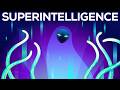
From AGI to Superintelligence: Humanity's Last Invention and AI Future
Explore the journey from narrow AI to artificial general intelligence (AGI) and potential superintelligence. This video examines how AI evolution mirrors biological intelligence, the risks and promises of self-improving machines, and why AGI could be humanity's final—and most transformative—invention.

Andrew Ng Debunks AI Fear-Mongering and Reveals Future Skills
AI pioneer Andrew Ng explains why fears of AI job apocalypse are overblown, revealing how the technology actually enhances human value. He discusses the real threat of AI misinformation, the importance of context and taste, and offers actionable advice for students and professionals to thrive in the AI era.
Ethan Mollick on AI: Practical Wisdom for Human Agency in a Chaotic Future
Wharton professor Ethan Mollick offers a grounded, non-hype perspective on AI, arguing that human taste, experience, and critical thinking are more valuable than ever. He provides actionable advice on using AI effectively, from agentic tools to improving your own workflow, and explains why the technology is neither savior nor destroyer.

The Revolutionary Impact of Claude AI: A Game-Changer for Software Engineering
Explore how Claude AI surpasses GPT-4 and revolutionary features that redefine productivity.

How AI Is Replacing Jobs: Train Your Brain to Survive the Future
A digital nomad warns that AI is rapidly replacing repetitive jobs across industries, from call centers to legal work, and predicts up to 50% of current roles could vanish in 2–3 years. He argues that critical thinking, human judgment, and personal branding are irreplaceable skills—and that studying mathematics is the best way to develop the reasoning ability needed to thrive.
Most viewed summaries

A Comprehensive Guide to Using Stable Diffusion Forge UI
Explore the Stable Diffusion Forge UI, customizable settings, models, and more to enhance your image generation experience.

Kolonyalismo at Imperyalismo: Ang Kasaysayan ng Pagsakop sa Pilipinas
Tuklasin ang kasaysayan ng kolonyalismo at imperyalismo sa Pilipinas sa pamamagitan ni Ferdinand Magellan.

Mastering Inpainting with Stable Diffusion: Fix Mistakes and Enhance Your Images
Learn to fix mistakes and enhance images with Stable Diffusion's inpainting features effectively.

Pamamaraan at Patakarang Kolonyal ng mga Espanyol sa Pilipinas
Tuklasin ang mga pamamaraan at patakaran ng mga Espanyol sa Pilipinas, at ang epekto nito sa mga Pilipino.

How to Install and Configure Forge: A New Stable Diffusion Web UI
Learn to install and configure the new Forge web UI for Stable Diffusion, with tips on models and settings.
Found this summary useful?
Take it with you. One click puts it in your own LunaNotes library.
Save to LunaNotes