Download Subtitles for Jim Rickards Gold Price Analysis Video
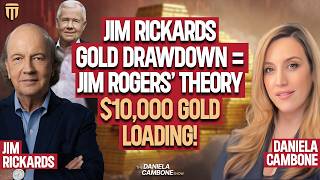
Jim Rickards: Gold Price Action Straight From Jim Rogers’ Theory — Perfect Time Before $10,000
ITM TRADING, INC.
SRT - Most compatible format for video players (VLC, media players, video editors)
VTT - Web Video Text Tracks for HTML5 video and browsers
TXT - Plain text with timestamps for easy reading and editing
Scroll to view all subtitles
All right, welcome back everyone. Today
we're joined by bestselling author and
gold expert Jim Rickards. We're going to
get right to the chase here. Spot gold
down about 5% year to date after surging
to all-time highs over $5,500 earlier
this year. Meanwhile, this week we saw
the latest CPI coming in over 4%
year-over-year. That's the highest in
three years. So, with energy prices
surging and core still sticky, what
comes next? you know, I had to bring Jim
Rickards on to help us answer these
questions that I know you all have. Jim,
thank you uh so much. Busy, busy Friday
here.
>> Yeah. Uh thanks for having me on. Uh
you're right. Uh whether it's the war in
Ukraine, the war in Iran, the gold
market, the stock market, SpaceX, you
name it. Quite a bit. Quite a bit going
on.
>> I know. Well, we're going to get to
SpaceX. People want your thoughts on
that, too. But we need to start with
what's going on in gold. Obviously, my
audience super interested and wants to
know. But look, we're down what over 4%
year to date after we know we hit the
all-time highs at 5,500. So is the
pullback that's happening even as
central banks, you know, say they're
continuing to buy and geopolit
geopolitics remain tense. Is this a
classic shakeout, you think, Jim, or are
we seeing something more structural in
play?
>> I think both things are true. I think it
is a shakeout and there is some
structural there are some structural
things going on which we can talk about
it. So Danielle, you said down 5% years
to date and of course you're right, but
it's down 20% from the high. Now the
high was the high was January 29th. Uh
so there was that January was crazy. We
all, you know, we all enjoyed the ride,
but it was almost going hyperbolic. When
you see that, yeah, I'm all for it. I
own gold and I recommend gold. But you
do take take a beat and say well that's
doesn't I I'm the one who well I'm one
among others who think it's going up a
lot higher and I I continue that
continues to be my view but when I when
you see something like that you know
it's just a little uh a little
hyperbolic there and so um so it's
pulled back but if you if you data it
from the high not the start of the year
it's at this point it's over 20% and and
could be a little bit more that's a
pretty big pretty big draw down so the
so the qu I when I look at things like
that, I don't get too euphoric when it's
going up. I don't get too depressed when
it's going down. What I do, I look at
and I ask myself why. Because if I can
answer that question, I can figure out
what's coming next. So, the one
narrative, which I don't agree with, by
the way, but it's out there, is that,
okay, gold has a spike 5,500. Um, you
know, but that's it. It's the top. It's
all downhill from here. The bull
market's over. It's going lower. Time to
get out. uh you know, etc., etc. Uh
that's one narrative. I don't agree with
that narrative, but I I hear it and I I
understand it. My view of what's going
on. I I think the data supports this. Um
are a couple things. Number one, it's a
commodity. And I talked to I know I've
mentioned on your show before, but it
may have been years ago, I talked to um
Jim Rogers about this. Jim is the
probably the greatest commodities trader
of all time. I don't uh I follow it
closely but no one no one's better than
Jim and um at the time this was some
years ago and gold had hit the previous
high about 1,900 just short of 2000 in
August 2011 by 2015
it was 1050
and but I talked to Jim somewhere in the
middle of that it was kind of gone from
1900 to 1300 to 1200 or whatever and he
said Jim uh I own gold. I'm holding on
to it. I buy more occasionally. Um, but
no commodity, these were his exact
words, no commodity goes to the moon
without a 50% draw down along the way.
He said, if you're if you're in this
market, you need to expect that. Um, and
I made a note of it and then I saw the
bottom at 1050. That was December 2015
was that uh that bottom. And of course,
when you're doing computations like
that, you have to pick a base. Uh, and
that can be arbitrary, but I picked uh
$250 an ounce, which was 1999.
That was an interim low versus, you
know, 800 in 1980. Um, but it had got as
low as $250 an ounce in 1999. Um, and
that's when Gordon Brown, who was
chancellor of the exeers, sold about a
third of the UK's gold at $250 an ounce.
I wish I'd been lined up to buy some,
but uh that's referred to as Brown's
bottom uh because the Gordon Brown
managed to hit the bottom of the market
uh and it took off from there. But if
you use that as your base, so okay, 250
is my base. It gets to 1900. Okay, so
that's um uh that's uh uh
you know basically se 1750
I think uh or 1650 is the change. Okay.
So, 1650. So, 250 plus 1650. There's
your 1900. So, what's half of 1650?
Well, it's 8.25. Well, you take 1900
minus 825 and you're down around 1,100
and the bottom was 1050. In other words,
what happened was exactly what Jim
Rogers predicted. It was down 50%. You
know, round number. And it's been going
up ever since. It's gone up five times
since then. So what we're seeing now is
a um when you get into um uh Mandler
said I mean I don't want to get too too
in the weeds in terms of mathematics and
so forth but um in in complexity theory
in complex dynamic systems and physics
and and Mandelro's understanding of well
it's fractal mathematics basically
fractal mathematics there's something
called scale invariance and scale
invariance means that the same patterns
exist over and over at different scales
they can be bigger, they can be smaller,
but it's the same pattern and it shows
up from a chart. I'm not a uh a
technical analyst. I do look at charts
for information. I don't think they
necessarily have a lot of predictive
value, but they are informative. Um, and
so in my view, what we're seeing is a um
a slightly smaller scale version of what
Jim Rogers talked about. So, you have to
pick a a base. You know, maybe 1,800 is
a good base. I mean, just pick 2,000 for
a round number and 5,000 for a high. The
high is actually higher and the interim
base maybe 1,800. But just say 2,000 to
5,000 for a run, that's um 3,000 points
and $3,000 an ounce. And if you took
half of that uh 1,500. So from 5,000
minus 1500, where would you be? You'd be
around 3500 if there's a 50% draw down.
Now, it was actually higher than that. I
think the bottom is probably closer to
$4,000 an ounce. We'll see. But my point
is, it's not, as long as you can
understand what's going on, it's not a
reason to panic. It's not a reason to
sell all your gold. I think it'll be
foolish. Quite the opposite, if you
don't have any gold or perhaps you want
to increase your allocation, it's a
great buying opportunity. This makes a
really looks like a really good uh a
really good entry point. So, so the
point is like, okay, um, not a lot of
fun. Uh, but if you bought it at, you
know, a,000 or 1300 or 1500, you're
still, you know, well in the money.
Number one. Uh, number two, if you
bought it at 5,000, hang on. It'll come
back. And if you haven't bought it or
haven't bought enough, you have a great
entry point. So, could it tick down to
4,000? Yeah, but I we're we're right
around a bottom in my view. So I would
say, you know, write it out and it'll
come back and it'll come back big. By
the way, the other side of what Jagger
said is that you have to have these 50%
draw downs along the way. He's right.
But when when they happen, you're on the
launch pad. You're now you are ready to
go to the moon. You're ready for the six
seven $8,000 numbers I've talked about
on your way to 10,000. So all the more
reason to hang in there. So that's
that's a um mathematical
volatility and commodity driven
analysis.
>> Uh and that was a fantastic summation
there, Jim. And I want to say I find it
interesting that you you're a great
turning to another great. So even great
turn to great.
>> Oh he's the greatest. So I I'll readily
uh
close friend of ours um here. Yeah. Um I
guess where why
can you talk to us a little bit as to
why you think he picks 50%. Why 50? Why
does it have to or it should?
>> It's pro well first of all experience he
he's had not just gold by the way every
commodity oil weed you know etc. You
know I live through the 70s and oil went
from $4 a barrel
>> to $20 a barrel. Uh that seems quaint by
today's standards, but in real money
that was that was probably uh closer to
uh you know to $100 today. But anyway,
it went from 4 to 20, end of the world,
etc. And then I remember because I was
in the bond market at the time uh in
1986 when interest rates were were still
quite high. Um the Iran Iraq war broke
out. Forget Iran US Iran Iraq. A million
people died in that war. People forget.
And the market was like, "Oh, oil's
going to the moon because uh you know,
they're going to close the straits of
all the things we're looking at now in
the real world." Uh they're going to
blow up the oil wells and close the
trace of her moons and all that. And I
said, and others said,
>> "No, these guys are going to pump oil
like crazy because they need the money."
And oil actually went down to $6 a
barrel from the 20 down to six. So if I
I throw that as an example of uh there's
a commodity down uh you know more than
50% from well you wouldn't use zero as a
base you got to pick your base that's a
little arbitrary but there's a commodity
that's down 50%. So he's seen it happen
a lot. Number one. Number two, there is
this mathematical foundation I talked
about which is fractal mathematics. That
is how commodities market markets work.
He had seen it in other markets. Um but
there's also a behavioral psychological
element. So what happens when the price
of gold is starts to come down? By the
way, Danielle, I want to get back to the
why. We haven't talked about that. This
we're doing the what and the how. We'll
come back to the why, but kind of
getting back to the the what and the
how. So, what happens? So, something
happens. Gold starts to go down. So, um
you know, people people are watching,
okay, it'll find a new floor and then it
goes down some more. So, now you're
you're hitting stop losses, traders, and
now we're talking about leverage
traders, hedge funds basically, and
proprietary trading desks at, you know,
Goldman Sachs or whatever. Their their
bosses are saying, "Hey, if you don't
get out, you're fired." And so, they get
out. Okay, so that's more selling. So it
something started to go down. Now
there's more selling because people got
to close out. They got stop losses.
Okay, guess what? More selling triggers
lower prices, which triggers more
selling because somebody else hit a stop
loss that was even lower than the one
before. So that continues for a while.
Now along come the momentum traders, the
CTAs, commodity trading advisors. They
might not have been involved at all, but
they're like, "Hey, here's a trend. Jump
on board. Sell gold. Sell gold." So
that's all they do. they don't
anticipate things, but when they see
things, they jump on the bandwagon. So,
you you just get a lot of selling that
feeds on itself. So, that's one thing
taking it down. Um, but there's
something more important when we've said
many times on on your show, Danielle,
that um the biggest driver of the price
going up is central bank buying. Yeah.
And and by the way the so let me just
interject a quick uh another footnote
which is um
>> in market gold you have what they call
weak hands and strong hands.
>> Weak hands when it's 5,000 I'm going to
get jump on the bandwagon get some buy
some and then it goes down like oh sell
sell get out they buy high sell low
great way to lose money. Uh but the weak
hands have to get flushed out and that's
happening. What about the strong hands?
The strong hands are central banks
institutions and others. Let's focus on
the central banks. They've been net
buyers since 2010. From 1970 to 2010, 40
years, central banks were net sellers.
Not the same central bank in every case,
but they were net sellers. Beginning in
2010, central banks became net buyers.
Um, led by China and Russia. In 2009,
China and Russia each had 600 metric
tons of gold. Today, Russia has about
2500 metric tons. So, they're four
times. China has 3,000 metric tons. So,
they're five times that they acknowledge
very likely have more when no one knows
how much more, but they could have six
or 7,000 tons. Uh but, uh Kazakhstan,
Turkey, Japan, um Mexico, believe it or
not, Vietnam, um these are all net
buyers of gold. Um so that was one of
the factors driving it up. The other
one, mining output is flat. I'm not
saying it's crashing. It's not. And I'm
not saying peak gold maybe. But, you
know, I'm in the mining. I invest in
mines. I talk to miners all the time.
They say, "Can we find gold?" Yeah, but
it's it's getting harder. It's getting
more expensive. The quality uh the um uh
the the density of the of the gold in
the ore is lower. Uh etc. So,
supply is not crashing, but it's flat.
demand was going up. Well, that means
the price goes up. This is supply and
demand. You'll learn this the first week
of economics. So, that's that is what
had been prevailing um throughout this
most recent run of the last u the last
three or four years. But you can go all
the way back to 2009 with with Russia
and China. What changed? Well, right
now, central banks are selling. There's
still net buyers, but the net buying has
dropped a lot. Russia has sold some
gold. Turkey has sold a lot of gold. Um
it's it's hard to know what China's
doing. They're they're not transparent.
Y but some of the central banks are
selling gold. Why? To buy oil. It's that
simple. When you take oil from 60 to 100
and you need oil, it doesn't matter what
the price is. This is what economists
call inelastic demand. Inelastic demand
means you got to buy it no matter what
the price is. And if you're paying more,
something else has to give. Yeah, they
have to cut some other spending or sell
some ass, do something, but you must buy
the oil or your economy is going to shut
down. So, uh, with inelastic demand for
oil at prices that have increased from
$60 a barrel to $100 a barrel, where's
that money coming from? Well, and by the
way, US dollars, remember, we're we're
still in the petro dollar world. I call
it uh I worked uh with the White House
on petro dollar uh the petro dollar deal
in 1974 but now I'm calling it petrod
dollar 1.0. We're in petro dollar 2.0
but the basic dynamic is the same which
is if oil is priced in dollars and you
need oil then you need dollars. You can
you can hate the dollar all you want.
You can talk about the collapse of the
dollar the the bond vigilantes you know
all this stuff. None of which is true by
the way. Um the dollar has been getting
stronger. Um and by the way, you want a
good measure of go of the strength of
the dollar, look at the dollar price of
gold.
>> Yeah.
>> When gold drops 20% in dollars, the the
reciprocal is the dollar went up like
25%. So So we have a we're in a strong
dollar world, which means not enough
dollars. Um and then again, inelastic
demand for oil. So countries are selling
gold to get dollars to buy oil. If you
want to know when gold is going to turn
around, I would say gold gold will turn
around. When oil turns around, when the
straits of reopened or the war in Iran
is over um and things start flowing
again and the price of oil comes down or
scenario number two, the economy goes
into such a bad recession that the price
of oil goes down not because the straits
of moves are open but because of demand
destruction. People just drive less and
unemployment goes up. you don't need any
gas in your car because you're not going
to work. So, um so that that is in the
cards. One is a kind of good scenario.
The war is over. The other one, the war
is not over, but the economy is shutting
down anyway. Uh and that'll bring the
price of oil back down. So, if you said,
"Okay, Jim, is is this kind of
retracement normal?" The answer is yes.
What's behind it? um net selling by
central banks, weekends, puking the
gold, you know, commodity trading
advisors, trend followers and stop
losses, a whole bunch of dynamics.
That's what's behind it. Um and when
will turn around? The answer is when the
price of oil starts to come down. Uh but
that then that scenario has two
branches. One is the war is over. The
other one is the war's still going on.
But but due to the shortage of oil, the
economy is shutting down. So this will
turn around. It'll turn around, I
expect, in in months, not years, because
uh uh you know, Herb Simon, famous
economist from the 1960s once said uh if
something can't continue, it won't. Uh
and and the p the closure of the
straight off can't continue. It's not
just prices. It's not it's it's talking
about shutting down South Korea, Japan,
and Taiwan, and Australia, New Zealand.
So, it'll break, but it could break in a
good way or a bad way. Either way, then
the price of gold will recover.
>> Excellent. By the way, Jim, and um let
me just bring up this other layer,
interest rates. Um we saw the CPI read
earlier this week, highest in three
years. Does this hotter than expected
inflation make the Fed rate cuts this
year
even less likely? We were all expecting
rate cuts, but does it seem now that the
Fed may hike rates because of this new
read?
>> Good, great question. They they may uh
so rate cuts are off the table, so
forget rate cuts. Uh now, so the
question is, will the Fed continue the
pause, which has been in place since
last December, or will they raise?
That's a close question. We have uh oh,
about a week to go. Um, it's really hard
to tell because, and let me explain. I'm
not trying to, you know, punt the
question. I'm just trying to give a
straight answer. From, uh, December
until the last meeting in April, uh,
there was a debate. Okay, unemployment's
gone up a little bit. Uh, but
inflation's going up, too. The idea that
the reciprocal was nonsense. It used to
be if unemployment is coming down,
inflation's going up, so we fight
inflation. But uh if unemployment is
going up, inflation's coming down. So we
fight unemployment and we pick our
target and we raise or cut rates
accordingly. That's the theory, the
Phillips curve. It's nonsense. It's a
joke. There is no Phillips curve. That's
what they teach you, but throw it out
the window. Throw it in the trash. Uh
it's like that scene in Beautiful Mind
where Russell Crow throws the book in
the garbage can and gives him a real
problem. Uh so throw that in the trash.
Uh what's going on is that unemployment
is going up. I know we had a strong
print, but you know, every reason in the
world to doubt that that is correct
because people don't understand the
extent to which they use models. They
don't go out and count heads or jobs.
The household survey does, ADP does, but
the employment uh employer survey that
is the headline news. They don't count
anything. They use a model and models
work while they work. But if the model
becomes obsolete due to a changed macro
environment, you're just getting bad
numbers. And by the way, that's not
guesswork. go back and look at the last
24 months of employment reports, you'll
find like 22 out of 24 were revised down
down and some like from 200,000 jobs to
zero. So I don't put much stock at the
biggest component was travel and leisure
like excuse me gas is $5 at the pump in
New Hampshire. It's probably $7 in
California. Uh people are cutting back
on driving. There's demand destruction.
uh they're cutting out consumer
discretionary spending. Does anybody
think that bartenders and chambermaids
are like driving the economy? I don't
think so. But the point is, whatever the
case, it seems that unemployment is
going up. Job creation is is flat. I
really don't um don't don't believe
those numbers are y I'm not saying
they're I'm not saying they're they're
frauds. I'm not saying they're lying.
I'm saying that they're using models
that don't sync up with reality. Okay.
Inflation's going up exactly as you
described. So the debate between
unemployment and inflation is over uh
for now. The discussion is purely about
inflation. That's the only thing they
care about. And that would normally mean
a rate hike. But what you have to ask
yourself is okay, given everything we
just said about demand destruction,
price of oil, economy slowing, etc.,
etc., Uh, do I think that the prices are
going to continue to go up, in which
case I better raise rates fast, or do I
think that these high oil prices are
going to bring going to bring everything
back down, starting with interest rates,
that this is all going to come down and
maybe what I should do is either pause
or maybe even cut rates, try to get
ahead of the curve a little bit. Okay,
so what's the history of the Fed?
They're always wrong. They're never
ahead of the curve. They're rarely with
the program. They usually they're the
last to know. I you don't base anything
on what the Fed's saying. They really
bad economists. So, will they raise or
pause? I think it's really close, but I
wouldn't be surprised if they raise
rates. We'll know more by Monday. Uh
because they'll leak it. You know, you
just have nowhere to look. Um but they
may pause. Uh so, here's the problem. J
Pal set a a trap for uh Kevin Worsh. H
>> at the last meeting the vote was uh the
vote to pause which is what they did was
8 to4 you never see four descents that's
rare n you know 9 to three 11 to1
sometimes but 8 to4 is really ugly from
the chairman's point of view but the
four no votes one of them was Steve
Moran who wants to cut rates so okay
that's Stephen he's doing his own thing
but three the other three were not
governors they were regional reserve
bank presidents and they voted No,
because they thought that they thought
the Fed statement was not harkish
enough. I read the Fed Fed statement
twice. It didn't seem uh it didn't seem
doubbish at all to me, but they said too
doubbish. Uh we were kind of saying you
might want to think hard about raising
rates or at least be more hawkish. So So
now Kevin Worse comes in. Now bear in
mind J. Pal's still there. He stepped
down his chair, but he's still on the
board of governors because that's a
different seat. Well, he has a seat on
the board of governors, but it's a
different term. His his term as governor
goes to 19, sorry, 2028.
>> That's awkward.
>> The last time that happened. When was
the last time a Fed chair stepped down
but remained on the board?
>> Good trivia question. Good trivia
question.
>> The answer was 77 years ago. was Marin
was Mariner Eckles in 1944
>> and he remained on the board until 1951
even though
>> William Machznney part Martin had become
the chair. So, think about you're Kevin
Walsh. You walk into the boardroom.
You're the boss. This is his first
meeting. There's J Palmer guys there.
>> There's Jay Pal sitting next to you.
Yep. Looking over your shoulder. And
here's three reserve prank prank
presidents that are like, and by the
way, all Pal wants to do is poke a stick
in Trump's eye
>> because by staying on the board, think
about it. He deprivives Trump of an
appointment because there's no vacancy.
So, he's depriving Trump of an
appointment. He's um trapped Worsh
because do you think Worsh at his first
meeting as chair do you think Worsh
wants an 84 vote or 93 vote? No. He
wants 11 to1 you know this kind you know
put him around on the other side. So
he's going to do what Pal and those
Reserve Bank presidents want and I think
they probably want to raise rates. So I
think it's close. I don't want to put a
stake in the ground but don't be
surprised if they raise rates. Now
that's a stupid thing to do. That that
that's my forecast. It's a big mistake,
but it's the Fed. They always make
mistakes.
>> One more point on gold. And by the way,
I'm I'm so appreciative of everything
you're saying, uh, Jim, because I know
that it's bringing a lot of calm to to
the viewers watching here. Going back to
the 50% drawback that Jim Rogers
outlined. So, let's say
>> we we're getting close to the bottom,
right? Gold,
>> pardon,
>> I think that's right. Yeah.
>> Right. Gold rallies back to 5,500. Let's
say we get 6,000 6,500. Now, for every
leg up, are we going back 50%.
>> No, because these um again back to the
fractal math, these 50% draw downs
happen. They happen on greater or lesser
scales. But once they happen, then the
next shot is is a moonshot. So, so the
answer is no. Daily daily volatility 5%
here. Yeah. But not 50%. We're we're
looking at something close to not not
not 50% from zero but 50% off pick a
base say 1,800 I think would be a
reasonable base for this rally.
>> Do you feel the same thesis applies well
does apply to silver then?
>> Yes. Yeah. Silver silver tags along
silver acts the same way with with two
footnotes. Number one usually with a lag
you know gold will take off before
silver will take off but silver's along
for the ride. Number one, silver is a
little more uh difficult to analyze
because it's a precious metal as a form
of money uh store wealth, but it's also
an industrial input. Gold is not a big
industrial input. Gold's not good for
much except money, which is a pretty big
deal. Silver, you know, it goes in
catalytic converters, it goes
electronics, it goes in satellites, it
goes in everything. So, um so you have
to look at industrial input and that has
to do with the business cycle and a
recession. So, a recession could be a
headwind for silver, but on the whole,
yeah, it's going to go up to over 100
and then keep going.
>> Okay, let me get some thoughts from you
on the SpaceX IPO, Jim. Are you buying
the hype?
>> Um, personally,
uh, well, let me put it this way. I'm
buying the fact that SpaceX is a solid
company with a great business plan
that's going to do extremely well. I
would I feel comfortable saying that.
Okay,
>> the price I just leave it to the market.
I mean, you know, knock yourself out.
I'm not um you know, it is what it is.
It'll it'll find its level. But I would
say two things quickly. Number one is
people say, "What is SpaceX?" Well, it's
a rocket company. They're going to take
people back, astronauts back to the
moon. Um and they're, you know, great
partners with NASA, etc. It is so much
more than that. Elon Musk is putting
data centers into space. So, um, using
SpaceX rockets. Well, what's the big
deal about that? Well, you got unlimited
free power because it's solar power and
it's cold in space. It's freezing cold.
So, you don't need to spend any money or
energy heating or sorry, cooling the
systems down because they're you got to
keep them warm actually. So uh the the
point being um all of the uh constraints
on massive massive data centers in on on
land which are water which are really
water energy chips um you know cooling
systems etc and and local resistance the
citizens are standing up look at the
chips one way the other but the power
input the energy source is a big deal
and the water for cooling is a big deal
that's much more scarce you don't have
that problem in space So, is SpaceX a
rocket company? Yeah. But it might be
the world's biggest data center company
because he's putting a million data
centers into space. Number one. Number
two, getting the astronauts to the moon.
That's a big deal. They're going to
colonize the moon. They're not just
going to go and take a few rocks and
come back. I'm not, you know,
disparaging that. But they're going to
colonize. And then that means military
coloniz. We're the only ones that can do
it. People talk about China catching up
in AI. Russia's ahead in hypersonic
missiles. True. but uh not in space.
We're the only ones who can land on the
moon and and do stuff there. And that's
part of what they're going to do. And
then um uh AI, XAI, which is Musk's AI
company, Starlink, they're all under uh
SpaceX. SpaceX will own Tesla, XAI,
um Starlink, uh and other enterprises.
They'll have all that value. They'll be
cross marketing. Uh, and then there's a
whole bunch of companies that are uh
that are not SpaceX, but they're they're
space adjacent, meaning they're doing
something in satellites or
space technology satellites, etc., and
they could do very well as well. So,
yeah, I'm bullish on the sector. Um, you
know, people always say, you know,
Warren Buffett was the greatest stock
investor of all time. That's not true.
He was okay, but not the greatest. But
what he was a genius at was tax deferred
compounding. if you don't pay taxes and
you don't have big draw downs and you
keep making money, you're going to be a
multi-billionaire without even trying.
And he he figured that out a long time
ago. And he pulled it off with insurance
companies and other I'm the next tax
lawyer, so I know a little bit about
that. Elon Musk's genius was slightly
different. It wasn't Tesla or batteries
or anything else. He figured out the
best business model was the one where
the government is your biggest customer.
Remember, every Tesla had a $7,000
government credit. Not a not a
deduction, a credit. I've lived in all
these zip codes where people drive
Teslas and I always wanted to pull the
Teslas over and get my $7,000 back
because I'm the taxpayer and they're
taking checks from the government. But
Musk understands if the government's
writing checks, you win. So, I uh I am
bullish on them. Yes.
>> Very smart. Jim, uh I thoroughly
appreciate everything you said to us
today. Like I said, you're going to
bring a lot of calm to to folks out
there. Um, you know, final words, uh,
stay a course.
>> Yeah. As on gold. Absolutely. And
probably SpaceX,
>> Jim Records, you're you're you're the
greatest in my in my opinion. Thank you
so much.
>> Thanks.
>> And we'll have much more coming your
way. I I know there's a lot of confusion
out there. So, like Jim Rickard says,
stay the course. And like I say as well,
stay the course and reach out to my
colleagues at ITM Trading who can help
you figure that out. Be sure to schedule
a call with them. It's a free strategy
session and we'll have more great
content coming your way. So, be sure to
stay tuned. We'll see you next week.
Full transcript without timestamps
All right, welcome back everyone. Today we're joined by bestselling author and gold expert Jim Rickards. We're going to get right to the chase here. Spot gold down about 5% year to date after surging to all-time highs over $5,500 earlier this year. Meanwhile, this week we saw the latest CPI coming in over 4% year-over-year. That's the highest in three years. So, with energy prices surging and core still sticky, what comes next? you know, I had to bring Jim Rickards on to help us answer these questions that I know you all have. Jim, thank you uh so much. Busy, busy Friday here. >> Yeah. Uh thanks for having me on. Uh you're right. Uh whether it's the war in Ukraine, the war in Iran, the gold market, the stock market, SpaceX, you name it. Quite a bit. Quite a bit going on. >> I know. Well, we're going to get to SpaceX. People want your thoughts on that, too. But we need to start with what's going on in gold. Obviously, my audience super interested and wants to know. But look, we're down what over 4% year to date after we know we hit the all-time highs at 5,500. So is the pullback that's happening even as central banks, you know, say they're continuing to buy and geopolit geopolitics remain tense. Is this a classic shakeout, you think, Jim, or are we seeing something more structural in play? >> I think both things are true. I think it is a shakeout and there is some structural there are some structural things going on which we can talk about it. So Danielle, you said down 5% years to date and of course you're right, but it's down 20% from the high. Now the high was the high was January 29th. Uh so there was that January was crazy. We all, you know, we all enjoyed the ride, but it was almost going hyperbolic. When you see that, yeah, I'm all for it. I own gold and I recommend gold. But you do take take a beat and say well that's doesn't I I'm the one who well I'm one among others who think it's going up a lot higher and I I continue that continues to be my view but when I when you see something like that you know it's just a little uh a little hyperbolic there and so um so it's pulled back but if you if you data it from the high not the start of the year it's at this point it's over 20% and and could be a little bit more that's a pretty big pretty big draw down so the so the qu I when I look at things like that, I don't get too euphoric when it's going up. I don't get too depressed when it's going down. What I do, I look at and I ask myself why. Because if I can answer that question, I can figure out what's coming next. So, the one narrative, which I don't agree with, by the way, but it's out there, is that, okay, gold has a spike 5,500. Um, you know, but that's it. It's the top. It's all downhill from here. The bull market's over. It's going lower. Time to get out. uh you know, etc., etc. Uh that's one narrative. I don't agree with that narrative, but I I hear it and I I understand it. My view of what's going on. I I think the data supports this. Um are a couple things. Number one, it's a commodity. And I talked to I know I've mentioned on your show before, but it may have been years ago, I talked to um Jim Rogers about this. Jim is the probably the greatest commodities trader of all time. I don't uh I follow it closely but no one no one's better than Jim and um at the time this was some years ago and gold had hit the previous high about 1,900 just short of 2000 in August 2011 by 2015 it was 1050 and but I talked to Jim somewhere in the middle of that it was kind of gone from 1900 to 1300 to 1200 or whatever and he said Jim uh I own gold. I'm holding on to it. I buy more occasionally. Um, but no commodity, these were his exact words, no commodity goes to the moon without a 50% draw down along the way. He said, if you're if you're in this market, you need to expect that. Um, and I made a note of it and then I saw the bottom at 1050. That was December 2015 was that uh that bottom. And of course, when you're doing computations like that, you have to pick a base. Uh, and that can be arbitrary, but I picked uh $250 an ounce, which was 1999. That was an interim low versus, you know, 800 in 1980. Um, but it had got as low as $250 an ounce in 1999. Um, and that's when Gordon Brown, who was chancellor of the exeers, sold about a third of the UK's gold at $250 an ounce. I wish I'd been lined up to buy some, but uh that's referred to as Brown's bottom uh because the Gordon Brown managed to hit the bottom of the market uh and it took off from there. But if you use that as your base, so okay, 250 is my base. It gets to 1900. Okay, so that's um uh that's uh uh you know basically se 1750 I think uh or 1650 is the change. Okay. So, 1650. So, 250 plus 1650. There's your 1900. So, what's half of 1650? Well, it's 8.25. Well, you take 1900 minus 825 and you're down around 1,100 and the bottom was 1050. In other words, what happened was exactly what Jim Rogers predicted. It was down 50%. You know, round number. And it's been going up ever since. It's gone up five times since then. So what we're seeing now is a um when you get into um uh Mandler said I mean I don't want to get too too in the weeds in terms of mathematics and so forth but um in in complexity theory in complex dynamic systems and physics and and Mandelro's understanding of well it's fractal mathematics basically fractal mathematics there's something called scale invariance and scale invariance means that the same patterns exist over and over at different scales they can be bigger, they can be smaller, but it's the same pattern and it shows up from a chart. I'm not a uh a technical analyst. I do look at charts for information. I don't think they necessarily have a lot of predictive value, but they are informative. Um, and so in my view, what we're seeing is a um a slightly smaller scale version of what Jim Rogers talked about. So, you have to pick a a base. You know, maybe 1,800 is a good base. I mean, just pick 2,000 for a round number and 5,000 for a high. The high is actually higher and the interim base maybe 1,800. But just say 2,000 to 5,000 for a run, that's um 3,000 points and $3,000 an ounce. And if you took half of that uh 1,500. So from 5,000 minus 1500, where would you be? You'd be around 3500 if there's a 50% draw down. Now, it was actually higher than that. I think the bottom is probably closer to $4,000 an ounce. We'll see. But my point is, it's not, as long as you can understand what's going on, it's not a reason to panic. It's not a reason to sell all your gold. I think it'll be foolish. Quite the opposite, if you don't have any gold or perhaps you want to increase your allocation, it's a great buying opportunity. This makes a really looks like a really good uh a really good entry point. So, so the point is like, okay, um, not a lot of fun. Uh, but if you bought it at, you know, a,000 or 1300 or 1500, you're still, you know, well in the money. Number one. Uh, number two, if you bought it at 5,000, hang on. It'll come back. And if you haven't bought it or haven't bought enough, you have a great entry point. So, could it tick down to 4,000? Yeah, but I we're we're right around a bottom in my view. So I would say, you know, write it out and it'll come back and it'll come back big. By the way, the other side of what Jagger said is that you have to have these 50% draw downs along the way. He's right. But when when they happen, you're on the launch pad. You're now you are ready to go to the moon. You're ready for the six seven $8,000 numbers I've talked about on your way to 10,000. So all the more reason to hang in there. So that's that's a um mathematical volatility and commodity driven analysis. >> Uh and that was a fantastic summation there, Jim. And I want to say I find it interesting that you you're a great turning to another great. So even great turn to great. >> Oh he's the greatest. So I I'll readily uh close friend of ours um here. Yeah. Um I guess where why can you talk to us a little bit as to why you think he picks 50%. Why 50? Why does it have to or it should? >> It's pro well first of all experience he he's had not just gold by the way every commodity oil weed you know etc. You know I live through the 70s and oil went from $4 a barrel >> to $20 a barrel. Uh that seems quaint by today's standards, but in real money that was that was probably uh closer to uh you know to $100 today. But anyway, it went from 4 to 20, end of the world, etc. And then I remember because I was in the bond market at the time uh in 1986 when interest rates were were still quite high. Um the Iran Iraq war broke out. Forget Iran US Iran Iraq. A million people died in that war. People forget. And the market was like, "Oh, oil's going to the moon because uh you know, they're going to close the straits of all the things we're looking at now in the real world." Uh they're going to blow up the oil wells and close the trace of her moons and all that. And I said, and others said, >> "No, these guys are going to pump oil like crazy because they need the money." And oil actually went down to $6 a barrel from the 20 down to six. So if I I throw that as an example of uh there's a commodity down uh you know more than 50% from well you wouldn't use zero as a base you got to pick your base that's a little arbitrary but there's a commodity that's down 50%. So he's seen it happen a lot. Number one. Number two, there is this mathematical foundation I talked about which is fractal mathematics. That is how commodities market markets work. He had seen it in other markets. Um but there's also a behavioral psychological element. So what happens when the price of gold is starts to come down? By the way, Danielle, I want to get back to the why. We haven't talked about that. This we're doing the what and the how. We'll come back to the why, but kind of getting back to the the what and the how. So, what happens? So, something happens. Gold starts to go down. So, um you know, people people are watching, okay, it'll find a new floor and then it goes down some more. So, now you're you're hitting stop losses, traders, and now we're talking about leverage traders, hedge funds basically, and proprietary trading desks at, you know, Goldman Sachs or whatever. Their their bosses are saying, "Hey, if you don't get out, you're fired." And so, they get out. Okay, so that's more selling. So it something started to go down. Now there's more selling because people got to close out. They got stop losses. Okay, guess what? More selling triggers lower prices, which triggers more selling because somebody else hit a stop loss that was even lower than the one before. So that continues for a while. Now along come the momentum traders, the CTAs, commodity trading advisors. They might not have been involved at all, but they're like, "Hey, here's a trend. Jump on board. Sell gold. Sell gold." So that's all they do. they don't anticipate things, but when they see things, they jump on the bandwagon. So, you you just get a lot of selling that feeds on itself. So, that's one thing taking it down. Um, but there's something more important when we've said many times on on your show, Danielle, that um the biggest driver of the price going up is central bank buying. Yeah. And and by the way the so let me just interject a quick uh another footnote which is um >> in market gold you have what they call weak hands and strong hands. >> Weak hands when it's 5,000 I'm going to get jump on the bandwagon get some buy some and then it goes down like oh sell sell get out they buy high sell low great way to lose money. Uh but the weak hands have to get flushed out and that's happening. What about the strong hands? The strong hands are central banks institutions and others. Let's focus on the central banks. They've been net buyers since 2010. From 1970 to 2010, 40 years, central banks were net sellers. Not the same central bank in every case, but they were net sellers. Beginning in 2010, central banks became net buyers. Um, led by China and Russia. In 2009, China and Russia each had 600 metric tons of gold. Today, Russia has about 2500 metric tons. So, they're four times. China has 3,000 metric tons. So, they're five times that they acknowledge very likely have more when no one knows how much more, but they could have six or 7,000 tons. Uh but, uh Kazakhstan, Turkey, Japan, um Mexico, believe it or not, Vietnam, um these are all net buyers of gold. Um so that was one of the factors driving it up. The other one, mining output is flat. I'm not saying it's crashing. It's not. And I'm not saying peak gold maybe. But, you know, I'm in the mining. I invest in mines. I talk to miners all the time. They say, "Can we find gold?" Yeah, but it's it's getting harder. It's getting more expensive. The quality uh the um uh the the density of the of the gold in the ore is lower. Uh etc. So, supply is not crashing, but it's flat. demand was going up. Well, that means the price goes up. This is supply and demand. You'll learn this the first week of economics. So, that's that is what had been prevailing um throughout this most recent run of the last u the last three or four years. But you can go all the way back to 2009 with with Russia and China. What changed? Well, right now, central banks are selling. There's still net buyers, but the net buying has dropped a lot. Russia has sold some gold. Turkey has sold a lot of gold. Um it's it's hard to know what China's doing. They're they're not transparent. Y but some of the central banks are selling gold. Why? To buy oil. It's that simple. When you take oil from 60 to 100 and you need oil, it doesn't matter what the price is. This is what economists call inelastic demand. Inelastic demand means you got to buy it no matter what the price is. And if you're paying more, something else has to give. Yeah, they have to cut some other spending or sell some ass, do something, but you must buy the oil or your economy is going to shut down. So, uh, with inelastic demand for oil at prices that have increased from $60 a barrel to $100 a barrel, where's that money coming from? Well, and by the way, US dollars, remember, we're we're still in the petro dollar world. I call it uh I worked uh with the White House on petro dollar uh the petro dollar deal in 1974 but now I'm calling it petrod dollar 1.0. We're in petro dollar 2.0 but the basic dynamic is the same which is if oil is priced in dollars and you need oil then you need dollars. You can you can hate the dollar all you want. You can talk about the collapse of the dollar the the bond vigilantes you know all this stuff. None of which is true by the way. Um the dollar has been getting stronger. Um and by the way, you want a good measure of go of the strength of the dollar, look at the dollar price of gold. >> Yeah. >> When gold drops 20% in dollars, the the reciprocal is the dollar went up like 25%. So So we have a we're in a strong dollar world, which means not enough dollars. Um and then again, inelastic demand for oil. So countries are selling gold to get dollars to buy oil. If you want to know when gold is going to turn around, I would say gold gold will turn around. When oil turns around, when the straits of reopened or the war in Iran is over um and things start flowing again and the price of oil comes down or scenario number two, the economy goes into such a bad recession that the price of oil goes down not because the straits of moves are open but because of demand destruction. People just drive less and unemployment goes up. you don't need any gas in your car because you're not going to work. So, um so that that is in the cards. One is a kind of good scenario. The war is over. The other one, the war is not over, but the economy is shutting down anyway. Uh and that'll bring the price of oil back down. So, if you said, "Okay, Jim, is is this kind of retracement normal?" The answer is yes. What's behind it? um net selling by central banks, weekends, puking the gold, you know, commodity trading advisors, trend followers and stop losses, a whole bunch of dynamics. That's what's behind it. Um and when will turn around? The answer is when the price of oil starts to come down. Uh but that then that scenario has two branches. One is the war is over. The other one is the war's still going on. But but due to the shortage of oil, the economy is shutting down. So this will turn around. It'll turn around, I expect, in in months, not years, because uh uh you know, Herb Simon, famous economist from the 1960s once said uh if something can't continue, it won't. Uh and and the p the closure of the straight off can't continue. It's not just prices. It's not it's it's talking about shutting down South Korea, Japan, and Taiwan, and Australia, New Zealand. So, it'll break, but it could break in a good way or a bad way. Either way, then the price of gold will recover. >> Excellent. By the way, Jim, and um let me just bring up this other layer, interest rates. Um we saw the CPI read earlier this week, highest in three years. Does this hotter than expected inflation make the Fed rate cuts this year even less likely? We were all expecting rate cuts, but does it seem now that the Fed may hike rates because of this new read? >> Good, great question. They they may uh so rate cuts are off the table, so forget rate cuts. Uh now, so the question is, will the Fed continue the pause, which has been in place since last December, or will they raise? That's a close question. We have uh oh, about a week to go. Um, it's really hard to tell because, and let me explain. I'm not trying to, you know, punt the question. I'm just trying to give a straight answer. From, uh, December until the last meeting in April, uh, there was a debate. Okay, unemployment's gone up a little bit. Uh, but inflation's going up, too. The idea that the reciprocal was nonsense. It used to be if unemployment is coming down, inflation's going up, so we fight inflation. But uh if unemployment is going up, inflation's coming down. So we fight unemployment and we pick our target and we raise or cut rates accordingly. That's the theory, the Phillips curve. It's nonsense. It's a joke. There is no Phillips curve. That's what they teach you, but throw it out the window. Throw it in the trash. Uh it's like that scene in Beautiful Mind where Russell Crow throws the book in the garbage can and gives him a real problem. Uh so throw that in the trash. Uh what's going on is that unemployment is going up. I know we had a strong print, but you know, every reason in the world to doubt that that is correct because people don't understand the extent to which they use models. They don't go out and count heads or jobs. The household survey does, ADP does, but the employment uh employer survey that is the headline news. They don't count anything. They use a model and models work while they work. But if the model becomes obsolete due to a changed macro environment, you're just getting bad numbers. And by the way, that's not guesswork. go back and look at the last 24 months of employment reports, you'll find like 22 out of 24 were revised down down and some like from 200,000 jobs to zero. So I don't put much stock at the biggest component was travel and leisure like excuse me gas is $5 at the pump in New Hampshire. It's probably $7 in California. Uh people are cutting back on driving. There's demand destruction. uh they're cutting out consumer discretionary spending. Does anybody think that bartenders and chambermaids are like driving the economy? I don't think so. But the point is, whatever the case, it seems that unemployment is going up. Job creation is is flat. I really don't um don't don't believe those numbers are y I'm not saying they're I'm not saying they're they're frauds. I'm not saying they're lying. I'm saying that they're using models that don't sync up with reality. Okay. Inflation's going up exactly as you described. So the debate between unemployment and inflation is over uh for now. The discussion is purely about inflation. That's the only thing they care about. And that would normally mean a rate hike. But what you have to ask yourself is okay, given everything we just said about demand destruction, price of oil, economy slowing, etc., etc., Uh, do I think that the prices are going to continue to go up, in which case I better raise rates fast, or do I think that these high oil prices are going to bring going to bring everything back down, starting with interest rates, that this is all going to come down and maybe what I should do is either pause or maybe even cut rates, try to get ahead of the curve a little bit. Okay, so what's the history of the Fed? They're always wrong. They're never ahead of the curve. They're rarely with the program. They usually they're the last to know. I you don't base anything on what the Fed's saying. They really bad economists. So, will they raise or pause? I think it's really close, but I wouldn't be surprised if they raise rates. We'll know more by Monday. Uh because they'll leak it. You know, you just have nowhere to look. Um but they may pause. Uh so, here's the problem. J Pal set a a trap for uh Kevin Worsh. H >> at the last meeting the vote was uh the vote to pause which is what they did was 8 to4 you never see four descents that's rare n you know 9 to three 11 to1 sometimes but 8 to4 is really ugly from the chairman's point of view but the four no votes one of them was Steve Moran who wants to cut rates so okay that's Stephen he's doing his own thing but three the other three were not governors they were regional reserve bank presidents and they voted No, because they thought that they thought the Fed statement was not harkish enough. I read the Fed Fed statement twice. It didn't seem uh it didn't seem doubbish at all to me, but they said too doubbish. Uh we were kind of saying you might want to think hard about raising rates or at least be more hawkish. So So now Kevin Worse comes in. Now bear in mind J. Pal's still there. He stepped down his chair, but he's still on the board of governors because that's a different seat. Well, he has a seat on the board of governors, but it's a different term. His his term as governor goes to 19, sorry, 2028. >> That's awkward. >> The last time that happened. When was the last time a Fed chair stepped down but remained on the board? >> Good trivia question. Good trivia question. >> The answer was 77 years ago. was Marin was Mariner Eckles in 1944 >> and he remained on the board until 1951 even though >> William Machznney part Martin had become the chair. So, think about you're Kevin Walsh. You walk into the boardroom. You're the boss. This is his first meeting. There's J Palmer guys there. >> There's Jay Pal sitting next to you. Yep. Looking over your shoulder. And here's three reserve prank prank presidents that are like, and by the way, all Pal wants to do is poke a stick in Trump's eye >> because by staying on the board, think about it. He deprivives Trump of an appointment because there's no vacancy. So, he's depriving Trump of an appointment. He's um trapped Worsh because do you think Worsh at his first meeting as chair do you think Worsh wants an 84 vote or 93 vote? No. He wants 11 to1 you know this kind you know put him around on the other side. So he's going to do what Pal and those Reserve Bank presidents want and I think they probably want to raise rates. So I think it's close. I don't want to put a stake in the ground but don't be surprised if they raise rates. Now that's a stupid thing to do. That that that's my forecast. It's a big mistake, but it's the Fed. They always make mistakes. >> One more point on gold. And by the way, I'm I'm so appreciative of everything you're saying, uh, Jim, because I know that it's bringing a lot of calm to to the viewers watching here. Going back to the 50% drawback that Jim Rogers outlined. So, let's say >> we we're getting close to the bottom, right? Gold, >> pardon, >> I think that's right. Yeah. >> Right. Gold rallies back to 5,500. Let's say we get 6,000 6,500. Now, for every leg up, are we going back 50%. >> No, because these um again back to the fractal math, these 50% draw downs happen. They happen on greater or lesser scales. But once they happen, then the next shot is is a moonshot. So, so the answer is no. Daily daily volatility 5% here. Yeah. But not 50%. We're we're looking at something close to not not not 50% from zero but 50% off pick a base say 1,800 I think would be a reasonable base for this rally. >> Do you feel the same thesis applies well does apply to silver then? >> Yes. Yeah. Silver silver tags along silver acts the same way with with two footnotes. Number one usually with a lag you know gold will take off before silver will take off but silver's along for the ride. Number one, silver is a little more uh difficult to analyze because it's a precious metal as a form of money uh store wealth, but it's also an industrial input. Gold is not a big industrial input. Gold's not good for much except money, which is a pretty big deal. Silver, you know, it goes in catalytic converters, it goes electronics, it goes in satellites, it goes in everything. So, um so you have to look at industrial input and that has to do with the business cycle and a recession. So, a recession could be a headwind for silver, but on the whole, yeah, it's going to go up to over 100 and then keep going. >> Okay, let me get some thoughts from you on the SpaceX IPO, Jim. Are you buying the hype? >> Um, personally, uh, well, let me put it this way. I'm buying the fact that SpaceX is a solid company with a great business plan that's going to do extremely well. I would I feel comfortable saying that. Okay, >> the price I just leave it to the market. I mean, you know, knock yourself out. I'm not um you know, it is what it is. It'll it'll find its level. But I would say two things quickly. Number one is people say, "What is SpaceX?" Well, it's a rocket company. They're going to take people back, astronauts back to the moon. Um and they're, you know, great partners with NASA, etc. It is so much more than that. Elon Musk is putting data centers into space. So, um, using SpaceX rockets. Well, what's the big deal about that? Well, you got unlimited free power because it's solar power and it's cold in space. It's freezing cold. So, you don't need to spend any money or energy heating or sorry, cooling the systems down because they're you got to keep them warm actually. So uh the the point being um all of the uh constraints on massive massive data centers in on on land which are water which are really water energy chips um you know cooling systems etc and and local resistance the citizens are standing up look at the chips one way the other but the power input the energy source is a big deal and the water for cooling is a big deal that's much more scarce you don't have that problem in space So, is SpaceX a rocket company? Yeah. But it might be the world's biggest data center company because he's putting a million data centers into space. Number one. Number two, getting the astronauts to the moon. That's a big deal. They're going to colonize the moon. They're not just going to go and take a few rocks and come back. I'm not, you know, disparaging that. But they're going to colonize. And then that means military coloniz. We're the only ones that can do it. People talk about China catching up in AI. Russia's ahead in hypersonic missiles. True. but uh not in space. We're the only ones who can land on the moon and and do stuff there. And that's part of what they're going to do. And then um uh AI, XAI, which is Musk's AI company, Starlink, they're all under uh SpaceX. SpaceX will own Tesla, XAI, um Starlink, uh and other enterprises. They'll have all that value. They'll be cross marketing. Uh, and then there's a whole bunch of companies that are uh that are not SpaceX, but they're they're space adjacent, meaning they're doing something in satellites or space technology satellites, etc., and they could do very well as well. So, yeah, I'm bullish on the sector. Um, you know, people always say, you know, Warren Buffett was the greatest stock investor of all time. That's not true. He was okay, but not the greatest. But what he was a genius at was tax deferred compounding. if you don't pay taxes and you don't have big draw downs and you keep making money, you're going to be a multi-billionaire without even trying. And he he figured that out a long time ago. And he pulled it off with insurance companies and other I'm the next tax lawyer, so I know a little bit about that. Elon Musk's genius was slightly different. It wasn't Tesla or batteries or anything else. He figured out the best business model was the one where the government is your biggest customer. Remember, every Tesla had a $7,000 government credit. Not a not a deduction, a credit. I've lived in all these zip codes where people drive Teslas and I always wanted to pull the Teslas over and get my $7,000 back because I'm the taxpayer and they're taking checks from the government. But Musk understands if the government's writing checks, you win. So, I uh I am bullish on them. Yes. >> Very smart. Jim, uh I thoroughly appreciate everything you said to us today. Like I said, you're going to bring a lot of calm to to folks out there. Um, you know, final words, uh, stay a course. >> Yeah. As on gold. Absolutely. And probably SpaceX, >> Jim Records, you're you're you're the greatest in my in my opinion. Thank you so much. >> Thanks. >> And we'll have much more coming your way. I I know there's a lot of confusion out there. So, like Jim Rickard says, stay the course. And like I say as well, stay the course and reach out to my colleagues at ITM Trading who can help you figure that out. Be sure to schedule a call with them. It's a free strategy session and we'll have more great content coming your way. So, be sure to stay tuned. We'll see you next week.
Keep this transcript
Save it to LunaNotes and it becomes a real note in your library — editable, searchable, and ready to turn into flashcards or a diagram. Free to start.
Save to LunaNotesOr download subtitles for another video.
These subtitles were extracted using the Free YouTube subtitle downloader by LunaNotes.
Related videos
Download Subtitles for Central Banks Buying Gold Video
Access accurate subtitles for the video on central banks' secret gold purchases. Downloading these captions helps you follow complex financial insights clearly and stay informed on what’s coming next in the gold market.

Ashwin Raghavan Gold Trading Subtitles Download
Download subtitles for the insightful video on how Ashwin Raghavan made 13 crores through gold trend following. Enhance your understanding and trading skills by reading precise captions while watching the video.

Download Subtitles for Stock Market Surge Insights Video
Access accurate subtitles for the video discussing major stock price surges and the best timing to sell. Downloading these captions helps you fully understand the expert secret indicators shared for profitable trading strategies.
Download Subtitles for 'After Years of Investing' Video 2026
Get accurate and easy-to-follow subtitles for the video 'After Years of Investing, This Is All I’m Buying in 2026.' Enhance your understanding of investment strategies discussed and never miss key insights by downloading captions.

Download Subtitles for Cheating Gold Digger | Financial Audit Video
Access accurate subtitles for the 'Cheating Gold Digger Is Destroying His Life' video to enhance your understanding and follow every detail of the financial audit story. Downloading subtitles ensures better comprehension and allows you to watch the video in various environments without missing key points.
Most viewed

Untertitel für 'Nicos Weg' Deutsch lernen A1 Film herunterladen
Laden Sie die Untertitel für den gesamten Film 'Nicos Weg' herunter, um Ihr Deutschlernen auf A1 Niveau zu unterstützen. Untertitel helfen Ihnen, Wortschatz und Aussprache besser zu verstehen und verbessern das Hörverständnis effektiv.

ดาวน์โหลดซับไตเติ้ล DMD LAND 3 The Final Land Day 1
ดาวน์โหลดซับไตเติ้ลสำหรับวิดีโอ DMD LAND 3 The Final Land Day 1 เพื่อช่วยให้เข้าใจเนื้อหาได้ง่ายขึ้น และเพิ่มความสะดวกในการติดตามทุกช่วงเวลา เหมาะสำหรับผู้ชมที่ต้องการความชัดเจนและเข้าถึงข้อมูลอย่างครบถ้วน

Subtítulos para TIPOS DE APEGO | 6 DE COPAS Episodio 56
Descarga los subtítulos para el episodio 56 de la tercera temporada de 6 DE COPAS, centrado en los tipos de apego. Mejora tu comprensión y disfruta del contenido en detalle con nuestros subtítulos precisos y accesibles.

Download Subtitles for Harvard CS50 2026 Computer Science Course
Enhance your learning experience with downloadable subtitles for the Harvard CS50 2026 full computer science course. Easily follow along with lectures, improve comprehension, and access the content offline anytime. Perfect for students and enthusiasts aiming to master computer science concepts.

Descarga Subtítulos para NARCISISMO | 6 DE COPAS - Episodio 63
Accede fácilmente a los subtítulos del episodio 63 de '6 DE COPAS', centrado en el narcisismo. Descargar estos subtítulos te ayudará a entender mejor el contenido y mejorar la experiencia de visualización.
Found this transcript useful?
Take it with you. One click puts it in your own LunaNotes library.
Save to LunaNotes