Download Subtitles for 'How Transistors Run Code' Video
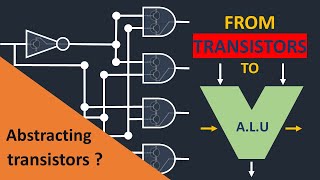
HOW TRANSISTORS RUN CODE?
Core Dumped
SRT - Most compatible format for video players (VLC, media players, video editors)
VTT - Web Video Text Tracks for HTML5 video and browsers
TXT - Plain text with timestamps for easy reading and editing
Scroll to view all subtitles
this video is sponsored by brilliant
transistors are very simple components
they are basically electronic switches
when we apply current to one of its
terminals a transistor lets electricity
pass through but how can this simple
Behavior make computers
possible in today's video we are going
to learn how transistors can be used to
achieve more complex
tasks like doing math and even
interpreting
instructions hi friends my name is
George and this is core dumped before we
begin just a reminder that you can find
me on social media and our Discord
server where I'm available to answer
your questions and by the way I keep
getting requests to use my own voice
instead of using text to speech the
reason I don't record myself is because
I grew up in South America and I'm not a
native English speaker so I hope you
like modern family cuz once I start
recording myself that's what it will
sound
like Anyway let's start a single
transistor typically has three terminals
a collector an emitter and a base in a
circuit it can act as an insulator
preventing electricity from flowing
between the collector and emitter
terminals but if we apply a small
current to the base terminal it acts as
a conductor allowing electricity to
flow essentially a transistor can be
seen as a switch but instead of
mechanical movement it operates by using
electrical
signals in this example circuit we are
using a transistor to turn on and off an
LED by utilizing the base terminal as an
input and the emitter terminal as an
output signal we can mimic the input
signal with a switch and visually
represent the output signal with the
LED let's dub this a simple gate in a
simple gate when the input is zero the
output is zero when the input is one the
output is
one now let's tweak things a bit here
when the input is zero the LED is on due
to the way it is arranged within the
circuit but pay attention to this
setting the input to one causes the LED
to turn off indicating to us the output
is a zero this setup is commonly
referred to as an inverter or a not
gate this may seem a bit confusing this
video I found on Twitter is a perfect
example of this
effect and if you want more details you
can watch this video by Ben eer where he
explains all this using real
components we're not limited to just one
transistor by using multiple transistors
we can achieve more complex Behavior if
two transistors are connected in series
when both inputs are zero the output
will be zero because both transistors
act as insulators similarly if either
input is zero the output will be zero
the only way to obtain a one in the
output is by having both transistors act
as conductors which happens when both
inputs are set to one
this is where we begin to apply a
powerful concept called abstraction
instead of focusing on the individual
transistors in the circuit we can
abstract this into a white box a box
that consistently outputs a specific
value based on two given
inputs this is known as an and gate an
and gate outputs a value of one if and
only if both inputs are one otherwise
the output will be
zero if we connect the transistors in
parallel when both transistors act as
insulators electricity cannot
flow but in this setup having any
transistor acting as conductor is enough
to allow electricity to
flow so in this arrangement to get an
output of one is not strictly necessary
to set both inputs to
one once more we can abstract this
circuit into a box known as an or gate
an or gate outputs a value of zero if
and only if both inputs are zero
otherwise it outputs a value of
one these circuits known as logic gates
are so fundamental that instead of
representing them with boxes each one is
assigned a dedicated
symbol notice that since inputs and
outputs are electrical signals we can
connect the output of one logic gate to
the input of another this allows us to
combine logic gates to achieve even more
complex
behavior for example if we desire this
particular Behavior we can combine logic
G Gates accordingly to achieve
it this is where we begin to see the
power of abstractions while this setup
is ultimately composed of transistors
it's much simpler to understand what's
happening by thinking in terms of logic
gates this circuit is known as an xor
gate and it is also very important in
computer science so it has its own
symbol and now that we understand what
logic gates are let's use them to create
more use ful things let's start with
adders adding binary numbers is actually
quite simple in fact binary addition
works just like decimal addition 0 + 0 =
0 0 + 1 = 1 1 + 0 = 1 and 1 + 1 = two
however the value two cannot be
represented with a single binary digit
when this occurs we say the addition has
overflowed meaning we require an
additional bit to represent the value so
what we're aiming for is a circuit that
takes two input values and produces two
outputs the sum and the
carry let's break down the
sum but before a quick message from
brilliant your learning process doesn't
have to be synonymous with mindlessly
scrolling through a
PDF brilliant is designed to offer small
lessons that you can engage with
whenever you find the time making
learning a little each day both
enjoyable and convenient one of the best
brilliant features is the interactive
nature of their lessons which encourage
critical thinking skills skills through
problem solving activities for those
aiming to enhance their problem solving
abilities brilliant is an ideal platform
it's latest course thinking in code lays
down the foundational principles of
coding enabling you to adopt the mindset
of a programmer and you can pick more
advanced topics such as Python
Programming and the mechanics of large
language models all while engaging with
small and fun interactive lessons you
can get for free 30 days of brilliant
premium and a lifetime 20% discount when
subscribing by accessing brilliant.org
dumped or by using the link in the
description below and now back to the
video let's break down the sum we
require a circuit that outputs zero when
both inputs are the same and one when
they differ does this sound familiar
it's precisely what an exor gate
accomplishes so we've already solved
half of the puzzle for the carry output
we need a circuit that outputs the value
one only when both inputs are
one this matches the behavior of and
gate and there we have it we've crafted
a circuit capable of adding two singled
digigit binary
numbers okay but what about multi-digit
binary
addition well let's try since we have to
add numbers in each row using one Adder
for each row seems logical it works well
for the first row but when we move to
the second row there's an
issue we need to consider that the
previous row might have created a carry
but because the adder circuit only
accepts two inputs it doesn't account
for this carry because of this
limitation this circuit is known as a
half adder and it is not useful in this
scenario what we need is a full adder a
circuit that can handle not only the two
bits being added but also take into
account the carry from a previous
addition here's the circuit we're
working towards think of it as a circuit
capable of adding three singled digigit
binary
numbers to simplify matters we can
encapsulate this in a box which we'll
call a full
adder with full adders we can now add
multi-digit binary
numbers the carry output of each full
adder feeds directly into the carry
input of the next full adder as shown
here in this
animation to add binary numbers of n
digits in one go n full adders are
needed for example if we aim to add two
8 bit numbers we'll need eight full
adders remember that values are
represent Ed here using electrical
signals since electricity moves at
incredible speed once we alter the input
the output changes almost instantly and
this is what makes transistors ideal for
this job while logic gates can be
crafted from other components like
relays and even fancy 3D printed Parts
powered by weird stuff like marbles or
even water none of this matches the
speed and compactness of
transistors before Things become overly
complex we can one more time package all
of this functionality into a special
component known as an 8bit
Adder an 8bit Adder takes two 8-bit
numbers as input and produces the sum of
the inputs as another 8bit number it
also provides an overflow signal which
is essentially the carry out output of
the last full adder inside this overflow
signal is crucial because it informs us
whether the storage capacity being
utilized is adequate to represent the
result of the
operation in this example both inputs
are one bite long but if we attempt to
store the output in just one bite we
will miss information resulting in an
incorrect
value by monitoring the Overflow output
we can recognize the need for an extra
bite to accurately store the
output believe it or not neglecting to
manage operation overflows can lead to
undefined Behavior sometimes with severe
consequences like this rocket accident
in
1996 and we can continue to move to
higher levels of abstraction if we want
to make a circuit that increments an
input value we can simply use an adder
and set the second input to always be
one we've only talked about adders in
detail but in the end it's all about
logic gates with them we can make more
useful things like a full subtractor
that then can be used to build an 8 bit
subtractor and from there we could keep
going and make even more complicated
stuff as you may have guessed inside the
CPU there's a special component that
houses all these circuits for now let's
call it our mysterious
component the question we want to answer
now is when a CPU reads an instruction
how does it identify which one of these
circuits corresponds to that specific
instruction how does the computer
discern adding numbers upon encountering
a particular instruction and subtract
them upon encountering
another I mean some instructions aren't
even arithmetic
operations the last type of component we
are covering today are binary
decoders let's take a look at this
circuit and examine the output for every
input combination the first thing we can
notice here is that each combination
triggers a specific output to activate
while deactivating all other
outputs another way to see it is that
the circuit receives the binary number
that corresponds to the position of the
output we wish to
activate this is what binary decoders do
when it receives an input one and only
one output has the value of one with all
others outputting the value of zero
if we have a decoder with three inputs
we can control which of eight outputs
turns
on four inputs well we can control 16
outputs and so
on this is huge because it means that we
are also capable of creating circuits
that can select among multiple
options now remember that assembly code
is just a humanfriendly representation
of machine code the actual code
consisting of ones and zeros that
computers comprehend
not all instructions are arithmetic
operations some of them are instructions
dedicated to fetch and write data to
memory and other stuff like that let's
imagine a very basic architecture where
if the first two bits of an instruction
are zeros the computer interprets them
as arithmetic operation
instructions in this example to verify
this we could employ nor Gates given the
scope of this video at the moment we are
not concerned with instruction that
signifies something else but at least we
know how to identify between them
in this example architecture the third
and fourth bits will determine the type
of arithmetic operation to be executed
for instance if those bits are 0 0 it
means addition if 01 it represents
subtraction and so forth this is
commonly known as an OP code each op
code is associated with one and only one
kind of arithmetic
operation when the CPU has determined
that the current instruction is an
arithmetic operation Our Mysterious
component receives this op code and
internally links those two bits to a
decoder which is used to identify the
desired internal
operation the straightforward approach
here would be by allowing all circuits
to receive the inputs and generate their
respective outputs but the outputs of
the decoder are interconnected in a way
that allows only the output of the
selected operation to pass through this
component keep in mind that there are
more efficient ways to do this but here
we focus on
Simplicity Our Mysterious component can
also be enclosed with within a box this
is a rudimentary and somewhat incomplete
version of something known as an
arithmetic logic
unit we'll talk about this component in
more detail in a future episode where we
discuss how CPUs execute instructions
but beforehand an arithmetic logic unit
takes input values and an OP code that
tells the internal circuitry what
arithmetic operation to perform between
those values it then produces the result
of the specified operation along with
additional information such as whether
the result is negative 0 or if it has
overflowed and this was a very very very
brief introduction to how computers use
transistors to do math and follow
instructions well sort of because we
completely avoided an important concept
memory but that's a topic for a future
video so make sure to subscribe because
you don't want to miss it and that's it
for this episode don't forget to hit
that like button if you enjoyed this
video or learned something it's free and
that would help me a lot
Full transcript without timestamps
this video is sponsored by brilliant transistors are very simple components they are basically electronic switches when we apply current to one of its terminals a transistor lets electricity pass through but how can this simple Behavior make computers possible in today's video we are going to learn how transistors can be used to achieve more complex tasks like doing math and even interpreting instructions hi friends my name is George and this is core dumped before we begin just a reminder that you can find me on social media and our Discord server where I'm available to answer your questions and by the way I keep getting requests to use my own voice instead of using text to speech the reason I don't record myself is because I grew up in South America and I'm not a native English speaker so I hope you like modern family cuz once I start recording myself that's what it will sound like Anyway let's start a single transistor typically has three terminals a collector an emitter and a base in a circuit it can act as an insulator preventing electricity from flowing between the collector and emitter terminals but if we apply a small current to the base terminal it acts as a conductor allowing electricity to flow essentially a transistor can be seen as a switch but instead of mechanical movement it operates by using electrical signals in this example circuit we are using a transistor to turn on and off an LED by utilizing the base terminal as an input and the emitter terminal as an output signal we can mimic the input signal with a switch and visually represent the output signal with the LED let's dub this a simple gate in a simple gate when the input is zero the output is zero when the input is one the output is one now let's tweak things a bit here when the input is zero the LED is on due to the way it is arranged within the circuit but pay attention to this setting the input to one causes the LED to turn off indicating to us the output is a zero this setup is commonly referred to as an inverter or a not gate this may seem a bit confusing this video I found on Twitter is a perfect example of this effect and if you want more details you can watch this video by Ben eer where he explains all this using real components we're not limited to just one transistor by using multiple transistors we can achieve more complex Behavior if two transistors are connected in series when both inputs are zero the output will be zero because both transistors act as insulators similarly if either input is zero the output will be zero the only way to obtain a one in the output is by having both transistors act as conductors which happens when both inputs are set to one this is where we begin to apply a powerful concept called abstraction instead of focusing on the individual transistors in the circuit we can abstract this into a white box a box that consistently outputs a specific value based on two given inputs this is known as an and gate an and gate outputs a value of one if and only if both inputs are one otherwise the output will be zero if we connect the transistors in parallel when both transistors act as insulators electricity cannot flow but in this setup having any transistor acting as conductor is enough to allow electricity to flow so in this arrangement to get an output of one is not strictly necessary to set both inputs to one once more we can abstract this circuit into a box known as an or gate an or gate outputs a value of zero if and only if both inputs are zero otherwise it outputs a value of one these circuits known as logic gates are so fundamental that instead of representing them with boxes each one is assigned a dedicated symbol notice that since inputs and outputs are electrical signals we can connect the output of one logic gate to the input of another this allows us to combine logic gates to achieve even more complex behavior for example if we desire this particular Behavior we can combine logic G Gates accordingly to achieve it this is where we begin to see the power of abstractions while this setup is ultimately composed of transistors it's much simpler to understand what's happening by thinking in terms of logic gates this circuit is known as an xor gate and it is also very important in computer science so it has its own symbol and now that we understand what logic gates are let's use them to create more use ful things let's start with adders adding binary numbers is actually quite simple in fact binary addition works just like decimal addition 0 + 0 = 0 0 + 1 = 1 1 + 0 = 1 and 1 + 1 = two however the value two cannot be represented with a single binary digit when this occurs we say the addition has overflowed meaning we require an additional bit to represent the value so what we're aiming for is a circuit that takes two input values and produces two outputs the sum and the carry let's break down the sum but before a quick message from brilliant your learning process doesn't have to be synonymous with mindlessly scrolling through a PDF brilliant is designed to offer small lessons that you can engage with whenever you find the time making learning a little each day both enjoyable and convenient one of the best brilliant features is the interactive nature of their lessons which encourage critical thinking skills skills through problem solving activities for those aiming to enhance their problem solving abilities brilliant is an ideal platform it's latest course thinking in code lays down the foundational principles of coding enabling you to adopt the mindset of a programmer and you can pick more advanced topics such as Python Programming and the mechanics of large language models all while engaging with small and fun interactive lessons you can get for free 30 days of brilliant premium and a lifetime 20% discount when subscribing by accessing brilliant.org dumped or by using the link in the description below and now back to the video let's break down the sum we require a circuit that outputs zero when both inputs are the same and one when they differ does this sound familiar it's precisely what an exor gate accomplishes so we've already solved half of the puzzle for the carry output we need a circuit that outputs the value one only when both inputs are one this matches the behavior of and gate and there we have it we've crafted a circuit capable of adding two singled digigit binary numbers okay but what about multi-digit binary addition well let's try since we have to add numbers in each row using one Adder for each row seems logical it works well for the first row but when we move to the second row there's an issue we need to consider that the previous row might have created a carry but because the adder circuit only accepts two inputs it doesn't account for this carry because of this limitation this circuit is known as a half adder and it is not useful in this scenario what we need is a full adder a circuit that can handle not only the two bits being added but also take into account the carry from a previous addition here's the circuit we're working towards think of it as a circuit capable of adding three singled digigit binary numbers to simplify matters we can encapsulate this in a box which we'll call a full adder with full adders we can now add multi-digit binary numbers the carry output of each full adder feeds directly into the carry input of the next full adder as shown here in this animation to add binary numbers of n digits in one go n full adders are needed for example if we aim to add two 8 bit numbers we'll need eight full adders remember that values are represent Ed here using electrical signals since electricity moves at incredible speed once we alter the input the output changes almost instantly and this is what makes transistors ideal for this job while logic gates can be crafted from other components like relays and even fancy 3D printed Parts powered by weird stuff like marbles or even water none of this matches the speed and compactness of transistors before Things become overly complex we can one more time package all of this functionality into a special component known as an 8bit Adder an 8bit Adder takes two 8-bit numbers as input and produces the sum of the inputs as another 8bit number it also provides an overflow signal which is essentially the carry out output of the last full adder inside this overflow signal is crucial because it informs us whether the storage capacity being utilized is adequate to represent the result of the operation in this example both inputs are one bite long but if we attempt to store the output in just one bite we will miss information resulting in an incorrect value by monitoring the Overflow output we can recognize the need for an extra bite to accurately store the output believe it or not neglecting to manage operation overflows can lead to undefined Behavior sometimes with severe consequences like this rocket accident in 1996 and we can continue to move to higher levels of abstraction if we want to make a circuit that increments an input value we can simply use an adder and set the second input to always be one we've only talked about adders in detail but in the end it's all about logic gates with them we can make more useful things like a full subtractor that then can be used to build an 8 bit subtractor and from there we could keep going and make even more complicated stuff as you may have guessed inside the CPU there's a special component that houses all these circuits for now let's call it our mysterious component the question we want to answer now is when a CPU reads an instruction how does it identify which one of these circuits corresponds to that specific instruction how does the computer discern adding numbers upon encountering a particular instruction and subtract them upon encountering another I mean some instructions aren't even arithmetic operations the last type of component we are covering today are binary decoders let's take a look at this circuit and examine the output for every input combination the first thing we can notice here is that each combination triggers a specific output to activate while deactivating all other outputs another way to see it is that the circuit receives the binary number that corresponds to the position of the output we wish to activate this is what binary decoders do when it receives an input one and only one output has the value of one with all others outputting the value of zero if we have a decoder with three inputs we can control which of eight outputs turns on four inputs well we can control 16 outputs and so on this is huge because it means that we are also capable of creating circuits that can select among multiple options now remember that assembly code is just a humanfriendly representation of machine code the actual code consisting of ones and zeros that computers comprehend not all instructions are arithmetic operations some of them are instructions dedicated to fetch and write data to memory and other stuff like that let's imagine a very basic architecture where if the first two bits of an instruction are zeros the computer interprets them as arithmetic operation instructions in this example to verify this we could employ nor Gates given the scope of this video at the moment we are not concerned with instruction that signifies something else but at least we know how to identify between them in this example architecture the third and fourth bits will determine the type of arithmetic operation to be executed for instance if those bits are 0 0 it means addition if 01 it represents subtraction and so forth this is commonly known as an OP code each op code is associated with one and only one kind of arithmetic operation when the CPU has determined that the current instruction is an arithmetic operation Our Mysterious component receives this op code and internally links those two bits to a decoder which is used to identify the desired internal operation the straightforward approach here would be by allowing all circuits to receive the inputs and generate their respective outputs but the outputs of the decoder are interconnected in a way that allows only the output of the selected operation to pass through this component keep in mind that there are more efficient ways to do this but here we focus on Simplicity Our Mysterious component can also be enclosed with within a box this is a rudimentary and somewhat incomplete version of something known as an arithmetic logic unit we'll talk about this component in more detail in a future episode where we discuss how CPUs execute instructions but beforehand an arithmetic logic unit takes input values and an OP code that tells the internal circuitry what arithmetic operation to perform between those values it then produces the result of the specified operation along with additional information such as whether the result is negative 0 or if it has overflowed and this was a very very very brief introduction to how computers use transistors to do math and follow instructions well sort of because we completely avoided an important concept memory but that's a topic for a future video so make sure to subscribe because you don't want to miss it and that's it for this episode don't forget to hit that like button if you enjoyed this video or learned something it's free and that would help me a lot
Keep this transcript
Save it to LunaNotes and it becomes a real note in your library — editable, searchable, and ready to turn into flashcards or a diagram. Free to start.
Save to LunaNotesOr download subtitles for another video.
These subtitles were extracted using the Free YouTube subtitle downloader by LunaNotes.
Related videos
Download Subtitles for All Machine Learning Concepts Video
Enhance your understanding by downloading accurate subtitles for the 'All Machine Learning Concepts Explained in 22 Minutes' video. Access clear captions to follow complex topics with ease and improve your learning experience.

Download Subtitles for Harvard CS50 2026 Computer Science Course
Enhance your learning experience with downloadable subtitles for the Harvard CS50 2026 full computer science course. Easily follow along with lectures, improve comprehension, and access the content offline anytime. Perfect for students and enthusiasts aiming to master computer science concepts.

Download Subtitles for OS Process Management & Multiprogramming Video
Easily download subtitles for the OS Process Management lecture by Ravindrababu Ravula to enhance your learning experience. Captions help you follow complex topics like Process States and Multiprogramming with clarity and better comprehension.

Download Subtitles: How To Learn Hacking – A Practical Demo
Get the complete subtitles for the 'How To Learn Hacking' practical demo. Enhance your learning by reading along with key steps and commands, perfect for following complex demonstrations.

Download Subtitles for Every Major Scientist Explained Video
Easily download accurate subtitles for the "Every Major Scientist Explained in 10 Minutes" video. Enhance your understanding by reading along and improving accessibility for all viewers. Perfect for learning and quick reference.
Most viewed

Untertitel für 'Nicos Weg' Deutsch lernen A1 Film herunterladen
Laden Sie die Untertitel für den gesamten Film 'Nicos Weg' herunter, um Ihr Deutschlernen auf A1 Niveau zu unterstützen. Untertitel helfen Ihnen, Wortschatz und Aussprache besser zu verstehen und verbessern das Hörverständnis effektiv.

ดาวน์โหลดซับไตเติ้ล DMD LAND 3 The Final Land Day 1
ดาวน์โหลดซับไตเติ้ลสำหรับวิดีโอ DMD LAND 3 The Final Land Day 1 เพื่อช่วยให้เข้าใจเนื้อหาได้ง่ายขึ้น และเพิ่มความสะดวกในการติดตามทุกช่วงเวลา เหมาะสำหรับผู้ชมที่ต้องการความชัดเจนและเข้าถึงข้อมูลอย่างครบถ้วน

Subtítulos para TIPOS DE APEGO | 6 DE COPAS Episodio 56
Descarga los subtítulos para el episodio 56 de la tercera temporada de 6 DE COPAS, centrado en los tipos de apego. Mejora tu comprensión y disfruta del contenido en detalle con nuestros subtítulos precisos y accesibles.
Download Subtitles for Harvard CS50 2026 Computer Science Course
Enhance your learning experience with downloadable subtitles for the Harvard CS50 2026 full computer science course. Easily follow along with lectures, improve comprehension, and access the content offline anytime. Perfect for students and enthusiasts aiming to master computer science concepts.

Descarga Subtítulos para NARCISISMO | 6 DE COPAS - Episodio 63
Accede fácilmente a los subtítulos del episodio 63 de '6 DE COPAS', centrado en el narcisismo. Descargar estos subtítulos te ayudará a entender mejor el contenido y mejorar la experiencia de visualización.
Found this transcript useful?
Take it with you. One click puts it in your own LunaNotes library.
Save to LunaNotes