Download Subtitles for Every Major Scientist Explained Video
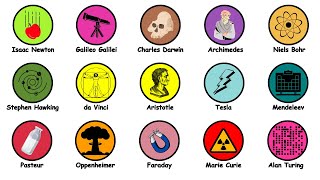
Every Major Scientist Explained in 10 Minutes
The Cosmic Explainer
SRT - Most compatible format for video players (VLC, media players, video editors)
VTT - Web Video Text Tracks for HTML5 video and browsers
TXT - Plain text with timestamps for easy reading and editing
Scroll to view all subtitles
Isaac Newton Isaac Newton was born on
December 25th 1642 in wol Thorp England
he was a mathematician physicist and
astronomer his most famous work
philosophia naturales principia
Mathematica laid out the laws of motion
and the universal law of gravitation
among his achievements are the invention
of calculus the discovery of the
spectrum of light and the formulation of
the three laws of motion Albert Einstein
Albert Einstein born on March 14th 1879
in M Germany was a physicist his most
famous Theory the theory of relativity
fundamentally changed our understanding
of space time and gravity in 1905 he
published his theory of special
relativity introducing the famous
equation energy equals mass time the
speed of light squared later in 1915 he
developed the theory of general
relativity explaining gravity as the
curvature of SpaceTime he was awarded
the Nobel Prize in physics in 1921 for
his discovery of the photoelectric
effect Galileo galile Galileo galile
born on February 15th 1564 in Pisa it
was an astronomer physicist and
mathematician Galileo's development of
the telescope enabled him to make
groundbreaking astronomical observations
including the moons of Jupiter and the
phases of Venus supporting the
heliocentric model of the solar system
despite facing opposition from the
Catholic Church Galileo continued to
advocate for the cernic theory which
placed the Sun at the center of the
universe Charles Darwin Charles Darwin
born on February 12th 1809 in Shrewsbury
England was a naturalist and biologist
best known for his theory of evolution
by natural selection Darwin's voyage on
the HMS Beagle from 1831 to 1836
provided him with the observations and
evidence that led to his groundbreaking
work on the Origin of Species published
in 1859 his theory proposed that species
evolve over time through the process of
natural selection where individuals with
advantageous traits are more likely to
survive and reproduce Marie curri Marie
curri born on November 7th 1867 in
Warsaw Poland then part of the Russian
Empire was a physicist and chemist Marie
C's research on radioactivity earned her
two Nobel prizes one in physics in 1903
shared with Pierre C and hre beel for
their work on radioactivity and another
in chemistry in 1911 for her discovery
of the elements halonium and radium
Aristotle Aristotle born in 384 BCE in
styra Greece was one of the most
influential philosophers and scientists
in history he studied at Plato's Academy
in Athens and later founded his own
School the lysium his work organon laid
the foundation for formal logic and his
metaphysics delved into the nature of
reality and existence Nicola Tesla
Nicola Tesla born on July 10th 1856 in
sman Croatia was an inventor and
electrical engineer Tesla immigrated to
the United States in 1884 where he
became known for his groundbreaking work
in electrical engineering his inventions
include the alternating current
electrical system the Tesla coil and
significant contributions to wireless
communication and transmission of
electricity Leonardo da Vinci Leonardo
da Vinci born on April 15th 1452 in in
Vinci Italy was a polymath known for his
achievements in various Fields including
art science engineering and Anatomy Da
Vinci's artistic masterpieces such as
the Mona Lisa and the Last Supper are
celebrated for their Innovation and
artistic Brilliance Beyond art he made
significant contributions to Anatomy
Optics and Engineering with designs for
inventions ranging from flying machines
to armored vehicles Louie pastur Lou
pastur born on December 27th 1822 in
Dole France was a chemist and
microbiologist pastor's research on
fermentation led to the development of
pasteurization a process that kills
harmful bacteria in food and beverages
he also proved that microorganisms are
responsible for fermentation and disease
he also developed the germ theory of
disease which revolutionized medicine
his work on the rabies vaccine developed
in 1885 saved countless lives Steven
Hawking Steven Hawking born on January
8th 1942 in Oxford England was a
theoretical physicist cosmologist and
author his most famous work A Brief
History of Time brought brought complex
scientific Concepts to a broader
audience and became an international
bestseller he was diagnosed with
amyotrophic lateral sclerosis at a young
age which gradually paralyzed him
Dimitri Mel Dimitri melave born on
February 8th 1834 in tobolsk Russia was
a chemist best known for creating the
periodic table of elements mela's
greatest achievement was organizing the
elements into a systematic table based
on their atomic mass and chemical
properties his periodic table even
predicted the existence of undiscovered
elements Thomas Edis
Thomas Edison born on February 11th 1847
in Milan Ohio was an American inventor
and entrepreneur Edison is best known
for his work in electrical engineering
and is often credited with inventing the
Practical incandescent light bulb
although he refined existing designs
rather than creating it from scratch he
also developed the first practical
photograph and motion picture camera his
inventions paved the way for modern
technology earning him the nickname The
Wizard of menow Park Alexander Fleming
Alexander Fleming born on August 6th
1881 in lockfield Scotland was a
Scottish bacteriologist best known for
his discovery of penicillin Fleming's
greatest breakthrough came in 1928 when
he accidentally discovered the
antibacterial properties of the
penicilium mold this led to the
development of penicillin the world's
first antibiotic which treated bacterial
infections effectively in 1945 he was
awarded the Nobel Prize in physiology or
medicine for his discovery of penicillin
Neil bore Neils bore born on October 7th
1885 in Copenhagen Denmark was a Danish
physicist known for his contributions to
Quantum Theory and atomic structure B's
greatest achievement was his development
of the bore model of the atom which
introduced the concept of quantized
electron orbits and explained Atomic
Spectra bore also developed the theory
of complimentarity which explained that
particles can exhibit both wav like and
particle-like properties depending on
the experimental setup his work earned
him the Nobel Prize in physics in 1922
Carl lenus Carl lenus born on May 23rd
1707 in Rashel Sweden was a botanist
physician and zoologist known as the
father of modern taxonomy lenaeus
transformed the classification of living
organisms by developing a system of
naming and organizing species known as
binomial nomenclature his most famous
work Systema naturai published in 1735
explained the modern biological
classification Max plunk Max plank born
on April 23rd 1858 in Keel Germany was a
physicist known for his contributions to
Quantum Theory his most significant
achievement was his formulation of the
quantum hypoth is in 1900 which said
that energy is quantized and can only
exist in small packets called Quant for
his contributions to theoretical physics
plank was awarded the Nobel Prize in
physics in 1918 verer Heisenberg verer
Heisenberg born on December 5th 1901 in
verburg Germany was a theoretical
physicist best known for his work in
quantum mechanics Heisenberg's most
famous contribution is the development
of the uncertainty principle proposed in
1927 which suggests that you can't
accurately measure both the exact
position and the momentum of a part at
the same time for his achievements he
was awarded the Nobel Prize in physics
in 1932 Michael Faraday Michael Faraday
born on September 22nd 1791 in Newington
Bots Sur England was a physicist and
chemist known for his work in
electromagnetism and electrochemistry
Faraday's contributions include the
discovery of electromagnetic induction
which forms the basis of electric
generators and Transformers and the laws
of electrolysis which describ the
relationship between electric current
and chemical reactions Ernest Rutherford
Ernest Rutherford born on August 30th
1871 in Brightwater New Zealand was a
physicist known as the father of nuclear
physics Rutherford's greatest
contribution was his discovery of the
atomic nucleus in 1911 through the
famous gold foil experiment Rutherford
also contributed to the fields of
radioactivity and the understanding of
the radioactive decay process Rutherford
was awarded the Nobel Prize in chemistry
in 1908 for his investigations into the
disintegration of radioactive substances
Alan touring Alan touring born on June
23rd 1912 in mavil London was a British
mathematician logician and computer
scientist he joined the government code
and Cipher school during World War II
where he played a crucial role in
Breaking the German Enigma code
contributing to Allied Victory turing's
greatest contribution is the concept of
the turing machine which refers to a
theoretical tool that solidifies the
idea of an algorithm and computation
Paving the way for the development of
today's digital computers despite his
groundbreaking work Turing faced
persecution for his homosexuality
leading to his tragic death by suicide
in 1954 J Robert Oppenheimer J Robert
Oppenheimer born on April 22nd 1904 in
New York City was an American
theoretical physicist known as the
father of the atomic bomb oppenheimer's
contribution came during World War II
when he led the Los Alamos laboratory
where the Manhattan Project developed
the first atomic bombs under his
leadership the project successfully
produced and tested the world's first
atomic bomb in 1945 Archimedes
Archimedes born around 287 BCE in
Syracuse Sicily was an ancient Greek
mathematician physicist engineer and
inventor arim's greatest contributions
included the calculation of pi the
discovery of the principle of buoyancy
and the development of integral calculus
he is best known for his invention of
the Archimedes screw a device used for
lifting water Archimedes also designed
Innovative machines and weapons for the
defense of Syracuse during the siege of
Syracuse lenus Pauling lonus Pauling
born on February 28th 1901 in Portland
Oregon was a chemist biochemist and
peace activist he was awarded the Nobel
Prize in chemistry in 1954 for his
research into the nature of the chemical
bond and the structure of molecules
lonus Pauling also received the Nobel
Peace Prize in 1962 for his efforts in
promoting peace through science if you
made it to the end of this video you're
one of the good ones be sure to hit that
subscribe button and leave us a like see
you next time
Full transcript without timestamps
Isaac Newton Isaac Newton was born on December 25th 1642 in wol Thorp England he was a mathematician physicist and astronomer his most famous work philosophia naturales principia Mathematica laid out the laws of motion and the universal law of gravitation among his achievements are the invention of calculus the discovery of the spectrum of light and the formulation of the three laws of motion Albert Einstein Albert Einstein born on March 14th 1879 in M Germany was a physicist his most famous Theory the theory of relativity fundamentally changed our understanding of space time and gravity in 1905 he published his theory of special relativity introducing the famous equation energy equals mass time the speed of light squared later in 1915 he developed the theory of general relativity explaining gravity as the curvature of SpaceTime he was awarded the Nobel Prize in physics in 1921 for his discovery of the photoelectric effect Galileo galile Galileo galile born on February 15th 1564 in Pisa it was an astronomer physicist and mathematician Galileo's development of the telescope enabled him to make groundbreaking astronomical observations including the moons of Jupiter and the phases of Venus supporting the heliocentric model of the solar system despite facing opposition from the Catholic Church Galileo continued to advocate for the cernic theory which placed the Sun at the center of the universe Charles Darwin Charles Darwin born on February 12th 1809 in Shrewsbury England was a naturalist and biologist best known for his theory of evolution by natural selection Darwin's voyage on the HMS Beagle from 1831 to 1836 provided him with the observations and evidence that led to his groundbreaking work on the Origin of Species published in 1859 his theory proposed that species evolve over time through the process of natural selection where individuals with advantageous traits are more likely to survive and reproduce Marie curri Marie curri born on November 7th 1867 in Warsaw Poland then part of the Russian Empire was a physicist and chemist Marie C's research on radioactivity earned her two Nobel prizes one in physics in 1903 shared with Pierre C and hre beel for their work on radioactivity and another in chemistry in 1911 for her discovery of the elements halonium and radium Aristotle Aristotle born in 384 BCE in styra Greece was one of the most influential philosophers and scientists in history he studied at Plato's Academy in Athens and later founded his own School the lysium his work organon laid the foundation for formal logic and his metaphysics delved into the nature of reality and existence Nicola Tesla Nicola Tesla born on July 10th 1856 in sman Croatia was an inventor and electrical engineer Tesla immigrated to the United States in 1884 where he became known for his groundbreaking work in electrical engineering his inventions include the alternating current electrical system the Tesla coil and significant contributions to wireless communication and transmission of electricity Leonardo da Vinci Leonardo da Vinci born on April 15th 1452 in in Vinci Italy was a polymath known for his achievements in various Fields including art science engineering and Anatomy Da Vinci's artistic masterpieces such as the Mona Lisa and the Last Supper are celebrated for their Innovation and artistic Brilliance Beyond art he made significant contributions to Anatomy Optics and Engineering with designs for inventions ranging from flying machines to armored vehicles Louie pastur Lou pastur born on December 27th 1822 in Dole France was a chemist and microbiologist pastor's research on fermentation led to the development of pasteurization a process that kills harmful bacteria in food and beverages he also proved that microorganisms are responsible for fermentation and disease he also developed the germ theory of disease which revolutionized medicine his work on the rabies vaccine developed in 1885 saved countless lives Steven Hawking Steven Hawking born on January 8th 1942 in Oxford England was a theoretical physicist cosmologist and author his most famous work A Brief History of Time brought brought complex scientific Concepts to a broader audience and became an international bestseller he was diagnosed with amyotrophic lateral sclerosis at a young age which gradually paralyzed him Dimitri Mel Dimitri melave born on February 8th 1834 in tobolsk Russia was a chemist best known for creating the periodic table of elements mela's greatest achievement was organizing the elements into a systematic table based on their atomic mass and chemical properties his periodic table even predicted the existence of undiscovered elements Thomas Edis Thomas Edison born on February 11th 1847 in Milan Ohio was an American inventor and entrepreneur Edison is best known for his work in electrical engineering and is often credited with inventing the Practical incandescent light bulb although he refined existing designs rather than creating it from scratch he also developed the first practical photograph and motion picture camera his inventions paved the way for modern technology earning him the nickname The Wizard of menow Park Alexander Fleming Alexander Fleming born on August 6th 1881 in lockfield Scotland was a Scottish bacteriologist best known for his discovery of penicillin Fleming's greatest breakthrough came in 1928 when he accidentally discovered the antibacterial properties of the penicilium mold this led to the development of penicillin the world's first antibiotic which treated bacterial infections effectively in 1945 he was awarded the Nobel Prize in physiology or medicine for his discovery of penicillin Neil bore Neils bore born on October 7th 1885 in Copenhagen Denmark was a Danish physicist known for his contributions to Quantum Theory and atomic structure B's greatest achievement was his development of the bore model of the atom which introduced the concept of quantized electron orbits and explained Atomic Spectra bore also developed the theory of complimentarity which explained that particles can exhibit both wav like and particle-like properties depending on the experimental setup his work earned him the Nobel Prize in physics in 1922 Carl lenus Carl lenus born on May 23rd 1707 in Rashel Sweden was a botanist physician and zoologist known as the father of modern taxonomy lenaeus transformed the classification of living organisms by developing a system of naming and organizing species known as binomial nomenclature his most famous work Systema naturai published in 1735 explained the modern biological classification Max plunk Max plank born on April 23rd 1858 in Keel Germany was a physicist known for his contributions to Quantum Theory his most significant achievement was his formulation of the quantum hypoth is in 1900 which said that energy is quantized and can only exist in small packets called Quant for his contributions to theoretical physics plank was awarded the Nobel Prize in physics in 1918 verer Heisenberg verer Heisenberg born on December 5th 1901 in verburg Germany was a theoretical physicist best known for his work in quantum mechanics Heisenberg's most famous contribution is the development of the uncertainty principle proposed in 1927 which suggests that you can't accurately measure both the exact position and the momentum of a part at the same time for his achievements he was awarded the Nobel Prize in physics in 1932 Michael Faraday Michael Faraday born on September 22nd 1791 in Newington Bots Sur England was a physicist and chemist known for his work in electromagnetism and electrochemistry Faraday's contributions include the discovery of electromagnetic induction which forms the basis of electric generators and Transformers and the laws of electrolysis which describ the relationship between electric current and chemical reactions Ernest Rutherford Ernest Rutherford born on August 30th 1871 in Brightwater New Zealand was a physicist known as the father of nuclear physics Rutherford's greatest contribution was his discovery of the atomic nucleus in 1911 through the famous gold foil experiment Rutherford also contributed to the fields of radioactivity and the understanding of the radioactive decay process Rutherford was awarded the Nobel Prize in chemistry in 1908 for his investigations into the disintegration of radioactive substances Alan touring Alan touring born on June 23rd 1912 in mavil London was a British mathematician logician and computer scientist he joined the government code and Cipher school during World War II where he played a crucial role in Breaking the German Enigma code contributing to Allied Victory turing's greatest contribution is the concept of the turing machine which refers to a theoretical tool that solidifies the idea of an algorithm and computation Paving the way for the development of today's digital computers despite his groundbreaking work Turing faced persecution for his homosexuality leading to his tragic death by suicide in 1954 J Robert Oppenheimer J Robert Oppenheimer born on April 22nd 1904 in New York City was an American theoretical physicist known as the father of the atomic bomb oppenheimer's contribution came during World War II when he led the Los Alamos laboratory where the Manhattan Project developed the first atomic bombs under his leadership the project successfully produced and tested the world's first atomic bomb in 1945 Archimedes Archimedes born around 287 BCE in Syracuse Sicily was an ancient Greek mathematician physicist engineer and inventor arim's greatest contributions included the calculation of pi the discovery of the principle of buoyancy and the development of integral calculus he is best known for his invention of the Archimedes screw a device used for lifting water Archimedes also designed Innovative machines and weapons for the defense of Syracuse during the siege of Syracuse lenus Pauling lonus Pauling born on February 28th 1901 in Portland Oregon was a chemist biochemist and peace activist he was awarded the Nobel Prize in chemistry in 1954 for his research into the nature of the chemical bond and the structure of molecules lonus Pauling also received the Nobel Peace Prize in 1962 for his efforts in promoting peace through science if you made it to the end of this video you're one of the good ones be sure to hit that subscribe button and leave us a like see you next time
Keep this transcript
Save it to LunaNotes and it becomes a real note in your library — editable, searchable, and ready to turn into flashcards or a diagram. Free to start.
Save to LunaNotesOr download subtitles for another video.


32K+ people have turned 65K+ videos into notes
“Very useful tool. I'm using it for the last couple weeks and I'm loving it so far. Makes learning on YouTube a great experience.”
 Bhai Chrome Web Store review
These subtitles were extracted using the Free YouTube subtitle downloader by LunaNotes.
Related videos
Download Subtitles for All Dimensions in Physics Explained Video
Get accurate subtitles for the 'All Dimensions in Physics Explained Simply' video to enhance your understanding and enjoy the content at your own pace. Perfect for students and physics enthusiasts who want clear and accessible explanations during their learning journey.
Download Subtitles for All Machine Learning Concepts Video
Enhance your understanding by downloading accurate subtitles for the 'All Machine Learning Concepts Explained in 22 Minutes' video. Access clear captions to follow complex topics with ease and improve your learning experience.
Download Subtitles for Scientific Study Tips Video
Enhance your learning experience by downloading accurate subtitles for the video '벼락치기 성공하는 과학적인 공부법 (feat.궤도)'. Subtitles help you follow along easily, improve comprehension, and make studying more effective.
Download Subtitles for 90-Second Brain Capture Video
Enhance your viewing experience with accurate subtitles for the 90-Second Brain Capture video. Easily follow along, improve comprehension, and make the content accessible anytime you watch. Perfect for learners and viewers seeking clarity and accessibility.

Download Subtitles for Your Favorite Videos Easily
Enhance your video watching experience by downloading accurate subtitles and captions. Enjoy better understanding, accessibility, and language support for all your favorite videos.
Most viewed

Untertitel für 'Nicos Weg' Deutsch lernen A1 Film herunterladen
Laden Sie die Untertitel für den gesamten Film 'Nicos Weg' herunter, um Ihr Deutschlernen auf A1 Niveau zu unterstützen. Untertitel helfen Ihnen, Wortschatz und Aussprache besser zu verstehen und verbessern das Hörverständnis effektiv.

Subtítulos para TIPOS DE APEGO | 6 DE COPAS Episodio 56
Descarga los subtítulos para el episodio 56 de la tercera temporada de 6 DE COPAS, centrado en los tipos de apego. Mejora tu comprensión y disfruta del contenido en detalle con nuestros subtítulos precisos y accesibles.
ดาวน์โหลดซับไตเติ้ล DMD LAND 3 The Final Land Day 1
ดาวน์โหลดซับไตเติ้ลสำหรับวิดีโอ DMD LAND 3 The Final Land Day 1 เพื่อช่วยให้เข้าใจเนื้อหาได้ง่ายขึ้น และเพิ่มความสะดวกในการติดตามทุกช่วงเวลา เหมาะสำหรับผู้ชมที่ต้องการความชัดเจนและเข้าถึงข้อมูลอย่างครบถ้วน
Download Subtitles for Harvard CS50 2026 Computer Science Course
Enhance your learning experience with downloadable subtitles for the Harvard CS50 2026 full computer science course. Easily follow along with lectures, improve comprehension, and access the content offline anytime. Perfect for students and enthusiasts aiming to master computer science concepts.
Descarga Subtítulos para NARCISISMO | 6 DE COPAS - Episodio 63
Accede fácilmente a los subtítulos del episodio 63 de '6 DE COPAS', centrado en el narcisismo. Descargar estos subtítulos te ayudará a entender mejor el contenido y mejorar la experiencia de visualización.
Found this transcript useful?
Take it with you. One click puts it in your own LunaNotes library.
Save to LunaNotes