Download Subtitles for 140 Soft Acrobatics Moves Tutorial
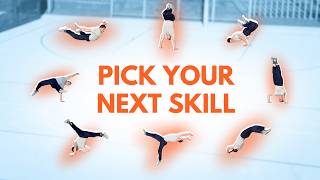
140 Soft Acrobatics Moves Adult Beginners Can Actually Master (Ranked)
SoftAcroAaron - Acrobatics and Movement Teacher
SRT - Most compatible format for video players (VLC, media players, video editors)
VTT - Web Video Text Tracks for HTML5 video and browsers
TXT - Plain text with timestamps for easy reading and editing
Scroll to view all subtitles
If you want to learn new skills, use
this video for inspiration and I
guarantee there'll be something perfect
for your current [music] level. I've
been teaching adult acrobatics for over
12 years and mapped out 140 skills for
you in this video that anyone can learn.
And if you really want to make progress
and [music] not just be inspired for a
hot minute, download this poster using
the link below. Circle the key skills
you want to learn. All skills are
numbered so you can easily find the
right one here inside this video. Then
cross out the ones you've mastered
because I want you to win, but you will
get stuck somewhere. I also have two
workbooks for you. One for complete
beginners, one for intermediate. So that
you know exactly how to get unstuck.
Beginner skills are split into six
different categories. Cartwheels,
[music] handstands, aerials, rolls,
macacos, and elbow levers. Cartwheels
but mini. All the flow, none of the
fear. Try step. Starts like a mini
cartwheel except that hands and feet are
switched. Make a triangle between both
feet and a hand and step through. The
half cartwheel is [music] exactly what
it sounds like. Half a cartwheel. And it
combos perfectly with a mini cartwheel.
Next, the spinning half cartwheel front
side. Sounds complicated but is really
just a half cartwheel with a small spin.
And that means you know what the
spinning half cartwheel back side is.
Same thing but in reverse. Spinning to
the back side. You see, I try to name
all the skills not creatively but
literally so that it's easiest to
understand just from reading. Same thing
with a 90° cartwheel across a 90°
corner. And if this is scary, you can
scale it back by using an elevated
surface. But this is a skill list, not a
tutorial. So let's wrap it up and move
on to the low bend arm cartwheel. It's
exactly what it sounds like but a lot of
people find it easier than cartwheels in
the [music] beginning because you stay
close to the ground. The low headstand
cartwheel is slightly trickier because
you have to control placing your head on
the ground gently. Otherwise, it's
uncomfortable. The square cartwheel
follows the same foot hand hand foot
pattern of a regular cartwheel but you
don't have to go straight or all the way
upside down. Moving on from cartwheels
to handstands. As you'll [music] see, I
keep the categories quite loose
actually. A handstand for me is just an
inverted balance so that we can have an
easy starting point. And what about the
difficulty? Are they really all ranked
in order? Well, that of course depends
on your body and your skill set. But
generally speak, the earlier skills are
going to be easier than the later skills
for most people and most body types that
is. Of course, there always exceptions
and the categories can have different
skill levels as well. Rolls tend to be
easier than aerials for example. But I
didn't want to mash everything up like
crazy, so we follow the charm skill
categories. Cow is handstands, aerials,
rolls, macacos, elbow levers in order.
Finishing the beginner handstands with a
crow.
Beginner aerials start with the upright
butterfly kick. That's the first of
three aerial branches. Next, we have the
rise, which is the backwards leaning
branch. And then we have the aerial
itself, which is the most inverted one
of the skills. The tornado kick has
great transfer and utility for the rise
later. I love it as a beginner skill.
Everyone can start that can look amazing
when perfect. The touch star jump
teaches a low chest take off position
important for the rise later on. And to
improve the slanted jumping cartwheel,
you try to get more frames in the air
every jump. And the side view shows how
we're not completely inverted. That's
different for the straight jumping
cartwheel that has much more of a
gymnastics aesthetic to it and we
completely invert as you can see from
this back view. This could also be
called a classic dive [music] cartwheel.
Beginner rolls starting with a fisherman
hip roll. I've taught this to
80-year-olds as well as to 5-year-olds.
It's super fun to warm up just like the
belly roll is. Everyone can do it on
their first try. The seated backwards
shoulder roll is already a little bit
more difficult though. But start on a
soft ground, warm up your neck, take it
slowly and you should have this down in
a session or so. And when you do, you
already have a learned the next skill,
the kneeling forward shoulder roll
because you can literally reverse the
backwards shoulder roll. Next, the
sideways arching roll. Looks easy, can
be deceptively tricky. The square roll
is a typical gymnastics roll. Great for
tight tuck, good to practice on soft
ground and not recommended for parkour.
The half invert roll starts like [music]
a backwards square roll. You cross over
your feet and then, well, you flip the
other way around. This is the full
invert roll, also sometimes called a
neck roll or suitcase roll. I know a
bunch of BJJ clubs who have this in
their standard warm-up. Backward square
roll, please warm up your neck for this
one. The single leg backward arching
roll. Isn't it beautiful? It's like its
own little contained flow that you can
do super slowly and control. I just love
it. You'll figure it out. Beginner
macacos, macacos, macacos. That's right,
the mini one-arm macaco is the starting
place for almost everyone, except for
the very flexible people who might
prefer the mini sweeping macaco. High
wall walkovers are not macacos at all.
They are if you abide by my categories
and just think of them as super flexible
bendy person macacos. That's right, we
want to get better at bridging and
arching in general. So, yes, the high
support walkover is also a form of
macaco [music] practice at the very
least. A great skill in its own right
when you use it to teach yourself how to
stay stable across shoulders and hips
while maintaining the arching shape. The
high support two-arm macaco starts on
one arm but transitions through two and
is often the first way that people get
fully inverted. The high sweeping macaco
is great to train the far side hip
extension, which is a form of learning
through constraints. Don't jump off both
feet in a bridge walkover if you lack
explosiveness. Use your flexibility and
do a single leg walkover instead.
Beginner elbow levers. I love them
because you can just move from six point
to five point side elbow lever. It's a
super safe and encouraging way to put
more [music] weight on your hands and
learn to balance. You ready move on to
the different four-point elbow lever
variations. For the front elbow levers,
your elbow is pointing towards the front
of your belly or your hip. And for the
side elbow lever variations, of course,
it's placed towards the side. The
four-point balances are stable but fun
to figure out. How many variations can
you come up with? Next up, a baby
freeze. That's how it's called in
b-boying or breaking. [music] But, as
you know, I like to name things
literally so that even someone who's a
complete beginner can kind of guess what
we mean when we say three-point knee
plus hip elbow lever.
The front elbow lever is sometimes
called a croc in the circus and hand
balancing world. And with three points,
we can get almost as creative or maybe
even more creative than with the
four-point positions. Be creative and
play around. Side elbow levers are
usually called QDRs in Capoeira, which
stand for queda de rins. And I've no
idea how to pronounce that correctly.
But as you know, I'm inspired by all the
arts and I cannot get enough from these
interesting acrobatic variations. Like
the near side elbow lever spin, which
obviously needs to be followed by the
far side elbow lever [music] spin. Add a
foot switch in between and you can
already make your very own little flow
out of these two moves.
By the way, if you're a beginner and you
want to learn these skills with ease in
just 15 minutes a day, [music] then
check out the AcroBody community. Link
is in the description. All right, let's
jump back in. Intermediate skills.
That dramatic pause felt absolutely
necessary for our 180 cartwheel. That's
right, in my book, these are already
intermediate skills. Not too easy for
the average adult. And if you can master
them with ease, then well, I invite you
to try out these contra ipsi cartwheel
variations. The skill ceiling is nearly
infinite when it comes to cows. If you
think you're done, you can just start
improving [music]
them, making them cleaner, and sooner or
later a completely new door will open to
you. Like the forward cartwheel. This is
one of my absolute favorite skills. It
has [music] the elegance of a front
walkover and the ease of a regular
cartwheel if you can do it well. And it
gets you straight to the slanted front
handspring, which of course is just a
teaser for what's to come later. A Gumby
has the signature arching shape right in
[music] the middle. Let's jump into our
intermediate handstand starting with our
forearm stand followed by the crane.
Now, we'll spend more time balancing on
two hands and raise our center of mass
with the back to wall split handstand
hold. Avoid using your feet to push off
the wall and instead shift your center
of mass slowly. The same holds true for
the chest to wall split handstand hold.
Keep midline tension and use fingertip
pressure to continuously rebalance
yourself. Handstand walking on the other
hand is continuously falling forward and
catching yourself and you're building
confidence without a wall, which is
essential for the free standing split
handstand hold, which now also requires
that you know how to kick up and catch
yourself. Starting intermediate aerials
with our horizontal butter fly kick
followed by the far hand support aerial,
which teaches you how to invert and jump
while giving you the safety of the
second hand. Our mini aerials are
progressing by kicking each foot higher
than the level of the hips and in
general, we're now collecting more and
more airtime and aerial awareness. In
the all fours rise, you can try to spot
the ground even while you're in the air
and the two-handed cart flip teaches you
how to be springy and snap both feet
together to the ground quickly. While
the far hand cart flip is ideal to teach
you a low chest take off with a powerful
kick that's needed for the far hand
webster variation. Topping off the
intermediate aerials with a late
touchdown [music]
rise. You take off more or less upright,
but invert at the last moment. So hands
and feet touch the ground at the same
time. The intermediate rolls will now
require more momentum to work out.
That's what makes them challenging and
why I recommend to learn those on softer
ground, including the straddle bent arm
180 roll. And if you're up for a random
side quest, then combine the side elbow
levers with a straddle 180 roll to learn
your windmills. The backward arching
roll is now done entirely without foot
support.
The bridge rotation roll can actually be
done both as a square [music] roll and
as a shoulder roll.
And the unique flow and momentum of
these last two makes them my favorite in
[music] the intermediate rolling
category.
Back to macacos. The unique thing about
momentum start is that we elevate the
hip before the hand is planted on the
ground. Even though that's just one two
or three frames, it already prepares us
for more advanced variations like the
fisherman's squat ipsy macaco. Ipsy just
means same side, which means we're
pushing off the right foot and right
hand at the same time. Whereas for the
pistol seat contra macaco, we're pushing
off the right foot and the left hand at
the same [music] time. As always, if you
want to build a truly robust skill set,
you want to include all of them in your
training. By the way, as a rule of thumb
for soft acro skills, all of them are
solvable through either flexibility,
strength, or momentum. And all of them
are scalable like the head bridge
walkovers I'm demoing here. The
perfectly square macaco is a true crown
skill because by default we all macaco a
little bit to the side. Whereas for the
perfectly square macaco, we want to exit
at the exact same angle we started. And
this is another one of my favorites, the
backward cartwheel. In part because you
can chain them so beautifully together
and in part because they're a perfect
mirror image of the forward cartwheel.
The two-point front elbow lever. Same
base of support as a handstand, much
easier to balance. Followed by a hop
into a knee and hip elbow lever. Right,
our baby freeze. If you can now include
those dynamic switches, it means you're
now at a different level of skill. The
sweep into a knee and hip elbow lever is
also called a coffee grinder to baby
freeze. I absolutely respect the origins
and traditions of all of these beautiful
variations, just like the mini cartwheel
to two-point elbow lever is a role to
queda de rins in capoeira.
Just one moment. Are you a mover over 35
and you've hit your intermediate
plateau, but you know in the depth of
your heart that you still want to learn
advanced skills? [music] Then check out
the Movement Freedom Game Plan. The link
is in the description. There I give you
the full breakdown how I teach my
students to progress every single
practice year after year for decades to
come. I think you'll celebrate that
video. Now, let's jump back into
advanced skills.
The inside lunge cartwheel is an
advanced a lateral pattern to coordinate
[music]
that includes a leg switch that is
easily missed if you don't observe
closely. The hever sao or just reverse
sao [music] is a spinning arching
cartwheel. Superseded in difficulty by
the one-arm reverse sal and now we're
getting more dynamic with a front
handspring [music] step out followed by
the helicoputero, my absolute favorite
arching cartwheel skill. For our
advanced handstands, we're getting into
more challenging holds including the
tuck handstand hold and the straight
handstand hold. Of course, there are
always exceptions for who will find what
most challenging, but the general
direction still holds. The headstand
press is easier than a bent arm press
which is easier than a side press to
handstand [music] which are still easier
than a pike press to handstand.
And when you can fluidly change shapes
while you're balancing the handstand,
then of course your handstand control is
at a next level which is needed to be
able to cartwheel into a straight
handstand or finally macaco straight
into a handstand. I do want to make one
thing clear here. There is no skill
ceiling. You could learn a back
handspring and catch yourself in a
handstand. You can learn a one-arm
handstand. The ceiling expands
infinitely high, but these 140 skills
right here in this video, they're all
attainable for the average adult with a
regular person schedule. You don't have
to become a circus artist or a full-time
performer [music] or a master instructor
in order to learn these. You can be a
parent or a police officer. You can be a
high school teacher or a physiotherapist
with a packed schedule. The point is
that if you want to master movement and
you want to move playfully for the
coming not just years but decades with
your kids and maybe grandkids or at
least your friends and you have been
fascinated by mastering your movement in
acrobatics. And you felt stuck or you
didn't know where to start learning a
new skill, then now you at least have a
list of 140 skills that make it easy to
map out the new path and get excited
about all the different skills you can
still learn. Just like I'm still
learning the backward roll to handstand.
At the end of a long day, that was my
absolute best attempt. And the bridge
walkover was my absolute nemesis after
recovering from a disk hernia, but that
is half the point of all these skills. I
pursue them because in the process I
show myself that I've become more
capable, that even injury is nothing
that can hold me back in the long run,
and [music] that movement freedom is
truly a lifelong pursuit. And these are
two things all my students have in
common. Number one, they see movement as
one of their top three priorities in
life. Of course, there's family, there's
our career, but then there's [music] our
physical well-being and our health. And
finding a fun way to engage with it and
not one [music] that is full of shoulds
and musts is what turns it from an
obligation into the adventure of a
lifetime. As you can tell, I'm drifting
from the practical into the
philosophical, which for me is a sign
that maybe I've said enough [music] so
far. If, however, you want help with
these intermediate and advanced skills,
and you want to learn with a little bit
more ease, more structure, more
playfulness, and more camaraderie,
[music]
then watch the Movement Freedom Game
Plan video I linked in the description.
There, I'm giving you my full
run-through of the system that took 12
years, thousands of teaching hours, and
studying sports science to put together
in its final form. All right, I'll see
some of you in that video, in the
Movement Freedom Game Plan. Link is in
the description. And I'll leave you with
the last advanced elbow lever
variations. By the way, this is the one
skill that made arching acrobatics fun
and achievable for me from the start.
What is that one skill that unlocks all
the others for you? I'll let you ponder
that for the rest of the video.
I'm I'm one last time for the final
closing words, which is of course that
all these individual skills that really
unfold and expand
>> [music]
>> when you start piecing them together.
And that's where true movement mastery
and beauty of movement [music]
come together.
You're you're still here even after
watching 140 skills
>> [music]
>> and you're not yet moved. That means
please please download the poster below.
Just print it out once for fun. I mean
what can happen? Worst case scenario you
print out that poster, you stick it on
the wall, you circle some of the skills
that come easy to you. You find they're
a little bit tricky and boom you get
hooked for life learning an amazing
movement art. I don't know of any cooler
ways to stay fit, healthy and agile. Or
or you still not convinced? Like what's
the soft acro thing? Why does Aaron keep
mentioning charm skills? In that case
you might just want to check out this
video next.
That's that's it. I don't have any more.
I'll see you there, okay? I'll see you
there.
Full transcript without timestamps
If you want to learn new skills, use this video for inspiration and I guarantee there'll be something perfect for your current [music] level. I've been teaching adult acrobatics for over 12 years and mapped out 140 skills for you in this video that anyone can learn. And if you really want to make progress and [music] not just be inspired for a hot minute, download this poster using the link below. Circle the key skills you want to learn. All skills are numbered so you can easily find the right one here inside this video. Then cross out the ones you've mastered because I want you to win, but you will get stuck somewhere. I also have two workbooks for you. One for complete beginners, one for intermediate. So that you know exactly how to get unstuck. Beginner skills are split into six different categories. Cartwheels, [music] handstands, aerials, rolls, macacos, and elbow levers. Cartwheels but mini. All the flow, none of the fear. Try step. Starts like a mini cartwheel except that hands and feet are switched. Make a triangle between both feet and a hand and step through. The half cartwheel is [music] exactly what it sounds like. Half a cartwheel. And it combos perfectly with a mini cartwheel. Next, the spinning half cartwheel front side. Sounds complicated but is really just a half cartwheel with a small spin. And that means you know what the spinning half cartwheel back side is. Same thing but in reverse. Spinning to the back side. You see, I try to name all the skills not creatively but literally so that it's easiest to understand just from reading. Same thing with a 90° cartwheel across a 90° corner. And if this is scary, you can scale it back by using an elevated surface. But this is a skill list, not a tutorial. So let's wrap it up and move on to the low bend arm cartwheel. It's exactly what it sounds like but a lot of people find it easier than cartwheels in the [music] beginning because you stay close to the ground. The low headstand cartwheel is slightly trickier because you have to control placing your head on the ground gently. Otherwise, it's uncomfortable. The square cartwheel follows the same foot hand hand foot pattern of a regular cartwheel but you don't have to go straight or all the way upside down. Moving on from cartwheels to handstands. As you'll [music] see, I keep the categories quite loose actually. A handstand for me is just an inverted balance so that we can have an easy starting point. And what about the difficulty? Are they really all ranked in order? Well, that of course depends on your body and your skill set. But generally speak, the earlier skills are going to be easier than the later skills for most people and most body types that is. Of course, there always exceptions and the categories can have different skill levels as well. Rolls tend to be easier than aerials for example. But I didn't want to mash everything up like crazy, so we follow the charm skill categories. Cow is handstands, aerials, rolls, macacos, elbow levers in order. Finishing the beginner handstands with a crow. Beginner aerials start with the upright butterfly kick. That's the first of three aerial branches. Next, we have the rise, which is the backwards leaning branch. And then we have the aerial itself, which is the most inverted one of the skills. The tornado kick has great transfer and utility for the rise later. I love it as a beginner skill. Everyone can start that can look amazing when perfect. The touch star jump teaches a low chest take off position important for the rise later on. And to improve the slanted jumping cartwheel, you try to get more frames in the air every jump. And the side view shows how we're not completely inverted. That's different for the straight jumping cartwheel that has much more of a gymnastics aesthetic to it and we completely invert as you can see from this back view. This could also be called a classic dive [music] cartwheel. Beginner rolls starting with a fisherman hip roll. I've taught this to 80-year-olds as well as to 5-year-olds. It's super fun to warm up just like the belly roll is. Everyone can do it on their first try. The seated backwards shoulder roll is already a little bit more difficult though. But start on a soft ground, warm up your neck, take it slowly and you should have this down in a session or so. And when you do, you already have a learned the next skill, the kneeling forward shoulder roll because you can literally reverse the backwards shoulder roll. Next, the sideways arching roll. Looks easy, can be deceptively tricky. The square roll is a typical gymnastics roll. Great for tight tuck, good to practice on soft ground and not recommended for parkour. The half invert roll starts like [music] a backwards square roll. You cross over your feet and then, well, you flip the other way around. This is the full invert roll, also sometimes called a neck roll or suitcase roll. I know a bunch of BJJ clubs who have this in their standard warm-up. Backward square roll, please warm up your neck for this one. The single leg backward arching roll. Isn't it beautiful? It's like its own little contained flow that you can do super slowly and control. I just love it. You'll figure it out. Beginner macacos, macacos, macacos. That's right, the mini one-arm macaco is the starting place for almost everyone, except for the very flexible people who might prefer the mini sweeping macaco. High wall walkovers are not macacos at all. They are if you abide by my categories and just think of them as super flexible bendy person macacos. That's right, we want to get better at bridging and arching in general. So, yes, the high support walkover is also a form of macaco [music] practice at the very least. A great skill in its own right when you use it to teach yourself how to stay stable across shoulders and hips while maintaining the arching shape. The high support two-arm macaco starts on one arm but transitions through two and is often the first way that people get fully inverted. The high sweeping macaco is great to train the far side hip extension, which is a form of learning through constraints. Don't jump off both feet in a bridge walkover if you lack explosiveness. Use your flexibility and do a single leg walkover instead. Beginner elbow levers. I love them because you can just move from six point to five point side elbow lever. It's a super safe and encouraging way to put more [music] weight on your hands and learn to balance. You ready move on to the different four-point elbow lever variations. For the front elbow levers, your elbow is pointing towards the front of your belly or your hip. And for the side elbow lever variations, of course, it's placed towards the side. The four-point balances are stable but fun to figure out. How many variations can you come up with? Next up, a baby freeze. That's how it's called in b-boying or breaking. [music] But, as you know, I like to name things literally so that even someone who's a complete beginner can kind of guess what we mean when we say three-point knee plus hip elbow lever. The front elbow lever is sometimes called a croc in the circus and hand balancing world. And with three points, we can get almost as creative or maybe even more creative than with the four-point positions. Be creative and play around. Side elbow levers are usually called QDRs in Capoeira, which stand for queda de rins. And I've no idea how to pronounce that correctly. But as you know, I'm inspired by all the arts and I cannot get enough from these interesting acrobatic variations. Like the near side elbow lever spin, which obviously needs to be followed by the far side elbow lever [music] spin. Add a foot switch in between and you can already make your very own little flow out of these two moves. By the way, if you're a beginner and you want to learn these skills with ease in just 15 minutes a day, [music] then check out the AcroBody community. Link is in the description. All right, let's jump back in. Intermediate skills. That dramatic pause felt absolutely necessary for our 180 cartwheel. That's right, in my book, these are already intermediate skills. Not too easy for the average adult. And if you can master them with ease, then well, I invite you to try out these contra ipsi cartwheel variations. The skill ceiling is nearly infinite when it comes to cows. If you think you're done, you can just start improving [music] them, making them cleaner, and sooner or later a completely new door will open to you. Like the forward cartwheel. This is one of my absolute favorite skills. It has [music] the elegance of a front walkover and the ease of a regular cartwheel if you can do it well. And it gets you straight to the slanted front handspring, which of course is just a teaser for what's to come later. A Gumby has the signature arching shape right in [music] the middle. Let's jump into our intermediate handstand starting with our forearm stand followed by the crane. Now, we'll spend more time balancing on two hands and raise our center of mass with the back to wall split handstand hold. Avoid using your feet to push off the wall and instead shift your center of mass slowly. The same holds true for the chest to wall split handstand hold. Keep midline tension and use fingertip pressure to continuously rebalance yourself. Handstand walking on the other hand is continuously falling forward and catching yourself and you're building confidence without a wall, which is essential for the free standing split handstand hold, which now also requires that you know how to kick up and catch yourself. Starting intermediate aerials with our horizontal butter fly kick followed by the far hand support aerial, which teaches you how to invert and jump while giving you the safety of the second hand. Our mini aerials are progressing by kicking each foot higher than the level of the hips and in general, we're now collecting more and more airtime and aerial awareness. In the all fours rise, you can try to spot the ground even while you're in the air and the two-handed cart flip teaches you how to be springy and snap both feet together to the ground quickly. While the far hand cart flip is ideal to teach you a low chest take off with a powerful kick that's needed for the far hand webster variation. Topping off the intermediate aerials with a late touchdown [music] rise. You take off more or less upright, but invert at the last moment. So hands and feet touch the ground at the same time. The intermediate rolls will now require more momentum to work out. That's what makes them challenging and why I recommend to learn those on softer ground, including the straddle bent arm 180 roll. And if you're up for a random side quest, then combine the side elbow levers with a straddle 180 roll to learn your windmills. The backward arching roll is now done entirely without foot support. The bridge rotation roll can actually be done both as a square [music] roll and as a shoulder roll. And the unique flow and momentum of these last two makes them my favorite in [music] the intermediate rolling category. Back to macacos. The unique thing about momentum start is that we elevate the hip before the hand is planted on the ground. Even though that's just one two or three frames, it already prepares us for more advanced variations like the fisherman's squat ipsy macaco. Ipsy just means same side, which means we're pushing off the right foot and right hand at the same time. Whereas for the pistol seat contra macaco, we're pushing off the right foot and the left hand at the same [music] time. As always, if you want to build a truly robust skill set, you want to include all of them in your training. By the way, as a rule of thumb for soft acro skills, all of them are solvable through either flexibility, strength, or momentum. And all of them are scalable like the head bridge walkovers I'm demoing here. The perfectly square macaco is a true crown skill because by default we all macaco a little bit to the side. Whereas for the perfectly square macaco, we want to exit at the exact same angle we started. And this is another one of my favorites, the backward cartwheel. In part because you can chain them so beautifully together and in part because they're a perfect mirror image of the forward cartwheel. The two-point front elbow lever. Same base of support as a handstand, much easier to balance. Followed by a hop into a knee and hip elbow lever. Right, our baby freeze. If you can now include those dynamic switches, it means you're now at a different level of skill. The sweep into a knee and hip elbow lever is also called a coffee grinder to baby freeze. I absolutely respect the origins and traditions of all of these beautiful variations, just like the mini cartwheel to two-point elbow lever is a role to queda de rins in capoeira. Just one moment. Are you a mover over 35 and you've hit your intermediate plateau, but you know in the depth of your heart that you still want to learn advanced skills? [music] Then check out the Movement Freedom Game Plan. The link is in the description. There I give you the full breakdown how I teach my students to progress every single practice year after year for decades to come. I think you'll celebrate that video. Now, let's jump back into advanced skills. The inside lunge cartwheel is an advanced a lateral pattern to coordinate [music] that includes a leg switch that is easily missed if you don't observe closely. The hever sao or just reverse sao [music] is a spinning arching cartwheel. Superseded in difficulty by the one-arm reverse sal and now we're getting more dynamic with a front handspring [music] step out followed by the helicoputero, my absolute favorite arching cartwheel skill. For our advanced handstands, we're getting into more challenging holds including the tuck handstand hold and the straight handstand hold. Of course, there are always exceptions for who will find what most challenging, but the general direction still holds. The headstand press is easier than a bent arm press which is easier than a side press to handstand [music] which are still easier than a pike press to handstand. And when you can fluidly change shapes while you're balancing the handstand, then of course your handstand control is at a next level which is needed to be able to cartwheel into a straight handstand or finally macaco straight into a handstand. I do want to make one thing clear here. There is no skill ceiling. You could learn a back handspring and catch yourself in a handstand. You can learn a one-arm handstand. The ceiling expands infinitely high, but these 140 skills right here in this video, they're all attainable for the average adult with a regular person schedule. You don't have to become a circus artist or a full-time performer [music] or a master instructor in order to learn these. You can be a parent or a police officer. You can be a high school teacher or a physiotherapist with a packed schedule. The point is that if you want to master movement and you want to move playfully for the coming not just years but decades with your kids and maybe grandkids or at least your friends and you have been fascinated by mastering your movement in acrobatics. And you felt stuck or you didn't know where to start learning a new skill, then now you at least have a list of 140 skills that make it easy to map out the new path and get excited about all the different skills you can still learn. Just like I'm still learning the backward roll to handstand. At the end of a long day, that was my absolute best attempt. And the bridge walkover was my absolute nemesis after recovering from a disk hernia, but that is half the point of all these skills. I pursue them because in the process I show myself that I've become more capable, that even injury is nothing that can hold me back in the long run, and [music] that movement freedom is truly a lifelong pursuit. And these are two things all my students have in common. Number one, they see movement as one of their top three priorities in life. Of course, there's family, there's our career, but then there's [music] our physical well-being and our health. And finding a fun way to engage with it and not one [music] that is full of shoulds and musts is what turns it from an obligation into the adventure of a lifetime. As you can tell, I'm drifting from the practical into the philosophical, which for me is a sign that maybe I've said enough [music] so far. If, however, you want help with these intermediate and advanced skills, and you want to learn with a little bit more ease, more structure, more playfulness, and more camaraderie, [music] then watch the Movement Freedom Game Plan video I linked in the description. There, I'm giving you my full run-through of the system that took 12 years, thousands of teaching hours, and studying sports science to put together in its final form. All right, I'll see some of you in that video, in the Movement Freedom Game Plan. Link is in the description. And I'll leave you with the last advanced elbow lever variations. By the way, this is the one skill that made arching acrobatics fun and achievable for me from the start. What is that one skill that unlocks all the others for you? I'll let you ponder that for the rest of the video. I'm I'm one last time for the final closing words, which is of course that all these individual skills that really unfold and expand >> [music] >> when you start piecing them together. And that's where true movement mastery and beauty of movement [music] come together. You're you're still here even after watching 140 skills >> [music] >> and you're not yet moved. That means please please download the poster below. Just print it out once for fun. I mean what can happen? Worst case scenario you print out that poster, you stick it on the wall, you circle some of the skills that come easy to you. You find they're a little bit tricky and boom you get hooked for life learning an amazing movement art. I don't know of any cooler ways to stay fit, healthy and agile. Or or you still not convinced? Like what's the soft acro thing? Why does Aaron keep mentioning charm skills? In that case you might just want to check out this video next. That's that's it. I don't have any more. I'll see you there, okay? I'll see you there.
Keep this transcript
Save it to LunaNotes and it becomes a real note in your library — editable, searchable, and ready to turn into flashcards or a diagram. Free to start.
Save to LunaNotesOr download subtitles for another video.
These subtitles were extracted using the Free YouTube subtitle downloader by LunaNotes.
Related videos
Download Subtitles for Mastering Matrices in 3D Animation
Enhance your learning experience by downloading accurate subtitles for the video on mastering matrices in 3D animation. Subtitles help you better understand complex concepts and follow along easily, making the animation techniques more accessible.
Download Subtitles for Adobe Illustrator Beginners FREE Course
Enhance your learning experience with accessible subtitles for the Adobe Illustrator for Beginners FREE Course. Download captions to follow along easily, improve comprehension, and master the software at your own pace.
Download Subtitles for The Guillotine Choke Masterclass Video
Enhance your learning experience with downloadable subtitles for The Guillotine Choke: A Complete Masterclass. Perfect for following along, improving comprehension, and mastering every technique showcased in this instructional video.

Download Subtitles for Learn This Skill to Thrive in 10 Years
Enhance your understanding by downloading subtitles for the video 'Learn This Skill If You Want To Thrive In The Next 10 Years.' Subtitles help you grasp key concepts clearly and make learning accessible anytime, anywhere.
Download Subtitles for Best Way To Improve FAST in Football
Enhance your learning experience by downloading accurate subtitles for the video 'Best Way To Improve FAST in Football (Beginner Guide)'. Subtitles help beginners understand the key techniques clearly and improve their football skills effectively.
Most viewed

Untertitel für 'Nicos Weg' Deutsch lernen A1 Film herunterladen
Laden Sie die Untertitel für den gesamten Film 'Nicos Weg' herunter, um Ihr Deutschlernen auf A1 Niveau zu unterstützen. Untertitel helfen Ihnen, Wortschatz und Aussprache besser zu verstehen und verbessern das Hörverständnis effektiv.
ดาวน์โหลดซับไตเติ้ล DMD LAND 3 The Final Land Day 1
ดาวน์โหลดซับไตเติ้ลสำหรับวิดีโอ DMD LAND 3 The Final Land Day 1 เพื่อช่วยให้เข้าใจเนื้อหาได้ง่ายขึ้น และเพิ่มความสะดวกในการติดตามทุกช่วงเวลา เหมาะสำหรับผู้ชมที่ต้องการความชัดเจนและเข้าถึงข้อมูลอย่างครบถ้วน

Subtítulos para TIPOS DE APEGO | 6 DE COPAS Episodio 56
Descarga los subtítulos para el episodio 56 de la tercera temporada de 6 DE COPAS, centrado en los tipos de apego. Mejora tu comprensión y disfruta del contenido en detalle con nuestros subtítulos precisos y accesibles.

Download Subtitles for Harvard CS50 2026 Computer Science Course
Enhance your learning experience with downloadable subtitles for the Harvard CS50 2026 full computer science course. Easily follow along with lectures, improve comprehension, and access the content offline anytime. Perfect for students and enthusiasts aiming to master computer science concepts.
Descarga Subtítulos para NARCISISMO | 6 DE COPAS - Episodio 63
Accede fácilmente a los subtítulos del episodio 63 de '6 DE COPAS', centrado en el narcisismo. Descargar estos subtítulos te ayudará a entender mejor el contenido y mejorar la experiencia de visualización.
Found this transcript useful?
Take it with you. One click puts it in your own LunaNotes library.
Save to LunaNotes