Introduction to Defense Mechanisms
Everyone uses unconscious defense mechanisms to protect against anxiety, conflict, and uncomfortable feelings. These range from basic distortions of reality to more mature coping strategies that support psychological health.
Historical Background
- Sigmund Freud introduced the concept in the early 1900s, highlighting mechanisms like repression.
- Anna Freud expanded on this in 1936 by classifying defenses and emphasizing ego psychology.
- George Vaillant later categorized these defenses into a hierarchy from primitive to mature.
Categories of Defense Mechanisms
1. Primitive or Narcissistic Defenses
- Develop early in childhood and often distort reality.
- Common in personality disorders like borderline and narcissistic personality disorder.
- Examples include:
- Denial: Ignoring facts to avoid unpleasant emotions (e.g., denying smoking harms despite evidence).
- Projection: Attributing one’s own unacceptable feelings to others.
- Splitting: Viewing people or situations as all good or all bad with no middle ground.
2. Immature Defenses
- More developed than primitive but still impair adaptive coping.
- Seen in adolescents and adults under significant stress or with personality disorders.
- Examples:
- Acting Out: Expressing unconscious impulses through actions instead of discussing feelings.
- Regression: Reverting to childlike behaviors under stress (e.g., tantrums).
- Somatization: Experiencing physical symptoms like headaches due to psychological distress.
3. Neurotic Defenses
- More mature, typically found in healthy adults.
- Involve some reality distortion but allow better functioning.
- Frequently addressed in psychodynamic psychotherapy.
- Key examples:
- Displacement: Redirecting emotions from a threatening target to a safer one (e.g., yelling at family after boss’s criticism).
- Repression: Unconscious forgetting of traumatic memories.
- Reaction Formation: Behaving opposite to unacceptable feelings (e.g., being overly kind to someone disliked).
- Isolation of Affect: Detaching emotion from stressful events.
- Rationalization: Justifying behaviors or feelings to avoid true emotional conflict.
4. Mature Defenses
- Most adaptive and psychologically healthy.
- Support emotional intelligence, resilience, and realistic relationships.
- Important mechanisms include:
- Sublimation: Channeling negative impulses into constructive activities (e.g., exercise, art).
- Suppression: Consciously setting aside distressing thoughts temporarily.
- Humor: Using jokes to cope with stress and mistakes.
- Altruism: Reducing personal anxiety by helping others.
Applying Knowledge of Defense Mechanisms
Psychodynamic Principles to Understand Yourself
- The unconscious mind matters: Unrecognized feelings influence behavior and well-being.
- Psychic determinism: All behaviors have underlying reasons.
- Early childhood shapes adult relational patterns and defenses. See Mastering Detachment and Overcoming Anxious Attachment in Relationships for deeper insights.
- Defense mechanisms protect the ego but require conscious work to shift toward healthier options.
- Insight and awareness promote symptom relief and personal growth. Consider Mastering Emotional Resilience: The Art of Cognitive Reframing for further strategies.
Strategies for Growth
- Observe feelings and identify associated defense mechanisms.
- Reflect on past experiences influencing current behaviors.
- Practice replacing maladaptive defenses with mature ones like sublimation or humor.
- Seek professional therapy if self-work feels challenging.
Conclusion
Understanding and recognizing the wide spectrum of defense mechanisms, from denial to altruism, can empower individuals to manage emotional stress more effectively. By consciously cultivating mature defenses, people enhance mental health, improve relationships, and foster resilience in daily life. For an expanded understanding of core psychological concepts, see Understanding Psychology: Key Concepts and Common Misconceptions Explained.
[Music] Hi guys, my name is Dr. Naza and welcome to my channel.
Ever wonder why you deny eating that last cookie even when the crumbs are on your shirt? Or why you get angry at
someone who did nothing wrong? Those are just small examples of something we all do. These are the defense mechanisms.
These are the unconscious tricks your mind plays to protect you from stress, conflict, and uncomfortable feelings.
From denial to humor, you'll see how we all use them every day, often without even knowing it. Whether you're a mental
health professional looking to sharpen your clinical eye or an interested individual who simply wants to
understand yourself and others better, this video is for you. Stick around because by the end of this video, you'll
not only recognize these psychological superpowers in action, but also learn how to use the healthier ones to your
advantage. Let's start with some history. Back in the 1900, Sigmmont Freud, the father of
psychiatry and psychology, he first introduced the idea of unconscious defenses. He described them as ways the
mind keep anxiety at bay like repression when you repress previous memories and you remove them from your conscious
mind. In 1936, his daughter Anna Freud classified them in her book, The Ego and the Mechanism
of Defense, adding lots of flavors to her father's work. She is the master of ego psychology.
And in 1977, a psychiatrist by the name of George Veilent organized them into hierarchy
from primitive to mature to help us see which defenses are healthy and which might cause problems. So let's break
them down. So really we have major categories for these defenses. One, primitive or narcissistic defenses. Two,
immature defenses. three neurotic defenses and four mature defenses. So, we're going to start with the primitive
or narcissistic defenses. These are the earliest most basic psychological defense mechanisms we use to protect
ourselves from anxiety, shame or perceived threat. They are called primitive because they
develop very early in childhood and reflect a less mature way of coping often distorting reality rather than
integrating it. And this is where the problem. So really these defense mechanism are going to distort reality.
They are not going to help anyone. They won't help the individual. They won't help the society. They are commonly seen
in personality disorder especially borderline personality disorder and narcissistic personality disorder. This
is when adults are stuck in the childhood primitive defenses. Remember in the previous videos we talked about
lots of psychosocial and psychosexual development according to lots of psychiatrist and psy psychologist and we
say that most of them would say that we have stages that people should go through to get to the next stage from
childhood to adult life. If they are stuck in one of these stages, they will be suffering forever with whatever is
going on in that stage. So we have lots of people who are stuck in their childhood stages that would actually
have him use these defense mechanism, the immature uh defense mechanism or the primitive
defense mechanism, narcissistic defense mechanism forever. So uh they are commonly seen in personality disorders
but we also see them in people who are stuck in childhood primitive defenses. So the first one I'm going to talk about
is denial which is the unconsciously ignoring perceptual or other data from external reality in order to avoid
unpleasant emotions. So pretty much you're talking to someone who's smoking and we all know that smoking is bad.
that person will tell you smoking isn't harmful. My grandfather lived to 90. So really this is unconsciously
ignoring perceptual or other data from external reality just to avoid the unpleasant emotion.
The other defense mechanism in the primitive uh category is projection. So projection is pretty much attributing
one's own end knowledge feeling to others like pretty much accusing a colleague of hostility when
you are the one feeling hostile. So pretty much projecting your own feelings to others. This is something even though
it's in the uh primitive or narcissistic defense but lots of people still do in their adult life. Right.
The other one, third one here in this category, splitting. It's a defense mechanism in which a person views
themselves, others or situations in all or nothing way, as either entirely good or entirely bad with no middle ground.
So pretty much this is like seeing someone as perfect one day and horrible the next day. This is black and white
thinking. This is something very common to see in patient with borderline personality disorder and this could
cause lots of psychosocial problems in patient with borderline personality disorder. So these are the main
primitive or narcissistic defenses denial projection and splitting. Now moving to immature uh defenses which are
the which are little like one step more developed than primitive defenses but still they reflect poor reality testing
or difficulty managing emotions adapt adaptively. They are often seen in adolescents and in adults with certain
personality disorders. Again, most likely patient with borderline personality disorder, narcissistic
personality disorder, but you can see them in other personality disorder or problem with impulse control problems or
even under significant stress. They could show up. So under this category we have acting
out, regression and somatization. These are the most common ones. So acting out is directly express uh through action of
unconscious wish or impulse in order to avoid being conscious of the affect that accompanies it. So pretty much this is
you know you're angry and what you do you don't like to talk about your anger but what you do is you slam doors. So
slamming doors instead of talking about your anger is acting out very commonly seen and this is a very um uh
interesting defense mechanism because maybe people feels a little better when they slam doors but this is not a good
way to cope with stress. The other defense mechanism in the immature category here is regression. pretty much
throwing a tantrum after frustrating event. Just like small little old kids. When small little kids have any problems
or they don't like something, what they do? They can throw a tantrum. Adults should work through the stress. So when
adults use this repression and they throw a tantrum after a frustrating event, we call that regression. It's
like regressing to their childhood life. The other defense mechanism here is sumatization.
So sumatization, stress showing up as headaches or stomach pain. This is something very
commonly seen in kids. Kids don't like school. So they claim they have stomach pain or headaches, right? We think they
claim that but actually this is a defense mechanism called sumatization. It is unconscious. They are not faking
symptoms by the way. They are not lying. it is from their unconscious mind. Their unconscious mind is trying to defend
them and that's why it is causing what we call sumatization. So this is an immature defense mechanism but it
happens to protect the ego from the uh stress that was uh built in the unconsciousness or the unconscious mind.
The next category is what we call neurotic defenses. And these are very famous and this is actually where the
spotlight is because this is what most psychonamic psychotherapists concentrate on. So neurotic defenses are more mature
than primitive or immature defenses and are generally seen in healthy adults. So these are people who were not stuck
in a childhood stage but still they still involved some distortion of reality but they allow better
functioning and keep distressing feelings out of conscious awareness. These are often the focus of psychonamic
psychotherapy as I said because they can be brought to consciousness and worked through.
So under this category the most common ones we have displacement, repression, reaction formation, isolation and of a
effect and rationalization. The first one I'm going to talk about today is displacement. So displacement
is the reflection of feelings from source of those feelings toward a relatively less cared for object or less
threatening object. So pretty much someone someone who was yelled at by his boss will go home and they displace that
into their partners, their wife, their significant other or even their kids. So they cannot yell at their boss but
they go home and they yell at their partner or wife or kids because they are less cared for object or actually less
threatening object for them. They cannot yell at their boss. they could be fired but simply they can yell at their wives
and and their kids with less fear of uh consequences. So yelling at your partner after your boss criticizes you is a
displacement and that's something it is in your unconsciousness that should be brought to your consciousness and worked
through. The other defense mechanism in this category is repression. It's like a memory lapse or failure to acknowledge
input from a selective sense organ. So pretty much that's like forgetting a traumatic memory. And here you say, "Oh,
that's awesome. That's why we have memory lapses or failure to remember something. That's a good thing. I don't
want that to to be in my conscious awareness." Well, let me tell you what happens here.
So when you are repressing the trauma or the stress the trauma and the stress will never vanish by the way it is going
to go down to your unconscious mind right it is going to sit there and it's going to grow up and before it explode
it could transform into physical symptoms. This is someone who suddenly they get a
seizure episode. They go to see a neurologist, multiple MRI brains and and EEGs and everything is negative. And
here the neurologist will say, "Oh, these are pseudo seizures or non-epileptififor
uh seizures." And here you wonder what does that mean? That means I'm faking. No, you're not. So actually in
psychiatry we call that functional neurological disorder or what we used to call conversion disorder which is
converting the stress and the traumatic memory and event from the unconscious mind to the consciousness
by creating medical symptoms or physical symptoms. So it is unconscious. It is not up to you. You're not in control of
that. You're not lying. You're not faking symptoms. Simply your unconscious mind is trying to protect you.
It's it's really big in your unconscious mind and you want to just you know your unconscious mind wants to get it better.
So before it shows up to your uh uh consciousness, it will be transformed to physical symptoms.
The other defense mechanism in this group is reaction formation. pretty much behaving in a fashion opposed to an
unacceptable instinctual impulse. Well, you had a fight with someone and next day, you know, uh instead of going and
fighting again with that person, you bring that person some donuts. So really, it's like treating someone you
dislike with excessive kindness. That is uh reaction formation. Now here you may tell me that looks good. So why we just,
you know, call that immature defense mechanism? Well, the problem with this one, you're actually behaving in a
fashion opposed to what you feel, right? So you're you're trying to force yourself or your unconsciousness is
forcing your consciousness to behave to behave in a different way and to be more acceptable socially. So that could
create lots of future problems and that's why you have to think about it and actually resolve your feelings
and not actually allowing your behavior to be just different than you're feeling. Uh the other one is isolation
of affect just like describing trauma without emotion. uh this is you know it's just removing
emotion from the traumatic event which again you may tell me that looks good and most of these neurotic defenses you
may tell me that looks good I'm not going to think about it but yeah we're humans right and humans are not only uh
data it is combination of data feelings emotions uh uh lots of thinking lots of defense mechanisms right so we have to
know I cannot isolate my a effect because my a effect is a big part of me. So that's why I have to talk about it
and change it somehow to a different defense mechanism. The last one in this category that I'm going to talk about is
rationalization. So someone who did not get the job would tell you, oh I don't really want that
job anyway. So you're rationalizing to yourself to make yourself feel better even if it's wrong. It's like you really
wanted a this job but you know after you didn't get it you said oh I didn't really want that job anyway you may tell
me oh that's helpful I don't want to think about these things and you know u make myself feel bad well you know
you're did not resolve the conflict so the conflict is not vanishing it is in your unconscious mind and you have to
resolve it but it's going to be in your awareness at some point now we'll move to the mature defenses
And here mature defenses are the most adaptive and psychologically healthy. They allow people to manage internal
conflict and emotional stress while maintaining connection to reality and relationships. These are often
associated with resilience, good coping skills and emotional intelligence. In this category, the major four ones are
sublimation, suppression, humor and altruism. So I'll talk a little bit about them and
these are going to be the the main one that we're going to talk about how to change the other one to these ones
because these are defense mechanism good for humanity. So the first one sublimation pretty much turning anger
into sports or art. You're having bad time at work. Uh you go home uh and what you do is you change and you go to the
gym and you start working out and you come back home you feel better. That's sublimation. or you start a new hobby
because you're having a stressful job or stressful relationship. This is actually much better than projecting your feeling
on others or displacing anger from your boss who yelled at you to your wife who's at home and did not do anything
only supporting you. The other defense mechanism here, which is to me a little questionable because it's called
suppression. So pretty much you're you're choosing not to think about an argument until you're ready, which may
things to be okay. But after doing lots of suppressions, suppressions could become repression and you're going to
repress these stress in your unconscious mind and that could explode at some point or turn into the conscious mind or
even give you somatic symptoms. humor. Joking about your own mistakes or actually joking the stress out. This is
how I call it. So you're in stressful situation, you just humor it out. Joke it out. This is a good defense
mechanism, but it takes lots of modeling and training. Not everyone could use humor in every day, but sublimation,
it's easier to use than humor. Now, the last defense mechanism in this category is very important for humanity. It's
called altruism, which is pretty much reducing anxiety or stress by helping others. You're having a bad uh uh stress
or bad job or whatever and after you finish, you go to the in-house shelter and you help people who don't have food.
This is pretty good. We need more people in this world using altruism. So again, sublimation, suppression, humor, and
altruism are good defense mechanism. The best one that I would recommend that we should all use more are sublimation,
humor and altruism. So now let's move to a different perspective here. How to help ourselves
understanding defense mechanism and how to understand ourself better. So here you know we need to talk about a very
old therapy called psychonamic psychotherapy. That's what sigon freud started and we need to see that there is
core principles of this uh kind of therapy that we need to know and try to do it on ourselves or our patient
depends on uh uh your position. So the core principles are the unconscious mind matters, psychic determinism, early
childhood shapes adult life, defense mechanism, the centrality of relationships and insight as curative.
So the first one is uh the unconscious mind matter. Don't say my unconscious is underneath the surface. I don't see it.
I don't feel it. I don't hear it. It doesn't matter. No, it's the opposite. It is there. It is you. It is going to
show up. It is going to make you suffer. So you have to understand this fact that when things are in your unconscious
mind, they matter. And your unconscious mind matters. And you always have to talk about, oh, what happened to me
before that I don't think about that. It's in my unconscious mind. Talk about your childhood events. All the things
that happened to you that made you feel bad and you forgot about it because you repressed it, right? When you repress
things, they don't vanish. They go to your unconscious mind. The second one is psychic determinism.
Nothing is truly random. We talked about that in previous videos. So, slips of the tongue, dreams, even accidents can
reveal unconscious wishes. So you need to be very careful and know anything I'm doing has a base in my end consciousness
and I need to know what is this base that will help you understand your yourself better and understand your life
better. Early childhood shapes adult life. Don't say oh forget about my childhood. No
how we relate to caregivers forms templates for adults relationships. What happened in childhood is going to affect
my life as an adult. Trauma, neglect, early loss leave lasting and conscious imprints. So we need to really know that
and say okay I'm not going to like leave my childhood aside and think about the future only. We going to think about the
future. But you have to resolve the matters in the childhood first. Then understand your defense mechanism. The
ego uses defenses like repression, denial, projection to manage anxiety and conflict. Therapy, whether it's done by
a professional or if you sit down every day, by the end of the day, you walk through your day, you walk about your uh
uh uh you walk inside your maladaptive defenses and you work through them and you try or decide to make better
defenses. Next day, you're actually coaching yourself to do better. The centrality of relationships, human
development and psychopathology are deeply rooted in relationships. The therapeutic relationship itself becomes
a key vehicle for changes. Insight as curative gaining awareness of unconscious motives, conflict and
pattern fosters symptom relief and personality growth. So here's the good news. You can work with this knowledge.
Notice what you feel and ask why now. Connect it to your past experiences. Identify which defense mechanism you're
using. Swap unhealthy defenses for healthier ones like sublimation, humor, or altruism. And if it feels too hard to
do alone, that's where therapy can help. And remember, you can be your own therapist. But if you feel stuck,
professional help can guide you. Now, we're going to show videos about several defense mechanisms. Try to guess
them. And at the end of the short video, we'll mention what kind was that. Smoking isn't harmful. My grandfather
smoked and lived to 90. [Music] I know you think I am hostile. You are
the hostiles one and not me. [Music] I said Mr. Jones was awesome yesterday.
He is awful. I don't know how his wife deals with him. [Music]
[Music] [Applause] I have a legitimate belly pain and
you're telling me that everything is negative. Hey, hey, hey. [Music]
[Music] He was driving a big car. We clashed. He had some severe injuries. He has broken
bones and he may not be able to walk again. I failed at this task. I did not do my
job well anyway. [Music] [Music]
[Music] Spilled coffee. Classic Monday move, right? But hey, instead of stressing
out, you crack a joke. I guess my shirt needs some flavor. Suddenly, everyone's laughing. That
little accident brings you all closer. Humor. Kindness. Turning life's messes into moments that
actually make your day better. [Music]
Psychological defense mechanisms are unconscious strategies the mind uses to protect itself from anxiety, conflict, and uncomfortable emotions. They help individuals manage stress by distorting or avoiding reality temporarily, allowing emotional stability and coping with difficult feelings.
Defense mechanisms are categorized into four levels: primitive defenses like denial and projection distort reality and develop early; immature defenses, such as acting out and regression, impair coping; neurotic defenses, including repression and rationalization, involve moderate reality distortion but better functionality; and mature defenses like sublimation and humor effectively support emotional health and resilience.
Repression is an unconscious defense where traumatic memories or unacceptable thoughts are blocked from conscious awareness without intentional control. Suppression, by contrast, is a conscious effort to temporarily set aside distressing thoughts, allowing one to focus on other tasks before revisiting the feelings later.
By recognizing the defense mechanisms you use, you gain insight into how you unconsciously cope with stress and emotions. This awareness enables you to consciously shift from maladaptive defenses like denial toward more mature ones, such as humor or altruism, promoting emotional resilience, healthier relationships, and personal growth.
Start by observing your emotional responses and identifying which defense mechanisms you employ when stressed. Reflect on the past experiences influencing these patterns, then intentionally practice healthier strategies like channeling negative emotions into creative activities (sublimation) or using humor. Professional therapy can also support this transformation if self-guided efforts are insufficient.
Early childhood experiences shape the formation of defense mechanisms and influence adult relational patterns. Many defenses develop during this time as the ego learns to manage anxiety. Exploring these roots can deepen self-understanding and help address entrenched behaviors for lasting emotional healing.
Mature defenses such as altruism and humor actively support emotional intelligence by fostering empathy, social connection, and flexible coping. Altruism reduces personal anxiety through helping others, while humor allows people to tolerate stress and mistakes lightly, enhancing overall mental well-being and resilience.
Keep this summary
Save it to LunaNotes and it becomes a real note in your library — editable, searchable, and ready to turn into flashcards or a diagram. Free to start.
Save to LunaNotesOr summarise for another video.


32K+ people have turned 65K+ videos into notes
“Very useful tool. I'm using it for the last couple weeks and I'm loving it so far. Makes learning on YouTube a great experience.”
 Bhai Chrome Web Store review
This summary and transcript were automatically generated using AI with the Free YouTube transcript summary tool by LunaNotes.
Related summaries
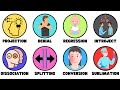
Understanding Psychological Defense Mechanisms: Key Types and Examples
Explore the major psychological defense mechanisms individuals use to protect themselves from emotional distress. This summary explains mechanisms like denial, repression, projection, and more, providing real-life examples and insights into their functions and differences.

Mastering Emotional Resilience: Techniques for Lasting Change
This video explores the science of emotions and offers practical techniques for emotional regulation, cognitive reframing, and building resilience. Learn how to manage your emotions effectively and transform challenges into opportunities for growth.
Mastering Emotional Resilience: The Art of Cognitive Reframing
This video explores the concept of cognitive reframing under pressure, teaching viewers how to transform pain into power and develop emotional resilience. It outlines a three-phase approach to mental conditioning, emphasizing the importance of maintaining humanity while building strength.

Understanding Emotional Triggers: The Path to Inner Peace and Self-Integration
This video explores the concept of emotional triggers and how they reflect our inner selves, drawing on Carl Jung's theories. It emphasizes the importance of understanding our reactions to others as a pathway to healing and self-acceptance, rather than seeking control over external circumstances.

The Impact of Childhood Trauma on Parenting Styles and Mental Health
Explore how childhood trauma shapes parenting styles and leads to mental health issues, backed by extensive research and case studies.
Most viewed summaries

A Comprehensive Guide to Using Stable Diffusion Forge UI
Explore the Stable Diffusion Forge UI, customizable settings, models, and more to enhance your image generation experience.

Kolonyalismo at Imperyalismo: Ang Kasaysayan ng Pagsakop sa Pilipinas
Tuklasin ang kasaysayan ng kolonyalismo at imperyalismo sa Pilipinas sa pamamagitan ni Ferdinand Magellan.

Mastering Inpainting with Stable Diffusion: Fix Mistakes and Enhance Your Images
Learn to fix mistakes and enhance images with Stable Diffusion's inpainting features effectively.

Pamamaraan at Patakarang Kolonyal ng mga Espanyol sa Pilipinas
Tuklasin ang mga pamamaraan at patakaran ng mga Espanyol sa Pilipinas, at ang epekto nito sa mga Pilipino.

How to Install and Configure Forge: A New Stable Diffusion Web UI
Learn to install and configure the new Forge web UI for Stable Diffusion, with tips on models and settings.
Found this summary useful?
Take it with you. One click puts it in your own LunaNotes library.
Save to LunaNotes