Classification of Numbers: The Foundation
Real vs. Imaginary Numbers
- Real numbers: All numbers from -∞ to +∞ (e.g., -1, 0, 1, 2, 3...)
- Imaginary numbers: Numbers with a negative under the square root (√-1, √-2...), represented by 'i'.
Important Note: Imaginary numbers don't exist on the real number line.
For a comprehensive guide on real numbers and their classification, check out Understanding and Classifying Real Numbers: A Comprehensive Guide.
Types of Real Numbers: A Quick Breakdown
1. Natural Numbers (N)
- Definition: Counting numbers given by nature.
- Set: 1, 2, 3, 4, 5... (starts from 1)
- Key Rules:
- Zero is not a natural number.
- No negative number is a natural number.
- All natural numbers are positive.
To dive deeper into natural numbers, primes, and integers, explore Mathematics for Data Science: Natural Numbers, Integers, and Primes.
2. Whole Numbers (W)
- Definition: Natural numbers including zero.
- Set: 0, 1, 2, 3, 4...
3. Integers (Z)
- Definition: Includes all positive numbers, negative numbers, and zero.
- Categories:
- Positive integers: ...+1, +2, +3...
- Negative integers: ...-1, -2, -3...
- Zero: Neutral, neither positive nor negative.
Spotting Numbers: Prime, Composite, Even, Odd, and Perfect
Even and Odd Numbers
- Even: Set of natural numbers divisible by 2 (form: 2n).
- Odd: Set of natural numbers not exactly divisible by 2.
Prime Numbers
- Definition: Numbers divisible only by 1 and themselves.
- Smallest prime number: 2 (also the only even prime number).
- Smallest odd prime number: 3.
- Formula for primes > 5: 6k ± 1 (e.g., for k=7: 7·6 = 42; 42+1=43, 42-1=41, both prime).
Composite Numbers
- Definition: Numbers divisible by a number other than 1 and itself (more than 2 factors).
- The number 1: Neither prime nor composite.
Co-Prime Numbers
- Definition: A pair of numbers with no common divisor other than 1 (HCF = 1).
- Example: (9, 25), neither number is prime, but together they are co-prime.
- Rule: Any two consecutive numbers are always co-prime.
Perfect Numbers
- Definition: A number where the sum of all its divisors (excluding the number itself) equals the number.
- Example: 6 is perfect because its divisors (1, 2, 3) sum to 6.
- Counterexample: 3 (only divisor is 1) and 8 (1+2+4=7 ≠ 8) are not perfect.
Smallest & Largest n-Digit Numbers
- Smallest n-digit number: 10^(n-1)
- Largest n-digit number: (10^n - 1), which equals n times the digit 9.
Important Summation Formulas
- Sum of first n natural numbers: n(n+1)/2
- Sum of squares of first n natural numbers: n(n+1)(2n+1)/6
- Sum of cubes of first n natural numbers: [n(n+1)/2]²
Rational vs. Irrational Numbers
- Rational numbers: Can be written in p/q form (q ≠ 0). Includes terminating and repeating decimals.
- Irrational numbers: Cannot be written in p/q form. Examples: √2, π.
- Critical distinction:
- π (pi) is irrational.
- 22/7 is rational (it's a fraction, not the true value of π).
BODMAS: The Order of Operations
- Bracket (solved in order: vinculum, , then ( ), then { }, then [ ])
- Of (multiplication, solved before regular multiplication)
- Division
- Multiplication
- Addition
- Subtraction
Important: Addition and subtraction are performed left-to-right, not arbitrarily.
Divisibility Rules at a Glance
| Divisor | Rule | |---------|------| | 2 | Last digit is even (divisible by 2). | | 3 | Sum of all digits is divisible by 3. | | 4 | Last two digits are divisible by 4. | | 5 | Last digit is 0 or 5. | | 6 | Divisible by both 2 and 3. | | 8 | Last three digits are divisible by 8. | | 9 | Sum of all digits is divisible by 9. | | 10 | Last digit is 0. |
Solved Example: BODMAS in Action
Question: 5 - [96 ÷ 4 of 3 - (16 - 55 ÷ 5)]
Solution:
- Solve inner bracket: 55 ÷ 5 = 11; then 16 - 11 = 5
- Now: 5 - [96 ÷ 4 of 3 - 5]
- Solve 'of' (multiplication): 4 of 3 = 12
- Division: 96 ÷ 12 = 8
- Inside bracket: 8 - 5 = 3
- Final: 5 - 3 = 2
For a broader revision of similar topics, see Class 10 Maths Half Yearly Marathon: Complete Revision of 8 Chapters.
Key Takeaway: This class is designed to be a definitive revision, every theory point maps directly to exam questions. Practice the BODMAS and rational/irrational conversion problems thoroughly to secure marks in the number system section.
Hello, dear children, I extend a special warm welcome to all of you. I hope you're all well and your studies
are going well. Children, in today's class, we're going to completely finish the number system. The class may be a
little long, so you'll need to be patient. But rest assured, if you finish today's class, you'll have a
couple of questions in your stomach, as arithmetic carries five marks. You'll definitely get two questions from
today's class. Theory has been covered, as well as previous years. What types of questions might be expected in our
exam? All of those questions have been asked. This class has been designed with a focus on the stomach. However,
the standard of questions is comparable to those of anyone preparing for other papers, whether they're preparing for
NTPC, Railways, or SSC. That too will be beneficial. Because one's basic, theoretical portion never changes. So,
my son, I have come with full enthusiasm and awareness. You know, just as you love me in the 9:00 am
class, you have to give me the same love in this class, children. Today's class is a little different because
there we are practicing the number of questions and our focus is on the chapter-wise series. Is it clear, dear
children? So, you will not interrupt and say, "Sir, I am hungry. I need to drink water. I have to do this." You
must stay connected until the end because only then will the entire class run smoothly. Now, let me take comments
from my dear children, as I can see in the comments. These were the first to arrive. Nandini Pandey, good evening.
Ah, Sanjana Maurya, Aditya Patel, Nikta Nishad, Tanya Yadav, Ajay Kumar, Deepak Kumar, okay, okay, okay, okay. Monu
Mishra has arrived. I don't know if he is just chatting with someone. Okay, okay, okay. Miss Sharma has arrived.
Happy Navratri, Guruji. Yes, look, I forgot. I was thinking earlier. Happy Navratri to all of you, my children.
And today I pray to Mother Goddess that you have jobs by the time next Navratri comes. Okay? So tell me, are you all
ready? In a way, send a thumbs up or a heart. Then I'll start the class, son, and we'll study slowly and patiently.
If you have patience, you'll get selected quickly. You'll get flustered, right? Some of the students interrupt
me and say, "Sir, hurry up, do this or that. Just keep going as I'm going. I'll get you into a new position." Okay
. Now tell me quickly, dear children. Then I'll start the class. Tell me quickly, let me check the comments. Oh,
ho, ho, Sushma has arrived. Very, very good. Let's send it quickly, friend. Ajit Kumar, your name has been
mentioned, brother. Be happy. Okay, keep working hard, stay connected with us, kid. Now, just watch one more thing
. I've taken everyone's comments and seen which kids are connected. Gradually, more will join. Now, don't
expect this from me, kid. Think of our class as if it were a movie; you just keep watching. I'll talk to you
occasionally, and when I do, you'll have to reply. Otherwise, you'll have to ask questions like, "How are you in
love?""Where are you from?" You shouldn't do that at all. Because, if you don't get selected, you know no one
will support you. So, kid, without wasting any time, I'm starting the class. Is that okay? Yes. Let's start
with the number system. The kids I've assigned to today's class mainly cover a few other chapters: whole numbers,
fractions, and decimals; general arithmetic questions; exponents and quotients; and powers. Equations with
one variable, a lot of things mixed into the number system, you'll see in today's class. Various arithmetic
questions, which I think are miscellaneous, are also included in today's class. So, without wasting time
, children, I'm starting with the basics. First, let me explain a little about the number system. One question
will be directly related to the basics in your paper. Look, this slide is white. The rest are black. Don't worry
at all. The question is asking this. What is the question, dear children? The question is this. The question is
about the classification of numbers. The classification of numbers. Basically, we're teaching you by
dividing them into two categories. In this, we have the same thing in front of us, son. There's a slash here. It's
not different. Okay? So, we divide it into two categories. One is real numbers, and the other is imaginary
numbers, children. The Hindi word for real number is real numbers, and imaginary number is also non-real
number or unreal number. Both of these have the same meaning. Imaginary number or non-real number, both are the same.
So, what are real numbers, children? Real number means all the numbers from minus infinity to plus infinity, which
category do they all fall into? They fall into real numbers. For example, -1 , -2, -3, -4, and then start with plus,
1, 2, 3, 4, 5, 6, up to infinity. All these numbers are real. So, imaginary means, children, like under root, if
there is a minus, -1, -2, -3, etc., this type of number is called imaginary number. So, in a way, it goes into
minus, son. In minus, there is an i. For which i is also replaced with 0. It is also called ai ot. Dear children,
this. However, you don't need to do it according to your stomach. My children, you just need to keep this one thing in
mind. How do you recognize imaginary numbers? It should be inside the minus under the root. Actually, we can see
this number in our imagination. This number doesn't exist in reality. And when it comes to real numbers, all
numbers from minus infinity to plus infinity are called real numbers. I hope this slide is clear to you. I'll
move on to the next slide. There are a few things, my children. I've written them down directly to save us some time
. Otherwise, even if I were to teach these things in writing, it would take more time. That's why I've written them
down in today's class. For example, if I talk to you, my children, about natural numbers, I'm talking to you,
dear children, about natural numbers. Natural numbers mean numbers that are given to us by nature. So, they are
given by nature, like one, two, three, four, five; All numbers of this type are real, natural numbers. It's also
written that the set of numbers used in counting is called natural numbers. It is represented by n. It's a simple
thing. Natural numbers start with one. I hope this is clear to you. Now, let's move on, children. I've noted it here.
Even this often leads to the child making the mistake of saying, "Sir, zero isn't a natural number." That's
absolutely correct, child. If a number starts with zero, like 0, 1, 2, 3, 4, then they are natural numbers, and if a
number starts with zero, then they are, in a way, whole numbers. The next slide will explain: "Zero is not a natural
number." Zero is not a natural number. No negative number is a natural number. All natural numbers are positive. You
have to memorize these three points. I'll upload this PDF to Telegram after class is over. So, whenever you take
the exam or after class ends, my child, you have to read this entire theoretical portion once. The question
says zero is not a natural number. The second one says no negative number is a natural number. All natural numbers are
positive. All three points should be clear. Now I'll move on, son. What does he say next? The smallest number of n
numbers. Well, this is often a big confusion for children. Comment once, the new student, sir, please,
Radhe-Radhe. Okay. New student, Kiran Kumari, Radhe-Radhe to all of you. Look , Ranveer has also come. No, son, you
don't have to talk. You know when your teacher is teaching so seriously. Right now, I feel like I'll finish the theory
as soon as I get it done. When you come to the question, I'll give you the question, wait for your answer, and
you'll answer, then I'll explain. But I won't teach you the theory. I haven't even studied it myself. So, children,
you just have to listen; I'll upload the PDF later. You don't have to read it by looking for screenshots or
anything else. Okay? You'll get the full PDF. I asked you what the smallest n-digit number is. This can be very
confusing. For example, if I say, "Tell me the smallest five-digit number," or "Tell me the largest five-digit number,
" you have to think a little. So, keeping this in mind, what did I do, child? I created a result for the
smallest n-digit number, which is always written as n-1. For example, if I ask you, "What is the smallest
three-digit number?" What is the value of n here, son? What is the value of n? What is the smallest n-digit number? It
will be n. Now, you can convert it to n -1. If you multiply n-1, what happens there, son? If you multiply n-1, add
two zeros. How many zeros will you add after that, son? Two zeros. Because here, the smallest n-digit number is
mentioned. So, basically, if someone were to ask you, "Two," forget the smallest two-digit number, everyone
knows that. Now, tell me, what is the smallest three-digit number? What would be the smallest three-digit number, son
? So, you would subtract one from n, the smallest three-digit number. If you go to 1000, son, it would be four
digits. So, you would subtract 1 from it, as there are three zeros. If there are three zeros, then you would
subtract one from three, only then you would get triple 9. Yes or no? And here , if we talk about the largest n-digit
number, n is the answer. And it is written in this format. For example, if I were to ask you, "What would be the
largest three-digit number?" So, triple , the largest four-digit number, it will appear four times. What is the
largest five-digit number? Five times nine will appear. It's simple. Zero comes in this. Just remember this and
subtract one. Is it clear, dear children? It's a very simple matter. You must have understood it. Let's move
on to the next question, dear children. In the next question, I worked hard and wrote down three formulas in one place
for you. I know, son, but it's the last time, so revision is necessary. It's the last time. So, in today's class,
I'll have you revise. Completely. What are you saying? The formula for the sum of the first n natural numbers is "n (n
+ 1)/2." After that, the formula for the sum of the squares of the first n natural numbers is "n (n + 1)(2n + 1)/6
." After that, the formula for the sum of the cubes of the first n natural numbers is "n (n + 1)/2," and we'll
round it off by bracketing the total and making it a whole square. Although I taught this in the average class, I
still felt it was important to share it with the children. So, children, all these formulas should be ingrained in
your minds. Now, there's no time left to think about revising them after a month. No, son, there's no time now.
I'm teaching today, so we have to finish it today. I don't need any pending work at all. After that, I've
written a few small things about what integers are? The group of numbers that includes cubes, negative integers,
integers, and zero is called integer numbers. For example, zero. Now, let's assume that we represent the integer
number here as a number, son. For example, let's say zero, then moving from 0 to -1, -2, -3, -4, and moving
from 0 to +1, +2, +3, +4, and up to infinity. So, these are negative integers and these are positive
integers. But the question arises: what is zero, sir? Is zero negative or positive? So, child, you will say that
zero is neither negative nor positive. It is neither positive nor negative. It is neutral, in the middle. It must be
written somewhere. If it is not written , then you can write it down. Zero is neither a positive integer nor a
negative integer. It is neutral, son. What is it? It is indifferent. It is neutral. This brother is not with
anyone. It is just that since you have come, he is supporting you, saying, " Brother, I am with you." The other one
has come. Brother, I am with you too. I don't want to harm anyone. So, what is zero like, son? It's neutral,
indifferent. It's neither negative nor positive. You have to keep this in mind . Let me continue, dear children. It
says "Integer Number,""Perfect Number." Well, sometimes questions are asked about this. I've written the theory.
I'll explain it through two or three examples. Don't worry, my son. The question says, "Son, if the sum of all
the divisors of a number n, excluding n , equals a given number n. Except n, such numbers are called integer numbers
. Meaning, they're called perfect numbers." Now, I know I've said it very clearly. You might not have understood.
Now, let me take an example. I'll explain it through it. For example, let's say I took the example number
first, son. I said, "Example Number First," like the one in front of you. Suppose I said 3n, then which numbers
divide three? So you'll say one is divided by three, and one is divided by one. Now he's saying excluding n,
meaning excluding three. If I exclude three, how much does it equal? One. So, does one equal three? Then you'll say,
"No, sir." That means, brother, this isn't a perfect number. What kind of number is this not, son? This isn't a
perfect number. Another example, brother, what other example? Suppose I took six. Now, dear children, break six
down. So, six is divided by one, divided by two, divided by three, and divided by six. The definition says to
leave n out, brother. So, here, n is left out, left out. Now add it up. What is 1 + 2 + 3, son? This is six. And
what was this? Six. When added, the factors equaled this. Exactly. Did the factors equal this or not? Exactly. So,
they equaled this. This means it's a perfect number. This is the story, children. Let's take one more example.
I said eight. So what divides eight? One, two, four, and eight. Leave eight aside. Add the rest. So, what is 1 + 2
+ 4? What equals this? No. This means eight is not a perfect number. I'm not talking about a perfect square. I'm
talking about a perfect number. I'm talking about integers, my children. So , through these examples I've shared,
my sons, please tell me once whether your concept has become clear or not. Tell me quickly, my children. Tell me
quickly, my son, is this thing clear? Now, comment once: Sir, everything is going well, because I'll be asking you
questions every two or four minutes. Tell me, so far, whatever I've explained, you've become 100%clear on
the theoretical portion. Tell me quickly, my children. I need students studying in today's class. I need to
get them selected. So, in a way, we need an audience that's willing to read . These love stories are useless.
There's no point in getting such praise , son. Well, how will you recognize Sir ? Son, we'll have to break it down and
see it, only then will we be able to recognize it. You won't know it by looking directly at it. Speak quickly.
All clear. Okay. Okay. Now I'll move on . I'll talk to you again later. Let me finish this for now. After that, I'll
stop and talk to you again. After that, this is a very small matter. I won't waste even two seconds on this. The
question is asking, what are even numbers? So, you all know that the set of natural numbers divisible by two is
called the set of even numbers. Any even number is in the form 2n. Why would it be in the form 2n? When
divided by two, it will definitely fall into the table of two. So, understand this way: all numbers divisible by two
are even numbers. They are even numbers . That's how my children come here in the case of odd. So what are odd
numbers? The set of natural numbers that are not exactly divisible by two is called the group of odd numbers. Or,
numbers that are not even are called odd numbers. Simply put, numbers that are not divisible by two are odd
numbers. Now, you know this, but I know that I've included some things just for your revision, because these are known.
But there are some things that I've included for revision. I'm not taking up too much time on this. I won't spend
time on things that you already know. Now, I've marked some stars and written some points here. You should memorize
them. What is the smallest prime number , son? It is two. What is the smallest and only even prime number, son? It is
two. Two is a number that, despite being even, is still a prime number. Despite being even, it is also a prime
number. There's no number in the rest of the world that's both even and prime . Except for whom, son? Except for two.
Two is both even and prime. Meaning, even and prime. So, you have to keep this in mind. Yes. If you ask for the
smallest odd prime number, sir. If you're asked, "Sir," the smallest odd prime number, you should say three.
After that, I said that every prime number has two factors. Yes, I'm absolutely right, son. Prime numbers
are prime numbers. Prime numbers have two factors, don't they? How many factors do they have? Two. So,
understand it this way, my children: any number that is divisible by itself and one, and not divisible by anything
else, is called a prime number. Numbers that are divisible by themselves and one are called prime numbers. What did
I say after that? A prime number greater than five or five is of the form 2 plus -1. If a number is greater
than five, son, you can check it by adding 2 and subtracting 1. You'll get a prime number. For example, if it's
seven, you'll substitute 7 for it: 7*6 = 42. Add one to 42 to get 43 and subtract one to get 41. Both are prime.
If you know this, you can check it that way, no problem. Let's move on, dear children. Look, I've talked about
primes. Now let's talk about divisible numbers, meaning composite numbers. Look, son, a prime number means one
that has two factors, and more than two . This means a number is divisible by any number other than one and itself.
All of them are composite numbers. So, what are numbers in Hindi? They are composite numbers. Son, if a number is
divisible by itself and any number other than one, then that number is a composite number. For example, if I
tell you that four is divisible by one, by two, and by four. So look, one, two, three have become factors. This means
what number has it become? It's a divisible number. Just like six is divided by one, two, three, and six. So
, where does this fall? The divisible number. You have to keep this in mind. Okay, sir. What do you have to note
down? Look how hard I've put into this PDF, children. I've mentioned every single thing that's wrong in today's
class. If someone ever asks you what kind of number one is? One is neither a composite number nor a prime number.
One is neither prime nor composite. Son , one is neither divisible nor prime. You have to keep this in mind. One is
neither divisible nor prime. Is it clear, dear children? So, you have to note this down. Let's move on. What did
he say next? A prime number. There's a lot of confusion, children. A prime number, a co-prime number. A pair of
two numbers that have no common divisor other than one are called coprime numbers. If you didn't understand,
understand it this way: two numbers whose HCF is the same, whose HCF is the same, whose HCF is the same, with
nothing in common other than one. What are such numbers called, son? They are called prime numbers. For example, if I
tell you, this is nine. This is 25. Now look, nine is not a prime number, and 25 is also not a prime number. But both
are prime numbers. What kind of numbers are they, son? They are prime numbers. Because 25 and nine have nothing in
common. You can take other examples from around the world. Take three, take five, write seven, write nine, write
anything, or any number written with a gap of two. Will all of them go into what? Will they all come in coprime?
Yes or no? Not with a gap of two, meaning write any number consecutively. For example, if you write two, write
three. These are coprime numbers. Write 10, write 11. If you write two consecutive conjunct numbers, two
consecutive conjunct numbers, they will be coprime. Is it clear, dear children? Okay? Let's move on. Yes. Now, son,
understand this a little. There's a lot of confusion between rational and irrational numbers. They're called
rational numbers, son. Rational numbers mean numbers that we can write in p/q form. Meaning, we can write them in an
up form. For example, if this is 3/5, we write any number in 3/5. Meaning, it's written. So, what is this, son?
It's a rational number. It's a rational number. Or we can write it by removing the point. And what does it say? A
number that can be represented in the form p/q where p and q are integers and q is not zero. If q becomes zero, it
becomes infinity. If the value below, for example, you write five above and then zero, it will become infinity. So
this is not possible. Just make sure that the value of q is not zero. Okay? Let's move on. Next, he said, "Son,
what are irrational numbers?" Numbers that aren't rational are irrational. Meaning, what are those numbers that
can't be written in the p/q form, son? They are irrational. They are irrational numbers. But you also have
to write a note. What did I write in the note? Now, look, we often know that the value of pi is 22/7. Pi also has a
value of 3.14. Children, there's a difference between the two. If it's written normally, that pi is an
irrational number. Talking about pi, pi is irrational. Whereas if he writes 22/7 for you. If he writes 22/7 for you
, it's a rational number. Because this form is p/q. But the value of pi, which you write as 3.144, goes on and on.
It's never ending. Not ending means it can't be in p/q form. So, what does this mean? We can't call it a rational
number. So, keep this in mind: those whose pi by q form is written are rational, and those whose pi by q form
isn't written are irrational. If someone asks you what pi is, say it's irrational. If someone asks you what
22/7 is, say it's a rational number. Because children get very confused because they'll say the value of pi is
22/7, so the result should be the same. No, no. If it's written as pi, it's because the value of pi varies so much.
Many people have done research on this. Books have been written asking what the exact value of pi is. To this day, it's
still unclear. It goes on and on in integers. That thing just doesn't end. So if pi comes, it's irrational, and if
22/7 comes, it's rational. Tell me quickly, son, is it clear? Now, leave a comment and tell me, Sir, that we have
no doubts about this. After that, I'll move on, because I'll definitely talk to you in between and I'll have a drink
of water. My throat is dry. Yes, sir! Where are you guys coming from? Rajput ji, you're coming so late, how will
things work? Class for you guys...And I told you before, son, that I'll start class today at 4:00, but you guys don't
come on time. Look, this is wrong, son! The teacher is working so hard, and you're not coming on time. This is
wrong. Right now, Kumar is saying, " Blue flower, yellow flower, Sir, you're beautiful." Hey, brother, I'm not
beautiful at all; I'm Kalu. "Sir, I'm on the job, sorry, sir. Okay." Okay, okay, no one, no one. Chief Minister
2027, Jai! Oh man, what a name you've come up with, Chief Minister 2027! Aditya Patel, sir, recite a poem. Hey,
friend, I'll recite it later. I can't. Just read it now, let me finish some theory. I'll recite it for you after
that. Don't worry. Finish the theory. When we get to the questions, I'll give you the questions. Then I'll have some
time left. Right now, I'm just teaching a little bit. Okay? No one. No, no, son Rajput, it's not an issue. Let's get
started now. Let's move on, dear children. Okay. Oh, ho, ho, wow, the questions are here. Look, it's not like
that yet; the theory is complete. Now, the basic things, the little things, are often missed. So my effort was to
ensure that these were not missed, and I hope you've noticed that I only studied the small things, but sometimes
, if a direct question arises on these, it gets missed, son. Now, I'm teaching you what questions can be made related
to these. And all the chapters are mixed. It's not like that. There are all these questions on rational,
irrational, unit, digit, surds, ends, decimals, largest value, smallest value in the entire class. Today's class is
going to be a long one. Now do this question quickly. Do it, son. Hum, hum, I've moved aside, son. Look, now I'll
coordinate a little bit. Since the theory is complete, I'll give you some time too. Now tell me the answer to
this quickly. Tell me the answer to this quickly. Let's see whose answer comes first. Hum, hum, three is coming.
Three is coming. But think a little about whose answer came first. Sorry for the delay. Sanjay Kumar, no one.
Kiran Kumari, "Sir, please, I understood. Sir, please, Sir, please, I didn't understand. Sir, please." Kiran
Kumari, tell me what you didn't understand. I haven't taught any questions yet, and tell me what you
didn't understand. Whatever I taught was written on the board; I just explained it. There's no question of
understanding or not understanding. I've shown you at least 15 or 16 slides so far. Tell me which point you have
doubts about. I'll explain it to you in a better way. Don't worry, just in case there's a particular point. Okay? The
question is asking about prime numbers greater than four and smaller than 16. So, one greater than four is five, one
is seven, one is 11, and one is 13. Add them all up. What's the point, son? So how much does this amount to? If you
add 12, 12, and 13, then the sum of 25, 35, 36 becomes 36. Now it says 1/4 of the sum. So subtract 1/4 of the sum,
then divide it by four and you get nine . What number is this square of? So, son, what is nine the square of? Three.
He's not asking directly. Look how he's twisted it. Add the numbers greater than four and less than 16 and take 1/4
of it. How much? If you take 1/4, what will the resulting number be the square of? It will be the square of three.
There's no time to waste time. Tell me the answer to the next question. How is a prime number greater than five
represented? I've already explained it. It's 6k + -1. 6k + 1 is -1. 6k + 1 is -1. Is it clear, children? I've taught
you this in theory. Is it clear? Let's move on, dear children. The next question for you is: tell me the
product of the first five whole numbers . What is it? What will be the product of the first five whole numbers? How
much? You asked a fake question. Whole numbers start with zero. After zero, there's one, two, and so on. Forget
about five, up to infinity. Write 500,000. Once zero is reached, any number multiplied by zero will make
everything equal to zero. It will make everything equal to zero. Yes or no? It will make everything equal to zero, son
. Tell me further. How many digits will be needed to write numbers from one to 50? Tell me, my son. How many digits
will be needed to write numbers from one to 50? Brother, there's no point in getting into political discussions here
. Study quietly, and figure out who will succeed and who won't. But if you don't get a job, trust me, your life
will be hell. Those who don't succeed have such wealth. These are the kings and emperors you're talking about. No
matter what happens, his seven generations can live off it. If he doesn't make a single penny, you
understand, right? I teach here, so my family can survive, and you'll get a job. So, put these things aside. Son,
let's not talk politics. I'm a teacher here, right? And you're my student. Whenever these things are discussed, we
don't do it like this. Sometimes, sitting down and talking is a different matter, but right now, your focus
should be on studying. Son, Mahi Chaudhary ji, you're coming so late, my friend! 91 is up, very good. Look, son,
it's a simple matter. Sometimes we make mistakes. So, from one to nine, it's a simple matter: nine is up. Now, son, if
you subtract nine from 50, you're left with 41, and 41 is left with those two-digit numbers. Hey, tell me one
thing: from one to nine, it's a single digit, so nine is up. Now if we subtract nine from 50 then 41 is left,
so the remaining 41 numbers are all two digits. So if you multiply it by two then it becomes 82, so add 82 and raise
it to nine, sorry, add 82 and raise it to nine, how much will you add, son? 82 will become ours. 91 is the correct
answer of this question. 91 is the correct answer of this question. 91 is the correct answer of this question. Is
it clear dear children? Yes. Let's move on to the next question. The next question is about the different concept
which was absolutely basic of our number system, that has been completed. The next concept has come. A new
concept has come which is related to board mass. You must be understanding board mass. All these are orders. You
know the order of writing BODMAS while solving. Whenever we solve a simplification question, we will write
BORD MAAS like this. BORD MAAS and the full form of all the words is written. However, technically, there is another
bar after this. The viculum that appears, we solve the bar first. If it comes, otherwise, board maas has to be
kept in mind. B means bracket. OFF means of. It means multiplication indirectly. But look at multiply, here
too there is multiply and if both multiply and OFF come, then we will first solve the multiplication with OFF
, then the real multiplication. D means division, M means multiplication, A means addition and sab means
subtraction. You have to remember this, Boss! Well, our children get confused with some brackets. Son, this bar that
is placed above any number, we basically call it bar in our language; By the way, it's written as a ventricle
, or it's also called a line or bar bracket. Sometimes, this bracket is called a small bracket in our language.
This one is called a curly bracket. It's called a major bracket in Hindi. And it's also called a square bracket
or a large bracket in our language. So, remember them by their shape. The paper won't ask what their name is. What's
their name? First, understand that if all these brackets are in a question, this one is solved first. Then comes
this one, and then this one. Memorize them by their shape. If all the brackets are in a question, the small
one is solved first. Then comes this one, and then this one. Is it clear, son? You have to keep this in mind. Now
, what's the next question? We've raised questions related to this. Let's discuss that. Children, you'll solve
this question first. I'll step aside a bit. Now I'll give you time. Quickly, my children, tell me the correct answer
. This question is written. 5 minus the large bracket is opened. 96/4 of 3- small bracket. 16-55/5-small bracket
and large bracket are closed. Quickly, tell me what the correct answer is. Do it, children. Tell me the correct
answer. Mahi Chaudhary, I'll come to check if everyone is studying. Okay, today's class is private. All children,
please pay attention to this. This class is not very live, as many children are not coming right now. You
might be thinking we'll see later, but this class will definitely be private; because the chapter-wise class on the
number system is very technical. If children join now, it will be beneficial for them. Two of our
children are coming, C...we...let's solve it, dear children. Look, first of all, let's break the small bracket. Son
, if I divide this by 5, I get 11. And look, son, let's not just write it down , let's use some common sense. Divide
55 by 11 and subtract 11 from it. Are you getting it right? Subtract 11 and 11 from it, and you'll get five. What's
the value of this? Five. Okay? Inside this bracket. Now let's check something here. First, the OFF will be solved.
Son, will it be solved? Like, if we write BORD MASS (), BORD MASS; so first the bracket, then the OFF. So, if we
solve OFF, it means multiply. If we do this, we get 12, so 12 will subtract 96. So, 5-the big bracket is 8. And how
much is going on here, son? If you subtract 5 and 5 from this, you'll be left with three, and there's already a
minus here. And 3 taken from 5, you'll be left with two, dear children. So, the correct answer to your question
will be two questions. Let's move on to the next question. My children, the next question is something like this.
Please read this question carefully and answer it. The question says if 48/72*3 close the bracket-15/8*small bracket
40-32 close the bracket-10 close the large bracket. And later it is written + 2p = 6/2, then find the value of p.
You have to tell me, dear children, how much will it be. You have to tell me how much p will be. Hurry up, my
children. Kiran, is it a mistake? Is it my mistake? Sir, what happened? Please tell me, what is your doubt? Tell me
once, write a long comment, I will read your comment, son, don't worry. Just tell me what the problem is. Do this
question once, dear children, break it down to four. Very good, very good, the public is going with four. Tell me
quickly, friend, what will happen? The value of p will be three. Ranveer is saying three. Okay. Yes, sir. Let's go
with three, our child. Let me check the rest. Look, son, there's not a lot of writing involved. A little bit of
thinking is required. But you have to keep this in mind: if the board's remainder is even slightly off, the
answer will be wrong. Then, first, the smaller number in the bracket is 8. How much will it be, son? Eight. Now tell
me, divide, and which one will be solved first? First, subtract 8, then divide, then multiply. So, first,
divide, so I'll divide 15 by 8 and add 8, then this will cancel out. So, basically, solving this, we'll have 15
here and 10 there, so I'll solve it all from here to here, son. So, five. How much will I get? Five. Now, let's come
here, son, and look at it in the brackets. So, this is 48 divided by 72, and add 8 will be 3. Okay, this is how
we'll cut it...are you doing it right? Or subtract 24 from this and subtract 24 from this twice, and you get 2. Okay
, so I'll write it here, son. This gives you 2, and this gives you minus 5 , minus 5 = 2p, and equal to 2. Divide
this by 3, and we get 3. Now, subtract this from this, and -3 = 2p, and + 3, -3, goes here and becomes plus 3. So,
the value of p should be 3, son. Look, is it 3? The D option should be, according to me. Sometimes silly
mistakes happen, so please check it once. It must be 3, son. D is the correct answer to this question, clear?
Let's move on to the next question, dear children. Okay, son, everyone has answered. Very good, Rajput ji, it was
yours that was wrong. No problem. Move on to the next question. The next question seems simple. Tell me quickly,
my dear. What's the answer? Oh, yes, yes, son! Tell me the correct answer quickly. Do this one too, friend,
quickly. Why are you taking so long, son? I told you to solve the smaller one in the brackets first, paying
attention to the board mass. The board must be kept in mind. If you don't pay attention, you'll get the wrong answer.
So, bracket, then after that, solve off . Bracket, and after that, what will you solve off? Off. So, children, if I
solve this bracket once, you add them together, their sum becomes 11, and 11 is subtracted from this, it becomes
seven. Now, seven divided by 14, it remains seven. Then divided by 16, it leaves nine. Then nine divided by 25,
it leaves 16. It should come out to 16, son. You'll see, you're getting 16 too. Tell me clearly once, quickly. It
should come out to 16, dear children. The correct answer should be 16. Clear? 16 is the correct answer to this
question. Let's move on to the next question. The next question, kids, is very simple. I've asked you many such
questions in practice sets. So I hope you can answer it correctly. You'll treat these numbers as real numbers.
Nothing will happen to you. Just consider this as a and this as b. And break the question down. How? What it's
trying to say is that a + b squared is a² + b² + 2ab. If you open it there, it becomes a² + b²-2ab. And it's
written twice below, it becomes a*a². This a² and this b², the minus and plus, will cancel out, and the top
becomes 2 a² + 2 b², and the bottom becomes a² + b². If we take the two common ones from the top, it means a²
+ b²/a² + b². This cancels out. The answer is two. If you use real values, you'll go crazy. You won't be able to
solve the question. So, basically, consider this number a. Consider this b . Once the question is solved, this
thing is useless. It becomes two. Is it clear? I hope it's clear. Let's move on to the next question. The question says
, "Look, this is a different type of question, kid. This will be new for you . So, try to understand this a little.
It's saying that this form is expressed in the equivalent form p/q. How can we write it in p/q form?" If you ever get
a question like this, understand what you'll do, son? What do you do if you get a question like this? Listen! Look
at this bar, this bar. How many digits are there below this bar? So, one, two. How many digits are there? One and two.
So, we write nine below the number of digits below the bar. What do we write? This is a bar, how many digits are
there below it? One and two. So there are two digits, so write two nines below and subtract them from nine 9*7
63 and 9*1 = 9, 9*1 = 9 7 11 is there anywhere? Exactly, B option is the correct answer of this question. B
option is the correct answer of this question. Tell me quickly my children, is it clear or not? Tell me quickly.
Let's move on to the next question. Four-five questions will be cleared like this. Tell me, break this question
and tell me. 0.3183181818 Now see from where is the repetition starting son? The repetition is happening that 18818
so to avoid repetition what will be placed above 188 sir? A bar will be placed above it. It will not be placed
above three because three is a single number. The repetition starts after that. 18818, so a bar appears above
188. Now, understand the concept here: how will it be written? How do you break it down? So, first, write down
the entire number. Will you write 318 like this? Absolutely. Now, tell me, which number doesn't have a bar? Three.
So, the number without a bar becomes a minus. So, brother, three is divided by three. Okay, how many digits are there
below the bar? One and two. So two become nine. How many digits are there without a bar? One. So, that becomes
zero. Clear? Didn't you understand? See what I'm saying, son? First, the repetition will come above the number
18818. So, it won't come above the three; it's above 188. How do you break it down after that? Like, 318, write
down the entire 318. Then, the number without a bar becomes a minus. How many digits are there below the bar? One,
two, so as many digits as there are nines. So nine appears twice, and how many times there is no bar? One, so as
many zeros as there are no bars. So this is one zero. Now if you subtract this and write it down, 315 divided by
990 should probably be subtracted by nine. Let's check this once. Subtract 9 from 9. 9*3 = 27. And what is the
difference, son? 9*5 = 45 9*1 = 9 9*1 = 9. You will subtract 5 seven times. You will subtract 5 two 22 times. 9 by 7/2
should be 7/22. 7/2 means option A is the correct answer to this question. Option A is the correct answer to this
question. My son, A is the correct answer. Tell me, is A the correct answer? Is it clear? Tell me, is it
clear, son? A is the correct answer. Tell me quickly. Hey, tell me. We'll move on to the next question, son. The
next question is something like this. Solve it quickly, son. Solve it quickly , friend. This won't work. Look, now
you have to see that there was a zero on the other side of the point. There's a one here. So, leave the one as it is.
Don't disturb it. Put a plus sign and write it as 13. How many numbers don't have a bar? Subtract one from the other
. How many numbers are below the bar? If there's a nine without a bar, this is 0. So, 1 + 12 and upon 90, if you
subtract six from six twice, you subtract 15 times. So, this gives 1 + 2/15. 15*1 = 15. And if you add two,
17/15 is the correct answer to this question. Where is 17/15, son? It's given in option D. So, option D will be
the correct answer to your question. Option D will be the correct answer to your question. Tell me quickly, it's
clear. Write question number six once, which one is it telling me, son Ranveer , write the answer of which number six
once, I will tell you. Come on, the next question is in front of you, son. Do it quickly. Let's hurry up, dear
children, let's do it, son, quickly, let's do this question. Let's do this question. Then we will take your doubts
. Son, we will see what it is. There is no need to worry. Write this down: 5 78. Now tell me, you will subtract five
from 5 78. Okay? And how many numbers are there below the bar? 99 and this without the bar. Now subtract this from
this, son. So it will come to 582. Okay ? And after this, 990. Now cut it apart , son. Tell me, by what should we
subtract it? Let's subtract this. It will be subtracted by nine. 10 and 15 will not be subtracted. By what should
we subtract this? If we sum them, 15 will be subtracted by three. Or by any bigger number because if you subtract
this from 87 then 82 will be left. Come on, subtract it. You subtract it by three. So 3*1 = 3, okay sir. 3*1 = 3,
two are left, 7, 21, 3, 8, 24, 3, 9, 27 and 3*4 = 12, 194 and this 3 0, now by what should you subtract, son? Now
subtract by two, so subtract by two; 2* 2 = 18, 9 and 2*7, 14, 97 and you will subtract by two, 2*1 = 2, 2*6 = 12 and
57 by 2 97/1 165 97/1, 165 is the correct answer of this question. 97/1 165 is the correct answer of this
question. Is it clear, dear children? Is it clear? And I don't know what Ranveer is saying in one question, "Sir
, I have a doubt. Let's explain it. Which one is the 16? Let's look at it, son. There's no problem. Okay, this is
the one I'm doubting, son. Let's try it again. There might be some silly mistake. Let's follow Boss. The thing
is, if you don't pay even a little attention, the answer will be wrong. In this, son, first we'll solve the small
bracket. This one, if we look at minus and plus, what comes first? First, the big addition, and then the subtraction.
So, if I add this to this, it becomes 11. And if we take -11 from 18, son, it becomes seven. There's no problem with
that. This inside value is seven. Okay? Now, after that, I'll bracket this one. This one is 7 and -7. So, when you
subtract this from this, son, seven will remain. How much will be left? Seven, and this bracket is going to be
16. If you subtract this from this, you get seven. And after this, there's just an empty number. No problem. Then
you'll solve this bracket. So, my child , when you subtract this from 16, you get nine, and if you subtract nine from
this, you get 16! 16 is fine, son. Are you having any doubt about this? Ranveer, how will it be 10? Okay, 16
will be the answer. Why are you having doubt about this, tell me. Sir, it's negative eight! Where is negative eight
, brother? This seven is left here. Okay, this is negative eight. So first, you'll solve the plus. In this, go to
the board exam, son. Brackets of divide , multiply, addition, subtraction. So first, you'll do the addition, then the
subtraction. So, first, you'll add this , then you'll come to this. If you subtract this from this, you're doing
10 and 10 and 10, 10 and plus 3, so you get 13, and 13 is getting one, and then you're subtracting one from 15. I
understand what you're doing. When you subtract this from this, the minus sign will become 10, and then you subtract
one from 13, and if you subtract this from this, son, how much will you get, 15, and if you subtract 15 from 25, how
much will you get, 10. But if you go to the definition, board mass ()— addition, subtraction, first you add,
then subtract. So first you add to this , son, first you add this to this, you add this to this, then you subtract
this from this. You won't subtract this from this first; first, if this is next to this, you'll add it, the addition,
then subtract this from this. Okay? You're getting confused, that's how it is. Is it clear or not? Tell me quickly
. Okay, this question is homework, son, because it's the same type. I've given you four or five questions, so you can
do whatever answer you get. Or you can tell me in the comments, or you can't, but you should definitely do it,
there's no problem. Now, let's introduce the concept of divisibility from here. Come on, son, let's move on
to divisibility. Come on, come on, okay , son. One thing to keep in mind, Aditya Patel, whoever you are, you're
this Google? Do you know that everything written on Google is 100% correct? Google throws up all sorts of
wrong things, so never trust Google so much. When we've told you that this is the case and even provided proof that
this will be solved first, and then this, Google is in for a rude shock! When we've written here, yes, sometimes
a silly mistake happens, it's accepted and a session is declared. But what is Google saying? Chat GPT makes all sorts
of mistakes. If I send you four questions and have him do it, and he'll send you the wrong ones, then that
means you don't trust the teacher, you trust him. Okay, no problem. The divisibility rule of 2, 4, and 8. Why
are all three of them written together, my child? Why are all three of them written together? The divisibility rule
of two, four, and eight. Look, son, two is pretty straightforward. The last digit should be divisible by two. If
the last digit is divisible by two, that number will be subtracted from two . It's very simple. Everyone knows it.
And the divisibility rule for four says the last two. Look, two is the last digit, and four is the last two digits.
Four is the last two digits, and if we're talking about eight, the last three are on the next slide. But the
last three digits, my child, if the last three digits are subtracting from eight, then that number will be
subtracting from eight. If the last two digits are subtracting from four, then that number will be subtracting from
four. And if the last digit is subtracting from two, then that number will be subtracting from two. So, all
three are the same. Please pay attention to this. Is it clear, dear children? Let's move on to the next
question, dear children. Do this next question. Do it quickly. Tell me the answer to this question, my children.
Tell me quickly, what is the correct answer? Side set. Well, I've already told you that. Look, eight has three
digits. After that, I'll move on. Look, we'll come, listen, my son. The question asks for the divisibility rule
of 3 and n. What does the divisibility rule of 3 and n say, son? If the sum of all digits—by the way, I've taught
you all this in the practice set, son —that if a number is divisible by three, the sum of its digits, the sum
of all digits, should be divisible by three. And the same rule applies for nine: the sum of all digits should be
divisible by n. If the sum of the digits is divisible by three, the number will also be divisible by three.
If the sum of the digits is divisible by nine, the number will also be divisible by nine. Is this clear? Let's
move on to the next question, son. Look , it's a simple matter: there's no need to memorize the divisibility rule of
six. Because if a number is divisible by two and three, what will it be divisible by? It will be divisible by
six. And we've already studied the rule for two and three. So, that's what we've covered here. After that,
divisibility by 11 is important. Read this once, dear children. Read the divisibility of 11 once. After that, I
will move on. Let me step aside. Look, all of you, children, read this once. Listen to me carefully, children. The
divisibility rule of 11 is very important, and what do you have to read in it? If the difference between the
sum of the digits at odd places and the sum of the digits at even places is zero or a multiple of 11. Now, you may
not have understood this through language. Do one thing, dear children. Do one thing, pick up your mobile and I
will see your comments. Don't use your mobile to Google two or three examples of multiples of 11. I am telling you
this in advance. Then you will say wrong. You will say that Google is making you do this. Open the calculator
in your mobile. Tell me the multiples of 11 on the calculator. If you want any big number. Now, don't just say
1331. Everyone knows that. Like five, six, seven, eight, nine. Any big number like that. Give me two examples. I'll
prove it by looking in the comments and writing it here, explaining the rule. While I'm drinking water. Tell me
quickly. Tell me quickly, dear children . Tell me quickly. Answer what I'm saying.
>> Otherwise, I'll use my calculator to tell you something. You tell me. Aditya Patel sent one. He didn't send it from
Google, son. 156, 7, 85 is fine. Send me one more example, son, and then I'll solve both. Mahi's number is 176, 25,
61. It'll be clear with just two. Now, how many will you ask me to write? It hasn't even come yet, but if anyone
else did, I would have told you. Look, look, Alia has also come. I've written down the 85 number. Okay. Okay. Okay.
Okay. Let's understand from both. Then listen, child. Now understand the language of what was written. It said
to sum the alternate digits. Like one after leaving one. Like this is five. You add seven to five. If you add five
to 12 and 12, it becomes 17. So from this side, it becomes 17. Now add from the other side. 1 and 6, 7 and 7 and 18
= 8, so 8 + 2 = 16, this is 15, this is 15. Check the difference once. This becomes 5 and this 12 = 12, and you add
this, oh yes, 12 and 5 = 17, and you add this seven seven from here, and add this, how much does it become? 15, the
difference will be two. You must have asked this from Google itself, Aditya Patel, take it, it is not deducting
from 11, now don't say that it is deducting from Google too. Now look here. Mahi sent this, let's check it.
One and five, six and six, 12 and one, 13. 13 is already here. Now let's go from the opposite side. 7 and two, 7
and two, 9 and 9, and son, how much do you make it? 6, 15, brother, what are you doing? This number won't even be
subtracted from 11. huh? Where are you sending this from? You're sending anything, anything. Divide it and see,
use a calculator. Come on, how much is this? 1 5 6 7 8 and after that 5/11, where is it subtracting? This is going
into points, after that, see it. 1 17 6 25 and after that 61 by 11, this is also going into points. Where are you
sending from? You must have Googled this. I think. These two numbers won't be subtracted. This one won't be
subtracted. This one won't be subtracted. I told you to send a multiple of 11. Ranveer, come on,
Ranveer sent it. Come on, see, this boy is fine. 1, 2, 3, 4, 5. Let's check it. Look, add five and three, it's eight.
Eight and one makes nine, nine from here. And if you add this and that, how much will you get? This makes five, the
difference is four, and that won't add up either. Hey, are you crazy? Okay, no problem, son. You must have understood
the definition. You can't send examples , so what can I do about it? I have examples waiting ahead, I'll get them
done. There's no issue. You're sending random examples. It's not making any sense. He sent another one. Let's check
it further. 6 7 8 1 5 Look, add five to this. 8 13 and 13 and this, add six. What's the result? 19 and from here,
let's subtract eight from this, 11. This number will be deducted 100% because 19 divided by 8 is 11, a
multiple of 11. Either zero or a multiple of 11, you're sending anything , friend. Okay, let's go. The questions
will come, we'll answer them. Two examples weren't sent to you properly. Are you preparing to become an
inspector? Huh? This is too much! I said that using my mobile phone, it's not like you couldn't tell using a
calculator. So what's the point of fooling me, son? I'm just proving it. If it's not zero or 11, it won't be
deducted from 11. So my question is, the examples they sent won't be deducted, and if it had been zero or 11
, it would have been deducted. What's the problem with that? Anyway, tell me the answer to this question. If the
number in front of you is exactly divisible by 2564, tell me which one is the correct answer? Read the entire
question and say the answer quickly. Hurry up. Okay, C! That's fine for you guys, okay, sir. C means two will be
substituted for this. Very good, very good, my child, very good! How smart are you? Brother, didn't you read the
question? It says which of these digits can't replace this dollar. This means three can, and the divisibility rule
for four says that if I substitute six, it becomes 64; if I substitute five, it becomes 54; if I substitute two, it
becomes 24; and if I substitute eight, it becomes 84. So this also gets subtracted, this also gets subtracted,
this also gets subtracted. So, son, what is 54 not divisible by? It is not divisible by four. That means five.
Option B is the correct answer. I have not asked you. I have not asked you. Read the first question. Which one
cannot come? Three options can come. Fourth cannot come. So five will be the correct answer. Tell me the answer to
the next question dear. Whose name do you want to take brother? Come on son, tell me the answer to this. He is
saying that this number is written as A , what is the smallest value that can be given to A to divide it by eight?
What is the smallest value that will come in place of A? Four options are given. Tell me and do you know the
divisibility rule of eight, son. How many digits? Last three digits are divisible by 8. Apply this rule quickly
and tell me the correct answer. Ranu Yadav has forgotten you. How are you commenting like this? You have not
forgotten, you are an old student, child. Do it my son. Tell me the correct answer to this. You're going
with three, last for three. So this is 6 a 32. If you divide it by eight, it will be subtracted. 8*7 56. How many
are left from 56? Four and 72. So this will be subtracted. It will be subtracted by three, son. Okay? Three
will be the correct answer. B is the right answer. Come on, tell me the correct answer, son. This is a simple
question. Now it says it's divisible by three, so what will be the maximum value of p? Brother, it's divisible by
three, so first eliminate the pairs of threes. This is divisible by three. This is divisible by three. And add
these two, and this is it, friend. This is also divisible by three. Their sum gives the value of p. So the value of p
will be a multiple of three. What did it say? What will be the maximum value of p? So this is also possible. This is
also possible. This is also possible. So what is the maximum value of p? And p is a single digit. Pi is a digit,
right? So this is not possible. Now, if we look at these, this is also possible . This is not possible at all. So, if
the largest possible value is no a, then a is the correct answer to this question. We, we are fine, son. Look,
it's simple. Don't get confused about why it's not 12, because pi is a digit, and a digit is a single digit. 12 is a
two-digit number, so we shouldn't look at it anyway, because p is a single digit. Where do the digits go up to
nine? Like 1, 2, 3, 4, 5, 6, 7, 8, 9, 12 can't be, it could be nine, it could be six, but it said the largest value,
so nine is the only possible value. Let's move on to the next question. Find the value of a that is divisible
by nine. So first, remove the 9's from the table. Look, six and three, 9. Remove that. Then, add eight and six,
and this is eight. 8 + 1. Now, tell me, what should I put in place of a, son? What should it subtract from? Aa should
subtract from nine. So, if I put six, it won't subtract 14. And if I put seven, 7 2 won't subtract 14 15. If I
put eight, it won't subtract 16. Son, this is coming up. Find the value of the divisible a. This is going wrong.
Did I make a mistake somewhere? This cancels it out. That's absolutely correct. Well, there's also four in it.
Oh, ho, ho, this is a complete game. This cancels it out. And if I look at it, one comes out of 10 10, and two 3 +
a needs to be satisfied. So, six is also possible. Seven won't happen. I'll put eight, I'll put 11 10, 13. It will
be six, son. It will be six. Six is six . It is six. Six is the correct answer to this question. It is six, son. Okay?
Well, first, remove the numbers that appear in the 9's table. Like this six and this three. Remove this. Remove six
and three, 9. Now, look, I divided 10 and four, 10 and four, sorry, six and four, 10 by nine and took one out. And
then added one and two, so 3 + a. Now, as soon as I replace a with six, it will appear in the 9's table. The next
question is before you: Which of the following numbers is divisible by 11? Here's an example; you won't need it.
You were telling the wrong one, right? Now tell me which one is correct. There was a boy, where did he go? Did he
block me by calling him Vishal Yadav? I have to cook food. What do I have to do ? Tell me again, the public is going
with A. Now, it will become clear here. Look, add the alternates. What is it saying? It is divisible. For example, 1
and 3, 4 and 1, 5 and 5, 10, so from one side it's 10. Now, from the other side, 2 and 4, 6 and 6 and 4, 10, so
from the other side it's 10 too, and 10 is subtracted from 10. A zero appears. This means this number is subtracted
from 11. This is the divisibility rule of 11. Okay, son? Please pay attention to this. Tell me clearly quickly. Pammi
Sharma ji is saying," Sir, you haven't seen a single message from me. "Please tell me, sir. Tell me, brother, you
sent a message. I'll look at all your messages. Only after that will I teach, because your selection will be based on
these messages. What I'm teaching here. This won't help you in your paper. Your messages will come. What are you
sending, son? Tell me quickly. Tell me, brother! Tell me quickly, my friend. Pammi, whatever it is, someone's ID is
from Ayansh Verma's...Sir, my elder brother, he looks at it like Bhaiya. Absolutely, no one, he's your brother.
Hey, will you comment now? What's up, brother? Pammi Sharma, don't look at the comments. And I stop and check your
comments, but you're not commenting. Then, when I'm teaching from behind, I'm not even looking at the comments,
but they just slip away, brother. There are a lot of students studying behind here, them...look at his comment. Tell
me quickly, if it's divisible by 11, tell me the value of k. Break it down quickly, quickly, an important class is
going on. Excellent, sir, class was at 7:00. Who said Muskan ji? It was at 7:00, will you tell me once? Tell me,
who said class was at 7:00? I had a class at 7:00. The thumbnail on the poster has a link to a class from two
days ago. Is sir angry? Hey brother, why would I be angry? Hey friend, why would I be angry with you guys? You
talk like this, son, and I'll get angry too. Tell me, can I do anything for you from this closed room in the studio?
Even if you abuse me, I can't do anything. I can only block you. I can't do anything beyond that. Tell me,
children have their own values. We're teaching here, son. We're giving you education. We're giving you education,
and that too for free, without charging any money. Now, if you say anything, we can't do anything about it from here,
son. Tell me, what can you do? Because neither you're a graduate with me, nor am I, so this doesn't make any sense.
Don't get angry, son. Anyway, look at the value of k. Use the same concept. I've written the alternate one in great
detail. Start adding from here. Come on . Add four to this, 12 12, and 5 to that, and 17 to eight, and you get 25.
So, from one side, you've got 25. Add the minus sign. From the other side, let's look at 7 and 4, 11 11, and K.
Now, add five to 11. So, if I add five to 11, it becomes 16 + k. 16 + k, this becomes 16 + k, son. Tell me this
quickly. Now tell me, what should I put in place of k? If it's 16, then you can make it 11. The maximum value we can
put in this is anything, like nine, I can put nine, son. If I put nine in place of 16, it will become 25. If I
put nine in place of k, it will become 25, so it will become 0; I don't think any value below that will satisfy me.
Even if I put six, no, no, no, it will be nine, son. As soon as I put nine in place of k, this 25 and this 25-25 + 25
will also be subtracted. It will become 0. Brother, I don't know what all these things are you saying today. Aditya is
saying," Sir, I won't answer now. "Son, I told you something. You tell me this. You think I'm angry with you? Yeah,
don't say that. I teach you guys with so much love. I don't know what your name is. Angry Girl Kumu, your name
must be something else. Okay. Let's move on to the next question, kids. Here's a new type. Tell me quickly,
dear children, what's the correct answer? Tell me quickly. Tell me quickly, what's the correct answer?
Keep breaking this down, son. Tell me quickly. Let's see what the correct answer is. Hey, where are you going,
Ranveer Singh? I don't want to go, son. Wait, wait, wait, study. Aditya Patel, I'll see. If you're so insistent, I'll
see, son. There's no problem. Study now , okay? Study now, my child. Tell me the answer to this? Tell me once, solve
it, friend. If I solve this number from the bottom, it means 3/2, right? And if we flip it and write it, this is the
second step, 1 + 2 ≡ 3, and if we solve it, it becomes 5/3. So this will happen with this, if we solve 1 + 1 +
5/3, it becomes 1/8/...sorry, sorry, sorry, sorry, sorry, this 8...1 second, where did you mess up? This is 3/2,
okay. And if we link 3/2 with it, it becomes 1 + 3/2, so it becomes 5 ≡ 2, and then we flip it and write it, 1 +
≡...hum...hum...oh, let's do it again . No problem, son. Look, if I solve this function, it means, sir, what is
3/2, son? 3/2, and we will flip it, because if we go up, it becomes 2 ≡ 3 , and if we write 2/3, it becomes 5/3.
Now, if we write 5/3 in reverse order, it becomes 1 + 3/5, and then we write it as 8/5. 8/5 becomes 1/8/5, so the 5
gets flipped to the top. So, sorry, it should be 5/8. Son, the answer to this question is 5/8. 'Is the correct answer
to this question?' 5/8 'Is the correct answer to this question?' Okay? 5/8 Let's do it quickly, son. We won't
waste time. There's still a little bit left. Wait just a little bit. I'll get it done quickly. Don't worry. Whenever
you get a question like this, look at this. For example, this is four. Write four. Below it is five. Write five. How
many times does this one appear? 1 2 3 Look, 1 2 3. Now add the next number to it. Add four to five, you get nine. You
add five to nine to get 14, and son, add this to 14 to get 23. How much do you get? 23. So, son, 23 will come up,
and what's just below that? First, 14, so 23/14, that is, option C is the correct answer to this question. Hurry
up, let's do it quickly. Tell me quickly, what's the correct answer? Hey , wait, read for a while. Your data
gets exhausted very quickly. Now do this question like this. Look, 1 2 3 4 5, so 1 2 3 4 5, and this is written as
two, and for that, it's written as three. Keep adding and writing. You add two to three to get five. You add two
to five to get eight. Add this to eight to get 13. Add this to 13 to get 21. Add 34 to 21 to get 34. How much is
just above that? 21 Tell me, isn't there a great trick? Did you enjoy it? So, this is how we break down such
questions, son. This is how we break down such questions. Is it clear? Tell me quickly. Next question. Do the next
question. Come on, son. This is the last type. It will be covered. Hurry up . Look, son, sometimes they'll ask you
to tell the largest fraction, or the smallest fraction. So, whenever such a question comes up, there are many ways.
But, son, what do you want them to do? Do them in semi-finals. Do them in semi-finals. How? This is 3/5, and this
is 2/3, and this is 1/2. What do you want them to do, son? Look, cross multiply. If I multiply this here, it
becomes 15. If I do it here, it becomes 8*3 = 24. So, 24 is greater than 15, so this is subtracted because you were
asked for a larger number. Now do this with this. If you do this with this, this will become 9, and this will
become 10. Hey, if you do this with this, nine will come and this will become 10. So this has been cut from
here. Now do these. This four has come and if it goes here then three will come. So this has fallen short. Remove
this. So where is 2/3? 2/3 2/3 C option is the correct answer of this question. 2/3 is the correct answer of this
question. 2/3 is the correct answer of this question. Dear children, let's move on to the next question. Solve the
next question in the same way quickly. What has been asked? The largest has been asked. The largest has been asked.
So see, you will put seven here. 7*4 for 28 9*5 = 45 Hey, if I do this here then this will become 45. This will
become 28. So cut this off beforehand. What is the need to write it? 13*5 = 65 and 77 so 65 has fallen short of this.
Now the son of 13 is 169 and 17*1 = seven of 17 and 17*1 = 17 and one 18 so this becomes 187 so if this falls short
then 11/13 will be bigger. 11/13 means D option is the correct answer of this question. D option is the correct
answer of this question. Tell me quickly. D option will be the correct answer to the question. So son, you
have to handle such questions like this . Tell me quickly. Which of the following friction is the largest? Now
sometimes he will give you options and ask which one is the largest among these? Tell me which one is the largest
among these? Tell me quickly son. Tell me quickly which one is the largest? Now see I am moving fast. Let me get
you through the maximum number of questions quickly son. You also have less time because data is also consumed
friend. It is not just like that. Quickly tell me which one. Okay, tell me quickly. I'm waiting for your
comment. Hey, tell me, 7/8 is coming for Ranveer. Let's see, brother. Okay, let's get a question like this. What
happened in the previous question was that we had given four values. I crossed it out. Now how about this, sir
? So, here, son, you can either go logical or do one thing: get the semi-finals. Semi-finals means get them
done like this. Write down the starting two. Get the semi-finals in the starting two and get the semi-finals in
the last two. Get the semi-finals, get the last two. Pick any two. It depends on you. It's not a problem. Now pick
from these. 13*4 = 52, this will become 520. 16*1 = 16 16*3 = 48 49 49. So, brother, this is smaller. So, from the
top one, I got the bigger one. Okay? Now let's look here. 8*7 = 56, this will become eight. 8*3 = 24 plus 4 and
8*6 = 48 49 50 This becomes 504 and this 560. This is eliminated from this. This is eliminated from this. So now we
have these two numbers. Now finalize them. So 13 by 6 and son, this 7/8. Now do 13 here, get 13 here, read the table
of 13. 13*8 = 104 and here 16*7 = 112. So, 104 is the smaller number, so which one is the bigger one? 700, sorry, 7/8.
7/8 is the correct answer. So, look, both of them have different approaches to asking the question. If I had four
numbers, I would cross-multiply and check. But here, there are not four numbers. There are four options. So,
you pick two each. First, I picked the starting two, got the bigger one, and then picked the last two, got the
bigger one. So, they'll have them do the semifinals first, and then the finals. Is it clear? Let's move on to
the next question. Son, you can do this question, son. I'll give it to you as homework. Tell me, what's in it? Son,
can't you do it? I've made you do three or four" What is the largest number? " questions. You can do it quickly; it's
no problem. Is it clear? Tell me! Do it , son, it's simple. Let's move on. What is the smallest number to multiply 2940
by so that the product becomes a perfect square? You'll see questions like this in the paper. Quickly tell me
the correct answer. Tell me the answer, my children. Alia Sir is going to the temple. Wait 15 minutes, go to the
temple, and I'll finish it after that. Go on. Look, son, what's the point of this question? Do it using the
factorization method. Factor it out. For example, brother, this is written as 2940. Now subtract it. By what, son?
First, if I look at the sum, will 14 be subtracted from seven? Should we try with two first? Let's do it with two. 2
*1 = 2. Then subtract two four times. One is left over from two. Okay? This is four. Then subtract two. So 2 7 14 2
*1 2 and seven times, no, this is subtracted seven times. 2*3 = 6 and 2*5 = 10, we get 35. Now by what, son? Five
. Subtract it from seven. 7*1 = 7 0 7*5 = 35. Subtract it from seven. 7*1 = 7 7 *5 = 35, okay? Divide 15 by three, it
will be five. Then five will be five. Now look at the pair. Look, son, this is a complete pair and seven also has a
complete pair. But here, a pair is needed with three, and a pair is needed with five. So, one needs three and one
needs five. So, 3*5 means, how much more do you need, son? 15. That means, option D is the correct answer to this
question. D option is my child's question. Yes, Rajput ji, you have come . Very good. Okay? So, son, the correct
answer to this would be 15. Try one more question like this and tell me. By which smallest number should 2100 be
divided? Look, it's obvious. If we look at 2100 as 21*100, then 100 is a perfect square. If we want to make 21
also a perfect square, then we need another 21. So, what will we need? 21. Only then will it become a perfect
square. Hey, don't factor it. You can write 2100 as 100*21. So 100 itself is the square of 10. But this isn't. So if
I need another 21, I simply multiply it by 21*21 to get 441. So 21 is the correct answer to this question.
Quickly, son, tell me this question. Look, where did this question come from ? I told you there's a trick. A person
has some chickens and some cows. Each of them has legs. Represent them with the letter L. Dear children, the number
of legs is 140, and the number of heads (head means head) is 48. So, you've been asked to tell the number of
chickens. Meaning, you've been asked to find the number of two-legged ones. You've been asked to find the number of
two-legged ones...So, I told you how to find the number of four-legged ones. I told you, divide the number of legs by
half, 70, and subtract 48 from it. Subtract 48 from this. So, how much is left? 22. Now, 22, so which ones are
included in this, son? 22 are those with four legs, meaning crows. Now, how many were there in total? 48. So,
subtract 22 from 48, and you get six, these two. So, 26 will be the correct answer to this question. What will it
be, children? 26. There are many ways to solve this question, dear children, but I have told you the best approach.
You have to fulfill this condition. Okay? Yes. Look, you might not know this thing. You might be having doubts.
Look, what did I tell you? How many legs are there? 140. How many heads? Head means you need heads. How many?
48. So, son, if you're ever asked about four-legged animals, divide the number of legs by half and subtract the number
of heads, you get four. So, legs equals 140, which is halved. How many do you get? 70, and if you subtract the number
of heads from 70, how many do you get? 22. Now, 22 are the cows, cows, etc., meaning they have four legs. But he
asked about a hen, which has two legs. So, how many were there in total for 22 ? 48. If you subtract 48 from 48, then
26 is the correct answer to this question. Let's move on to the next question, son. Look, this new type has
come. In this too, you have to tell which of the largest among the numbers is the biggest. Which is the biggest
number among these? This is a very good question. Tell me quickly. Hum Hum Hum, Miss Sharma is saying, I will copy. If
you want to copy, then you have to ask a question only. There are many things in the world. Copy Katrina Kaif. Copy
Deepika Padukone. Copy Alia. Move ahead in life. You have to do the questions. Only then will you get a job. How will
you get one by copying? Son, you tell me. Oh, ho, ho. Let me get you to do one such question. After that, Ranveer
is asking for the next one. Now, everyone, pay attention. See how you will do this question. Look, dear
children, if the under root is five, then it means basically 5 to the power 1/2. Now, if q is 7, then it means 7 to
the power 1/3. And if it is 13, then we will write it as 13 to the power 1/4. Write this much. After that, pay
attention to the denominator of the power. This is two. This is three, and this is four. So, tell the LCM of 2 3 2
3 4. Tell the LCM of 2 3 4. So the LCM of 2 3 4 will be 12. So, we will make these 12. We will make these 12 and
these 12. So this will be divided by this, sir, six times. Yes. Okay? How many times will this be divided by this
? Four times. And this will be divided by this, three times. Now understand the logic, son. 5 to the power is six.
Okay? And what is this to the power of seven? It is four. And son, how much does this become? It is 13. What is the
power of 13? It is three. What is the power of 13, son? It is three. Now I have got this much. Now you try solving
it. Let's be a little logical. You tell me, 6 to the power of 25 is. I don't know what it is. But 3 to the power of
25 is 125, right? So 125*125 must be this number. Yes or no? Now how much is this? 4 to the power of 7, so I don't
know 4 to the power of 7. So what is the square of 7? 49*49 must be this number. Is it clear, dear children? Now
this is the cube of 13. No matter how much it becomes, if you multiply 13*13* 13, you'll go crazy. Don't do it. You
need to use a little bit of intelligence. Look, if you see these three numbers, then I see that if we
multiply 125*125, this will be the largest number. This will go on the second number, this on the third.
Because tell me one thing, what will be the cube of 13? What is the cube of 12? 17, 17 28; what will be 2197 for 13?
2197 is only 2197 as far as it goes. So this number is smaller than this, and if you multiply it, it becomes 24 001,
and this will go much higher. So this is the largest number. This corresponds to this, so it means you've been asked
for the largest number here. So the largest option is the correct answer to this question. Option A is the correct
answer to this question. Apply logic to this question. If you think you'll do it by extracting the exact data, you'll
go crazy. I didn't even multiply. Just look at this, the approach has reached this point. What does 5 to the power of
6 mean? 5 to the power of 3*5 to the power of 3 means 125*125. 7 to the power of 4 means 49*49. Now, will 125*
125 be greater than 49*49? Don't multiply. And the cube of 13 will be smaller than both of these. It's
clearly visible. So, this is the bigger number. If you had asked for the smaller number, this number would have
been the cube of 13, and 13 was corresponding to this and this was corresponding to this. So, this number
would be the smallest, sir, and this number would be the largest. Tell me quickly, is your concept clear or not?
Now you'll think, multiply this. Hey, I'm not making you do any calculations. You're being asked which is bigger and
which is smaller? Tell me quickly, is it clear or not? There's just a little more time left, son. Let's do it
quickly. We have five or seven minutes left because we'll miss the question. It won't be fun. Hmm, hmm, let's do
this question quickly. Is this a repeat ? No, no, no. Tell me quickly. For example, write 1/3 of 6 as 1/5 of 5 as
1/6 of 12 as 1/6 of 12 as 1/6 of 12. Do it quickly. Do it quickly. Now, son, take the LCM of all of them. Tell me
the LCM quickly. What will you get? It will be 30. Tell me quickly, which one is bigger? You don't have to multiply.
You have to use logic. Ranu Yadav, you didn't understand. You'll get this question right away. If we do this
question, it will become more complicated. Don't worry. Don't worry. Tell me what the correct answer is.
Don't multiply. We won't calculate the exact data. Calculating the exact data will waste a lot of time. Option 1:
Okay, now tell me, like this is in the denominator, isn't it? This is three, and what is this? Five. And what is
this? Six. Look carefully at the children who had doubts. So, their LCM is calculated. What did you get, son?
30 is the answer. Anything less than 30 won't work. So, write*30 and*30 is the answer. This calculation is getting
very lengthy. 30 is subtracting this from this, and it gives 10. 5 is subtracting this from this, and 12 is
subtracting this from this, and what is the power of 12? It gives five. Okay? This question has become quite lengthy,
son. It doesn't even cover this much. All are equal. All are not equal. Who is the biggest? Okay? Now, look, in
this, we have to write 6*6 10 times, and 5 15 times. Tell me, this is a very lengthy calculation. How was this data
obtained? Because even if we were to solve it on paper, I would explain it right now, but according to the paper,
it would be very lengthy. Tell me. What else can we do? This square q doesn't become anyone's. This is 5 to the power
of 6. What did you get, son? This is a very lengthy calculation. 6 3, but you couldn't have calculated it exactly,
son. Who calculated it exactly? Not with a mobile calculator, but without a calculator, because we don't get a
calculator on paper, son. Okay, this is correct, correct, correct, correct, correct. This, this, this was written
wrong, no one. This won't be 15. Well, if you subtract this from this, it will be 6, so six is obtained. So this is 10
of 6, and this is, so this is eliminated here, this is eliminated, which means it won't be 5. The 5 one
won't mean this. It's gone. Remove it. Now, we have to sort this out from the two. We need to apply a little logic
here. So, this is 12 to the power of 12 , and this is 6 to the power of 10. If I use logic, I can write this, son. I
can write this, 36 to the power of 5. Oh, yes or no? Okay, of course I can write this, the square of 6 to its
power. And if I use logic, this becomes 5 to the power of 12. Done! Look at the logic! It took me so long to understand
! Come on, look at this, son! I'll explain it to you all. I wrote this one by mistake, no problem. Now, first look
at this one: 5 to the power of 6, and this one to the power of 10, so this one has already been removed. Now, I
was getting confused between 6 to the power of 10 and 12 to the power of 5. What is 5? So tell me, can I also write
10 to the power of 6 as 5 to the power of 36? Oh, this 6 is the square of 6, because the power of 6 is 10, so I can
also write it this way: 10 to the square of 6 and 5 to the power of 5. When we do this, it becomes 10. So, 5
to the power of 36 and 5 to the power of 12, brother, when the power is the same, the number with the larger base
becomes the larger number. So, the one with six will become the largest number , son. This means this number is the
largest, and if asked for the smallest, you can find it. This one came in the first place as the smallest. Yes, you
saw here, we're not working out the exact number, but we're taking a little approach. Tell me, is it clear, son? Is
it clear? Say it quickly. Yes, let's do such questions, dear children. I'll get you to do one more such question. This
is the last one. After that, do two or four more questions if you don't have any left. Well, that's it. This is the
last question, and after that, I'll bring a couple of questions into the practice set and I'll get you cleared
there. Don't worry, son. Look at this question and see how it's broken down. Look at this question and see how it's
broken down, son. Let's see how we break it down, I'll explain. This is a power, son. If you look at the HCF of
this power, you'll see the highest common factor as 50. How much is it? 50 , nothing is visible above 50, sir. So,
if I divide this by 50, I divide this by 50, it'll be divided five times, and write its power as 50. Okay? If I
divide this by 50, write it three times and its power as 50. If I divide this by 50, it'll be divided twice, and its
power as 50. And then I'll divide it by 50, so how many times? Son, if I divide by 50, it will be four times and its
power will be 50. Now look at the base. 2 to the power of 5 means 32. So, brother, 32 to the power of 5 is 50;
cube of 3 is 27, 27 to the power of 50 is 50; square of 5 is 25, 25 to the power of 50 is 16*16 i.e. 256 and its
power is 50. My son, all powers are the same. The one with the bigger base is bigger. The one with the smaller base
is smaller. Now you were asked which is the smallest number? So which is the smallest base? 25 and 25 are
corresponding to this. And what is this corresponding to? Five means this 100. This number is coming, son, the third
one. This will be the smallest. This will be the smallest. And the largest one is this last one. Where did this
last one go? This is this 4 to the power of this and in this this one will become the largest. Tell me quickly, is
it clear or not? Son, I didn't do anything. The HCF of all these powers is 50. Divide it by 50 five times. So,
2 to the power of 5 means write 32 to the power of 50. Divide it by 50, write 3 to the power of 27 to the power of
50. Divide it by 50, write 25 to the power of 50. And divide it by 50 four times, and 16 to the power of 4 means
256 to the power of 50. This is the base...because all the powers are the same, so the number with the larger
base will be larger; the number with the smaller base will be smaller. Meaning, if its base is small, it will
be small; if its base is large, it will be largest. Tell me quickly, is this trick clear to you or not? Tell me
quickly, dear children, is the concept clear or not? Oh, tell me quickly, okay . Yes. Very good, son. So, in such
questions, we don't extract the exact data. We'll try to find some ideas. The rest of today's class will be limited
to this, son. See you tomorrow. I won't have class today. I've already taken Sunday evening, and tomorrow is Monday.
Tomorrow is our time from 9:00 to 10:00 , and you'll get the practice sets with them. Miss Sharma, did you really
understand? Okay, that's good, clear. Okay, son, then enjoy yourself. We'll meet in the next class. Be sure to
watch today's class once later; it's a very important class. Okay, say it quickly. If anyone has something to say
, you'll say it again. Ranveer, enjoy it, son. See you in the next class. See you tomorrow. Okay, son. Rajput ji,
very good, son. Okay, okay. Yadav, Ranu , Alia, Miss Sharma, thank you. Okay, sir, very nice class. Okay, okay, okay,
thank you so much. Angry girl, Komu, clear sir, very good. Come on, son, we'll see you again tomorrow at 9:00
with practice sets. Okay, we'll end today's class here. Thank you so much, dear children, thank you so much for
staying tuned for so long, and see you tomorrow. Thank you so much.
Numbers are first classified as real and imaginary. Real numbers exist on the number line and include all rational and irrational numbers, while imaginary numbers involve the square root of a negative number (e.g., √-1 = i). For competitive exams, you typically work with real numbers only. Within real numbers, the key subsets are natural numbers, whole numbers, integers, and then further breakdowns into prime, composite, even, odd, co-prime, and perfect numbers.
Natural numbers (N) are counting numbers starting from 1 (1, 2, 3...). Whole numbers (W) include zero along with natural numbers (0, 1, 2, 3...). Integers (Z) expand to include negative numbers as well (-3, -2, -1, 0, 1, 2...). The key distinction: zero is not a natural number but is a whole number and an integer; all natural numbers are positive integers.
A prime number is divisible only by 1 and itself (e.g., 2, 3, 5, 7). The smallest prime is 2, which is also the only even prime. A composite number has more than two factors (e.g., 4, 6, 8, 9). The number 1 is neither prime nor composite. A quick test: for primes greater than 5, they often follow the form 6k ± 1 (though not every such number is prime).
Co-prime numbers are a pair of numbers that share no common factor other than 1 (their HCF is 1). For example, 9 and 25 are co-prime because 9's factors are 1, 3, 9 and 25's are 1, 5, 25; only 1 is common. A perfect number is one where the sum of all its proper divisors (excluding itself) equals the number; the smallest perfect number is 6 (1+2+3=6).
BODMAS stands for Brackets (solve in order: vinculum, parentheses, curly braces, square brackets), Orders (powers and roots, though here 'Of' means multiplication), Division, Multiplication, Addition, and Subtraction. In the example 5 - [96 ÷ 4 of 3 - (16 - 55 ÷ 5)], first solve the inner bracket: 55÷5=11 then 16-11=5; then '4 of 3' means 4×3=12; then 96÷12=8; then inside brackets 8-5=3; finally 5-3=2. Always follow the exact sequence and apply addition/subtraction left to right.
Rational numbers can be expressed as a fraction p/q with q ≠ 0, and their decimal form either terminates (e.g., 0.5) or repeats (e.g., 0.333...). Irrational numbers cannot be written as a simple fraction and have non‑repeating, non‑terminating decimals (e.g., √2, π). A common exam trick: π is irrational, but 22/7 is rational because it is a fraction, not the exact value of π.
Key divisibility rules to remember: divisible by 2 if last digit is even; by 3 if sum of digits is divisible by 3; by 4 if last two digits form a number divisible by 4; by 5 if last digit is 0 or 5; by 6 if divisible by both 2 and 3; by 8 if last three digits are divisible by 8; by 9 if sum of digits is divisible by 9; by 10 if last digit is 0. Practice applying these quickly to solve number‑based multiple‑choice questions.
Keep this summary
Save it to LunaNotes and it becomes a real note in your library — editable, searchable, and ready to turn into flashcards or a diagram. Free to start.
Save to LunaNotesOr summarise for another video.
This summary and transcript were automatically generated using AI with the Free YouTube transcript summary tool by LunaNotes.
Related summaries

Class 10 Maths Half Yearly Marathon: Complete Revision of 8 Chapters
Join Ritik Mishra for an intensive Class 10 Maths half-yearly exam marathon. This session provides a rapid revision of 8 key chapters, including Real Numbers, Polynomials, Pair of Linear Equations, Quadratic Equations, Arithmetic Progressions, Triangles, Coordinate Geometry, and Trigonometry, with important exam-focused questions.
Mathematics for Data Science: Natural Numbers, Integers, and Primes
This beginner-friendly lecture introduces foundational number theory for data science: natural numbers, integers, arithmetic operations, divisibility, factors, primes, and unique prime factorization. Learn how quotient/remainder notation (mod) works, why primes matter, and how every integer can be decomposed into primes.
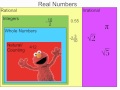
Understanding the Real Number System: Key Concepts and Definitions
Explore the fundamentals of the real number system, including natural numbers, whole numbers, and irrational numbers.

Understanding and Classifying Real Numbers: A Comprehensive Guide
Learn how to classify real numbers into natural, whole, integers, rational, and irrational with clear examples and explanations.

Understanding Averages, Ratios, and Proportions in Mathematics
This video covers essential mathematical concepts including averages, ratios, and proportions. The instructor explains challenging questions from past exams and provides practical examples to help students grasp these topics effectively.
Most viewed summaries

A Comprehensive Guide to Using Stable Diffusion Forge UI
Explore the Stable Diffusion Forge UI, customizable settings, models, and more to enhance your image generation experience.

Kolonyalismo at Imperyalismo: Ang Kasaysayan ng Pagsakop sa Pilipinas
Tuklasin ang kasaysayan ng kolonyalismo at imperyalismo sa Pilipinas sa pamamagitan ni Ferdinand Magellan.

Mastering Inpainting with Stable Diffusion: Fix Mistakes and Enhance Your Images
Learn to fix mistakes and enhance images with Stable Diffusion's inpainting features effectively.

Pamamaraan at Patakarang Kolonyal ng mga Espanyol sa Pilipinas
Tuklasin ang mga pamamaraan at patakaran ng mga Espanyol sa Pilipinas, at ang epekto nito sa mga Pilipino.

How to Install and Configure Forge: A New Stable Diffusion Web UI
Learn to install and configure the new Forge web UI for Stable Diffusion, with tips on models and settings.
Found this summary useful?
Take it with you. One click puts it in your own LunaNotes library.
Save to LunaNotes