Overview of Menthol Biosynthesis
Menthol is a monoterpene primarily synthesized in peppermint (Mentha piperita). Its biosynthetic pathway originates from geranyl pyrophosphate (GPP), produced via the MEP (methylerythritol phosphate) pathway localized in the plastids. For a deeper understanding of the foundational pathways, see Comprehensive Overview of Terpenoid Biosynthesis via MVA and MEP Pathways.
Key Biosynthetic Steps
- GPP Conversion: Geranyl pyrophosphate (GPP) is converted into limonene by the enzyme limonene synthase.
- Pathway Divergence: Limonene can be further processed into either menthol or carvone depending on the enzymatic pathway:
- Menthol pathway involves limonene-3-hydroxylase converting limonene to trans-isopiperitenol.
- Carvone pathway depends on limonene-6-hydroxylase, typical of Mentha spicata.
- Intracellular Localization: This metabolic route spans multiple organelles:
- Plastids (MEP pathway synthesis of precursors)
- Endoplasmic reticulum (further enzymatic conversions)
- Mitochondria (specific hydroxylation steps)
- Cytosol (final conversions to menthol and related derivatives)
For insights into the diversity and biosynthesis of monoterpenoids including limonene derivatives, refer to Understanding the Diversity and Biosynthesis of Monoterpenoids in Plants.
Enzymes Involved
- Limonene synthase (LS)
- Limonene-3-hydroxylase (L3H)
- Menthone reductase (MR)
- Menthofuran synthase (MFS)
- Isopiperitenone reductase (IPR)
- Other reductases and dehydrogenases facilitate conversions to various intermediates such as isopiperitenone, pulegone, and menthone.
Cellular and Tissue Localization
- Glandular Trichomes: Menthol synthesis and accumulation primarily occur in glandular trichomes on leaf surfaces.
- Trichomes comprise:
- Stalk cells
- Secretory cells
- Subcuticular oil storage cavity
- Breaking trichomes releases essential oils responsible for peppermint aroma.
Regulation of Menthol Biosynthesis
- Two main phases during leaf development:
- Peak menthol biosynthesis and oil gland filling around 12 days after leaf initiation.
- A decline in transcript and enzyme levels one week later, concomitant with increased menthone reductase activity shifting menthone to menthol.
Genetic Engineering for Enhanced Menthol Yield
- Case studies show manipulation of key enzymes like limonene synthase and menthone reductase to upregulate menthol production.
- Approaches focus on increasing key intermediate availability and enzyme expression in peppermint.
For practical applications of metabolic engineering to enhance alkaloid and terpenoid production in plants, especially regarding enzyme manipulation and pathway optimization, see Metabolic Engineering of Indole Alkaloid Biosynthesis: Case Studies in Plants and Yeast.
Conclusion
Understanding menthol biosynthesis at molecular and cellular levels enables targeted metabolic engineering to boost essential oil yield in peppermint, enhancing its commercial and therapeutic value.
[Music] [Music] welcome to nptl online certification
course on pharmacognosy and metabolic engineering we'll now go to lecture number 45 which is the Menthol story so
where I will cover biosynthesis and pathway manipulation for enhancing the yield of
Menthol so the concepts covered first will be the biosynthetic pathway of Menthol and its
regulation and its cellular localization and next we will discuss a few case studies where attempts were
made to enhance the Menthol yield in peppermint plant through genetic engineering
approaches so Menthol is basically a monot Tarpin which I have
mentioned in one of the previous classes so the structure of Menthol just to remind
you this is menthal and
another compound uh monotor uh which is not Menthol but it's called
carvone this is car
one and that one is menal
well so this pathway originates from
map so map means it is basically operating in the plastid but
uh then the substrate is basically the gpp Geral pyop phosphate and then
gpp makes lonin and lonin subsequently converted into
either carbon or
Menthol so the major difference is here that uh one
enzyme uh which basically drives the lonin towards the carbon which is lonin six
hydroxy lonin six
hydroxy whereas the other enzyme which drives the pathway towards Menthol which is lmon in three
hydroxy carbon uh you will find in the species which is Mena
speak and Menthol you will find in the papermint which is
Mena pipera enas spata is also call this common name as
Pina so now let us see this in detail in the next slide so that means the biosynthesis now we will drop
so here at the cellular level so multiple cellular organis are involved uh for so I will put it in this
way first I will try to draw the organal and then I will put the pathway inside so consider this whole thing as a cell
so I am only putting here the the green indicates basically it's the
chloroplast okay and then I will also put uh endoplasmic
reticulum which should be here
and then another endoplasmic reticulum I have to put it
here and then I also have to put the mitochondria
here okay so this endoplasmic reticulum I have to make it
slightly larger in size oh sorry okay so now let us
write this is plasted okay
and this is endoplasmic
reticulum this is [Music] endo plasmic
[Music] reticulum and then uh this is
the Mito quria so the map pathway starts with py
and uh D Gap and
uh so we will straight away start with the uh DXs then DXs
and then it makes DX p and which M map and then subsequently I will push the
pathway in this direction finally at one point we will see the formation of
gpp so now I'll write the compound so uh this is first one is and this
is M sorry this is yeah me and the enzymes are
and then so many so many finally you will land in
gpp so the gpp is here so gppp will be converted into
limonin l i m o n e n e this
lonin will be transported out and enters into the endoplasmic reticulum so lmon I have to write it
again lonin and the enzyme responsible for this step is lonin
synthes so lonin synthes basically converts gpp to lonin and lonin now
moves inside the endoplasmic reticulum and where by the action of this enzyme
l3h which is the three hydroxy lonin 3 hydroxy which converts lmon to so I put
l3h l3h yeah which converts lmon into trans isoptin so
trans ISO pad
isol so this transpo isop pipol will be subsequently converted into ISO
piperon so the trans hyperon will now moved into the
mitochondria and where it is converted into isopar ton so this
is trans ISO
P reol now converted into
ISO pper ton okay this isopar Tenon will come out
from the mitochondria into the cytool and then so I have to put the writing again
ISO P tone and which will be converted into
ISO polyon C isop polyon so C ISO
po G and C isop polygon subsequently converted into polygon so I put the
arrow and then this poon uh we'll move one in one root polygon will move
inside the uh endoplasmic reticulum again and where it will be converted into menthofuran
if you are n you okay
whereas in another case this polyon will be converted into Menon so pulan can be converted into
either menthon or also is Menon so Menon
or Isom menthon okay and from menthon Menthol is
finally synthesized and from Isom menthon
isomenthol can be formed and also NE isomenthol can also be
formed new isomenthol can be form new
ISO menol can also be formed so we put the arrow here okay so this step basically
occurring in the cytool okay now it is also possible that M MBA
pathway contributes towards the Menthol biosynthesis but much later it was found that in fact NBA pathway is not
contributing to Menthol biosynthesis because there are some blockage exist in the late steps of MBA pathway therefore
I am not showing the MV pathway here so as you know the MBA pathway operates in the cytool so you can uh keep a space
for this so this is basically the me pathway and here is the space
for MV pathway which is not really contributing towards the uh Menthol
biosynthesis now uh this is about uh okay now there are few enzymes I have to put it here uh for
example this uh important enzyme the MFS menthofuran
synthes so Ms MFS will be here menopur and synthes
and IPR will be here which converts isop piperon to isopon
so and another important enzyme is
ipgi let okay so I make it simple as simple as I can
so ipgi yes s isop poon isomes ipgi I can put it here
so ipgi stands for CIS isopon isaris and IPR stands for Trans isop
piperon reductors so R is basically reduct is and this is
basically Isis okay and IP DH is also
there which is basically a dehydrogen is now next what we see what is happening
in case of carbon so carbon what is this that the lonin uh because lonin moved to
endoplasmic reticulum in in case of Mena uh spata the lonin formed in the uh plastid
moves into the endoplasmic reticulum so I will put the lmon in here
and this lonin will be converted into trans carvol TR r e n
s c a r v e o l this trans Carval will come out from
the endoplasm reticulum into the cytool so trans
and this trans Carval will be converted into Carbone so now I will add the arrow well so you should not be confused
so therefore this endoplasmic reticulum I will remove it from
here instead I will uh prefer to put it here inside so
the enzyme is limonin 6 hydroxy which is here
l6h and then there is a CDH trans Carval dehydrogenase so which converts trans
Carval to carbon so this is CDH so these two are the meas
enzyme converting lonin into carbon and this one particularly you will find in that species what is that which is Mena
spicata whereas the other pathway is operating in the Mena pipera the
pment so this is basically in brief in the most simplified way the uh I I represented the pathway of
Menthol and carbon biosynthesis okay one important enzyme I must put it which is menthol
reduce which should come here which should be menthon Menthol reductors so or I can put it simply
write it Mr Mr stands for Menon
reductors and pogon to menthon formation this is called
PR that means again poon reductors
well so this is in brief the pathway and which which operates uh starting from plastid involving endoplasmic
reticulum and mitochondria and finally to the cytool so this is basically in brief the pathway also Menthol can be
converted into meny acetate acetate as well
so so now what we will see we'll see the regulation of the pathway and where we will find the Menthol in the plant
so next slide so this is localization of the
Menthol so the place where these menthols are synthesized and accumulate is called
triome so I will draw a structure of a triome to show you here these are called glandular triome
because this forms a typical gland I just uh draw
it this is called the stock cell and then above it these are called secretary
cells and then top of it will be
the subc oil storage cavity so this is this is the oil
storage Cav cavity this is also subicular this is the stock
cell and this is called the thisel
cell and these are called secretary
cells so the products are synthesized then from here it secretes
here so this is basically filled up with essential oil where menol is the m component so this is basically the
structure of one such glandular
triome there are two type one is called Pate another is called capitate so if it has a stock it is capitate if the stock
is not there proper so it is basically beled okay now next is the regulation of menthol bi
synthesis there a problem with m regulation of Menthol
biosynthesis so basically there it's it can be divided into two periods one is the two distinct period one is the first
period so which is basically picks around 12 days of leaf initiation that
means F at about 12 Days
After Leaf initiation so where what you will find here in this stage you will find oil
glands filling with the essential oil and
conversion of precursors to
menthon and also pon pon and Muran are
also detected U and this will be followed by the
second period so which is basically
one week later so in this period what you will see that
the transcripts and the
enzymes both will be diminished and then important point is is gradual
increase of of Menon reduced
activity Mr resulting in depletion
of Menon and concomitant
increase in Menthol okay so Leaf surface contains
glandular triom and when you touch the leaf of this men menas species basically you are by touching you are breaking
down the glandular triom and if you smell your hand you will get the aroma because what happens you you are
basically uh breaking down this uh this subc oil storage cavity which is very delicate and that is this one if it is
broken down then that leads to the release of the essential oil okay so this is brief about the regulation of
Menthol biosynthesis I will end this lecture here and in the next class I will
continue this topic to complete the total theme so that is menthol story so thank you very much
Menthol is primarily synthesized via the MEP (methylerythritol phosphate) pathway in peppermint plastids, starting from geranyl pyrophosphate (GPP). GPP is converted by limonene synthase into limonene, which then undergoes further enzymatic transformations leading to menthol production.
Key enzymes include limonene synthase (LS) that converts GPP to limonene, limonene-3-hydroxylase (L3H) converting limonene to trans-isopiperitenol, menthone reductase (MR) which reduces menthone to menthol, and other reductases and dehydrogenases that facilitate the conversion of intermediates such as isopiperitenone and pulegone along the pathway.
Menthol biosynthesis and accumulation primarily take place in glandular trichomes on the leaf surface. These trichomes consist of stalk cells, secretory cells, and a subcuticular oil storage cavity, where the essential oils including menthol are synthesized and stored.
Menthol biosynthesis peaks around 12 days after leaf initiation during oil gland filling. Following this, transcript and enzyme levels decline about one week later, while menthone reductase activity increases, promoting the conversion of menthone into menthol, effectively regulating the final menthol content during leaf maturation.
Genetic enhancement focuses on manipulating key enzymes such as overexpressing limonene synthase and menthone reductase to increase intermediate availability and boost enzyme activities. These modifications optimize the pathway flux toward menthol synthesis, significantly improving essential oil yield.
The fate of limonene depends on the hydroxylase enzyme: limonene-3-hydroxylase converts it into trans-isopiperitenol leading to menthol biosynthesis, whereas limonene-6-hydroxylase channels it toward carvone production, typical of spearmint (Mentha spicata). Thus, enzyme specificity directs pathway outcomes.
Knowing that menthol synthesis occurs in glandular trichomes and involves multiple organelles like plastids, ER, mitochondria, and cytosol helps researchers target genetic modifications precisely. This cellular insight enables optimization of enzyme expression and metabolite flow within specific compartments, enhancing menthol biosynthetic efficiency.
Keep this summary
Save it to LunaNotes and it becomes a real note in your library — editable, searchable, and ready to turn into flashcards or a diagram. Free to start.
Save to LunaNotesOr summarise for another video.
This summary and transcript were automatically generated using AI with the Free YouTube transcript summary tool by LunaNotes.
Related summaries
Metabolic Engineering of Menthol Biosynthesis for Enhanced Essential Oil Yield
This lecture explores metabolic engineering strategies to optimize menthol biosynthesis in peppermint, focusing on gene overexpression and antisense suppression techniques to manipulate key enzymes. It summarizes experimental outcomes, challenges, and future directions to improve essential oil yield and composition using transgenic approaches and environmental factors.
Comprehensive Overview of Terpenoid Biosynthesis via MVA and MEP Pathways
This lecture provides an in-depth exploration of terpenoid biosynthesis, focusing on the mevalonate (MVA) and methylerythritol phosphate (MEP) pathways. It covers the origin of key five-carbon precursors, the diversity of terpenoid structures, and the cellular compartmentalization and regulation of these pathways, highlighting their biological significance and applications such as essential oil production and antimalarial targets.
Monoterpenoids in Floral Scents and Metabolic Engineering Insights
Explore the dominance of monoterpenoids in floral volatiles, techniques for their analysis, and a detailed case study on linalool synthase gene expression in Arabidopsis. Understand enzyme roles, storage mechanisms, temperature effects, and challenges in metabolic engineering for floral scent production.
Comprehensive Biosynthesis and Metabolic Engineering of Lignans, Rosmarinic and Chlorogenic Acids
This lecture explores the intricate biosynthesis pathways of lignans, including important compounds like phoyotoxins, as well as caffeic acid esters such as rosmarinic and chlorogenic acids. It highlights the pharmacological relevance of these phenolics, details enzymatic steps, and presents metabolic engineering advances enhancing their production in plants and microbial systems.
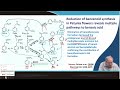
Comprehensive Overview of Benzenoid Biosynthesis and Volatile Emission in Plants
This detailed lecture explores the biosynthesis pathways of volatile benzenoids, focusing on the C6-C1 metabolites, enzymatic processes, and regulatory networks in plants like Clarkia and Jasminum sambac. It covers molecular mechanisms, enzyme characterization, physiological emission patterns, and the integration of metabolic engineering insights for floral scent production.
Most viewed summaries

A Comprehensive Guide to Using Stable Diffusion Forge UI
Explore the Stable Diffusion Forge UI, customizable settings, models, and more to enhance your image generation experience.

Kolonyalismo at Imperyalismo: Ang Kasaysayan ng Pagsakop sa Pilipinas
Tuklasin ang kasaysayan ng kolonyalismo at imperyalismo sa Pilipinas sa pamamagitan ni Ferdinand Magellan.

Mastering Inpainting with Stable Diffusion: Fix Mistakes and Enhance Your Images
Learn to fix mistakes and enhance images with Stable Diffusion's inpainting features effectively.

Pamamaraan at Patakarang Kolonyal ng mga Espanyol sa Pilipinas
Tuklasin ang mga pamamaraan at patakaran ng mga Espanyol sa Pilipinas, at ang epekto nito sa mga Pilipino.

How to Install and Configure Forge: A New Stable Diffusion Web UI
Learn to install and configure the new Forge web UI for Stable Diffusion, with tips on models and settings.
Found this summary useful?
Take it with you. One click puts it in your own LunaNotes library.
Save to LunaNotes