Understanding Energy Levels and Sublevels
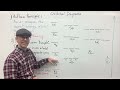
In this video, Mr. Covald explains an easy method for writing electron configurations by using the orbital diagram and a simple diagonal arrow technique.
The foundation of this method lies in Understanding Atomic Structure: From Atoms to Subatomic Particles, which explains how energy levels and sublevels are organized around the nucleus.
Key Concepts
- Energy level (n) determines how many sublevels exist in that shell
- n = 1 → 1 sublevel (1s)
- n = 2 → 2 sublevels (2s, 2p)
- n = 3 → 3 sublevels (3s, 3p, 3d)
- n = 4 → 4 sublevels (4s, 4p, 4d, 4f)
Constructing the Diagram
-
Write the sublevels in columns organized by energy level:
- 1s
- 2s, 2p
- 3s, 3p, 3d
- 4s, 4p, 4d, 4f
- 5s, 5p, 5d, 5f, 5g (hypothetical)
- Continue for higher energy levels
-
Add diagonal arrows starting from 1s, going between sublevels, and continuing down the pattern
Following the Arrows (The Easy Method)
The diagonal arrows tell you the exact order in which electrons fill the sublevels. This approach is grounded in Orbital Diagrams and Electron Configuration: Aufbau, Pauli, and Hund's Rules Explained, which covers the fundamental principles governing electron arrangement:
- 1s (2 electrons)
- 2s (2 electrons)
- 2p (6 electrons) - Back to top of next arrow
- 3s (2 electrons)
- 3p (6 electrons)
- 4s (2 electrons)
- 3d (10 electrons)
- 4p (6 electrons)
- 5s (2 electrons)
- 4d (10 electrons)
- 5p (6 electrons)
- 6s (2 electrons)
- 4f (14 electrons)
- 5d (10 electrons)
- 6p (6 electrons) And so on...
Why This Works
- Each sublevel holds a maximum number of electrons:
- s = 2 electrons (1 orbital)
- p = 6 electrons (3 orbitals)
- d = 10 electrons (5 orbitals)
- f = 14 electrons (7 orbitals)
- The arrows naturally follow the Aufbau principle (lowest energy first)
- This method eliminates the need to memorize the filling order
Practical Application
To write an electron configuration:
- Start at 1s and follow the diagonal arrows
- Fill each sublevel with its maximum electrons
- Stop when you've placed all electrons for your atom
Example: For an atom with 20 electrons (Calcium): 1s2 2s2 2p6 3s2 3p6 4s2
For a more detailed walkthrough of this process, see the Orbital Diagrams & Electron Configuration: Step-by-Step Guide, which provides additional examples and explanations.
This method works for all elements and even extends to hypothetical future elements beyond f orbitals.
Bonus: Going Beyond Known Elements
The diagram can include hypothetical sublevels (g, h, i, j) for energy levels above 4, showing the pattern continues indefinitely.
This technique provides a visual, memorable way to master electron configurations without rote memorization.
hello everyone and welcome back my name is mr covald and in this video i'm going to show you an easy method for writing
the electron configurations in the order in the orbital diagram so let's get into this so
um so in a previous video we talked about how the energy levels are related to the
uh the uh sub levels and how the sub levels relate to the number of orbitals and things like that but in this video
we're going to focus on just the relationship between the uh the energy levels and the sublevels so we remember
that if we have n the n number that's your energy level so n is energy and so
if we write down the numbers of the energy they can go they start at one and they go on to whatever so i i have all
the way down to nine and so we saw before that the number of the energy level you're at matches or
corresponds to the number of sub-levels that you have so let's go ahead and write this down what
i'm going to do is i'm going to write down the sublevels this way and i'm going to add the number of the energy
level to each sub-level so at energy level number one you have only one sub-level and that's the s
so we're going to call that the one s okay
then at the second sub-level you have two i'm sorry at the second energy level you have two sub-levels that those are
the s and the p this is where the p comes in so we have an s and a p but since we're at the second energy level
we're going to put a 2 in front of there to to recognize or identify that particular sublevel as an energy 2
sublevel so here we're going to have a 2 so i'm going to put the the s's in
in a column and i'm going to put the p next to it so we're going to have 2 p
so there's our two sublevels for the second energy level and for the third energy level we have three sublevels so
that's going to be sp and this is where we add the d and we could so we're going to add the
uh sp and d but since we're at the third energy level that's going to be 3s so we're going to put that energy level in
front of the number our letters so 3s 3p and then we have 3
d added on and so then we keep going and we for every number we add a new sub level so
we're at energy level number four so we're going to add four so that's going to be spd and now we're
going to add f so the f sub level so that's going to be 4s 4p
4d [Music] and 4
f now the f sub level is where we normally
stop because uh that's the only level that we have that is uh that are that our atoms or elements that we know of
occupy um but theoretically we could go beyond that so i'll write uh more theoretical ones as we go on so
for example if we're at level number five that means we have five sub-levels but we only know up to four so we can
continue the alphabet and just identify that last one as a hypothetical so here would be 5 s
5 p so all of the energy level or sublevels here would have a five because they're
in the fifth energy level so this would be five d five f and if we're continuing the
alphabet next would be g so this would be 5 g and i'll put
parentheses around that to identify that that's a hypothetical we don't know of that existing but there's no reason why
we couldn't identify that or discover that in the future and then we just keep going on so
for six we would have six sublevels so six s six p
six d six f and then here we have six g
and then after g is h so we could have six h
after that and we can continue with the seven so we have seven
so that's gonna be seven s seven p seventy
seven f and then of course we would have seven g followed by oops i want to make sure
this isn't the row seven h
and then after h is i so we're going to put
7 i and let's just do one more but we could
keep going and going so here we have eight s
8 p 8 d 8 f
8 g a h [Music]
a i and of course after i is j so eight
j okay so and we could keep going and going and
going on for infinity but we're going to stop here and so
here is the the pattern of the sub levels and the uh levels so now now that we have this
we can uh we can do our easy method of figuring out the order of where the electrons are going so um do
you do i expect you or does any teacher expect you to memorize the order of the sub levels maybe there's some out there
that expect you but here is a nice way that a method if you set this up
you can basically know the order of the orbitals uh in which the electrons are filling up the orbitals of the electron
configuration of your atom so how how can we remember where the electrons go first where do
they go next and so on and so forth so now that we have this what i'm going to do is i'm going to
draw diagonal arrows so we're going to draw diagonal arrows this way so i'm going to go through
the 1s and i'm going to draw parallel arrows so this one is going to go and no i'm going
to draw arrows through each of these so i'm going to draw an arrow diagonal through this one and then between them
and then this one and then between them and then this one and between them so i'm going to go in this order so this
arrow goes through the 1s the next 0 is going to go through between the 1s and the 1 and the 2p so i'm gonna go between
them so they're they're parallel now this one's gonna go through the 2p but it's
also going to go through the 3s because the 3s that's not a very straight line now i'm
going to go between them so i'm going to go between the 2p 3d so i'm going to go between
them draw a parallel arrow and now i'm going to go through the 3d
so i'm going to go through the 3d and the 3d goes to 4p5s and then i'm going to draw an arrow
between 3d and 4f so that's going to go through these
and then i'm gonna go through the four f and so the the parallel arrow goes to four f five d six p
and so on and i could just continue doing this so between the four f and the 5 g i'm going to draw a parallel arrow
so it's going to go through 5 f 6 d 7
p and then 8 s and i could keep going right i could keep going through the 5g and so on
and so now that you have this the arrows tell you where to go so you start here
right this is you start here and then you end wherever you want to go so you fill in your
electrons according to the number of electrons that that sublevel can fill up right so my first two electrons go into
the 1s so i'm going to start here move through here my arrow takes me through the 1s so the 1s is the first
sub level that i am filling in now that i'm at the end of that arrow i go back to the top of this arrow so
if i draw kind of this way so if i go i'm going to go back to
that arrow here i'm going to go down this way so then next is the 2s so let me write that up so first is the 1s and
i go through and then the 2s right 2s is next and i go through here and then
i go back to the end of this hero and i follow this
diagonally this way and the first one is the 2p so i'm going to fill in the 2p with 6 electrons so that would be 2p
6. so i should put 2 in there 2 in there and 6 in there right so i'm going to go through the 2p
and then followed by the 3s i two electrons go into the 3s sublevel so i'm going to put 3s and then that's 2
and then i'm done with the 3s i'm at my arrow here so now i got to go back to the end of this hero
and then i go down so next would be 3p and the p sublevel has six electrons why
because that sub level has three p orbitals each orbital holds two electrons maximum two electrons three
orbitals at six total so then that's going to be three p
six and then next would be 4s so again the 4s sublevel s sublevels
held a maximum of 2 electrons and then so on so as i'm going through the arrows i'm
writing down the electron configuration and i'm filling in the electrons that i have and i stop when i have no more
electrons so this is a really easy tool to use to help you remember the order and how to fill in the order of these
sublevels and write down your electron configuration as you are going through so i hope this is helpful i hope you
enjoyed this video if you learned a lot if this is the first time you've seen this then you know i'm glad hit that
like button make sure you subscribe to my channel hit that notification bell so you can be
notified by other videos that i put out comment in the comment section let me know what you think
and ask me any questions thanks for joining me have a great day
The diagonal arrow method is a visual technique that uses an orbital diagram organized by energy levels (n=1,2,3,4...). You draw diagonal arrows starting from 1s and moving across sublevels, following the Aufbau principle. By following these arrows in order, you determine the exact sequence in which electrons fill sublevels without memorizing the filling order.
To construct the diagram, first list sublevels in columns by energy level: 1s, then 2s 2p, then 3s 3p 3d, and so on. Then add diagonal arrows starting from 1s, moving between sublevels, and continuing down the pattern. Each diagonal arrow connects the last sublevel of one row to the first sublevel of the next, guiding you through the filling order.
Each sublevel has a fixed capacity: s holds up to 2 electrons (1 orbital), p holds up to 6 electrons (3 orbitals), d holds up to 10 electrons (5 orbitals), and f holds up to 14 electrons (7 orbitals). These limits are key when filling electrons using the orbital diagram method.
Follow the diagonal arrows: start at 1s (2 electrons), then 2s (2), 2p (6), 3s (2), 3p (6), and 4s (2). Count until you reach 20 electrons. The configuration is 1s² 2s² 2p⁶ 3s² 3p⁶ 4s². This method works for all elements by continuing along the arrows until all electrons are placed.
The method works because it automatically follows the Aufbau principle, which states electrons fill orbitals from lowest to highest energy. The diagonal arrows map the energy ordering of sublevels (e.g., 4s fills before 3d due to lower energy). This visual approach eliminates the need to memorize exceptions and provides a consistent, repeatable process for any element.
Yes, the diagonal arrow method extends to hypothetical sublevels like g, h, i, and j for higher energy levels (n=5 and beyond). The diagram pattern continues indefinitely—just add new rows of sublevels (e.g., 5g, 5h) and draw diagonal arrows. This makes the technique valuable for theoretical elements beyond the known periodic table.
The diagonal arrows visually guide you through the exact filling sequence, so you don't need to recall a memorized order like '1s, 2s, 2p, 3s, 3p, 4s, 3d...'. Simply follow the arrows step-by-step, filling each sublevel to its maximum capacity. This reduces errors and makes electron configurations intuitive for students.
Keep this summary
Save it to LunaNotes and it becomes a real note in your library — editable, searchable, and ready to turn into flashcards or a diagram. Free to start.
Save to LunaNotesOr summarise for another video.
This summary and transcript were automatically generated using AI with the Free YouTube transcript summary tool by LunaNotes.
Related summaries

Orbital Diagrams & Electron Configuration: Step-by-Step Guide
Learn to construct orbital diagrams and write electron configurations using the aufbau principle, Pauli exclusion principle, and Hund's rule. This tutorial uses a hotel analogy to explain electron placement and provides detailed walkthroughs for chlorine and silver atoms.
Orbital Diagrams and Electron Configuration: Aufbau, Pauli, and Hund's Rules Explained
This video explains how to fill orbital diagrams using the Aufbau principle, Pauli exclusion principle, and Hund's rule. Using bromine (35 electrons) as an example, it demonstrates the step-by-step process for placing electrons in orbitals from lowest to highest energy.

Electron Orbitals and Configuration: From 1s to p Orbitals
## Description Uncover how electrons actually arrange in atoms beyond the Bohr model. This guide explains orbitals as probability maps, how electrons fill from lowest to highest energy, and exactly how to read electron configurations using the periodic table.

How to use the periodic table to write electron configuration easily
Learn how to read the periodic table to quickly write electron configurations for any element. This step-by-step chemistry tutorial breaks down the s, p, d, and f blocks, showing how period numbers and block widths correspond to energy levels and electron counts.

Electron Configuration Patterns: Quantum Numbers & Orbital Rules Explained
Discover the key patterns in electron configurations, including quantum numbers, sublevels, and orbital counts. This tutorial explains how energy levels, sublevels, and maximum electrons relate through simple mathematical rules.
Most viewed summaries

A Comprehensive Guide to Using Stable Diffusion Forge UI
Explore the Stable Diffusion Forge UI, customizable settings, models, and more to enhance your image generation experience.

Kolonyalismo at Imperyalismo: Ang Kasaysayan ng Pagsakop sa Pilipinas
Tuklasin ang kasaysayan ng kolonyalismo at imperyalismo sa Pilipinas sa pamamagitan ni Ferdinand Magellan.

Mastering Inpainting with Stable Diffusion: Fix Mistakes and Enhance Your Images
Learn to fix mistakes and enhance images with Stable Diffusion's inpainting features effectively.

Pamamaraan at Patakarang Kolonyal ng mga Espanyol sa Pilipinas
Tuklasin ang mga pamamaraan at patakaran ng mga Espanyol sa Pilipinas, at ang epekto nito sa mga Pilipino.

How to Install and Configure Forge: A New Stable Diffusion Web UI
Learn to install and configure the new Forge web UI for Stable Diffusion, with tips on models and settings.
Found this summary useful?
Take it with you. One click puts it in your own LunaNotes library.
Save to LunaNotes