Electron Configuration Patterns: A Comprehensive Guide
Overview of Quantum Numbers
Before diving into patterns, it's essential to understand the four quantum numbers that describe orbitals and electrons: For a deeper understanding of how these numbers interact, see our guide on Orbital Diagrams and Electron Configuration: Aufbau, Pauli, and Hund's Rules Explained.
- n (Principal quantum number): Relates to energy level
- l (Azimuthal quantum number): Relates to sublevel and orbital shape
- ml (Magnetic quantum number): Relates to orbital orientation (e.g., px, pγ, p_z)
- ms (Spin quantum number): Relates to electron spin (up or down)
Key Principle: The Pauli exclusion principle states that each orbital can hold a maximum of two electrons, and those electrons must have opposite spins.
Pattern 1: Number of Sublevels per Energy Level
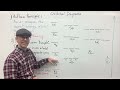
| Energy Level (n) | Number of Sublevels | Sublevels Present | |-----------------|---------------------|-------------------| | n=1 | 1 | s | | n=2 | 2 | s, p | | n=3 | 3 | s, p, d | | n=4 | 4 | s, p, d, f | | n=5 (hypothetical) | 5 | s, p, d, f, g | | n=6 (hypothetical) | 6 | s, p, d, f, g, h | | n=7 (hypothetical) | 7 | s, p, d, f, g, h, i |
Rule: The number of sublevels at energy level n equals n.
Pattern 2: Number of Orbitals per Sublevel
| Sublevel | Number of Orbitals | |----------|-------------------| | s | 1 | | p | 3 | | d | 5 | | f | 7 | | g (hypothetical) | 9 | | h (hypothetical) | 11 | | i (hypothetical) | 13 |
Rule: Orbitals per sublevel increase by 2 (odd numbers: 1, 3, 5, 7, 9...).
Pattern 3: Total Orbitals per Energy Level
| Energy Level (n) | Orbital Distribution | Total Orbitals | Check | |-----------------|---------------------|----------------|-------| | n=1 | 1s | 1 | 12 = 1 | | n=2 | 1s + 3p | 4 | 22 = 4 | | n=3 | 1s + 3p + 5d | 9 | 32 = 9 | | n=4 | 1s + 3p + 5d + 7f | 16 | 42 = 16 |
Rule: Total orbitals at energy level n = n2.
Pattern 4: Maximum Electrons per Energy Level
Since each orbital holds a maximum of 2 electrons:
- Maximum electrons at energy level n = 2 × n2 = 2n2
Examples:
- n=1: Maximum 2 electrons
- n=2: Maximum 8 electrons
- n=3: Maximum 18 electrons
- n=4: Maximum 32 electrons
Summary of Key Patterns
- Sublevel count = energy level number (n)
- Orbital count per sublevel follows odd numbers: 1, 3, 5, 7...
- Total orbitals per energy level = n2
- Maximum electrons per energy level = 2n2
These patterns explain the structure of the periodic table and help predict electron configurations for elements. For a step-by-step process on writing configurations, check out our Orbital Diagrams & Electron Configuration: Step-by-Step Guide. To see how these patterns connect to the broader understanding of matter, read Understanding Atomic Structure: Protons, Electrons, and Electron Configuration. Finally, learn how the periodic table is organized based on these principles in Understanding the Classification of Elements and Periodic Properties in Chemistry.
hello everyone and welcome back my name is mr covald and in this video we're going to be going over the patterns that
we see in electron configurations so let's get into this so in an earlier video i talked about electron
configurations and how they're related to orbital diagrams in another video i talked about how to use orbital diagrams
to fill in where the electrons are in your in your particular atom based on how many electrons you have
but hopefully maybe you saw some patterns so in this video i'm going to make those
patterns explicit so here
there are four quantum numbers now i'm not going to get into the details of what these quantum numbers
are in detail uh but just know that there are four quantum numbers each quantum number relates to a different
characteristic or description of the orbital or the electron in the orbital so i'll just write them down but i'm not
going to go into detail so you have your your n which is going to be related to energy
level okay you have your l which is going to be related to your
sub level or energy sub level this is also related to shape of your orbitals so we talked
about shape of the orbitals in an early earlier video and so uh this is also the sub-level that we're going to be
talking about in a moment you have your m sub l quantum number that's going to be
related to your orientation of the orbital so remember we were talking about how
the orbitals can be oriented along different axes like your p orbitals you have three p orbitals the p x
p y p z and they're they're named that because of the orientation along the uh those
axes or between the axes depending on what orbitals you're looking at and then you have your
m sub s which is your electron spin so electron electron spit and so remember we talked about how electrons
could be spin up or spin down and the poly exclusion principle says that if you uh if you are going to put electrons
into any orbital you can only put two and those electrons must have opposite spin so that's why you can only have two
because you can't have if you have more than two then you're going to end up having electrons
that have the same spin and you can't have that so so two electrons only in an orbital
okay so this is energy level sub-level orientation and spin so
uh now let's talk about the uh the patterns so um
so we have our energy levels and we saw that your energy levels could be n one through whatever actually so what
i'm going to do is i'm gonna list the the energy levels
so we'll have n so so you get at n equals 1
n equals 2 n equals 3 4
5 6 7
8 and so on so remember that the uh energy levels here
are as far as energy goes the energy level number one is closest to the nucleus it's the lowest in energy
and then the next higher one is energy level number two so that would be a higher energy than the n equals one
so it's farther from the nucleus n equals three would be higher energy and that would be still farther so as
you increase in your energy level you're increasing in energy and therefore
you're getting farther from the nucleus okay so
here we have n and then here we'll have our sublevel so remember this is going to be our energy
level and so then we have our sub level
and our sub levels we're given the three shapes or three letters s p d and f and those are
related to the shapes that we saw before so so when we're looking at the sublevels
we saw that n equals one only has one sublevel so that was the s sub level
right so the s is in the one and that's the only sub level that exists in the one
and then at the second sub level i'm sorry at the uh at the second energy level we saw that we added a p sublevel
so we had s and p we had 2s and we had that 2p right we had the 2s orbital and the 3
uh 2p orbitals so here we have the s
and the p okay and then we go to the third the third
energy level and then that's where we saw the ds come in so the third energy level had the s
the p and the d and then if we keep going
at the fourth energy level we saw that there would be s p
d and then we get the f coming in at that level as well so what do you notice in the pattern
here i'm at energy level number one and i have one sub level
energy level number two and have two sublevels energy level number three
i have three sub levels energy level number four i have four sublevels
so what's the pattern if you're noticing the pattern you'll see that the number of the sub-level
gives you the number i'm sorry the number of the energy level gives you the number of the sub-levels so if i if i'm
at energy level number one i have one sub level energy level number two i have two sub levels three three sub levels
four four sub levels so i could actually keep going and it and the pattern does continue uh we stop at f because our
periodic table actually only goes up to f but we could discover other elements that
don't stop there right so if we were to continue this we could continue the alphabet from f right
so if i'm at energy level number five we would have s p
d and f and a new sublevel would be introduced and we could call that
g you know following the alphabet f g okay and we could continue also so we would six
energy level number six you'd have six sublevels so that would be s p
[Music] d f
g and then we could throw h in there and then we could do sevens so seven would have seven sublevels so s
p d f g
h what would follow h i so at the seventh sub level i would be
introduced so that would be a possible sublevel at energy level number seven and just to complete this so eight would
be s p d
f g h
and then i and then after i we have j so all of these if i put
parentheses around these these are like hypothetical these we haven't discovered yet
but we could discover an element that is not on the periodic table and we would have to
introduce these new new letters
but for now we only go up to f but the pattern can continue so
these are possible sub levels at these larger energy levels so now you kind of see the pattern there
okay so what about electrons
or what about the number of orbitals let's talk about that number of
orbitals okay so number of orbitals we said that if you look at s
how many orbitals are in s remember the orbital diagram with the lines how many lines does every s sublevel in your
orbital dot in your orbital diagram have there's only one so that means there's one orbital so at this sub-level you
have one s orbital
so you only have one s orbital at that sub level
right now at the p your p orbitals or your p sublevel has
three p orbitals so you have three p orbitals at the s i'll put the s here
and we'll put p there how many p orbitals you have at the p sub level
you have three p
orbitals about at the d sublevel d we said it was five
we have five d orbitals okay and then at f we said
f has seven we saw the seven f orbitals okay so do you see a pattern here so s
sublevel 1s orbital p sublevel 3p orbitals d sublevel
5d orbitals f sublevel 7f orbitals and remember the difference in the orbitals is about their orientation in space they
have different kinds of shapes but they're uh also oriented differently in space
so notice how each one is increasing so these are increasing in energy as well
so the s or sublevel is lower in energy than the p the p is lower in energy than the d
and the d is lower than the f that's why they fill in in that order
so you notice the pattern here one three five seven how is it increasing
they're all odd numbers increasing by two starting with one so we have our hypothetical sublevels here
g so after g right we have our hypothetical g there so if we're following the pattern what
would be the number of sublevel or number of orbitals at the g sublevel it would be
nine nine g
orbitals or noodles and what about h
we're going to continue h hypothetical h 5 7 9 11.
so we'd have 11 h orbitals and what about i
if we continue i this would be 13 and so on so that's the pattern that's relating
sublevels and orbitals so your number of orbitals in the sub-level increases by two
every time you go to a different sub-level okay
so this is another pattern that we can keep in mind um
so what about the maximum number of electrons so if we're
if we're looking at sublevels right let me make sure i have space so number
of the total number of orbitals total number of orbitals
it just so happens that the total number of orbitals at a particular energy level is the square
of that level so if we're looking at n n is our energy level the total number of
orbitals all the orbitals at that level happens to be
one right the total number of
orbitals at number two we have one s orbital and we have three p orbitals so that's a total of four
we have at the third energy level we have spd so we have 1s 3p
and we have 5d that's going to be 9
so 1 plus 3 plus 5 is 9. and at four
we have the four sublevels each of them has one one s three p five d seven f and so there we have
sixteen and do you know notice the pattern between the energy level and the number
here 1 1 2
4 3 9
4 16. what's the pattern
the number the total number of orbitals in the energy level is equal to n squared
so whatever energy level you are at square that number that's the total number of orbitals you have at that
energy level now what about electrons all right sorry about that it looks like
the power went off so we'll just keep going so
just really quick how do i figure out the maximum number of electrons
in a in an energy level well since i know that there are a maximum of two electrons in each orbital
right so you can only have two electrons in each orbital and i have the number of
electrons a number of orbitals here then i take that number of orbitals and i
multiply by two so the total number of orbitals in your energy level is
n squared so if you multiply that by 2 you get 2n squared so total so total number of electrons
is 2n squared so i'll write that total total number
of electrons two n squared so i hope this is
interesting and helpful um this is just interesting patterns that uh i think are you will be helpful in keeping in mind
like what's going on uh in the uh electron configuration and maybe this will help you remember what's up okay so
thank you for joining me and have a great day oh and don't forget smash that like button
okay subscribe to my channel hit that notification bell and put a comment in
the comment section okay thanks for joining me have a great day
The four quantum numbers are: n (principal, indicating energy level), l (azimuthal, indicating sublevel shape), ml (magnetic, indicating orbital orientation like px, py, or pz), and ms (spin, indicating electron spin up or down). Together, they uniquely describe each electron's location and behavior within an atom, following the Pauli exclusion principle that no two electrons can share all four numbers.
The number of sublevels at energy level n equals n itself (e.g., n=3 has 3 sublevels: s, p, d). For sublevels, orbitals follow an odd-number pattern: s has 1, p has 3, d has 5, f has 7, and so on. Key formulas: total orbitals per energy level = n², and maximum electrons per energy level = 2n².
A sublevel (e.g., s, p, d, f) is a group of orbitals within an energy level that share the same shape. An orbital is a specific region within a sublevel that can hold up to two electrons with opposite spins. For example, the p sublevel contains 3 orbitals (px, py, pz), each capable of holding two electrons for a total of six.
The patterns link directly to periodic table rows and blocks. Each row (period) corresponds to filling a new energy level, with s-block (2 electrons), p-block (6), d-block (10), and f-block (14) elements matching the maximum electrons per sublevel. For instance, n=2 holds 8 electrons, explaining the second period’s 8 elements.
The Pauli exclusion principle states that an orbital can hold at most two electrons, and they must have opposite spins. This rule ensures each electron in an atom has a unique set of quantum numbers, preventing configurations that would violate quantum mechanics. It’s fundamental to predicting how orbitals fill: without it, multiple electrons could occupy the same state indebida.
Yes, these patterns are foundational for writing configurations. Start by identifying the energy levels and sublevels using n² for total orbitals and 2n² for electrons. Then apply the Aufbau principle (fill lowest energy first), Hund’s rule (maximize parallel spins in degenerate orbitals), and the Pauli principle. The patterns explain why, for example, potassium ends with 4s¹—the configuration follows the energy ordering derived from these quantum rules.
No, the g, h, and i sublevels are purely theoretical for elements beyond the known periodic table (which ends at oganesson, element 118). In reality, these sublevels would only appear at extremely high atomic numbers (n=5 and beyond for g), but current elements never reach that point. The patterns help understand the underlying quantum structure and predict possible future discoveries.
Keep this summary
Save it to LunaNotes and it becomes a real note in your library — editable, searchable, and ready to turn into flashcards or a diagram. Free to start.
Save to LunaNotesOr summarise for another video.
This summary and transcript were automatically generated using AI with the Free YouTube transcript summary tool by LunaNotes.
Related summaries

Electron Orbitals and Configuration: From 1s to p Orbitals
## Description Uncover how electrons actually arrange in atoms beyond the Bohr model. This guide explains orbitals as probability maps, how electrons fill from lowest to highest energy, and exactly how to read electron configurations using the periodic table.
Orbital Diagrams and Electron Configuration: Aufbau, Pauli, and Hund's Rules Explained
This video explains how to fill orbital diagrams using the Aufbau principle, Pauli exclusion principle, and Hund's rule. Using bromine (35 electrons) as an example, it demonstrates the step-by-step process for placing electrons in orbitals from lowest to highest energy.

Orbitals, Energy States, and Electron Configuration Explained
This video clarifies the key difference between Bohr model orbits and quantum mechanical orbitals, explaining how electrons exist as probability clouds rather than fixed paths. You'll learn how energy states dictate electron placement in shells and subshells, and see the electron configurations for hydrogen, helium, and lithium.

Easy Method to Write Electron Configurations Using Orbital Diagrams
Learn a simple diagonal arrow trick to remember the order of electron filling in atomic orbitals. This step-by-step guide shows how to arrange sublevels (s, p, d, f) by energy level and follow the arrows to write correct electron configurations for any element.

Orbital Diagrams & Electron Configuration: Step-by-Step Guide
Learn to construct orbital diagrams and write electron configurations using the aufbau principle, Pauli exclusion principle, and Hund's rule. This tutorial uses a hotel analogy to explain electron placement and provides detailed walkthroughs for chlorine and silver atoms.
Most viewed summaries

A Comprehensive Guide to Using Stable Diffusion Forge UI
Explore the Stable Diffusion Forge UI, customizable settings, models, and more to enhance your image generation experience.

Kolonyalismo at Imperyalismo: Ang Kasaysayan ng Pagsakop sa Pilipinas
Tuklasin ang kasaysayan ng kolonyalismo at imperyalismo sa Pilipinas sa pamamagitan ni Ferdinand Magellan.

Mastering Inpainting with Stable Diffusion: Fix Mistakes and Enhance Your Images
Learn to fix mistakes and enhance images with Stable Diffusion's inpainting features effectively.

Pamamaraan at Patakarang Kolonyal ng mga Espanyol sa Pilipinas
Tuklasin ang mga pamamaraan at patakaran ng mga Espanyol sa Pilipinas, at ang epekto nito sa mga Pilipino.

How to Install and Configure Forge: A New Stable Diffusion Web UI
Learn to install and configure the new Forge web UI for Stable Diffusion, with tips on models and settings.
Found this summary useful?
Take it with you. One click puts it in your own LunaNotes library.
Save to LunaNotes