
Download Subtitles for The Wolf Spider Isn't What You Think
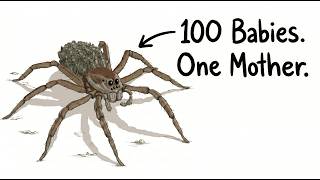
The Wolf Spider Isn't What You Think — Stop Killing It
Garden Whispers
SRT - Most compatible format for video players (VLC, media players, video editors)
VTT - Web Video Text Tracks for HTML5 video and browsers
TXT - Plain text with timestamps for easy reading and editing
Scroll to view all subtitles
You saw it move and everything in you
said the same thing.
>> [music]
>> Big, fast, hairy, no web, just a large
brown spider running across your garden
path or appearing suddenly on your
garage floor moving with a speed and
directness that feels different from
every other spider you have ever
encountered. Not building anything, not
hiding, just moving purposefully like
something that knows exactly where it is
going and has no reason to stop. And
your instinct was immediate, get rid of
it.
But here is what that instinct is
costing you every single time you act on
it. The wolf spider is one of the most
effective ground level predators in your
garden. It hunts without a web, without
a trap, without any structure at all
relying entirely on speed, vision, and a
hunting strategy refined to the point
where it almost never fails. And it is
targeting the exact insects that are
quietly damaging your plants, invading
your home, and biting you and your
family every time you sit outside.
Today we are going to follow the wolf
spider into the dark, understand how it
hunts, what it sees, and what it
carries. And by the end, I think you
will look at the large brown spider on
your garden path very differently.
Let's start with the name because it
tells you almost everything you need to
know about how this animal operates. The
wolf spider belongs to the family
Lycosidae from the Greek word lykos
meaning wolf. The name was chosen
because of one specific behavioral trait
that sets this spider apart from almost
every other species. It does not wait
for prey to come to it. It hunts. It
stalks, pursues, and runs down its
targets the way a wolf runs down prey.
Actively, aggressively, covering ground
until it finds what it is looking for.
There are more than 2,000 known species
of wolf spiders worldwide and they are
found on every continent except
Antarctica. In North American gardens
and homes, the most commonly encountered
species range from half an inch to over
2 inches in body length, large enough to
be immediately alarming to most people
and fast enough to disappear before you
can react. But the first thing to
understand about that size and that
speed is what they are for.
The wolf spider's body is built for
ground-level pursuit. Its legs are long
relative to its body, its musculature
dense, and its movement pattern adapted
for rapid acceleration across irregular
surfaces, soil, leaf litter, gravel,
grass, concrete. It can reach surfaces
quickly, change direction instantly, and
close the distance to prey before the
prey has time to respond. It is, in the
environment of your garden floor and
your home's perimeter, one of the
fastest and most agile predators
operating at that scale. And what it is
pursuing across your garden floor
matters enormously to you.
Wolf spiders prey on ground-dwelling
insects, crickets, grasshoppers,
cockroaches, ants, beetles, earwigs, and
a wide range of other arthropods that
live and feed at soil level.
These are the insects that damage plant
roots, contaminate soil, carry bacteria
into your home, and bite you when you
walk through the garden barefoot.
The wolf spider hunts them continuously
across the same paths they use to move
through your outdoor space, intercepting
them before they reach your plants or
your foundation.
It does not sit in one location and
wait. It patrols.
A single wolf spider covers a
significant area of ground each night,
hunting everything that moves within its
range.
And unlike a web-based spider that
catches whatever happens to fly into a
fixed structure,
the wolf spider goes to where the prey
is, which means it concentrates its
hunting in the places where pest
populations are highest. Now, let's talk
about how it finds its prey because the
wolf spider's sensory system is one of
the most remarkable features of its
biology, and it is the reason those eyes
look the way they do. The wolf spider
has eight eyes arranged in three
distinct rows. The bottom row contains
four small eyes. The middle row contains
two large eyes, noticeably larger than
those of most spider species, that face
directly forward and provide binocular
vision with genuine depth perception.
The top row contains two medium-sized
eyes positioned on the upper surface of
the head, providing a wide field of view
above and behind. This eye arrangement
gives the wolf spider something unusual
among spiders, the ability to judge
distance accurately. Most web-building
spiders detect prey through vibration.
They feel the tug of the web rather than
see the prey. The wolf spider hunts
visually, the way a vertebrate predator
does, tracking movement and calculating
the distance and trajectory of its
target before committing to the final
chase.
The large forward-facing eyes are also
reflective. They contain a structure
called a tapetum lucidum, the same
mirror-like layer found in the eyes of
cats and other nocturnal animals, that
amplifies available light and allows the
spider to see effectively in near total
darkness. If you shine a flashlight
across your garden at night and see two
tiny green or amber points of light
reflecting back at you from ground
level, that is a wolf spider. The eye
shine is unmistakable once you know what
you are looking for. It is hunting in
your garden right now, while you read
this.
But the most surprising thing about the
wolf spider is not how it hunts. It is
what happens after it reproduces. The
female wolf spider does not abandon her
eggs after laying them. She carries
them. She produces a spherical egg sack,
sometimes containing hundreds of eggs,
and attaches it to her spinnerets, the
silk-producing organs at the tip of her
abdomen. She carries the sack with her
everywhere she goes, protecting it from
predators, positioning it in sunlight to
regulate temperature, and occasionally
rotating it to ensure even development.
If the sack is forcibly removed, she
will search for it and reattach it.
When the eggs hatch, the spiderlings do
not disperse immediately. They climb
onto their mother's abdomen and cling to
specialized hairs on her back. All of
them, sometimes more than 100 tiny
spiders, covering her entire back
surface in a moving layer. She carries
them for days, hunting, moving, and
surviving with this living cargo, until
they are developed enough to disperse
and hunt independently.
This behavior, maternal care extended
well beyond egg laying into active
protection and transport of offspring,
is rare among spiders and completely
unexpected in an animal that most people
consider purely instinctual and
solitary. The wolf spider on your garden
path may be carrying the next generation
of the most effective pest hunters in
your outdoor space.
Now, let's address the question that
most people have by this point in the
story. Is it dangerous? The wolf spider
is venomous. Like all spiders, it uses
venom to subdue prey.
But the venom of the wolf spider is not
medically significant for healthy adult
humans. Bites are documented. They occur
when the spider is accidentally trapped
against skin, squeezed, or handled
roughly, and the result is localized
pain, redness, and swelling roughly
comparable to a wasp sting, fading
within a day or two without treatment.
There are no documented cases of serious
systemic reactions from wolf spider
bites in otherwise healthy individuals.
The wolf spider will not bite you unless
you give it no other option. It does not
pursue humans. It does not investigate
humans. When it detects your presence,
and it will detect it with those
sensitive eyes and the vibration
detecting hairs covering its legs and
body, its response is immediate and
consistent. It runs away. The spider
that appeared suddenly on your garage
floor and disappeared in 2 seconds was
not approaching you. It was fleeing you
at maximum speed.
There is one practical concern worth
addressing honestly. Wolf spiders,
particularly in autumn, will
occasionally enter homes seeking warmth
as temperatures drop. They are not
infesting your home. They are seeking a
temporary shelter, and they will
continue hunting indoors exactly as they
do outdoors, consuming the insects that
live in your walls and baseboards. But,
if finding one indoors is genuinely
distressing, a glass and a piece of
cardstock will relocate it outside
without any contact required. What you
should not do, and this is the point
that matters most, is reach for a
pesticide.
Broad-spectrum insecticides applied
around your home's perimeter do not
distinguish between the pest insects you
want to eliminate and the wolf spider
that was eliminating them for you.
They remove the prey and the predator
simultaneously, leaving your garden and
your foundation without one of the most
effective natural pest control systems
it had.
The wolf spider does not need anything
from you. It does not need a shelter you
built. It does not need food you
provided. It found your garden because
your garden has what it needs: ground
cover, moisture, and an abundant prey
population.
Its presence is, like the toad and the
opossum and the cellar spider before it,
a sign that your outdoor space supports
a functioning food chain.
A garden with wolf spiders is a garden
that is working. The large, fast,
unsettling spider on your garden path
tonight is not a threat. It is a patrol,
moving through the same routes that
crickets and cockroaches use to enter
your home, hunting them at the source,
covering ground that no trap and no
spray can cover as efficiently or as
continuously. Leave it to its work. Have
you ever found a wolf spider carrying
her egg sack or seen one with
spiderlings covering her back and had no
idea what you were looking at? Tell me
about it in the comments. I read every
single one. And if today was the day the
most alarming spider in your garden
became the most appreciated, then
something just shifted in the way you
see what is moving through the dark.
That shift is exactly what this
community is built on. I'll see you in
the next one.
Full transcript without timestamps
You saw it move and everything in you said the same thing. >> [music] >> Big, fast, hairy, no web, just a large brown spider running across your garden path or appearing suddenly on your garage floor moving with a speed and directness that feels different from every other spider you have ever encountered. Not building anything, not hiding, just moving purposefully like something that knows exactly where it is going and has no reason to stop. And your instinct was immediate, get rid of it. But here is what that instinct is costing you every single time you act on it. The wolf spider is one of the most effective ground level predators in your garden. It hunts without a web, without a trap, without any structure at all relying entirely on speed, vision, and a hunting strategy refined to the point where it almost never fails. And it is targeting the exact insects that are quietly damaging your plants, invading your home, and biting you and your family every time you sit outside. Today we are going to follow the wolf spider into the dark, understand how it hunts, what it sees, and what it carries. And by the end, I think you will look at the large brown spider on your garden path very differently. Let's start with the name because it tells you almost everything you need to know about how this animal operates. The wolf spider belongs to the family Lycosidae from the Greek word lykos meaning wolf. The name was chosen because of one specific behavioral trait that sets this spider apart from almost every other species. It does not wait for prey to come to it. It hunts. It stalks, pursues, and runs down its targets the way a wolf runs down prey. Actively, aggressively, covering ground until it finds what it is looking for. There are more than 2,000 known species of wolf spiders worldwide and they are found on every continent except Antarctica. In North American gardens and homes, the most commonly encountered species range from half an inch to over 2 inches in body length, large enough to be immediately alarming to most people and fast enough to disappear before you can react. But the first thing to understand about that size and that speed is what they are for. The wolf spider's body is built for ground-level pursuit. Its legs are long relative to its body, its musculature dense, and its movement pattern adapted for rapid acceleration across irregular surfaces, soil, leaf litter, gravel, grass, concrete. It can reach surfaces quickly, change direction instantly, and close the distance to prey before the prey has time to respond. It is, in the environment of your garden floor and your home's perimeter, one of the fastest and most agile predators operating at that scale. And what it is pursuing across your garden floor matters enormously to you. Wolf spiders prey on ground-dwelling insects, crickets, grasshoppers, cockroaches, ants, beetles, earwigs, and a wide range of other arthropods that live and feed at soil level. These are the insects that damage plant roots, contaminate soil, carry bacteria into your home, and bite you when you walk through the garden barefoot. The wolf spider hunts them continuously across the same paths they use to move through your outdoor space, intercepting them before they reach your plants or your foundation. It does not sit in one location and wait. It patrols. A single wolf spider covers a significant area of ground each night, hunting everything that moves within its range. And unlike a web-based spider that catches whatever happens to fly into a fixed structure, the wolf spider goes to where the prey is, which means it concentrates its hunting in the places where pest populations are highest. Now, let's talk about how it finds its prey because the wolf spider's sensory system is one of the most remarkable features of its biology, and it is the reason those eyes look the way they do. The wolf spider has eight eyes arranged in three distinct rows. The bottom row contains four small eyes. The middle row contains two large eyes, noticeably larger than those of most spider species, that face directly forward and provide binocular vision with genuine depth perception. The top row contains two medium-sized eyes positioned on the upper surface of the head, providing a wide field of view above and behind. This eye arrangement gives the wolf spider something unusual among spiders, the ability to judge distance accurately. Most web-building spiders detect prey through vibration. They feel the tug of the web rather than see the prey. The wolf spider hunts visually, the way a vertebrate predator does, tracking movement and calculating the distance and trajectory of its target before committing to the final chase. The large forward-facing eyes are also reflective. They contain a structure called a tapetum lucidum, the same mirror-like layer found in the eyes of cats and other nocturnal animals, that amplifies available light and allows the spider to see effectively in near total darkness. If you shine a flashlight across your garden at night and see two tiny green or amber points of light reflecting back at you from ground level, that is a wolf spider. The eye shine is unmistakable once you know what you are looking for. It is hunting in your garden right now, while you read this. But the most surprising thing about the wolf spider is not how it hunts. It is what happens after it reproduces. The female wolf spider does not abandon her eggs after laying them. She carries them. She produces a spherical egg sack, sometimes containing hundreds of eggs, and attaches it to her spinnerets, the silk-producing organs at the tip of her abdomen. She carries the sack with her everywhere she goes, protecting it from predators, positioning it in sunlight to regulate temperature, and occasionally rotating it to ensure even development. If the sack is forcibly removed, she will search for it and reattach it. When the eggs hatch, the spiderlings do not disperse immediately. They climb onto their mother's abdomen and cling to specialized hairs on her back. All of them, sometimes more than 100 tiny spiders, covering her entire back surface in a moving layer. She carries them for days, hunting, moving, and surviving with this living cargo, until they are developed enough to disperse and hunt independently. This behavior, maternal care extended well beyond egg laying into active protection and transport of offspring, is rare among spiders and completely unexpected in an animal that most people consider purely instinctual and solitary. The wolf spider on your garden path may be carrying the next generation of the most effective pest hunters in your outdoor space. Now, let's address the question that most people have by this point in the story. Is it dangerous? The wolf spider is venomous. Like all spiders, it uses venom to subdue prey. But the venom of the wolf spider is not medically significant for healthy adult humans. Bites are documented. They occur when the spider is accidentally trapped against skin, squeezed, or handled roughly, and the result is localized pain, redness, and swelling roughly comparable to a wasp sting, fading within a day or two without treatment. There are no documented cases of serious systemic reactions from wolf spider bites in otherwise healthy individuals. The wolf spider will not bite you unless you give it no other option. It does not pursue humans. It does not investigate humans. When it detects your presence, and it will detect it with those sensitive eyes and the vibration detecting hairs covering its legs and body, its response is immediate and consistent. It runs away. The spider that appeared suddenly on your garage floor and disappeared in 2 seconds was not approaching you. It was fleeing you at maximum speed. There is one practical concern worth addressing honestly. Wolf spiders, particularly in autumn, will occasionally enter homes seeking warmth as temperatures drop. They are not infesting your home. They are seeking a temporary shelter, and they will continue hunting indoors exactly as they do outdoors, consuming the insects that live in your walls and baseboards. But, if finding one indoors is genuinely distressing, a glass and a piece of cardstock will relocate it outside without any contact required. What you should not do, and this is the point that matters most, is reach for a pesticide. Broad-spectrum insecticides applied around your home's perimeter do not distinguish between the pest insects you want to eliminate and the wolf spider that was eliminating them for you. They remove the prey and the predator simultaneously, leaving your garden and your foundation without one of the most effective natural pest control systems it had. The wolf spider does not need anything from you. It does not need a shelter you built. It does not need food you provided. It found your garden because your garden has what it needs: ground cover, moisture, and an abundant prey population. Its presence is, like the toad and the opossum and the cellar spider before it, a sign that your outdoor space supports a functioning food chain. A garden with wolf spiders is a garden that is working. The large, fast, unsettling spider on your garden path tonight is not a threat. It is a patrol, moving through the same routes that crickets and cockroaches use to enter your home, hunting them at the source, covering ground that no trap and no spray can cover as efficiently or as continuously. Leave it to its work. Have you ever found a wolf spider carrying her egg sack or seen one with spiderlings covering her back and had no idea what you were looking at? Tell me about it in the comments. I read every single one. And if today was the day the most alarming spider in your garden became the most appreciated, then something just shifted in the way you see what is moving through the dark. That shift is exactly what this community is built on. I'll see you in the next one.
Keep this transcript
Save it to LunaNotes and it becomes a real note in your library — editable, searchable, and ready to turn into flashcards or a diagram. Free to start.
Save to LunaNotesOr download subtitles for another video.
These subtitles were extracted using the Free YouTube Subtitle Downloader by LunaNotes.
Related videos

Download Subtitles for 'You Won't Expect This...' Video
Enhance your viewing experience by downloading accurate subtitles for the video 'You Won't Expect This...'. Perfect for better understanding, accessibility, and enjoying the content without missing any details.

Download Subtitles for When They Come for Me Video
Easily access and download accurate subtitles for the video 'When They Come for Me.' Enhance your viewing experience with clear captions that improve understanding and accessibility, perfect for all audiences.

Download Subtitles for 90-Second Brain Capture Video
Enhance your viewing experience with accurate subtitles for the 90-Second Brain Capture video. Easily follow along, improve comprehension, and make the content accessible anytime you watch. Perfect for learners and viewers seeking clarity and accessibility.

Download Subtitles for XLMRat Lab - Cyberdefenders Video
Enhance your understanding of cybersecurity with downloadable subtitles for the XLMRat Lab - Cyberdefenders video. Access accurate captions to follow complex concepts easily and improve learning efficiency.

Subtitles for Lion vs Bengal White Tiger Challenge Video
Download accurate and clear subtitles for the thrilling Lion vs Bengal White Tiger challenge video. Enhance your viewing experience by understanding every roar and interaction in detail with these easy-to-use captions.
Most viewed

Untertitel für 'Nicos Weg' Deutsch lernen A1 Film herunterladen
Laden Sie die Untertitel für den gesamten Film 'Nicos Weg' herunter, um Ihr Deutschlernen auf A1 Niveau zu unterstützen. Untertitel helfen Ihnen, Wortschatz und Aussprache besser zu verstehen und verbessern das Hörverständnis effektiv.

ดาวน์โหลดซับไตเติ้ล DMD LAND 3 The Final Land Day 1
ดาวน์โหลดซับไตเติ้ลสำหรับวิดีโอ DMD LAND 3 The Final Land Day 1 เพื่อช่วยให้เข้าใจเนื้อหาได้ง่ายขึ้น และเพิ่มความสะดวกในการติดตามทุกช่วงเวลา เหมาะสำหรับผู้ชมที่ต้องการความชัดเจนและเข้าถึงข้อมูลอย่างครบถ้วน

Subtítulos para TIPOS DE APEGO | 6 DE COPAS Episodio 56
Descarga los subtítulos para el episodio 56 de la tercera temporada de 6 DE COPAS, centrado en los tipos de apego. Mejora tu comprensión y disfruta del contenido en detalle con nuestros subtítulos precisos y accesibles.

Descarga Subtítulos para NARCISISMO | 6 DE COPAS - Episodio 63
Accede fácilmente a los subtítulos del episodio 63 de '6 DE COPAS', centrado en el narcisismo. Descargar estos subtítulos te ayudará a entender mejor el contenido y mejorar la experiencia de visualización.

Download Subtitles for Inside Out 2 Extended Preview 2024
Get accurate and easy-to-follow subtitles for the Inside Out 2 extended preview (2024) featured on Fandango at Home. Enhance your viewing experience and ensure you catch every detail of this exciting preview with our downloadable captions.
Found this transcript useful?
Take it with you. One click puts it in your own LunaNotes library.
Save to LunaNotes