Download Subtitles for Alice in Wonderland Dark Meaning
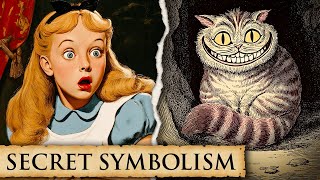
Alice in Wonderland: The Dark Meaning Behind the Madness
The Lore Labyrinth
SRT - Most compatible format for video players (VLC, media players, video editors)
VTT - Web Video Text Tracks for HTML5 video and browsers
TXT - Plain text with timestamps for easy reading and editing
Scroll to view all subtitles
You know the story. A curious girl falls
down a rabbit hole into a world of
talking animals, mad tea parties, and
nonsensical riddles. For over a century,
Alice in Wonderland has enchanted
children around the world with its
whimsical characters and dreamlike
adventures. But the historical record
reveals an origin far older and stranger
than commonly believed. And once you
understand the real context behind Lewis
Carol's masterpiece, you'll never see
this children's classic the same way
again. It's a cultural bomb
strategically disguised as fantasy
containing some of the darkest secrets
of Victorian England. The story begins
on a seemingly innocent summer day in
1862. Charles Dodgeson, a mathematics
lecturer at Oxford University, took
three young sisters on a boat ride down
the river Tempames. The middle child,
10-year-old Alice Little, grew restless
and begged Dodgeson for a story with
lots of nonsense. What emerged from his
imagination that day would become one of
the most analyzed texts in literary
history. But here's where the innocent
origin story starts to unravel. When
Dodgeson died in 1898, his family made a
decision that would forever cast a
shadow over his legacy. They went
through his personal diaries and
deliberately removed entire pages,
specifically the pages covering the
period when he was closest to Alice
Little and writing her story. Imagine
that Oxford study just days after the
funeral. The smell of old leather and
pipe tobacco still lingers. His sisters
gather around the heavy oak desk where
he wrote his fantastical tales. Someone
opens the diary to June 27th, 1863. A
date that should have documented a
pivotal moment in the Alice story. They
read the entry, then silence, a sharp
intake of breath. Without a word,
someone produces a pair of scissors. The
metallic snip echoes through the room as
page after page is carefully cut from
the binding. Some accounts suggest they
were burned in the fireplace. The names
Alice and Little glimpsed in Dodgeson's
precise handwriting before the flames
consumed them forever. The family
members present that day took the secret
of what they read to their graves. This
physical act of deletion carried out by
his own relatives implies a secret so
devastating that scholars still debate
its nature today. What could have been
written in those journals that required
such complete erasure from history? You
have to understand the context here.
Dodgeson, who published under the name
Lewis Carol, had an unusual number of
friendships with prepubescent girls. He
photographed them extensively, wrote
them elaborate letters, and created
personalized stories just for them. In
Victorian society, where propriety
governed every social interaction, these
relationships raised eyebrows even then.
But without those missing diary pages,
the true nature of his affections
remains, as one biographer put it, as
foggy as a cloudedl looking glass. The
manuscript itself tells another story.
When Dodesson first wrote out Alice's
adventures as a Christmas gift for the
real Alice Little, it was a private,
intimate creation filled with inside
jokes and personal references only she
would understand. But when he decided to
publish it for the wider world,
something fascinating happened. He
didn't just expand the story. He
specifically added the darkest, most
disturbing chapters. The transformation
of the Duchess's baby into a pig, the
Mad Hatter's Tea Party. These weren't in
the original gift to Alice. Carol
consciously chose to inject these
elements of horror into what was
supposedly a children's tale. While we
can only speculate what this personal
shadow was, we can see a different kind
of darkness that he deliberately
inserted into his story for the public
when he decided to publish it. He didn't
just expand the tale. He transformed it
into a vehicle for the hidden horrors of
the world around him. Those scenes of
Alice drinking mysterious liquids and
eating strange substances that make her
grow and shrink, that wasn't inspired by
the psychedelic drugs that 1960s
counterculture later claimed. The
reality is far more disturbing and far
more pervasive. During Carol's era,
opium wasn't some underground narcotic.
It was in nearly every Victorian
household. Historical records show that
five out of six families regularly used
Lordinum, liquid opium, for everything
from headaches to quieting restless
infants. Mothers would give it to their
babies to stop them from crying. The
coroner's reports from that era tell
stories that would horrify any modern
parent. In 1854, a London mother named
Sarah Whitfield confessed at an inquest
that she had given her six-month-old son
a teaspoon of Godfreyy's cordial, a
popular opiate syrup marketed
specifically for infants, every night to
keep him quiet, while she worked her
14-hour shifts at the textile mill. The
bottle sat on her mantelpiece next to
the family Bible, its sweet smell
masking the narcotic within. One night,
she gave him his usual dose. The baby
fell silent immediately as he always
did, but by morning his lips were blue
and his tiny body was cold. The coroner
recorded it as accidental poisoning by
Lordinum, one of dozens of similar
deaths that month alone. Mrs. Winslow's
soothing syrup, another best-selling
infant quietener, contained enough
morphine sulfate to eliminate an adult
if taken in excess. Yet advertisements
promoted it with images of cherubic
babies and promised mothers peace and
quiet nights. The ease with which Alice
consumes these transformationinducing
substances mirrors exactly how casually
Victorians consumed their daily doses of
opiates. But Carol encoded something
even darker in his expanded manuscript.
Remember that scene with the duchess and
her baby that turns into a pig? the one
he specifically added for publication.
The text describes the infant's
disturbing transformation. Its eyes were
getting extremely small for a baby, and
its nose was becoming much more like a
snout than a real nose. Contemporary
medical reports from Carol's time
described something horrifyingly
similar. Infants who were regularly
dozed with lordinum by their caretakers
would physically deteriorate. Doctors
wrote that these narcotic sickened
children shrank up into little old men.
The parallel is unmistakable. The
Duchess's neglected transforming baby
isn't nonsense. It's a coded indictment
of Victorian mothers who were literally
poisoning their children with casual
narcotic use. Infant mortality from
opiate overdose was, in the clinical
language of the time, an extremely
common result. The same society that
drugged its young ones was slowly
poisoning its craftsmen. And in the
quiet hum of industry, another madness
was being born. The Mad Hatter, that
beloved character known for his
nonsensical tea parties and riddles,
carries an even more tragic secret. You
see, the phrase mad as a Hatter wasn't
just a quirky Victorian expression. It
described a very real, very horrific
occupational disease that was destroying
workers across England. In 1860, at a
hat factory in Stockport, workers spent
their days bent over felting tables,
turning rabbit fur into felt for
gentleman's hats. The process uses
mercury nitrate, which releases toxic
vapor into the air. Thomas Corbett, one
of the workers, has been exposed to it
for 8 years. Each morning, his hands
tremble as he carries basins of mercury
solution. By midday, the shaking worsens
until he can no longer eat. His wife
assumes he's drinking again, and his
children keep their distance when his
behavior turns erratic. After two more
years, his speech becomes slurred, and
he begins hallucinating, seeing giant
rabbits in the corners of the workshop.
His co-workers mock him as mad as a
Hatter, unaware he's suffering from
mercury poisoning. Eventually, Thomas
collapses at his station. His nervous
system destroyed. The factory replaces
him within a week. His widow receives
nothing. Hat makers in Carol's time used
mercury nitrate to process rabbit fur
into felt. Day after day, these workers
breathed in mercury vapors in poorly
ventilated factories. The metal slowly
poisoned their nervous systems, causing
what doctors called Hatters shakes,
uncontrollable trembling that made it
impossible to hold a teacup steady. The
poisoning attacked their minds, too,
causing hallucinations, emotional
instability and speech problems that
made them seem insane. The medical
community knew about this as early as
1829. French doctors confirmed the
connection in 1869. Yet in England, the
suffering continued. The factory owners
knew their workers were being poisoned.
The government knew. The public knew. It
was so common they had a saying about
it. But nothing changed. The use of
mercury in hatmaking wasn't banned until
1941. And only then, because the
military needed mercury for detonators
in World War II. So when you watch the
Mad Hatter's bizarre behavior at his
eternal tea party, you're not seeing
whimsical nonsense. You're seeing
Carol's brilliant encapsulation of
systemic indifference to workingclass
suffering. An entire character built
around an industrial disease that
everyone knew about, but no one bothered
to stop. The Queen of Hearts, with her
constant shriek of off with their heads,
seems like an over-the-top caricature of
authority. But Carol was encoding very
specific political commentary into her
character. The scene where the card
gardeners frantically paint white roses
red contains a historical reference that
would have been immediately recognizable
to Victorian readers. The red rose was
the symbol of the house of Lancaster.
The white rose represented the house of
York. These two royal houses fought the
wars of the roses, one of the bloodiest
periods in English history where the
throne changed hands through
assassination and execution. In the
winter of 1461, the snow in Toutton
turned red with the blood of 28,000
Englishmen. The bloodiest day in English
history. Men were executed simply for
wearing the wrong colored rose on their
dublet. At Tukesbury in 1471, Lancaster
supporters who sought sanctuy in the
abbey were dragged out and beheaded on
the spot, their only crime being loyalty
to a red rose instead of a white one.
The Duke of Somerset was pulled from the
altar itself and executed in the town
square while his blood ran into the
gutters. These weren't soldiers dying in
battle. These were executions based
purely on which flower you wore, which
version of royal legitimacy you
supported. The gardeners painting roses
red weren't just following a queen's
arbitrary preference. They were
depicting the desperate attempts of
subjects to display the right political
allegiance to avoid execution. Carol's
Victorian readers raised on these
historical horrors would have instantly
understood. Every time the queen screams
for someone's head, she's channeling
centuries of English monarchs who did
exactly that. Carol knew his audience
would recognize this reference. He was
showing them that the violent capricious
authority of the Queen of Hearts was no
different from the actual English
monarchs who had ordered thousands of
executions based on political whims. In
an era when Victorian society prided
itself on law and order, Carol dared to
suggest that their entire system of
authority was as arbitrary and cruel as
a playing card tyrant screaming for
heads to roll. His satire of power
didn't end with politics. It reached
into the very roots of society, to the
classrooms where the next generation
learned not to think, but to obey.
Picture a classroom in 1865 Oxford, not
far from where Carol himself taught
mathematics. 12 girls stand in identical
brown piphors, their backs rigid, hands
clasped behind them. The air reeks of
chalk dust and fear. They chant in
perfect unison. How do the little busy
bee improve each shining hour? Not one
of them understands what they're saying.
Questions are forbidden. Curiosity is
rebellion. The governness, Miss
Strickland, holds a thin wooden cane
that has already struck three sets of
knuckles this morning for impertinent
wonderings. This is education, mindless
repetition, until the words are carved
into memory like epitaps on stone. One
girl, let's call her Margaret, will
later recite these same verses at her
wedding, at her children's
christristenings, on her deathbed, never
once knowing what they mean, only that
she must remember them perfectly or face
the consequences. Alice begins her
journey as a proper Victorian child, her
head filled with multiplication tables,
geography lessons, and moral poems she's
memorized by wrote. Watch what happens
when she tries to use this knowledge in
Wonderland. She attempts to verify her
identity by reciting her lessons. Let me
see. 4 * 5 is 12 and 4 * 6 is 13. Her
geography becomes nonsense. London is
the capital of Paris. Every piece of
standardized knowledge she's been taught
crumbles into meaninglessness. And
here's the brilliant part. Carol, the
Oxford mathematician, made Alice's
multiplication technically correct if
you shift number bases. a sophisticated
mathematical joke aimed directly at his
academic colleagues who are pushing
increasingly abstract mathematical
theories. Alice's complete psychological
breakdown, who in the world am I? Ah,
that's the great puzzle, occurs
precisely because everything she's been
taught to memorize has failed her. Carol
was demonstrating that the Victorian
education system with its emphasis on
wrote memorization over actual
understanding was creating children
whose entire identities could collapse
the moment their memorized facts proved
useless. The trial scene at the story's
climax brings Carol's critiques
together. The courtroom operates on pure
chaos. Evidence is meaningless. Logic is
punished. And justice depends entirely
on the queen's mood. But this wasn't
fantasy. It was barely even satire. In
1856, a case shook London that could
have come straight from Wonderland. Mary
Barrett, a seamstress from White Chapel,
was brought before the magistrate for
stealing a loaf of bread worth 3 p. She
had three starving children at home and
hadn't eaten in 2 days. The evidence was
clear. She had taken the bread. She was
sentenced to 6 months hard labor in New
Gate Prison where she would die of
typhus within 3 weeks. That same week,
the Honorable Augustus Fitz Hugh, son of
an earl appeared before the same court
for assaulting a housemaid so severely
she couldn't work for a month. Multiple
witnesses testified to his violence. He
was fined£1 sterling, less than the cost
of his morning champagne, and released
with a warning to conduct himself as
befits a gentleman. The newspapers
barely mentioned it. Victorian courts
regularly featured trials just as
arbitrary, where social status mattered
more than evidence, and sentences could
be passed based on a judge's disposition
rather than law. When Alice finally
stands up to declare, "You're nothing
but a pack of cards." She's not just
dismissing fictional characters. She's
voicing what Carol saw as the ultimate
truth about Victorian authority. That
beneath all their pretensions of order
and civilization. The powerful were
nothing but arbitrary tyrants playing
games with people's lives. Alice in
Wonderland endures because it operates
on multiple levels simultaneously.
Children see a fantastic adventure.
Adults recognize social satire, but
historians see something else entirely.
A coded map of Victorian England's
darkest secrets. Those missing diary
pages destroyed by Carol's own family
ensure we'll never know the full truth
about his relationship with Alice
Little. Yet their very destruction
speaks louder than words ever could.
When your own relatives burn your
writings rather than let them be read,
the shadow cast is darker than any
secret they might have contained. Carol
didn't write a children's story. He
wrote an expose disguised just enough to
slip past Victorian sensors and into
nurseries worldwide. The real magic
trick isn't the disappearing Chesher cat
or size changing potions. It's that
Carol hid a revolutionary manifesto
inside a children's book, encoding
criticisms so sharp they would have
destroyed him if stated plainly. The
next time someone tells you Alice in
Wonderland is just imaginative nonsense
for children, remember the truth.
Sometimes the most powerful revelations
can only be told through the mouth of a
confused little girl lost in a world
that makes no sense because in the end,
neither did Victorian England.
Full transcript without timestamps
You know the story. A curious girl falls down a rabbit hole into a world of talking animals, mad tea parties, and nonsensical riddles. For over a century, Alice in Wonderland has enchanted children around the world with its whimsical characters and dreamlike adventures. But the historical record reveals an origin far older and stranger than commonly believed. And once you understand the real context behind Lewis Carol's masterpiece, you'll never see this children's classic the same way again. It's a cultural bomb strategically disguised as fantasy containing some of the darkest secrets of Victorian England. The story begins on a seemingly innocent summer day in 1862. Charles Dodgeson, a mathematics lecturer at Oxford University, took three young sisters on a boat ride down the river Tempames. The middle child, 10-year-old Alice Little, grew restless and begged Dodgeson for a story with lots of nonsense. What emerged from his imagination that day would become one of the most analyzed texts in literary history. But here's where the innocent origin story starts to unravel. When Dodgeson died in 1898, his family made a decision that would forever cast a shadow over his legacy. They went through his personal diaries and deliberately removed entire pages, specifically the pages covering the period when he was closest to Alice Little and writing her story. Imagine that Oxford study just days after the funeral. The smell of old leather and pipe tobacco still lingers. His sisters gather around the heavy oak desk where he wrote his fantastical tales. Someone opens the diary to June 27th, 1863. A date that should have documented a pivotal moment in the Alice story. They read the entry, then silence, a sharp intake of breath. Without a word, someone produces a pair of scissors. The metallic snip echoes through the room as page after page is carefully cut from the binding. Some accounts suggest they were burned in the fireplace. The names Alice and Little glimpsed in Dodgeson's precise handwriting before the flames consumed them forever. The family members present that day took the secret of what they read to their graves. This physical act of deletion carried out by his own relatives implies a secret so devastating that scholars still debate its nature today. What could have been written in those journals that required such complete erasure from history? You have to understand the context here. Dodgeson, who published under the name Lewis Carol, had an unusual number of friendships with prepubescent girls. He photographed them extensively, wrote them elaborate letters, and created personalized stories just for them. In Victorian society, where propriety governed every social interaction, these relationships raised eyebrows even then. But without those missing diary pages, the true nature of his affections remains, as one biographer put it, as foggy as a cloudedl looking glass. The manuscript itself tells another story. When Dodesson first wrote out Alice's adventures as a Christmas gift for the real Alice Little, it was a private, intimate creation filled with inside jokes and personal references only she would understand. But when he decided to publish it for the wider world, something fascinating happened. He didn't just expand the story. He specifically added the darkest, most disturbing chapters. The transformation of the Duchess's baby into a pig, the Mad Hatter's Tea Party. These weren't in the original gift to Alice. Carol consciously chose to inject these elements of horror into what was supposedly a children's tale. While we can only speculate what this personal shadow was, we can see a different kind of darkness that he deliberately inserted into his story for the public when he decided to publish it. He didn't just expand the tale. He transformed it into a vehicle for the hidden horrors of the world around him. Those scenes of Alice drinking mysterious liquids and eating strange substances that make her grow and shrink, that wasn't inspired by the psychedelic drugs that 1960s counterculture later claimed. The reality is far more disturbing and far more pervasive. During Carol's era, opium wasn't some underground narcotic. It was in nearly every Victorian household. Historical records show that five out of six families regularly used Lordinum, liquid opium, for everything from headaches to quieting restless infants. Mothers would give it to their babies to stop them from crying. The coroner's reports from that era tell stories that would horrify any modern parent. In 1854, a London mother named Sarah Whitfield confessed at an inquest that she had given her six-month-old son a teaspoon of Godfreyy's cordial, a popular opiate syrup marketed specifically for infants, every night to keep him quiet, while she worked her 14-hour shifts at the textile mill. The bottle sat on her mantelpiece next to the family Bible, its sweet smell masking the narcotic within. One night, she gave him his usual dose. The baby fell silent immediately as he always did, but by morning his lips were blue and his tiny body was cold. The coroner recorded it as accidental poisoning by Lordinum, one of dozens of similar deaths that month alone. Mrs. Winslow's soothing syrup, another best-selling infant quietener, contained enough morphine sulfate to eliminate an adult if taken in excess. Yet advertisements promoted it with images of cherubic babies and promised mothers peace and quiet nights. The ease with which Alice consumes these transformationinducing substances mirrors exactly how casually Victorians consumed their daily doses of opiates. But Carol encoded something even darker in his expanded manuscript. Remember that scene with the duchess and her baby that turns into a pig? the one he specifically added for publication. The text describes the infant's disturbing transformation. Its eyes were getting extremely small for a baby, and its nose was becoming much more like a snout than a real nose. Contemporary medical reports from Carol's time described something horrifyingly similar. Infants who were regularly dozed with lordinum by their caretakers would physically deteriorate. Doctors wrote that these narcotic sickened children shrank up into little old men. The parallel is unmistakable. The Duchess's neglected transforming baby isn't nonsense. It's a coded indictment of Victorian mothers who were literally poisoning their children with casual narcotic use. Infant mortality from opiate overdose was, in the clinical language of the time, an extremely common result. The same society that drugged its young ones was slowly poisoning its craftsmen. And in the quiet hum of industry, another madness was being born. The Mad Hatter, that beloved character known for his nonsensical tea parties and riddles, carries an even more tragic secret. You see, the phrase mad as a Hatter wasn't just a quirky Victorian expression. It described a very real, very horrific occupational disease that was destroying workers across England. In 1860, at a hat factory in Stockport, workers spent their days bent over felting tables, turning rabbit fur into felt for gentleman's hats. The process uses mercury nitrate, which releases toxic vapor into the air. Thomas Corbett, one of the workers, has been exposed to it for 8 years. Each morning, his hands tremble as he carries basins of mercury solution. By midday, the shaking worsens until he can no longer eat. His wife assumes he's drinking again, and his children keep their distance when his behavior turns erratic. After two more years, his speech becomes slurred, and he begins hallucinating, seeing giant rabbits in the corners of the workshop. His co-workers mock him as mad as a Hatter, unaware he's suffering from mercury poisoning. Eventually, Thomas collapses at his station. His nervous system destroyed. The factory replaces him within a week. His widow receives nothing. Hat makers in Carol's time used mercury nitrate to process rabbit fur into felt. Day after day, these workers breathed in mercury vapors in poorly ventilated factories. The metal slowly poisoned their nervous systems, causing what doctors called Hatters shakes, uncontrollable trembling that made it impossible to hold a teacup steady. The poisoning attacked their minds, too, causing hallucinations, emotional instability and speech problems that made them seem insane. The medical community knew about this as early as 1829. French doctors confirmed the connection in 1869. Yet in England, the suffering continued. The factory owners knew their workers were being poisoned. The government knew. The public knew. It was so common they had a saying about it. But nothing changed. The use of mercury in hatmaking wasn't banned until 1941. And only then, because the military needed mercury for detonators in World War II. So when you watch the Mad Hatter's bizarre behavior at his eternal tea party, you're not seeing whimsical nonsense. You're seeing Carol's brilliant encapsulation of systemic indifference to workingclass suffering. An entire character built around an industrial disease that everyone knew about, but no one bothered to stop. The Queen of Hearts, with her constant shriek of off with their heads, seems like an over-the-top caricature of authority. But Carol was encoding very specific political commentary into her character. The scene where the card gardeners frantically paint white roses red contains a historical reference that would have been immediately recognizable to Victorian readers. The red rose was the symbol of the house of Lancaster. The white rose represented the house of York. These two royal houses fought the wars of the roses, one of the bloodiest periods in English history where the throne changed hands through assassination and execution. In the winter of 1461, the snow in Toutton turned red with the blood of 28,000 Englishmen. The bloodiest day in English history. Men were executed simply for wearing the wrong colored rose on their dublet. At Tukesbury in 1471, Lancaster supporters who sought sanctuy in the abbey were dragged out and beheaded on the spot, their only crime being loyalty to a red rose instead of a white one. The Duke of Somerset was pulled from the altar itself and executed in the town square while his blood ran into the gutters. These weren't soldiers dying in battle. These were executions based purely on which flower you wore, which version of royal legitimacy you supported. The gardeners painting roses red weren't just following a queen's arbitrary preference. They were depicting the desperate attempts of subjects to display the right political allegiance to avoid execution. Carol's Victorian readers raised on these historical horrors would have instantly understood. Every time the queen screams for someone's head, she's channeling centuries of English monarchs who did exactly that. Carol knew his audience would recognize this reference. He was showing them that the violent capricious authority of the Queen of Hearts was no different from the actual English monarchs who had ordered thousands of executions based on political whims. In an era when Victorian society prided itself on law and order, Carol dared to suggest that their entire system of authority was as arbitrary and cruel as a playing card tyrant screaming for heads to roll. His satire of power didn't end with politics. It reached into the very roots of society, to the classrooms where the next generation learned not to think, but to obey. Picture a classroom in 1865 Oxford, not far from where Carol himself taught mathematics. 12 girls stand in identical brown piphors, their backs rigid, hands clasped behind them. The air reeks of chalk dust and fear. They chant in perfect unison. How do the little busy bee improve each shining hour? Not one of them understands what they're saying. Questions are forbidden. Curiosity is rebellion. The governness, Miss Strickland, holds a thin wooden cane that has already struck three sets of knuckles this morning for impertinent wonderings. This is education, mindless repetition, until the words are carved into memory like epitaps on stone. One girl, let's call her Margaret, will later recite these same verses at her wedding, at her children's christristenings, on her deathbed, never once knowing what they mean, only that she must remember them perfectly or face the consequences. Alice begins her journey as a proper Victorian child, her head filled with multiplication tables, geography lessons, and moral poems she's memorized by wrote. Watch what happens when she tries to use this knowledge in Wonderland. She attempts to verify her identity by reciting her lessons. Let me see. 4 * 5 is 12 and 4 * 6 is 13. Her geography becomes nonsense. London is the capital of Paris. Every piece of standardized knowledge she's been taught crumbles into meaninglessness. And here's the brilliant part. Carol, the Oxford mathematician, made Alice's multiplication technically correct if you shift number bases. a sophisticated mathematical joke aimed directly at his academic colleagues who are pushing increasingly abstract mathematical theories. Alice's complete psychological breakdown, who in the world am I? Ah, that's the great puzzle, occurs precisely because everything she's been taught to memorize has failed her. Carol was demonstrating that the Victorian education system with its emphasis on wrote memorization over actual understanding was creating children whose entire identities could collapse the moment their memorized facts proved useless. The trial scene at the story's climax brings Carol's critiques together. The courtroom operates on pure chaos. Evidence is meaningless. Logic is punished. And justice depends entirely on the queen's mood. But this wasn't fantasy. It was barely even satire. In 1856, a case shook London that could have come straight from Wonderland. Mary Barrett, a seamstress from White Chapel, was brought before the magistrate for stealing a loaf of bread worth 3 p. She had three starving children at home and hadn't eaten in 2 days. The evidence was clear. She had taken the bread. She was sentenced to 6 months hard labor in New Gate Prison where she would die of typhus within 3 weeks. That same week, the Honorable Augustus Fitz Hugh, son of an earl appeared before the same court for assaulting a housemaid so severely she couldn't work for a month. Multiple witnesses testified to his violence. He was fined£1 sterling, less than the cost of his morning champagne, and released with a warning to conduct himself as befits a gentleman. The newspapers barely mentioned it. Victorian courts regularly featured trials just as arbitrary, where social status mattered more than evidence, and sentences could be passed based on a judge's disposition rather than law. When Alice finally stands up to declare, "You're nothing but a pack of cards." She's not just dismissing fictional characters. She's voicing what Carol saw as the ultimate truth about Victorian authority. That beneath all their pretensions of order and civilization. The powerful were nothing but arbitrary tyrants playing games with people's lives. Alice in Wonderland endures because it operates on multiple levels simultaneously. Children see a fantastic adventure. Adults recognize social satire, but historians see something else entirely. A coded map of Victorian England's darkest secrets. Those missing diary pages destroyed by Carol's own family ensure we'll never know the full truth about his relationship with Alice Little. Yet their very destruction speaks louder than words ever could. When your own relatives burn your writings rather than let them be read, the shadow cast is darker than any secret they might have contained. Carol didn't write a children's story. He wrote an expose disguised just enough to slip past Victorian sensors and into nurseries worldwide. The real magic trick isn't the disappearing Chesher cat or size changing potions. It's that Carol hid a revolutionary manifesto inside a children's book, encoding criticisms so sharp they would have destroyed him if stated plainly. The next time someone tells you Alice in Wonderland is just imaginative nonsense for children, remember the truth. Sometimes the most powerful revelations can only be told through the mouth of a confused little girl lost in a world that makes no sense because in the end, neither did Victorian England.
Keep this transcript
Save it to LunaNotes and it becomes a real note in your library — editable, searchable, and ready to turn into flashcards or a diagram. Free to start.
Save to LunaNotesOr download subtitles for another video.


32K+ people have turned 65K+ videos into notes
“Very useful tool. I'm using it for the last couple weeks and I'm loving it so far. Makes learning on YouTube a great experience.”
 Bhai Chrome Web Store review
These subtitles were extracted using the Free YouTube subtitle downloader by LunaNotes.
Related videos

Download Subtitles for Palm Reading Video: Discover True Meanings
Enhance your understanding of palm reading by downloading accurate subtitles for this insightful video. Captions help you follow along effortlessly and grasp the true meanings behind palm lines, making the experience accessible to everyone.
Download Subtitles for 'Your Choice Will Reveal the Truth About You' Video
Enhance your understanding of 'Your Choice Will Reveal the Truth About You' by downloading accurate subtitles. Captions help you follow along easily, improve comprehension, and enjoy the content at your own pace.

Download Subtitles for Altered States: AI, Occult & Kabbalah
Enhance your understanding of the Altered States video featuring Tucker Carlson as it explores AI, the occult, Kabbalah, and Nick Land. Download accurate subtitles to follow complex ideas clearly and engage more deeply with the content. Perfect for learners and enthusiasts seeking detailed insights with accessible captions.

Download Subtitles for SMCCC2 Video and Enhance Understanding
Download accurate subtitles for the SMCCC2 video to improve comprehension and accessibility. Enjoy clear captions that help you follow along easily and grasp key content effortlessly.
Download Subtitles for Seasonal Sadness | Inside Out Clip
Enhance your viewing experience by downloading accurate subtitles for the 'Seasonal Sadness' clip from Inside Out. Subtitles help you understand every emotional nuance and enjoy the video even in noisy environments or for hearing-impaired viewers.
Most viewed

Untertitel für 'Nicos Weg' Deutsch lernen A1 Film herunterladen
Laden Sie die Untertitel für den gesamten Film 'Nicos Weg' herunter, um Ihr Deutschlernen auf A1 Niveau zu unterstützen. Untertitel helfen Ihnen, Wortschatz und Aussprache besser zu verstehen und verbessern das Hörverständnis effektiv.

Subtítulos para TIPOS DE APEGO | 6 DE COPAS Episodio 56
Descarga los subtítulos para el episodio 56 de la tercera temporada de 6 DE COPAS, centrado en los tipos de apego. Mejora tu comprensión y disfruta del contenido en detalle con nuestros subtítulos precisos y accesibles.

Download Subtitles for Harvard CS50 2026 Computer Science Course
Enhance your learning experience with downloadable subtitles for the Harvard CS50 2026 full computer science course. Easily follow along with lectures, improve comprehension, and access the content offline anytime. Perfect for students and enthusiasts aiming to master computer science concepts.

ดาวน์โหลดซับไตเติ้ล DMD LAND 3 The Final Land Day 1
ดาวน์โหลดซับไตเติ้ลสำหรับวิดีโอ DMD LAND 3 The Final Land Day 1 เพื่อช่วยให้เข้าใจเนื้อหาได้ง่ายขึ้น และเพิ่มความสะดวกในการติดตามทุกช่วงเวลา เหมาะสำหรับผู้ชมที่ต้องการความชัดเจนและเข้าถึงข้อมูลอย่างครบถ้วน
Descarga Subtítulos para NARCISISMO | 6 DE COPAS - Episodio 63
Accede fácilmente a los subtítulos del episodio 63 de '6 DE COPAS', centrado en el narcisismo. Descargar estos subtítulos te ayudará a entender mejor el contenido y mejorar la experiencia de visualización.
Found this transcript useful?
Take it with you. One click puts it in your own LunaNotes library.
Save to LunaNotes