Introduction to Central and Inscribed Angles
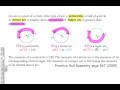
- Central Angle: An angle with its vertex at the center of the circle. The measure of a central angle is equal to the measure of its intercepted arc.
- Inscribed Angle: An angle with its vertex on the circle itself. The measure of an inscribed angle is always half the measure of its intercepted arc.
Key Properties
- Central Angle and Arc: If the intercepted arc measures 98°, the central angle that intercepts this arc is also 98°.
- Inscribed Angle and Arc: For an intercepted arc of 164°, the corresponding inscribed angle measures half of that, 82°.
Practical Examples with Calculations
-
Given Arc AB = 90°:
- Central angle M (vertex at center) measuring the same 90°.
-
Arc CD = 160°:
- Inscribed angle intercepting this arc measures half: 80°.
-
Given an Inscribed Angle of 70°:
- Intercepted arc would be twice that, 140°.
-
Complex Quadrilateral within Circle:
- If an outside arc measures 100°, the central angle equals 100°.
- The inscribed angle intercepting this arc measures 50°.
- For arc JKL: Since total circle is 360°, arc JKL = 360° - 100° = 260°.
-
Given an Inscribed Angle (N) of 40°:
- Intercepted arc measures twice the angle: 80°.
- Corresponding central angle intercepting the same arc is 80°.
-
Step-by-Step for Multiple Angles:
- Inscribed angle of 20° corresponds to intercepted arc of 40°.
- Inscribed angle of 30° corresponds to intercepted arc of 60°.
- Calculations within triangles formed by these angles use the sum of 180° to find unknown angles (e.g., 180° - (30° + 20°) = 130°).
Tips for Solving Circle Angle Problems
- Always identify whether the angle is central or inscribed.
- Use the relationship: central angle = intercepted arc.
- Use the relationship: inscribed angle = 1⁄2 intercepted arc.
- For missing angles in triangles inside circles, apply the triangle angle sum property.
- Remember total circle degrees add to 360°, useful for finding unknown arcs.
By understanding and applying these principles, you can confidently solve various geometry problems involving central and inscribed angles in circles. For deeper understanding of related areas such as Identifying Minor Arcs, Major Arcs, and Semicircles in Circles and Calculating Arc Length, Triangle, and Sector Areas with Theta, check out these comprehensive guides. Additionally, mastering concepts around circle-related triangles can be enhanced by exploring Solving Varying Angle Problems Using Sine and Cosine Laws.
let's look at uh central angles and inscribed angles so I have a couple pictures here a couple circles that show
what a central angle and inscribed angle are um so central angle just as a reminder is an angle where the vertex is
at the center of the circle the very center inscribed angle is where the vertex touches the circles on the circle
so what so so what about them what's special about them well one special thing about a central angle is if I know
let's say this Arc here is 98° great boy bands of all time so this
central angle would also be 98 degrees this angle is the same as the intercepted Arc for an inscribed angle
let's say this is 100 and looks like it's about 164° is my guess the inscribed
angle is half it's always half of the intercepted Arc so this would be 82° right there okay so what I did was I
figured let's look at a few examples and make sure we you know we get it so I have six examples here if I have this
Arc AB is 90 Dees question that would most likely come up is what is angle M well we just talked about this the arc
is the same as the central angle so this would be 90 and vice versa if they give you the central angle you can assume
that the arc is the same okay uh if this is 160 degrees this Arc from C to D then half of 160 would be 80 so if you're
watching this for notes purposes what I would encourage I probably should have said this before I went over these two
is maybe pause it I'll scroll down slightly so you can see the others copy them down and see if you can figure out
like the missing angles and arcs on these shap shapes okay this angle is 70 so what
would this Arc be right here well uh if this is 70 we just talked about this the angle is half of the arc so here we
divide it by two but if we know the angle we're going to multiply by two so 70 * 2 is 140 be about
140 all right here the bottom one we have an arc and and we got some funky looking quadrilateral happening here so
one question would be what's the central angle well it's the same as the outside Arc so 100
degrees another question would be what is the inscribed angle well if this is 100 this would
have to be half so 50° other question would be well what is this angle
and this angle and the answer is I don't know there's really no way to tell without
more information um they look like they're about the same but they're not necessarily the same so we can only find
these two um a third question or I guess fourth question might be uh if we want
jkl if I asked you for this J KL that would be how much well remember Circle 360 so if this is 100 that means
from J to K to L would have to be 260 because 360 minus 100 is 260 okay so this time you're given the
inscribed angle and if I extend out these lines n to p and N to Q if this is 40° that means this intercepted Arc here
has to be twice that so this would be 80° and then this central angle would be
80° obviously it's uptu so it's not a great drawing but this is how the math would shake out okay so what we're going
to find on this one is we're going to figure out what this angle is we're going to figure out what this angle is
we're going to figure out what this Arc is and what this Arc is and we could probably also figure out
these angles here we'll do that so let's start with this Arc SX if we start at
V and we extend out our lines here for angle V I guess this would be angle
xvs this is 20° and that means that this Arc SX is the intercepted Arc for this 20°
inscribed angle so this would have to be 40° because it's twice as big as the inscribed
angle sorry about the Bell uh so let's clear this
out and then if we want to do the same thing for this if this is 30 Dees we extend that out this would have
to be 60° because it's double that okay so I'm going to clean this up again so then a question might come up
with what is this angle right here at T well if you look this angle at
T the intercepted Arc is 40° so the inscribed angle would have to be half of that which is
20 and then likewise with this angle if you're asked to find whoops I got a little bit excited
there let me clean this up if you're asked to find this angle here well the intercepted Arc would be
60 degrees so this would be half which would be 30 degrees and then like I mentioned
earlier if we wanted to find this angle we have a triangle here so if this is 30 and 20 that's 50 we know these
three angles in a triangle have to add up to 180 so 180 minus 50 would be 130° and then you could figure out the
other three because we have some vertical angles here so this is 130 and we'd have 50 and 50 here and here
because 130 and 50 are a linear pair so they have to be supplementary okay so there's a few
examples of central angles and inscribed angles
A central angle has its vertex at the center of the circle and its measure equals the intercepted arc's measure. An inscribed angle has its vertex on the circle itself and measures exactly half of its intercepted arc. For example, if an arc measures 100°, the central angle intercepting it is 100°, while the inscribed angle is 50°.
To find the inscribed angle's measure, divide the intercepted arc's measure by two. For instance, if the intercepted arc measures 164°, the inscribed angle intercepting that arc measures 82° (164° ÷ 2 = 82°). This relationship holds for any inscribed angle in a circle.
You can find the intercepted arc by doubling the measure of the inscribed angle. For example, an inscribed angle measuring 70° intercepts an arc of 140° (70° × 2 = 140°). This is a straightforward reverse of the inscribed angle property.
By recognizing whether an angle is central or inscribed, you can use their relationships with arcs to find unknown angle or arc measures. Applying these, along with the triangle angle sum property and the fact that a full circle measures 360°, enables solving for missing values in complex figures, such as quadrilaterals inscribed in circles.
First, identify if the angle is central or inscribed. Then apply the rule: central angle equals intercepted arc, inscribed angle equals half the intercepted arc. Use the total 360° circle measure to find unknown arcs. When triangles are involved, apply the 180° sum of angles to find missing angles efficiently.
Sure! If you have inscribed angles measuring 20° and 30° intercepting arcs of 40° and 60° respectively, then the unknown angle in the triangle formed can be found by 180° - (20° + 30°) = 130°. This uses both arc-angle relations and the triangle angle sum property to solve for the missing angle.
You can deepen your knowledge by exploring guides on identifying minor and major arcs, calculating arc lengths and sector areas, and solving triangle problems using sine and cosine laws. These resources provide comprehensive explanations and examples to enhance your problem-solving skills with circles.
Keep this summary
Save it to LunaNotes and it becomes a real note in your library — editable, searchable, and ready to turn into flashcards or a diagram. Free to start.
Save to LunaNotesOr summarise for another video.


32K+ people have turned 65K+ videos into notes
“Very useful tool. I'm using it for the last couple weeks and I'm loving it so far. Makes learning on YouTube a great experience.”
 Bhai Chrome Web Store review
This summary and transcript were automatically generated using AI with the Free YouTube transcript summary tool by LunaNotes.
Related summaries
Identifying Minor Arcs, Major Arcs, and Semicircles in Circles
This video lesson explains how to identify and differentiate minor arcs, major arcs, and semicircles within a circle by analyzing points and corresponding central angles. Learn key concepts, definitions, and the relationships between these arcs to enhance your understanding of circle geometry.

Calculating Arc Length, Triangle, and Sector Areas with Theta
This video tutorial explains how to find shaded areas involving circle sectors and triangles using trigonometric formulas and graphing calculators. It covers solving for angles and areas in various geometric configurations with step-by-step methods and calculator instructions.

Mastering Trigonometric Identities, Equations, and the CAST Diagram
Explore exact trigonometric values, the unit circle, and the CAST diagram to solve trigonometric identities and equations effectively. Learn key identities, graph behaviors, and step-by-step methods for solving complex trig problems including quadratic forms and transformations.
How to Use SOHCAHTOA to Find Missing Angles in Triangles
Learn how to apply SOHCAHTOA principles combined with inverse trigonometric functions to calculate missing angles in right-angled triangles. This guide breaks down step-by-step labeling of sides and using inverse sine, cosine, and tangent on your calculator for accurate angle results.

Solving Varying Angle Problems Using Sine and Cosine Laws
This video tutorial explains how to solve geometry problems involving varying angles using sine and cosine laws. It covers calculating unknown angles, distances, and bearings in triangles with practical examples and step-by-step solutions.
Most viewed summaries

A Comprehensive Guide to Using Stable Diffusion Forge UI
Explore the Stable Diffusion Forge UI, customizable settings, models, and more to enhance your image generation experience.

Kolonyalismo at Imperyalismo: Ang Kasaysayan ng Pagsakop sa Pilipinas
Tuklasin ang kasaysayan ng kolonyalismo at imperyalismo sa Pilipinas sa pamamagitan ni Ferdinand Magellan.

Mastering Inpainting with Stable Diffusion: Fix Mistakes and Enhance Your Images
Learn to fix mistakes and enhance images with Stable Diffusion's inpainting features effectively.

Pamamaraan at Patakarang Kolonyal ng mga Espanyol sa Pilipinas
Tuklasin ang mga pamamaraan at patakaran ng mga Espanyol sa Pilipinas, at ang epekto nito sa mga Pilipino.

How to Install and Configure Forge: A New Stable Diffusion Web UI
Learn to install and configure the new Forge web UI for Stable Diffusion, with tips on models and settings.
Found this summary useful?
Take it with you. One click puts it in your own LunaNotes library.
Save to LunaNotes