Introduction
Many behaviors we consider quirky or normal might actually be red flags signaling mental health challenges. Recognizing these signs is crucial for understanding when your brain is sending a call for help. For example, exploring Understanding Major Mental Health Disorders: Symptoms and Realities can provide deeper insight into these challenges.
1. The Skin Archaeologist (Excoriation Disorder)
- Compulsive skin picking causing distress and scars
- Linked to anxiety, OCD, or trauma
- Acts as a coping mechanism to control overwhelming feelings
2. The Mental Time Traveler (Rumination)
- Replaying past events or obsessing over future scenarios
- Core symptom of depression and anxiety
- Creates a harmful loop that worsens mental health
3. The Emotional Ghost (Emotional Blunting)
- Lack of emotional response in situations that typically evoke feelings
- Can be caused by severe depression or PTSD
- Feels like watching life through a foggy window
4. The Disaster Director (Catastrophic Thinking)
- Exaggerating minor problems into disasters
- Common in generalized anxiety disorder
- Leads to constant feelings of threat and worry
5. The Approval Addict (Rejection Sensitivity Dysphoria)
- Overwhelming emotional response to perceived criticism or rejection
- Common in individuals with ADHD
- Causes people-pleasing behaviors and emotional distress
For more about ADHD's impacts, see Understanding ADHD: Diagnosis, Treatment, and Relationship Insights.
Additional Behaviors to Watch
The Ritual Prisoner (Obsessive Compulsive Disorder)
- Compulsive rituals like repeated checking or arranging
- Performed to relieve anxiety but becomes a time-consuming cycle
The Joy Thief (Anhedonia)
- Inability to feel pleasure from enjoyable activities
- A symptom of depression affecting social and physical enjoyment
The Reassurance Junkie (Excessive Reassurance Seeking)
- Constant need for validation and certainty
- Driven by anxiety and fear of rejection
The Choice Paralytic (Decision Paralysis)
- Overwhelmed by making everyday decisions
- Linked to anxiety disorders causing freeze or inaction
More strategies to overcome this can be found in How Digital Habits Are Weakening Your Brain and Ways to Rebuild Focus.
The Human Slot Machine (Impulse Control Disorder)
- Acting on impulses without considering consequences
- Leads to risky behaviors and regret
Enhance understanding of Unlocking Mental Clarity: A Comprehensive Guide to Executive Function and Brain Hacks to learn brain-boosting techniques that aid impulse control.
Conclusion
These behaviors are not signs of weakness or character flaws but signals your brain is struggling. Recognizing and listening to these warning signs is the first step toward seeking help and improving mental well-being. Understanding defense strategies, such as detailed in Understanding Psychological Defense Mechanisms: From Denial to Altruism, may also offer valuable perspectives.
You know what's wild? That quirky thing you do, the one everyone laughs about. Yeah, that might not be a personality
trait. It might be your brain literally malfunctioning. And the scariest part, you probably have no idea. I'm about to
show you five behaviors that seem totally normal, maybe even relatable, but are actually red flags waving so
hard they're about to fly off the pole. And before you click away thinking this doesn't apply to me, stick around
because statistically at least one of these is happening in your brain right now. Let's start with number 10. The
skin archaeologist. You're watching TV and suddenly realize you've been picking at that tiny bump on
your arm for 20 minutes. It's bleeding. Now, this isn't just a bad habit. It's excoriation disorder. Compulsive
skinpicking. Your brain is screaming a signal, fix something now, and your hands obey. During the act, there's a
strange relief, but afterward, shame, guilt, scars. This is often linked to anxiety, OCD, or trauma. Your brain
creates a problem it can control, your skin, because the world feels too overwhelming. You're not weak. Your
brain is trying to survive. Number nine, the mental time traveler. Lying in bed at 2:00 a.m. replaying an
awkward conversation from 3 years ago, or scripting future conversations that will never happen. That's rumination.
Your brain is stuck in a loop, trapped in the past or future, refusing to let you live in the present. Rumination is a
core symptom of depression and anxiety. Your brain thinks if it just replays that moment one more time, it can solve
it. But it never does. It just makes you feel worse. Studies show people who ruminate are far more likely to develop
major depression. Your brain isn't being thoughtful. It's malfunctioning. Number eight, the emotional ghost. You
tell someone exciting news and they just stare and say, "Oh, cool." Or maybe you're that person. Your best friend is
crying and you feel nothing. This is emotional blunting and it's terrifying. Your brain's emotional response system
is broken, like a volume knob turned all the way down. It can happen with severe depression or PTSD. From the outside,
you might seem chill, but inside you're screaming, wanting to feel anything. You start to feel like a robot watching life
through a foggy window. This isn't resilience. It's a red flag that something is deeply wrong. Number seven,
the disaster director. You send a text, no response for an hour. A normal brain thinks they're busy. Your brain produces
a disaster movie where they hate you and you're going to die alone. This is catastrophic thinking. Your boss sounds
slightly annoyed. You're convinced you're getting fired and will end up homeless. This isn't just worrying. It's
your brain taking a tiny spark and turning it into a five alarm fire. It's a hallmark of generalized anxiety
disorder where your brain's threat detection system is broken, seeing danger everywhere. It's not preparing
you for the worst, it's torturing you with fiction. Number six, the approval addict. Someone gives you the slightest
criticism and it feels like a punch to the chest. A friend takes too long to text back and your brain screams, "They
hate me. I did something wrong." This is rejection sensitivity dysphoria or RSD and it's extremely common in people with
ADHD. It's like your brain has a faulty panic button that goes off at the tiniest hint of rejection. People with
RSD often become extreme people pleasers, terrified of not being perfect. And the weirdest part, the
rejection doesn't even have to be real. A distracted look can feel like a personal attack. It's a brain that feels
emotional pain, like physical pain, and it's excruciating. So, what does this all mean? These
aren't just funny labels for our quirks. They're windows into how our brains are wired and sometimes how that wiring gets
crossed. Recognizing these patterns isn't about diagnosing yourself. It's about understanding. It's about
realizing that if you're struggling with one of these patterns, you aren't broken or dramatic or weak. Your brain is just
sending a signal, a very loud, very persistent signal that it needs help. And the first most powerful step you can
take is to simply listen. All right, let's break down five behaviors that look normal on the surface, but are
actually your brain screaming for help. Number five, the ritual prisoner. You have to check the lock on your door
exactly seven times before you leave. Lose count, you start over. Or maybe you arrange the items on your desk in
perfect symmetry every single morning. If something's slightly off, you feel this overwhelming dread. We call this
being organized. But for some, these aren't preferences. They're urgent, screaming demands from the brain. This
is OCD, obsessive compulsive disorder. And it's not about being meat. It's the feeling that something catastrophic will
happen if you don't perform a specific action. The ritual is the brain's desperate attempt to shut down terror.
It's an invisible electric fence. Cross it and your internal alarm system goes haywire. Someone with OCD might wash
their hands until they're raw. Not because they're dirty, but to wash away a bad thought. They might check the
stove dozens of times, convinced one mischeck means the house burns down. The ritual provides relief, but it never
lasts. The anxiety comes roaring back demanding the ritual be done again, maybe even bigger next time. It's a
cruel cycle that can eat up hours of someone's day. Number four is the joy thief. You bite into your absolute
favorite food, the one you used to crave, and it tastes like cardboard. Your best friend gets engaged. You know
you should be excited. Instead, you feel nothing. This is anhidonia, the inability to feel pleasure. It's one of
the most devastating symptoms of depression. Your brain has a joy circuit. When something good happens, it
lights up with dopamine and you feel good. But with anhidonia, that circuit is broken. You go to a party, everyone's
laughing. You know you should be having fun, but you feel like you're watching your own life through a window,
disconnected, numb. There's social anhidonia, where being with people feels like a chore. And there's physical
anidonia. When food, music, and touch just feel flat. If life's pleasures have packed their bags and left, it's not you
being ungrateful. It's a sign that something deeper is going on. Number three, the reassurance junkie. You send
a text. No immediate reply. Your brain instantly screams, "They're mad. I said something wrong." So you ask, "Are you
mad at me?" They say no. For a second, relief. Then the doubt creeps back. What if they're just saying that? I should
ask again. just to be sure. This is excessive reassurance seeking and it's a trap. This isn't about getting new
information. The person asking already knows the answer. It's about killing that awful feeling of anxiety. The
problem, the more you seek reassurance, the more your brain relies on it. People might repeatedly confess minor mistakes
from years ago, hoping to be told it's okay. They aren't trying to be annoying. They're in genuine distress, caught in a
loop where the only relief is an answer that never sticks. The brain is desperately trying to get certainty in
an uncertain world, but the quest for 100% certainty is impossible. Number two, the choice paralytic. You
spend 45 minutes scrolling through Netflix watching nothing. You stand in the cereal aisle so long that security
gives you weird looks. The waiter asks what you want. Simple question, but your brain starts running every possible
disaster scenario. What if the pasta is cold? What if I pick wrong and everyone judges me? Ordering lunch just became a
life ordeath situation in your head? This is decision paralysis. People with it aren't just being picky. Their brain
is stuck trying to avoid the wrong choice, waiting for a perfect certainty that never arrives. So they freeze for
hours, for days. This bleeds into everything. Career moves get postponed. Relationships stay in limbo. Nearly one
in five adults deals with anxiety that can cause this, turning everyday choices into mental torture chambers. If you're
paralyzed by choices other people make without thinking, it might be your brain sounding a clear alarm. And number one,
the human slot machine. You quit your job without a backup plan. You book a one-way flight to a country you've never
been to. You buy something you absolutely cannot afford. You call it spontaneous. The real name, impulse
control disorder. Your brain's stop button is broken. You feel the impulse and you act on it immediately with zero
thought about the consequences. A normal brain has a little voice that says, "Wait, what could go wrong?" Your brain,
that voice is on permanent vacation. This can mean compulsive shopping until you're drowning in debt, binge eating
until you're sick, or explosive anger that destroys relationships. This isn't living your best life. It's being
trapped in a cycle of action and regret. People make lifealtering decisions in seconds and spend years dealing with the
fallout. Your brain's fear response is so broken that it stops seeing risk. So, there you have it. Five behaviors that
might seem relatable, but are actually signs your brain is struggling. If any of this sounded familiar, listen
closely. You are not broken. You are not alone. And this isn't a personality flaw. It's your brain's check engine
light coming on. A signal that something deeper needs attention. Acknowledging it is the first and strongest
Yes, emotional blunting, characterized by a diminished emotional response, often occurs in severe depression or PTSD. It can make individuals feel detached from their experiences, signaling the need for professional evaluation and support.
Rejection Sensitivity Dysphoria causes an overwhelming emotional reaction to perceived criticism or rejection, frequently affecting those with ADHD. This leads to people-pleasing behaviors and emotional turmoil, highlighting the importance of tailored coping strategies.
Behaviors such as compulsive skin picking, excessive rumination, emotional blunting, catastrophic thinking, and heightened sensitivity to rejection can signal underlying mental health challenges. Recognizing these patterns early can help you seek appropriate support and improve your well-being.
Compulsive skin picking, known as Excoriation Disorder, is often linked to anxiety, OCD, or trauma. It serves as a coping mechanism to manage overwhelming emotions but can cause distress and physical scars, indicating the need for mental health intervention.
Rumination involves continuously replaying past events or obsessing over future possibilities, commonly seen in depression and anxiety. This harmful loop intensifies negative emotions and hampers recovery, so addressing rumination is vital for mental health management.
Other notable behaviors include obsessive compulsive rituals, inability to experience pleasure (anhedonia), constant reassurance seeking, decision paralysis, and impulse control issues. These behaviors often reflect underlying anxiety, depression, or executive function challenges.
Acknowledging these behaviors as signals rather than character flaws is crucial. Seeking professional help, learning about psychological defense mechanisms, and adopting brain-boosting and focus-building techniques can facilitate recovery and improve mental health.
Keep this summary
Save it to LunaNotes and it becomes a real note in your library — editable, searchable, and ready to turn into flashcards or a diagram. Free to start.
Save to LunaNotesOr summarise for another video.


32K+ people have turned 65K+ videos into notes
“Very useful tool. I'm using it for the last couple weeks and I'm loving it so far. Makes learning on YouTube a great experience.”
 Bhai Chrome Web Store review
This summary and transcript were automatically generated using AI with the Free YouTube transcript summary tool by LunaNotes.
Related summaries
Understanding Major Mental Health Disorders: Symptoms and Realities
This comprehensive summary explores key mental health disorders including depression, anxiety, ADHD, OCD, PTSD, bipolar disorder, panic disorder, social anxiety, eating disorders, borderline personality disorder, schizophrenia, and dissociative identity disorder. It highlights their symptoms, effects on daily life, and the emotional and neurological challenges faced by individuals.
How Digital Habits Are Weakening Your Brain and Ways to Rebuild Focus
Everyday digital habits like doom scrolling and constant phone use are linked to decreased attention, executive function, and cognitive flexibility. This summary explores the science behind these effects and offers practical, research-backed strategies to restore your mental sharpness and focus.
Understanding Psychological Defense Mechanisms: From Denial to Altruism
Explore the four main categories of psychological defense mechanisms—primitive, immature, neurotic, and mature—and learn how these unconscious strategies protect us from stress and emotional conflict. Discover practical ways to recognize and shift toward healthier defenses like humor, sublimation, and altruism for improved mental well-being.
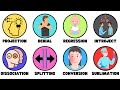
Understanding Psychological Defense Mechanisms: Key Types and Examples
Explore the major psychological defense mechanisms individuals use to protect themselves from emotional distress. This summary explains mechanisms like denial, repression, projection, and more, providing real-life examples and insights into their functions and differences.

The Dark Side of ADHD: Understanding the Struggles and Finding Hope
Explore the challenges and hidden strengths of living with ADHD—discover how to thrive despite the struggles.
Most viewed summaries

A Comprehensive Guide to Using Stable Diffusion Forge UI
Explore the Stable Diffusion Forge UI, customizable settings, models, and more to enhance your image generation experience.

Kolonyalismo at Imperyalismo: Ang Kasaysayan ng Pagsakop sa Pilipinas
Tuklasin ang kasaysayan ng kolonyalismo at imperyalismo sa Pilipinas sa pamamagitan ni Ferdinand Magellan.

Mastering Inpainting with Stable Diffusion: Fix Mistakes and Enhance Your Images
Learn to fix mistakes and enhance images with Stable Diffusion's inpainting features effectively.

Pamamaraan at Patakarang Kolonyal ng mga Espanyol sa Pilipinas
Tuklasin ang mga pamamaraan at patakaran ng mga Espanyol sa Pilipinas, at ang epekto nito sa mga Pilipino.

How to Install and Configure Forge: A New Stable Diffusion Web UI
Learn to install and configure the new Forge web UI for Stable Diffusion, with tips on models and settings.
Found this summary useful?
Take it with you. One click puts it in your own LunaNotes library.
Save to LunaNotes