
Understanding Acids and Bases: Definitions, Properties, and Reactions Explained
Introduction to Acids and Bases
- In grade 11 science, defining acids and bases is fundamental.
- Two primary definitions are used:
- Brønsted-Lowry definition: Acid is a proton (H+) donor; base is a proton acceptor.
- Arrhenius definition: Acid produces hydrogen ions (H+) in aqueous solution; base produces hydroxide ions (OH−).
For a deeper dive into these concepts, see the Comprehensive Guide to Acids, Bases, and pH Concepts Explained.
Common Acids and Bases
- Acids:
- Sulfuric acid (H2SO4) – Strong acid
- Hydrochloric acid (HCl) – Strong acid
- Ethanoic acid (acetic acid, CH3COOH) – Weak acid
- Bases:
- Sodium hydroxide (NaOH) – Strong base
- Ammonia (NH3) – Weak base
Explore their properties further in the Key Properties and Uses of Acids and Bases Explained.
Ionization vs. Dissociation
- Ionization: Occurs when covalent compounds react with water to form ions (e.g., NH3 reacting with water).
- Dissociation: Ionic compounds separate into ions when dissolved in water (e.g., NaOH → Na+ + OH−).
Understanding the nature of ions involved can be boosted by reading Understanding Ions and Ionic Bonds in Chemistry.
Detailed Reactions
- Acidic Reaction Example:
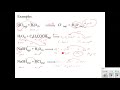
- HCl + H2O → H3O+ + Cl−
- HCl donates a proton (H+) to water forming hydronium ions (H3O+).
- Basic Reaction Example:
- NaOH → Na+ + OH−
- NaOH dissociates to produce hydroxide ions responsible for its basic properties.
Strength of Acids and Bases
- Strong acids/bases: Fully ionize or dissociate in solution, leading to high concentrations of H3O+ or OH−.
- Weak acids/bases: Partially ionize/associate, resulting in fewer ions in solution.
Important Concepts
- Water can act as both an acid and a base (amphoteric).
- Acids and bases undergo proton transfer (protolysis) reactions.
- Understanding ionization and dissociation is vital for calculating pH and other chemical properties.
Summary
- Acids are proton donors; bases are proton acceptors.
- Brønsted-Lowry theory is widely used and includes bases like ammonia that do not contain hydroxide ions.
- Arrhenius definition is limited to aqueous solutions and hydroxide-containing bases.
- Knowing the strength and ionization/dissociation behavior of acids and bases is crucial for further chemistry studies.
Stay tuned for more in-depth lessons on acids and bases to prepare for advanced topics in grade 12.
one of the most important things that we learned in grade 11 was how to define an acid and how to define a base so I've
given you the bronze dead Lowry or the Lowry Bron stead definitions here of an acid and a base there is another
definition that you need to know which I'll go over in a second but this is the more accepted or the one that we refer
to most commonly nowadays an acid is a proton donor so when we say protons we mean an H+ ion this over here is a
proton so an acid is a proton donor in other words it gives away an H+ and a base is a proton acceptor something else
that I wrote here that is important to note it's just the terminology that we use acids ionize so an acid can ionize
in water bases dissociate I'll explain the slight difference in a second but first here's a list of common acids so
their name their chemical formula and also their strength so if they're strong or weak and you need to remember
sulfuric acid is h204 and it's strong you need to know that sulfuric acid is strong you need to know that
hydrochloric acid is strong you need to know that ethanoic acid or acetic acid is weak these are things that you must
study and what do I mean by weak or strong I will also revisit that in a lesson here are some common bases same
thing the name I've also given the common name in Brackets the formula and if they are generally considered to be
strong bases or weak bases again these are things that you need to study if we say ammonia you need to know that
ammonia is NH3 and you need to know that it is considered to be a weak base so remember I told you that there were two
ways that we can Define acids and bases the first definition is called the arenus definition and I've pasted the
definitions over here for you you do need to know this we can ask this as a definition so arenus defined an acid as
a substance that produces hydrogen ions okay there's the proton H+ ions or hydronium ions when they dissolve in
water and a base is a substance that produces hydroxide ions when they are dissolved in water this definition is
fine it still holds up in most cases but the issue with this definition is that it limits acids and bases to aquous
Solutions only remember Aquis is when I dissolve it in water or when it reacts with water it also limits bases to hyd
oxides so bases that have o minus ions in it but we do know that there are bases for example ammonia NH3 which is a
base it's a weak base it does not have oh minus ions in it so that is an important thing to note this definition
is good it exists you must learn it but it has some limitations here is a reaction equation that shows what
happens when an acid so in this case it's hydrochloric acid reacts with water and it forms Al hydronium ions so
there's our h3o plus ions as well as a chloride ion I'll explain again where we get this from how do we know that it
forms these things it's important that you are able to complete an equation like this and my bottom equation is an
example of a base dissociating in water so it's breaking up into its ions and you can see here it's NaOH sodium
hydroxide and it breaks up or dissociates into na+ ions and O minus ions there's the hydroxide and that is
where this definition comes from then we've got the bronze dead Larry or the Larry bronze dead definition or Theory
and they said that an acid is a proton donor in the presence of a base which means that the acid will give away an H+
ion and a base is a proton acceptor in the presence of a base so the one gives away the one accepts that's also why
it's called a proton transfer or a protolysis reaction remember the proton in this case is H plus so they're
transferring the proton so the characteristic properties of acids so what gives acids their properties can be
attributed or ascribed to the H atoms in their compound so it means that because of these H+ atoms because of these um
protons that's what gives atoms their properties so when an acid is diluted with water a chemical reaction occurs
it's known as ionization and we form hydronium ions so generally when we think of hydronium ions h3o plus ions we
think of acids when we think of hydroxide ions we generally think of bases so the formation of hydronium ions
is basically when the proton the H+ ion reacts with H2O and here we go what makes a base a
base what is responsible for the Basel likee Properties or the alkaline properties is the formation of the
hydroxide ion the O minus ion and just by the way sometimes you hear that bases are called alkal substances so a base
that is soluble in water is called an Alkali that's where that word comes from so bases NaOH dissociate or break up in
water and this is the equation I showed you earlier it's aquous because it's dissolved in water it's the ions
dissolved in water and this is very important so bases generally dissociate which means that they break up into
their ions but this weak base called ammonia actually ionizes the reason why this one is called dissociate and this
one is called ionize is because over here the one that dissociates breaks up into its ions these are ionic substances
so it consists of a metal which is the sodium ion na+ and O minus the anion so bases generally dissociate because
generally they are ionic however ammonia NH3 is actually a coal bonded compound so it doesn't dissociate or break up
into ions cuz it's not ionic it's coent so it actually reacts with the water and it forms nh4+ an O minus and remember
this is all about a proton transfer so acids are proton donors one of the H is from the water the water is acting like
an acid okay waterers on water is known as ailite it can sometimes be an acid sometimes be a base I know that can
confuse people but in this case it's acting like an acid and it donates the proton so it gives
away one of its H+ to the base so think about it H2O it loses an H+ so now it's no longer
two hydrogens it's got one hydrogen it was neutral it lost a positive so it's got a negative charge that's where the O
minus comes from and that H+ is given to the base remember bases are proton ACC receptors it was NH3 it becomes nh4
because it got an extra H+ so again there's a lot going on but this is basically a summary showing why
acids ionize so it is a polar calent substance it ionizes in water so it reacts with water and in this case it's
forming CL minus and h3o+ remember when you see H3 plus you think about acids it says your strong
acids ionize completely in water and this is the definition of a strong acid it is something that you learned in
grade 11 it is something that you need to know in grade 12 as well so what happens is acids are proton donors it
gives away the h plus it gives away an ion and donated to the base that's why the base was
H2O it becomes h3o plus why does it become plus because it gains a proton which is a positively
charged thing then it was HCL but it's now lost a proton it's lost an H+ so it's no longer HCL it is now just CL and
it's a minus because it lost a plus very very important and we will discuss this later but HCL is a strong acid which
means that the equilibrium lies far to the right it means that there will be a very high concentration of hydronium
ions so if I know the concentration of the acid I will therefore know the concentration of the hydronium ions and
this becomes important when we calculating pH later and as I said bases dissociate which means that they
dissociate or they break up they ionize ionic separates in water becomes na+ and O minus because this is a strong base it
forms a high concentration of hydroxide ions so if I know the concentration of the base I immediately know the
Concentra of the hydroxide ions and this will be important when calculating the pH of bases later on and just remember
the exception in this case the weak base which is ammonia it's not ionic doesn't consist of ions it's co valent so it
doesn't dissociate it ionizes slight slight slight difference but it is important to know that is our first
recap lesson on grade 11 aets and bases in the next recap lessons we'll go over other important terminology and things
that you learned in grade 11 but you need to know in grade 12 bye everyone
The two primary definitions are the Brønsted-Lowry definition, which defines an acid as a proton (H+) donor and a base as a proton acceptor, and the Arrhenius definition, where an acid produces hydrogen ions (H+) in aqueous solution and a base produces hydroxide ions (OH−).
Strong acids include sulfuric acid (H2SO4) and hydrochloric acid (HCl), while ethanoic acid (acetic acid, CH3COOH) is a common weak acid. Strong bases include sodium hydroxide (NaOH) and ammonia (NH3) is an example of a weak base.
Ionization occurs when covalent compounds react with water to form ions, such as ammonia reacting with water. Dissociation involves ionic compounds separating into ions when dissolved in water, like sodium hydroxide dissociating into Na+ and OH− ions.
In an acidic reaction, such as hydrochloric acid (HCl) with water, the acid donates a proton (H+) to water molecules, forming hydronium ions (H3O+) and chloride ions (Cl−), which explains the acidic nature of the solution.
Strength depends on the extent to which an acid or base ionizes or dissociates in solution. Strong acids and bases fully ionize or dissociate, producing high concentrations of H3O+ or OH− ions, while weak acids and bases only partially ionize, resulting in fewer ions.
Yes, water is amphoteric, meaning it can act as both an acid and a base depending on the reaction. It can donate a proton in some reactions or accept a proton in others, which is essential for proton transfer (protolysis) reactions.
Understanding ionization and dissociation helps in calculating pH and other chemical properties crucial for studying acids and bases. It provides insight into how substances behave in aqueous solutions and their reactivity, which is foundational for advanced chemistry topics.
Keep this summary
Save it to LunaNotes and it becomes a real note in your library — editable, searchable, and ready to turn into flashcards or a diagram. Free to start.
Save to LunaNotesOr summarise for another video.
This summary and transcript were automatically generated using AI with the Free YouTube Transcript Summary Tool by LunaNotes.
Related summaries
Comprehensive Guide to Acids, Bases, and pH Concepts Explained
This lesson provides an in-depth overview of acids and bases using the Bronsted-Lowry definitions, explains key ions like hydronium and hydroxide, explores reaction examples, and clarifies the pH scale and its logarithmic nature. Understand properties, behaviors, and real-world examples that define acidity and basicity in aqueous solutions.

Key Properties and Uses of Acids and Bases Explained
Explore the fundamental properties of acids and bases, including their reactions, taste, and identification methods using litmus paper. Learn about strong and weak acids and bases, common examples, and practical uses such as antacids and industrial applications.

Understanding Oxyacids: Formation, Naming, and Formulas Explained
This guide explains how oxyacids form from oxyanions, their dissociation in aqueous solutions, and the systematic naming patterns based on polyatomic ion endings. Learn to write formulas and recognize acid names like sulfuric, nitric, and nitrous acid with clear examples.

Comprehensive Chemistry Review: Isotopes, Ionic Compounds, and Molar Mass
This video lesson reviews key chemistry concepts including isotopes, atomic mass, ionic and molecular compounds, Coulomb's law, and mole calculations. It provides clear explanations, examples, and problem-solving strategies essential for mastering foundational chemistry topics.

Understanding Atoms and Elements: A Comprehensive Overview of Chapter 4 in Chemistry
This lecture provides an in-depth exploration of Chapter 4, focusing on the fundamental concepts of atoms and elements in chemistry. Key topics include chemical symbols, the periodic table, atomic structure, and the significance of isotopes and electron configurations.
Most viewed summaries

A Comprehensive Guide to Using Stable Diffusion Forge UI
Explore the Stable Diffusion Forge UI, customizable settings, models, and more to enhance your image generation experience.

Kolonyalismo at Imperyalismo: Ang Kasaysayan ng Pagsakop sa Pilipinas
Tuklasin ang kasaysayan ng kolonyalismo at imperyalismo sa Pilipinas sa pamamagitan ni Ferdinand Magellan.

Mastering Inpainting with Stable Diffusion: Fix Mistakes and Enhance Your Images
Learn to fix mistakes and enhance images with Stable Diffusion's inpainting features effectively.

Pamamaraan at Patakarang Kolonyal ng mga Espanyol sa Pilipinas
Tuklasin ang mga pamamaraan at patakaran ng mga Espanyol sa Pilipinas, at ang epekto nito sa mga Pilipino.

How to Install and Configure Forge: A New Stable Diffusion Web UI
Learn to install and configure the new Forge web UI for Stable Diffusion, with tips on models and settings.
Found this summary useful?
Take it with you. One click puts it in your own LunaNotes library.
Save to LunaNotes