How to Answer "What Are Your Greatest Strengths?" in Job Interviews
The common interview question, "What are your greatest strengths?" can be deceptively difficult. Although we know our strengths well, articulating them in a way that shows confidence without arrogance requires strategy.
Three Things to Avoid When Preparing Your Answer
-
Don't Focus on Hard or Technical Skills as Your Primary Strengths
- Technical expertise (like Excel or specific software) may not always apply to the role or company.
- Such skills can become obsolete or vary between organizations.
- Instead, emphasize transferable skills that are valuable across different contexts and roles.
-
Don't Mention Irrelevant Strengths to the Job
- Highlight strengths directly applicable to the position.
- Avoid generic or unrelated traits (e.g., creative thinking for an accounting role).
- Network to learn what qualities high performers have at the company, using informational interviews or LinkedIn connections.
- For more on preparing for such discussions, see Mastering the Apprenticeship Interview: Tips and Strategies.
-
Don't Rely Solely on the STAR Method to Frame Your Answer
- The STAR (Situation, Task, Action, Result) format outlines experience but lacks reflection.
- Incorporate the CARL method by adding 'Learnings' to demonstrate growth and insight.
- Learn about effective storytelling with the CARL method in Mastering the Interview Question: What Are Your Strengths and Weaknesses?.
Recommended Actions Instead
- Prepare strengths based on transferable skills like honesty, respect, communication, and leadership.
- Research the company culture and role to align your strengths with their expectations.
- Use storytelling that reflects both your actions and your learning outcomes.
Example and Reflection
- A past answer focused on strong communication skills helped reduce compliance issues with a client by influencing key stakeholders.
- The improvement: concluding with a learning point about how communication enabled this success emphasizes the strength more clearly.
Additional Resources and Tips
- Access a list of transferable skills in the video description to craft your strengths.
- Join the Facebook group linked for exclusive weekly career tips.
- Explore related videos breaking down behavioral interview questions with sample answers.
- For broader strategies on excelling in interview calls, consider Mastering Intro Calls: Preparation Strategies for Success.
By focusing on relevant, transferable skills and integrating reflective insights, you can confidently answer "What are your greatest strengths?" and make a compelling impression in your next interview.
>>The popular interview question, "What are your greatest strengths?" should be an extremely easy question to answer, in theory.
After all, we know ourselves best, we know what our biggest strengths are. So why is this question still tripping up candidates
during job interviews? Because, as you'll soon notice, it's actually pretty challenging to balance your humility
with the need to project your successes and confidence. In this video, I first highlight three things you do not wanna say when preparing
for this interview question. Share three actions you wanna take instead, and end with an example answer
that I gave years ago, where I made these mistakes. And what I would do differently today. So let's get started.
Hi friends, welcome back to the channel. My name is Jeff, and if you're new here, I upload videos on practical career and interview tips.
So if you're a current student or young professional, consider subscribing for more actionable content. Diving right into the three things you do not wanna do
when preparing for the, "What are your greatest strengths" interview question. Number one, do not mention a hard or technical skill
as your biggest strength. You may well be an Excel guru. You could be someone
who makes the most beautiful PowerPoint slides, you can even know the Salesforce CRM system back to front. The two biggest issues with mentioning how you're great
with a particular piece of software, is that number one, one day your role may involve in a direction
where that product isn't relevant anymore. And number two, the company you're interviewing with
may be using an alternative solution. To give an oversimplified example, imagine if you were interviewing
for a project management role, and you said your greatest strength was how familiar you are with "Monday.com",
the project management software. Little do you know, the company's actually using "Notion" or "Asana"
for all their project management needs. Furthermore, there might be a lot of professionals in your target company,
who have been working with that product or software for much longer than you have. So saying how that technical skill is one
of your greatest strengths, might come off as a little bit presumptuous. Instead, what you wanna do,
is to prepare something that I call, "Transferable Skills" as your strengths. Because those can be applied
across a variety of responsibilities. It can grow with you as you progress in your role. Let's say you're interviewing for an entry level position
in the sales team as an accountant manager. And you say two of your biggest strengths are that you're honest and you're respectful of others.
Those are very healthy attributes to have as an account manager when you're dealing with clients everyday.
And when you progress to be a people manager, those are still extremely important strengths to have when managing a team.
And as a bonus to you all, I'm actually gonna add a list of transferable skills that will make great strengths,
down in the description bellow. By the way, if you liked that first tip, actually I have a Facebook group
where I share exclusive weekly tips. So consider joining if you haven't already. I'll link that down bellow as well.
Moving on to number two, do not talk about a strength that's irrelevant to the role you're applying for.
Can you imaging interviewing for an accounting role and telling the interviewer how amazing you are at creative thinking.
I mean, no offense to all the creative accountants out there. You could prepare a great response with the right numbers,
the right story, the perfect amount of impact you made. But the interviewer will still just be thinking, "Wow, this person did not do the research."
Instead, make sure to mention strengths that have a direct application to the job you're applying for.
Think about it this way, the interviewers know the qualities that the high performers already have, right.
So if you're able to see a strength that makes a connection in the interviewer's mind, between yourself and the high performers on their team,
they will start to unconsciously think about how you'd perform on the job. And I'm gonna say an unpopular opinion right now.
The best way to find a relevant strength to talk about is not through the job description, because they're often just too vague.
But rather asking someone who's working there already. In today's day and age, where everyone is so interconnected, there's really no excuse not to network,
and not to connect with other professionals through virtual means. Watch my videos on how to properly connect with others
on LinkedIn, and questions to ask during informational interviews, or coffee chats.
You don't even need to hop on a phone call. Finding a relevant strength could be as simple as sending a polite message
to an existing contact, with something like, "Hi, sorry to bother you, but if you could think back
"to a recent hire on your team who you enjoyed working with, "what made them stand out?" That question will prompt them
to think of specific attributes that you can leverage in your own answer. If you've enjoyed this video so far,
a like and sub to the channel would be amazing. Finally, the third thing you want to avoid doing. Don't rely completely on the "S.T.A.R" answer format
when preparing your story. When preparing stories to back your strengths up, you might be tempted to use the
"Situation, Task, Action, Results" format to structure your answer. But as I've mentioned in a previous video,
where I compare the "S.T.A.R" and "CARL" methods, for questions that require you to reflect on your experiences,
questions such as, "What are your greatest strengths?" You wanna make sure to include your learnings as part of your answer.
The "L" in "CARL". I actually made this mistake when I was interviewing a couple of years ago.
So let's jump into my answer from back then and show you what I would do differently today. Not that I'm interviewing right now, or anything.
So to prove to you I'm not making this up, this is a document that I was using to prepare for my interviews a couple of years back.
As you can see, I have input some behavior interview questions, like, "Why are you a good candidate?"
"Why you?" "Why are you leaving EY?" I was a managing consultant with Ernst & Young before this.
And here we go, "What are your strengths?" So, I basically followed the "S.T.A.R" format completely here.
I said one of my greatest strengths is that I've got strong communication skills. And for the experience that I gave,
the situation was I was working with a big 4 advertising agency here in Shanghai, one of our large clients.
The task was a fact that there were compliance issues at that branch and we were supposed to decrease that. The action that I took was,
because I have strong communication skills, I developed a working relationship with the CFO and on the ground staff.
So, one of my proposals was less extreme than the plan we were going to adopt. So I was able to sort of influence the key stakeholders
to adopt my plan. And the result rather is a fact that the number of compliance issues decreased because of my proposal.
So that wasn't necessarily a bad answer. But if I were using the "CARL" method, I would've included a "Learnings" at the end here.
And summarized how it was because of my strong communication skills that I was able to influence the CFO to go another route.
Which ultimately led to a fewer number of compliance issues. That would've emphasized my biggest strength in this case, as oppose to just ending with a result to the
"What's your biggest strength" interview question. That might sound like a very small thing, but a small adjustment like that
can make quite a big difference. All right, and there you have it. Three things not to do when preparing for the
"What are your greatest strengths" interview question and what to do instead. If you wanna come up with strong answers
to the most common behavioral interview questions, check out this playlist, where I break down each one and provide sample answers.
Subscribe if you haven't already. Comment down below if you have any questions, and as usual-- Have a great one.
Focus on transferable skills that align with the job and company culture rather than technical skills that might be irrelevant or outdated. Research the role and company through informational interviews or LinkedIn to identify qualities valued by high performers, then select strengths like communication, leadership, honesty, or respect that resonate with those expectations.
While the STAR method (Situation, Task, Action, Result) effectively outlines your experience, it lacks reflection on what you learned. Incorporating the CARL method adds 'Learnings,' which demonstrates personal growth and deeper insight, making your story more compelling and showing how your strengths have developed over time.
A strong answer could highlight a strength like communication by describing how it helped reduce compliance issues with a client through effective stakeholder influence. Ending with a learning point—such as how this experience improved your ability to navigate complex conversations—emphasizes both your skill and your reflective growth.
Avoid focusing mainly on hard or technical skills that may not be relevant, mentioning strengths unrelated to the job or company values, and relying solely on the STAR method without including reflections. These missteps can make your answer seem disconnected or superficial, reducing its impact.
Use networking techniques like informational interviews with current employees or connect via LinkedIn to gather insights about the company's culture and what qualities top performers exhibit. This research allows you to tailor your strengths to fit what the employer prioritizes, increasing your answer’s relevance.
Transferable skills include honesty, respect, effective communication, leadership, adaptability, and problem-solving. These qualities are broadly applicable across roles and industries, demonstrating your value regardless of specific technical expertise.
The video description provides lists of transferable skills to help craft your responses, and joining related Facebook groups offers weekly career tips. Additionally, exploring related videos on behavioral interview questions or reading summaries like 'Mastering Intro Calls: Preparation Strategies for Success' can further enhance your preparation.
Keep this summary
Save it to LunaNotes and it becomes a real note in your library — editable, searchable, and ready to turn into flashcards or a diagram. Free to start.
Save to LunaNotesOr summarise for another video.
This summary and transcript were automatically generated using AI with the Free YouTube transcript summary tool by LunaNotes.
Related summaries
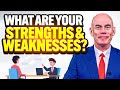
Mastering the Interview Question: What Are Your Strengths and Weaknesses?
This video tutorial provides essential tips on how to effectively answer the challenging interview question about your strengths and weaknesses. Learn the best strengths to highlight and safe weaknesses to mention, along with structured example answers to impress your interviewers.

Comprehensive Guide to Common Job Interview Questions and Answers
This summary provides detailed insights into typical job interview questions along with effective, professional answers. It covers personal strengths and weaknesses, career goals, teamwork, problem-solving, and handling workplace challenges, supporting job seekers in preparing confidently for interviews.

Master Interview, English Speaking, Exam, and Presentation Confidence
This video offers practical guidance to overcome anxiety and build confidence in interviews, English speaking, exam preparation, and public presentations. Through roleplay scenarios and actionable tips, viewers learn strategies to manage nerves, improve communication, study smarter, and perform effectively under pressure.

Mastering the Apprenticeship Interview: Tips and Strategies
In this episode of Journey to Mastery, Dustin Stelzer shares essential tips for successfully interviewing for an apprenticeship. He emphasizes the importance of punctuality, confidence, and effective communication to make a lasting impression on potential employers.
SQL Job Interview Prep: What Companies Really Ask (Watch Real Calls)
Watch real SQL job interview calls to see exactly what questions companies ask and how candidates answer (and sometimes struggle). The instructor breaks down each interview question, from T-SQL constructs and indexes to SSIS and temp tables, revealing exactly what you need to know to get hired as a data professional.
Most viewed summaries

A Comprehensive Guide to Using Stable Diffusion Forge UI
Explore the Stable Diffusion Forge UI, customizable settings, models, and more to enhance your image generation experience.

Kolonyalismo at Imperyalismo: Ang Kasaysayan ng Pagsakop sa Pilipinas
Tuklasin ang kasaysayan ng kolonyalismo at imperyalismo sa Pilipinas sa pamamagitan ni Ferdinand Magellan.

Mastering Inpainting with Stable Diffusion: Fix Mistakes and Enhance Your Images
Learn to fix mistakes and enhance images with Stable Diffusion's inpainting features effectively.

Pamamaraan at Patakarang Kolonyal ng mga Espanyol sa Pilipinas
Tuklasin ang mga pamamaraan at patakaran ng mga Espanyol sa Pilipinas, at ang epekto nito sa mga Pilipino.

How to Install and Configure Forge: A New Stable Diffusion Web UI
Learn to install and configure the new Forge web UI for Stable Diffusion, with tips on models and settings.
Found this summary useful?
Take it with you. One click puts it in your own LunaNotes library.
Save to LunaNotes