Understanding Ionization Energy in the Periodic Table
This video explains the periodic trend for ionization energy, defined as the energy required to remove one electron from a neutral atom.
Core Concepts: Effective Nuclear Charge & Distance
The trend is driven by two main factors:
- Effective Nuclear Charge: The net positive charge felt by an electron after accounting for shielding by inner electrons. Learn more about this in the Understanding the Classification of Elements and Periodic Properties in Chemistry summary.
- Distance from Nucleus: Based on Coulomb's Law Explained: How It Applies to Atoms and Electron Shielding, the farther an electron is from the nucleus, the weaker the attractive force.
A stronger attractive force means more energy is needed to remove the electron (higher ionization energy).
The Periodic Trend
- Across a Period (Left to Right): Ionization energy increases. This is because the effective nuclear charge increases, pulling the valence electrons in closer and making them harder to remove.
- Down a Group (Top to Bottom): Ionization energy decreases. Although nuclear charge increases, the shielding effect also increases. Crucially, the valence electron is much farther from the nucleus, reducing the attractive force and making it easier to remove.
Key Takeaway
The trend for ionization energy is the inverse of the trend for atomic radius. If you can remember that atomic radius decreases across a period and increases down a group, you can easily deduce the ionization energy trend.
For a deeper understanding of the periodic table and related concepts, check out the Comprehensive Overview of Periodic Table and Key Concepts in Chemistry.
Quick Reference
- Highest Ionization Energy: Top right corner of the periodic table (Helium).
- Lowest Ionization Energy: Bottom left corner of the periodic table (Francium).
hello everyone and welcome back my name is mr covald and in this video i'm going to continue to go over periodic trends
and we're going to go over ionization energy in this video okay let's get into this so
periodic trends so again it all goes back to uh the trend in effective nuclear charge
what's happening in the nucleus is it getting bigger what's happening with shielding is there shielding going
on what's happening to energy levels are we adding energy levels things like that and it always goes back to coulomb's law
as well remember so as electrons get farther from the nucleus there's a not as strong of a pull on those
electrons the bigger the charge right bigger charges have stronger pulls on each other and so that's going to be the
factors that we want to think about when we're thinking about periodic trends and so
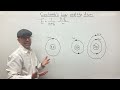
right now uh on the board i have here uh so the periodic table
and so here are the groups it's kind of weird but that's the way it is with my drawing um
so we have this group three group four five six and so on i don't have seven and eight
uh because of lack of room um and then i have three periods or at least two periods and then i have uh
potassium in the third third period so
when we're looking at ionization energy we have to understand that ion is what ionization energy is
so ionization energy is the energy required to remove one electron from a neutral atom so
we're removing the first electron from a neutral atom how much energy does that take okay
so we got to think about um is it is it going to be easier or harder to take an electron away from an atom if
the nucleus uh has a larger charge right so if the charge in the nucleus is larger and the
electrons are feeling a larger pull a larger attractive force by the nucleus then it's going to be
harder to remove that electron and it's going to take more energy right so therefore we would expect that the
stronger the pull on the electron right the stronger the pull the stronger the
attractive force on the electron the harder it is to remove that electron from the atom and therefore we're going
to need to put more energy in so more energy required okay
so there are two factors that affect the pull on the electron the first factor is
the size of the charge right and when we're thinking about size of charges we're thinking about the nucleus so
more charge in the nucleus means more pull
and so and also we need to take in the shielding effect as well because some of that shielding is going to counteract
some of that sides of the charge that's why we need to look at effective nuclear charge because the effective nuclear
charge takes into consideration the shielding effect and so we can look at the effective
nuclear charge and say okay is the effective nuclear charge large or small if the effective nuclear charge is large
then that means greater attractive force which means that you're going to need more energy to remove the electron
therefore higher ionization energy okay the other thing we want to look at is these uh how far
the electrons are from the nucleus so remember distance matters if we're thinking about coulomb's law right so
the closer they the charges are the stronger the attractive force the farther those charges get away from each
other this weaker the attractive force right so again if the attractive force is weaker it's
easier to take away the electron it doesn't take as much energy so less energy means
less ionization energy so those are the things we want to keep in
mind so let's look at our periodic table let's look at the effective charge let's look at the size of the atom right so if
we can remember what's happening with the size of the atom and y then we can remember the ionization
energy so we saw with the size of the atom that as you go across the size of the atom
decreases why because the effective nuclear charge is increasing
so what does that mean so the larger the charge the more attractive force the more it's going to pull the electrons in
so therefore the electrons are feeling a greater force as you go across the periodic table
so this electron here is not feeling as much of an attractive
force as this electron so if this electron is only feeling an effective force of one a plus one charge
then this one will be easier to remove because it's not held as strongly this one
has a larger attractive force so it's got an effective nuclear charge of plus two so it's feeling a stronger pull
and therefore it's going to be it's going to require more energy to remove this electron from this atom that it
does this atom and so on so this these electrons feel an effective force of a plus three
so removing one of these electrons is going to require more energy because they feel a greater force
and so on so because the effective nuclear charge is increasing going across the periodic
table therefore we would expect the ionization energy to also increase so the amount of
energy required to remove the electron should increase as well because the electrons are feeling a greater
attractive force and so it's going to be harder to remove that electron which means it requires more energy
okay what about going down the group we saw before
that going down a group the effective nuclear charge pretty much stays the same
and again the reason it stays the same is because although the the nuclear charge is getting larger
so is the shielding so the shielding is increasing as well so they counteract each other
so the effective nuclear charge is pretty much the same plus one so the uh the attractive force of the
nucleus on the electron is not changing all that much it does change um but what we definitely notice here is as you
go down you're adding a larger shell so the valence electron is getting farther from the positive nucleus and so because
that valence electron is getting farther from the positive nucleus that positive nucleus is not able to attract the
electron as strongly if it was closer because remember as the electron gets farther from the nucleus that attractive
force decreases so this electron here we would expect to have a stronger force
on it and therefore removing this electron would be harder and therefore require more energy therefore more
ionization energy than say this one here because it's farther away so this electron is farther from the nucleus so
this would be not as strongly attracted so it'd be easier to take this electron away and
therefore it would be easier to take this electron away because it's even farther from the nucleus so we would
expect that the ionization energy the amount of energy needed to take the electron away would decrease going down
a group because the you're getting farther from the nucleus and again farther from the
nucleus means weaker attractive force easier to remove the electron and so
going back to my periodic table here we could write the trend as follows
so as you are going across the periodic table this way then ionization energy increases
right so ie ionization energy increases
going across and it also increases going up a group or decreases going down
a group either way you want to think about it so ionization energy increases going up the group so then the
overall pattern in the periodic table is that going from this corner to this corner you have
increasing ionization energy and that's the pattern
and so we can see that we can understand this pattern we can remember this pattern here this
trend in the periodic table with regard to ionization energy because we understand the trend going on with the
effective nuclear charge and shielding and what's going on with the sizes of the atom because of that so when we're
going down a group we're adding energy levels electrons are getting farther away as we go across a period the
effective nuclear charge is increasing pulling electrons in closer more strongly
and so you could see how the trend of atomic size or radius is matching or related to
ionization energy as well so if you can remember the trend of size then it's easy to remember the trend for
ionization energy because they're both based on the same things which is effective nuclear charge and the
distance from the nucleus i hope this is helpful if you like this video please smash that
like button please subscribe to my channel hit that notification bell so you'll be notified by other videos i put
out put a comment in the comment section let me know what you think and if you have any questions thanks for joining me
have a great day
Across a period, the effective nuclear charge increases because the number of protons increases while the number of inner shell electrons remains constant. This stronger positive pull holds the valence electrons tighter, making them harder to remove and thus requiring more energy.
As you go down a group, the valence electrons are much farther from the nucleus due to the addition of new energy levels. Although the nuclear charge also increases, the increasing distance and stronger shielding from inner electrons reduce the net attractive force, making it easier to remove the outermost electron.
Ionization energy and atomic radius follow inverse trends. When atomic radius decreases (e.g., across a period), ionization energy increases because electrons are closer to the nucleus. When atomic radius increases (e.g., down a group), ionization energy decreases due to the greater distance and weaker attraction.
Helium, located at the top right corner of the periodic table (excluding noble gases), has the highest ionization energy. This is because it has the smallest atomic radius and a very high effective nuclear charge for its valence electrons, making them extremely difficult to remove.
The three key factors are: 1) Effective nuclear charge – the net positive charge felt by an electron; 2) Distance from the nucleus – farther electrons are held more weakly; 3) Shielding effect – inner electrons reduce the attraction felt by outer electrons.
Ionization energy is the minimum energy required to remove the most loosely bound electron from a neutral, gaseous atom. This first ionization energy is always positive because energy must be added to overcome the electrostatic attraction between the electron and the nucleus.
Keep this summary
Save it to LunaNotes and it becomes a real note in your library — editable, searchable, and ready to turn into flashcards or a diagram. Free to start.
Save to LunaNotesOr summarise for another video.


32K+ people have turned 65K+ videos into notes
“Very useful tool. I'm using it for the last couple weeks and I'm loving it so far. Makes learning on YouTube a great experience.”
 Bhai Chrome Web Store review
This summary and transcript were automatically generated using AI with the Free YouTube transcript summary tool by LunaNotes.
Related summaries

Comprehensive Overview of Periodic Table and Key Concepts in Chemistry
This video provides an in-depth exploration of the periodic table, focusing on the classification of elements, atomic structure, and key concepts such as ionization energy and electron affinity. It covers essential topics for students preparing for chemistry exams, including the trends in the periodic table and the significance of effective nuclear charge.
Coulomb's Law Explained: How It Applies to Atoms and Electron Shielding
In this video, Mr. Koval explains Coulomb's law and its critical role in understanding atomic structure, electron behavior, and shielding effect. Learn how charge and distance determine potential energy, why opposites attract, and how this law explains periodic trends like ionization energy and atomic size.

Understanding the Classification of Elements and Periodic Properties in Chemistry
This video provides an in-depth exploration of the classification of elements and their periodic properties in chemistry. It covers the periodic table's structure, trends in atomic radius, ionization energy, electron affinity, and electronegativity, along with historical context and exceptions to general trends.

Orbitals, Energy States, and Electron Configuration Explained
This video clarifies the key difference between Bohr model orbits and quantum mechanical orbitals, explaining how electrons exist as probability clouds rather than fixed paths. You'll learn how energy states dictate electron placement in shells and subshells, and see the electron configurations for hydrogen, helium, and lithium.

How to Write Electron Configurations for Ions: Transition Metal Tips
Learn to write electron configurations for ions by understanding which electrons are removed or added. This tutorial covers main group and transition metal ions, explaining how to handle the 4s and 3d orbitals correctly for accurate results.
Most viewed summaries

A Comprehensive Guide to Using Stable Diffusion Forge UI
Explore the Stable Diffusion Forge UI, customizable settings, models, and more to enhance your image generation experience.

Kolonyalismo at Imperyalismo: Ang Kasaysayan ng Pagsakop sa Pilipinas
Tuklasin ang kasaysayan ng kolonyalismo at imperyalismo sa Pilipinas sa pamamagitan ni Ferdinand Magellan.

Mastering Inpainting with Stable Diffusion: Fix Mistakes and Enhance Your Images
Learn to fix mistakes and enhance images with Stable Diffusion's inpainting features effectively.

Pamamaraan at Patakarang Kolonyal ng mga Espanyol sa Pilipinas
Tuklasin ang mga pamamaraan at patakaran ng mga Espanyol sa Pilipinas, at ang epekto nito sa mga Pilipino.

How to Install and Configure Forge: A New Stable Diffusion Web UI
Learn to install and configure the new Forge web UI for Stable Diffusion, with tips on models and settings.
Found this summary useful?
Take it with you. One click puts it in your own LunaNotes library.
Save to LunaNotes