Introduction to Hydrohalogenation of Alkynes
Victor, an organic chemistry tutor, explains the hydrohalogenation reaction where alkynes react with hydrogen halides such as HBr. This video discusses the reaction mechanism, typical examples likely seen on tests, and common pitfalls to avoid. For foundational concepts, see Understanding Basic Principles and Techniques of Organic Chemistry for Class 11.
Traditional Mechanism Overview
- Step 1: Electrophilic attack by the hydrogen halide on the alkyne forms carbocation intermediates.
- Step 2: Nucleophilic attack by the halide ion follows, producing the Markovnikov product where the halide attaches to the more substituted carbon.
- The carbocation intermediate can exist as a primary or secondary carbocation; the more stable secondary carbocation usually forms.
Illustrative Example
- Using 3-methyl-1-butyne and HBr, the mechanism predicts two carbocation intermediates.
- The favored path leads to a secondary carbocation with linear geometry (sp hybridized).
- The nucleophile (bromide ion) attacks to give the intermediate "halfway" product.
Why Carbocation Rearrangements Often Do Not Occur
- Despite expectations, tertiary allylic carbocation rearrangements are not observed.
- Kinetic studies suggest a concerted termolecular mechanism involving simultaneous interaction of the alkyne and two HBr molecules, bypassing discrete carbocation formation. For further insight into reaction pathways, refer to Comprehensive Guide to Types of Chemical Reactions Explained.
- Without carbocation intermediates, rearrangements do not take place.
Resonance Stabilization in Double Addition
- Subsequent addition of HBr forms a secondary carbocation stabilized by resonance with bromine's lone pairs.
- This resonance stabilization reduces rearrangement and guides product formation.
Experimental Evidence Supporting Termolecular Mechanism
- Reactions (e.g., but-2-yne with HBr) yield anti-addition products exclusively, contrary to expectations if carbocations were intermediates.
- Carbocation pathways typically yield non-stereospecific product mixtures.
Exam Tips and Instructor Guidance
- Traditional carbocation mechanism remains common in textbooks; termolecular mechanism may be less emphasized.
- Always verify with your instructor which mechanism to apply on exams.
- For test problems, avoid proposing carbocation rearrangements in hydrohalogenation of alkynes unless explicitly supported.
Conclusion
Understanding the nuanced mechanisms behind alkyne hydrohalogenation helps avoid common student errors and aligns expectations with experimental chemistry. For complementary information on hydrogen-related reactions, consider Hydrogen Production from Electrolysis: A Comprehensive Overview. Visit further resources and engage with instructors for clarification when preparing for exams.
hey everyone Victor is here your organic chemistry tutor and today I want to talk about the hydrohalogenation of alkin or
in other words how alkin react with hydrogen halides in this video we'll go over the intricacies of the reaction
itself and its mechanism the typical examples you are likely encounter in your tests and of course we'll go over
the common mistakes students make so you can avoid those as well so grab your cup of coffee and notebook to work through
the examples with me hit that like button for good luck on the test and let's get started so here is how the
mechanism of the hydrohalogenation is described in pretty much every textbook out there we start with an alkine and
hydrogen halide propine and hydrogen bromide in this case the first step here will be electrophilic attack from the
hydren helide on the alkine and similarly to the hydrohalogenation of alkenes this reaction can potentially
give you two different carbocations in this particular case we can make a primary carbo like this and a secondary
carbocation like that one based on everything that we know about the carbocation we can predict that the
secondary carbocation will be the one that we form in this reaction and the other one is not going to be our choice
and after that we are going to perform a nucleophilic attack on the carbon giving us the first possible product in this
reaction and depending on how we do this reaction we can either stop here or continue with another round of addition
with the next next equivalent of our hydren helide if we continue with this reaction and perform the next
electrophilic attack just like in the previous case we are going to end up with two possibilities for our
carbocation a primary carbocation that looks like this and a secondary carbocation like this one naturally we
would want to go with a secondary carbocation here not to mention that this carbocation is stabilized by the
resonance with the bromine atom and while this resonance might not be particularly strong due to the poor
orbital overlap uh between carbon and bromine it is nonetheless there so the next nucleophilic attack by the bromine
anion will give us the final product notably both cases the formation of my halfway product and my final product
give me so-called marcovnikov product where we have a helide that ends up on the more substituted carbon and the
hydrogen atom on the less substituted carbon pretty easy right well let's look at this example over here in this case
I'm reacting three methyl but one Ion with hbr so the first step here would be exactly what we would expect an
electrophilic attack from the hbr on our PI bond this gives us two possible carbocation intermediates the primary
one and the secondary one like this and since in this case my secondary carocon is still SP hybridized I'm showing it
with the linear geometry and the bond angle over here of about 180° and naturally the primary
carbocation is a nogo so we'll continue with the secondary one here next we're going to do the nucleophilic attack by
the bromide anion giving us the halfway product two bromo 3 methyl but one in and you're probably wondering here why I
didn't do a carbocadon rearrangement after all we know that if a caroan can rearrange to give us a more stable
caroan it's bound to happen and like in this case we should end up with a way more stable tertiary Aly carboca and yet
that does not happen and you might also be wondering why despite everything you've learned in your course this is
all of a sudden an exception and we know that in chemistry there are no such things as exceptions everything has a
reason and trust me there is a reason here and the reason being the fact that the mechanism that we teach you is a
total um well you got it what I mean to say is that the actual experimental data does not support the mechanism we teach
to our sophomore G chemistry students there so the current kinetic studies of this reaction suggest that the reaction
has a concerted ter molecular mechanism in this case the molecule of an alkine interacts with two different molecules
of hbr simultaneously giving you the product right away by passing the formation of the carbocation and since
we have no carbocation intermediate we have no caroc and rearrangements to my knowledge I haven't seen any reasonable
explanation of why this carbocation if it actually forms at all uh doesn't undergo the rearrangement if you happen
to know the study looking into this proving that there is an actual carbo Catan and it doesn't rearrange because
of the reasons that are not um I don't know pure magic please let me know in the comments below I'd love to check it
out and be proving wrong now the second step on this reaction is just a normal hydrohalogenation with no tricks to it
we don't see any caroan rearrangements here simply because our intermediate is stabilized by the resonance from the
bromine's electron spaires so nothing unexpected here so on the exam no matter how much you might be tempted to do the
rearrangement in this case they are usually not observed so don't do any rearrangement here just put your hydren
on the less substituted carbon and you're broing on the more substituted carbon for the first step and then for
the Second Step as well there is also another experimental evidence that supports the termolecular mechanism for
this reaction so let's look at this reaction ction between the but 2 and hbr the halfway product in this case is
nearly exclusively a product of the anti- addition if a carbocation would be involved in this reaction then we would
see an appreciable amount of the other product as well since the reaction you know involving carbo Catans they are not
stereo specific yet we are not seeing this here at all now since there are two mechanisms for this reaction one that we
teach to students which doesn't have much support in the form of the experimental evidence and the other one
which is more realistic make sure you know which one your instructor expects from you on the test the thing is there
are only a couple of textbooks out there that talk about the termolecular nature of the first step and if you are not
using one of those textbooks in your class you'll be learning the mechanism with the carboon so I always advise that
in the cases like this check with your instructor since it's your instructor and not me who is going going to be
giving you your final grade and with that I want to thank you for watching this video hit the like button if you
learned something new today leave me your feedback and questions in the comments below watch this video next and
I'll see you tomorrow
Hydrohalogenation of alkynes involves two main steps: first, an electrophilic attack by the hydrogen from HBr on the alkyne creates a carbocation intermediate, typically favoring a more stable secondary carbocation; second, the bromide ion attacks this carbocation, resulting in the Markovnikov product where the halide attaches to the more substituted carbon.
Though carbocation intermediates are proposed, experimental evidence supports a concerted termolecular mechanism involving two HBr molecules reacting simultaneously with the alkyne. This pathway bypasses discrete carbocation formation, so carbocation rearrangements, such as tertiary allylic rearrangements, are generally not observed in these reactions.
When a second molecule of HBr adds, the resulting secondary carbocation is stabilized through resonance with bromine's lone pairs. This resonance stabilization minimizes carbocation rearrangement and directs the reaction towards specific products, ensuring regioselectivity and limiting side reactions.
Studies, such as reactions of but-2-yne with HBr, show exclusive formation of anti-addition products which are stereospecific. Carbocation intermediates typically lead to mixtures of stereoisomers, so the observed selectivity supports a termolecular mechanism with simultaneous interactions rather than stepwise carbocation formation.
A prevalent error is assuming carbocation rearrangements will occur during hydrohalogenation of alkynes, despite evidence to the contrary. Another is relying solely on traditional textbook mechanisms without considering updated experimental insights. Students should confirm with instructors which mechanism to use and avoid proposing rearrangements in typical exam problems unless specified.
For instance, when 3-methyl-1-butyne reacts with HBr, two possible carbocation intermediates form, but the reaction favors the secondary carbocation with linear geometry (sp hybridized). The bromide nucleophile attacks this intermediate, leading to the Markovnikov addition product. Understanding this example helps predict product structures on exams.
Students should understand both traditional and updated mechanisms, focusing on the Markovnikov addition and the role of resonance stabilization. They should avoid proposing carbocation rearrangements unless explicitly told and familiarize themselves with experimental evidence favoring a termolecular mechanism. Engaging with instructors for clarifications and practicing typical examples will enhance exam readiness.
Keep this summary
Save it to LunaNotes and it becomes a real note in your library — editable, searchable, and ready to turn into flashcards or a diagram. Free to start.
Save to LunaNotesOr summarise for another video.
This summary and transcript were automatically generated using AI with the Free YouTube transcript summary tool by LunaNotes.
Related summaries
Understanding Basic Principles and Techniques of Organic Chemistry for Class 11
Dive into the fundamentals of organic chemistry to clear confusion and enhance your understanding in class 11.
Understanding Enthalpy of Atomization: Definition and Examples
Explore the concept of enthalpy of atomization with detailed examples and calculations for better understanding.
CBSE Class 12 Chemistry: Full Revision of Solutions, Electrochemistry & Chemical Kinetics
This comprehensive revision session covers three crucial numerical-based chapters: Solutions, Electrochemistry, and Chemical Kinetics. The instructor motivates students after the Physics exam to focus on Chemistry, covering key formulas, concepts (like Kohlrausch's Law, Nernst Equation, and Rate Laws), and important exam questions from NCERT Exemplar and Previous Year Questions.
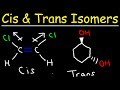
Cis and Trans Isomers: Physical Properties, Polarity, and Identification
Learn how cis isomers have groups on the same side (polar, higher boiling point) while trans isomers have groups on opposite sides (nonpolar, lower boiling point). Understand how to identify which alkenes can exhibit cis-trans isomerism by checking each double-bonded carbon for two different substituents.
Orbital Diagrams and Electron Configuration: Aufbau, Pauli, and Hund's Rules Explained
This video explains how to fill orbital diagrams using the Aufbau principle, Pauli exclusion principle, and Hund's rule. Using bromine (35 electrons) as an example, it demonstrates the step-by-step process for placing electrons in orbitals from lowest to highest energy.
Most viewed summaries

A Comprehensive Guide to Using Stable Diffusion Forge UI
Explore the Stable Diffusion Forge UI, customizable settings, models, and more to enhance your image generation experience.

Kolonyalismo at Imperyalismo: Ang Kasaysayan ng Pagsakop sa Pilipinas
Tuklasin ang kasaysayan ng kolonyalismo at imperyalismo sa Pilipinas sa pamamagitan ni Ferdinand Magellan.

Mastering Inpainting with Stable Diffusion: Fix Mistakes and Enhance Your Images
Learn to fix mistakes and enhance images with Stable Diffusion's inpainting features effectively.

Pamamaraan at Patakarang Kolonyal ng mga Espanyol sa Pilipinas
Tuklasin ang mga pamamaraan at patakaran ng mga Espanyol sa Pilipinas, at ang epekto nito sa mga Pilipino.

How to Install and Configure Forge: A New Stable Diffusion Web UI
Learn to install and configure the new Forge web UI for Stable Diffusion, with tips on models and settings.
Found this summary useful?
Take it with you. One click puts it in your own LunaNotes library.
Save to LunaNotes