Comprehensive Insights into OSINT, Maritime Intelligence, Telegram Investigations, and Cybersecurity Threats
Introduction to Ocean Summer 26
Ocean Summer 26 assembled a global community of OSINT professionals, including investigators, analysts, journalists, and researchers. The event emphasized OSINT’s growing importance across sectors such as cybersecurity, national security, and fraud detection, driven by expanding publicly available information and the need for skilled analysts.
AI and OSINT Evolution
- Speaker Chris from Black Dot Solutions highlighted AI’s role as an evolution, not revolution, in OSINT processes.
- AI accelerates data collection, triage, entity extraction, summarization, and report generation, allowing analysts to focus more on contextual analysis.
- Maintaining human involvement is critical to preserve judgment, reduce AI hallucinations, and ensure ethical compliance.
- Practical examples include AI-generated Boolean search queries, archival investigations using the Wayback Machine, and enhanced due diligence workflows.
Maritime Open-Source Intelligence (Maritime OSINT)
- Presenters Shager and Suang explained techniques to track maritime vessels using Automatic Identification System (AIS), satellite AIS, and VSAT (satellite internet terminals).
- Explained key identifiers: IMO number (unique vessel ID), MMSI number (changes with flag state), call signs, and hull numbers.
- Discussed limitations of terrestrial AIS (range-based) vs. satellite AIS (broader coverage but higher latency).
- Emphasized multi-source verification including CCTV footage, public webcams, and geographic mapping for confirming vessel presence.
- Case studies on ghost ships and sanction evasion demonstrated how changing vessel identifiers help hide activities.
- Highlighted ethical considerations, operational security measures like sock puppet accounts, and privacy-focused OS for investigations.
Telegram Investigation Techniques
- Speaker Agnima detailed methods to investigate Telegram, termed as the "modern dark web" due to illicit activities.
- Tools covered include:
- Sagma: tracks username changes and notifies groups.
- Bo Detective: reverse lookup for usernames, breach checks, and leaked data.
- TG Scan: identifies Telegram group memberships.
- Username-ID resolution techniques, including handling accounts without usernames or forwarding disabled.
- Phone number lookup tools and various Telegram search engines (Telego, WayInWebin).
- Discussion on leaked Telegram datasets impacting privacy and investigative capabilities.
- Emphasized ethical considerations, avoiding illegal use of leaked databases and using burner accounts responsibly.
Cyber Threat Intelligence Case Study
- VTO Alpino presented a ransomware attack investigation focusing on infrastructure analysis using the Whois protocol.
- Key findings include:
- Identification of compromised IP addresses belonging to Autonomous Systems linked with cybercrime.
- Cross-referencing domain registrations and email addresses uncovered a cluster of malicious operations.
- Use of OSINT to attribute infrastructure to known threat actors and understand their modus operandi.
- Highlighted importance of multi-source verification and continuous research in evolving threat landscapes.
Online Evidence Capture and Preservation
- Tim Gman emphasized the necessity of capturing and preserving online evidence with legal admissibility in mind.
- Shared the evolution from screenshots to defensible captures incorporating metadata, hash values, and timestamps.
- Covered tools ranging from free (Windows snipping tool, PowerShell hashing) to paid (Snag It, Hunchley, Web Preserver) for capturing webpage content and videos.
- Demonstrated workflow for capturing social media content, highlighting challenges like expanding comment sections.
- Discussed chain of custody documentation to maintain evidence integrity. For more on this topic, see Types of Digital Forensic Evidence in Cybersecurity Investigations.
Understanding Stolen Credentials and Cybercrime Ecosystem
- Thomas Illuminati discussed the infrastructure of stolen credential ecosystems, focusing on info stealers and the "access pipeline" leading to ransomware attacks.
- Explained major info stealer families (Luma, RedLine, Amoss) and evolution of credential theft techniques.
- Highlighted how stolen credentials are commoditized, sold, and leveraged by different threat actors within a supply chain model.
- Addressed challenges in takedown operations due to ecosystem resilience and rapid regrouping.
- Recommended defense strategies including multi-factor authentication, session token binding, rapid incident response, and legal compliance. These recommendations align with practices outlined in Comprehensive Overview of Incident Response and Handling in CCNA Cyber Ops.
Closing Remarks
Ocean Summer 26 showcased the global OSINT community’s growth and collaboration, providing practical skills and perspectives on emerging technologies and threats. Attendees were encouraged to engage with the community and apply the shared knowledge to their respective fields.
This summary synthesizes key insights from expert presentations, offering actionable guidance and awareness of current OSINT practices, maritime monitoring techniques, Telegram investigations, cyber threat intelligence, and digital evidence preservation necessary for modern investigators and cybersecurity professionals. For tools that support investigations like these, consider exploring 21 Free Forensic Investigation Tools You Need to Know.
So hello everyone uh good morning and good evening and good afternoon to everyone joining us from around the
world. Uh my name is Hir and uh yeah I'm the founder of Ocean and it is my pleasure to welcome you all to
Ocean Summer 26. Uh what started as an idea to bring together the global question community has really grown into
an international event uh where we bring together investigators, analysts, private security professionals,
journalists, researchers, life forming personals and students who all share a common passion for ocean. Uh today Ocean
is no longer just an each discipline. It has become a critical capability for a lot of different sectors like cyber
security, threat intelligence, investigations, fraud detection, journalism and national
security and a lot of other domains. the amount of publicly available information continues to grow and so the need for
uh yeah so for the the need for like information continues to grow and so the the need for skilled professionals in
the ocean domain our goal with ocean con is simple to create a platform where experts can share practical knowledge
real world investigations experiences and their methodologies that attendees can work and can apply your workload
despite being from a different location removing the geographical barrier because like if we
over the course of today's event you will be hearing from a lot of industry experts covering topics ranging from
artificial intelligence and ocean uh to maritime intelligence telegram intelligence incident response and a few
talks on digital evidence preservation and a little bit on dark so I would like to thank all of our speakers and
attendees for generously sharing their expertise and being part of this community. I encourage everyone
to participate and ask yourselves, engage in discussions and making the most of the knowledge being shared
today. With that, let's begin 26. Thank you all for joining us and I hope you guys enjoy the conference. So to kick
off the conference, I'm pleased to introduce Chris who is head of intelligence at Blackboard solutions,
one of the companies leading in ocean. Uh Chris has over 20 years of military intelligence experience along with a
significant experience in UK's national crime agency and in counter disinformation investigation. Today
he'll be presenting on the talk AI and notion evolution not revolution. So please join me in welcoming Chris. So
the stage is yours. >> Cool. Thank you very much uh Darj. Um okay. So uh yeah, thank you very much
for that introduction. Uh good morning, good afternoon, good evening to everyone that's joining uh the call. Um today I'm
going to be talking about artificial intelligence and open-source intelligence and how I believe it's an
evolution of a process, not necessarily a revolution uh that you may may think it is.
So in terms of who I am and who I represent, um I work at a company called Black Dot Solutions. It's one of the
leading open source intelligence platforms in the world, uh focused in the UK in Cambridge, and it focuses
predominantly on financial and economic crime, but like a lot of open source platforms can be put towards any use
case. Uh I've recently had a look at uh migrant smuggling or drug trafficking, gun trafficking, and the platform is is
fantastic for that. And we use artificial intelligence within the platform. And we use it in a number of
different ways. And I'm going to talk about how uh how you can use uh artificial intelligence in your open
source intelligence investigations and how we use it in our platform as well. Uh like JJ said, in terms of my
background experience, I've got 20 years British military intelligence experience with deployments to Afghanistan, Kosovo,
Iraq, and a few others. um as also working in the National Crime Agency uh predominantly in covert intelligence
collection. So hopefully if there's anything on open source intelligence uh I can help you with please reach out and
uh I'll do my best to help. So in terms of the current state of open source intelligence information volumes
are expanding uh more rapidly than ever before. We've only got to look at social media platforms in terms of just how
many tweets are being put out on X every day compared to this time 10 years ago or 20 years ago. And artificial
intelligence is shaping and reshaping the way that that information is created, that information is collected
and how we interpret that information. And artificial intelligence really is leaning into all three stages uh of of
that part. Organizations are also facing new risks uh in terms of the geopolitical climate. Uh last time I
checked, roughly 20 conflicts have either started or finished in the past five months of this year alone. And this
is a a really uh really chaotic time in terms of the geopolitical environment. And in terms of reputational, the risk
of mis or malinformation targeting a company or a state um is has increased that much more. or an artificial
intelligence is playing a role there and open source intelligence is becoming a strategic int intelligence discipline in
its own right. Quite often we talk about human intelligence, imagery intelligence, um signals intelligence
and open source intelligence is kind of seen as a a lesser intelligence discipline. I completely disagree. Open
source intelligence is a strategic intelligence discipline in its own right. And I think we're seeing that
more and more um you know with recent conflicts how open source intelligence is bringing uh information to the for
much quicker than some of those more traditional intelligence disciplines. So to take you back in time in terms of
the evolution of open source intelligence, it really started it started hundreds of years ago with you
know looking through newspapers and and everything else. But the modern version of open source intelligence came around
really in the 1940s with the foreign broadcast monitoring service um created in the CIA to monitor newspapers and
radio looking at open-source publicly available information um in order to extract relevant information and turn it
into intelligence. During the cold war, the analysis of that foreign media was a good way of gaining information um in
the public domain and again turning it into open source intelligence. Fast forward to the 1990s and the
internet makes so much more data uh available to the general public. Forums, static websites, uh news sites all
coming into their own. By the 2010s, we have social media bringing near realtime userenerated content to the masses
within minutes uh of of events taking place. As we've seen recently as well, sometimes these events are being live
streamed and that that's bringing that content to the user um in lifetime. And this year, artificial intelligence
has really come into its own in the last couple of years, but I think this year is going to be the year that we're going
to see another massive leap forward in terms of the capability of artificial intelligence. And it's offering a new
way to shape the data and also offering a new way to automate open-source intelligence collection and processing.
So my view is that artificial intelligence is an evolution of existing processes, not a revolution.
It doesn't do anything that we couldn't already do. It may be able to collect data faster. It may be able to process
data faster and it may be able to um conduct analysis faster. But all it is doing is accelerating processes that
humans have done for decades. What it does do is it expands reach across a broader range of existing resources. in
the time it takes you to write a prompt for a chat bot to go and collect information for you. Um,
it just allows you to expand that that reach across a broader range of resources.
When it comes to the use of artificial intelligence in any intelligence collection, it's really important that
we retain the role of the human in that whether that's human in the loop or human on the loop. But needless to say,
the human has to be part of the judgment that takes place in the intelligence uh process
and artificial intelligence supports open source intelligence's continued mission that is to gain actual insights
from publicly available information and it's really key that AI supports that. So in terms of um some of the challenges
that are being faced today, as of July 2025, two and a half billion messages were
being sent to chat GPT every day. Now there are queries that normally would have been directed to Google or Bing or
Yahoo or Yandex, but instead they're being leveraged against an LLM, a chatbot. So it's interesting to see that
shift in terms of the public use of AI compared to traditional use of search engines for example.
Investigators are facing an increased organizational push for uh increasing their speed and accuracy and um whilst
facing massive data volumes. When we look at social media um that there is now such a broader range broad range of
social media platforms to to exploit and analyze. Artificial intelligence can definitely help with that. In terms of
the high velocity of events, events are changing the shape of the data landscape on a daily basis. We can only look at
what's going on in Iran over the past couple of months to see just how quickly events can can come out and enter the
open source information domain. Miss, dis and malinformation and deception operations are also increasing
whether that's by hostile state or or lone actors um conducting campaigns in order to change public public opinion
and and influence um you know public discourse. Manual open source intelligence
workflows are unsuited to overcoming these challenges on a on an enterprise scale.
when we look at the the broad range of of um data coming into the analyst, they need something to help help them with
that. So, in terms of looking at artificial intelligence, what can it do? It can
automate collection and triage. We can target an agent to collect on certain topics or from certain sources and
triage that for us in order to reduce how much data we're we're looking at. We can use it to extract entities and
patterns. Artificial intelligence is fantastic, is brilliant at being able to identify entities and pull out um key
entities from from from documents, from websites, from social media, and identify patterns and connections
between them. It's also really good at summarizing, processing very large data sets. If you put 20 or 30,000 lines of
data into a chatbot, it will summarize it in a really good way. um or produce an infographic for you instantly which
just allows you to focus on the analysis and it gives the analyst more time for that contextual interpretation. I think
during my career I've seen a case where analysts will focus 70% of their time on the collect and 30% of their time on the
analysis and the dissemination and that's not how it should be. AI flips that model around.
Artificial intelligence should not be used to conduct end-to-end investigations without any human input.
There has to be human in the loop or human on the loop within any AI process. And it doesn't replace human insight. If
you are an expert in uh American CEO relations, you are an expert in that. An LLM may be able to give an approximation
of an analysis, but it can't replace human context. So, how can AI change traditional
workflows? Uh, for those of you that are familiar with the intelligence cycle, these are the steps of it. In terms of
the direction, the humans define the goal. Humans should craft that question, that information requirement, that
intelligence gap and use AI to scope and explore that problem. When it comes to the collect, the humans should judge
proportionality. They should look at what sources are being used and identify whether it's proportionate for the
investigation that they're carrying out. But AI can go off and enable rapid automated data collection on behalf of
that human. In terms of the processing, the AI can reduce the time spent on manual
filtering. They can carry out mapping, verification, and a degree of analysis um and processing. As part of that, AI
can be used to enhance human insight by pinpointing risk factors, looking through networks, identifying key nodes
and key entities and key relationships for more exploitation. they can identify where patterns exist and and pull those
out to allow the analyst to focus on uh the analysis of that piece of information.
When it comes to dissemination, AI can also be used to um produce reports at speed. They could be automated reports
or they can be used to curate data into such a way that they can be put into a template and disseminated out. But there
has to always be human in or human on the loop depending on the process. So in terms of um ethics and governance
uh a key thing you will have noticed is about the human analyst remaining central to the process. There has to be
transparency and methodology. Sometimes I've seen companies adopt AI in a very untransparent way. they are hiding those
processes and they're not showing the the user how AI is coming up with that determination. One of the ways that we
have built AI within black dot is that it's always transparent. It will show the methodology. It will show the
working out and it will show how it has come to that answer. In terms of bias mitigation, it's really
important that um you know the LLM is not biased towards a particular um answer. Um and that all
comes down to prompt generation and we'll talk about that in a little bit later on. In terms of data protection
and privacy, it's also really important that uh information isn't being leaked out. Sometimes when we use LLMs, there's
a fear that we are training that model in in better ways to to do things. Black Dot takes a very um a very critical view
of this in terms of making sure that the user's data is protected at at all times. So no data is sent to the LLM.
The LLM can't learn from anything. Um it it's very static in terms of that. And in terms of accountability and
decision- making, AI should not be used to make a decision. It can be used to inform a decision, but it shouldn't be
the ultimate decision maker. So AI in practice. So some of the key um platforms that are
out there, people who have heard of chat GPT or Claude. Um these are some of them out there in terms of what they're
really good at. So Chat GPT is really good at summarization. Uh putting in a large amount of information, it can pull
out a really good um short executive summary about all that information. And it's also good at chain of thought. What
I mean by that is being able to have a conversation, being able to refine a question, being able to refine a prompt,
going backwards and forwards with chat GPT, uh, is really, really, really good. Claude is fantastic at kind of ethics
first compliance work or very complex analysis. Look at good at looking at very large data sets and conducting a
very a very detailed analytical process of what that information means. Mistral is um very low latency in terms
of of how quickly it can come up with an answer um but is probably less used than than some of the others. Gemini is
fantastic at um vibe coding if you wanted to to create an app by yourself. Uh people generally use Google's AI
studio using using Gemini. Um it's really good at constructing imagery and videos as well. Um yeah
uh Meta's AI is not being used that much outside of outside of the meta platform in in the same way that maybe Claude uh
Open AI and Google is. Um but it's got really good uh scope for looking across social media.
Grock uh Grock is fantastic at um Grock has been fantastic at analyzing
data from X. It has also come under fire very recently, especially over the winter of
last year. Um, and is very biased. Uh, I don't want to go into too much about Grock. Um, but it's very biased in some
of its outputs. Like I said, it's it's probably the most useless one out there that I've come across.
So, what can AI be used for? It can be used for um conducting person and identity research. It's really good at
looking at social media uh data. It's good at looking at different identifiers and mapping those relationships across
networks. AI can also be used for threat intelligence if you need to do any kind of monitoring or alerting um looking at
a workflow and enriching the data that you've already got. Um, it's really good at
looking at risk monitoring, looking at multiple different sources all at once, social media platforms, forums,
marketplaces, and filtering that data to come up with any risk to to your organization or your country.
It's also really good at looking at um looking at uh indicators of compromise and then adding context to that. So if
you're in a cyber threat intelligence role, it can be really good at looking at those IoC's uh and pivoting across
and looking at other infrastructure as well. One of the ways that we use it quite a lot within Black Dot Solutions
is for due diligence and know your customer. If you're looking for adverse media on a particular organization, a
particular individual, if you're looking at corporate records and providing that audit trail across multiple platforms,
again AI is really useful for for that. So when we talk about uh artificial intelligence uh and prompt generation,
quite often people will just go straight into the prompt and uh relying on the LLM to um kind of fill in the gaps.
That's a really bad way of doing it. A really good way of coming up with a good prompt is to start with the context.
Give the LLM the context by which you want it to operate. In this case, I'm asking to act as an open source
intelligence analyst. I'm telling it that it needs to assist in gathering publicly available information uh and
pull it across. I've also told it to ask me any questions if it needs clarification before it starts. This
just gives it the context, the the boundary to work in um and and kind of stops it from going off and and
gathering information by itself. So, we start with the context. You are an AI. You are an Aussie analyst. The
next thing we're going to do is we're going to look at the objective. This is the exact thing I want it to do. I want
you to to generate a comprehensive summary on the situation in the Middle East, for example.
I will always put constraints into any prompt. Do not lie. Collect only information from a certain time period.
Use only these verified sources or or however you want to do it. Do not lie, do not guess are two very critical ones
when it comes to using LLM. Quite often we talk about um LLM hallucinations and it's really important to minimize that
as low as reasonably practicable. It's impossible to get rid of them completely. But by adding in those
constraints, it reduces the risk um to the user. And then it's also key to identify the
the output. How do you want to see the information that it collects? Do we want to generate a table or create a map,
create an image, a video, produce a report? Um you can also give it frameworks in terms of producing a
report. For example, here I've got pestl um political, economic, social, etc. like the framework for that report. And
for the eagle-eyed people amongst you, you'll notice that this kind of follows the intelligence cycle. I'm giving it
the direction. I'm telling it how to collect the information uh and then how the how I want the information to come
out. So these are some ways that you can use it uh in your own work. So this is using
uh using chat GPT. Um I wanted to create a prompt for exploiting telegram using the way back machine. So this is not
using the telegram API. This is not using a third party platform. This is just using the wayback machine and chat.
So I've given it the context. You to conduct an Aussie style archival investigation into the public telegram
channel War Gonzo. And I've then pulled across a couple of different um uh sources for it to look at by looking at
um t.me but also uh any of the way back machine looking at telegram metrics etc etc.
Bottom left you can see one of the constraints do not claim complete coverage if it's not available. I'm
telling it like not to lie. I've given it its objectives. So build a timeline, identify major major themes, track
changes, note propaganda patterns, and this is how I want it to appear. I want an executive summary, a timeline,
historical message, reconstruction, etc., etc. And that's using chat chat GPT to come up with a prompt. Um, really
useful for looking at a telegram without any, you know, u additional su additional tools.
Another really good platform out there is overpass turbo. So, Overpass Turbo brings in data from
Open Street Maps um but allows you to query the data sets in ways you can't do it elsewhere.
So, for example, um using Open Street Maps, it may have identified CCTV cameras. By asking chat GPT to generate
a prompt for Overpass Turbo, um it will come up with that prompt for me. And you can see how I've entered that in the box
to identify CCTV cameras. So, I'm using chat GPT to create the prompt for another platform. And that's also a
really good way of using AI to speed up your your open source intelligence investigations.
We can also use it for exploiting social media. So, here is a um uh a prompt for exploiting Twitter. Um in this time, in
this case, we're looking at COVID 19 and scandmic. and we're looking for related discourse looking for miss this and
malinformation around COVID. So the task that I gave chat GPT was to generate a highly effective boolean search query
and that's exactly what it did. It came up with the the different keywords, the different hashtags, different themes um
and it generates uh all of these prompts for me. I can then just copy that, paste it into Twitter and conduct, you know,
my investigation from there. Again, I'm not having to use any other platforms, but I'm using chat GPT to create that
detailed boolean search query for me. Google Maps is another really good example.
So, uh, within Google Maps, you can create KML or KMZ files for visualization within either Google Maps
or Google Earth. And in this case, I wanted it to go off and collect information on the Russia Ukraine
conflict. collect any event data that's got latitudes, longitudes, locationational data that I can then put
in to Google Maps and visualize it myself. There are fantastic tools already out there that do this. Live UA
maps, gorilla maps already do it, but I wanted to do it myself and see how that would work. So, the input data would
include things like CSV files, JSON files, Telegram posts, etc. But it allows me to pull all that information
and visualize it myself within Google Maps. So in terms of some tips I've come
across over the past couple of years when it comes to using AI the first one is ask for confidence
scores. As we know LLM hallucinate and we can only reduce that as low as reasonably practicable. But by asking
for a confidence score we are kind of giving ourselves an idea as to whether there is a a chance that it has
hallucinated at any point. The other thing I would do is use the professional head of intelligence analysis's
probability yard stick. If you don't know what that is, Google it. Um, but it's a professional intelligence um,
language that we use in the UK for conducting intelligence analysis. So, every keyword has got a percentage next
to it, almost certain, highly likely, um, etc. And it allows us as the analysts to read
the output of an LLM and decide how much weight it's giving to that particular statement.
By providing stacked prompts, we're telling it to to do certain things uh in in a certain way. So I want you to
conduct this type of collection and then conduct this type of analysis and then conduct this type of output. By stacking
those prompts, you're going to get a much better refined product at the end of it for use within else uh you know
other products. Another way to reduce hallucinations as low as reasonably practicable is to
demand citations and provide direct quotes from any source material that it identifies. Always always check the
citations and always check the quotes. Uh it can still hallucinate but again it does reduce the risk that that will
happen. Do not lie and do not guess. Be really explicit. Um, people quite often say
thank you to an to an LLM when it provides an answer, but you can also be quite direct when it comes to the
prompt. Make it clear. You cannot lie. You cannot guess. And this is where I'd say you can infer. And if you do infer
or make a deduction, use the probability yard stick to back up your reasoning and provide your reasoning. I want to see as
the analyst how the LLM has come up with the answer. So looking at um a couple of quick case
studies. So within uh black dot solutions we use something called Federas automate. This
allows the analyst to do a very minimal input. Um that could be something as simple in this case as Iran and a very
simple prompt create a risk profile uh on Iran and the Middle East. Behind that prompt, the uh the black dot
solutions have created uh a playbook, a workbench that that kind of goes away and collects information in a certain
way. It will go off and collect an executive summary and it will then conduct analysis in this case in the
pestal framework political, economic, social, technological, environmental and legal, a recognized framework used by
intelligence analysts around the world. But the analyst, the user of the platform doesn't need to know any of
that. All they need to do is put in a very basic prompt and it will go off and collect that information. The key thing
here is that means it's a low bar to entry. Any analyst can go off and do this uh using a very simple uh simple
prompt. It reduces the cognitive load. Analysts especially open source intelligence
analysts are subject to such a large cognitive load when they're doing their investigations. anything we can do as a
platform to reduce that means that that focusing on the analysis not the collection and this means we can be
really responsive to the geopolitical climate. I spun this uh this playbook up within a couple of days of the Iran
conflict and already we're producing detailed reporting entity extraction and relationship mapping across uh across
the entire g geopolitical climate of Iran. So, where does AI fit in?
AI fits in within complex investigations. If you're having to do a lot of investigation work and your um a
large part of that is scoping that initial steps, you know, is this something that should be in my
investigation or not? AI can help analysis. Uh AI can help with the analysis of that and kind of conduct
that triage for you at the very beginning of an investigation. any kind of enhanced due diligence. We
can do consistent and repeatable EDDD reports that allow you to focus on the analysis of it rather than with that
collection. It allows that human oversight uh and insight at the end of the process to to look through and make
sure that the the enhanced due diligence report is accurate. any kind of screening and monitoring
whether we're looking out to external data without losing key investigative time again allows the analyst to focus
on the analysis not the collection and any investigation that requires efficiency scalability and accuracy AI
can come in and enable the analysis of the analyst to speed up their investigative process which allows them
again to focus on the analysis and I'll keep saying that it's quite quite So what is the future of open source
intelligence? I honestly believe that artificial intelligence is not um replacing uh the
process. It it it's redefining open source intelligence by revealing processes that can be sped up through
the use of artificial intelligence. I think we are going to see an increased recognition of open source intelligence
alongside traditional intelligence disciplines. We will hopefully see the continued use
of human analysts in the center of investigations and artificial intelligence tools
expanding across open source intelligence allowing organizations to fully achieve um open source
intelligence's full potential. Still we are using manual processes for uh verification of uh geo intelligence
and again that's something I think AI will will speed up this year and allow us to focus on but the output of that
not not the process itself. That is everything from me. Um that's my my LinkedIn. I'm not sure why the book a
meeting QR code hasn't loaded up but but there we go. Uh and we've got the email address uh at the bottom there. So, feel
free to take a screenshot, take a photo. Um, I'm not sure how we do questions, but if you've got any questions, um,
feel free. Okay. So, one of the questions that uh we've had in is uh how do we prevent
sensitive data from not being used by the LLM for future training? Is it possible? Yes. Yes, it is. So within
black dot solutions, our LLM is purely static in terms of what it's interacting with uh within the within the platform.
So no data is being sent back anywhere. So LLMs can be hosted within um segregated parts of AWS infrastructure
for example. Um so it's no longer it's no longer out there in the wild. So it's not it's not collecting data in the same
way that um your your normal user going on to chat GBT and putting in a search query that information is stored
uh stored by by OpenAI. So uh so yes yes it's definitely possible. Um it's better when you've got
it hosted in your own infrastructure. Um, ultimately I go back to the the standard phrase that if you're not
paying for it, then you're the product. So, generally with these LLMs, if you're paying for it, if you've got some kind
of organizational, you know, business um uh membership of that that particular platform, it allows you to to to be
confident that your information isn't being sent off for for further training. Uh hi Chris uh you can see the Q&A in
the comment section like just click on the comments button and there you will see all the Q&As.
>> Okay. So, another question is. Oh, I need to might be lacking.
Sorry, I'm just trying to get the comments up. Cool. Okay. So, um
uh do we just need humans for accountability since AI can predict tonality and truthfulness?
Um really interesting question. Yes, we definitely need humans for accountability in terms of um tonality
and truthfulness. I've seen a lot of platforms talk about sentiment analysis and a lot of
platforms talk about narrative analysis. LLMs are fantastic at doing narrative analysis.
LLMs are not so great at doing sentiment analysis. And I'm very hesitant when I hear a platform talk about sentiment
analysis because LLMs may be good at picking up tonality,
but sometimes they fail at looking at satire. So, um, you you definitely still need the human
in the loop for for that company. Uh okay. Uh Sabiri, please tell me more about your company services. Yeah, so
Blackot Solutions uh provides access to a piece of software called Veraris. Uh Videras is a social media uh sorry a
social network analysis uh centric platform. So we look at entities, companies, organizations, social media
channels uh and pull actionable insights from there. Um, feel free to drop an email uh and we can sort out a demo.
Uh, oh, Deepseek. Yeah, Mr. Anonymous 5107. Um, Deepseek is I I I left Deepseek off
the the list. Um mostly because uh within the UK especially in UK intelligence
Deepseek is just not um a a suitable platform to to use the uh if you go into deepseek and ask it for TM and square
for example you will get a very interesting answer um compared to other platforms
uh and it and it's subject to a similar kind of bias process as Grock. So, um, I'm very loathed to use an LLM that that
has inherent biases built built into it. Uh, narrative frame.
Yeah. Uh, so Drew Rex, um, interesting question about narrative framing, um, narrative framing of conflicts evolving
since the rise of LLMs. So, not not necessarily with regards to the LLMs, although we've seen, you know, the
ability to push out uh AI created um news articles um has massively increased, I think, over the past couple
of years. Uh there have been some stats that have been cited that have been wrong in terms of how much content is is
AI generated at the moment. One of the things I did notice um particularly during the Iran conflict, the early days
of the Iran conflict was the amount of um AI generated Instagram accounts that were pushing
pro-Iranian material um uh predominantly around um Iran's
military uh prowess. And I think that's um that's really interesting thing that's that's happened. We've also seen
as well uh all of the Lego videos that have come out of Iran um for focusing on the United States. Uh all AI generated
obviously um and that's just an interesting an interesting way of using AI during a conflict um
targeting the reputation of of the United States. Um any other questions?
Cool. Uh, I'll just give it another couple of minutes. Uh, Dj, that's all right.
Okay. So, thank you Chris. Uh that was really a very informative talk on how AI is being like how AI is
implementing by option industry and how like we can use AI in our workshop. So, thank you again for joining us and
giving us your valuable time. Uh thanks again. Uh we will see you sometime in future.
>> Thank you very much. Have a good So time for our next session. So now I
would like to introduce our next speakers and shank. Both are a highly respected
ocean and cyber security researcher. Together they will take us into the world of maritime ocean exploring AIS.
So let us welcome Shager and Suang on the stage. Hi everyone. Hello.
So we just start with the very basic things like a few years ago if somebody wanted
to track a ship in the middle of a ocean, right? So they would need access to a very high-profile things like the
government systems, military sensors or even expensive satellite imagery. But today a researcher with a laptop and a
internet connection and with the right methodology which we are going to discuss can do something remarkably
similar. The maritime oent has transformed the ocean from one of the least visible environment on the earth
to the rich source of intelligence. So in the next time we are going to take a deep dive into how ships communicate,
what they unintentionally expose and how we as investigators can use that information to uncover activity be
beyond oceans and that is where our talks comes into play beyond AIS a practitioners verification chain for
maritime. But as we say with great powers come great responsibility. We would like to give some disclaimers
first. So the disclaimer one is that the content discussed on this platform is
meant for educational purpose only. So the misuse of any information herein shall be the sole liability of the
abuser. Disclaimer two is that this talk bears no authorization from speaker's employment. Having said that we would
just go further. >> Uh thank you Shoubam. So like before we start now just understand and take a
step back to look at like how things started. Well, initially it was we are just cyber security enthusiast guy. We
didn't know much about the OSEN. Well, one day we decided to form a CTF team and we started to play competition. At
that time we were playing the online CTF Devcon competition about the maritime uh OSEN and it started to you know the
challenges started to peak our interest. It started to peak our curiosity and something that sprinkled in our mind
that you know something strange is happening and that's where we started to looking more deep and deep into it and
that after that one thing lead to the another and with this curiosity we ended up with a maritime OENT. Now before we
move forward let's clear the agenda first. Now in this talk we're going to deep dive into the parts of how maritime
works. How we are going to track the ships using the EIS as well as we are going to look into the satellite based
EIS. We moving forward to the VSAD CCDV cams and looking into the different resources. The thing is that we need to
make sure that this is not just about the tools. We are going to look into the technique itself because the technique
is what make an ocean practitioner, analyst or a researcher different but we are have to focus on the techniques what
different techniques we can use. So in that way we are moving forward leading to that a short introduction of who I
am. So my name is Saga Diwari. I'm working as an independent cyber security and ocean researcher for the past five
to six year. I'm an enthusiast guy. I'm working with independently with lots of firms including the threat coast,
Maligo, Vicarius and dozens of other firms and with them I have published over 250 articles on cyber security
threat intelligence as well as on the OEN together with Shubam Kumar upon this uh research and training team F society
double O and together we have honored to share the stage of around 30 plus international conferences including the
science open summit activity PH talks and various other over to you Shban. Um so I'm Shbank Kumar and currently I'm
a senior security analyst and uh just like Saga I'm an OSEN enthusiast here just like all of you and moreover a
cyber security evangelist. So together with Saga we have presented a lot of research ranging from science to PH
talks and uh we really love this field and with that we will love to go further and that is the table of contents in
order to make you understand like how we are going to delve deeper. So we will start with the first things that is what
is OSENT we'll try to understand the importance of it and then we will del into the level three that we define as a
basic that is AIS because if we are going from beyond the part we need to understand what it is and then we will
go into the SAT AIS and the human layers and case studies and VSAT and with that we will end the part of the conclusion.
So having said that we'll move forward and that's is the very basic and that is the ops. So even before you start any
investigations you need to you know harden your own machines and yourself too and that is where the first part
comes in that is the sock puppet accounts. So soft puppet accounts are very important because they intend to uh
help you create an identity, help you to protect yourself. How you can do that? You can create your own similar as they
say that fake social media accounts your burner email identities or you can also utilize alternate profiles or forums for
create an alternate identity of yourself. What you can use? You can use uh platforms such as temp main or you
can generate your fake identities by fake identity generators that is where you can also utilize since now AI images
farther that possible you can create GAN images for your localized uh accounts and you can utilize during your own
investigations because they are very much necessary for your open-source intelligence that is there or threat
intelligence or undercover uh or even undercover journalism that you are going to proceed. Then we'll move forward with
a further part of it and that is the basic the VMs the OS that are very much designed to help you during your own
investigations. One of them that we like other than uh TS OS is HUNX. So Hunx is also a privacy focused operating system
which is made to help you improve your anonymity. So as you are gathering further and dwelling deep down into your
own investigations whether it be tracking vessels whether it be trying to uncover any operations out there you
need these oss because they have built-in securities whether it be proxy chains in themselves right so that is
where we widely use during our own investigations so how it is is that its uh it prevents basically your IP
leakages which are there it has a very good compartmentalization. That is a part and it also helps you to
protect unwanted application mistakes which you are continuously opening because as they say whenever you are
delving deep dive into an internet you are leaving footprints that is how you can reduce a bit of them and they are
very much useful for your high risk investigations. Moving further,
we will have something that we uh traditionally utilize a lot and that is a remote browser isolations. They are a
very good ones because there you can access the resources from your web browser which basically runs on your
remote server or even a cloud container that is totally segregated or isolated from your own machine that is out there.
How it is? because these are just uh remotely isolated uh parts. So it is a safe visual information that you can
pull from different web pages and also you can sanitize your own environment during that process. So it helps you to
uh uh be protected from malicious website or even the tracking uh parts of the cookies even themselves or even the
fishing page or malicious scripts that are continuously running tracking you. And having said that once we have
gathered and cleared all our bases from these objects ranging from your sockent to your OS and to your browser
isolations we can move further now and that is the part of maritime oent. So OSENT is what? OSENT is the ability
and more of a art that we would say that enables you to collect, analyze and disseminate the information that is
publicly available to you. These informations can range from your newspaper clips to even the parts of
your social media profiles. So uh taking everything into account it helps you to form a bit of a information part there.
Now when we are dealing with maritime domains whether it be shipping fishing or even the deep research vessels or the
nots which are generally proposed by different governments that is where maritime posting comes into play because
you can now use all these techniques in order to mar uh in order to monitor it. So how does it do? It ranges from your
AIS which we have defined and we will be defining further to the satellite imagery that you have observed to the RF
or the RF or the signal intelligence that we do have and moreover the global records from which we can uh get the
realtime operational picture of the world ocean. Now the further the part where is important.
So as we said and you know much more further that ocean covers basically 70% of our planet right it's vast it's
remote however if you do understand that most of the global logistics flow through your ocean itself that is almost
90% of it and some of these news that you can see here whether it be the rightmost corner of it right whether it
be the homos summary for mariners. This is a very recent
event that happened and is continuously affecting us because it is thus uh it is affecting the global economics
altogether and ranging from not just that to the cyber uh cyber operations that are continuously taking place in
other than that part is a product tanker hijack of Yemen. So there are multiple piracy operations that are continuously
going in which uh drives to through various government organization where different ships and vessels are
continuously hijacked and they also cause a lot of loss in the global chain operations and that is where maritime
motion gives you a very good power in order to understand what is happening where it is happening and how you can
track it. So you can contribute to a much more operationalized safety of our oceans and to our nation itself. And
moving forward now we will take a deep dive into the key importance and for that we have S.
Um yeah so like Shbam has already discussed the key case studies that are being happening the global conflict that
are continuously running show us that that is the need of an R to look into the maritime ocean in a great
perspective and here we'll be discussing the few key importance factors the first as Shubam has already mentioned that 70%
of the entire trade is happening through the seaw routes only which is include the crude oil the logistics the
transportations the cargo and in different formats so it is help it is very much important to track and
identify any kind of illegal illicit activities or maybe the piracy operations that might be happening and
to continuously perform the surveillance to in the international or the territorial waters. So every country,
every nation has their own international water regulations and they need to make sure that the boundaries are in
particular checks, all the kind of activities, all the kind of vessels movement should be in a particular order
to have the particular kind of you know swift trade movement again any sort of uh maybe the destru disruption of the
movement like we have seen because of the conflicts it's always happened that some of the some of the other states is
getting blocked and the global trade might get affected apart from the war scenarios. One of the key factors for
the maritime oent is the environmental protection as there are lots of oil spillage cases or maybe illegal fishing
that is might be happening. illegal fishing in lots of perspective. We are going to cover in subsequent slides that
might be happening and that is also helpful in when we are talking through the perspective of the maritime ocean.
And for the last is the search and the rescue operations that is happening because maritime ocean give you the real
time feed. These time feeds helps you to understand that because you know in a search and rescue operations timing is a
is a very critical moment and every second counts in that matter. So having data in the emergency sections which is
flow through the navex codes like you know these are being the broadcasting codes. So search and description can be
performed in a very quick and quick manner. Moving forward we have like before we you know delve into the
working we'll just cover some basic terminologies that we are going to hear in the subsequent slides. And as you can
see that ships has because ships are like the giant ICS floating because they have lots of internet connectivity, lots
of radio bands connectivity because they they want to be like working it's like a computer computer that is working in
floating a 300 uh gross tonage ship. So starting with we have the very first and the most pivotal is that is the AIS or
the automatic identification system. So basically these are the transponders that are being regulated to transpond
and broadcast certain messages that includes the ship name, the number, the identities, the gross tonnage of the
ship from where it was traveling from where it is going as well as in some cases the recent port calls. We're going
to discuss AIS further on moving forward. The next is the VSAT or as we call the a very small aperture
terminals. So basically these are like the regular satellite dish that we have on our homes and house structures and it
is important for these vessels to connect to the re internet. So all the marine ferals are there they can use and
connect to the internet for that visa terminals are very important. We're going to understand how it is important
from the perspective of maritime investigation. Now coming forward to the third part that is the IMO or the
international maritime organization. So IMO is a unique specific number that starts with the three digit of IM O and
followed by the seven-digit number like 1 2 3 4 5 6 7. So the entire number would be IMO 1 2 3 4 5 6 7 M. This
number is unique and related to a particular vessel. It means that once this number has been assigned to a
particular ship, it's going to remain for them till till the end life cycle of the vessel. Moving forward, we have the
another identity number that is called the MMSI or maritime mobile service identity. It's a nine-digit number and
the first three digit like for example the nine digit would be 1 2 9 and the first three digit 1 2 3 represent the
MID value or maritime identification digit value. Well, this value do change if a vessel decides to flow under a
different flag and under a different organization maybe for a certain time period is being flowing for the country
A and for after certain time period it's flowing for country B it might value is going to be changed. So the very first
and pivotal difference between the IMO and MMSAI number is that where IMO number is meant to be constant for the
entire life cycle, MMSAI number can be changed if a vessel flows under different organization name, country as
and follow on. The call signs are used to understand and identify the ships as a radio operator. So every call sign
helps to identify like a telephonic uh identification for the uh ships to broadcast the messages. So if they have
a inter ship to ship communication or ship to show communication they can identify each other. The hull number is
like a identifying number that is presented on or painted on the hull of the ship and it is used to identify a
particular vessel specifically if you're talking about the military or the government ID vessels. It is used to
identify because every vessel operated by the world governments do have a hole number. So it's easy
identific identify that level. Moving forward we have and let's take a deep dive into the what is AIS. So basically
AIS works on the VHF maritime frequencies under the NMEA0183 sentence structures and it uses the time division
multiple access protocol. The operating frequencies of AIS is 161.975 MHz and 162.025 MHz. The message are being
broadcasted upon 2 to 30 seconds depending on the vessel's pay status. And when the message has been
broadcasted they have the IMO number of the vessel they have the MMSA number of the vessel they have the call send as we
have seen as well as the recent port call. So it is there being broadcasting in any receiver which is has the AIS
based decoder can decode those messages while these number are being broadcast in the open frequency. So one within
just an amateur radio kit can decode and learn this messages. Now we're going to look at some of the commercial AIS
aggregation platforms. So um if you have been familiar with the marine vessel vessel finder these are quite famous
one. So every uh platform that uses the AIS as a backend technology do have its own strengths and do have its own
limitations. So how these structures work is that these are the global centralized structure which is used by
the third party business application. So every receiver around the world receive these AI signals on 165.975 MHz or
162.025 and 025 MHz decode these message and vine API sent sent to a centralized hub where we can see the ships in the
different formats. So the vessel finder marine message traffic or marine traffic all the ships as we can see in the
different color codes that uh tells the DV flag of the ship like are they tankers are they cargo ships are they
private ships or maybe passenger ships maybe government operated. So every uh color decoding tells us what kind of
ships are we looking at. But one of the biggest problem is that with the business model of the AIS ship
is that they are behind the business model like you know you have to pay a subscription fees to get the access of
all the data and that's where the open source platform like EIS hub comes into the picture. Now the biggest problem is
that certain data that could could be important for the investigation purposes or important for the research purposes
might be hidden behind these pay walls. So for that the AIS hub like platform is quite useful because AIS hub gives you
the direct access of the receiver that is receiving this data in in a way when a receiver is receiving this data and is
being decoded in the real time you get the data. So you are accessing directly the receiver antenna kit. So AIS hub is
quite useful because you know you can see from which direction the ships are coming in the entire statistics of the
data how much packets are coming in what those those packets include. So even if some kind of information is being
fabricated as uh described in the commercially aggregate platform you can check this verified this data through
the AIS because as an OSEN practitioner it is always important to look through the different sources of the data not
just believe on one source of the data and where this a service could be quite useful moving forward looking at like
decoding these signals using your own SDR equipment. So you can just have a simple RTL SDR with a web antenna and
the particular decoders in the set. You can use the SDR platforms like you can use radio or you can have VK SDR or
maybe open web RX or KV SDR as uh as required and you can tune it to the AIS frequencies of 16.975 MHz or 162.025 025
MHz and then you can start decoding these signals. In this time you are receiving those signals on your own and
then decoding it and we can see the IMO number, MMSI number or the call sign and includingly you also have the latitude
and longitude that the geographical coordinates and you know in what position the ships are coming from. Now
the biggest problem is this because we are receiving from the land. This is basically the terrestrial AI signal that
we are receiving. It has its own restriction that we cannot listen to the lots of signal that is ranging from a
very long distance. So like 20 to 40 nautical miles that's the basic limitation that we going to listen to
it. Another kind of problem or constraint that do happens is the atm atmospheric interference because the
signal quality might decrease when the signal is being flowing through a very long distances as well as what has
happened is that data dduplication also happens on the receiver resources. So it needs to be happen that it needs to be
dduplicated before it is being sent and analyzed for the research purposes. Now that's where we are talking about
the terrestrial AIS coverage limitation. So as we can see in the image that the ships has a has a big gap. So if the gap
is like 50 or 100 nautical miles because the limitation for this uh this AIS terrestial signals are like 20 to 40
nautical miles. So distance before that the problem is that you cannot might hear the right data or maybe you might
not even know that there is something else in the ocean in that particular area above 100 nautical miles that's
where the limitations comes in and for that the satellite based EI signals do happen so like in the remote polar
region when there is a limited infrastructures because it all depend upon the individual receivers that are
being placed around the globe that is listening to this particular frequency and then then decoding the data and
providing to maybe the centralized here marine traffic vessel finder or maybe the EIS or even if it's you get into
that those places and put your engine and set up the SDR setup to receive those signals then you can might listen
to those signals but apart from that listening through then open source part of the terrestrial AI signal it's not
possible and that's where the satellite AIS comes into the picture the satellite AIS basically generally use the lower
earth orbit satellites to collect AIS transmission so it's a collection of multiple satellites that do happen
because maximum the VHF happens in the line of sight communication the terrestrial areas but instead of that
satellite just receive those signals and broadcast it and these are satellites are being orbiting around 400 to 800
kilometers above the earth and for thousands of nautical miles they can spread the data around it. So how it is
being useful is that it uh the substantial fees that is being covered by the platforms this is one of the
problem because you cannot might you might not found satellite a data on the commercial aggregator platform. So that
is one of the biggest challenges that the investigator faces. Now let's understand that how the satellite AI
basically works. So let's say that these ships are being sending the AI signal to the satellite that is that is just
receiving. It might hold the data. It might just rebroadcast this data to the satellite station that is on the ground.
It might be thousands of nautical miles away. On the this satellite station get the data. It tells to the ground station
and then it distributed to the broadcasting near to the ship and ship or ship to shore communication. So these
ships that are being so far away in the vast oceans they might know that where the ship is particular position is and
instead of depending upon the terrestrial areas data they are being depending upon the satellite based
system. So that is about like how the AIS work. Now let's move forward to the vis.
Now uh now we have started with uh the basic hunting right that we have reached a point where AIS is no longer helping
us as Saga said that AIS does have its own limitation. So as investigators we do need another source of information
and that is where VSAT comes into play. Now VAST stands for very small aperture terminal and it acts as a ship's
internet connection while it is at at sea. Now think about this for a moment because all of the ships that we do have
they also they will require internet access whether uh it be for the crew connectivity that is out there or giving
an update to the headquarters themselves about their own locations or whether it be downloading important logs. So even
when the AIS goes into silent these communications needs to continue and that is where it creates a a opportunity
for us to utilize something known as VSAT. Now a VAST is basically a terminal communication that utilizes the helps of
satellites and where the satellite basically relays this information or the traffic back to the ground station when
they are connected to the internet. So most of the uh maritime providers that we do have basically utilize two types
of frequencies whether it be the KU band or the KA band communications and each provider basically deploys a slightly
different equipments altogether but from this intelligence perspective we need to understand that we need to
care about the fingerprints that they are creating. So what does it do? It helps to provide you the voice over
phones back to the shore navigation that we do have or the remote monitoring of the u ship's engine that and the various
systems that are linked to it. So as Saga said that ships are more like a giant floating IC in themselves and that
is where the part is. Now we'll move further where we will try to understand the key
technical points that we do have. First of all for um VAST itself we need a geostationary satellite that needs to be
connected right they needs to transmit the data that we do have there needs to be a stabilized antenna that we do have.
So the VSADs are basically like slight antenna dishes that you have in your homes and these are basically rotatable
and uh since they are rotatable they are particularly aligned with the satellite they are linked to continuously and
since they're utilizing the frequencies of KUK or even the C bands that we do have because different vendors will have
different part so it provides a reliable communication out there whether it be from the 12 to 18 GHz or 25 to 40 GHz
altogether. Now there is a part of the latency too because the signal travels a lot of these distances up to the
satellites. So it does create a bit of a latency whether it be from ranging from 500 to 700 milliseconds as other than
that we have something as called as implemented into is BU or LNV. Both of these what you can think about is that
they amplify the signals out there itself because if you are getting the low signals or there are lot of noises
they basically cancel out each other amplifies your signal all together and that is where the communication be far
more reliable than you can expect into the vast remote ocean even where the AIS is not working at that having moving
forward with that part we will utilize something called as for the VSAT communications that we do have. Now what
the strategies you can utilize these are basically the dashboard that you can see in front of you. One it says of a
Cobbahham one. So, Kobaham is one of these V vendors for these VSAT communications that are deployed on the
vessels or the ships that we do have and it provides different kinds of information ranging from your location
to your positions to the frequency being utilized to even the speeds that we do have and it provides different other
functionality depending on the level of the access that you do have. Now since all of these uh vat we are much more
interested in the fingerprinting of it. Uh so that is where we are going to utilize different techniques. So we are
going to understand about the banner analysis that we do have or even the port scanning. So different platforms
ranging from shenan to census they basically systematically catalog all of these dashboards into themselves and
there you can utilize your techniques such as banner grabbing in themselves because all of these dashboards the VAT
one for example the kobahham one will have something as cobraham and the version written into it whether it be uh
the 600 or 900 different series of Having goes further.
Yeah. So going further you can see there is a part of the ocean that you can utilize and see. Now once you have
gathered your whole information from your uh search engine whether it be the census or
shenan in particular and you have gathered the location of it you can use such as Google maps in order to identify
the location of your where your ship is located. This method is very much useful. Why? because it helps you to
understand where your vessel is actually located at a particular point of time in the ocean itself where even the AIS has
sometimes failed. Now combining this with various other techniques we can get we can get different kinds of metadata
too which we will discuss a bit further. Having moved forward we you can see that Saga has stated that
for AIS investigations we have different kinds of platforms such as marine traffic but we have utilized a vessel
finder. Now all of these platforms do provide different kinds of detail right ranging from their own voyage history
that were there, their port calls that were there or even the locations. As you can see in the map itself, there are
different kinds of color that have been provided right these are all these ships. So once you have tracked a vessel
through even VAT where AIS has gone dark. So what we can do is we can establish the authenticity right now and
the accuracy that we are trying to establish in this step itself. Now the vessel that we are currently tracking
and showing you was both seen by alas and VSAD in particular and we want to state the accuracy of both of them to be
there from VSAD perspective that we located the ship near the harbor itself and then we utilized the AIS base
platforms for example the vessel finder in order to track that location and guess what both of them came at the same
time at the same place itself there was a bit of a latency gap As you know that we stated however it was far more
closer. So what happens here that even if AIS has been turned off or even has been spoofed or anything goes out there
you can utilize these different techniques in order to find the location of these so-called dark ships out there.
Right now you can confirm it further ensuring that data is far more reliable through these.
Now you can move further on back a bit.
Yeah. Uh now other part is through this uh information that we are showing. These are the other ships informations
that we have been collectively getting the information through even the vishat portion and you can see the different
locations of the ships that have out there. You can identify the locations through the geo coordinates that are
continuously provided on these dashboards that you do have. So the basic process we can understand is first
you can identify the vendor that you have. For example, take it for the goaham. Take a series for 600
or even 900 for that part. Then you can utilize these search engines in order to find the panel information or the port
informations and then you can get the dashboard that you have from the dashboard that you have. You can use
different locations or coordinates in order to pinpoint where your vessel is seen and then you can utilize AIS based
platforms or even not just that you can utilize Google maps in journal to identify the locations where the ship
was actually seen or where it has traveled. So these are more of a comprehensive information that you can
obtain from various resources. And why this is important guys? Because in OENT it's not a very good thing to rely on
just one platform. You need to identify your information from various other platform in order to form a collective
intelligence. Now can move forward. So once we do have we will now introduce you the part of visual confirmation. So
understand this. Imagine that you have identified a vessel through VAST and maritime records or even the AIS out
there. Can we actually see it? So in many of the cases the answer can be yes from where the port the harbor the
shipping terminals often provide these CCTV feeds. If you know approximately your where your vessel should be at a
particular time by calculating uh the coordinates the ship speed in themselves. These cameras can help you
verify its presence. And this particularly useful for when there are different port visit for a different
vessel that has been seen or even for a suspicious activities that you think or even for the sanction evasion that we
are generally seeing even during the state that we are currently living in and for the various cargo operations
that you can understand. So a vessel even may hide its AIS signal but it cannot hide from these cameras
overlooking the harbors itself that you can get this information from various sides whether it be winding in
themselves. It help you to identify where this port can be seen and as you can see in the image itself it shows you
a camera where is confirming the visual presence of a vessel that we have been tracking through various other sources.
going forward. Now the public webcams that we do have they provide an another visual source of
information. Uh now around the world itself there are thousand and thousands of webcams that are continuously
monitoring your waterways the canels the bridge that we do have these ports. So these cameras the the webcams that you
are seeing they provide a near realtime visibility of your marine activity that is going on the ship or the board itself
for investigators. Thus webcams offer extremely something important. They we can combine it as he said with our vat
information with our mapping analysis or even the AIS information to confirm the other part that where the vessel is
actually we understand can be seen. These can be um you know bought by utilizing various techniques from
ranging from ling to the cruising earth that we do have and when you come out there you will be able to get the
location of these webcams or even the port cams that we do have to get the information of the ship that you are
trying to track about. But for that you have to understand where the ship can be seen by understanding the protocols that
it have or the recent activity that it showed out there. So the step is basically to strengthen our confidence
in the assessment that we have and enable the actionable finding that we are presenting.
We do have a case study and for that we have s Oh thank you Shbam. So like moving
forward we just try to understand and see the case study. So initially like uh we are studying about a particular
vessel and we have the IMO number of the vessel. Once we search the IMO number of the vessel we get to find the ID that
the name of the vessel and we have the complete lot of words record of a near decade from 2016 to 2026. So once we
start having the data we can start seeing its movement through lots of positions and here we can see a
loitering events. Loiting events are basically where the vessel was at at a particular instance of the time and it
has been registered. So we can see the MMSI im number the call sign the dates of the data the name and once we start
seeing these kinds of information we can see a lots of movement here. So we can zoom in and we can see on what
part of the oceanic part this ship was moving in and once we start seeing we can see the
registry records we can start uh fingering into understanding that what kind of information has been coming in.
So we can see that there were like 97 port visits from these particular area of China, Sri Lanka, United States of
America and three more. We have seen that there were zero encountered events and more than 1,400 loitering events
that were being registered by this vessel. Now this vessel was a particular set of interest because because of the
recent ge conflict that was happening. We found that this vessel was loitering at a particular incident that was
happening in the Indian sub oceanic continent region and this particular ship was turning off their AIS again up
and down up and down it's like basically spoofing spoofing the entirety of what the ship meant to do. So that kind of
raised our interest and we started looking into the different port visit that it has over the time period on you
know try to match with the other kind of significant incidents that are happening. So we are seeing the
different econom exclusive economic zones where the ship was like the Chinese EZ overlapping with the
Philippines EZ the Vietnamese EZ or maybe the United States EZ. We were seeing the different kinds of event that
were being registered. Now what we can do further on is to uh look at these economic zones where we
can see in what particular time zone they were being loitering events were reported
and once we have the uh vessel flight the data we can even use some AI based tools to analyze the data the logs like
we are using perplexity here to analyze the logs here and plot the graphs to understand the actual systemic activity
that what kind of vessel. So we had not got to know the sesmic vessel and the other kind of information. So you have
the uh logs in the form of Excel sheet that you can download and you can use the AI prompt tools to understand and
make sense of this data in a quite useful and handful way. Moving forward to the our next case study. It's a quite
famous in the recent time and quite interesting one also. So we got to know we were following the news and we got to
know that there was this one particular interesting vessel that was reported known as the Bella 1 with an IMO ID of
923080 and a certain MMSI number was uh voyaging from through the Atlantic and
Pacific Ocean towards the European side. So this vessel was quite in news because because it was being sanctioned by the
United States and it was trying to escape that zone. So once we start looking into the data we can see that
this position received by this vessel was 21 days ago. So basically it just stopped maybe you know stopped with AIS
so it cannot be tracked on the public base platforms or maybe it has been escaped the terrestrial AIS zone. So we
start have to look into the different platform and use the different techniques to see what kind of
information we can gather in it. So once we start uh looking through the IMO number we found that as we have
mentioned that the IMO number remains constant for the entire life cycle of the vessel. So we can see that this IMO
number was remaining for the significant five different names in that time. It has changed its name. It has changed its
ownership. So that kind of flag like it could be the uh by default ownership changes that might be happening or it
might be happening that it is being changing its ownership. It's changing its MID value hence changing its MMSI
try to change its identity to hide and become a part of a dark feed or a ghost feed as you know. So basically dark and
ghost are those kinds of ship that deliberately try to hide their identity so they cannot be tracked and escape
those sanctions or ease that zones. So we've started seeing that uh on we have started seeing that when it was in the
movement in the movement itself it changes it its name from Bella one to marinara. So basically changes MMSI
value. So in the real time we can see that the data that is being broadcasted was for no particular let's say for
country A it has been broadcasted and as soon as it changes MID value its name and its entire identity has been changed
to some something different ship as we can see here in the this ship was moving in the North Atlantic zone. So it was
trying to escape the central zone but it has been caught up and the entire news media industry was following this thing.
So we have tried the ship across the following days and try to see that entire identity of the AIS cooking that
was happening in real time and the what the ghost ships and how to the one of the example of how you can look through
the pivots of the ghost shipping. Now that brings us to the conclusion and the overall summary. So we have to
understand that the modern threads are real and OSEN is required because it's a it's a it's a technique. It's a tool
that is in your browser and it doesn't require you to have a lots of stuff with you. If this is the right set of
techniques, right sets of tools. You can decode the data. You can have the information and you can perform the
analysis upon those sorts of information. You have to understand that maritime security is being increasing
because these exposed vet devices allow lots of realtime tracking. Maritime vessels do happening happen and in our
own research we have found that there are lots of significant risk that are being happening through the vet
terminals exposed vital that might be happening. So the vendors needs to patch those exposed terminals. Apart from that
the webcam threat is also quite real because uh these do provide the visual intelligence in some time because we
this is quite important when we are looking at through the from the investigation or the research
perspective of the views. So we have to understand that in the end uh somewhere someone is watching you and with that uh
we like to thank you to the entire ocean team to give us this platform. If you have any query you can message us and
this is our website link you can connect with us. Thank you. Thank you.
particular question. Uh we can see one question in the YouTube screen. Uh what are the some of
the less known use cases of maritime oen? Um so I guess like uh we have what we have shared through the case studies
that uh the the you know when you are looking at from the ghost ships or the dark ships happening from the
investigative journalism point of view it's become quite useful to use this maritime OEN techniques from the set
intelligence also in case of the specifically from the maritime vendors it is quite useful to know that where
your ships are being there as we've seen tell in the key feature segment that you know it is important to track and
identify any kind of illic activity. So as you can see right now whenever a conflict happen the the only checkpoint
and the checklo happen is through the states streets and they blockage the maritime vessels hence blocking the
entire global economy. So it's always important from the intelligence perspective view that what is actually
happening and before an event even happen these insights helps you to understand the case and the things that
are happening in the real time. So in that way it has lots of perspective from the different case studies.
Um, okay. So, uh, yeah. So, what was the, uh, biggest analysis from the case studies? Uh,
okay. I can see some of the questions. I'll just start seeing from the top. Yeah,
show do we have any free alternative? So yeah you can you know there are like binary edge you can use you can use
modad you can use sensors uh some certain facilities are are free you need to figure it out like what kind of uh
grabbing you are performing and accordingly you can you do can find that uh I guess I've already answered this
one do we need to hack the CC together real time no uh this is whatever we are showcasing is the part of the passive
techniques that is being uh exposed we are not actively uh engaging with any of the It is like the show has mentioned
that if you visit to the windy.com that is majorly maintained to the weather forecasting site is do have the facility
of showcasing you the data the weather facilities weather activities in the real time through the CCTV cams and that
can be used to even side anglely see the activity so we have what we have shown here is from the windy itself we don't
have to actively interact with any of the things and perform all the things from the ethical point of view
>> yeah and we can see infrastructure thread using only uh infrastruure and yeah uh you want to take this one under
C infrastructure one >> yeah sure uh so if you are trying to build up about the infrastructure
regarding the C cables that you are seeing then yes one can do much more further other than that if it's about
the submarines that you are tracking then uh they are meant uh submarines are meant to be dark in as such it's not
that easy uh does requires you to utilize information from various sources from your social media profiles where
the last scene it was there and then you can utilize uh that in order to map that infrastructure that you are saying.
>> Yeah. Um now question what are some good practices to keep in mind while studying
maritime person? Uh yeah so like one of the good practices we can say always is to use
the correct set of opt because uh you always need to hide your identity you don't need to spill your own information
so that is one of the biggest part if you are following any sort of ocean investigation the biggest part is to use
the obssect second is to understand how the underlying techniques work so like if you're talking about the IMO MMSI
number we have described these two there are lots of other stuff also goes in but the pivotal one is the IMO and the MMSI
number so like to see that I am a number remains a constant MMS number might be changing. So if you see these kind of
information that is changing these frequency these kind of frequently changing happening then it might
indicate that something wrong is happening. So in that kind of information is important to study the
maritime motion. Uh is it possible to track any ship by using the consignment number? um directly I would say uh we
have not seen any sort of investigation where we can see that consignment number can be used directly to track the ship
because uh once it has it has its own privacy matter like you have you can see the packages from where the consignment
is being traveling but you cannot have know the from which ship which particular ship it is being happening
but if you know that like let's say particular you know voyaging company is packaging your ship and you know your
particular consignment might have been gone from Europe to let's say Africa you know that this which particular company
ship is going in the real time from Europe to Africa that might have your consignment directly there might be not
linkages but if you have the different sorts of information and you can interlink them you might have the data
point number >> yeah so uh it totally depends then yes
uh it's can be spoofed there are different case studies that are there. So with respect to the hull numbers uh
also it is seen and uh however you can identify that if the IMO number is from a broken ship or the scrap ship then yes
it has been spoofed out there it has been utilized in various sense you can utilize Jioint in order to identify
these kinds of ships even to understand if the IMO number that they utilizing is actually related to them. So they are
more of the logical checks that you can utilize. >> Yeah. Uh what was the main and biggest
analysis from the case study we have? So like in the Bella one case study the one of the biggest thing that we have seen
is that how frequently the MMSI number changed and how it has changed its identity. It has become like a ghost
ship because initially no transponder was able to decode the data. Not transponder was able to uh get the data.
But once we have seen the different MMS number start tracking it like we have seen it like the data was 21 days ago
but suddenly we got the 4 days ago data. So that kind of shift has happened when we try to see from the different
perspective >> satellite. >> Sure. In what ways is satellite AIS more
useful than terrestrial AIS? So uh satellite AIS and terrestrial AIS does have different works around them. For
example, as Saga described that satellite like terrestrial AIS does have a particular range that is 15 to 40 40
nautical miles around that and satellite AIS covers more of the global perspective. Other than that your
terrestrial AIS does are more of near real time. they're near uh instantaneous response out there and satellite AIS
does carry a bit of uh the latency that we do have and uh so in idle scenarios what we can say is that satellite AIS
does not completely replace test AIS they actually complement each other the test AIS provides you much of what we
say that a high frequency instantaneous response near realtime feedbacks and satellite AIS helps you to track these
vessels even in when they are very far away from the range that we do have for the receivers and transponders that we
do have. So, satellite provides you more of the strategic you know visibility for these vessels that we do.
Uh what software or website do you use for software accounts and yeah so like uh it uh generally depends there are
lots of website that one can use like we have shared about like you have to have your temp mail to create a temporary
mail there are some browser extensions that you can use that give you the temporary mail they give you the
disposable browsers that will have its own cloud infrastructure that will dislocate from your own uh entity so you
can use and use that you can use VPN door network and for that cap the Kness is same like Ki and CSL Linux. Yeah,
basically the entire Linux kernel structure is always the same. It's just a tools and the attribute that it
provides is different. And if you want to learn more about the you know CSL Linux or maybe Hunenix, there are lots
of YouTube tutorials that are available. There are over overall the documentation you can refer to where you can lots of
learn from that stuff. Uh how did Musin had influence during the US Iran war especially straight of
forwards and how investigator should update the G should be used? Uh yeah definitely it does have an impact
because anything that is happening in the Gulf which has an oil it do happen that the sanctions and you know the
blockages might happen. So the from the O maritime OEN perspective we can see that you know what kinds of ship were
being hold of which country ships were being hold of which country was sending the reinforcement which from where this
these particular you know special operations ships might be linking and might be lining and maybe leaking some
kind of information that tells you the incident that might be happening in real time. For instance, a partic on a
particular port, you can find a ship A that might not be available anywhere, but you might happen to get it on the
AIS hub and you might see that you know this is a reinforcement ship. So you know that something is happening on this
particular area. So they tell you because if something some country is sending reinforcement or troops or maybe
cargo anything on a particular thing, there is something event going to happen. So in way yeah it's helpful.
We'll talk about the AI AI that there is no one right AI we would say you have to work on the combination because they do
hallucinate you might not find always the right set of data so yeah you have to figure it out accordingly and analyze
it >> yeah and just wanted to add with respect to the AI don't just rely blindly on
what the AI is giving you or providing you the information out there try to understand and correlate at saga set
from the different models where that we do have in order to get this information. Try to follow uh from the
how the investigator should update itself is getting the information a lot from the social medias or the news that
you do have and continuously updating yourself regarding that. So just wanted to add on sorry yeah
uh how should analysts quantify confidence when every layer of maritime data can be manipulated? What problems
are solved by current tooling? Yeah definitely uh when we are dealing with something that is being open source when
you know being u meant from the contribution from different site it might happen that there there's going to
be spoofing. So the one of the biggest way to uh rectify or maybe reduce we cannot say that 100% is always the
result but maybe rectify is to use the different sources when you check the you know when you're looking at the EIS data
you're not looking at it from the marine vessel traffic or you know contributing sites you look you might use some EIS
sub you might use web SDS to get those data you might seen even some different sort of things that we have not discuss
covered in this part is the nax codes or maybe the GMDSS or epirb these are different protocols that might be used
that can give you the permissions. the AIS might be you know uh might be spoof might be data might not be available
from but from the G you're getting the GPS coordinates through the lab text codes you you might see that there might
be you know some sort of linkages or might not be so yeah that is one of the thing uh why is it important for
understanding public need a you want to take this one >> sorry
>> uh why is it important for OEN professionals to understand the distinction
founder. Why is it important for OEN professionals to understand the distinction between publicly available
information and legally obtainable by ensuring legal and uh ethical compliance? Yes, it is very much useful
to understand the distinction between the two because when you are getting these informations these are not just
related uh to because uh you know just a particular vessel it's much more related to a critical infrastructure that we do
have. So you need to understand what the information. So whatever we shared out here is much more related to the
publicly information whether it be the CCT key CCTV cameras that we were telling you it's more of the publicly
available resources right uh and you have to understand whenever you are trying to get the intricate details of
some ships you need to go through a legal procedure in order to get that uh you know information which is much more
critical to these vessels because all of them can be carrying different kinds of trades and goods. So it is much more uh
useful in that perspective. >> Yeah. Uh another one like what indicator
suggests maybe a part of coordinated influence operations.
Okay. So uh what indicators um that they suggest that a part of a coordinated influence operation is that you need to
that is where the part of getting a information from different resources comes into play. Whenever you are uh
trying to get information about a particular asset whether it be a vessel information or a coordinate of a vessel
you need to get that information through different resources whether it be from the social media perspective whether it
be from the AIS platforms that we do have or whether it be the VAT uh you know techniques that we provided to the
CCTVs and then you also need to utilize these informations in order to understand what the data is being
provided and since as Saga told you uh told us more about that these vessels can also be a part of the spoofed part
you know these locations can be spoofed they can utilize a lot of these uh sections whether it be the even the
hormos incident we have seen a lot of these spoofing continuously happening in the region itself so yes in order to
understand these uh indicators you will require to utilize different sources in order to get information about a
particular asset And combining that one you can easily understand whether it is a part of a coordinated influence
operation or not. >> Yeah. And also keep an always an eye on the social media trends maybe on the
apps and maybe Tik Tok Insta whatever the stuff because you know these u influence operations do start sometime
from there. So they are always going to be helpful if you're looking at particular section of that.
>> Yeah. >> Yeah. Um I guess that's >> so yeah uh sorry to disturb you guys I
think we are little bit late on time so we need to finish it. >> So thank thanks Saga and Sulam for
joining us in this session and sharing your valuable learnings to our attendees especially about like maritime
intelligence because it is a very unexplored topic from a portion perspective like you won't be able to
find much resources to learn further about it. So thank you again for joining us and giving us your valuable time we
are grateful for that. So, have a good day. >> Thank you. Thank you everyone. Have a
great day. >> Thank you. Thank you. >> Yeah.
So um yeah we can start the next. So now I would like to invite our next speaker Agnima who is a virtual CISO at RTDS and
a non cyber security professional. So Agna will be sharing practical techniques for investigating telegram
activity and understanding how like understanding one of the like most commonly abused platform used by users
today because like we have a very popular saying telegram becoming the new dark web. So please welcome a data.
>> Hi guys, I hope I am audible to everyone. So we'll be starting with our sessions on
how to investigate telegram. So let's just start. Let me also share my Twitch.
Okay. So today's topic is the tracking activities on Telegram. A companionship guide to Telegram Oint.
So who am I? So basically I am a data aka yogi. You might know me in the information security community mostly by
the my name. So I am as told I am a virtual cao at art and also I am a medical researcher at crash labs. So
basically I am a doctor by the day and hacker by the night. Also I have been an active bug bounty hunter for quite a few
years. Also I do mentor and train cyber security professionals time to time and I am associated with various companies.
when will we have successfully hacked and secured to 50 plus companies but that's the difference so we already have
the introduction let's directly go to the thing because that's what we are ultimately looking up to right
so this is the thing what do you mean by telegram like what's the first thing that comes to your mind
when you talk about telegram is it just another normal messaging application no things have changed so much in this
coming few years like hell lot has changed right uh it's no longer just a normal applications so people have been
using it for various purposes so it's not an application and something is definitely lurking underneath
so what we can say modern dark web cuz we see from scammers to hackers not only that we see a lot of unethical
activities like selling various kind of credit cards, debit cards, even scam pages. Okay, even selling different kind
of illegal BS. All this happens in Telegram. Even if you even dark investigator even like that, if you see
are quite active on the ocean community you have seen even the ocean industry has also talked about lot of
pornographic content even CPS on Telegram. So, Telegraph has been infested with these activities and you
can we can say 2026 not on that 26 for the few years from like 2022 or 2023 for from that time onwards it is becoming
the complete dark web. So and the thing about that guys it's not easily traceable people are not very easily
traceable on telegram and that's what we know right but we are in 2026 opensource investigation has come a lot of way
forward and we can do some things at least we can try to find who is the person behind certain activities so it's
a marketplace full of scam illegal activities and everything you know about it and here we will be learning about
how we can track few things, how we can uncover few identities in telegram like is it possible or not? What are the
things we can get? So what are the different kind of ways we can use to unmask all those
contractors like is it like if there's a channel so who is the owner behind the channel is it possible like how what
type of data how much data even we can gather from all of these. So this is always been the challenge for us like
and that's the reason we are here and we'll be learning all sorts of that. So first thing we'll be seeing today is
how we can use telegram bots mainly for investigation and threat intelligence purposes. So we know there are lot of
telegram boards. So if you are quite active on telegram you might have used a hell lot of boards right. So we'll be
seeing that like how we can use different kind of boards like when you are in joining different kind of channel
when you're joining different kind of groups you will see there are some board which instantly tells your username
there's something some board there which instantly notifies you when you changes your username right so these are some of
the boards so when we use all such ports like six to seven boards then we will get at least a data which we can use for
complete investigation And using that data in further ways we can actually have an identity. We can
actually unmask a people that is also possible in these days. Right? So let's just look into it.
So first B some of you might have heard of this board and some of you might not that is the SA mata. Okay. Or you like
to tell whatever you can use you just like what's in the name and as everyone says but ultimately this is a very
useful tool or you can say it's a very useful board for the first part of the investigation. It start from username
tracking to give a complete list of all of the username which we want to search. So username tracking it records every
time a user changes their display name or username. So if you put it in a board, it will give every time you are
changing a username. So if you have a large channel or a large group, let's say 1,000 member and if anyone at any
point of time changes that username, it will instantly notify that in that group. Also, you can search a person's
message like you can forward any person's message to this way and it will return a list of
known name history. So that is also possible and that's the reason it is frequently used by the researchers and
group moderator as a basic opensource intelligence tool. Uh if the user is impersonating else or
track a safety user who usually changes their identity often right so not only that it only tracks information that was
public at that time and so any kind of user are there in the group. So all of the user information everything which
was been there we can talk all about it with the help of this particular sagmata.
So as you can see I have taken a screenshot of one chat and as you can see uh so what you can see there is
there is a message I have forwarded from a person where he's telling about a fellow bug hunter long long ago back in
2021 and it has given a complete username of that person. You can see this is the user ID like 573935928
that is the user ID and this is the name of the person. Okay. And it has also given an instant like the particular
time when that person has actually make that name. So you can see an user timestamp a user date and user history
is also there. Then you can see a complete username history like before this what is the associated username
with this particular ID that is also being recorded. I also tried to forward another one but again there is no
records found. Now in the right side you can see this is the same chatboard is used in a group as you can see and here
you can see uh there is a person who has tried to change his name and instantly the group has notified that user 1664
386 755 change name from this one to anonymous. So this is the thing this is a very much thing which is very useful
when we are investigating and you can get a lot of information about this right. So I will try to show you the
same thing uh with the help of is it possible uh let me quickly just share my screen.
Yeah. So you can see I think you can share you can see my screen right. So this is the Smata board. Okay.
And you can just go to your search board in your telegram and just search for Smata and you will get like
this. Okay. Then you can just click on the search and you will have a information. So I will just click on
start and you can try to give. So what you can do you can just give a username. There are
three ways how you can query a user history. You can forward any user messenger and it will instantly give
what I already show you guys. You can type and send any kind of user ID or username in this chat. It will also
give. So I know one of the ID I had and I will just give that ID and we'll see this one.
Okay, since we this is a donator account we don't have this ids. Okay, so what we'll be doing we will just capture this
id user ID user bot. So just a minute only for donator account the username is available otherwise what you need to do
you need to give a user ID which is associated with the name. So later in this part we'll also see how we can get
a user ID from a username. So we have a user we got the user ID I'll just give it and you can see how
many times so this is one of my ID I used and you can see uh every time I have changed my name in this particular
history all has been documented and there are two time I have changed my username that is also been documented
here so you can get an you can the best thing about this you can get a user time stamp also like when the names and when
the username all these been changed right so it's a great way of the first part we
have done. Now let's go to the next tool
that is the bo red detective. Uh what we can do with it So this is this photo directive. This is
another tool which you can use for reverse lookup, data correlation, password leak check and also for any
kind of account discovery. So it can search information using a phone number using any kind of email address, name or
social network ID. It also attempts to find the linked account across different platform. like if you want to find an
username or any kind of profile associated with a telegram user. Okay, it can also check
uh it often crosses any kind of cross reference like any kind of data breaches to see if a specific identifier has any
associated leak passwords or PI and there is also some account discovery. You can also do that like you can it can
help identify the numeric telegram ID of a user which is permanent even they have changed the username. So all these
informations is possible right so what is the name of this boto detective so it's it's known as unnamer
okay so you can just search for boto detective bot and so this is actually a paid bot okay so you need to start I
have just shown you how you can start and you can see all this information you can get like telegram like ID email if
there is an email associated if there is a another kind of thing you want to look for so all these some of information you
can actually get from this channel but from particular photo detective. Some of them will work sometimes some of them
might not work because of course this some all these data are gathered from various kind of searches. Some are from
the leaked database some some are from the actual scrap materials. Okay. Some like GitHub scraps
username scrap. So all these things are kindly gathered and all everything are put together in one single place by the
owner of the boards and that's how these things are there. So you can obviously try this board. You can just search bo
detective board and you can try to use it. Next is a very popular service which is
the TG scan and this helps to find which telegram group a person is a member of and each group is associated with a very
kind of data like a date when this TGC scan board has seen the user in this group. So if you have joined any kind of
group and TGS scan helps to find those type of groups, those type of services and all this related to it.
You can see this is an example. So I have given a username right and this is also a paid one. But here
generally what it has it can give you number of group it is associated with okay. So even if you don't pay if you
want to free use the free service one thing you will get from the free service of this board is how many you will have
an idea of how many groups that target is associated with. So you can see this person are is present in the three
groups. So number of groups are three. Now if you pay this bot and you will also gra get the name of the groups as
you can see in the right side. So this is the telegram username. So you can see the corresponding ID and what is the
exact number of groups? There are 76 group and what is the exact group name. So that is also been there.
But if you are not willing to pay but you will still get a how many groups are there like three groups you can say in
the left side. So that is also another very important investigation while you are investigating any target profile. If
you are investigating a scammer, this is very much useful and for also the area agencies right
now what are the other things? So we can get people username, we can get people user ID, we can get people's histories,
okay, we can get people's might be like what are the groups they associated with then the corresponding message. So maybe
we can try to find what are the chat ids maybe when the person created the account. Now when a person created the
account that is at this point of time is very debatable like uh I am personally developing a comprehensive telegram
motion suit which will soon be out in the coming like 3 to four months where everything will be there like the from
the certain date and all but till now if you want to get an approximate registration date you can use this board
which is UNER board. So this is also something I will show you guys. Let me just quickly
share the screen. So you name board. So this is the UNR board. Okay.
And you can just try to find any person like any name. Okay. So this is also kind of
a paid board but you can try to use. So this is a I will just convert into username and here you can see. So what
you can do right now my balance is zero. So that's why I can't but if you want you can just top up your balance and you
can send a person name and it will give also its information but right now I will just uh try to give a normal name
like one thing I will Yes. You can see uh this profile list we certainly won't got but how when our
date is been registered we have got so you can see my ID is registered is February 2020. So we from here we can
get how much old our ID actually is when our ID is first actually created and what is also the first name. Now if you
want to see the profile list for that you need to pay an amount of money to this board okay to top up the service
but what is free is your registration date. So what we have we have a user history we have a username time profile
we have also got when this particular account was been first seen and registered in telegram right
so this is the work of username board now let's come to the next thing now one of the thing how to start with a
telegram user ID now we already know the one thing we need to know Every telegram username has an telegram user ID
right? So every telegram has a complete user ID. So what you need to think how to find any kind of telegram user ID
that's the first thing. So if you have a telegram username how we know how to find that how to get that user ID. So
that is the thing we need to show you guys and I will be showing in this part like how we can find any telegram
username and from that particular username how we can get a that person user ID. Now there are some of the tools
which I already sold like the unmer also give you an telegram channel user ID right like if you see even if you use
the sang mata sometimes they will also give the user ID but these are the ways will only applicable if you have an a
proper user ID like if the data is there but sometime what happens if you create a profile like yesterday that particular
profile user ID won't be present in these type of BS then what to do? So I will show you the one of the ways
how you can do this. So basically uh there is a way. So let's say I have my username is R YO R Y and
SA right. So I have a tool uh you can just come to my ID. Yeah I know my screen is not visible
because I am not showing you anything. I'll just showing you and then I will be showing there's nothing I am showing I'm
showing the PBT right now. Uh now I'll be showing the screen of what you need to be there.
So let's just uh come to the part uh where we'll be there. Okay. So I think you can see my screen.
Uh so just come to my site yogisite.com and just go to the tools and here you will say uh TG ID resolver. Okay. So
this will resolve username to complete a user ID. Okay. So just set at the rate R Y Z
and SBA notice the and I will just click on resolve and you can see I have got my
user ID. So there is not I have just used the teleon library for this process. But again uh the when you will
be doing it there's a lot of jamela what the thing you need to do you need to create your own tool. You need to use a
telegram library and every time you need to sign in with your telegram app. So there is a lot of hassle. So for that
reason for everyone to use I have created a complete page on my site which you guys can use.
Just go to my site and click on the TGID resolver in the tool sections and whenever you will give any telegram
username it will resolve what is the user ID. And let me tell you this user ID is constant and this user ID is
created. This user is associated with any username. When you first create your telegram account and this is constant
throughout even if you delete your telegram account completely this user ID doesn't get changed. So that's something
like recently one investigation has been done by one of my friend uh like if you know this that person like prias
Vincent. So he had to make a very good uh blog on how you can search a deleted person or how you can investigate a
deleted person a deleted username on telegram right so you can search that up on medium but that's a very useful like
just and it is possible only because the telegram user ID is always constant even if you delete your username like even if
you delete your account now the next challenge that I will show you that comes to against to my slide. What
happens? Yeah, he writes very good blogs like how to find telegram user ID if there is no
username. I will show you a classic example of that. There are lot of uh telegram accounts you will see when
there is no username. People doesn't give any username. Let me show you that one and how we can find that too.
Yeah. So this is one of the thing and you can see this person. Okay. Bonalapu.
Uh if you just click on it, there is no username. Now what? Now what? this person doesn't have any
username. Now how I will get this person's ID what I can do if I have any message forward from that
person? If I have any message from that person like even if any in group he messaged or he messaged me personally I
will just forward that message to user info this this particular bot.
Okay. Generally this will something do but again this port is not giving you
information. Now I will come to that also why it is not given because I have this is there is some hidden privacy
settings which is enabled but there is one message I have you can see has been forwarded uh which is known as from Mali
Nisha. Okay. So I will forward this partic. So this is a scammer as you can see a perfect scamming
text. I do fabric importation and also cryptocurrency investigation. So this it's a perfect scam scammer account.
Okay. And here also mobile number is hidden. But what he has she has done or he or
she has done the scammer has done. Yes he has he has forgot to enable privacy. So I will forward
uh this one and you can see we have a user ID. Now from user ID we can get the username history. We can get further
details by doing it. Right. But then again coming to another question like this particular profile
what will I do if this particular person bonamalur has not only has any kind of username but also he has disabled
forwarding like he has disabled forwarding from whose come. So like if you see when I try to forward uh his
text you can see the account was hidden by the user. So even this bot can't identify. But there is one way you can
get it. How? So if you are investigating and if you find came across any account which doesn't have a username also if
you forward any of his message to this type of boards you are not getting any user ID. What you will do? You will try
to message him like gen any kind of message like hi anything. Okay, let's say chess gibbish I am just giving and
then come to the user bot and then click on user then you will be able to upload this user ID directly and now you will
get an user ID okay so this is the trick so if that person doesn't have a username even you
have disabled the forwarding messages then this trick you can use and you can get that person user ID and then you can
further proceed to the investigations Right. So this is one of the very interesting way I have found out when we
do telegram investigations now let's come to again you drop your site URL please yeah so it
is uh yogisc.com and just y o gi c my name is yogi and so it is yogisc.com
Next is Telegram phone number lookup. In general like there are a lot of tools which you can use like if you have a
phone number and if you want to check if it is associated with any telegram or not. Let's say your your you have a
phone number, you got a random phone number while doing some investigation uh in some other part like you are doing
any scam investigation or anything and then you came across I got a phone number then first thing
you can do is you save that number in your phone and then you open telegram that is the contact syncing trick then
try to list it okay like in groups and channels in business account recruiters and community admins often share phone
numbers in telegram groups. So you can try to check the phone numbers in the groups and different kind of channel.
Okay, like I have given two do you can site contact us and then followed by the t.m me. Then if you're searching for a
particular phone number, you just give the phone number and you can then again site t.m me. And there is another tool
by bellinkat bellinkat telegram phone number checker. That's a very good tool I will say. So let me tell you
uh where is that? I just show you the bellinka telegram from number checker.
So, let me just share my screen. Yeah. Here you can see. So this is the one. Okay.
So the reason I am not showing this in directly in the demo is basically because you need to give your API ID
from Telegram and API hash and also your phone number to login uh to get the teleon session. That's the reason. So
you can install this tool and if you want to investigate any number which you have and if you want to check uh this
number is on telegram or not you can use this tool. It's a great tool created by bellinkad.
So always use this tool. Check the URL just search telegram phone number checker by bellinkad and you will get
this awesome tool. Now next thing
uh yeah like how we can extra yeah so next thing is like how we can extract information from a telegram channel like
if you see a channel how we can do that uh should we give our telegram detail is that safe? Yeah, because it is running
on your own PC. So this you can download you will download that linker telegram number checker and it will be running
from your own system. So that's the reason. So it's just using the teleon library to syncing that's it. So it's
safe. Now uh coming to the part of how you can extract information from a telegram
channel. So let's suppose you want to investigate something and how you can do that. So just use t.m dome me then give
the channel name and give the keyword. So you can get an username, you can get a channel name, you can get a
description, bio, profile picture all subscri channel ID directly and that is possible
if you are using web.telegram.org. I will show you this one also. This one is very interesting. Uh I recently saw
this trick also. And again this this trick is this this particular way
uh my previously what I used to do to extract the telegram channels ID is basically sending the any message from
the in directly giving that name to the user id but this is a better way this is you will be much easier way to do it if
you just open the telegram if you open your telegram directly in your web. telegram.org org and click on channel in
the URL itself you'll be getting. So let me show you how this thing happens. I'm sharing my screen.
I think see you can see my chrome tab right now. This is a crazy this is a channel.
You can see this is a selling channel and here you can see this is the channel ID we have got.
So this is the way by you can easily get any kind of telegram channel ID directly.
So try to use this and you can get any telegram channel ID and from this telegram channel ID we can go for
further investigation like from one channel ID we can try to give admin but again that is a different that is some
advanc telegram stuffs we might discuss in some other time in some other way. Okay
but that is one of the great way I have always find and I find this things very much interesting.
Now is the coming to the next part of Telegram search engine for lookup like what are the different kind of search
engine out are there uh if you want to investigate the first I will be telling about of course is the telgago
and that is one of the great tool I have came across in my recent years let me present that gago also uh let me
share my screen I'm going to show you Right. Yeah.
So this is the telago. You can go for it. And if you want to search, let's say you
want to search for any let's say crypto related group to look for scam. So cryptocurrency
and you can see there is something TG stat you can see different kind of telegram group. Okay. And you can click
on any of them and it will land them. Also you can you can see that their telegram joining URL like if you want to
search instead of cryptocurrency you want to search for some like the let's say scam group like let's say like
finance type of group let's say some like finance or bitcoin let's say that's better
and you can see there are lot of bitcoin related group telegram channel link you will get from here so these are the
various kind of things We always find you can use telego for this. Apart from telegra there is another very popular
board uh I will show that is the wayin webin.com. Yeah. And here you can also search for
different kind of telegram channel. So here already something has came up. So if you see
this is a skynet zone chat and here you can see there are 13991 user. This channel is based on Russia. You can also
get a channel creation date. The channel is based on Russian language. How many member growth details? Everything you
can see when it has been growth. Okay. How many subscrib members were there in January, February? So all details
regarding this channel and how many channel likes were there. Everything you can see.
So this wayin is also one of the very great personal tools I have came across. Okay. And literally you can use this to
investigate different kind of telegram channel and all telegram related activities.
Now recently another tool has been there out in the community and which is the date drop. Now before sharing the date
drop uh just a minute what I will because I have recently logged in trying to login
into my date drop account uh just give me a minute. I have to just reset my password in dead
drop. So they must.
So this is look terminate. Oh just a minute. Okay.
So, let me share the date drop. Yeah, I think you can see see my screen. So this is the data which is very
recently created by the ocean consultants and it's a great platform I recently find and because there are lot
of investigation you can do like you will get not only you will get the telegram channels unlike the teleg
you are only getting the telegram channels which are associated if you find but here also you can get a lot of
messages so this is very much useful when it's come to thread intelligence when it actual count to thread hunting
when you are actually investigating any particular messages okay in bulk and also there is a very good time limit
like dates are there so if you want to search let's say Aadhaar okay because this is something and you can
see all of the campaign and also the channels and what are the message which is associated you can see
there's a URL name profit okay if you try to view you can exactly try to see the channels
okay and you can see when the cash out's been there if anything is there all these
kind of things if you want to see any previous date you can also see like if you want to investigate anything about
aar in like let's say 2024 or 2025 let's say I'm giving in 2025 July okay and yeah I I'm giving this date 21 and here
I am trying to give any custom value I want to investigate again this is also in 2025 uh let's giving something like
October okay 31 and then I am giving search it is not getting any result from
but let's see if you get any any crypto related data Uh there is no date. Uh so I will just
make it let's say this is just and again I will search related to this.
And you can see the channels related to it the messages. Okay. And also you not not only that you can also export all of
this in the form of CSV format and unlike if you have used any kind of soft tools like there are lot of boolean
values by which you can search and also only through channels you can search. So all these functions are also there okay
and you can use all of these for this purposes. So for that is then dead drop is a very interesting tool like a macros
and I find it very much amusing. So that's it regarding the dead drop part. Okay
and let's come to once again I don't know what is happening to the slide. Why not slide is there?
Okay, I think can I see the slide now? Now there is another tool which you can use is for the mass surveillance on
telegram. If you want to surveillance on a mass level on a like how you have been seen how this community works, how
people sur perform mass surveillance from inside your own account instead of using any service like drop or any kind
of other then this tool is definitely for you. You need to set it up in your VPS through docker and you can try to
use this tool. Just get the name and you can search it on GitHub and you can try to use for on mass surveillance on
telegram. Now the question is we have very much I see people are very much interesting
with like can we track a person's phone number from telegram just by the username. You might have seen it in
various kind of telegram channel like some of the illegal channels they are doing and also and they are using
selling it by the name of ocean board. Okay. But where they are getting the data? So what happened in the 2025 end a
huge telegram leak had occurred. So 200 where 200 million telegram data has been compromised. As you can
see that 93 million plus email addresses were leaked. 66 million phone number was exposed and all those ex exploits phone
numbers and emails are present with the Russian database. Okay. So there is a very popular board in the Russian forums
in telegram which is known as the eyes of the god and the first eyes of the god came in the early 2023 in their first
internal league and they tried to monitor all of the people's phone number and all of the people's email which are
in telegram later on that got banned by the Russian government the eyes of the god and though the original bot got
banned by the Russian government but subsequent bots under that name came into being. So one such very popular bot
you have heard of if you are doing telegram intelligence is fun bot or tlog bot. Okay. And now there are lot of sub
bots like you can say lot of mirror bots of that fun state has came into existence and all of these even some of
the Indian scammers have also started to get create their own version like al of course their mirror of the fun state
boards have created a mirror and they try to sell this features of tracking a phone number. Now I want to use this
webinar to make you aware that directly if you are looking it if you are unless you have any authority or if you are a
hardcore host user who has investigating on government part just you getting or you abusing someone's phone number or
databases or abusing someone's email address is basically illegal because you are using leaked database data which is
not very legal. Okay. But still if you want you can directly use the service of the fun state board because it is
present and the exact if you're using funboard it is also don't under the Indian laws but don't use any kind of
people's like who sell this kind of features in their websites because that is will be illegal and even if you're
using it it directly like it directly violates the DPDP act okay so you might get
exposed or you might get in a situ situation which is harmful but I want to tell like just wanted to let you guys
know like where how is this telegram leak has been coming like how people are getting phone number from the username
so those have been possible just with this 200 million telegram data league and that is the whole point the
usernames the phone numbers which are out okay so this is the reason and now is the Q&A sessions
okay like So if you have any kind of questions you can ask me and this is the Twitter and
this is my LinkedIn also I had a YouTube channel where I had three videos and so this is the thing
what if someone who says no username no public group and strict privacy settings that's the thing I told you you need to
DM that person and then you need to upload it in the TGID board that is the only way you can So
you see that TG ID B is there. You can DM that person and you will get that person thing on your user.
Yeah, that alerts that person at least. But you can use a burner account. You can get a burner account in Telegram
from sellers for just around 200 rupees. So you can use a burner account >> and like always like whenever you are
doing post you need to use a burner account. So even if that person got alerted what will get alert you will
just uh try to create a fake message like just like you will also try to post as a cryptocurrency scam guy. Okay, then
it will be easy. So that person will just negotiate it. No, there is right now no course to
learn the telegram stuffs for telegram investigation. There is nothing much out dedicated.
Will DPDP change how telegram deals with information of internet? Absolutely. uh one of my research will come out in
the in this year. uh I might present this in the black hat USA 26 and might in the kakcon also if you are attending
kakon it is definitely coming out in the kakcon this year. So if you are visiting Kakon this year Kerala and 26 in the
October you will be seeing yeah so I will be this will directly impact the PDPA because I'll be publishing one of
my research on all of these things and we have already some talks going on with the authorities
ministries. So yeah any more questions? Yeah, Sujan, sorry for the background
noise because I was also not aware that people will start on today. I think it's been if you have any more
question you can say in comments. Yeah. Are burner account buying safe? Well, you are buying burner accounts
ultimately all ocean people ultimately somehow had to buy the account. You can't just always create like you can
see uh most of the if you want to buy an old account even if for Facebook even if for the Instagram or send you need to
buy from somebody now you in 2026 you can't create account based on 2019 so safe is the one how you can use it
completely depends on you like is it legal well buying an account is not exactly
illegal but how you are using it are you an authorized investigator or you like have done some work with the
go agencies then but if you are using it for illegal purpose completely then it is you will be flagged but otherwise
buying an account is not like there is nothing illegal in it you can buy any account
Okay. So I think there are no more question so we can wrap up the session. So thanks for joining us and sharing us
your valuable knowledge with our attendees. Uh thank for giving us your valuable time. Uh you bye.
>> Thank you. Thank you. Thank you for giving me the opportunity. It's been great.
So we are back again after a short break. So next we have VTO Alfeno a cyber threat intelligence specialist at
Saita. VTO will walk us through a fascinating real world incident response case study and demonstrate how
intelligence can be used to uncover large scale cyber criminal infrastructure. So please welcome for
the next talk. >> Hi guys. I I hope you can uh hear me pretty well as uh just give me a go no
go. You're okay and I will go. Uh perfect. Thank you Dai. Um first of all uh let me introduce uh myself. So uh who
am I? Um I'm VTO. uh I'm a sabot intelligence uh specialist and I work since I have a really long experience. I
started in this sector almost 20 years ago. uh in my uh professional life I'm a subro intelligence expert and instant
response uh expert and sometimes I have to uh too much free time to conduct my research with uh couple of friends and
today I will essentially present what uh has been um revealed during a short research with conducted with some
colleagues or former colleagues uh about the huge infrastructure that essentially uh is still was and is still
provided uh to many uh threat actors. I'm also co-ounder of uh essentially is the first Italian
nonprofit organization uh that uh is dedicated to creating like educational content in the uh field of the cyber
threat intelligence. So essentially we uh try to deulgate uh knowledge and contents about private threat
intelligence. We also organize some events and uh uh sooner or later we will organize also a cyber security
conference uh that where we hope we will have you all of you as virtual guests also uh by person. So um essentially
just to uh to start um let let me give you some context and I don't know why uh I don't see uh the content so okay sorry
I think something happened with my slides but yeah it is just one slide essentially
uh to give you a sort of introduction about this case uh we are talking about something that uh happened at the
occurred between 2023 and 2024 in the European region. I cannot disclose uh who was impacted by this
event but essentially this uh event was uh related to a ransomware attack that essentially led to data theft and ransom
exe ransomware execution within the perimeter of the victims. Um essentially in that at that time the vitamin it is a
huge company uh operating in a particular sector that I can't disclose uh found u tons of the uh systems that
have been compromised by a ransomware grow uh which essentially then as usually demanded a ransom. Our
investigation essentially uh was uh pretty long uh let's say a couple of weeks uh and led to reveal
tons of indicators of compromise and one of them uh the IP addresses that we found two of these IP addresses were not
attributed and uh the research conducted on these uh IOC's essentially uh took us to to find to reveal what was behind. Um
just to uh clarify this deck describe as I said the events occurred between 23 and 24. This means that it is something
related to the past. Uh unfortunately I cannot describe something that happened in the last two years because I think
that you can imagine that there are some NDAs and so on. Um it describes uh only how uh the VU uh protocol was used to
find information, details and evidence that then uh led to uh identify the the threat actor uh who was behind the
infrastructure and how this uh threat actor is still operating and how it is still u improving and increasing the
let's say the malicious services provided to uh many threat doctors. Um since uh the this research was uh
accomplished uh many things have changed and evolved and there are also there were a couple of companies who somehow
found uh almost similar IOC's and uh published the analysis that somehow matched with what uh at the time we we
found as researchers uh and unfortunately Uh this desk uh this deck deck sorry uh I will fix all the type of
mistakes. I promise. Uh this uh deck does not contain any mammoth. Uh I had no time. I'm sorry for that. I I wanted
I always want to to make my presentation more funny and more available but this time I didn't have time. Sorry for that.
So uh how everything began. Uh let's uh establish one basic principle. Um in the digital forensics uh uh discipline there
is one uh main principle that was essentially uh written by Edmund Locard that it is
can be uh identified or considered the father of the uh forensic science. So essentially
he said that the culprit will always take something from the crime scene and we leave something behind. This means
that uh there is no a perfect crime scene. So there will always uh be uh an evidence that
any investigator can use to identify who was the culprit or any way to understand uh what happened. Sometimes you can find
the culprit, sometimes you cannot find. It depends. But the forensic science uh helps help and will help the uh law
enforcement authorities always to uh to find who was behind the particular crime scene.
So uh keeping in our mind that principle we can say that uh tracing a threat means uh following those clues. So what
the tertato left inside this complex maze uh that uh take us bring us to to understand uh and to find or to identify
the real culprit. So a name that maybe is behind a particular group. Uh in this case, our culprit left a collection of
evidence inside the the victim's perimeter, the victim's maze. Uh which inspired and which somehow pushed us to
to start our investigation. Uh it was long. I took time and uh but the result was pretty good because anyway it took
us to make a let's say an attribution that doesn't mean that uh can be like so valuable but
could be an interesting element for uh many researchers and uh the this adventure essentially uh was conducted
through an a noin tool uh and it beca began with a couple of IP addresses that the threat actor used to um implant the
the malware but also to uh remotely control the the victim's perimeter. So um just uh let's um pick one uh one
one another principle uh in the threat intelligence uh there are many models that can be used to understand and to
clarify information. So how to they help a researcher to process data and to establish what is valuable, what is
reliable and what is really useful and the pyramid doain uh can be considered one of these main model. Essentially it
helps uh to establish uh what are the most fundamental indicators uh and can be enriched with other models
or other information. So uh the idea was okay if we uh start from this model uh what happens if we do a reach it will
some and this was essentially how we started our our investigation.
So uh we know that the IP addresses are considered like a an easy uh let's say indicator compromise. That means that
yes today they are valid uh but maybe in a couple of hours in 12 hours 24 hours 48 hours or so some days these IP
addresses can just uh be left and uh can be changed this this mean that sometimes the threat actors uh quite often uh
let's say they just use they temporarily use uh this uh indicator these elements uh do a completion and all the attack
but uh on our side as a defender uh let's say that the IP addresses can have just a temporary value because today the
let's say a command and control server could be behind an IP address but uh tomorrow the the same C2 server could be
moved behind another IP address. In this case, uh we were lucky because this command control server uh was still
there. But what was revealed uh during the investigation was quite interesting and amazing. So uh we started everything
as usual uh with using uh the whis uh I think that all of you know uh what what is the whis essentially or who doesn't
know pretty well as a aquarian response protocol that uh can be used uh for quering different databases uh that
store information about IP addresses or uh like registered users or assigners of these IP addresses also autonomous
system. So uh it's a protocol used to uh extract information about a collection IP addresses that can essentially
provide information about the the owner uh where this IP was assigned or uh which uh autonomous system uh is part of
and other many information and sometimes uh it could be used sometimes quite often is useful to to reveal like
breadcrumbs that can help the investigation. So to be um just more clear uh when we use the VUI protocol uh
we can um extract information about IP the IP address space uh the company name or the company address also the company
phone number uh or also the the autonomous system all this information um uh can be crossed and checked to uh
to reveal some other information. Uh unfortunately uh it doesn't work uh every single time
because of like privacy laws or because the the um the owner uh just reducted some information. So you will not see
everything. Uh so you will not find all information. In our case, uh we found many information and uh
this uh helped us to to make more uh cross um uh checks. So let let's start from the information about addressing an
autonomous system. essentially uh when we um checked the uh the information about the addressing so the addressing
space where these IP addresses were contained uh we obviously see has seen uh also the autonomous system when we
talk about autonomous system we talk about essentially a collection of connected uh internet
uh protocol rooting addresses that means uh a collection of uh uh different IP addressing spaces that are um somehow
collected inside the single administrative entity. So it is uh essentially uh a group of different uh
addressing IP addressing information that are um provided under like behind let's say a label a name um and this can
be interesting because essentially uh inside an automos system you can find like an enormous collection on the
addresses in our case the uh analyzing the automos system name related to these IP addresses, we found three different
autonomous system in peering. That means that they were exchanging um network traffic between them. Uh so they were
part of the same infrastructure and uh behind this inside this three different automo system we found many uh
IP addresses and uh it was uh quite expected but also useful uh because checking all these IP addresses
uh we found that essentially uh any some let's say cyber threat intelligence platforms uh were
attributing to those three different uh addressing space tons of IOC's related to uh different command control servers
different uh stealer malware ransomware and also uh some cyber fraud campaigns.
Um then we moved to uh a check to verify the address reported in the WIS extraction. And when I talk about
address I mean the physical address. Uh there is a famous memo essentially when it talks about physical address some
somehow somebody replies with a MAC address. In this case, it is the the address of the building where this
company uh that registered that um essentially bought these IP addresses uh was located. and making a a deep dive in
uh check, we found that that address was essentially reported um inside the Paradise paper, a collection of papers
um produced by um investigators and um journalists uh that reported like tons of names of companies as essentially
were uh laundering money uh for many reason. So essentially that address was present in that database and what uh it
were it was interesting uh when we checked that address essentially we found a collection on of company names
uh that were operating in that building and most of them were attributed to money launderers or anyway entities that
were laundering money uh in uh uh some countries. countries let's say but operating in a specific uh place if you
can see the image you will immediately see that uh it is reported the uh the country where this building was so uh
people's republic of China then um the uh there was also the organization name so essentially the
name of the company that um were using was using uh those IP addresses and uh doing some uh Google, some researchers
on Google, we found like an email address that uh led us to um a specific domain name. That domain name was again
uh quered and researched using VUI and it re revealed um a specific uh structure or anyway uh some detailed
information about uh this uh this company. So we obtained uh another part of details that could be used to uh to
do some some deep dive. In this case the domain name was essentially uh registered in the Russian Federation and
was um providing so the the result of the was providing a an email address. that email address um essentially was an
element that we kept uh just a part uh for a uh subsequent uh step but um checking the DNS s record uh we found
another mail address. So uh at that in that moment we had we have essentially revealed two different mail addresses
that were tied to those IP uh addresses and uh checking uh these uh mail addresses. We essentially aim to uh
found a subset of details that were part of a huge cluster uh that uh essentially were uh linked to malicious campaigns
and different threat actors. So uh we just used uh open uh tools. So we didn't use any particular platform. We found
everything just uh through dev and through like a couple of other other tools. Uh this malicious cluster
essentially were containing forums, telegram channels, card markets, malicious mails, accounts, domains,
users and also malicious files, malicious files that we also track through virus total for example. Um
again doing a deep dive on the mail address that we found within the so record uh we find we found a legitim um
alleged domain name that was essentially connected to another malicious domain name. So essentially we had the same
with a deep dive we just established that we had the same domain name uh with two different first level domains. One
was with HK that means Hong Kong and one was with RU that means the Russian Federation. Um
with the um uh checking this malicious domain name again with Buis, we found other interesting details uh that
essentially were reaching what we were uh researching and digging uh deep into this malicious name uh it came up
another third different company. So uh we started from the two different IP addresses. We found then the name of a
first company that led us to a couple of uh mail addresses that led us to uh the a second name uh company name that led
us to a third company name. Uh but uh we noticed one thing that we had three different company names but they had a
different country but the same uh phone number reported by the Louis essentially checking the the phone number we
essentially lended to uh another interesting information. So um different company, same phone
number, different countries, but all these elements were persisting and were living inside the three autonomous
systems that we we found and inside the main autonomous system that we found at the at the beginning of our
investigation. And uh this address uh the the phone number and also the address uh reported
by Louis uh with some Google research uh allowed us to find a control panel that was essentially hosted on a on a
particular server located in in Russia. And uh uh it was um interesting because this panel essentially uh was published
with two different logos. One owned by the Russian company that we f we revealed uh during investigation and one
related to the Chinese offshore company. This means that the two companies were strictly tied to each other and this
control panel was approved. But um we wanted to uh to see more and for this reason we started just using a tool set
you have in every browser. So we checked the um we extracted the network uh uh request to understand uh what happened
when you try to to reach this uh this panel and inside this um uh trace essentially we found a a hidden module
that uh was essentially forwarding you uh to another hidden
panel published on a specific uh port. Uh this port essentially were presenting uh a panel of the uh threat t where the
threat tat was able to access and also to uh manage uh all the malicious the entire malicious or part of the
malicious infrastructure. So we had the same automo system, different companies from different countries, but all of
them were linked all together with the uh to the malicious cluster. And this was a surprise because we didn't expect
to find a need panel um inside the uh this main let's say management console. Um
after uh digging uh quite deeper uh we found like a this huge infrastructure that was owned and managed by the same
operator essentially uh doing some researches uh with OENT information. we uh identify the particular uh name or
username that is quite well known in the uh dark web and is recognized as uh let's say the one of the main operator
of this huge infrastructure that uh can be uh that was used it is still used and will be I think used in the future uh
within the cyber crime landscape that means that uh cyber crime groups uh fraud groups, ransomware groups also uh
just normal threat actors that maybe wants to spread like the malicious campaign, fishing and so on. They will
somehow be able to to buy or to rent and to to use. One more thing uh between I'm I'm going
quite quickly so I think I will finish before 1 hour um just to not let you get bored. Um
uh I I will try guys I will try to reply to your questions later. I'm just reading. Um so um just doing some
research uh with all the elements that we extracted, we landed on the on a Russian web page where you can
essentially um uh do some queries about like company names. So also uh person names and essentially this web service
uh provides you all the information about not only people but also companies. that means that you will have
a clear overview of a specific entity. Uh we are lucky that the Russian government can provide such kind of
services because uh they will uh they are able to provide so many uh interesting information. In this case,
we identified that all those companies that we found uh were linked to one specific uh person, a Russian um uh
operator, let's call it. And this one uh verifying his names uh we also be we were also be able to uh trace uh how
this uh person was operating not only in Russia but also in Cyprus and also in China uh with different uh company names
but also uh it was um at the beginning when we started this investigation we found one
name but this name like let's call it the the director of this malicious infrastructure
uh meanwhile changed. So um the the first name that we found was essentially tied to a sort of a Chinese box uh
companies. So uh behind these names there were a tons of different companies uh registered in in Cyprus but also in
the UK. And we found also some evidence that this person was also awarded by the uh the British uh government. But this
name uh somehow left this uh uh let's say German company and gave to another person the control of this
infrastructure and these names is actually owning uh the entire uh let's say the entire
web infrastructure web service let's call it and uh checking again refined this name uh just a few months ago go.
We found that uh this um actor created another new uh other two different private company uh companies that are
also listly registered in the UK and they also well known by the law enforcement authorities and essentially
uh behind those uh companies uh there are other new uh malicious infrastructure. two different autonomous
system names uh which are currently used to host a malicious infrastructures. So uh essentially uh the the the
research um was not useful to identify this huge bulletproof uh let's
call it infrastructure as a service uh but also to establish who was behind in terms of person people and also to
establish uh doing dingying more and more how this infrastructure are continuously uh evolving and improveving
improving and they are continuously also used by many threat actors. We are talking about autonomous system that
means that we are not talking about three to uh 10 20 IP addresses. We are talking about thousands of IP addresses
available to be provided to any terat who needs to start a malicious campaign or to like uh conduct an attack and so
on. and mostly uh was also useful to um reveal that this automo system was also used by a uh group. That means that um
behind like ransomware groups or cyber crime groups also national state actors there are always somebody who is
providing some services. So it is a complex structured um uh let's say organization where every
specific actor has its own um scope uh its own business and uh uh can somehow support and help uh whoever wants to
perform any cyber attacks. So what then? Uh well uh the cyber crime as I said the cyber crime landscape is
complex and it is always developing and it is always uh improving its infrastructure services and capabilities
uh to respond um not only the needs but also to ensure that uh the infrastructure and services are so
reliable to um to be persistent to any law enforcement. uh operation and I think that many of
you heard about like last operation conducted by Interpol and essentially publicly released on their website where
they announced to uh have dismantled like many botnet infrastructure or DDoS infrastructure and so on. uh the more
the law enforcement authorities uh conduct their own operation the more this kind of organization cyber crime
organization are evolving and improving their capabilities and oin tools and also wellprepared uh researchers or oint
expert um can uh essentially daily take uh what happens in the cyber space and how the cyber space is evolving and
changing That means uh producing like tons of new report or tons of new researchers that essentially
can be used to share uh new information and new uh indicator of compromise or indicator of attacks to all um expert
who need this kind of information. also uh to help the cyber the law enforcement authorities to to um develop new counter
measures and also to conduct new uh cyber operation and u in the era of artificial intelligence. It is quite
surprising that and amazing that WIS uh is still one of the best in tools that people uh do have to uh start to to dig
and to do their research and uh it is always left to the research curiosity to use these tools and to use its own
capabilities to dig more and to reveal more information and details. So um in my presentation I left some breadcrumbs
that means that you can find something and you can conduct your own let's say research uh and also find something that
other researchers found out. So I wish you good luck for that and this is the end. I was quite quickly I hope it it's
not a problem for all of you and um thank you for your attention. So if you have any question feel free and I'll
reply. I'm checking the the chat to understand. Uh so yes um you service to hide the
poison information or product. Uh well um uh essentially the W
is not like a to you can poison but you can add some information. you can redact some information due essentially to the
privacy law uh that some regulation in some countries include. So for example Europe the GDPR uh allows users to
reduct their own information. That means that you will find just information about IP address the address in space
the autonomous system and maybe the country but you will not find like the the name of a person of is mail address.
So is also a building address. So it it is left to people to reduct this information. In some countries uh this
is just um not covered. So uh maybe there some countries where the privacy law was not still implemented or maybe
it is uh quite uh soft. So uh you can find many uh still many usable information. Um which soft is the the
cluster? um essentially was uh a sort of tool that uh was developed by uh people that um
that uh who helped me. So we essentially it was based uh somehow to multigo. So uh quering some databases produced that
that graph and um other way to identify owner. Uh well um we did not uh consider to dig more on
the uh dark web. We kept our our attention on IP addresses, automous systems and also other elements that we
were able to uh to access to find out and this led us to establish essentially also the name of the person because we
were able to find all information uh on the internet that were available as a source. So we did not need to to do like
some deep dive on the dark web. I hope I I reply to your uh to your question. Uh I don't know if anyone else has uh like
uh any other information. Uh but uh oh sorry I I found another question. How to seven continue
investigation even when all end up in Lance? What is your approach to difficulty treating task? Well, um let's
say that this this research was tricky since the beginning because uh those two IP addresses were not clearly attributed
to anyone else and uh the VUI protocol helped us just to um to find some breadcrumbs and to follow what we were
finding and digging more and more using um let's say Google or using Yandex or using Bing. So some dork uh queries or
some um doing some queries on virus total we essentially were able to enrich our research. Uh unfortunately as I said
at the beginning uh the culprit will always leave behind some traces. So um there will always be an element that
will help you to uh to find another way and it depends on your curiosity let's say uh to to find something there would
be a case where uh your research will just be over because you will not be able to
find something else but uh trust me when I say that there will always be an element something that you can use to
dig more and reveal something new. So essentially this research was an example how still the the oent can be really
useful to trace and to uh give an overview of something. Um
yes uh yes si is open to public. So uh we have our website we um just renew it and uh we are trying to release more
content uh essentially is a cyber threat intelligence commun uh association uh present in Italy but
uh we are open also to contribution from from other countries. Um as a um Drex are there any new artifact
which can potentially replace with as a registration data is getting less accessible.
Um well um there is a new uh tool that will replace the uh boo protocol and uh it is already
uh available. It is called the registration that access protocol are that essentially um provides uh some
other details. Uh but uh VUI is still a good tools. Uh but uh um you will always
let's be let me be more clear. uh when you conduct a research you always uh do like a first check on vis and you want
you always keep your attention on on understand okay who is behind this IP uh but you don't consider that maybe the
vis or maybe the ard will provide some a little um let's say information that that used with like I don't know Google
docs or yandex So other search engines could uh bring you to new information as uh you seen during my presentation which
was used many times with different uh information that were contained and checking every single information every
single record we were able to uh to find something new something more detailed. So uh unfortunately many researchers uh
uh keep their attention on the okay who is behind this IP uh where is located this IP and that's it but there are many
others who just start to dig more on each single record that provides also uh are so it is left to your uh deep dive
capability something else that I can uh reply. Feel free I'm here.
Um de I think I completed my presentation. I don't know if you want to add something more. Uh in any case, I
thank you so much for this opportunity. It is really a pleasure. uh feel free to reach to me uh uh through LinkedIn or
through uh site website and uh I hope to to see more most of you like in other conferences or also online. Thank you so
much. >> Uh thanks that was really an amazing presentation on who and like how it can
be used in identifying like structure. So thanks again for giving us your valuable time and putting us putting the
efforts in educating our audience. So thanks again. Uh see you. Bye. >> Thanks to you. Bye.
>> Uh we have 20 minutes for the next presentation. So let's take a short break for 20 minutes. The next
presentation will be after 20 minutes. So uh our next speaker is Tim Gman founder of North Country and
investigation form. Tim is very well known for his work in DSA investigation and evidence preservation. So today we
will be discussing why capturing and preserving online evidence is as important as finding it in the first
place. So let us welcome Tim for the next. >> Thank you for the introduction. I
appreciate it and I appreciate uh the opportunity to be a part of Osent Con 2026 and a part of that class. Just to
share a little bit about myself, my background. I've been doing online uh and criminal investigations really for
over 20 years now. Um, and so is what I found over those years in conducting these different types of investigations
is the importance of capturing and preserving the content that you're finding. With my background, I'm come
from law enforcement. I was working as a gang detective and then now I've been very focused on working criminal defense
investigations. Uh, some of which I'm working on the civil side as well. But I've been conducting social media
intelligence investigations since 2005. Uh to give you an idea, at that time uh my number one source for social media
intelligence was MySpace. Uh just to give you an idea of how long I've been doing it. Um but we could find all kinds
of information on the internet. It's a matter of how are we going to preserve that content and ensure that we have uh
that information that's going to be either acceptable for court or maybe just acceptable for our client. So,
we'll move through um what we're going to be discussing today. Uh as we go through this training, uh you can expect
to get a better understanding of the need for the capturing. Um what level do we need in terms of the tools that we
have available to us? uh not every case uh that you're working is going to require that you're using um some
high-end tool. Sometimes you're going to be able to get away with something maybe even a free tool. Uh and we're going to
share those different types of tools that are free, mid-range price, and then those that are a little bit more of a
premium price. Um but one of the things that we'll get into near the beginning here is discussing just the legal
foundation behind it. Uh because depending on where you're at and keep in mind for myself, I'm here in the United
States. Um I'm basing a lot of this training on the idea that my content that I capture and preserve online is
going to get uh used in um federal court in some cases. Um and so it's a real high standard that I need to make sure
that I follow. And at the end of this training here, we can go ahead and um compare some of these tools and maybe
you guys can start making some decisions on what tool is going to be best for you. Um I will note as I go through this
training, the tools that I'm sharing, I have no affiliation with. I don't get any kickbacks, nothing like that at all.
This is just from my experience in doing this over the last 20 years, the tools that I have used. And I'm going to offer
other options though I'm not going to show a demo for those tools. Uh but I definitely think that there are a lot of
great options uh depending on your your case, your use case and then we'll answer some questions at the end. Um
however uh the moderator will let me know if there's any questions that come about uh throughout uh the training.
Feel free to uh type those in and I'll respond accordingly. So the need for capturing and preserving
um you know this causes me to think back to those times and I think you could probably imagine the same for yourself
when you came across some information you didn't think it was important you continued forward to only find out yes
it was important and you failed to capture it. Um and so I'm going to move into
real world um consequences of not capturing and preserving So, this happened to me actually. Uh, I use it as
a as an example when I've taught this class before, and it is simply I was working a homicide case. The attorney,
uh, knew about some information that was out there, uh, brought it to my attention afterwards, knowing that I had
already done an investigation on a subject. And with that, uh, the attorney said, "Hey, do you have that
information?" Um, and I said, you know, let me look back and see if I was able to capture that. It didn't sound
familiar. I I looked. I did not have a capture of that site. And sure enough, I went to the website because I was like,
I'm going to go ahead and recapture it. The site was down, no longer available. I went to the good old method of the
Wayback Machine. There were no captures previously um on that site. Um so, what did I what did I have to fall back on?
Right? I could have gone back to the client and said, "Hey, you know, unfortunately I didn't capture it and it
no longer exists." And that's a real terrible situation um to have to deal with when you're the assigned
investigator and that ends up being a piece of information that was important that you weren't aware of initially. In
that situation though, what helped me out and one of the tools I'll be talking about is Hunchley. Uh Hunchley was one
of the tools that bailed me out of that situation. Uh so that was extremely uh helpful for me uh moving forward with
that client. The next thing I want to talk about is just the difference between a screenshot and a defensible
capture. That's how we refer to a web capture that is going to contain all of the details and the evidence that is
needed. Um when I first started and as I noted in 2005 I was using MySpace. Um, I started in 2000 doing criminal
investigations. What was acceptable then is not acceptable now. Uh, at that time you could get away with a screenshot
just on its own, just an image, even a print out of what you saw on the internet. Um, and I saw over the years
there were times where people are not people but law enforcement are submitting a screenshot from a cell
phone taking a photo of another cell phone that's showing some piece of evidence and at one point it was
acceptable. Um, now and especially you could imagine with AI it is no longer acceptable. Um, and so we want to make
sure that we get a defensible capture uh depending on your use case. And then the other thing that we'll be uh sharing in
more detail is the chain of custody. When it comes to physical evidence uh especially coming from law enforcement,
you have a chain of custody. Documenting who was the person that found it once it was packaged up and sealed. Then who did
you give it to? Who was it turned into? All of that gets documented with a date and time. When it comes to digital
evidence, we want to do something similar. Uh we want to make sure that that capture when we capture that piece
of evidence, uh that it has a date and time capture um noted on that document to ensure that we can say yes, at that
date and time I was the one that made that capture. And it's going to have your email address on there. Um it could
also be um the uh name of the individual that made the capture. So those things are part of
chain of custody. So we'll move through uh continue forward with this uh with this training. But just keep that in
mind. You don't want to be in that position where you lost that one piece of information.
So what's the legal foundation that we're talking here? And again, because I'm basing this off of the US court
system, I'm going to be sharing a couple of US court cases um that brought this to the attention of saying, "Hey,
screenshots are no longer going to be acceptable." As what I will encourage you guys to do is to um be aware of what
your local jurisdiction standard is. Uh find out what that is so that you're able to uh make sure that the work that
you are doing is going to be accepted. So in this example here, um we have a patent uh case here, uh trademark
infringement. Uh and so this company, uh it was named uh Moroccan Oil versus Mark Anthony Cosmetics. And ultimately, um,
when Mark Anthony Cosmetics is trying to defend, uh, their side of this case, um, they submitted screenshots from a
Facebook account, um, in an effort to try to prove their defense. And so with that, uh, the US federal court said,
"Hey, look at screenshots cannot be authenticated unless there is supporting metadata." Right? Metadata, again, I'll
be bringing this up a lot. Um, but we're talking about the URL address of that Facebook account would have been good.
The date and timestamp when it was captured, that would have been good. Um, depending on the tool that you're using,
you know, the specific browser that you use at the time of the capture. Uh, and then we'll be talking about that good
old digital uh fingerprint, the Shaw 256 hash. Um, so I'm going to share another case
just to give a little bit more background. Uh so in this case here we had employees that were suing uh Nautis
Medical Incorporated. Uh they were um they failed to get paid for their overtime wages and they decided to take
them to court. Now Nautis uh in an effort to defend themselves, they submitted to the courts a printout of an
inddeed.com resume uh LinkedIn profile, but it was a screen capture. Um and both of these items were not accepted. Uh the
courts found that Nautis made no effort uh to authenticate their evidence in means uh in means of the metadata um
having those hash values. Um so it's extremely important depending on that case that you're working to make sure
that you use the right tool to capture all of that information. So we keep talking about metadata.
You've heard it before. Um the word kind of gets you know thrown around a bit I would say these days. Uh but I think
that this right here is like the simplest of definitions and that is data about other data. Now it contains a lot
of information but I want to share with you here some real world examples to kind of just get an idea of what would
be um metadata to kind of get you thinking about it. Uh digital photos right? We have the actual photo, but
then we have the metadata which is going to include the camera model, the date, the time, GPS coordinates,
information like that. Emails are another example, right? You have the body of the email, but now we're looking
at who was it from, um, who received it, the date and the time that it was received. these additional data points
that are uh regarding that actual data in the example of the digital photo that is the metadata.
So what does it come down to when we're looking at forensic metadata? Now this is where it gets uh more indepth outside
of that standard metadata. This is the legal legally verifiable tamper evident data captured
alongside an image for example to prove its authenticity, integrity and exact origin. Um so this goes beyond a simple
screenshot capture. This is downloading um a lot of the content that is occurring behind the scenes of that web
page. So we have our hash right the digital fingerprint of that captured file. Um, this is that we're we've
captured it. It's sealed with this 64 characters verifying that yes, this is way this is what it looked like at the
time of the capture. And if anybody, like for instance, you submit it to court and their forensic expert wants to
go ahead and recreate what you had seen, that hash number, that 64 characters would match up to your original 64
characters. If you just change one pixel um on that image um the entire 64 characters are going to change and it's
not going to match up the need for a certified timestamp. Right? Not all the tools that I'm going to share are going
to provide that. Um some of them I'm going to suggest that you just document it yourself, right? But is that going to
be acceptable for court? Maybe for your court, I'm not sure. Uh but in US courts it is not going to be acceptable. But
this allows us to ensure that that date and time is stamped onto that document noting, hey, he was the one that was
capturing that information at that exact moment. Uh, and then we have our source URL, so this is really important. What
web page were we on? Was it just facebook.com or was it facebook.com backslash and
then whatever numbers because it was a specific post, right? So we want to have that exact information
as well. Um the source HTML, this is the hidden code that's running behind the scenes along with the network logs. This
is just ensuring that yes, you know, our browser was communicating with this website here and that exchange did
occur. Uh chain of custody, we brought that up earlier. Uh another just important one to keep in mind.
So, let's talk about some of the free tools that are available to you. Now, some of these tools you might
already be aware of. Um, I wouldn't doubt, you know, for instance, the snipping tool, but what are some ways
that we're able to do some free hashing as well of that capture? And so, I'm going to share that. This is just to
kind of give you a quick option if you are wanting to just start to get into this rule to ensure that you are
preserving your stuff in a semi-proper manner. Again, depending on what the setting is, uh, and who the client is.
So, in this example here, um, and I'll just say right now, I'm a Windows user. I don't use Mac. Um, I think, you know,
there's everyone has their their own tools that are going to work best for them. Uh, but the nice thing within
Windows is that we actually have the ability to do your own hashing um within Windows itself. So, here I have a
capture um of a screenshot. This is an Instagram account. And I'm going to name that file name. And in naming it, I'm
also saving it to my case file for that specific case. Now, we have the option here of going into our PowerShell. Very
simple for Windows. Um, you can easily just type that in to be able to open up that window. And then I'm going to copy
the path for that file name. Right? So, we copy that path and then we just type into the PowerShell get file hash. And
then we're able to paste in that file path. This right here is just a free option.
Uh you can see here we have the hash uh it is Shaw 256 level. Um so that's a great thing as well. Now if I was going
to try to submit this to maybe a client if I was going this route I would have additional columns just like what we
talked about a couple of uh slides ago is that we'd want to have that date and time noted there. Um what was the actual
um website that we pulled that uh image from. um that kind of information we'd want to add those additional columns in
here. This is just a do on your own so that you can keep track of, but I think it's a kind of a good idea to just test
this out on your own and figure out what might work for you and to just get a better understanding of what this
process uh is. So, in this example here, uh is what I want to show you is that you could just
simply go to a website like this. So, say you didn't want to go the PowerShell route um or that just seems uh beyond
what you're willing to do. We have basic uh sites like this and there are so many of them uh that exist out there. But by
simply putting that image into there, we're able to get this shot 256. Again, is it going to meet the court
standard? Uh not in the US. um I don't see that working out but it is a good option to
have if it is something that you're trying to pursue uh with your cases. So, additional free tools, right? So, we
have our Windows 11. Um, if you have that, they have the snipping tool. The great thing that they added, uh, which
I'll show an example of is the ability to actually capture video now. Uh, and that's a huge one. Uh, I'm going to show
you the example of a Chrome extension using Go Full Page. The benefit of using that and then Fireshot. FireShot is very
similar to Go Full Page. These are all free. Um, yes, with Fireshot you could pay for a pro version. Uh, but the free
version you can get a lot accomplished and done there. So, what I want to show you is in this example here, this is me
using uh the snipping tool on the left. Um, very simple, very user friendly, just
capture. I'm saying I want a new capture and I'm going to designate the area. One of the things that you'll notice as
I go through this is that this is a um I'm very focused on Instagram because Instagram, the way that it is formatted,
I find it to be one of the most most difficult um social media platforms to capture information off of. A lot of it
has to do with that side um comment section uh which is very difficult to be able to capture if you're trying to
capture the entire thing. Uh the next example I'll share here is just the video function. Um and using this
snipping tool, I can designate the area. This could be a nice clean capture. There's some audio there.
So now we've been able to capture that entire um video. Um however we need to use it.
I'll play it back there as an example. We got FIFA Cup coming uh here to uh Los Angeles area actually in next couple of
weeks. So it'll be exciting over here. But anyways, um so with this tool, we can capture a nice clean video um off of
Instagram. We're able to show who's posting it. Um even the date and time of that post and
then some of the comments that are off to the side there. Uh that's a nice clean capture that I would be able to
share with a client um if it is something that uh they're looking for some video footage. Um,
you can see that the clarity was was just as good as just seeing it on Instagram itself.
So, in this example here, this is just using the Chrome extension go full page. Many of you might be aware of this um
tool. Um, I personally like using uh Chrome as my major uh browser for conducting my investigations. And as you
know, any Chrome extension will also work on the Brave browser as well. I'll share this example here.
So that's it. That's the tool right there. You get to a post that you see that you want, you just click on it and
it automatically captures it for you. Now, one of the things that I really like about this is that I can export out
a PNG image file or I can go ahead and export out a PDF file. It makes it really convenient.
Um, oftentimes I'm using this on uh digital news articles uh that I come across. Sometimes one of my jobs is uh
monitoring or collecting news footage. And when I'm looking at newspaper articles that are on the web, um I'll
use this tool oftent times to go ahead and capture that. So, now we'll move into uh a paid tool.
Now, believe it or not, I've been using Snag It since uh 2006. Um they've been around for a while. The
company is TechSmith. They produce a lot of different products. And again, I'm not getting anything back from them, but
I do think it is a really good tool. Now, this one is where we start moving into those medium costs. And so for Snag
It, uh you're looking at $63 a year uh to to subscribe. Um you can just do that one-time purchase if you want. And um I
would suggest if you're doing that and you want to save costs, uh then I would go ahead and just maybe renew it every
couple of years uh just to save money. But you can get this uh for Mac as well, not just Windows. So, the nice thing
with this is that it does a lot of things similar to the snipping tool. Uh, which when Windows 11 came out with the
updated snipping tool where it can capture screenshots, where it can capture videos, I thought at that time,
well, maybe I don't need Snagot anymore because even with the snipping tool in with Snagot, you can also annotate. You
could drop in text and arrows and things like that. But Snagot still has more information uh or more options uh to
assist when you're doing a screen capture. And I'm going to share some of those
options. But one of the big things is is that with snipping tool, you know, if you want to capture just exactly what's
on your screen, no problem. But if you want a scrolling capture where it will continue down the web page and capture
everything, this is a great tool for you. Uh the nice thing is is that you can also do video the ability to blur
out sensitive information. Um so that could be really helpful when you're taking a screen capture and adding that
blur. Now you cannot add that blur when you're looking at a uh video. Um they have another product called Camtasia
that would allow you to do that if you're trying to stick with that in that TechSmith world. um they provide
different types of uh stamps, um emojis, things like that, right? But we're just keeping it specific for our client. We
want to capture a nice clean copy of a site that we saw, excuse me. So, in this example here, um
I'm looking at again at an Instagram post. This is the tool right here. I'm able to capture, click on the capture
function and then those crosshairs pop up and I can designate the specific area that I want to capture. Really easy. Um,
userfriendly. You can decide right there. Do I want to capture it as an image? Do I want to make a video? Um,
and if it was a video, then we would move into that video function. Um, in this dashboard here, once you've
captured it, this is what they refer to as the Snagot editor. And in here you could easily crop if you want to crop.
You could add symbols again, add those blur functions. Um, cut out information easily. Um, and the quality of that
image is really good. Um, screenshots like this are oftent times the screenshots that I'll be dropping into
one of my reports for the client. Um, so I'll tell them, hey, this is the site. um the subject is sharing this kind of
information and then here's a screenshot of that content that I saw. They're still going to get the digital file, but
sometimes it's easier to have it in the body of the report. And this is a nice clean capture that I can share with
them. So, in this option here, I'm going to share the scrolling capture function.
The scrolling capture um can be used in a couple of different ways. When you click on a page, if you want to just
scroll that entire page, you're able to do that without issue. And I've had it go for a very long time. Uh depending on
the web page that I'm on, it will continue to scroll down without issues. Um I haven't had it actually crash on
me. Uh but maybe I just haven't had that long of an article yet. But using this function, the reason why
I want to share it here on Snagit is that this is where we have the ability to capture this content um specifically
the comments section. And this is what makes it different than some of the other tools. Uh, so in this scenario
here, if this post was extremely important, I would capture just a screenshot of what I'm seeing here and
then I would capture the comments separately. And I'm going to show you how we do that using Snagit. Uh, and
that we're able to actually get a nice clean finish of all of the comments. So, you'll see I'm going to use the tool
again. Well, actually, the first thing that you have to do if you're going to do all the comments is open up all of
the comments so that they're all visible. Now, I sped up the video in an effort to just save us some time here,
but I captured or I opened up all of those collapsed comments so that we could see them all. And now I'm going to
use the Snag It tool. I'm designating this area. Once you designate the area, I'm going
to click on that one that has the arrows going in two different directions. And this window will pop up. This is the
preview window. And it's showing that as you're scrolling, it is capturing all of that content. Now, again, manually, you
need to make sure that you've opened up all of the comments. But in doing so, now I can scroll down. You can see how
long of a file that is, that image. Uh but now zoomed in we can see we have every single comment all the way through
and through to the end. This is very beneficial, very helpful uh for anybody that is trying to make sure that they
capture all of those comments. I've had cases where I'm getting asked to just track and monitor the comments and being
able to capture this, make sure that I saved it down. Uh, and then I can reference back to what was the last
comment and then let's see where that lines up with what new comments exist on that post. Uh, so this can be used in a
lot of different ways. Uh, but having it uh as a nice um PNG file is great. You could easily turn this into a PDF. Uh
there's a lot of different options when you're trying to save the file down. Uh but this is a good one. Another benefit
of using uh Snag It'll share with you is the ability to capture um to grab text. So sometimes when you're looking at uh a
web page, you know, they've blocked from anybody being able to highlight and copy that content off of that web page. Uh
with the Snagit, it's called grab text. You can easily just pull that text off. Uh and so that's another function that
we have with Snagot that is beneficial. All right. So this is just going to be an example of the video capture.
So, you'd want to make sure that the audio is ready to go. I'm telling it, turn off the camera, just the audio
that's coming from the computer itself. So, the nice thing with Snagit is that you could easily edit that video down to
make sure that the capture that you have is that specific um capture from the beginning to the end
of that video. Um so, you can easily edit out that information that is where it's uh just recycling that same video.
you want it to start fresh and end uh where it's supposed to end. So then we can easily just cut that out. Real
simple, very friendly. And say for instance um you're using this in another situation.
And there we go. We have the full video. So say that you're using this in another example where you needed to just cut out
uh the middle section for whatever reason. You're able to easily do that within Snagit as well.
Uh, it's a very friendly tool. One thing that I will note for sure that you want to be aware of is that you want to make
sure that when you're going to do a recording that you pick the the tab that says audio from your computer and make
sure that the microphone audio is turned off. Uh the reason is is that while you're watching it, yes, it's going to
record the audio from what you're observing on the internet, but it's also going to capture your audio if you're
making comments about that video. Um and so is what you should do no matter what is after you've completed your capture,
review that video, make sure that it is that clean copy that you were hoping for. Uh because you wouldn't want that
later on in court. um they're wonder them wondering, you know, what's this additional audio uh that we're hearing
in the background and it's you just, you know, talking. So, just be aware of that.
So, the next thing I wanted to move into was the Hunchley tool. Um, and I'm noting a couple of different options
down there as well. Um, I've had the opportunity to uh play with the forensic osent tool. I think it's a great tool as
well. uh Ubacron, I have also had an opportunity to play around with that tool. Um so I'm just throwing those
additional suggestions out there that you know Hunchley is not the only option that there are other options. The cost
on those additional tools I'm not sure what their cost is. Uh but I can say that in using Hunchley uh for you know I
would say 12 years or longer um that it is a great tool um for what I'm doing when I'm doing my case work. And just
remember back to that example near the beginning of this presentation where I was sharing
having it run in the background is what saved me. and we'll share a little bit more about that um because I'm going to
give some examples here. But uh just keep in mind there's some other options that are available.
So with Hunchley, the cost is 130 uh a year. Uh it's used on Chrome. Um it's purposely made for just being an
extension on Chrome or Brave. Um but now we're starting to move up in cost, right? So Snag It was $63. Now we're at
130 and it's going to continue to go up as we go through this presentation. But one of the great features is that
automatic page capture. That is where we're able to just turn on the Chrome extension and we're able to make sure
that while we're doing our investigation on that specific um investigation name, right? So that
one subject that you're doing the investigation, it's going to save everything as you're moving through uh
your um your investigation. I find it to be really helpful to be able to just go back later on and be
able to figure out, okay, how did I end up with that information? Because sometimes when you're moving
through your investigation, an online investigation, you start moving so fast. After you're finding a little bit here,
then you move to that next little piece and to the next little piece and you forget how you got to that point where
you found the real intelligence that's going to be beneficial to you. Um, so that's where I find this to be really
helpful. You could also have it just turned off and then you could just um add um a screenshot that you're seeing
um manually. Uh that's another functionality that you have there. um having it the casebased organization
again. So whenever you are getting a new case, you're going to open up the dashboard and then you're going to save
a uh that case name uh within the dashboard so that when you open it up on your Chrome extension and I'll be
showing this in an example in the next slide, you're able to click on that case, turn it on. Now you're telling
Hunchley, okay, anything that I am capturing or viewing needs to go to that specific case file. That's very helpful.
The other thing that I really like is the selectors function. So within the dashboard, we're able to add specific
tags. Um that is where sometimes I will input all of the usernames that I'm looking for. And is what it does is that
while you have the Hunchley tool on on your your browser and you're doing your investigation, if that username that
you've tagged within the Hunchley dashboard, if it pops up on a web page, it's going to highlight it for you so
that you can bring your attention to that and be like, "Oh, okay. That username that I'm looking for, sure
enough, it's populating on this page." Uh, that's a big one um that can really um help you find the information very
quickly as you're moving through your investigation. All right, so this is going to be an
example I'll show here. Uh, again looking at an Instagram account on the right, we have the actual Hunchley
dashboard. So I've already named my case. Um, I didn't put any specific tags, but is what I wanted to show you
here is that as I'm doing my work on the left, it's automatically populating on the right.
So, I'm going to turn it on. Now that it's on, it captured that first initial capture of the page I was
looking at. And then you'll see here it's stamping the URL address, the date, the time, and I'm just clicking through
each of these posts and it's saving them down for me, right? And it keeps a count of it as well. How
many pages have you looked at? Noting six. So here I'm just going to go ahead and turn it off. But I want to show you
that even when it is off, you can just right click on that page. If you want to take a note, you can easily just make a
note. Maybe there's something specific on this particular post that you're going to want to bring to the attention
of your client, or maybe it's something that you want to um um you know, just keep track of for yourself as a
reminder. Uh that's a great way to do it. So, you're able to just save that down. Now that image, that capture is
going to be saved with a comment, with a note. So, one of the great functions that I
wanted to share here was the ability to export out a report. And this is one of the reasons why I think this is a really
good tool. Um, one, it is capturing that metadata uh that we want to make sure is captured. Uh, this is just me creating
the report real quick, but this is what a final product would look like, right? It's showing the date, the time that I
went to each one of these pages. I'm able to focus in on that note that I made earlier um on that particular page.
And then I'll have a separate section of just all of the different screenshots that I captured on this case. but it's a
nice clean file uh a report that you're able to provide to your client. So you can see there right Instagram the URL
the hash the capture date uh and time all of that information is there but it's a nice clean um report that you're
able to export out and provide to your uh client uh which I think is a nice uh professional look.
So, we'll move into um some higherend premium products. Um Web Preserver is the one that I'm going to share, the one
that I'm familiar with that I have used. Uh Page Vault, I've had the opportunity to see that uh in action and I think
it's very similar to Web Preserver. Uh X1 and Smarsh are ones that I have not used myself. Uh, and I think that the X1
might even be more uh, expensive than Web Preserver. Um, but I haven't had the opportunity to try those out. So, maybe
those are some companies that you would want to reach out to and request a demo with and see if it's something that's
going to be worthwhile for your business, for your investigations, um, or maybe for your department.
So with web preserver uh court admissible captures uh so we get that Shaw 256 hash verification the proof
that the content has not been altered very important certificate of authenticity generated with every
capture and you guys will see that the complete HTML code uh the exact structure of that page the scripts that
are behind the scenes um and then it's up to you but I have found it very helpful within my investigations, maybe
specific for litigation cases, um either criminal, civil, things like that. Um you'll figure out what's going to be the
best situation for your case. Uh but just remember that it is so important, no matter what you're using, that you
capture what you see at that time. Um, so let's move to uh our our next slide
here. Um, oh that's what I was going to say. So the cost of this one, um, right now it's going for if you wanted to just
get that individual license, I think it's going for about 3500. Um, again, reach out to the companies, figure out,
you know, what they're actually uh charging. Uh but if I remember correctly, it's about 3500 uh just for a
single license. Um so keep that in mind. So in this example here, um I'm going to capture the entire page of an Instagram
account. I know I keep using Instagram, but again, I find it to be one of the more difficult ones when capturing
content um because of the way that it's it's set up. Uh, but in this example here, you'll see I'm able to just click
on the actual um web preserver Chrome extension. Uh, I click save. I already have it set up
specific for Instagram. So, I sped up the video again to just save you guys some time and show you.
Um, but ultimately, this is the completed capture of that entire uh Instagram page all the way
down to the bottom. Now, you can go ahead beforehand, right? because I can see all the way at the
bottom there, it still has that circular where it's still thinking. So, if you needed to capture that entire page,
maybe you want to slowly scroll down on that entire um in this example, Instagram account, that page, scroll all
the way down to the bottom and then hit that capture function. But in most cases, um, it will do it slow enough
that it can automatically populate as it continue to move down the page and capture all of it. The nice thing is
that we have a nice, clean, high pixel uh, image that we can provide to the client. And you're able to export this
out in a lot of different ways. Um, you're able to export it out as a PDF, an image file. Um, you can even have it
as a searchable PDF if that's what you really need. Um, in this example here, and again, because I I edited these
videos to speed them up, um, this one's going to kind of move fast. I wasn't sure how much time I was going to end up
having having, but this is the dashboard of Web Preserver. And so in this dashboard I entered in
the um Instagram account uh that I want to collect the posts from. Uh you have the option here to narrow down the time
frame as well. So I can say a specific uh specific date. So month, date and and day and year to this specific uh month,
day and year. So you can narrow it down, um, which is can be extremely helpful so that you're not searching it out and
then trying to find those specific posts. It will actually identify that for you. Um, once you've noted all of
that information, um, then you would hit start capture, which is that green button there. And
when it does the start capture, it's going to collect all of the links um, for that specific time frame that you're
looking at. you'll have all of the URL addresses. Uh you can save those down if you wanted to
just on your own. Um if you want to look at those URL addresses individually. Um but once you hit um the capture after
it's identified all those links that's when it starts going through its process of opening up each individual post um
without um each individual post um without any of the um um without having to go back to the
actual Instagram account page. Right? So it'll show the post and then we'll go to the next post. The thing you have to
keep in mind is that whenever you're using this tool, um, you cannot be clicking on any part of the Chrome
browser while it's functioning. So, right there, it's just collecting all of the links for me. Right? So, in this
example, I think it's going to capture up to like, you know, 600 links. Um, and this is just to show you this is the
process of it scanning through capturing each and all of those posts that I had. That's the end of it, right? So, I sped
it up as you can see, but then we're able to actually view that content. How did it come out in the end? So, what
you're going to get is you're going to get to look at the dashboard and in here are all of those posts that I captured,
right? And I'm going to show you at the end of this um what it looks like. What does the capture look like? The nice
thing with this tool that is really huge and is just a major timesaver and why I really like this tool is that it
automatically not only captures each of the posts, but it will automatically
expand all of the comments for you. Um if the post has numerous um images and videos within that same
post, it will also capture all of that content. So you can see there it automatically captured
um automatically expanded all of the comments. So I don't have to worry about manually going through like we're like I
was showing you in Snagit where I had to open up each comment. Right? So we have that information.
We can export it out. Again you have a lot of different options there. I'm going to do the collection report which
is a PDF. So, it's noting the date and time it was collected, who collected it. We have
that Shaw 256, and it's saying what was the URL address at the time of that capture. The nice
thing is is that that Shaw 256 that's going to be on each one of the captures uh that were made um on this account.
So you can see it's just a different number uh under each of the captures. Uh and this is the PDF version, right? So
if you were to export out just the image file, you would get one clean image um of this. It wouldn't be broken up. But
because this is a PDF, uh this is why it looks this way. Um it's broken up, but at least it's stamped on each page.
So when we're looking at these tools, these different options, um we offered you free options, medium
options, you know, medium cost options, and then premium, and there's even, you know, more expensive options beyond
that. Um, so is what you need to figure out is where uh you need to use this tool, where the tool is going to be
beneficial. You know, do you want to be paying for a high-end tool to do these smaller captures when in your
jurisdiction it doesn't require that level of capture? Um, those are the things that I want you to think about.
And when we look at this list here, this really breaks it down of the different benefits of each of these tools. Now, I
put Snagit and Web Preserver in pretty close um to their abilities. Uh Snagit, it does not have that ability to provide
any type of uh metadata. It's not providing you anything really. Um yes, it will show that the capture was made,
but again, it's more of a a screenshot that occurs there. And that's when you might need to implement some of those
free options that I was offering to you um earlier uh to see you know what would be um beneficial to you that you could
implement now which would be free snipping tool to do a capture followed by using a uh tool for hashing uh and
getting that hash. Um so those are some things that I want you to to think about. Um and uh
let me get to my next slide here. Okay. Um, so I'm here to answer any questions. Let me see if I can see
anything that pops up. All right. All right. So, I think the first
question that I see here is what is my opinion about the forensic OSEN tool? So, I I thought it's uh it's a really uh
good tool. Um is what I was trying to see is if it would rise to the level of replacing web preserver for me. Um and I
did not find that to be the case. Um, I actually had the opportunity to meet with the owner of it or the face of it
and explain to her, you know, the differences that I see that that I would like, you know, that would make it a
sale for me. Um, so it didn't work out, but I still think it's an excellent tool and there's a lot of great free options
uh that they offer as well. Uh, one of the options that I have used before that is just free is that it can um
automatically expand all of the comments uh for you. Uh, and on one of the cases that I was working, I actually had to
read all of the comments underneath a specific post. And so I used that tool to automatically open up all of the
comments and then be able to read through them so I didn't have to click on each one.
um how to go about capturing and preserving information on smartphones or tablets. Yeah. So, when it comes to
that, that's when uh a forensic expert is going to come in. Um one thing that anybody that I've worked with uh they
could tell you about me is that if I can do it, I will tell you I can do it. And if I can't, I'm going to tell you that's
not possible. Um and so that's where you're definitely going to want to have that forensic expert. you know, options
when it comes to like just trying to capture some content, but you're not preserving it in that higher level. Uh,
is the ability to do a screen recording, right? So, you could do a screen recording. I know within um iPhone,
other phones, you could record your screen with the audio and then save that video down of what you were observing at
the time. Um, but it's not a um it's not going to be like a a forensic standard. Let's see.
Um what's the smallest hash still required for images? So that I am not sure. Um
we're what I'm what I'm looking at is that uh 256 hash that's what I know is acceptable for the federal court system.
Um beyond that I am not sure. What is the methodology do you follow in OSENT investigations? What certifications
degrees do you advise us to follow? Thank you. Um, so my methodology for conducting OSENT investigations.
Um, you know, that could, uh, change depending on the case, uh, for sure. Uh, but one of the things that I think is
extremely helpful is I like to start off most of my investigations, uh, with that intelligence from, uh,
known databases, right? that's kind of more of like a the a solid foundation even though all the information is not
going to be there. And that is me saying that you know running um a subject on Lexus Nexus or IDI core and getting
those real good data points um if you have that option to be able to get their emails, their cell phone numbers, that
kind of information and then continue my investigation from there. Um but there's so many good options. Uh, I like to
identify that subject's, you know, family members, looking for the subjects that have the most unique names because
if the subject that I'm looking for has a generic name or they're just concealing themselves pretty well, then
I'm definitely going to focus in on their family members in an effort to try to see what connections um they have or
what accounts that me family member has and then see if somehow they've tagged or friended that individual that I'm
looking Most of my work is all social media intelligence gathering. Uh so there's a
lot of options there, but I I definitely um you know, I think it would be a different class. Um I've taught classes
on different subjects, uh Instagram, username investigations, cell phone investigations, things like that. Uh so
to go over my exact techniques, um I think it's going to be a little bit more uh in depth. And let me see here. I have
some other questions here. Okay. All right. Actually, I think that is it.
Uh so I appreciate your guys' time. Uh my last slide here that I'll share with you, you guys can take a screenshot is
the uh my contact information. Uh you can feel free to reach out to me on LinkedIn. My email address is there as
well. And uh if you have any questions uh followup, feel free to reach out to me at any time. I uh I appreciate your
guys's uh attending today's uh training and uh thank you. Oh, sorry. Certifications and degree. Uh
yeah, feel free uh to look up my my LinkedIn and uh and reach out to me. We could discuss there. I appreciate it.
Uh thank you Tim that was really an amazing and very informative session. So thanks again for giving us your valuable
time and putting so much effort in like sharing your valuable knowledge with our family. So thanks again. Uh see you
probably some other good time. Have a good day. >> All right. Thank you again.
Okay, so it's time we should we go for our final round. So now I would like to introduce our final speaker who is
Thomas Illuminati a cyber security insertion and a threat intelligence specialist. So uh sorry if I'm
pronouncing the name wrong. Thomas will explore how solen credentials move through the cyber crime ecosystem and
how dark and ocean can help organizations identify and mitigate risk before attacker strike. So now give us a
good of approach for Thomas Illuminati. Thank you Raj. You can hear me well. Yes. No.
Perfect. Okay. Good afternoon everyone. Uh thank you for being here. My name say is
and over the half hour I I want to talk you through what I see what I think is one of the the most underrated threats
in in the access economy today. Uh the infrastru to to to access pipeline is is the topic. Um here's the core idea
when we we tend to talk about infosere as a malware problem. Uh for example a single infected laptop
um single stolen password. Um but I want to reframe that um infoscular infection actually is not uh is not only an
endpoint event is this is the the first link in in a supply a supply chain attack that that probably and in some
cases ends in in ransomware a harvest credential of someone machine those credentials become um a structured
log and that's log is sold on telegram sometimes. So an initial access broker turns in into the the the network
foothold and that log is sold again on telegram and a ransom affiliate voice that foothold and encrypt your
environment. So, same victim but four different criminal businesses.
And where I want you to leave with this is that because this is a supply chain, you don't have to win everywhere. Uh you
have to uh you have to disrupt one node and you can do that with for example dark and interactively
before the foothold is ever sold. But um this is the part of most teams get wrong. Only if you operate inside a
legal and ethical posture that hold ups under a scrutiny will get to to that. So let me change the slide. Okay. The
first slide we need to to enter in the topic. So what actually is uh an infrastructed
and solar services and it's the feeling trait is that it's not persistent in in the most of cases it's room ones and it
does not sit on the the machine waiting for instruction. it's does not establish long-term persistence. Uh in most cases
is del deliberately delays itself when it stop. So that single shot behavior matters and
I will come back to to why uh next but in the next in the in that one execution it's harvest every sync of B browser
and an operating system will give up. Uh so you have the semit credential the the station cookies the the autofill data
the cryptocurrency wallets um sometime document sittings on the desktop and of course that's that harvest all the
system metadata about the the hs it's package all all of that into a structured archip and what's the
underground called log and it filtrates it and remove it itself to to remove any type of of fingerprint
because it's totally healthily and silent this type of malware. So now
why does the soft detction matter to to use a renders and this is because it shapes our entire detection problem.
There is often no persistent implant left behind on the on the end point by the time anyone anyone looks uh for
example the the malware is gone and the only durable artifact is the the stolen law sitting in different criminal
marketplace and this is exactly why the the threat intelligence has to come from outside
to the to the endpoint So that's mean come from the markets where those logs surface
um called that salt. Um just to set expectation on a scale we are not talking about
um niche threat. The most prevalent families infects million of machines every year because this is
industrialized. This is a automatic dev and the victim almost never know that that is it happens.
So the different major families are involved in a product market but uh
handful families the most of of the of this damage. Um let me give you the alignment first. Uh you can see we have
luma or luma c2 at emergency in 2022 and quickly become one of the most widely used steers in in the world. It is
primary developer operates under the alias called shamel and it's believed to be based in Russia. I'm I am
highlighting Luma deliberately because this the perfect case of a story in disruption
versus elimination and I will show you why in in a moment. The the next one is red line that was
identified in March 2020 through a camp that spoke a legitimate corona virus research force. At the height of of the
pandemic, victims were lured with the the promise of of helping find a cure. It's went on to become one of the most
prolific credential stealers on on the last five years. And the next is Peter.
appeared in October 2018 is a fork of the earlier arcade stealer and it earned its place in the story as
one of the paler to specifically target two factor authentication software and also target the the to browser and early
signal of where this whole ecosystem is was heading. Um the final in in this top major
families is metaler that surfaced in March 2022. This essentially a red line derivative
the the same code base and panel marketed as an improved version and establish itself as a serious Windows
thread in its own right. Now
I want to to that you read the the line at the bottom because this is one of the most important things uh on this slide.
Uh that is the the problem with the takedowns and that is the the the takedowns produce disruption windows. Uh
this is really important because there are no not permanent endings. When Luma was erupted by Microsoft and
the United States Department of Justice in my 2025 uh roughly 2,300 domains say in this
science million of infected machines was identified also but it's was within uh
playing your defense around temporary windows of different disruption windows because the TRA will almost inevitably
regroup or simply uh be replaced by a competitor in the ecosystem. We are managing this ecosystem not
ending it. Um the last point here is that refrain how you measure your own
success. Erh the goal of disruption is not a a body count is rising the cost and friction for the operators and
building time for for the different defenders and analysts during each window. If you measure the different
takedowns in the ransom versus service or infosil ecosystems as permanent wind, you will normally perpetually
disappointed about the the different reorders or rewrising of the different uh operators.
But for us, this was a heavily Windows problem. But of course that changed with AMOS. AMOS come from atomic macros
stealer or atomic sealer and that was identified in April 2023. Uh it's was purpose with to target uh focuses on
Apple machines filling a a genuine gap in what had been a windowcentric market. For everyone who has been telling their
their executive that Max is inherently safer, uh there is in in a certain point true, but Amos is the counterargument of
this. the the rich history of of Amos is h is worth to to telling because
and I want to to present here the the these accounts come from the the researcher concha and the team
of infos.com so the the is as the underground community reporting credit courtroom
uh in this case a threat actor know as X FFF with an early Mac distaler on on the forum cookie.pro Pro which was owned by
an actor using the the handle of Pingor. The team behind this is this part of of the the team behind Titan Steeler and
this is reported to have reverse engineered that wheel and developed the the initial version of
what we know with what now we call Amos. So on the on the right you can see the the actual uh um panel of this forum and
the the and the native Mac sealer marketed openly with with the different crypto collection chrome passport etc.
Well but so what does the product actually looks like? But it lands. And this is a simple really really simple
example of of an anatomy of of a when a sealer infiltrates it doesn't send back mess it up. It's an a structured archip.
uh the naming convention vary by family but uh the identifiers very often embed the the victim's IP
address or the country ISO code because after that the the sellers want to sort um price data geographically.
So a buyer can shop for for say German banking locks for example. The way you you will filter a product catalog is
with this h header tasks. So look at the directory structure you you have a auto fields you have cookies
the the the file grabber pulling documents spray of the the user desktop. uh you have the installed software and
the installed browsers, inventories, uh a full password file. Uh all the actually process running and sometimes
you have for example a a screenshot of the the desktop at the me at the moment of the infection.
user and system information is other information that the they still are harvest from the the endpoint and of
course that don't don't pass by the the crypto wallets h because it's the most direct focus of of profit for the for
the different uh cyber criminals. Think about uh what that combinations gives an attacker. It's not just
password. It is password plus live session cookies of uh a map of exactly what software the victim runs and which
versionions run with that software. So you can you as an attacker you can start to to
search different vulnerabilities in in that versions to to continue the the compro the compromise. Um
this is a a full toolkit that is everything you need to bypass the the the multiffactor authentication using
the the stolen session. uh tend to perform rapid informat reconance the moment you are inside because the lock
already told you what uh is on the machine. This akloation package
and it's designed for immediate use because the cookies have a DTL a time to leave. So when this time pass by, you
can use it again. Now how does the serial get onto the machine in the first place? Uh the
delivery stack has shifted dramatically. Uh the headline today is focused on the clickfic.
Good fix has become the new a new standard not not the only but but a new standard for the initial access
according the Microsoft 2025 digital defense report is accounted for 47% of the initial access methods observed by
Microsoft defender experts supervising traditional fishing which sats at 35% that is remarkable
inversion in in a single year. So his white sword, the execution chain is almost entirely social. The victim lands
on a page with a fake capture for example with the the the dialog like prove you are a human and the page
instru to open aros. We then press Ctrl D to and then press
enter. Um what they have actually done is paste a powers command that's uh malicious page silently copy to to the
user clipo and execute it themselves. The you the user runs the malware by
hand. There is no exploit, no attachment for your gateway to the trade. Just a human following instruction for a a
fishing page. And this technique is now formally tracked in March 2025 by Mitra added it
to the attack framework as technique T2B 04.004 0 through4
and this is called the the malicious copy and paste. Um when a technique ears it own super
technique ID that's is industry con is hard to say. So clickfig is a leading age but it's right
on to older channels. The first is search exploitation uh mal advertising and co the search and shine optimization
poisoning that that float fake in installer for example for chrome for erh for OBS
studio or not+ jd uh clients poisoning the the the search and sign optimization and puts all this
malware on the top of search results sometimes under the advertised or advertisement
task. So next we have the second that is the content baiting uh sometimes like
YouTube tutorial for rocket software and game mods that that's delivered luma uh and red line or or different families
through fake for example and game mods uh different l same outcome um the user
itself But and notice to the the defensive implication of all of this is
everyone of these vectors roots around your perimeter controls because the malicious actions is performed by an
authenticated trust user is inside your environment. You will not block this uh firewall. you you block it with user
awareness with execution controls on the end and critically with the king of credential monitoring we will talk about
in a minute. So defenders have not been standing still. And this slide is the the arms race in a
miniature uh on July ser 20 2024 Google shipped the upbone
encryption in in chrome version uh chrome version if I don't remember but I think that is here 127 the the
goal was really specific uh and could be cookies encryption to the application identity so that the stealer ruining as
the user could no longer simplify the crypt and while cough with the the session cookies. Uh it was a real
improvement for in terms of security in the health of 45 days. Spy cloud confirmed the the the first successfully
bypass by the fem fit seedor on September 124 and less than 45
days after launch. Then in October, the security researcher Alexander Hanag published a proof of
concept on GitHub that general generalized the technique. And at that point the the bypass was effectively
democratized by for any malware developer uh who wanted to to to improve their steelers or the their
malware. and evolution uh evolution continues and more resent family but cedar took it
a step further and it's uh 2.0 zero release in early 2025 rather than abusing the the encryption service is
attached to Chrome as uh the booger and use hardware uh breakpoint to read the the master K straight out of memory in
in plain text so no privilege escalation is required meanwhile the established families lumac 2 v2.0c zero CLC radantis
all maintain active confirmed bypass actually. So where does the the leave the the the defensive parimeter?
Three things actually move the the the needle. First who you can see in the the new defensive parameter is F2 that is
fishial resistant hardware back authentication and the next one is browser cookie pip
which ties the session to the device and a session lifetime policies is the the final one because uh a stolen
cookie you have a already expired is worthless of course for the the sealer. The the lesson of the the last eight
demon is that and no single browser control survives contact with with this this ecosystem. So you need a
difference in deep as identity the liar. So it's really recommended have a a a UB key for example with P2 that
be be useful to to to enshine or works as a security feature resistant and sometime hardware backing
authentication. Uh this is my my pod slide in this presentation because it's
where Austin does the the the he lifting the the masking of the developer behind red line. Uh this is the the rudiment of
case. Uh every step on this slide is from the United States criminal complaint field in the western district
of Texas. So it started fatally with a failing note among criminals. In March 2020, a rival threat after
using the the handle of of Foxovski bullish analyzis
naming then the mini then the then the mirror and Al Alen Chuck as the creator of of
red light. the tip was set to the the the investigation in in motion. Um from there is a clean chain of different o in
privots. Uh for example a pretty security f identifier a shandex email address get to the mirror in a leaked
forum database. erh forum views for the handles of sheh hack she hacking and blisters. Phoenix
linked the same shandex email to a BK the Russian social media platform profile under the the name of Maxi
metal. Um the coms the the the smoking gun the the Shandex email was tied to a a call account and the I call account
contain the man's own identity document his family's photos and also a copy of the red line source code.
So the the the operational security failure is in structuring the the developer of Fred started the
the source code for one of the world's most prolific at this time in the same personal
I call account and his passport and his family picture um the the infrastructure data was uh steal
and a single IP address for example in cross in cross Russia loged into that personal I with
701 times in July 2021 alone. Um the very same crossar IP access the red line licensing server under the admin
accounts. So this account was uh under the name H and admin 12 and WP pay connected the the
main family photo to the malware billing system and in October 2024 uh this become
in in the operation mus um international force lead by the Dutch national police with the FBI
uh the Department of Justice and the Department of Justice on serious charge
against Maxi Rudal for access devices proud conspiracy to to to commit computer intrusion and money laundering.
And here is a takeway for for the this room. He was not cal by breaking incriptation.
He was cowed by leaked credentials, social media views and overlapping if traffic pure oint
darkened tradecraft. uh the very same discipline we use defensively. simply run in in the other direction
and I want to devolve on the on that for one more second uh because it is the testes of this
internal capabilities we build to to monitor exposure boting across handles for emails to
infrastructure uh mapping the the different identities across bridges Those are not just investigative tools
for for law enforcement. They are exactly the the muscle of a defensive teams. It's to find its own exposed
credential before brokers does and the skill set is symmetric. Um let me change. Okay.
So the lock exists uh they are structured and there are people to catch them. Now let's follow uh the the money
road map uh and the money moves mayor on telegram. The the distribution model has two different tiers.
one one side public promotion channels the the the free clothes samples and these are tly packs
that the ser post on to to advertise the the quality of the data thinking think of of it it's a pr
sample of um market on the and of course that's in the other side we have the paid rooms that is subscription access
typically somewhere in the the range of 10 or few hundred dollars uh a month for created log and sorted by sector or
sometimes by country. Um this market is extraordinarily resonant. Look at the the immigration pattern following a
major takedown. as probably a successor platform like Acrit can absorb the displayed demand almost uh instantly.
Accret reportly applied over four sounds in the in the first week of the the operation after the the luma disruption.
you descript again you describe one cloud and the billards and sellers simply migrate to the to the next to the
to the next one within days. So this is one of the most complicated or hard analysis and is the entry point to
everything we do. This data is right there in poly channel often previewing real corporate domain.
But how do we use it without becoming part of of the crime we are investigated? That is the question for
for the the next slide to be answered. Uh I see is some questions uh at the finish of the presentation. I start to I
have a a brief time to to to answer all the questions. Um back again with the the previous
slide the answer is a line on graph uh locality this automated fields are what the underground call of blocks. So these
are different channels where the store data is aggregated for for sale with metadata rich file previews. You can see
right in in this image of it's more a representation of of a run chat but the the t or the detail of the
file is follow the same structure. Um the pre the price line is analysts must never purchase law directly from
criminals. Uh must never subscribe to to private people. Doing so can constitute knowing receipt
of stolen property. Uh SH is importantly it directly funds crim criminal infrastructure. you will be
paying to to bury people you are trying to to to stop. So what you can do to safely
monitor this public message? Uh the answer sometime is the seller post free samples to to market the their quality
and does produce routinely expose corporate domains watching does public review to see whether your domains
appear is legitimate or passive collection. Um when you need to to to go deeper you do it through bettered
intermediaries. Commonly the the analyst should consume the this threat intelligence through
contracted CTA provider operating under document rules of engagement. This is a real legal scaffold for this. the United
State Department of Affans from February 2020 on Gary online cyber intelligence and in Europe uh is part of
the GDPR resital 49 which split explicitly recognize network and information
security as a legitimate interest for processing this kind of that. The point is simple. Uh vendor intermediaries and
documented compliance are what you keep on the right side of of the line. Um
what is dumped in in different channels? Uh let me show what's analysis is actually haunted or
inside this law. This is the the anatomy of the ulp. LP stand for URL, login and password. So the prefields that are
contained separated by by columns that make up a single single credential record. Look at at this uh fake sample.
Uh this is a internal corporate VPN housing that's with the port, the admin username and the the password in clear
text. So this is what I will call the a really
cool gold standard signal when uh a ulp record contains an internal corporate hosting something like bpnyou
company that is a high confidence evidence of a genuine exposure
is not reus password is a tour weight into the company network um probably in a
critical asset of the company. So and there is a second thread uh hitting the in the same log this flag it early the
sometimes we have the the session cookie the the the stall in session cookies and an attacker can bypass multiffactor
authentication because there are replying and already authenticated authenticated session this is what is
called a cookie session hierarch hijacking um the second factor was satisfied on
the BT machine and the attacker simply inherited. So now follow
what's happen next because is uh this is the the pipeline made concrete specialist actors push this lock to
identify um validate entry points into the different corporates network. They package the that validated access and
the the final actors sometimes for example ransomware operators use the that broken provide access to to
deploy ransomware and that the single credential is this one line is the the seat of a full-blown incident.
So we need to after uh continue before continue sorry uh we need to to to make
a step back and the whole team's resolved into a single picture. This is a real criminal business of course that
that is called it as malware as a service abstraction of common software as a service or uh all type of business
as a service with specialized roles the the same way to legitimate the the supply chain has them. So we have in
in this slide four stages. The stage one is the harvest the the maze operators uh who will and rent the
seedors. Next we have the stage two that is aggregation the the different lock
brokers who collect and sort stolen data. Uh next we have the stage three that is the packaging focused on the
initial access broker. The apps could turn round into validated networks. And the final stage h the the strike is the
the ransomware table that accesses and pull the trigger to to compromise the the the objective.
Um in the bottom we have uh a little pricing table that make it concrete and this a real uh report to lum two on
windows run from roughly 350 up to $1,000 a month. So it's market status is rebounding post
disruption. Exactly the the grouping I I described early. Red line run around $150 a month and
status is infrastructure size October 2024. This is part of the the operation Magnus. uh the same with Amos Amo with
Amos the the Mac OS especially that I talked previously that is around $3,000
a month and that price has tripled size 2023 the last number is the the one to treat
it with with the the price of Mac steer triples year the market is telling you that demand for Apple access has floated
the the the economics sometimes some do not lie. Um but let's zoom on the most strategically
important role in that chain the initial access broker. The app is a specialist middleman that that they focus
exclusively on the initial access phase. Um then outsource the the coral bridge and and that division of of labor is
precisely what's make the the whole ecosystem so efficient by selling preset network foothold. the the initial access
brokers let ransomware as a service play just skip the the hardest part of of an attack the getting in and move straight
into the the decryptation and access is priced likely any commodity by how much power it confers
how the the lower end the VPN access if it's Cisco fortunate Citrix credential Well, then the RDB access to a single
host or the web shells on a public facing server for example. Hi Garcil cloud and SAS admin. Uh for
example the the Microsoft 365 global admin the AWS console access and at very top the the the most important that is
the domain admin a full active directory compromise which is effectively the the case of to the kingdom. So to put real
numbers on it reporting from saber reason has placed barrage uh domain admin access around $8,000
and curate VPN credentials at around 3,000 and here's the the statistic that should reframe your entry security
program according the the 2025 sus active adversary report in 56% of the cases is the card uh way in in was
externally remote services your HD device your um firewalls and VPNs using B accounts compromised credentials
where the the single biggest root counts overall at 41% most instructions today do not begin
with a clever spot they begin with a public login that someone bought which mean a stolen credential is not a
password rest is a presentation bridge. Um so what's we do we actually do about it? This is a a really really tiny
framework with two faces detection and distro. Um we start with detection and the most important part here is the
speed because the speed speed is the the whole again your your Kmetric is meanantime to remediate specifically the
time from uh credential exposure to your invalidating
that that that session a good target under four hours. And here is why that number matters. Uh the 2025 suffers
active adversary report puts the median time for an attacker to to reach active directory that's just 3.4 hours after uh
gaining access. If you response is lower than their advances, you have a red loss. We're
racing a clock that start at three and half hours. And we have the the phase two that is
the detection metric that is coverage and freshness. uh but
what percentage of your domain and your for example tenants are actually under monitoring and how quickly does a
credential go from appearing in underground to landing in your Q. Um here the the the
one of the the most important proactive is the honey token sit deliberately fake credential which for anyone using them
and there is near zero false positive tree wire and keep your overall false positive rate below 5%. So the programs
stay escal of of uh civil residence and um cyber deception implementation for security
and then the the disruption for example fish resistant multiffactor authentication like uh like again F2
and I want to be precious about why because found that in 2025 FA was either not enabled or not fully configurated
and in 59 45 46 sorry percent of of the the incident.
So the problem is actually not the multiffactor authentication does not work is that it was not fully deployed.
So move beyond push notification and SMS one time code. Second uh process cookie binding through
Chrome apps bone encryption necessary but uh as we saw not sufficient on its own. Um
and uh aggressive session lifetime policies short live a token and set up
authentication the moment you you see a shellocation of or device anomaly. Um this is really important for uh in
the perspective of infrastructure and network installation. And now if we if we're going to do this
collection work, if your analysts are going to to operate in this in this criminal um spaces, you have to protect
them and your organization. This is operational security that splits into two different
disciplines. Your obs going in and your incident response coming out coming out on the upset. Three simple rules. First
dissolate partnet environments. Second ser corporate footprint uh ser credential proxy lending route through
relation residential proxy network and for the incident response side uh there are two important roles. First neutral
is the the call canary traps so that person has seeded tracking links and chip wires and never click or interact
with them. uh second uh and decides direct clip back to the the cookie problem. This is important to
to have mandatory session invalidation and I want to short uh of closing statement that is infra to access uh is
a supply chain the harvest aggregation the packaging the strike for business or one big and disrupt any single node the
steer market the broker the access and you disrupt the the whole chain but and this isn't this I I most want you to
carry out this room that's only whole if you operate within a local analical store
that survives both clearance reviewistic scrutiny the the tray craft and the the edic are not in the tensot with the the
different mission there are the mission the moment you coach a corner but a log skip the burn from the market you stop
it being a defender and start being a participant. This is the the the board's case. We try and target let you get
ahead on on the ransomware. Okay, let me change. And that's everything I have for you to do today.
Thank you for your time and for your attention. This is my handles on on the screen. You can find me on GitHub and
LinkedIn. Uh, of course that you can send me whatever you need and I asked some I answer some some questions. This
case we have what about Linux? I never heard of infrastruct Linux. Uh, Mr. Anonymous
5107 exist again. uh this is more a philosophy in the the underground but uh
exist in for Linux because represent a a a person a percentile of of the the market like the the the mayor of of
servers uh are specific or sometime the same words the of course uh always focus on the
the final executable A zero2 if this malware are strong enough to bypass what can one do to
protect their system again changing uh biding cookies focus on multiffactor authentication hardware bucket like 2 um
of course that's being proactive in the different uh solutions like dark monitoring from a lot of better erh
vendors. The password sealer work same as just technically the same the info sealer use
different features from the password sealer also it's like an upgrade of of the the old
um I don't think that is case sealers no I I remember but the the the name right
now but the they catch sometimes the the case strokes and for example this is a a feature that some infosere have what are
the obser rules when conduct investigation into principally uh don't boy or treat with with criminals focus
on the the different o rules for example the the oin uk have a really good uh statement of of rules to follow in
investigation uh if you need to to to obtain some credential related to your site
sometimes the the the most ethical and legal way is go to better vendors name is like ulp but the enterprise
supports is that credential yeah sometimes yes or other
others not notice the the why because sometimes you you found the the the host name in
the ulb, but the ulp is um a a filter of the real log of the
infrastru. So sometimes they have the mfi uh with the the cookie session to to bypass the
mfi but you only see the ulp front channel samples. So they like GDPR. Yes, this is a really good example. Uh
you need to for example a good way is start to see the the different name of the files or for this reason the the the
most correct way is stay under the the legal ethical clouds. Um sometimes the vendors have
this the uh the the way or the the change to to manage this these different um laws and solutions.
>> Perfect. So that's conclude my my presentation. Thank you all for your time um attention and thanks again to to
Austin to to invite me. >> Um thanks Thomas that was really an amazing presentation on understanding
how infos work and the access pipeline. So thanks again for giving us a valuable time and sharing your knowledge with our
attendees. Thanks again. Bye. See you. Have a good time. Okay. So guys that is it for this
conference. I ear planned to take a short session on like my thoughts about ocean in general and about ocean like
what one we wanted to plan in future but now it's like 10:30 p.m. here and I'm feeling like uh I'm not left with much.
I better write some blog on it or probably we'll make a short YouTube video about it. So that's it for today.
Uh I will just give some closing remarks. So as we have come to the end of
Washington 2026, I would like to thank all of our speakers, attendees, volunteers and supporters for making
this event possible. Uh the knowledge shared today demonstrates the strength and growth the global ocean community.
We hope you have gained some practical skills, new perspective and valuable connection. Thank you for being part of
Ocean for summer 2026 and we look forward to seeing you again in some other future event. If you guys have
liked today's conference and have gained some valuable knowledge, uh feel free to give us a shout out on any of the social
like Twitter or LinkedIn. Thank you. Have a good day.
AI acts as an evolutionary tool in OSINT by accelerating data collection, triage, entity extraction, summarization, and report generation. This allows analysts to concentrate on contextual analysis while ensuring human oversight mitigates risks like AI hallucinations and maintains ethical standards. For example, AI can generate complex Boolean search queries and assist in archival investigations using resources like the Wayback Machine.
Maritime vessels are tracked by leveraging AIS data from terrestrial and satellite sources, as well as VSAT terminals. Key identifiers such as IMO numbers (unique vessel IDs), MMSI numbers (which change with flag states), call signs, and hull numbers help verify vessel identity. Combining AIS data with public webcams, CCTV footage, and geographic mapping enhances confirmation accuracy and detects activities like ghost ships or sanction evasion.
Investigators use tools like Sagma to track username changes and group notifications, Bo Detective for reverse username lookups and breach checks, and TG Scan to determine group memberships. Techniques also include username-ID resolution even when accounts lack usernames or have disabled forwarding. Phone number lookup tools and Telegram-focused search engines such as Telego enhance investigations, while ethical practices dictate avoiding illegal use of leaked datasets and utilizing burner accounts responsibly.
OSINT techniques utilize protocols like Whois to analyze compromised IP addresses and Autonomous Systems linked to cybercrime actors. Cross-referencing domain registrations and email addresses uncovers clusters of malicious infrastructure. This multi-source verification helps attribute cyber infrastructure to known threat actors and understand their tactics, enabling more targeted defense and response strategies.
Effective online evidence capture goes beyond screenshots to defensible methods that include metadata, hash values, and timestamps. Tools range from free options like Windows Snipping Tool and PowerShell hashing to paid solutions such as Snag It, Hunchley, and Web Preserver. Maintaining a clear chain of custody through documentation and capturing dynamic content like expanding social media comments are essential to preserve integrity and admissibility in investigations.
Stolen credential ecosystems rely on info stealers like Luma, RedLine, and Amoss to harvest data, which is then sold through a supply chain to threat actors conducting ransomware and other attacks. These ecosystems are resilient, complicating takedown efforts. Recommended defenses include implementing multi-factor authentication, session token binding, rapid incident response, and compliance with legal standards to mitigate risks and disrupt the attack pipeline effectively.
Human involvement ensures critical judgment and contextual understanding that AI alone cannot provide, reducing risks of AI hallucinations and ethical missteps. Analysts validate AI-generated outputs, adapt findings to nuanced scenarios, and oversee compliance with legal and ethical standards, making the investigative process both accurate and responsible.
Keep this summary
Save it to LunaNotes and it becomes a real note in your library — editable, searchable, and ready to turn into flashcards or a diagram. Free to start.
Save to LunaNotesOr summarise for another video.
This summary and transcript were automatically generated using AI with the Free YouTube transcript summary tool by LunaNotes.
Related summaries

Incident Response and Digital Forensics: A Comprehensive Overview
In this engaging webcast, Paul Sarian and John Strand delve into the critical topics of incident response and digital forensics, responding to audience demand for more content in these areas. They discuss practical tools, techniques, and the importance of baselining systems to effectively identify and respond to security incidents.
Understanding Advanced Threat Detection: Insights from F-Secure's Cybersecurity Webinar
In this comprehensive webinar, Marco Finck, Director of Advanced Threat Protection at F-Secure, discusses the evolving threat landscape and the importance of advanced detection technologies in cybersecurity. Key topics include the attacker mindset, detection technologies, and practical tips for improving response capabilities.
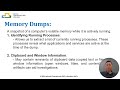
Types of Digital Forensic Evidence in Cybersecurity Investigations
This summary explores the various types of digital forensic evidence encountered during cybersecurity investigations, particularly in the context of a data breach at a financial institution. Key evidence types discussed include network logs, memory dumps, data images, and file system artifacts, each providing unique insights into the circumstances surrounding cyber incidents.
Defending Against Nation-State Cyber Threats: Insights from Tailored Access Operations
In this talk, Joyce from Tailored Access Operations shares critical insights on how organizations can defend against nation-state cyber threats. Emphasizing the importance of understanding one's own network, Joyce outlines key strategies for identifying vulnerabilities, implementing best practices, and maintaining robust security measures to thwart advanced persistent threats.
21 Free Forensic Investigation Tools You Need to Know
In this video, Konely Gonzalez introduces 21 essential free forensic investigation tools that can aid in digital forensics and incident response. These tools are crucial for extracting and analyzing evidence from various digital devices, helping to combat cybercrime effectively.
Most viewed summaries

A Comprehensive Guide to Using Stable Diffusion Forge UI
Explore the Stable Diffusion Forge UI, customizable settings, models, and more to enhance your image generation experience.

Kolonyalismo at Imperyalismo: Ang Kasaysayan ng Pagsakop sa Pilipinas
Tuklasin ang kasaysayan ng kolonyalismo at imperyalismo sa Pilipinas sa pamamagitan ni Ferdinand Magellan.

Mastering Inpainting with Stable Diffusion: Fix Mistakes and Enhance Your Images
Learn to fix mistakes and enhance images with Stable Diffusion's inpainting features effectively.

Pamamaraan at Patakarang Kolonyal ng mga Espanyol sa Pilipinas
Tuklasin ang mga pamamaraan at patakaran ng mga Espanyol sa Pilipinas, at ang epekto nito sa mga Pilipino.

How to Install and Configure Forge: A New Stable Diffusion Web UI
Learn to install and configure the new Forge web UI for Stable Diffusion, with tips on models and settings.
Found this summary useful?
Take it with you. One click puts it in your own LunaNotes library.
Save to LunaNotes