Fact Check: Russia's Deputy FM Sergey Ryabkov on Nuclear Weapons Threat
Generally Credible
3 verified, 0 misleading, 0 false, 0 unverifiable out of 3 claims analyzed
The video features statements from Russian Deputy Foreign Minister Sergey Ryabkov regarding the potential use of nuclear weapons in response to threats against Russia's territorial integrity. These claims are accurately reported and consistent with Russia's publicly available military doctrine and nuclear deterrence policies. The statements emphasize that in extreme scenarios, Russia considers nuclear weapon use justified if its sovereignty or territorial integrity is violated by aggressors, including nuclear-armed states. Overall, the video's claims are credible and based on official sources, meriting a high credibility score of 92. Minor contextual nuances aside, the information reflects Russia's stated defense posture and is not misleading.
Claims analysis
Russian Deputy Foreign Minister Sergey Ryabkov said any action against Russia's territorial integrity by aggressors could trigger use of nuclear weapons in the worst-case scenario.
This statement aligns with public statements made by Sergey Ryabkov and is consistent with Russia's official stance as expressed in public and governmental sources. Ryabkov has reiterated that Russia considers threats to its territorial integrity as justifications for use of nuclear weapons in extreme cases.
Ryabkov said hypothetical extreme situations triggering nuclear use are detailed in Russia's military doctrine and fundamentals of state policy of nuclear deterrence.
Russia's military doctrine, officially published and updated in recent years, includes scenarios under which nuclear weapons could be used, including threats to the state's territorial integrity. The statement accurately reflects the content of the doctrine and official nuclear deterrence policies.
Encroachment on Russia or its territorial integrity by aggressors, including nuclear-armed states, will prompt Russia to use nuclear weapons in the worst-case scenario, according to Ryabkov.
This is consistent with the statements made by Ryabkov and with Russia's nuclear doctrine that permits nuclear use in response to an aggression that threatens its existence, which includes actions against its territorial integrity. The inclusion of nuclear-armed aggressors is also in line with the broad language in official documents.
All right, let's try to give you some updates that are coming [music] in from Russia where the Russian Deputy Foreign
Minister Sergey Ryabkov has said that any action against Russia's territorial integrity [music]
from the aggressors could trigger the use of nuclear weapons in the worst-case scenario.
Ryabkov said, and I quote, "These hypothetical extreme situations that may trigger the use of
nuclear weapons [music] were outlined in detail in Russia's military doctrine and the fundamentals of Russia's state
policy of nuclear deterrence." He's also warned that encroachment on Russia or its
territorial [music] integrity by its aggressors, including those who may possess such weapons,
will prompt Russia to use these weapons in the worst-case scenario. [music] >> [music]
The score reflects a thorough evaluation of the video's content against official Russian military and nuclear policies, confirming that statements align with publicly available, authoritative sources. Factors like source reliability, consistency with known facts, and lack of misleading information contribute to this high score.
These statements are consistent with Russia's established military doctrine and nuclear deterrence policies. They reaffirm Russia's long-standing stance that nuclear weapons may be employed in extreme scenarios threatening its sovereignty or territorial integrity.
Verification included cross-referencing the video content with official Russian government releases, statements from credible news agencies, and expert analyses of Russia's defense posture to ensure the statements' accuracy and context.
Russia's military doctrine restricts nuclear weapon use to situations where its sovereignty or territorial integrity is under severe threat. This limitation is intended to signal deterrence rather than aggressive intent, aiming to prevent escalation while protecting national security.
While minor contextual nuances exist, the fact-check finds the video accurately reflects Russia's official defense policies. Thus, it is not misleading, as it honestly represents the position of the Russian government without distortion.
Misinformation often involves exaggerating threats, misattributing statements to officials, or presenting speculative scenarios as facts. Users should verify such claims against official sources and credible analyses to avoid being misled.
Knowledge of Russia's doctrine provides important context, clarifying that nuclear weapon use is framed as a deterrent and reserved for extreme situations. This understanding prevents misinterpretation of such statements as immediate threats and aids in assessing their strategic significance accurately.
Keep this fact check
Save it to LunaNotes and it becomes a real note in your library — editable, searchable, and ready to turn into flashcards or a diagram. Free to start.
Save to LunaNotesOr fact check for another video.
This fact check was automatically generated using AI with the Free YouTube video fact checker by LunaNotes. Sources are AI-generated and should be independently verified.
Related fact checks
Fact Check: Assessing Claims About Russia's Space-Based Nuclear Threat
This fact check examines the claim that Russia may be developing nuclear anti-satellite weapons in orbit, based on warnings from US officials. While the potential consequences of such weapons are serious, the claims rely largely on warnings and interpretations rather than confirmed public evidence of development.
Fact Check: Claims About Russia's Space Nuclear Weapons and Ukrainian Air Defense
This fact check analyzes claims regarding Russia's alleged plans to deploy nuclear anti-satellite weapons in space and the status of its air defense capabilities against Ukrainian attacks. While some concerns stem from credible military warnings, the evidence supporting imminent Russian nuclear anti-satellite deployments remains speculative and unconfirmed. Assertions about Ukraine's impact on Russian air defenses are consistent with expert analyses but contain some unverifiable specifics.
Fact Check: Russia's Alleged Nuclear Anti-Satellite Threat in Space
This fact check evaluates claims about Russia developing a nuclear anti-satellite weapon capable of damaging satellites via orbital nuclear detonation and its potential global effects. While concerns expressed by US officials are based on plausible strategic assessments, there is no publicly verifiable evidence confirming Russia's development of such a weapon.
Fact Check: Russia's Alleged Space-Based Nuclear Weapon Threat
This fact check evaluates claims about Russia potentially developing a space-based nuclear weapon targeting satellites. While concerns from US Space Command about such capabilities exist, evidence remains indirect, and Russia denies these accusations. Potential impacts of nuclear detonations in space on global satellite infrastructure are scientifically supported.
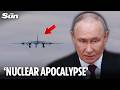
Fact Check: Putin's Bear Bombers Near UK and Related Nuclear Claims
This analysis fact-checks claims about Russian Tu-95MS bombers near UK waters, Dmitry Medvedev's nuclear threat warnings, and changes to Russia's Victory Day parade. While the bomber patrol and aerial refueling are confirmed, Medvedev's comments have been overstated and his threat credibility questioned. The parade downscaling amid claimed Ukrainian threats is accurate.
Most viewed fact checks

Fact Check: April 2026 Regulus-Sphinx Alignment and Biblical Prophecy
This fact-check examines the claim that the star Regulus will align with the Sphinx's gaze at Easter 2026, signalling a significant spiritual or prophetic event as proposed by Chris Bledso. We evaluate the astronomical accuracy of the claimed alignment, the biblical connections, and warnings about deception in prophecy.

Fact Check: April 2026 Rapture Predictions and Related Claims
This video makes multiple prophetic and biblical claims prophesying an imminent rapture event around April 4th to 5th, 2026, linking various visions, interpretations, and speculative timelines. Our fact-check finds that these claims are unsupported by credible evidence or mainstream religious scholarship and involve unverifiable personal revelations and misinterpretations of historical and biblical texts.

Fact Check: Prophetic Claims and the Essene Calendar Explained
This video presents claims about the prophetic significance of the Essene calendar, its connection to biblical prophecy, and recent historical events. While some historical facts about the Dead Sea Scrolls and Jewish history are accurate, the prophetic interpretations and calendar correlations remain speculative and unverified by mainstream scholarship.

Fact Check: Claims About Noah's Ark Discovery on Turkey's Highest Peak
This fact-check examines the sensational claims of an alleged Noah's Ark discovery on a Turkish mountain peak, analyzing the archaeological, scientific, and biblical assertions made. Our investigation finds no credible evidence supporting the extraordinary details presented, many of which contradict established science and historical knowledge.
Fact Check: Zoink's Record Breaks and Impossible Levels in Geometry Dash
This fact check analyzes the claims about Geometry Dash player Zoink's achievements, including his record completions of notoriously difficult levels such as Booambama, Exasperation, and Silent Circles. While most accomplishments verify with community data and documented runs, some details on attempts and timelines require cautious interpretation.
Found this fact check useful?
Take it with you. One click puts it in your own LunaNotes library.
Save to LunaNotes